
Search
- Bringing up Father: Third Series, 1919 - George McManus, a son of Irish immigrants, created the American syndicated comic strip <em>Bringing Up Father</em> in 1913. The strip follows the Irish working-class immigrant Jiggs and his wife, Maggie, as they navigate new-found wealth. McManus infused his strip with nuanced meanings, playing on early 20th-century themes of ethnic stereotyping and immigrant assimilation, the accumulation of wealth, social striving, and the American work ethic.
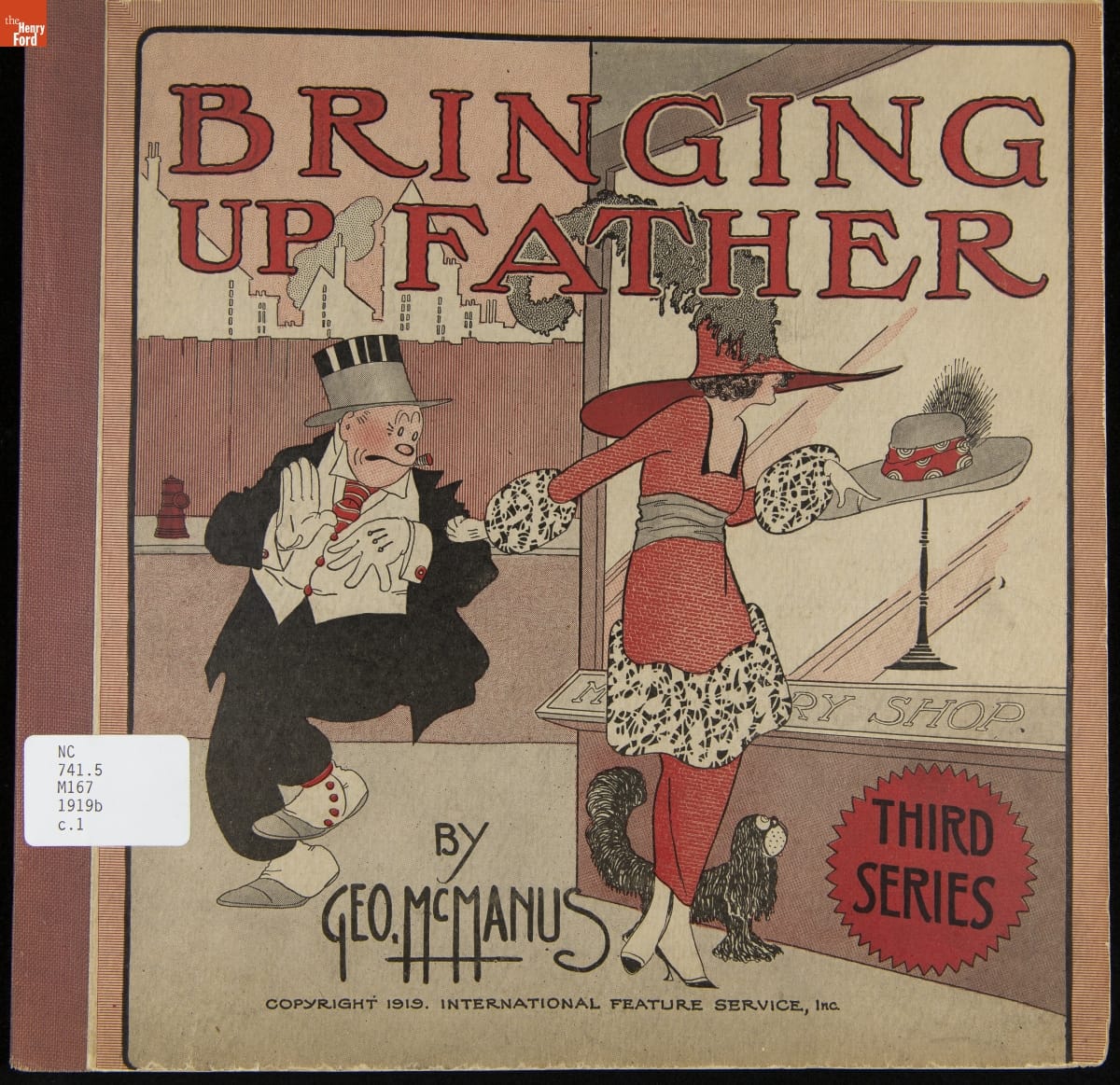
- 1919
- Collections - Artifact
Bringing up Father: Third Series, 1919
George McManus, a son of Irish immigrants, created the American syndicated comic strip Bringing Up Father in 1913. The strip follows the Irish working-class immigrant Jiggs and his wife, Maggie, as they navigate new-found wealth. McManus infused his strip with nuanced meanings, playing on early 20th-century themes of ethnic stereotyping and immigrant assimilation, the accumulation of wealth, social striving, and the American work ethic.
- Bringing up Father: Series Number 17, 1930 - George McManus, a son of Irish immigrants, created the American syndicated comic strip <em>Bringing Up Father</em> in 1913. The strip follows the Irish working-class immigrant Jiggs and his wife, Maggie, as they navigate new-found wealth. McManus infused his strip with nuanced meanings, playing on early 20th-century themes of ethnic stereotyping and immigrant assimilation, the accumulation of wealth, social striving, and the American work ethic.
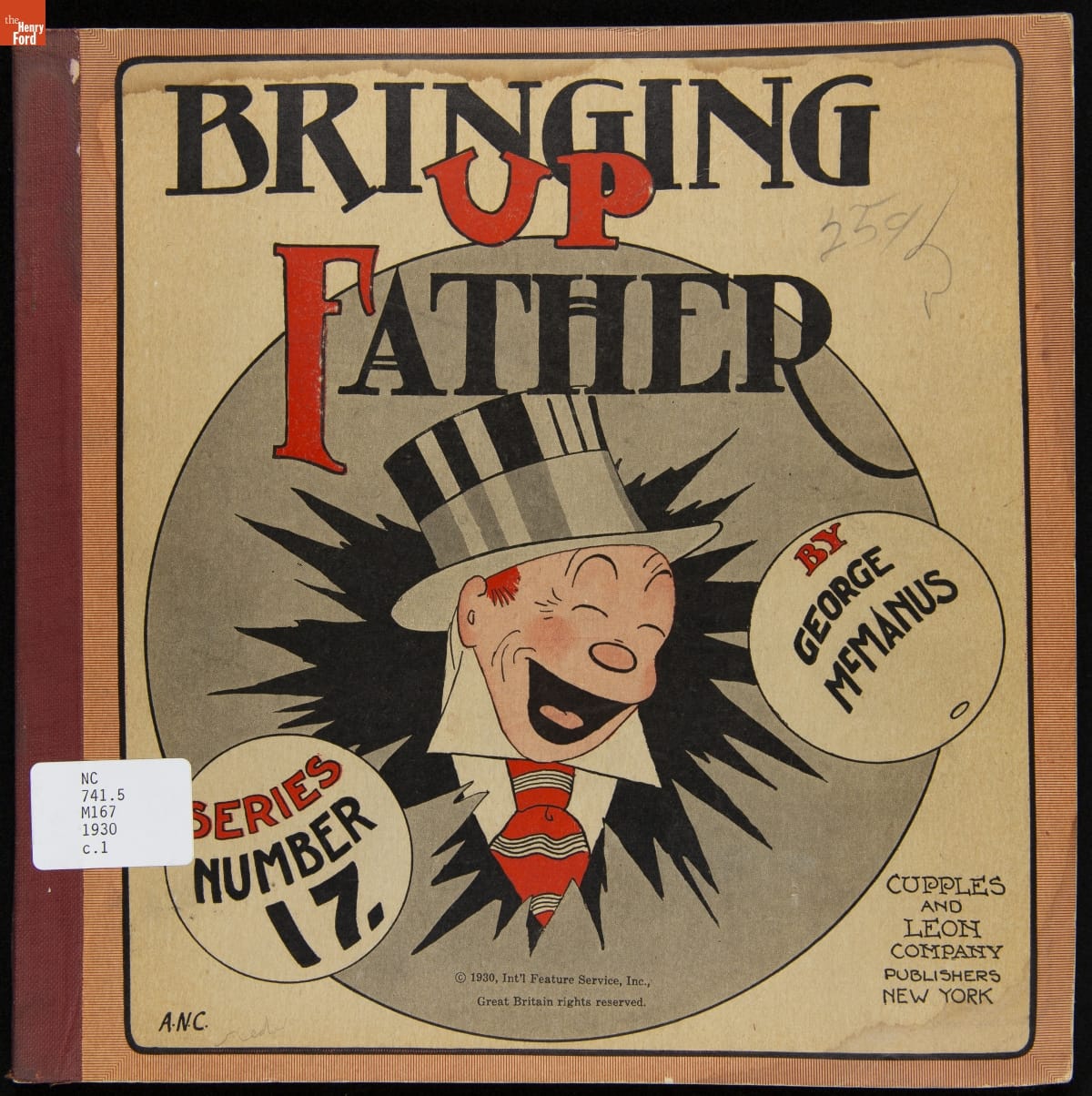
- 1930
- Collections - Artifact
Bringing up Father: Series Number 17, 1930
George McManus, a son of Irish immigrants, created the American syndicated comic strip Bringing Up Father in 1913. The strip follows the Irish working-class immigrant Jiggs and his wife, Maggie, as they navigate new-found wealth. McManus infused his strip with nuanced meanings, playing on early 20th-century themes of ethnic stereotyping and immigrant assimilation, the accumulation of wealth, social striving, and the American work ethic.
- "Feiffer on Civil Rights," 1966 -
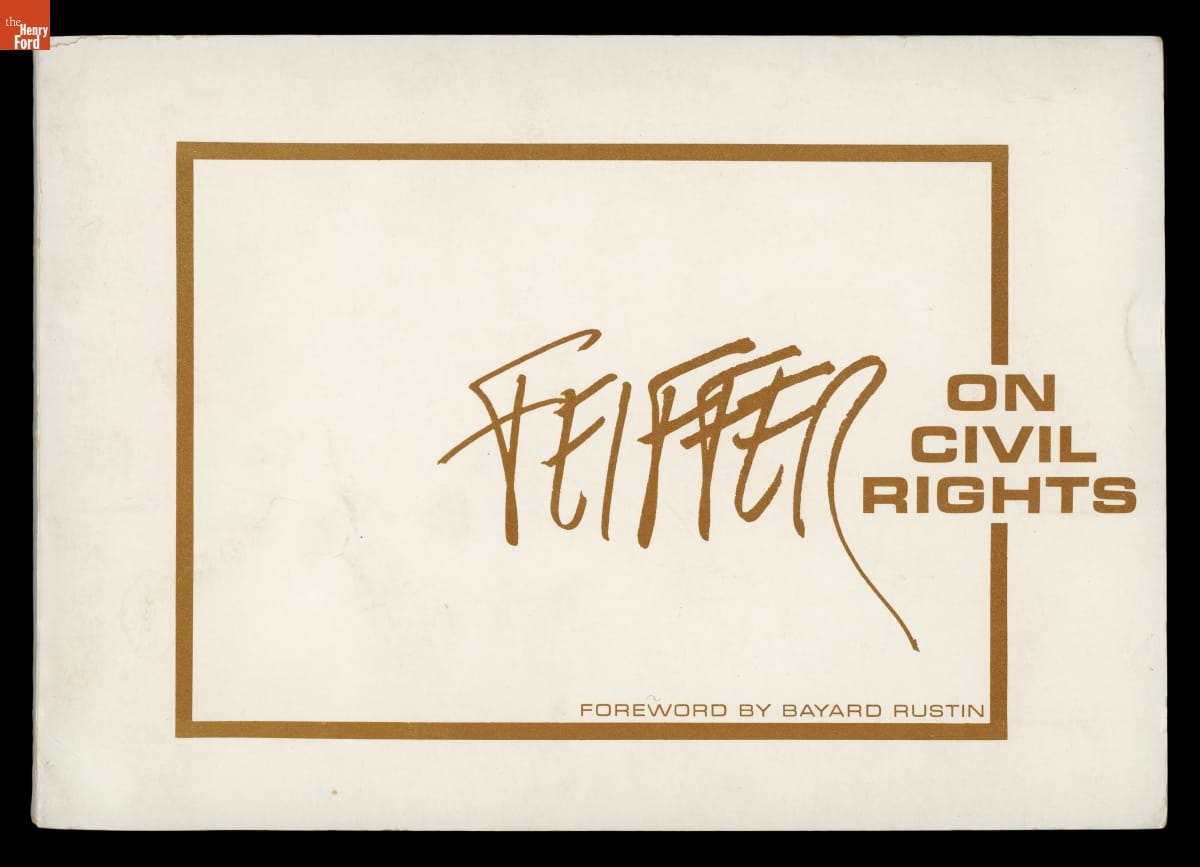
- 1966
- Collections - Artifact
"Feiffer on Civil Rights," 1966
- Marvel X Jason Polan, Spider-man "Amazing!" Cityscape T-Shirt, 2019 - Jason Polan was a Michigan-born, New York-based illustrator whose visual storytelling sought to elevate the everyday—with humor and care. This collection documents Polan's life and prolific art practice, spanning childhood to adulthood; he was also a convener of creative communities. Inspiration, ideation, and completed projects are represented in preparatory material, printed matter, publications, product design, artwork, and personal collecting.

- 2019
- Collections - Artifact
Marvel X Jason Polan, Spider-man "Amazing!" Cityscape T-Shirt, 2019
Jason Polan was a Michigan-born, New York-based illustrator whose visual storytelling sought to elevate the everyday—with humor and care. This collection documents Polan's life and prolific art practice, spanning childhood to adulthood; he was also a convener of creative communities. Inspiration, ideation, and completed projects are represented in preparatory material, printed matter, publications, product design, artwork, and personal collecting.
- SPRZ NY "Fin Fang Foom T-Shirt by Jason Polan for Uniqlo, 2019 - Jason Polan was a Michigan-born, New York-based illustrator whose visual storytelling sought to elevate the everyday—with humor and care. This collection documents Polan's life and prolific art practice, spanning childhood to adulthood; he was also a convener of creative communities. Inspiration, ideation, and completed projects are represented in preparatory material, printed matter, publications, product design, artwork, and personal collecting.

- 2019
- Collections - Artifact
SPRZ NY "Fin Fang Foom T-Shirt by Jason Polan for Uniqlo, 2019
Jason Polan was a Michigan-born, New York-based illustrator whose visual storytelling sought to elevate the everyday—with humor and care. This collection documents Polan's life and prolific art practice, spanning childhood to adulthood; he was also a convener of creative communities. Inspiration, ideation, and completed projects are represented in preparatory material, printed matter, publications, product design, artwork, and personal collecting.
- Bringing up Father: Fourth Series, 1921 - George McManus, a son of Irish immigrants, created the American syndicated comic strip <em>Bringing Up Father</em> in 1913. The strip follows the Irish working-class immigrant Jiggs and his wife, Maggie, as they navigate new-found wealth. McManus infused his strip with nuanced meanings, playing on early 20th-century themes of ethnic stereotyping and immigrant assimilation, the accumulation of wealth, social striving, and the American work ethic.
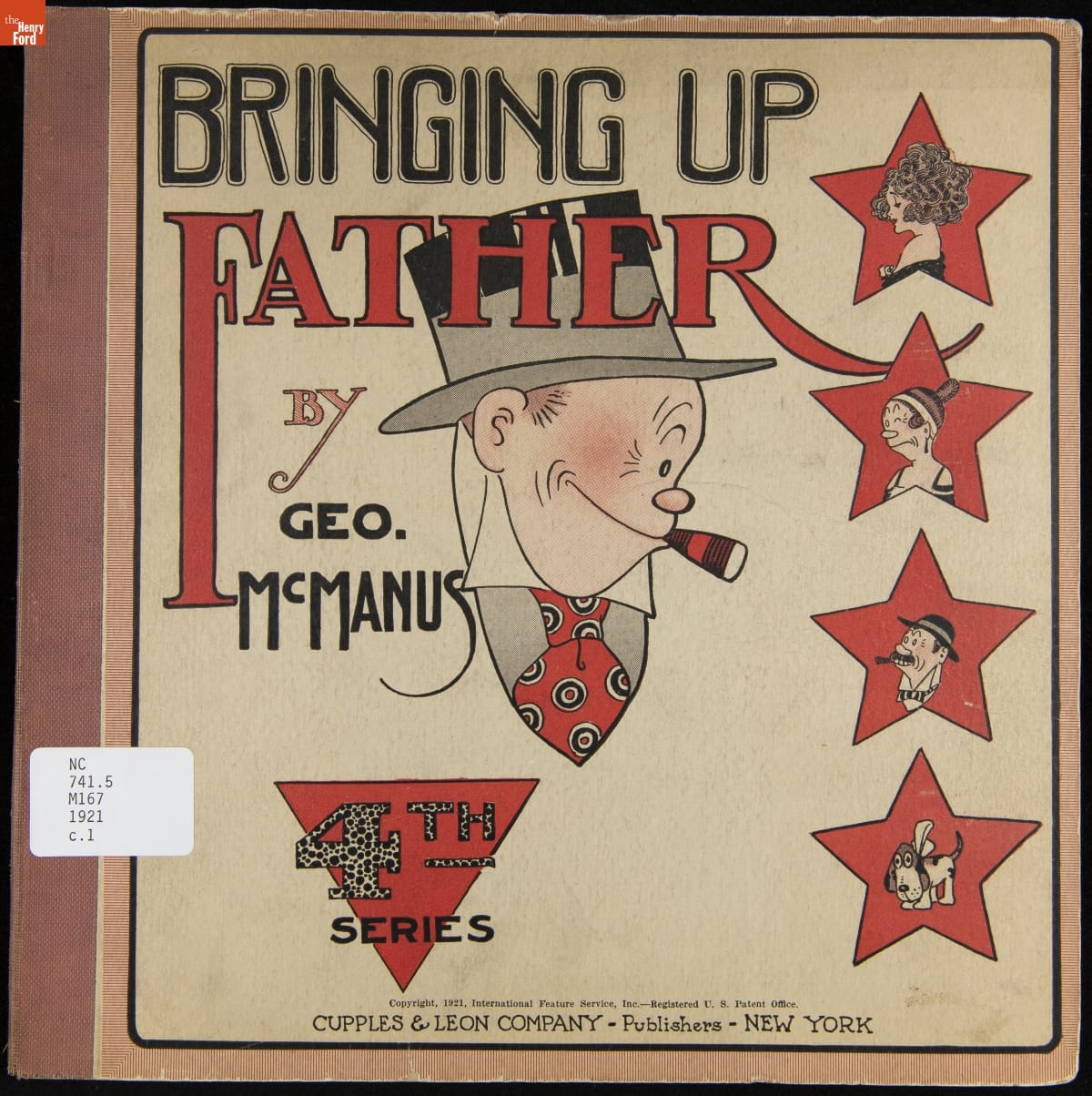
- 1921
- Collections - Artifact
Bringing up Father: Fourth Series, 1921
George McManus, a son of Irish immigrants, created the American syndicated comic strip Bringing Up Father in 1913. The strip follows the Irish working-class immigrant Jiggs and his wife, Maggie, as they navigate new-found wealth. McManus infused his strip with nuanced meanings, playing on early 20th-century themes of ethnic stereotyping and immigrant assimilation, the accumulation of wealth, social striving, and the American work ethic.
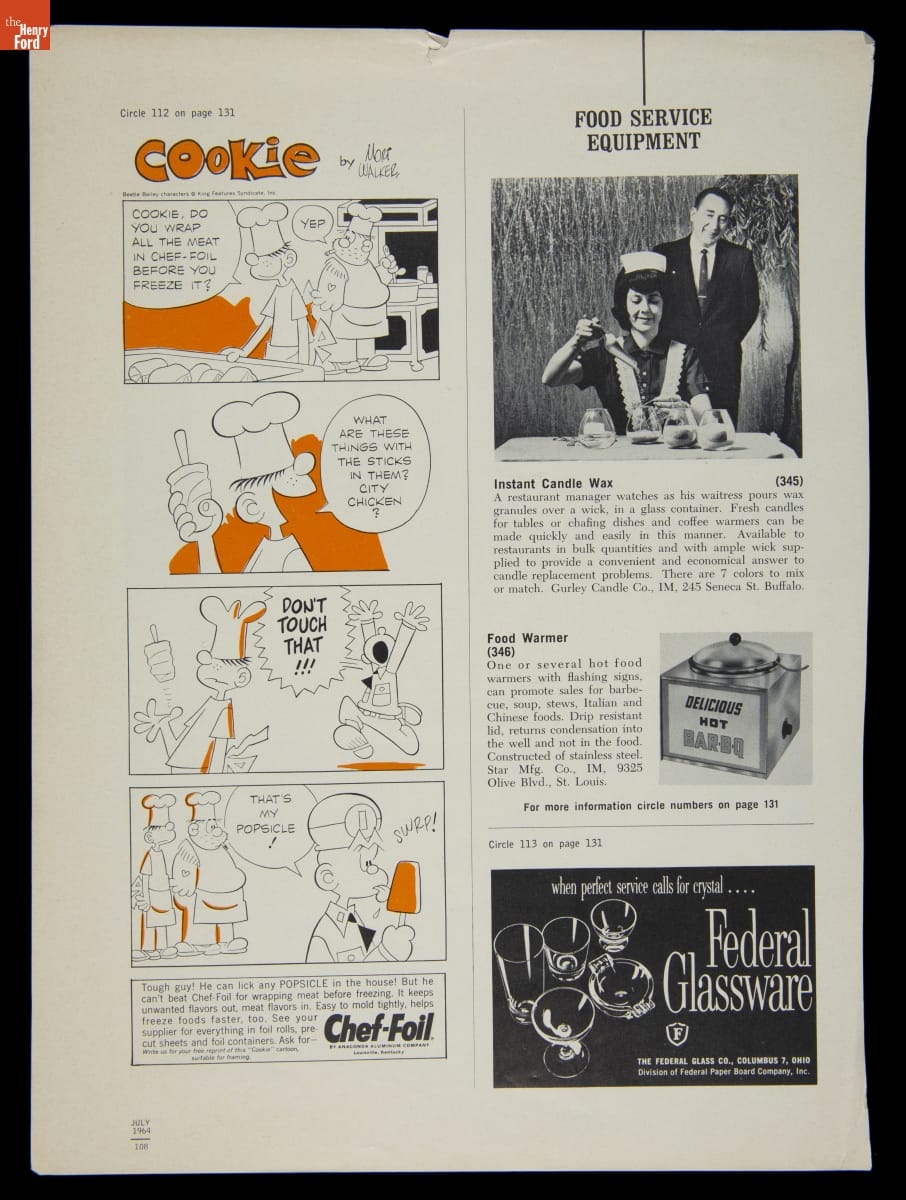
- Page from "Restaurants & Institutions" Trade Publication, July 1964 -
- July 01, 1964
- Collections - Artifact
Page from "Restaurants & Institutions" Trade Publication, July 1964
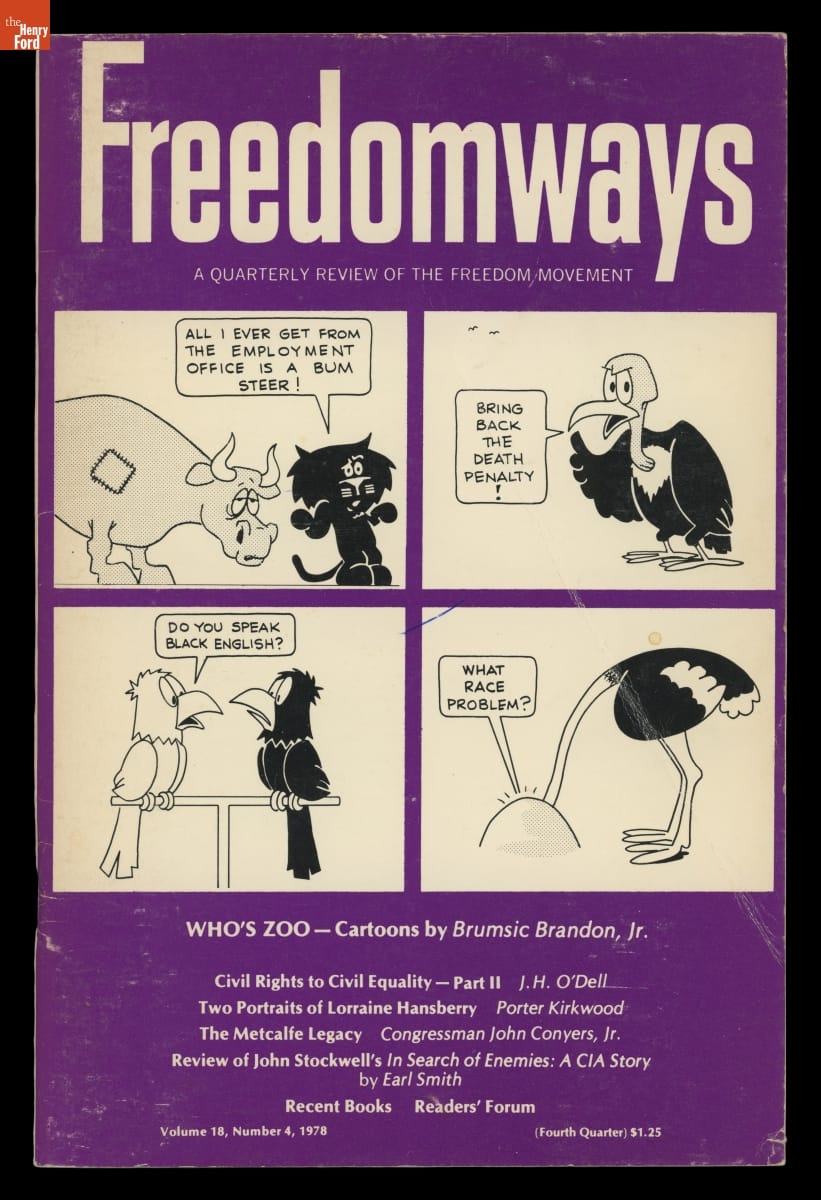
- "Freedomways," Vol. 18, No. 4, Fourth Quarter, 1978 - In 1961, Louis Burnham, Edward Strong, and W. E. B. Du Bois founded Freedomways, the leading African American theoretical, political, and cultural journal of its time. The journal included written works by leading Black authors, artists, politicians, and activists. The journal also reported on the political movements of the era, especially the American civil rights movement. Publication ceased in 1985.
- 1978
- Collections - Artifact
"Freedomways," Vol. 18, No. 4, Fourth Quarter, 1978
In 1961, Louis Burnham, Edward Strong, and W. E. B. Du Bois founded Freedomways, the leading African American theoretical, political, and cultural journal of its time. The journal included written works by leading Black authors, artists, politicians, and activists. The journal also reported on the political movements of the era, especially the American civil rights movement. Publication ceased in 1985.