
Search
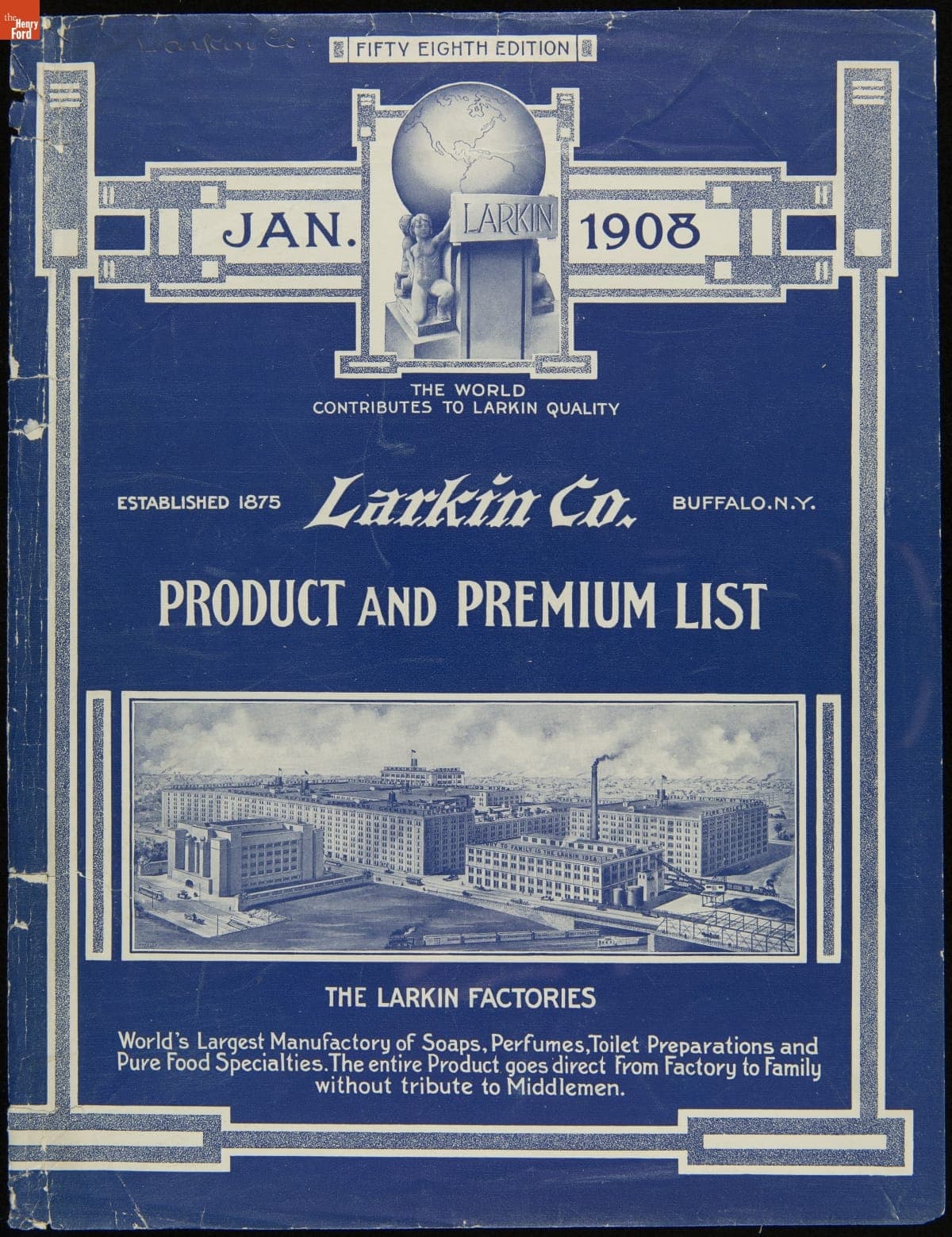
- Larkin Company Trade Catalog, "Product and Premium List," January 1908 (58th Edition) - John D. Larkin established a soap manufacturing company in 1875. He hired his brother-in-law, Elbert Hubbard, as a salesman. Hubbard developed "The Larkin Idea," a plan that sold goods directly to consumers through mail-order catalogs and offered incentivizing giveaways. It was a success. By the early 1900s, Larkin's catalogs contained pages of products and even more pages of premiums from which customers could choose.
- January 01, 1908
- Collections - Artifact
Larkin Company Trade Catalog, "Product and Premium List," January 1908 (58th Edition)
John D. Larkin established a soap manufacturing company in 1875. He hired his brother-in-law, Elbert Hubbard, as a salesman. Hubbard developed "The Larkin Idea," a plan that sold goods directly to consumers through mail-order catalogs and offered incentivizing giveaways. It was a success. By the early 1900s, Larkin's catalogs contained pages of products and even more pages of premiums from which customers could choose.
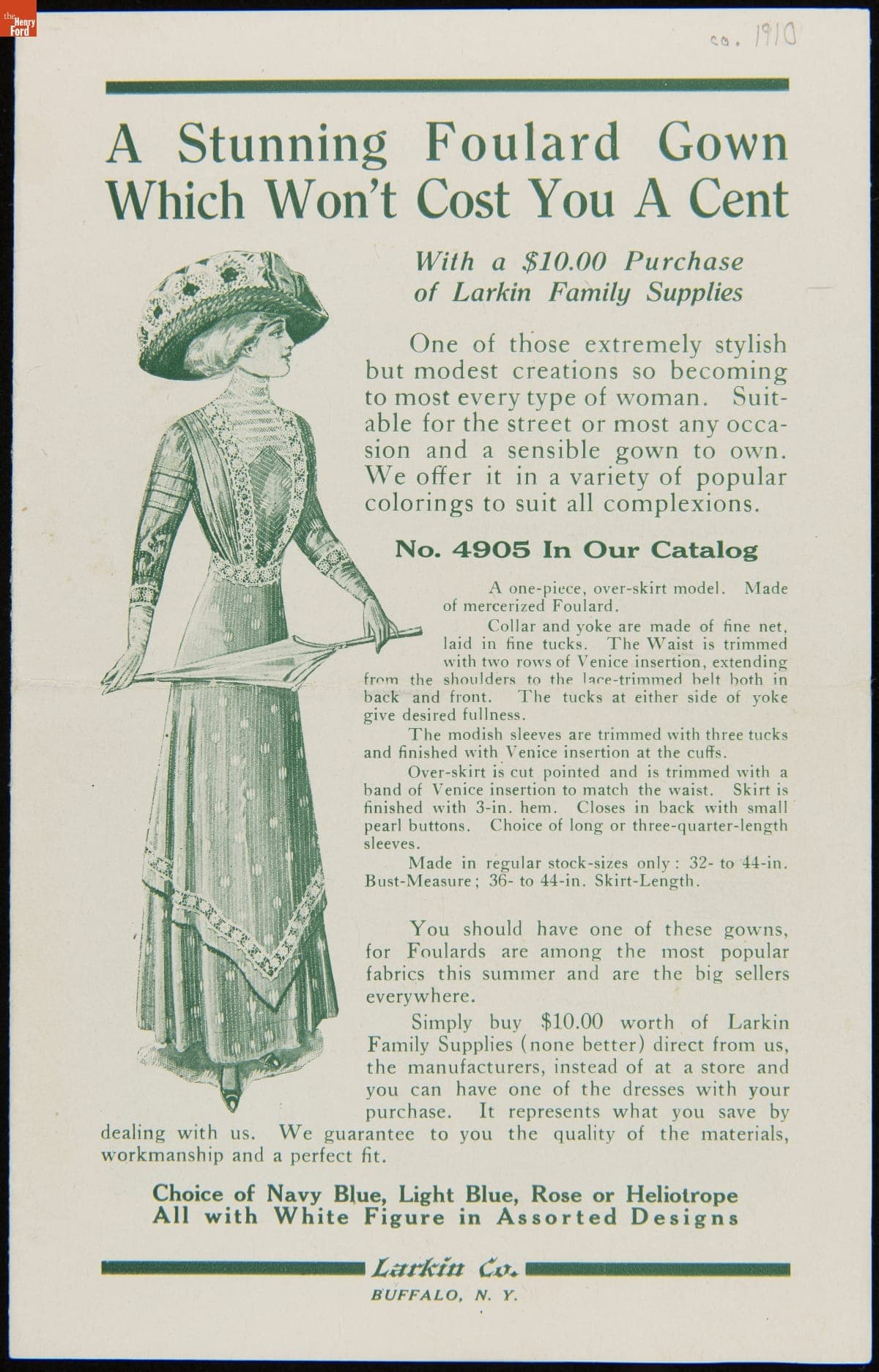
- Larkin Company Trade Catalog, "A Stunning Foulard Gown Which Won't Cost You a Cent," circa 1910 - John D. Larkin established a soap manufacturing company in 1875. He hired his brother-in-law, Elbert Hubbard, as a salesman. Hubbard developed "The Larkin Idea," a plan that sold goods directly to consumers through mail-order catalogs and offered incentivizing giveaways. It was a success. By the early 1900s, Larkin's catalogs contained pages of products and even more pages of premiums from which customers could choose.
- circa 1910
- Collections - Artifact
Larkin Company Trade Catalog, "A Stunning Foulard Gown Which Won't Cost You a Cent," circa 1910
John D. Larkin established a soap manufacturing company in 1875. He hired his brother-in-law, Elbert Hubbard, as a salesman. Hubbard developed "The Larkin Idea," a plan that sold goods directly to consumers through mail-order catalogs and offered incentivizing giveaways. It was a success. By the early 1900s, Larkin's catalogs contained pages of products and even more pages of premiums from which customers could choose.
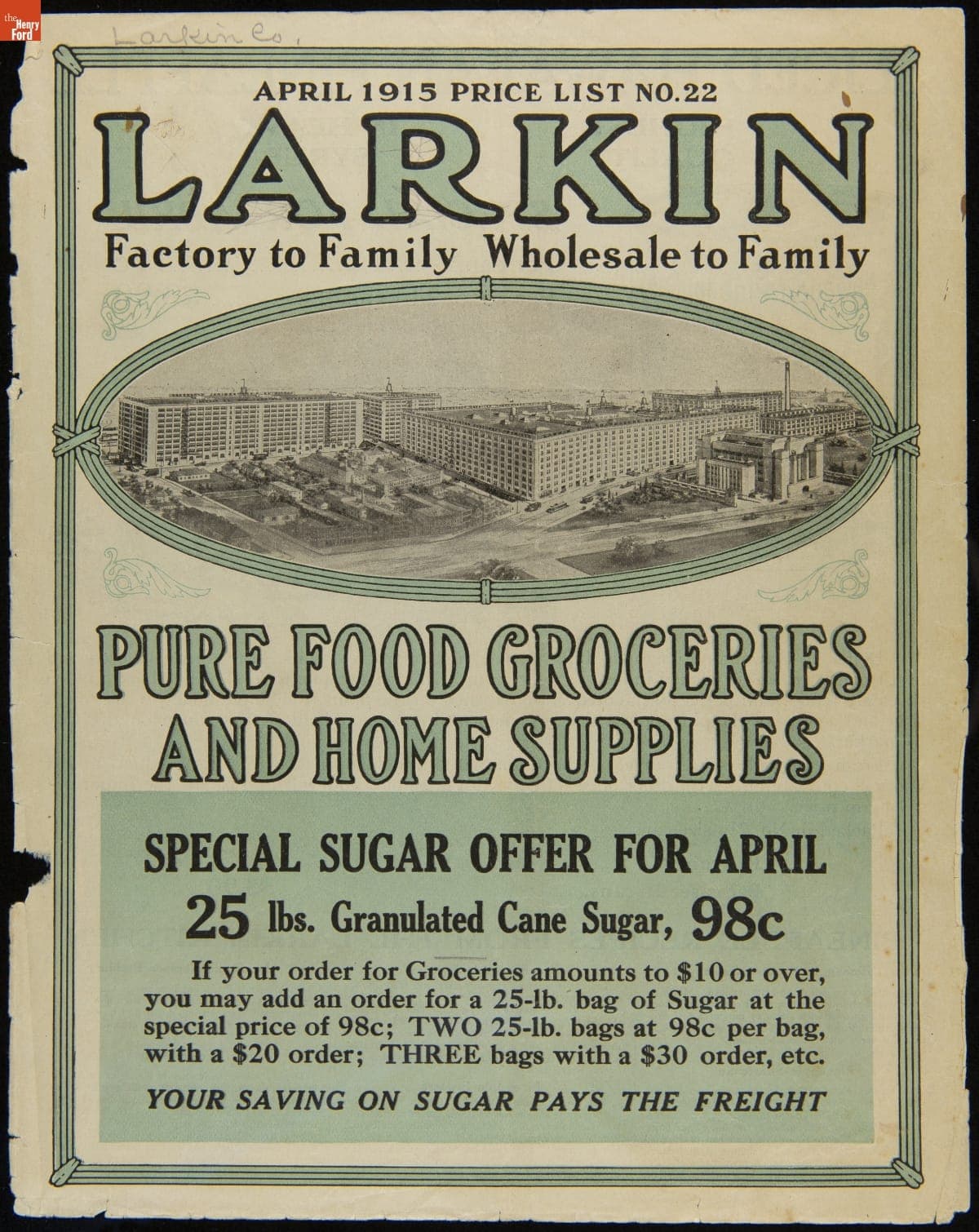
- Larkin Company Trade Catalog, "Pure Food Groceries and Home Supplies," April 1915 -
- April 01, 1915
- Collections - Artifact
Larkin Company Trade Catalog, "Pure Food Groceries and Home Supplies," April 1915
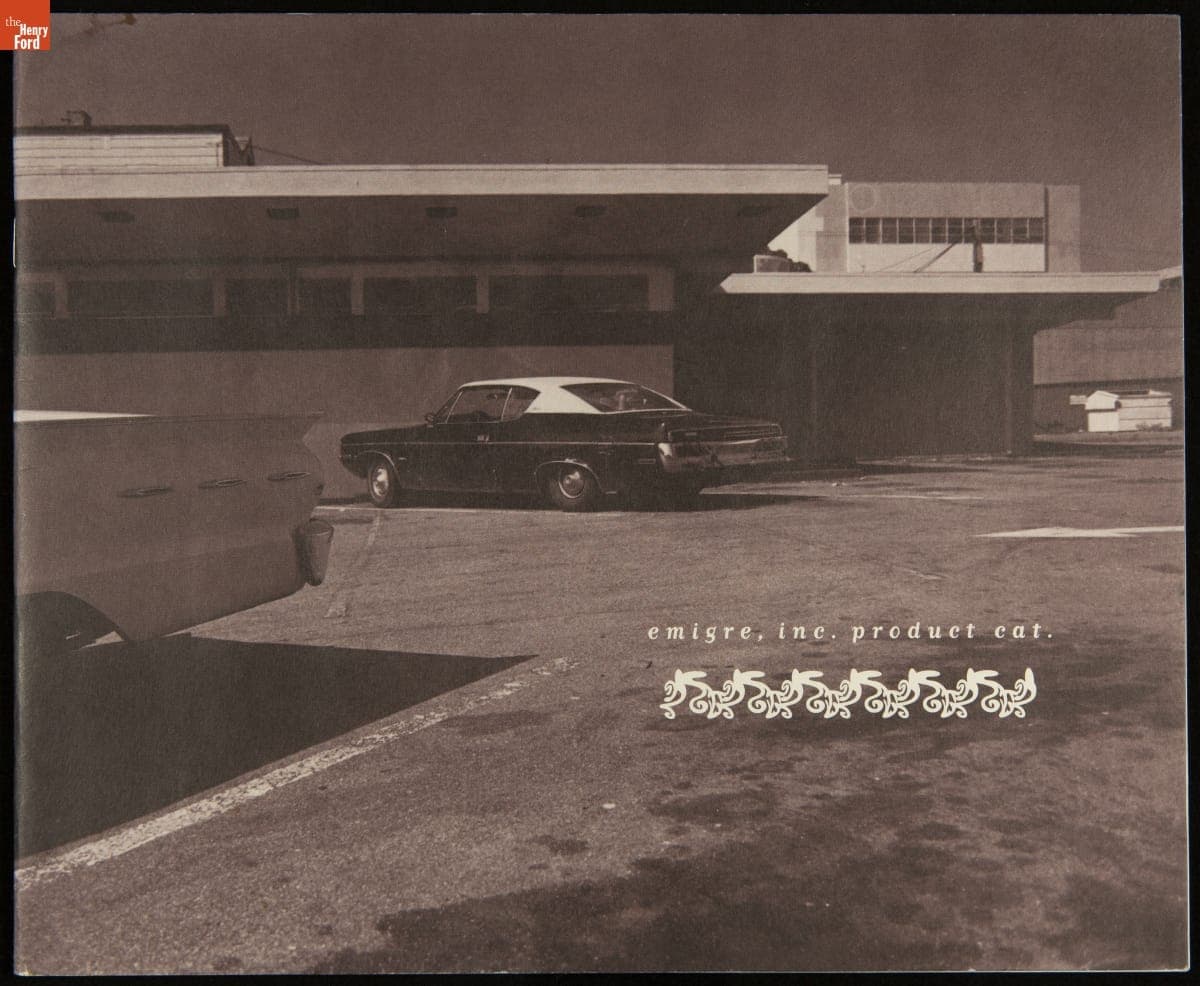
- Mailer, "Emigre Inc. Product Catalog," 1994-1995 - Emigre is a digital type foundry established by Rudy VanderLans and Zuzana Licko. The company's history is linked with the introduction of the 1984 Macintosh computer, used to design their early bitmapped typefaces. Emigre's digital work gained notoriety -- defying visual communication standards with fractured, layered combinations of text and image. This item advertised fonts or other items available for purchase.
- 1994-1995
- Collections - Artifact
Mailer, "Emigre Inc. Product Catalog," 1994-1995
Emigre is a digital type foundry established by Rudy VanderLans and Zuzana Licko. The company's history is linked with the introduction of the 1984 Macintosh computer, used to design their early bitmapped typefaces. Emigre's digital work gained notoriety -- defying visual communication standards with fractured, layered combinations of text and image. This item advertised fonts or other items available for purchase.
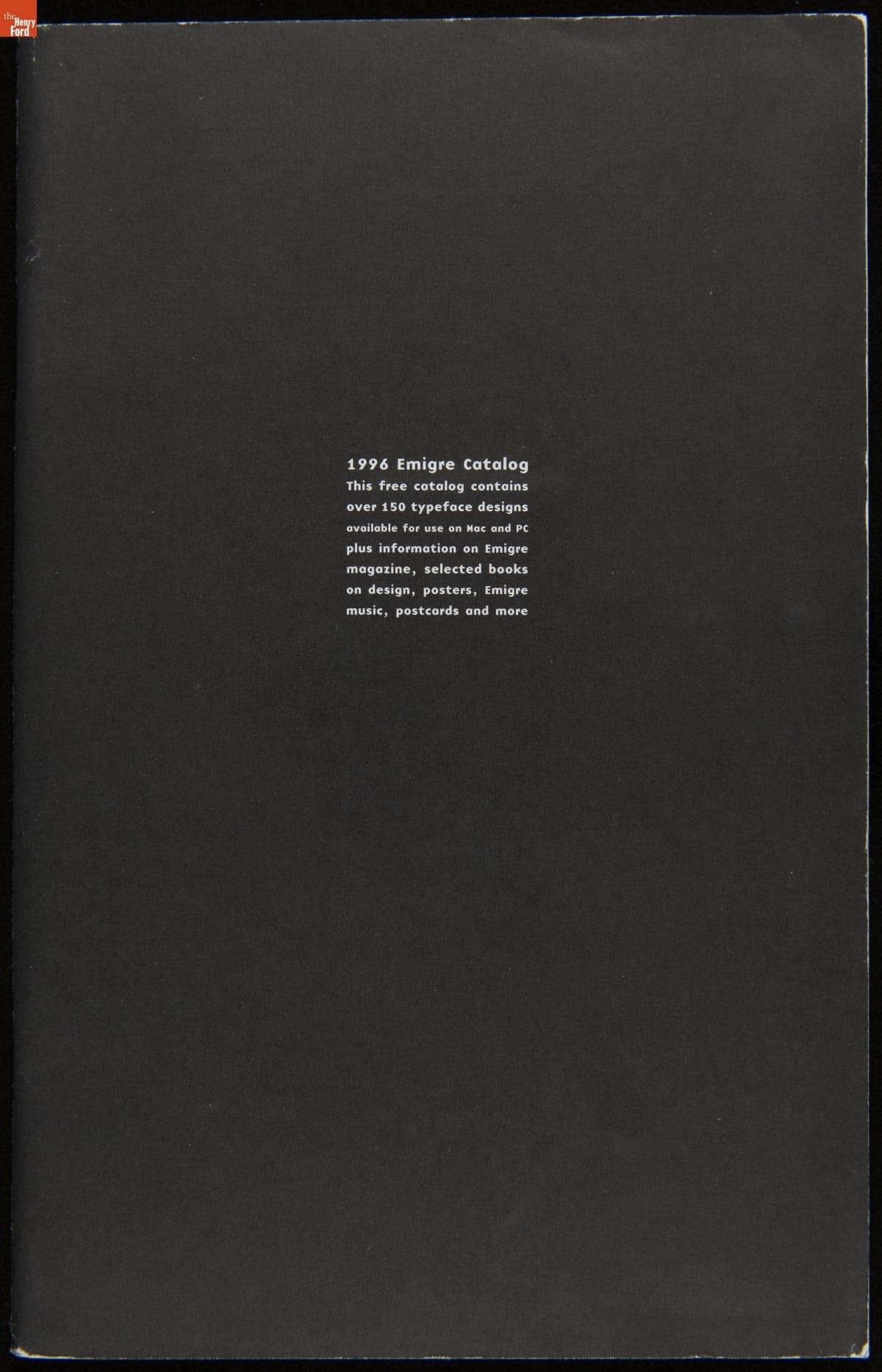
- Mail Order Catalog, "1996 Emigre Catalog," 1996 - Emigre is a digital type foundry established by Rudy VanderLans and Zuzana Licko. The company's history is linked with the introduction of the 1984 Macintosh computer, used to design their early bitmapped typefaces. Emigre's digital work gained notoriety -- defying visual communication standards with fractured, layered combinations of text and image. This item advertised fonts or other items available for purchase.
- 1996
- Collections - Artifact
Mail Order Catalog, "1996 Emigre Catalog," 1996
Emigre is a digital type foundry established by Rudy VanderLans and Zuzana Licko. The company's history is linked with the introduction of the 1984 Macintosh computer, used to design their early bitmapped typefaces. Emigre's digital work gained notoriety -- defying visual communication standards with fractured, layered combinations of text and image. This item advertised fonts or other items available for purchase.
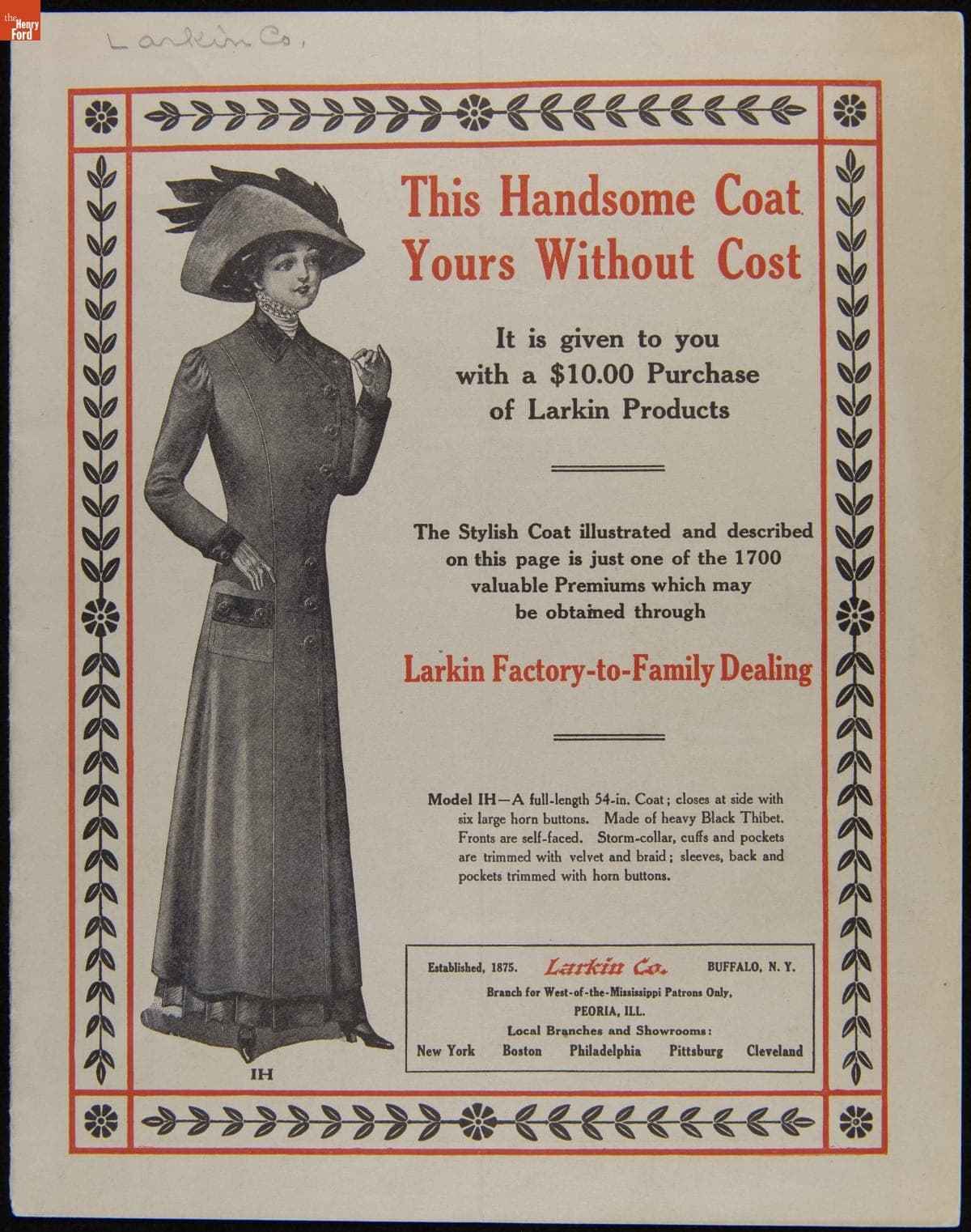
- Larkin Company Trade Catalog, "This Handsome Coat, Yours Without Cost," circa 1910 - John D. Larkin established a soap manufacturing company in 1875. He hired his brother-in-law, Elbert Hubbard, as a salesman. Hubbard developed "The Larkin Idea," a plan that sold goods directly to consumers through mail-order catalogs and offered incentivizing giveaways. It was a success. By the early 1900s, Larkin's catalogs contained pages of products and even more pages of premiums from which customers could choose.
- circa 1910
- Collections - Artifact
Larkin Company Trade Catalog, "This Handsome Coat, Yours Without Cost," circa 1910
John D. Larkin established a soap manufacturing company in 1875. He hired his brother-in-law, Elbert Hubbard, as a salesman. Hubbard developed "The Larkin Idea," a plan that sold goods directly to consumers through mail-order catalogs and offered incentivizing giveaways. It was a success. By the early 1900s, Larkin's catalogs contained pages of products and even more pages of premiums from which customers could choose.
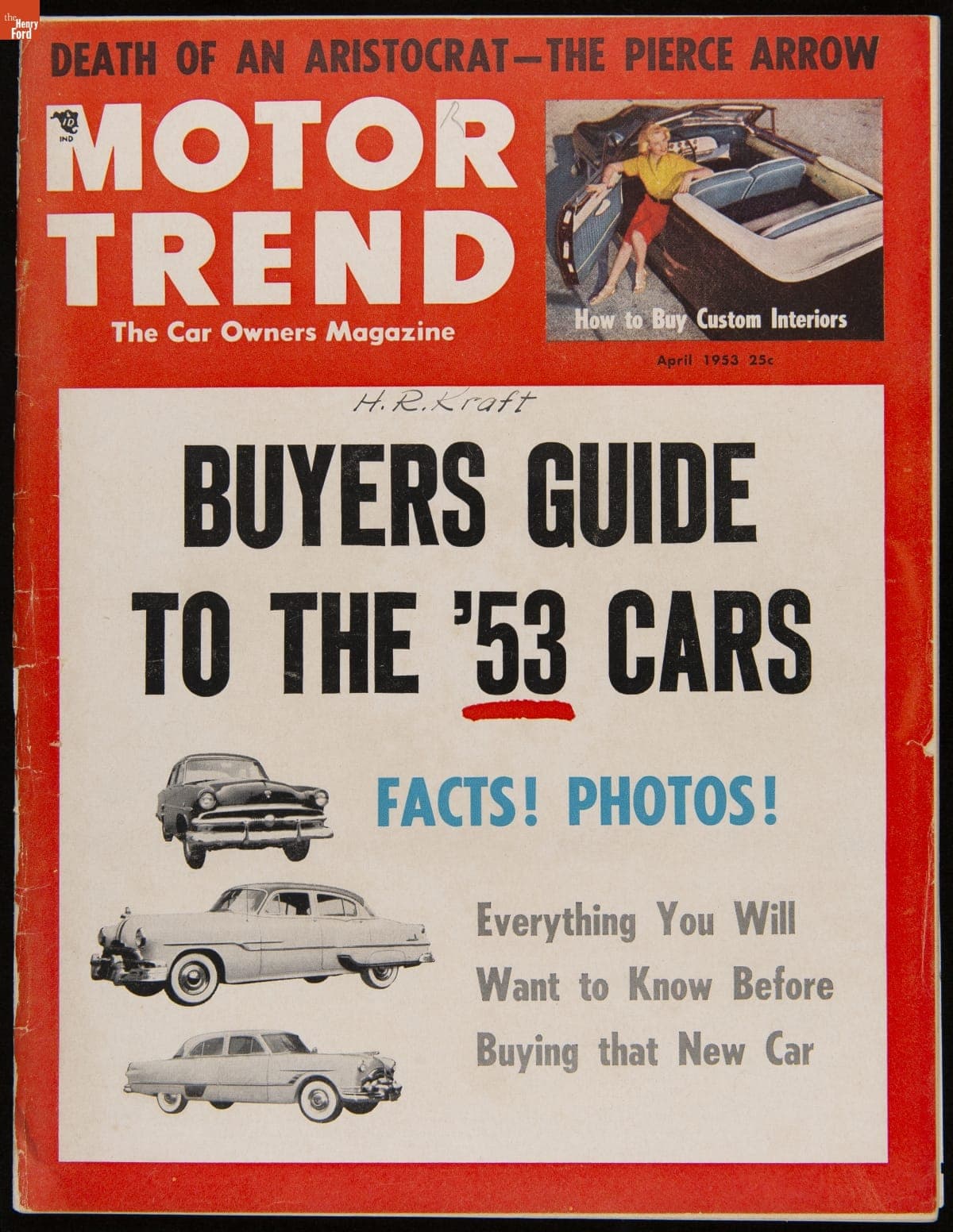
- "Death of an Aristocrat - The Pierce Arrow," Motor Trend Magazine, Vol. 5, No. 4, April 1953 - In 1953, <em>Motor Trend</em> magazine sponsored a contest for readers interested in careers in automotive design. Entrants submitted drawings, sketches, and photos showing their design proposals, along with essays predicting automotive design trends over the next ten years. Five winners each received a $2,000 scholarship to the prestigious Art Center School in Los Angeles.
- April 01, 1953
- Collections - Artifact
"Death of an Aristocrat - The Pierce Arrow," Motor Trend Magazine, Vol. 5, No. 4, April 1953
In 1953, Motor Trend magazine sponsored a contest for readers interested in careers in automotive design. Entrants submitted drawings, sketches, and photos showing their design proposals, along with essays predicting automotive design trends over the next ten years. Five winners each received a $2,000 scholarship to the prestigious Art Center School in Los Angeles.
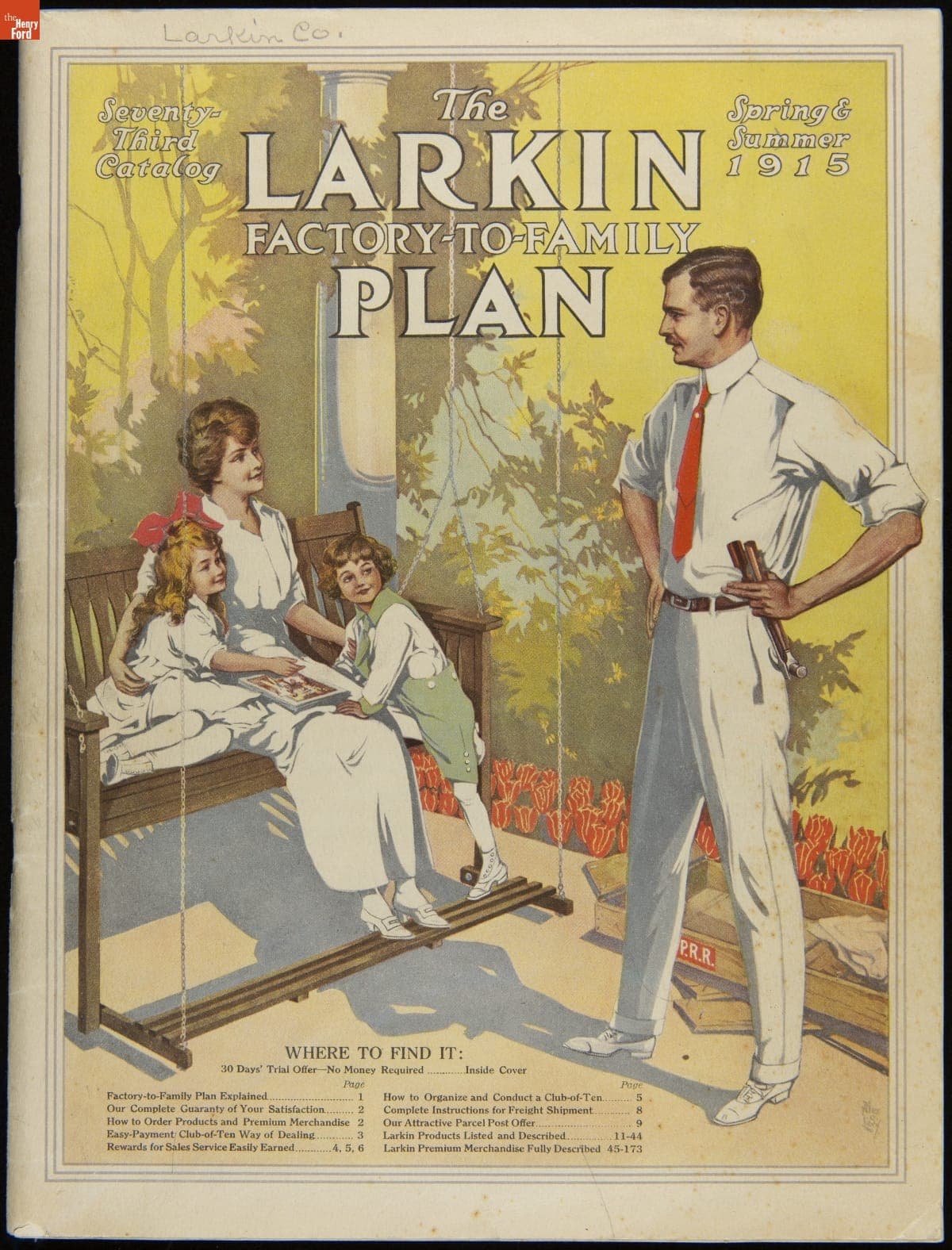
- Larkin Company Trade Catalog, "The Larkin Factory to Family Plan, 73rd Catalog," Spring and Summer 1915 - John D. Larkin established a soap manufacturing company in 1875. He hired his brother-in-law, Elbert Hubbard, as a salesman. Hubbard developed "The Larkin Idea," a plan that sold goods directly to consumers through mail-order catalogs and offered incentivizing giveaways. It was a success. By the early 1900s, Larkin's catalogs contained pages of products and even more pages of premiums from which customers could choose.
- 1915
- Collections - Artifact
Larkin Company Trade Catalog, "The Larkin Factory to Family Plan, 73rd Catalog," Spring and Summer 1915
John D. Larkin established a soap manufacturing company in 1875. He hired his brother-in-law, Elbert Hubbard, as a salesman. Hubbard developed "The Larkin Idea," a plan that sold goods directly to consumers through mail-order catalogs and offered incentivizing giveaways. It was a success. By the early 1900s, Larkin's catalogs contained pages of products and even more pages of premiums from which customers could choose.
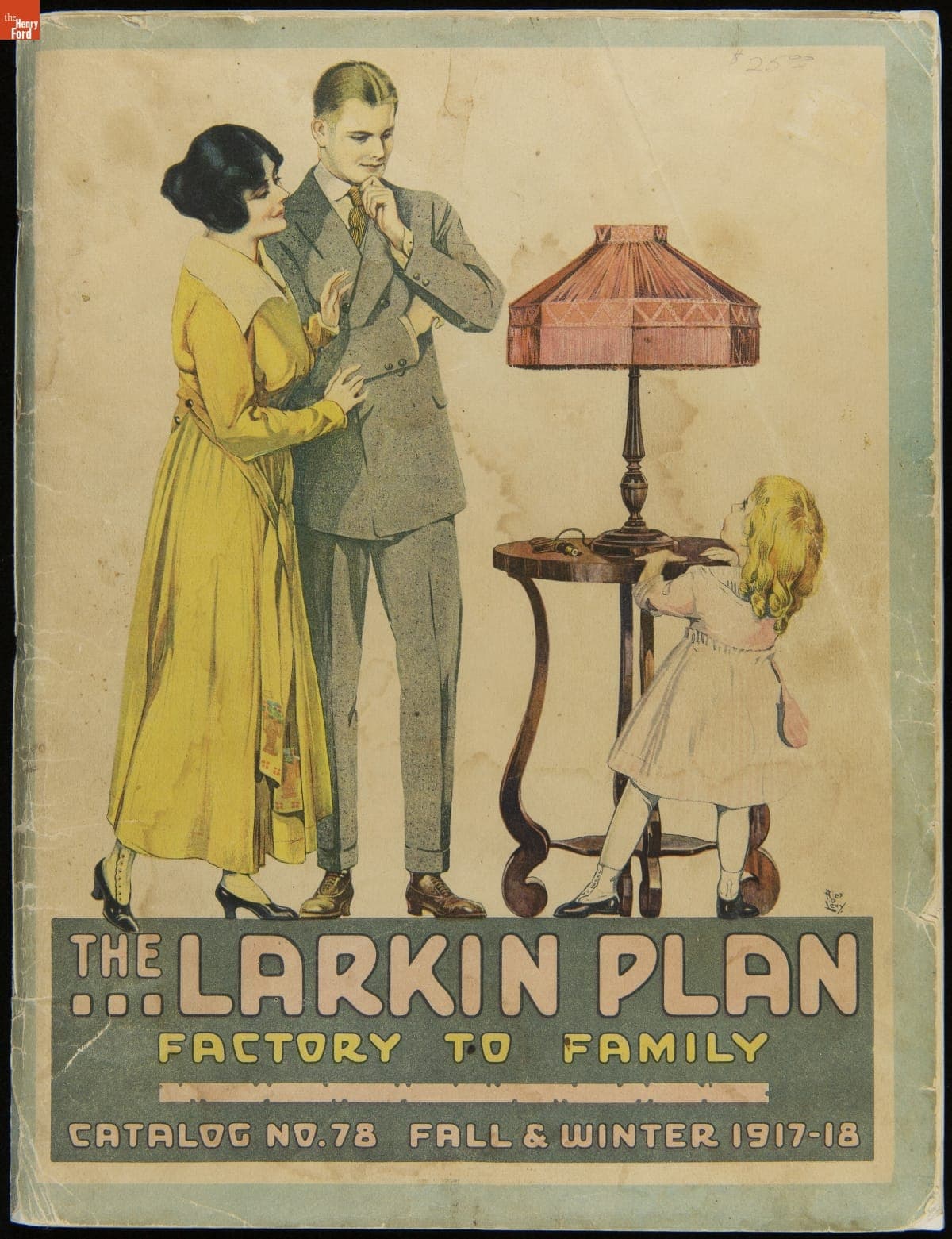
- Larkin Company Trade Catalog, "The Larkin Plan Factory-to-Family, Catalog No. 78," Fall and Winter 1917-1918 - John D. Larkin established a soap manufacturing company in 1875. He hired his brother-in-law, Elbert Hubbard, as a salesman. Hubbard developed "The Larkin Idea," a plan that sold goods directly to consumers through mail-order catalogs and offered incentivizing giveaways. It was a success. By the early 1900s, Larkin's catalogs contained pages of products and even more pages of premiums from which customers could choose.
- 1917-1918
- Collections - Artifact
Larkin Company Trade Catalog, "The Larkin Plan Factory-to-Family, Catalog No. 78," Fall and Winter 1917-1918
John D. Larkin established a soap manufacturing company in 1875. He hired his brother-in-law, Elbert Hubbard, as a salesman. Hubbard developed "The Larkin Idea," a plan that sold goods directly to consumers through mail-order catalogs and offered incentivizing giveaways. It was a success. By the early 1900s, Larkin's catalogs contained pages of products and even more pages of premiums from which customers could choose.
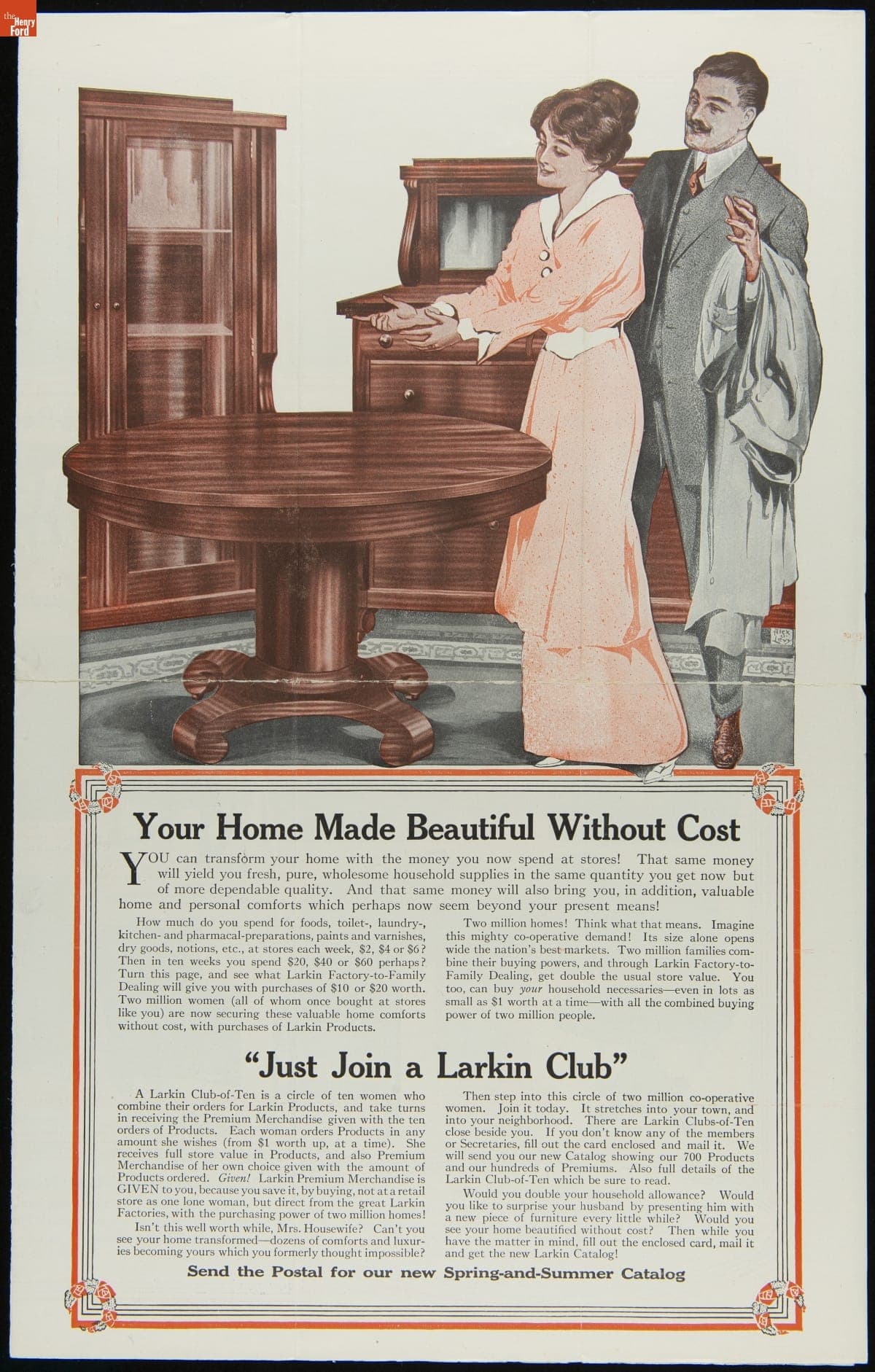
- Larkin Company Trade Catalog, "Your Home Made Beautiful," circa 1915 - John D. Larkin established a soap manufacturing company in 1875. He hired his brother-in-law, Elbert Hubbard, as a salesman. Hubbard developed "The Larkin Idea," a plan that sold goods directly to consumers through mail-order catalogs and offered incentivizing giveaways. It was a success. By the early 1900s, Larkin's catalogs contained pages of products and even more pages of premiums from which customers could choose.
- circa 1915
- Collections - Artifact
Larkin Company Trade Catalog, "Your Home Made Beautiful," circa 1915
John D. Larkin established a soap manufacturing company in 1875. He hired his brother-in-law, Elbert Hubbard, as a salesman. Hubbard developed "The Larkin Idea," a plan that sold goods directly to consumers through mail-order catalogs and offered incentivizing giveaways. It was a success. By the early 1900s, Larkin's catalogs contained pages of products and even more pages of premiums from which customers could choose.