
Search
- Desk Stand Telephone, 1890-1900 -
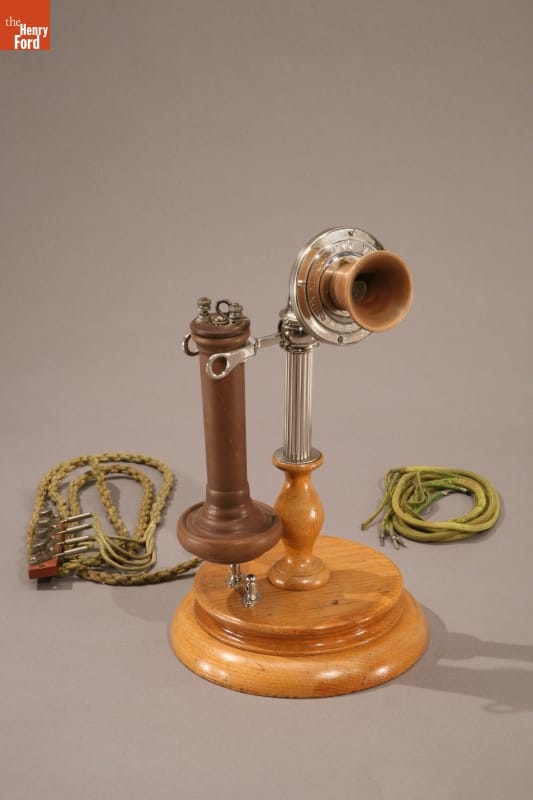
- 1890-1900
- Collections - Artifact
Desk Stand Telephone, 1890-1900
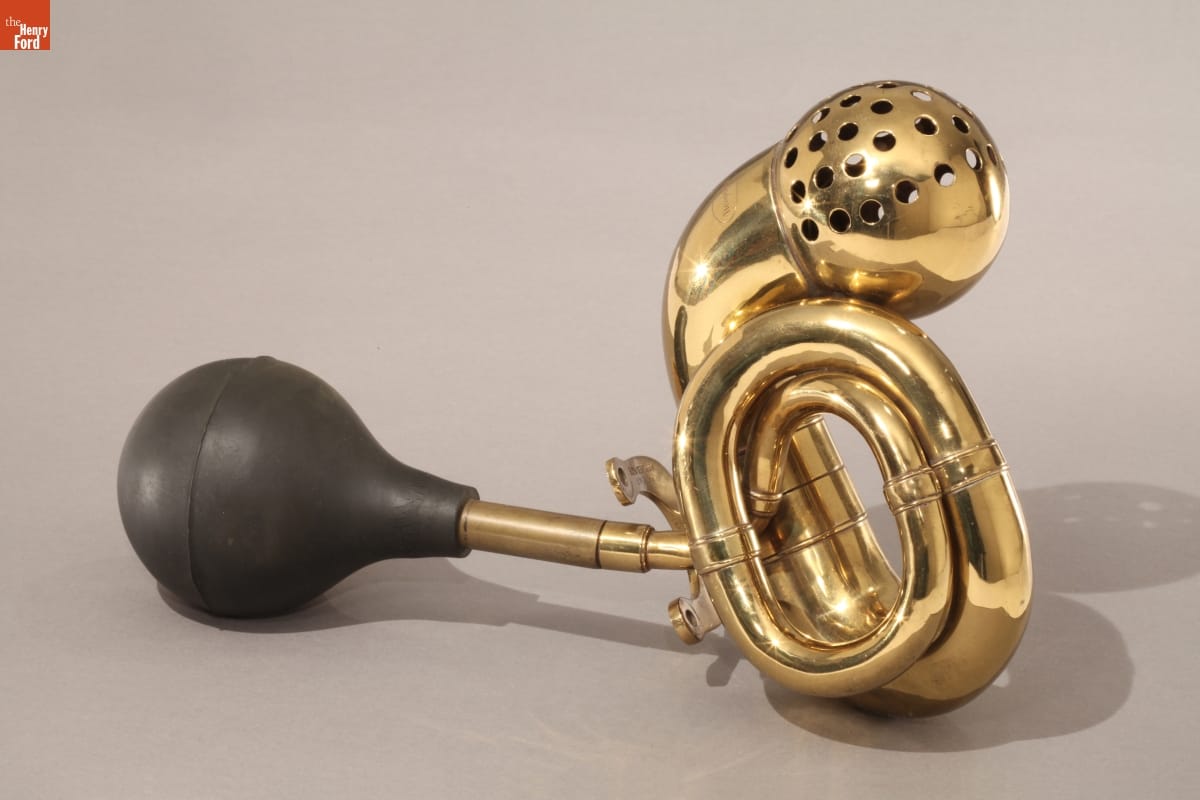
- Brass Automobile Bulb Horn, circa 1910 - Pedestrians, animals, and horse-drawn vehicles needed to be alerted when early motorists travelled down America's rural dirt roads or urban paved streets. Brass horns were one option, along with whistles and bells, available to motorists to signal others to oncoming automobiles.
- circa 1910
- Collections - Artifact
Brass Automobile Bulb Horn, circa 1910
Pedestrians, animals, and horse-drawn vehicles needed to be alerted when early motorists travelled down America's rural dirt roads or urban paved streets. Brass horns were one option, along with whistles and bells, available to motorists to signal others to oncoming automobiles.
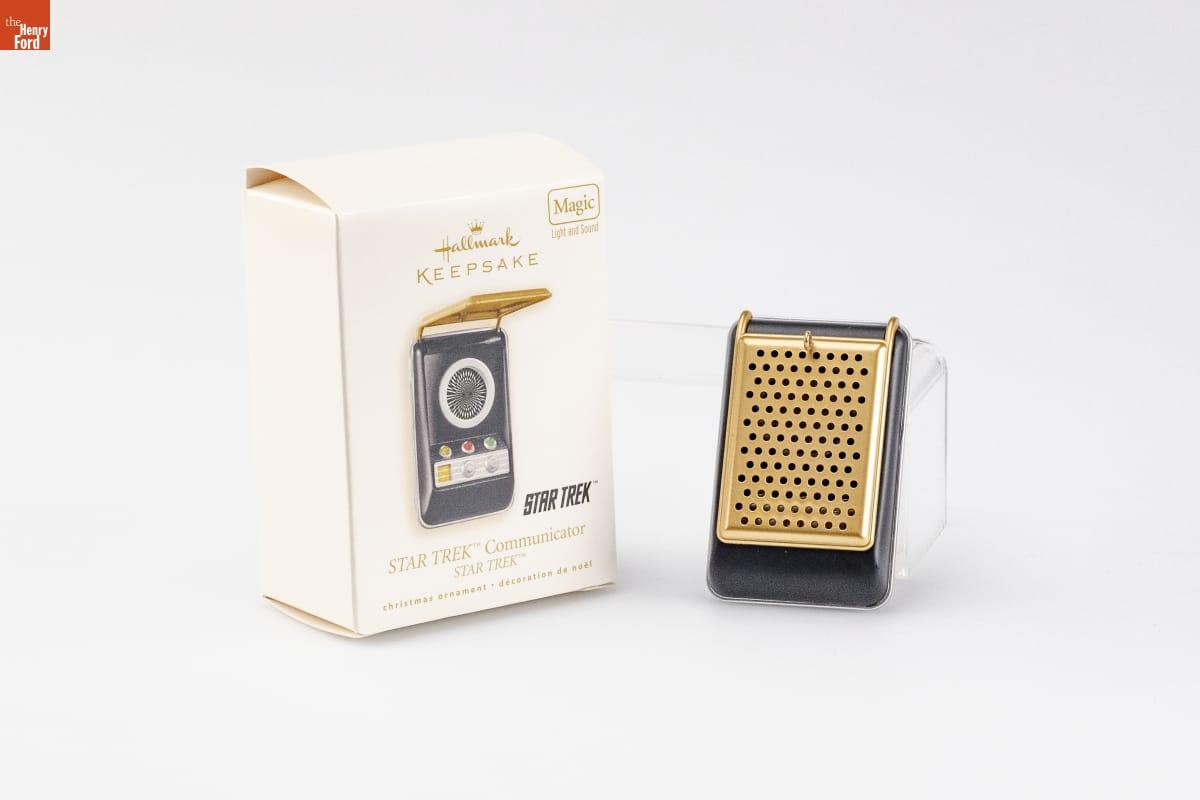
- Hallmark "STAR TREK: STAR TREK Communicator" Christmas Ornament, 2008 - Already known for greeting cards, Hallmark introduced a line of Christmas ornaments in 1973. The company's annual release of an increasing array of ornaments revolutionized Christmas decorating, appealing to customers' interest in marking memories and milestones as well as expressing one's personality and unique tastes.
- 2008
- Collections - Artifact
Hallmark "STAR TREK: STAR TREK Communicator" Christmas Ornament, 2008
Already known for greeting cards, Hallmark introduced a line of Christmas ornaments in 1973. The company's annual release of an increasing array of ornaments revolutionized Christmas decorating, appealing to customers' interest in marking memories and milestones as well as expressing one's personality and unique tastes.
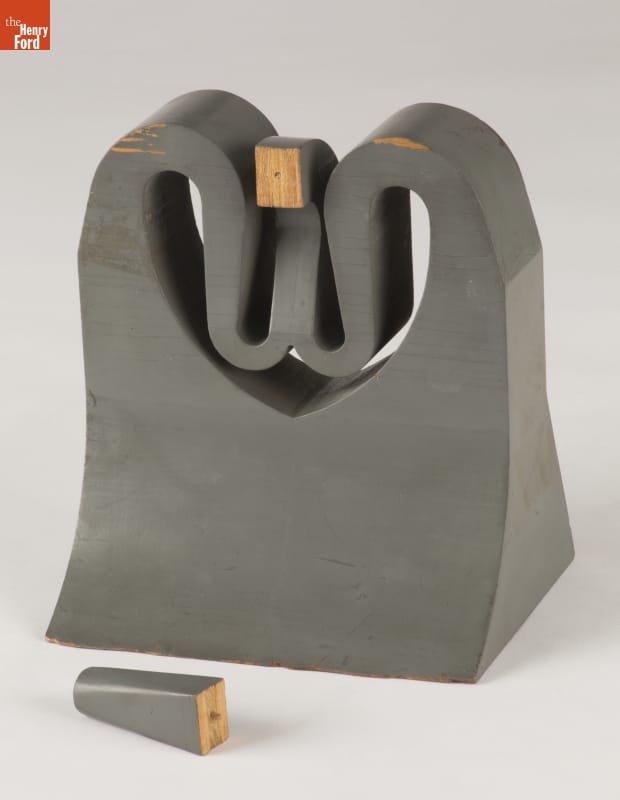
- Model of Acoustic Horn, circa 1920 -
- circa 1920
- Collections - Artifact
Model of Acoustic Horn, circa 1920
- Model 28-RO Teletype Machine, circa 1955 - Teletypewriters paved the way for the fax machine, combining typewriter and telegraph technologies. The Teletype Corporation's Model-28 was a rugged machine for military use. Indispensable in newsrooms of the 1950s-1960s, it received a constant flow of updates from news wire services. The KSR model had the ability to send and receive messages, while the RO Teletype only printed incoming messages.
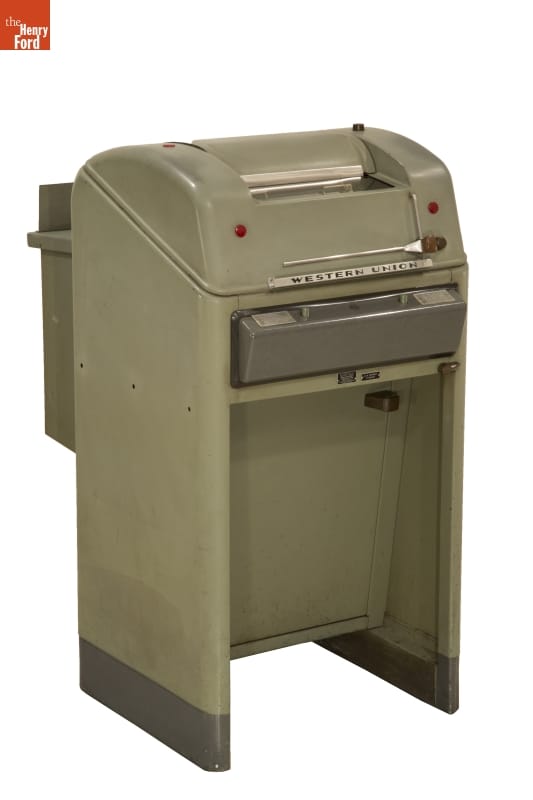
- circa 1955
- Collections - Artifact
Model 28-RO Teletype Machine, circa 1955
Teletypewriters paved the way for the fax machine, combining typewriter and telegraph technologies. The Teletype Corporation's Model-28 was a rugged machine for military use. Indispensable in newsrooms of the 1950s-1960s, it received a constant flow of updates from news wire services. The KSR model had the ability to send and receive messages, while the RO Teletype only printed incoming messages.
- Model for Acoustic Phonograph Horn, 1915 -
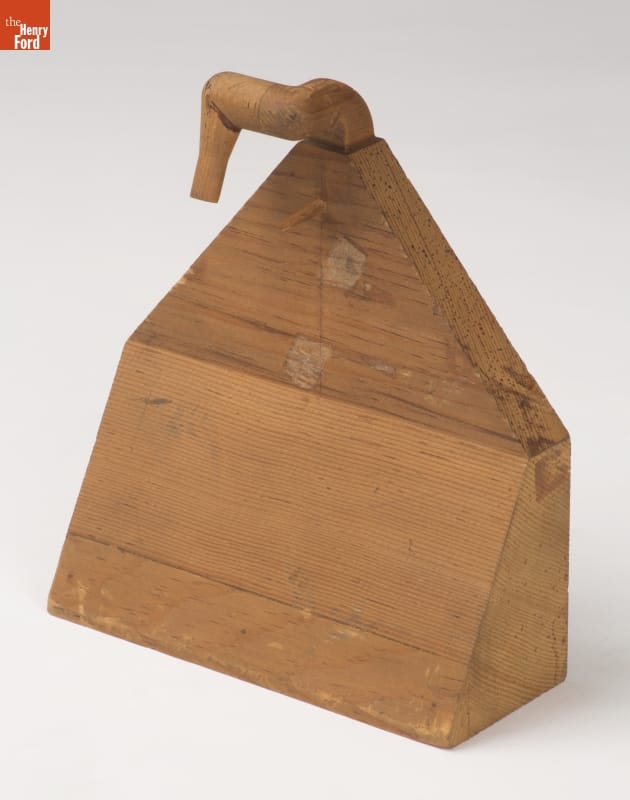
- 1915
- Collections - Artifact
Model for Acoustic Phonograph Horn, 1915
- Phonograph Horn, 1890-1920 -
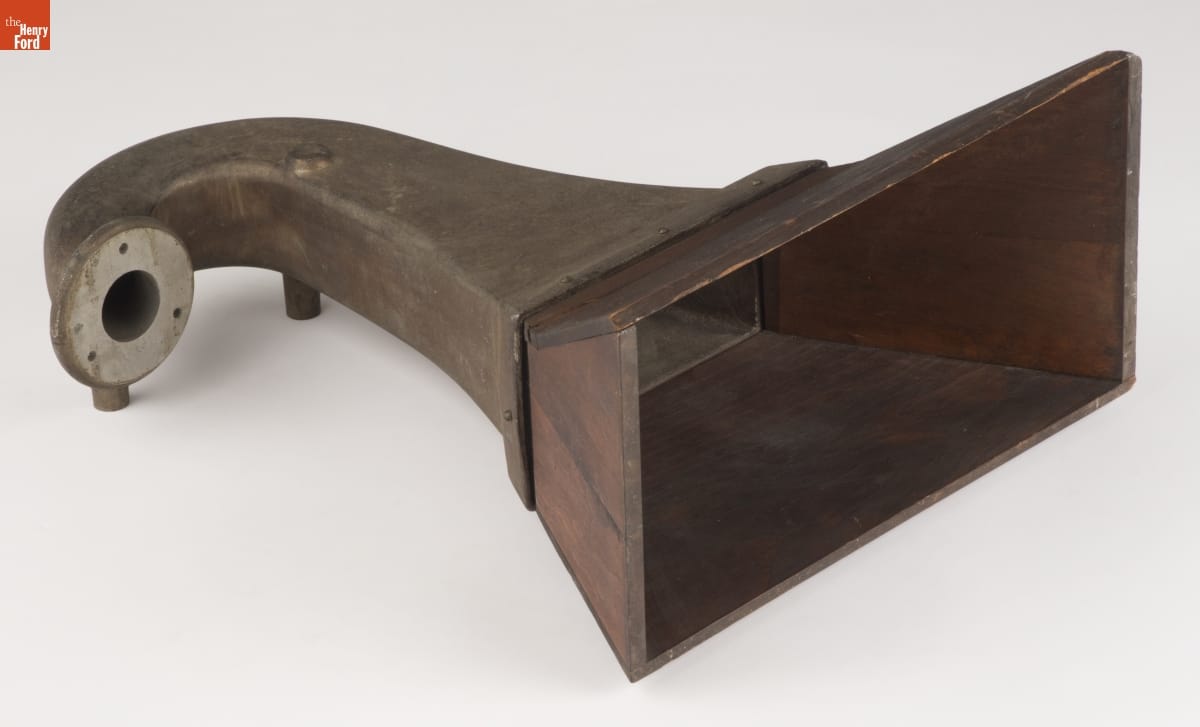
- 1890-1920
- Collections - Artifact
Phonograph Horn, 1890-1920
- Model 28-KSR Teletype Machine, circa 1955 - Teletypewriters paved the way for the fax machine, combining typewriter and telegraph technologies. The Teletype Corporation's Model-28 was a rugged machine designed for military use. Indispensable in newsrooms of the 1950s-1960s, it received a constant flow of updates from wire services. The KSR model had the ability to send and receive messages, while the RO Teletype only printed incoming messages.
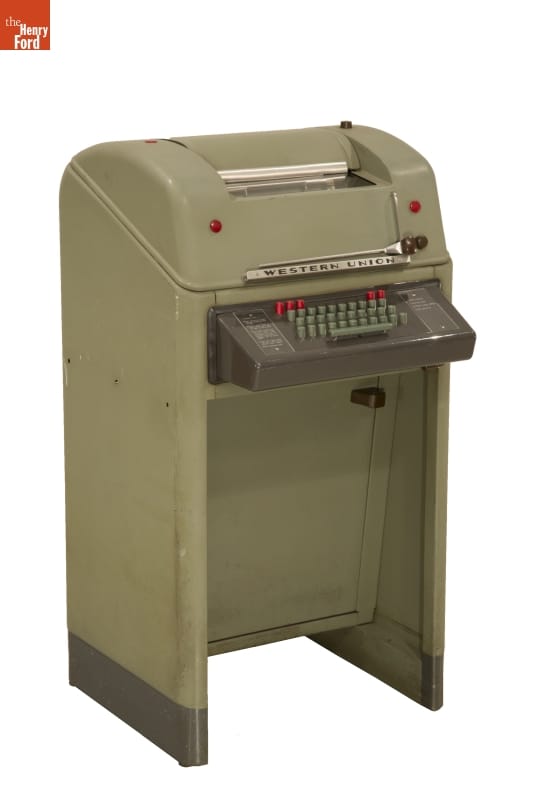
- circa 1955
- Collections - Artifact
Model 28-KSR Teletype Machine, circa 1955
Teletypewriters paved the way for the fax machine, combining typewriter and telegraph technologies. The Teletype Corporation's Model-28 was a rugged machine designed for military use. Indispensable in newsrooms of the 1950s-1960s, it received a constant flow of updates from wire services. The KSR model had the ability to send and receive messages, while the RO Teletype only printed incoming messages.
- King Radio Speaker Horn, 1922-1924 -
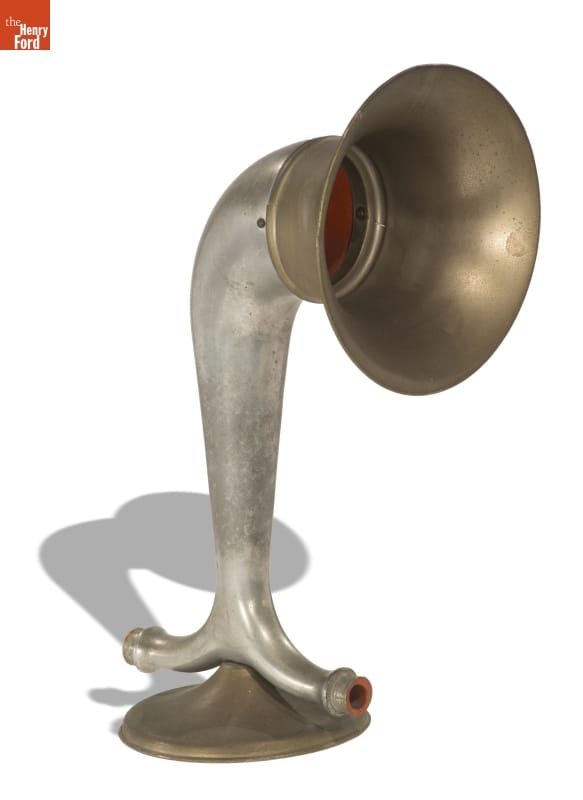
- 1922-1924
- Collections - Artifact
King Radio Speaker Horn, 1922-1924
- Phonograph Horn, 1890-1920 -
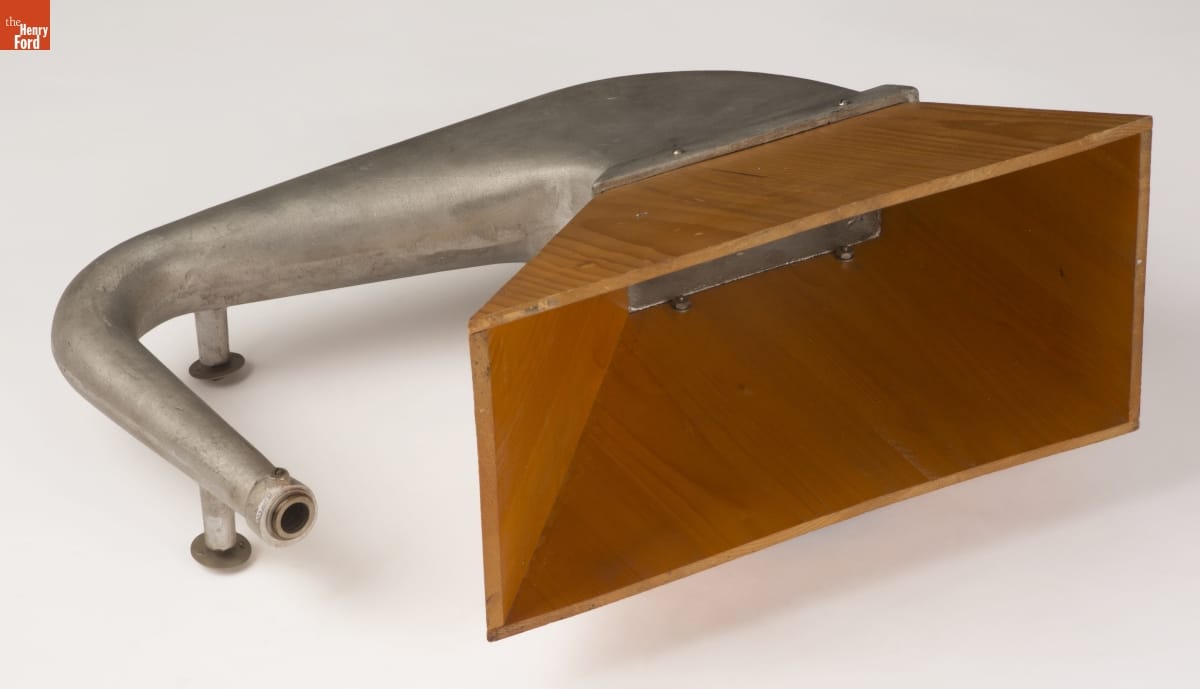
- 1890-1920
- Collections - Artifact
Phonograph Horn, 1890-1920