
Search
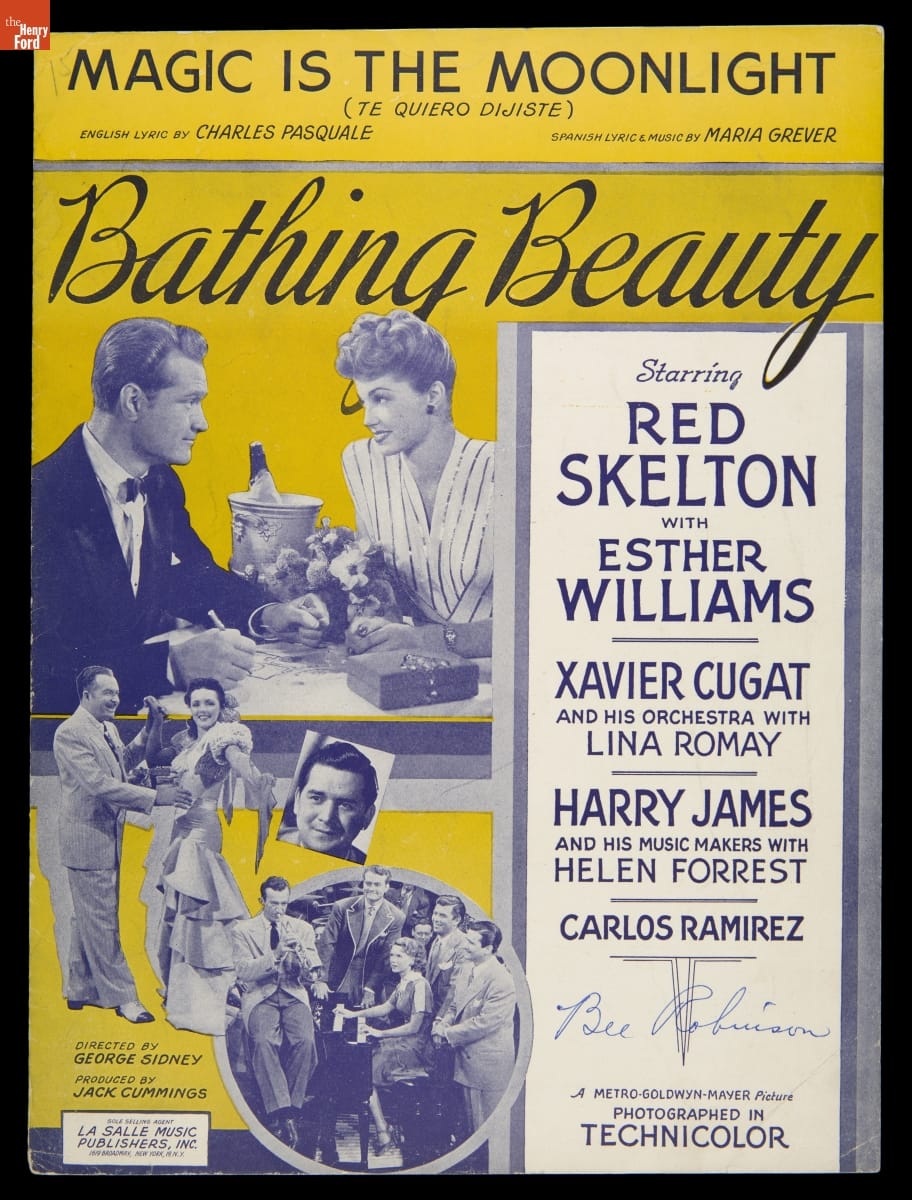
- "Magic is in the Moonlight (Te Quiero Dijiste)," 1944 - Mexican-born composer and lyricist Maria Grever’s romantic ballad, "Magic is the Moonlight" ("Te Quiero, Dijiste") graced MGM's 1944 movie, <em>Bathing Beauty</em>. The film starred Red Skelton and Esther Williams and featured many on-screen performances by big band greats of the era. In the movie, Carlos Ramirez sang Grever's song in Spanish, accompanied by the Xavier Cugat Orchestra.
- 1944
- Collections - Artifact
"Magic is in the Moonlight (Te Quiero Dijiste)," 1944
Mexican-born composer and lyricist Maria Grever’s romantic ballad, "Magic is the Moonlight" ("Te Quiero, Dijiste") graced MGM's 1944 movie, Bathing Beauty. The film starred Red Skelton and Esther Williams and featured many on-screen performances by big band greats of the era. In the movie, Carlos Ramirez sang Grever's song in Spanish, accompanied by the Xavier Cugat Orchestra.
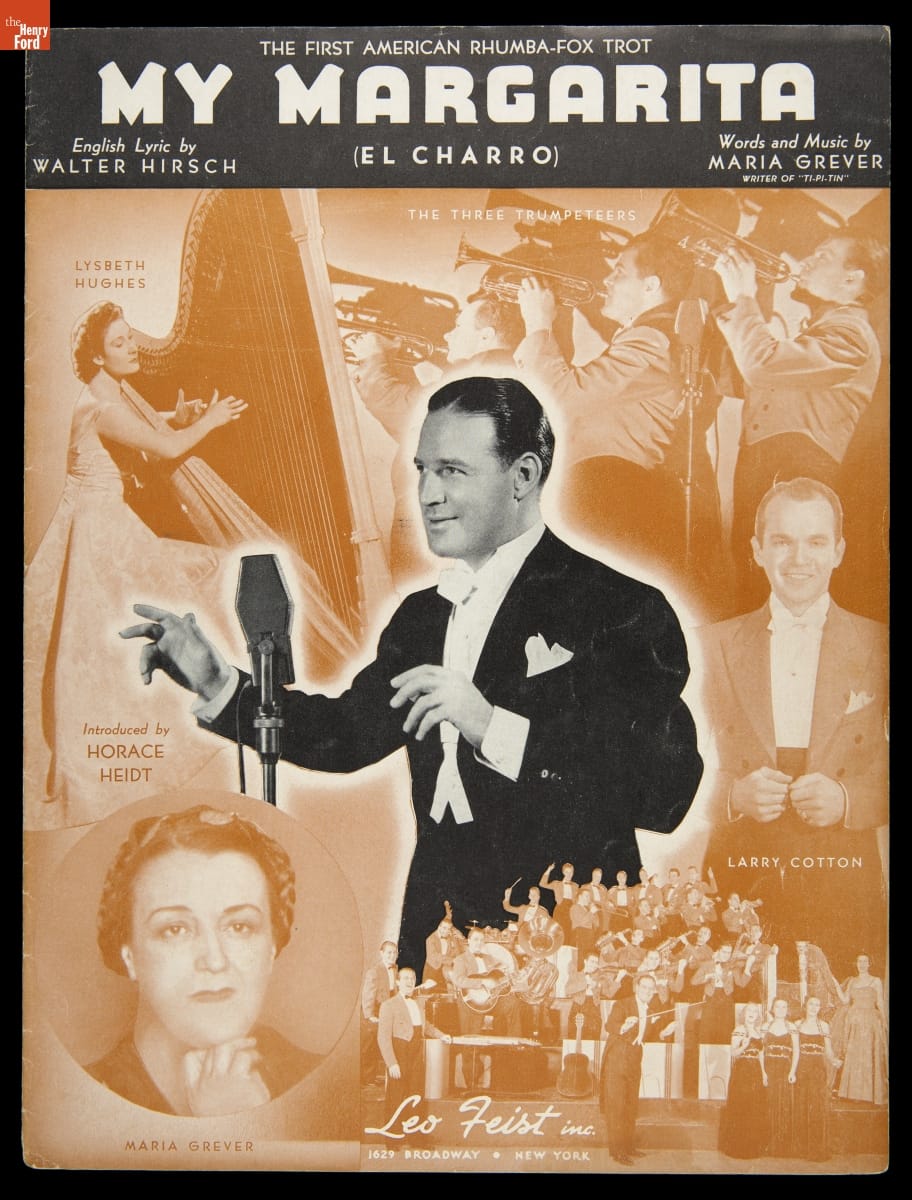
- "My Margarita (El Charro)," 1938 - Maria Grever, the first female Mexican composer and lyricist to attain international attention, moved to the United States in 1916. Here, she continued her musical career for 35 years, navigating the New York City-centered -- and male-dominated -- music industry. Her mix of popular song forms with Latin American rhythms created universal appeal. Grever's photo graced the cover of her song "My Margarita" in 1938.
- 1938
- Collections - Artifact
"My Margarita (El Charro)," 1938
Maria Grever, the first female Mexican composer and lyricist to attain international attention, moved to the United States in 1916. Here, she continued her musical career for 35 years, navigating the New York City-centered -- and male-dominated -- music industry. Her mix of popular song forms with Latin American rhythms created universal appeal. Grever's photo graced the cover of her song "My Margarita" in 1938.
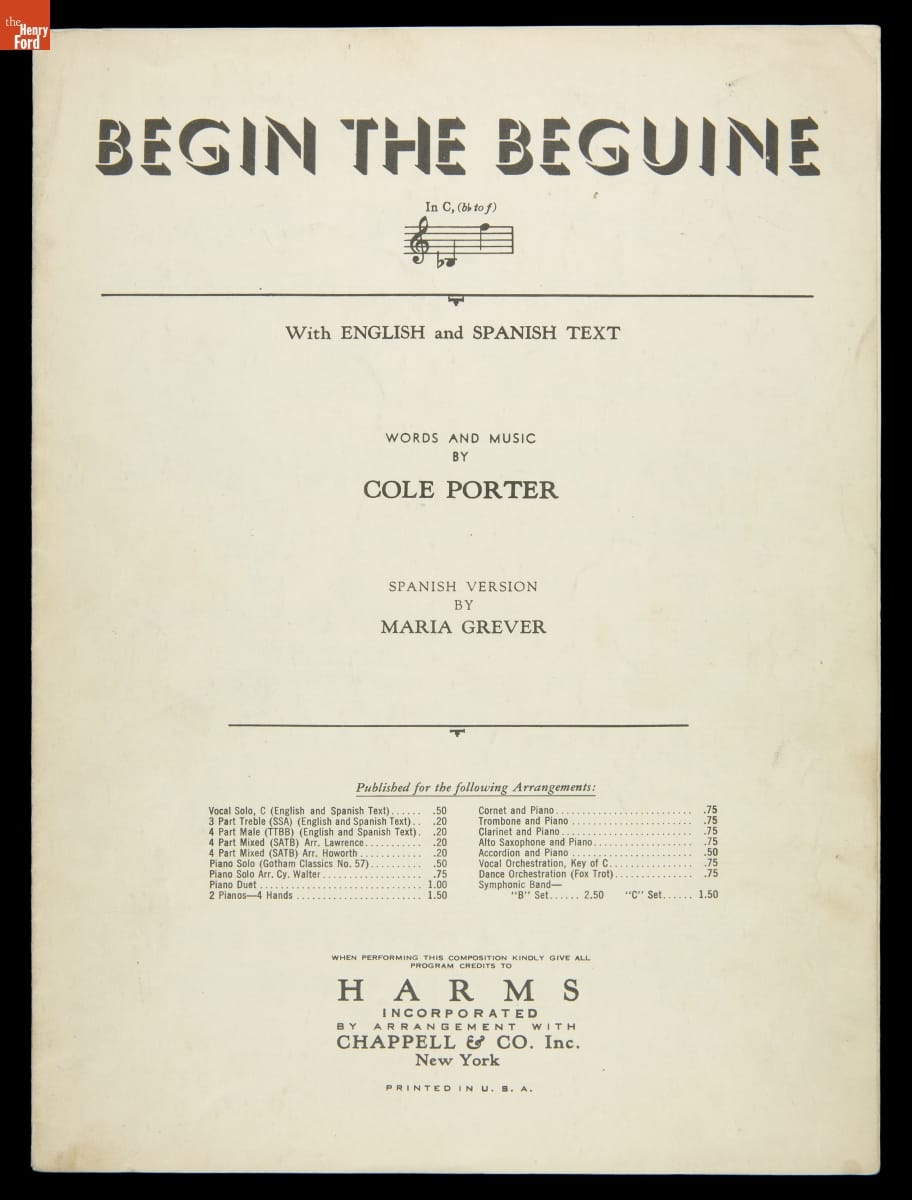
- "Begin the Beguine (with English and Spanish Text)," 1935 - American composer and lyricist Cole Porter brought worldly sophistication to American musical theater. In 1935, Cole Porter wrote his musically complex "Begin the Beguine" for the Broadway musical, <em>Jubilee</em>. Porter asked fellow ASCAP (American Society of Composers, Authors and Publishers) member Mexican composer Maria Grever to add the Spanish lyrics.
- 1935
- Collections - Artifact
"Begin the Beguine (with English and Spanish Text)," 1935
American composer and lyricist Cole Porter brought worldly sophistication to American musical theater. In 1935, Cole Porter wrote his musically complex "Begin the Beguine" for the Broadway musical, Jubilee. Porter asked fellow ASCAP (American Society of Composers, Authors and Publishers) member Mexican composer Maria Grever to add the Spanish lyrics.
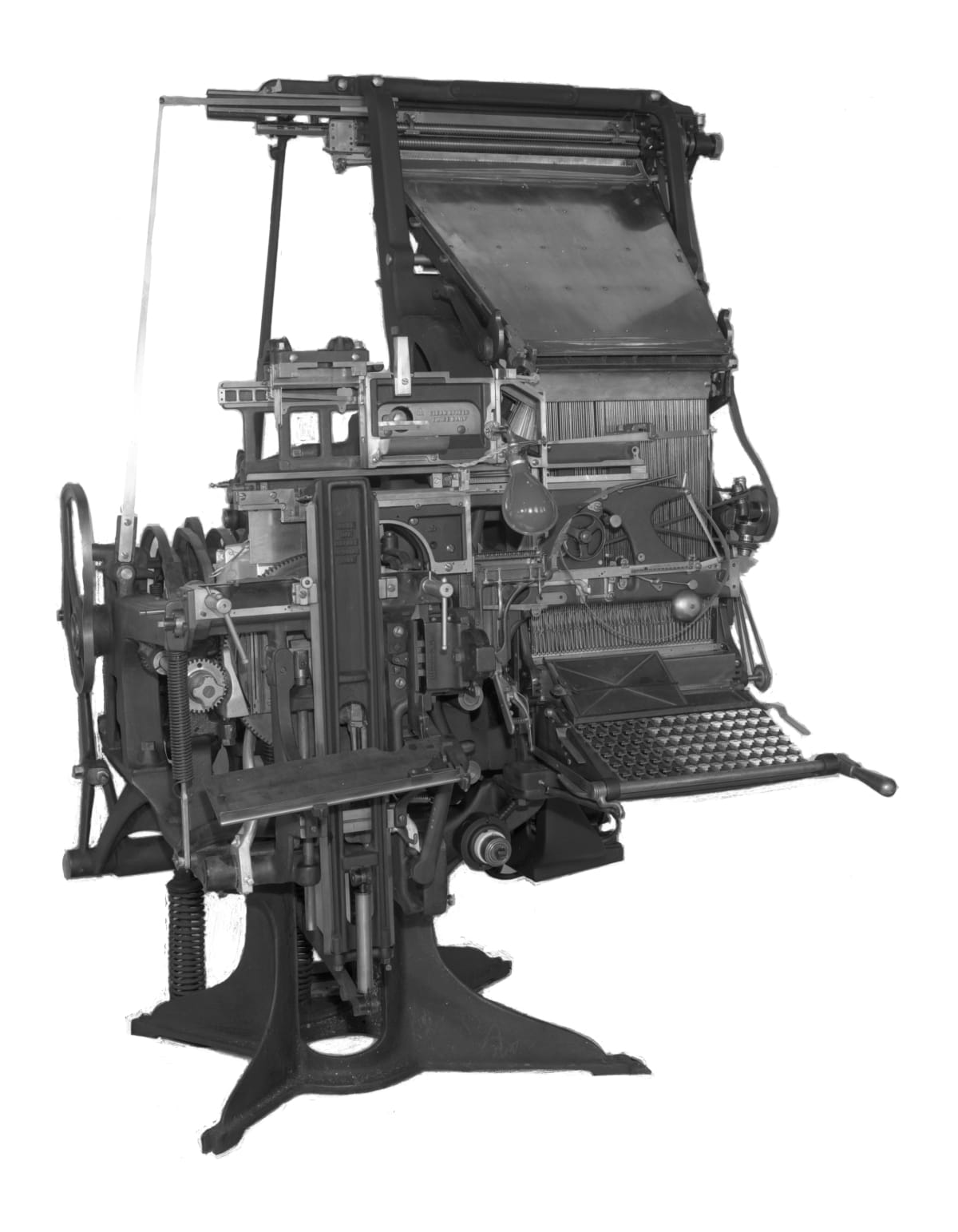
- Linotype Composing Machine, circa 1915 - Invented by Ottmar Mergenthaler in 1886, the Linotype machine revolutionized the printing industry. Instead of setting individual pieces of type by hand, printers operated the Linotype's keyboard to assemble a mould of an entire line of type. The machine then cast the entire line in type metal and printers assembled individual lines of type into full pages.
- circa 1915
- Collections - Artifact
Linotype Composing Machine, circa 1915
Invented by Ottmar Mergenthaler in 1886, the Linotype machine revolutionized the printing industry. Instead of setting individual pieces of type by hand, printers operated the Linotype's keyboard to assemble a mould of an entire line of type. The machine then cast the entire line in type metal and printers assembled individual lines of type into full pages.
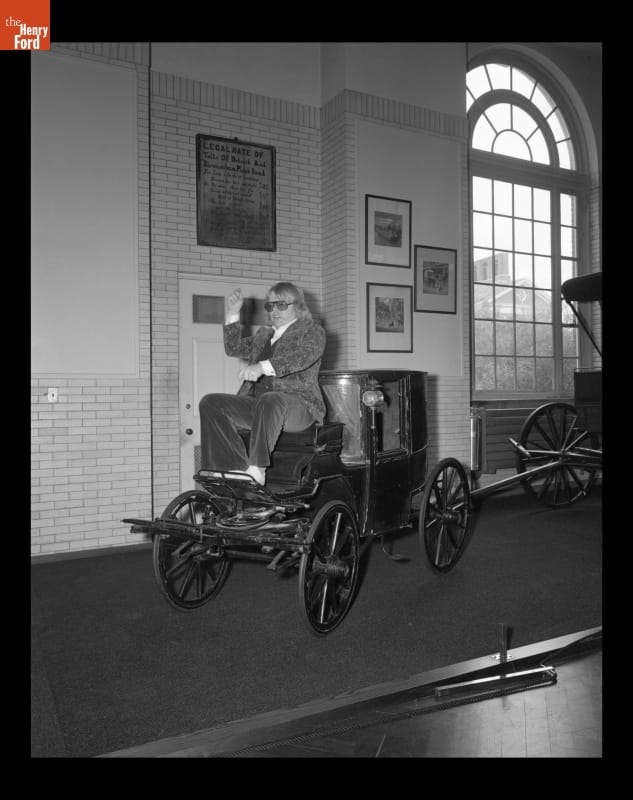
- Paul Williams Visiting Henry Ford Museum, May 7, 1980 - Many famous individuals have visited Greenfield Village and Henry Ford Museum. Actors, authors, and artists have passed through the entrance gates; business leaders, royalty, politicians, and a host of others have toured the exhibits. Photographs by the institution's photographer were taken if the celebrity allowed it. Singer, songwriter and composer Paul Williams visited the museum in 1980.
- May 07, 1980
- Collections - Artifact
Paul Williams Visiting Henry Ford Museum, May 7, 1980
Many famous individuals have visited Greenfield Village and Henry Ford Museum. Actors, authors, and artists have passed through the entrance gates; business leaders, royalty, politicians, and a host of others have toured the exhibits. Photographs by the institution's photographer were taken if the celebrity allowed it. Singer, songwriter and composer Paul Williams visited the museum in 1980.
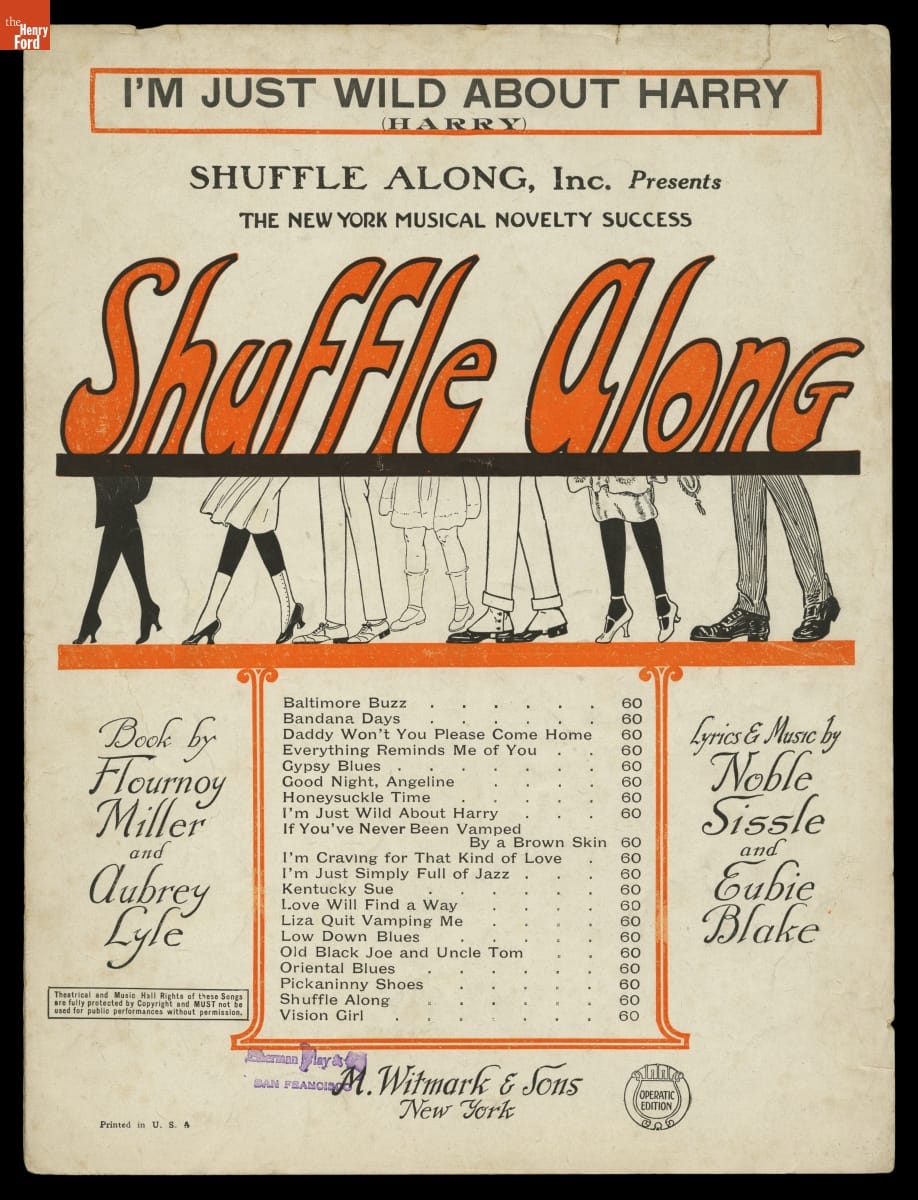
- "I'm Just Wild About Harry" from "Shuffle Along," 1921 -
- 1921
- Collections - Artifact
"I'm Just Wild About Harry" from "Shuffle Along," 1921
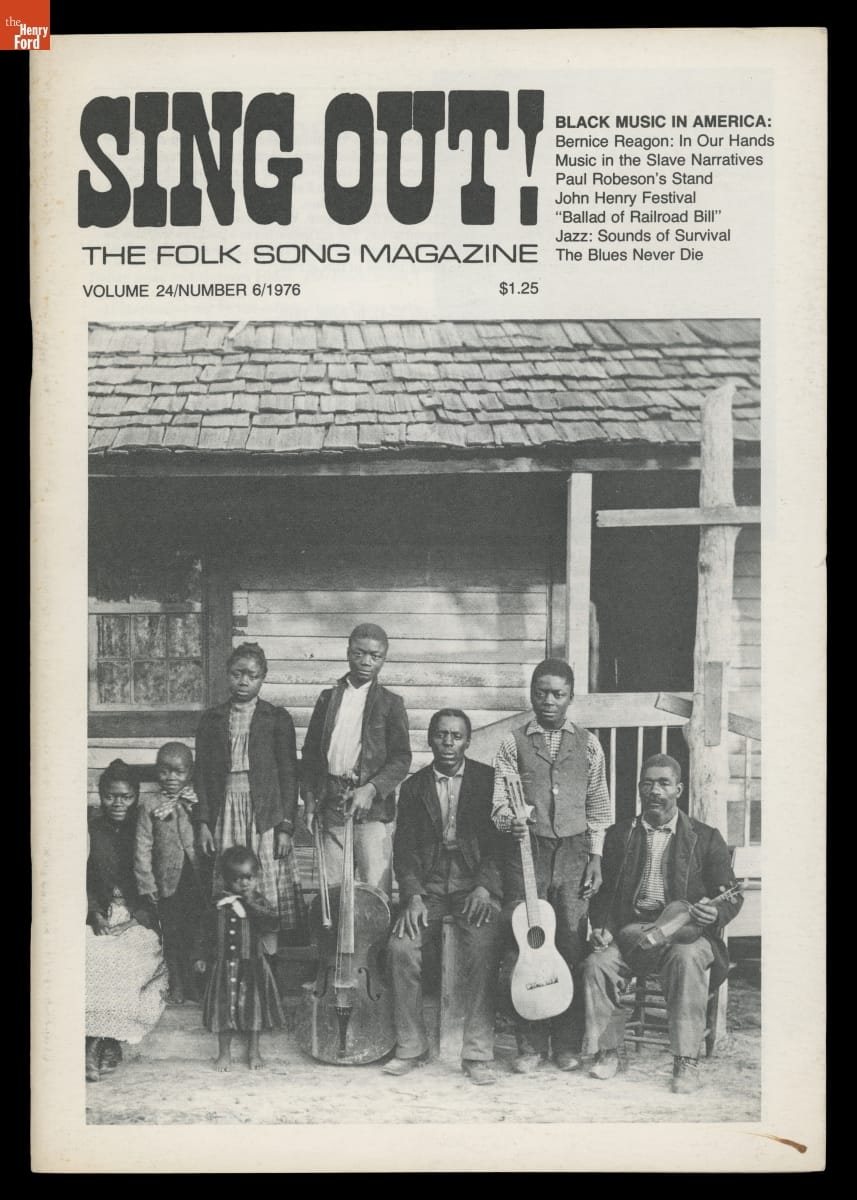
- "Sing Out! The Folk Song Magazine," 1976 -
- 1976
- Collections - Artifact
"Sing Out! The Folk Song Magazine," 1976
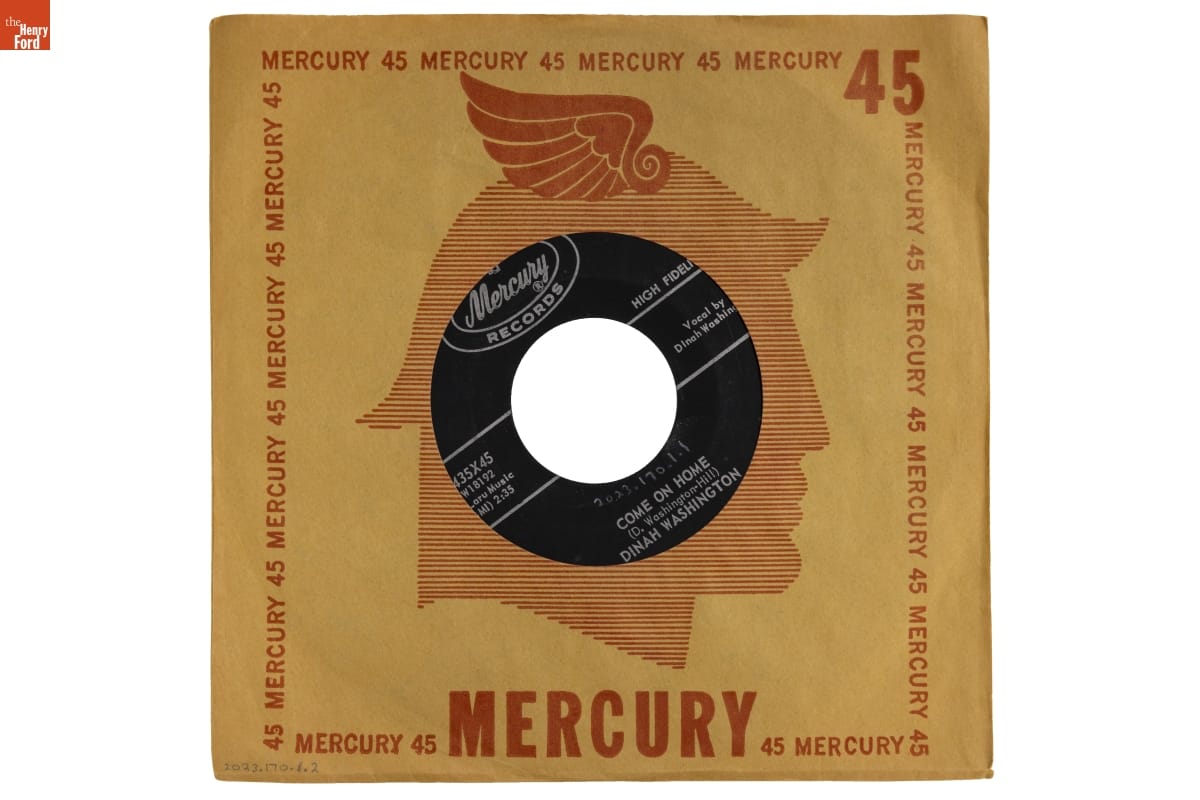
- "What A Diff'rence A Day Makes/ Come On Home" Record Album, 1959 - Dinah Washington, one of the most popular Black female vocalists of the 1950s, performed in a range of vocal styles including blues, R&B, and traditional pop music. Washington's 1959 recording of Mexican composer Maria Grever's song "What a Diff'rence a Day Makes" not only earned Washington a Grammy for Best R&B performance that year but made the song one of Grever's longest-lasting hits.
- 1959
- Collections - Artifact
"What A Diff'rence A Day Makes/ Come On Home" Record Album, 1959
Dinah Washington, one of the most popular Black female vocalists of the 1950s, performed in a range of vocal styles including blues, R&B, and traditional pop music. Washington's 1959 recording of Mexican composer Maria Grever's song "What a Diff'rence a Day Makes" not only earned Washington a Grammy for Best R&B performance that year but made the song one of Grever's longest-lasting hits.
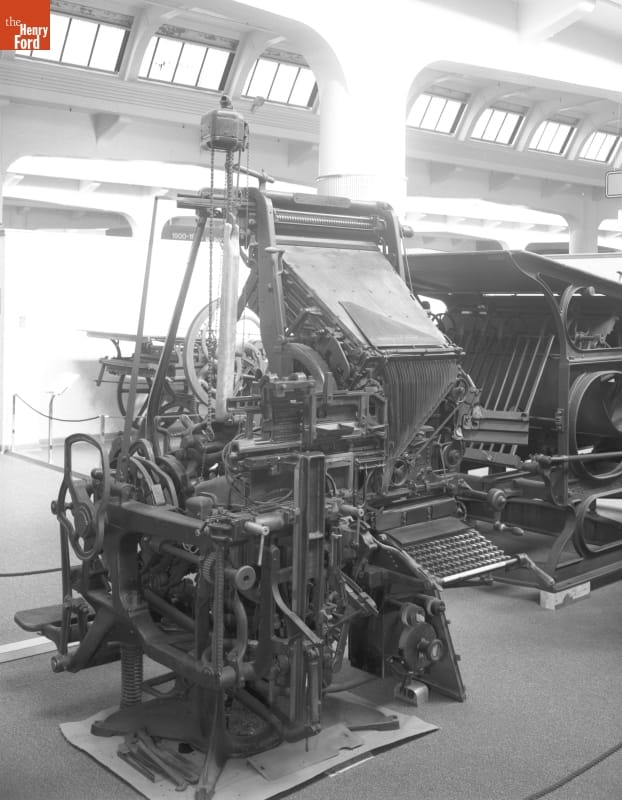
- Linotype Composing Machine, circa 1923 - Invented by Ottmar Mergenthaler in 1886, the Linotype machine revolutionized the printing industry. Instead of setting individual pieces of type by hand, printers operated the Linotype's keyboard to assemble a mould of an entire line of type. The machine then cast the entire line in type metal and printers assembled individual lines of type into full pages.
- circa 1923
- Collections - Artifact
Linotype Composing Machine, circa 1923
Invented by Ottmar Mergenthaler in 1886, the Linotype machine revolutionized the printing industry. Instead of setting individual pieces of type by hand, printers operated the Linotype's keyboard to assemble a mould of an entire line of type. The machine then cast the entire line in type metal and printers assembled individual lines of type into full pages.
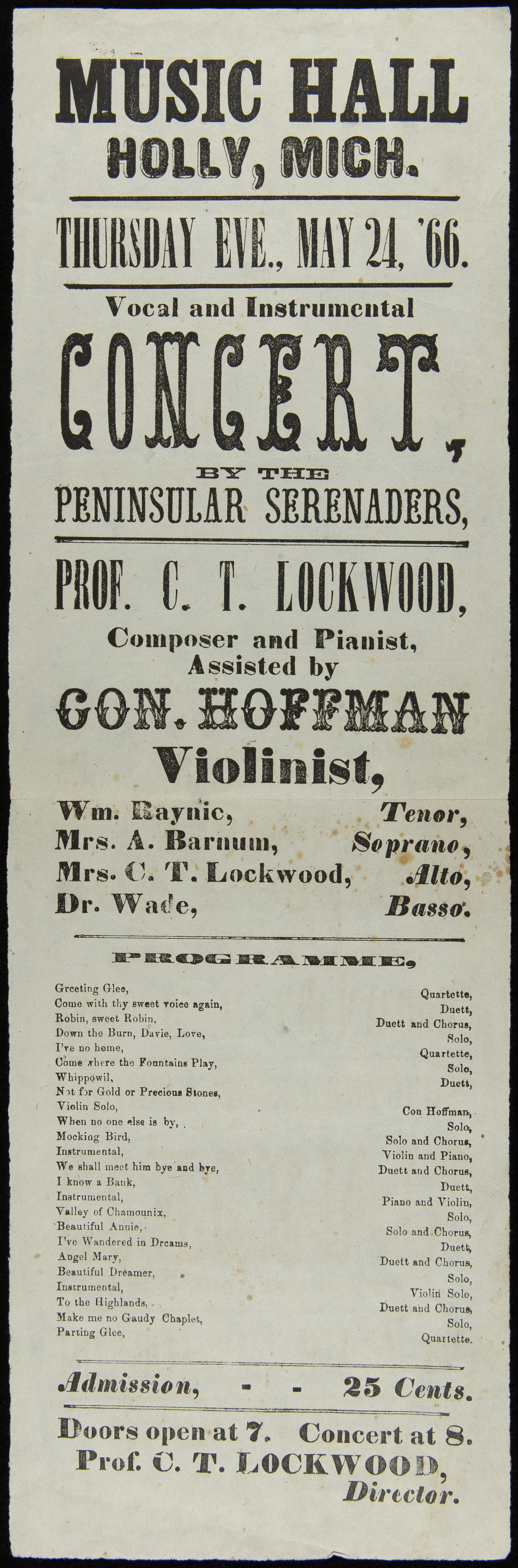
- Program, "Vocal and Instrumental Concert by the Peninsular Serenaders," Music Hall, Holly, Michigan, May 24, 1866 -
- May 24, 1866
- Collections - Artifact
Program, "Vocal and Instrumental Concert by the Peninsular Serenaders," Music Hall, Holly, Michigan, May 24, 1866