
Search
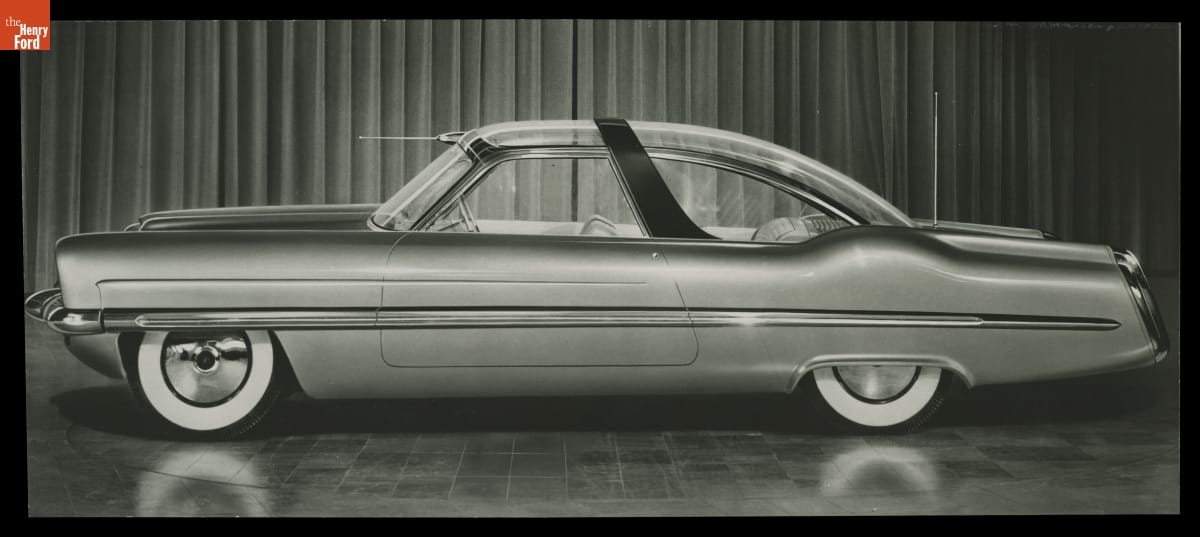
- Lincoln XL-500 Concept Car, 1953 - Ford Motor Company's Lincoln-Mercury Division revealed its Lincoln XL-500 concept car in 1953, to celebrate Ford's 50th anniversary. Promotional material heralded the car's power steering, power brakes, and push-button automatic transmission. In truth, the XL-500 was a non-running show piece. Even the "doors" were just grooves in the fiberglass body. But the XL-500's hooded headlights influenced Lincoln's 1956 production models.
- January 31, 1953
- Collections - Artifact
Lincoln XL-500 Concept Car, 1953
Ford Motor Company's Lincoln-Mercury Division revealed its Lincoln XL-500 concept car in 1953, to celebrate Ford's 50th anniversary. Promotional material heralded the car's power steering, power brakes, and push-button automatic transmission. In truth, the XL-500 was a non-running show piece. Even the "doors" were just grooves in the fiberglass body. But the XL-500's hooded headlights influenced Lincoln's 1956 production models.
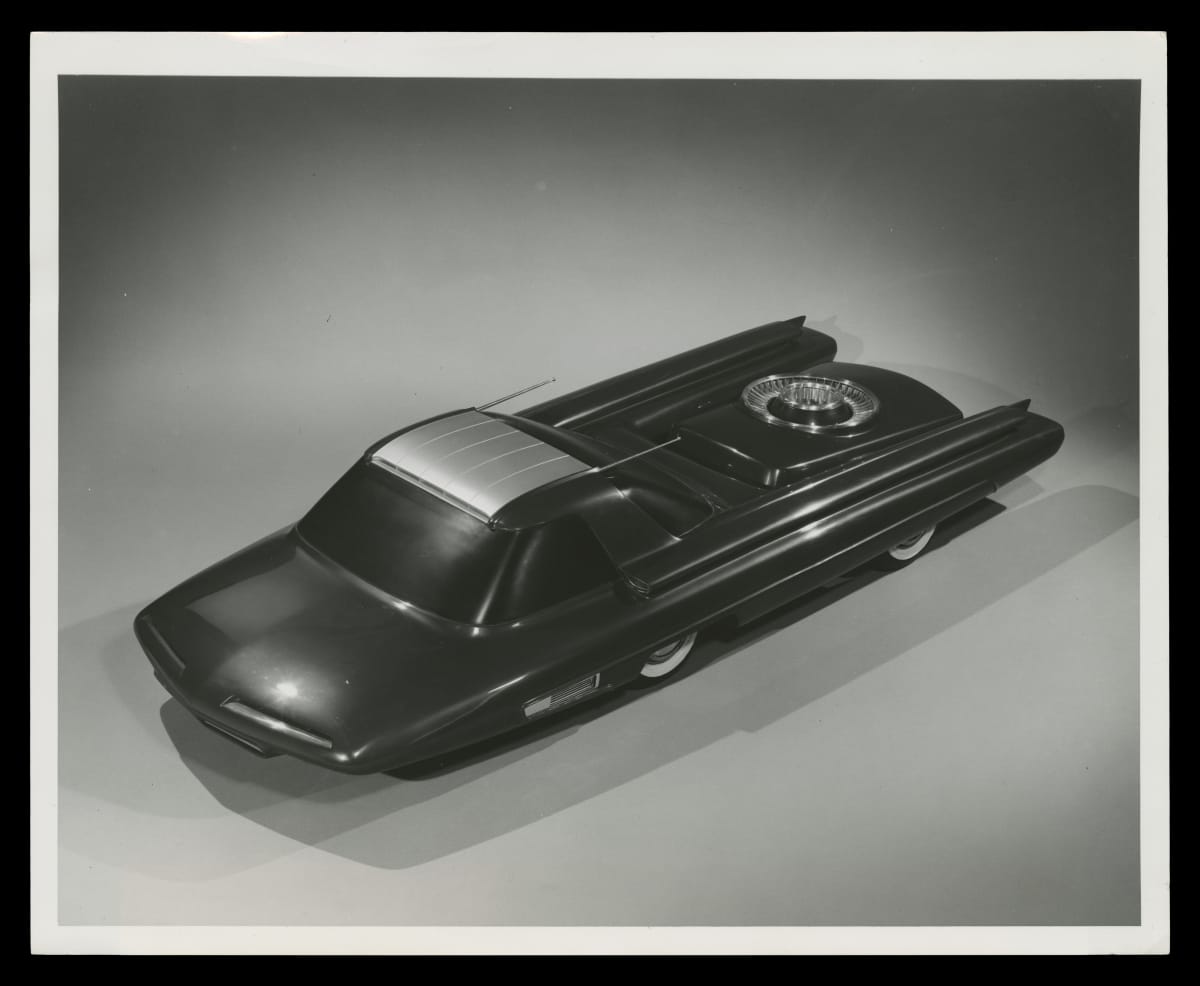
- Scale Model of the Nucleon, a 1958 Ford Motor Company Styling Conception for an Atomic-Powered Car - This 3/8-scale model was built to explore how the future of energy might affect the future of automotive design. The Ford Nucleon would have been powered by a rear-mounted, self-contained nuclear reactor. This atomic-automobile idea assumed, of course, that issues with nuclear safety and the size and weight of nuclear reactors would eventually be resolved. The Nucleon was never produced.
- 1958
- Collections - Artifact
Scale Model of the Nucleon, a 1958 Ford Motor Company Styling Conception for an Atomic-Powered Car
This 3/8-scale model was built to explore how the future of energy might affect the future of automotive design. The Ford Nucleon would have been powered by a rear-mounted, self-contained nuclear reactor. This atomic-automobile idea assumed, of course, that issues with nuclear safety and the size and weight of nuclear reactors would eventually be resolved. The Nucleon was never produced.
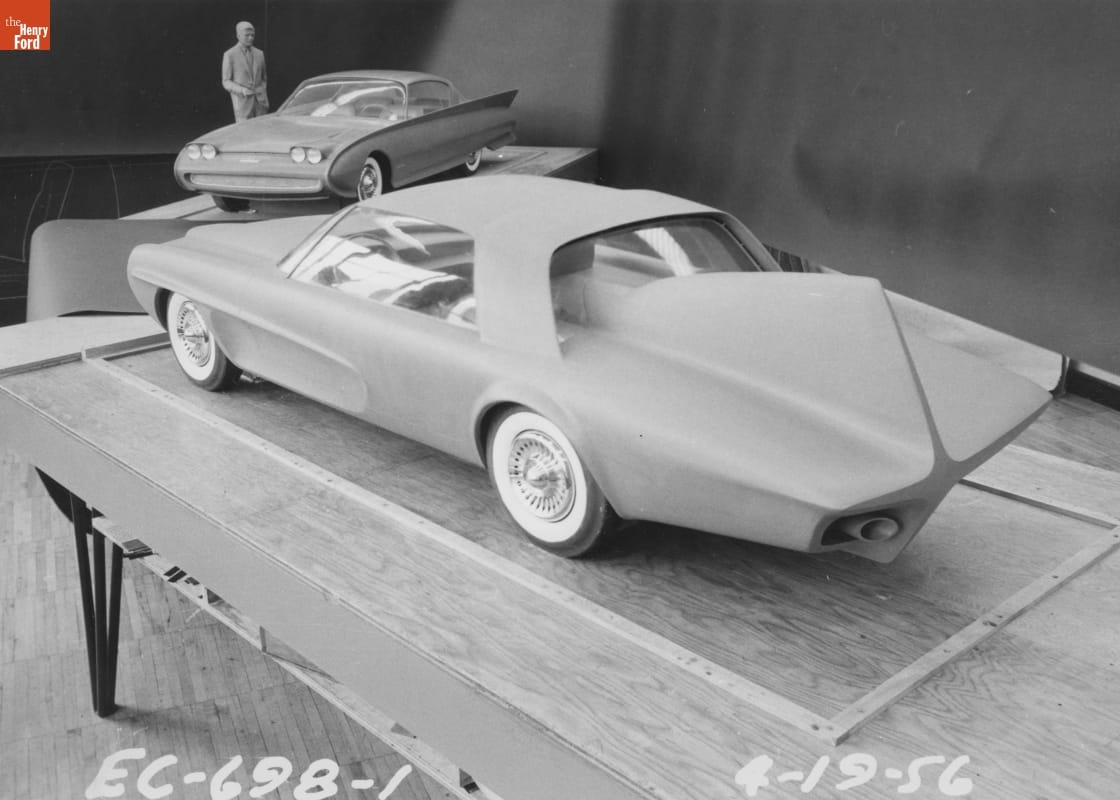
- Clay Model for the 1956 Chrysler Falcon Concept Car Designed by Virgil M. Exner - Virgil Exner designed the two-seat Chrysler Falcon concept car for the 1955 auto show season. The roadster was close in spirit to the contemporary Chevrolet Corvette and Ford Thunderbird, though the simulated knock-off wheels and external exhaust pipes gave the Falcon a somewhat racier appearance. Chrysler chose not to put the car into production.
- April 19, 1956
- Collections - Artifact
Clay Model for the 1956 Chrysler Falcon Concept Car Designed by Virgil M. Exner
Virgil Exner designed the two-seat Chrysler Falcon concept car for the 1955 auto show season. The roadster was close in spirit to the contemporary Chevrolet Corvette and Ford Thunderbird, though the simulated knock-off wheels and external exhaust pipes gave the Falcon a somewhat racier appearance. Chrysler chose not to put the car into production.
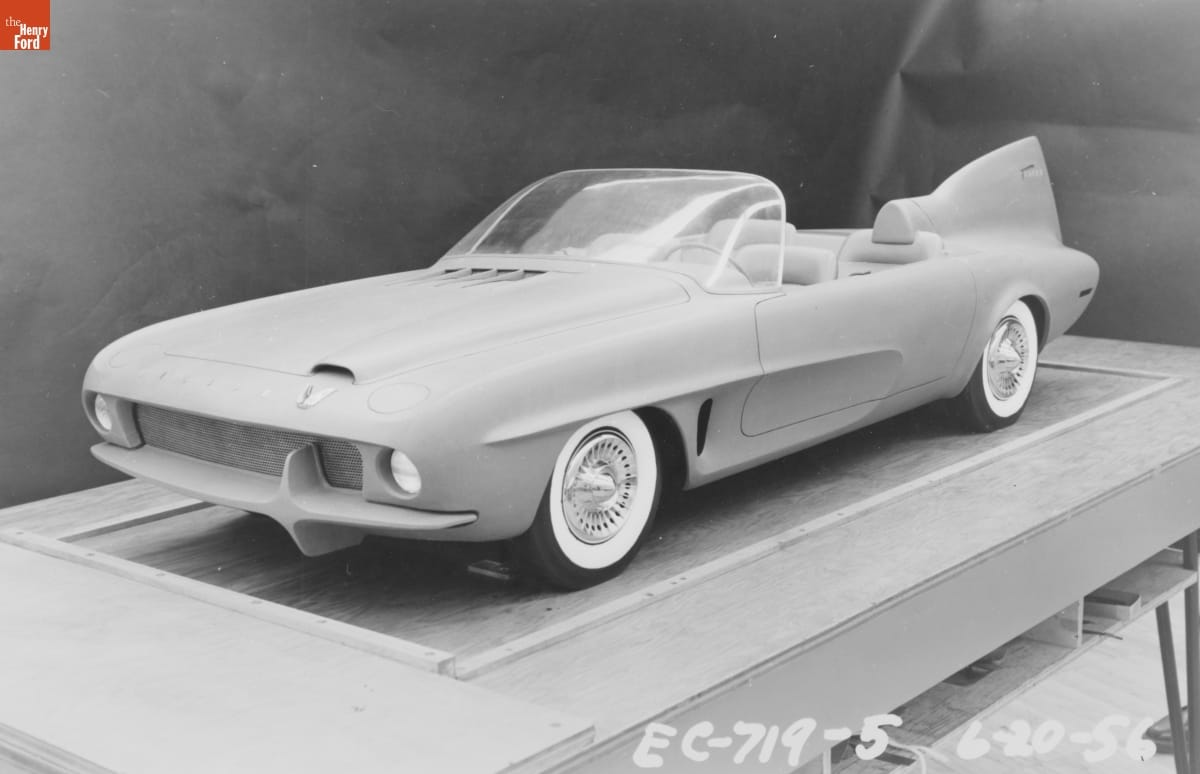
- Clay Model for the 1956 Chrysler Falcon Concept Car Designed by Virgil M. Exner - Virgil Exner designed the two-seat Chrysler Falcon concept car for the 1955 auto show season. The roadster was close in spirit to the contemporary Chevrolet Corvette and Ford Thunderbird, though the simulated knock-off wheels and external exhaust pipes gave the Falcon a somewhat racier appearance. Chrysler chose not to put the car into production.
- June 20, 1956
- Collections - Artifact
Clay Model for the 1956 Chrysler Falcon Concept Car Designed by Virgil M. Exner
Virgil Exner designed the two-seat Chrysler Falcon concept car for the 1955 auto show season. The roadster was close in spirit to the contemporary Chevrolet Corvette and Ford Thunderbird, though the simulated knock-off wheels and external exhaust pipes gave the Falcon a somewhat racier appearance. Chrysler chose not to put the car into production.
- Chrysler "613" Concept Car, 1955-1956 - In the 1950s, Chrysler Corporation's Advanced Styling Studio remade the carmaker's stodgy image with sleek, smooth lines inspired by jet aircraft. The department, headed by chief stylist Virgil Exner, developed several fully operational concept models. Pictured here is the body of #613, an "idea car" that exemplified Exner's "Forward Look" and influenced much of the styling for Chrysler's 1957 300C.
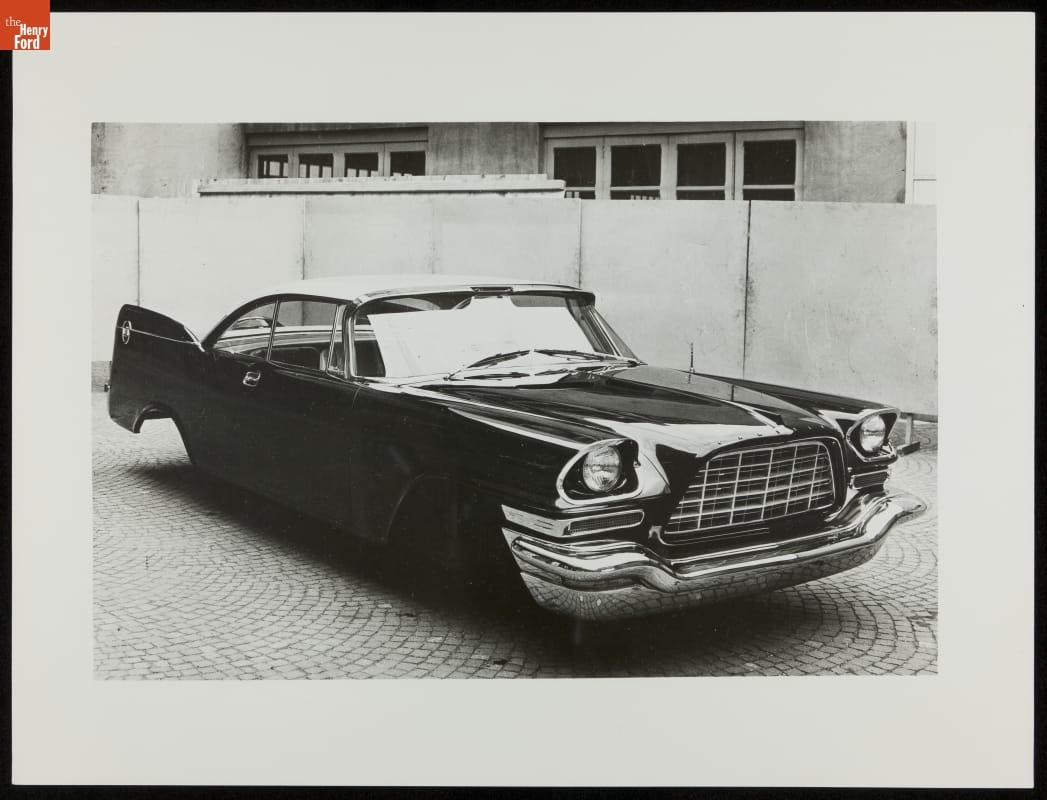
- 1955-1956
- Collections - Artifact
Chrysler "613" Concept Car, 1955-1956
In the 1950s, Chrysler Corporation's Advanced Styling Studio remade the carmaker's stodgy image with sleek, smooth lines inspired by jet aircraft. The department, headed by chief stylist Virgil Exner, developed several fully operational concept models. Pictured here is the body of #613, an "idea car" that exemplified Exner's "Forward Look" and influenced much of the styling for Chrysler's 1957 300C.
- 1974 Warrior Concept Car - When McKinley Thompson, Jr., joined Ford Motor Company in 1956, he was one of the automotive industry's first African American designers. In 1974 he completed a rugged, easy-to-build vehicle designed for developing countries: the Warrior. Thompson's prototype, built on a Renault 10 chassis, featured a buoyant plastic body and a removable top. Thompson couldn't interest automakers or investors in his bold idea.
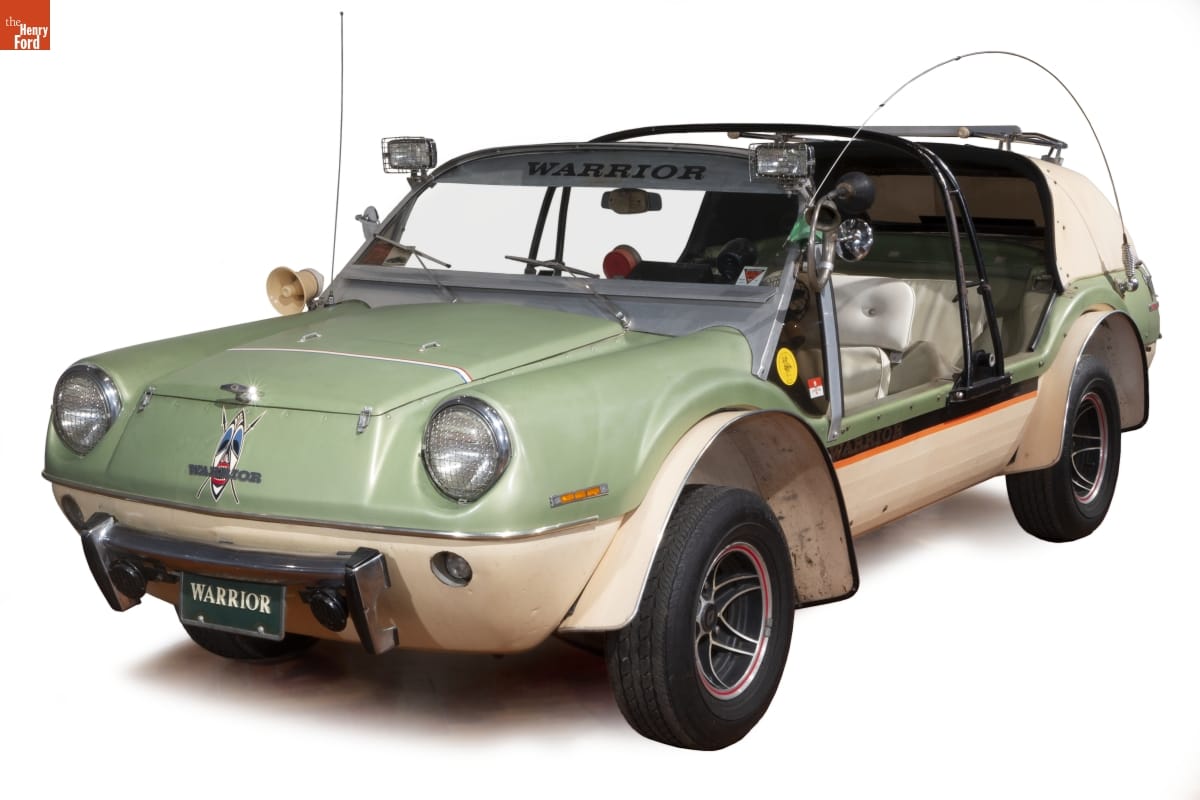
- 1974
- Collections - Artifact
1974 Warrior Concept Car
When McKinley Thompson, Jr., joined Ford Motor Company in 1956, he was one of the automotive industry's first African American designers. In 1974 he completed a rugged, easy-to-build vehicle designed for developing countries: the Warrior. Thompson's prototype, built on a Renault 10 chassis, featured a buoyant plastic body and a removable top. Thompson couldn't interest automakers or investors in his bold idea.
- Design Sketch, Dual-Ghia, circa 1956 - The Dual-Ghia had its origins in the Dodge Firearrow concept cars of the mid-1950s. When Dodge chose not to put Firearrows into production, businessman Gene Casaroll bought the rights and contracted Ghia of Italy to build bodies. Priced at more than $7,500, the Dual-Ghia was aimed at wealthy customers. Casaroll built fewer than 120 cars before production ended in 1958.
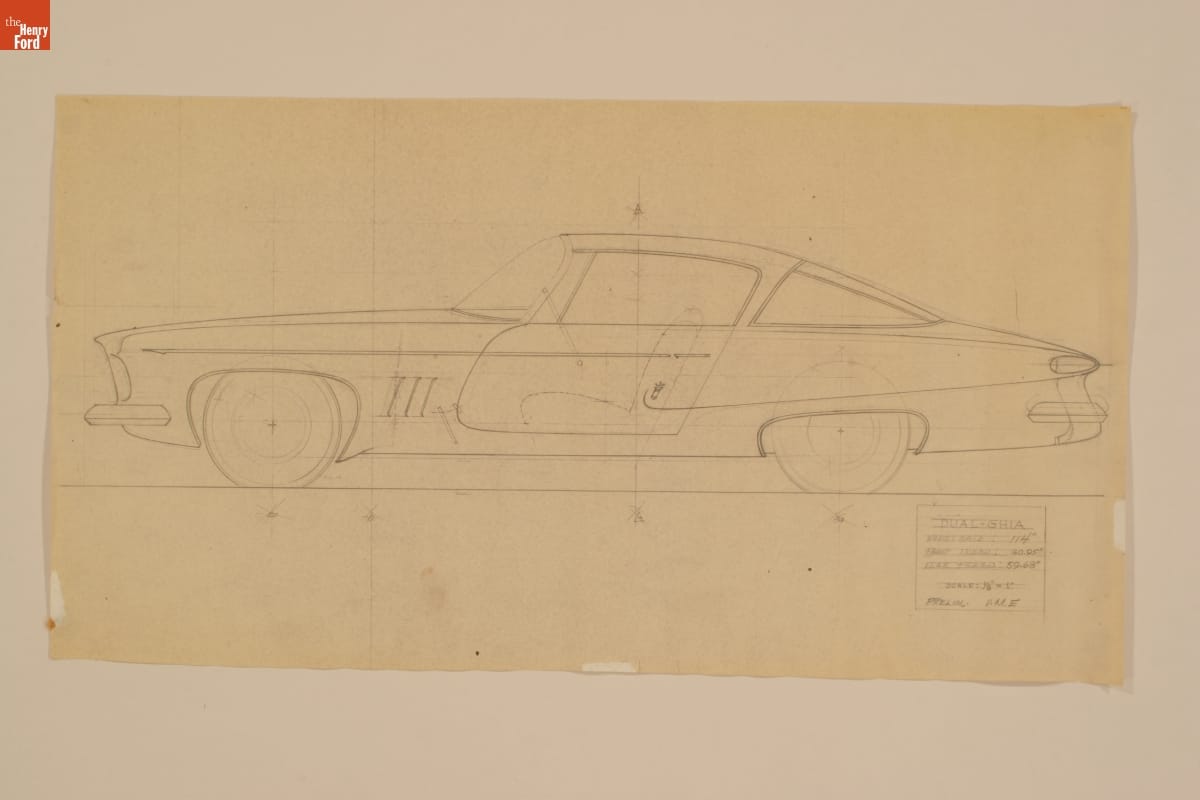
- circa 1956
- Collections - Artifact
Design Sketch, Dual-Ghia, circa 1956
The Dual-Ghia had its origins in the Dodge Firearrow concept cars of the mid-1950s. When Dodge chose not to put Firearrows into production, businessman Gene Casaroll bought the rights and contracted Ghia of Italy to build bodies. Priced at more than $7,500, the Dual-Ghia was aimed at wealthy customers. Casaroll built fewer than 120 cars before production ended in 1958.
- Dan Gurney Driving Ford Mustang I Experimental Sports Car, Watkins Glen, New York, 1962 - Road-racing champion Dan Gurney gave the Mustang I its first public demonstration at the 1962 United States Grand Prix in Watkins Glen, New York. The event got a lot of press and generated excitement.
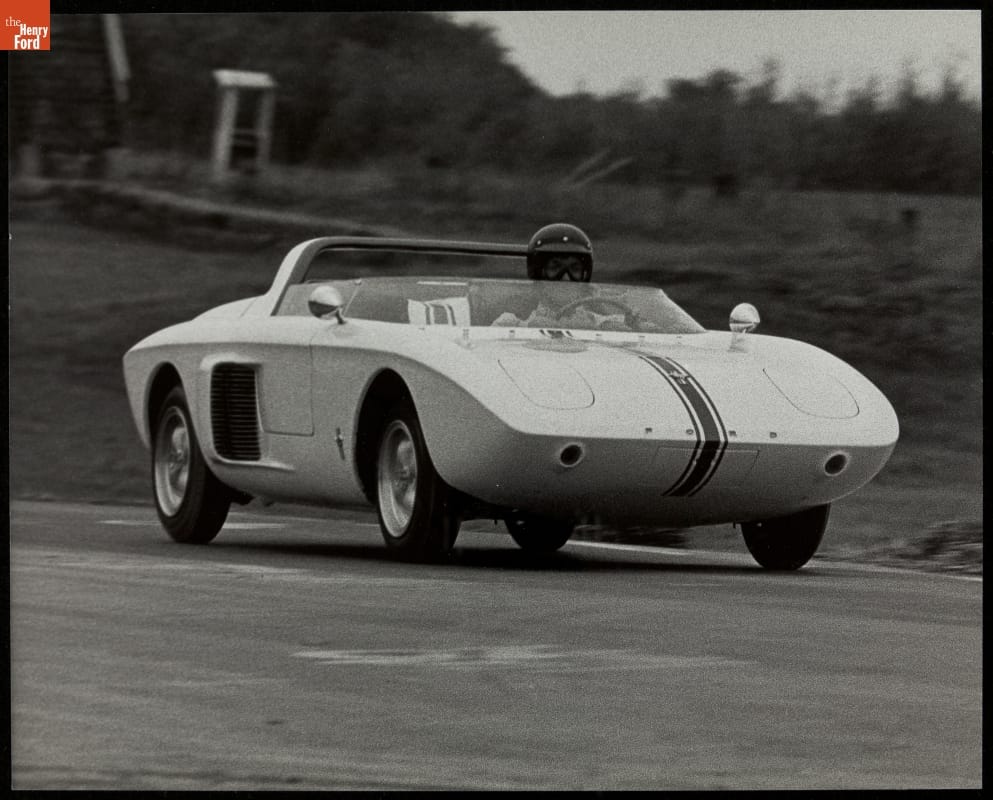
- October 07, 1962
- Collections - Artifact
Dan Gurney Driving Ford Mustang I Experimental Sports Car, Watkins Glen, New York, 1962
Road-racing champion Dan Gurney gave the Mustang I its first public demonstration at the 1962 United States Grand Prix in Watkins Glen, New York. The event got a lot of press and generated excitement.
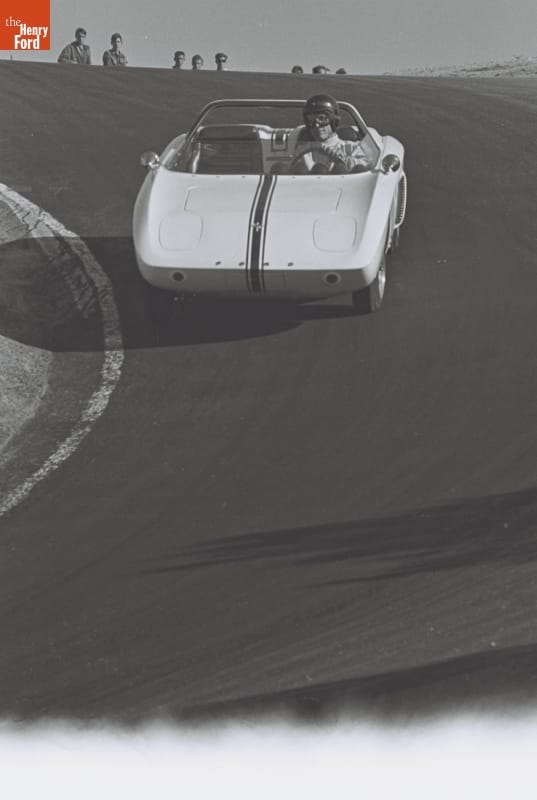
- Dan Gurney Driving Ford Mustang I Experimental Sports Car, Pacific Grand Prix, Laguna Seca, October 1962 - Ford Motor Company caused a sensation in the automotive press when it unveiled Mustang I in October 1962. Race driver Dan Gurney piloted the mid-engine sports car in demonstration laps at Watkins Glen, New York, and Laguna Seca, California. Never intended for sale, Mustang I's purpose was to generate interest in Ford. By that measure, it was a complete success.
- 19 October 1962 - 21 October 1962
- Collections - Artifact
Dan Gurney Driving Ford Mustang I Experimental Sports Car, Pacific Grand Prix, Laguna Seca, October 1962
Ford Motor Company caused a sensation in the automotive press when it unveiled Mustang I in October 1962. Race driver Dan Gurney piloted the mid-engine sports car in demonstration laps at Watkins Glen, New York, and Laguna Seca, California. Never intended for sale, Mustang I's purpose was to generate interest in Ford. By that measure, it was a complete success.
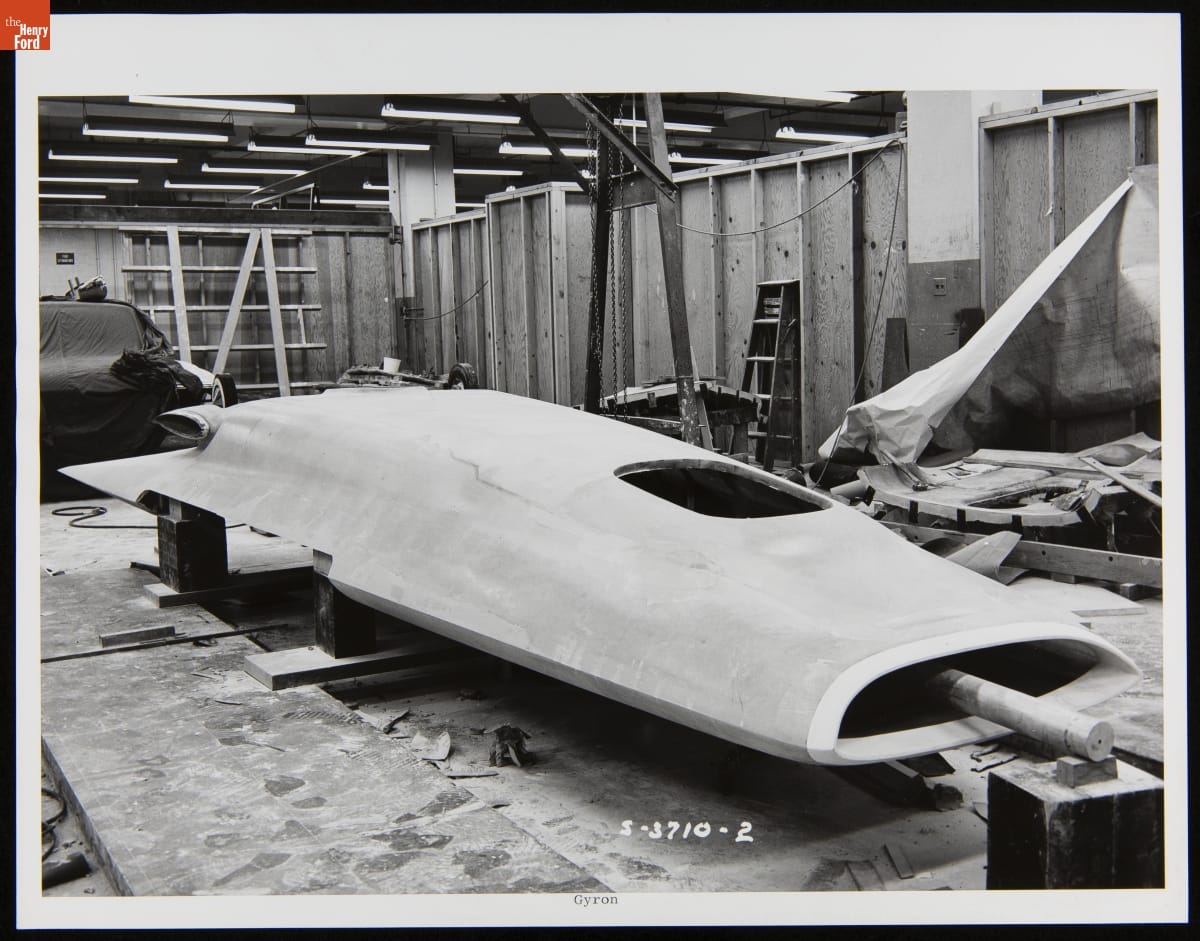
- Ford Gyron during Fabrication, 1959-1961 - Ford Motor Company revealed its Gyron concept car in 1961. Designers intended for a gyroscope to keep the two-wheeled car upright, but the technology was too expensive for a show car. Instead, the fiberglass Gyron used outrigger wheels to keep its balance while an electric motor moved it at 5 mph. The Gyron was destroyed in the 1962 Ford Rotunda fire.
- 1959-1961
- Collections - Artifact
Ford Gyron during Fabrication, 1959-1961
Ford Motor Company revealed its Gyron concept car in 1961. Designers intended for a gyroscope to keep the two-wheeled car upright, but the technology was too expensive for a show car. Instead, the fiberglass Gyron used outrigger wheels to keep its balance while an electric motor moved it at 5 mph. The Gyron was destroyed in the 1962 Ford Rotunda fire.