
Search
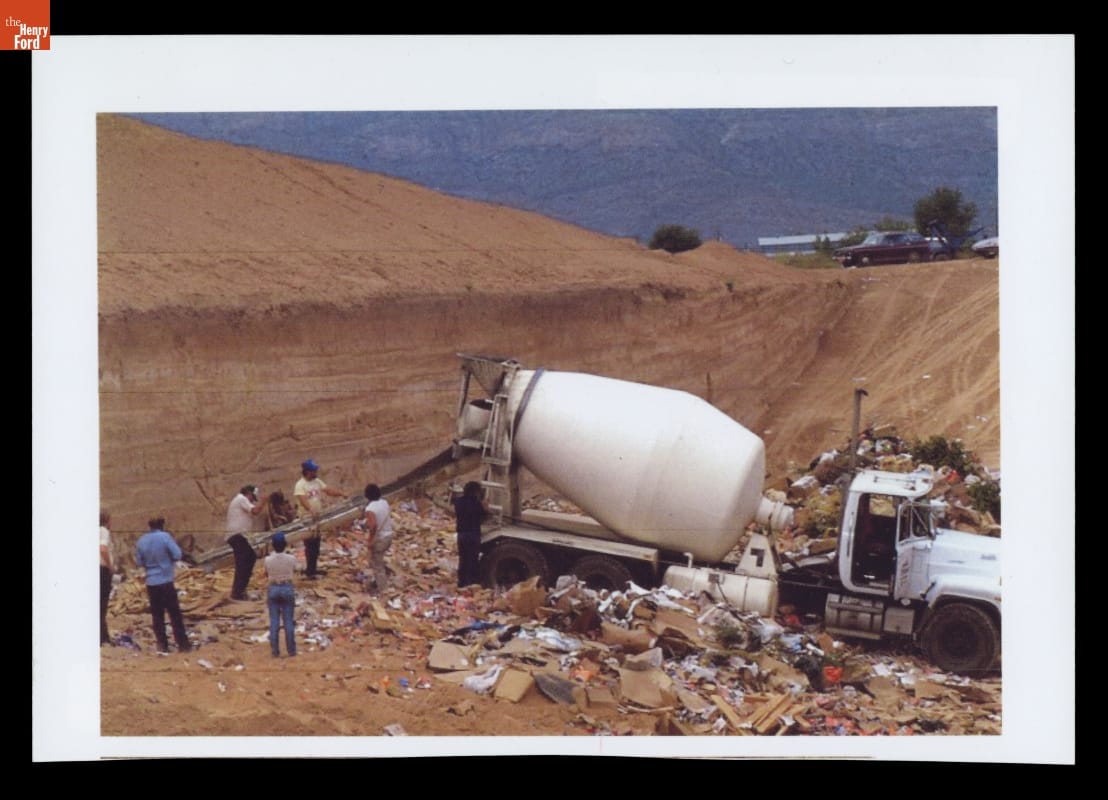
- Cementing over Refuse at the Atari Video Game Burial in September 1983, Alamogordo, New Mexico Landfill - In 1983, rumors circulated: Atari was bankrupt, and was dumping truckloads of games into a New Mexico landfill. Victim to the "Video Game Crash," the company buried 700,000 cartridges in the desert. The story became an obscure pop culture legend -- until "The Atari Tomb" was unearthed in 2014. This image documents the original 1983 burial of material.
- September 01, 1983
- Collections - Artifact
Cementing over Refuse at the Atari Video Game Burial in September 1983, Alamogordo, New Mexico Landfill
In 1983, rumors circulated: Atari was bankrupt, and was dumping truckloads of games into a New Mexico landfill. Victim to the "Video Game Crash," the company buried 700,000 cartridges in the desert. The story became an obscure pop culture legend -- until "The Atari Tomb" was unearthed in 2014. This image documents the original 1983 burial of material.
- Proposed "City of the Sun" Housing Project, circa 1916 -
- circa 1916
- Collections - Artifact
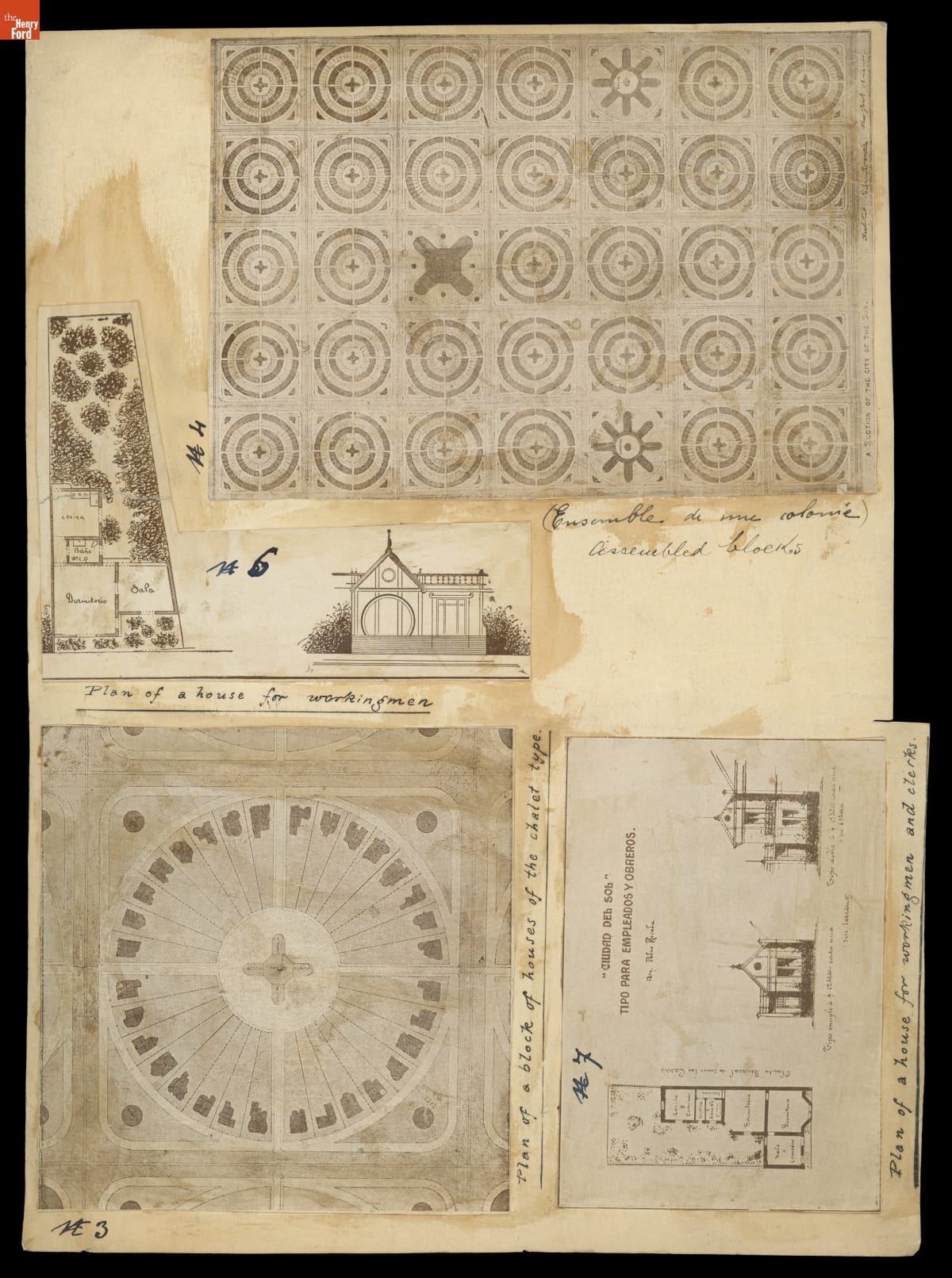
Proposed "City of the Sun" Housing Project, circa 1916
- Concrete Road Sections for Use in Experimental Impact Tests, Arlington, Virginia, 1921-1922 -
- 1921-1922
- Collections - Artifact
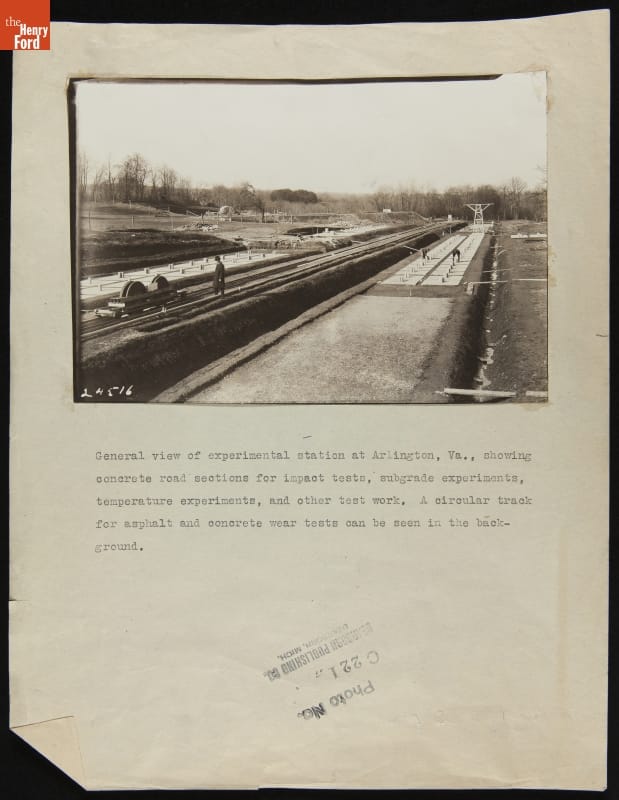
Concrete Road Sections for Use in Experimental Impact Tests, Arlington, Virginia, 1921-1922
- Proposed "City of the Sun" Housing Project, circa 1916 -
- circa 1916
- Collections - Artifact
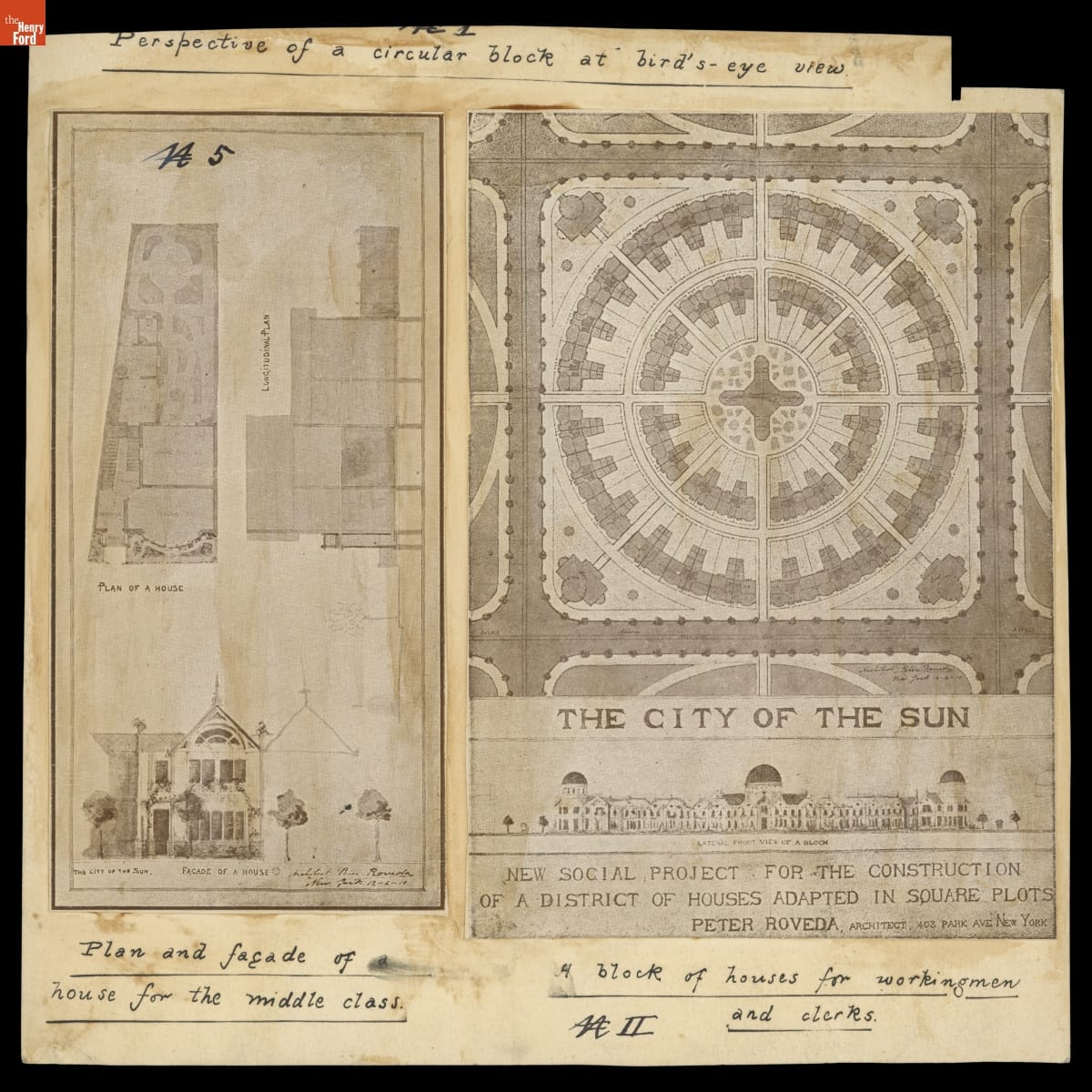
Proposed "City of the Sun" Housing Project, circa 1916
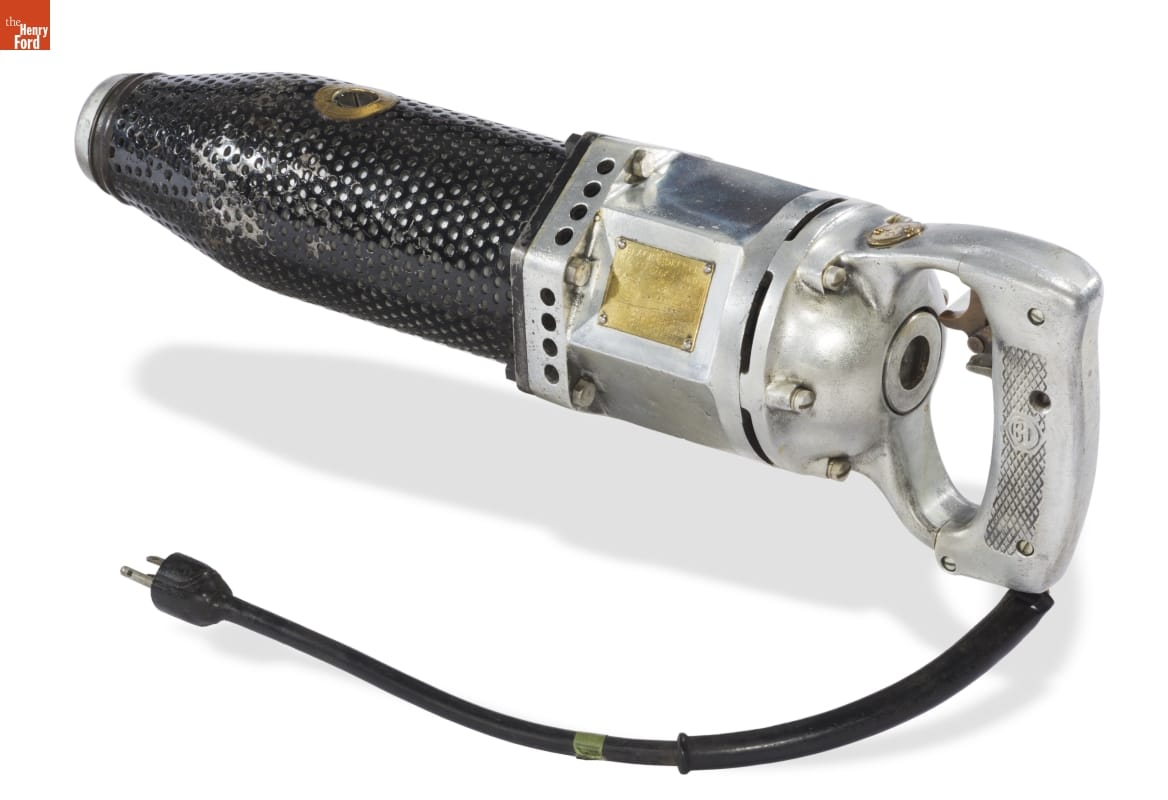
- Black & Decker Type A Electric Hammer, 1929-1930 - Alonzo G. Decker and S. Duncan Black, who operated a small manufacturing company in Baltimore, Maryland, began designing and producing electric tools in 1916. Their pistol-style grip and trigger switch, patented the following year, set the standard for power tool design. Black & Decker developed new products as the company expanded through the 1920s, introducing an electric hammer in 1929.
- 1929-1930
- Collections - Artifact
Black & Decker Type A Electric Hammer, 1929-1930
Alonzo G. Decker and S. Duncan Black, who operated a small manufacturing company in Baltimore, Maryland, began designing and producing electric tools in 1916. Their pistol-style grip and trigger switch, patented the following year, set the standard for power tool design. Black & Decker developed new products as the company expanded through the 1920s, introducing an electric hammer in 1929.
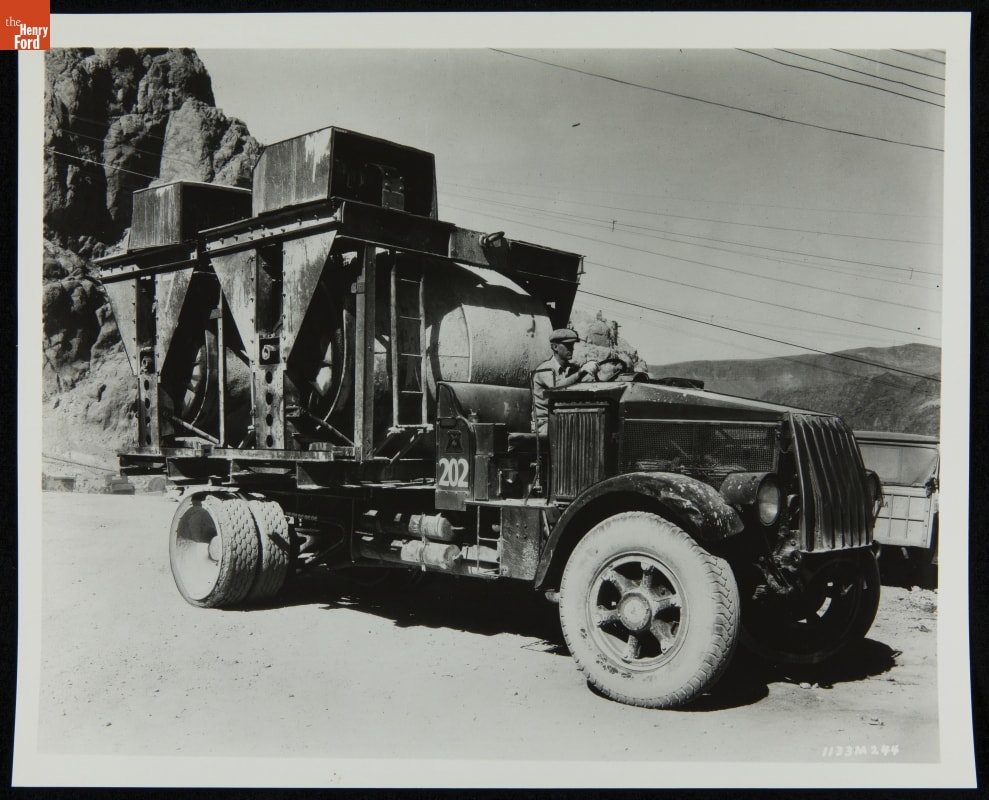
- Mack Model AC Dump Truck with Concrete Mixers at Hoover Dam Construction Site, 1933 - Founded in Brooklyn, New York, in 1900, Mack Brothers Company relocated to Allentown, Pennsylvania, five years later. In 1922, the company renamed itself Mack Trucks and chose a bulldog as its mascot. Mack-built trucks were widely used in the construction of Hoover Dam, located on the Colorado River. Work on the dam started in 1931 and was completed in 1936.
- November 01, 1933
- Collections - Artifact
Mack Model AC Dump Truck with Concrete Mixers at Hoover Dam Construction Site, 1933
Founded in Brooklyn, New York, in 1900, Mack Brothers Company relocated to Allentown, Pennsylvania, five years later. In 1922, the company renamed itself Mack Trucks and chose a bulldog as its mascot. Mack-built trucks were widely used in the construction of Hoover Dam, located on the Colorado River. Work on the dam started in 1931 and was completed in 1936.
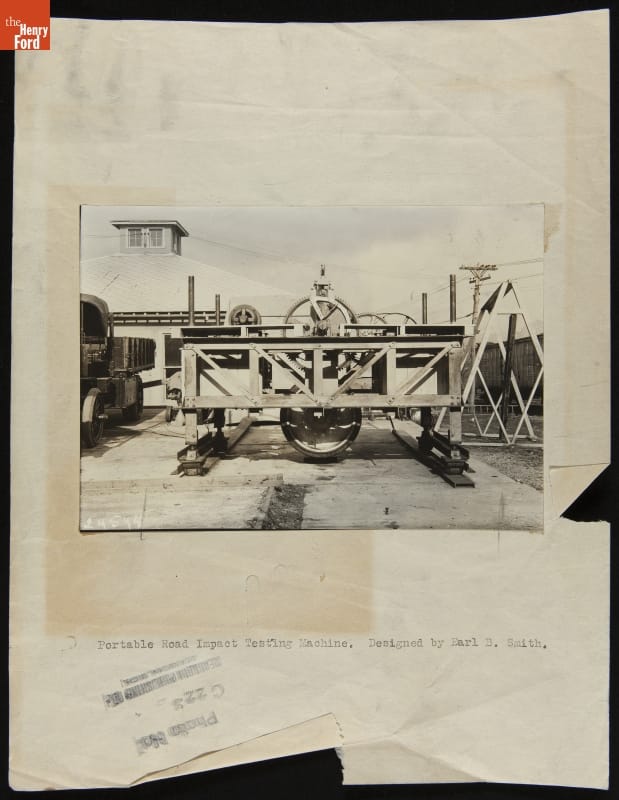
- Portable Road Impact Testing Machine Designed by Earl B. Smith, 1921-1922 -
- 1921-1922
- Collections - Artifact
Portable Road Impact Testing Machine Designed by Earl B. Smith, 1921-1922
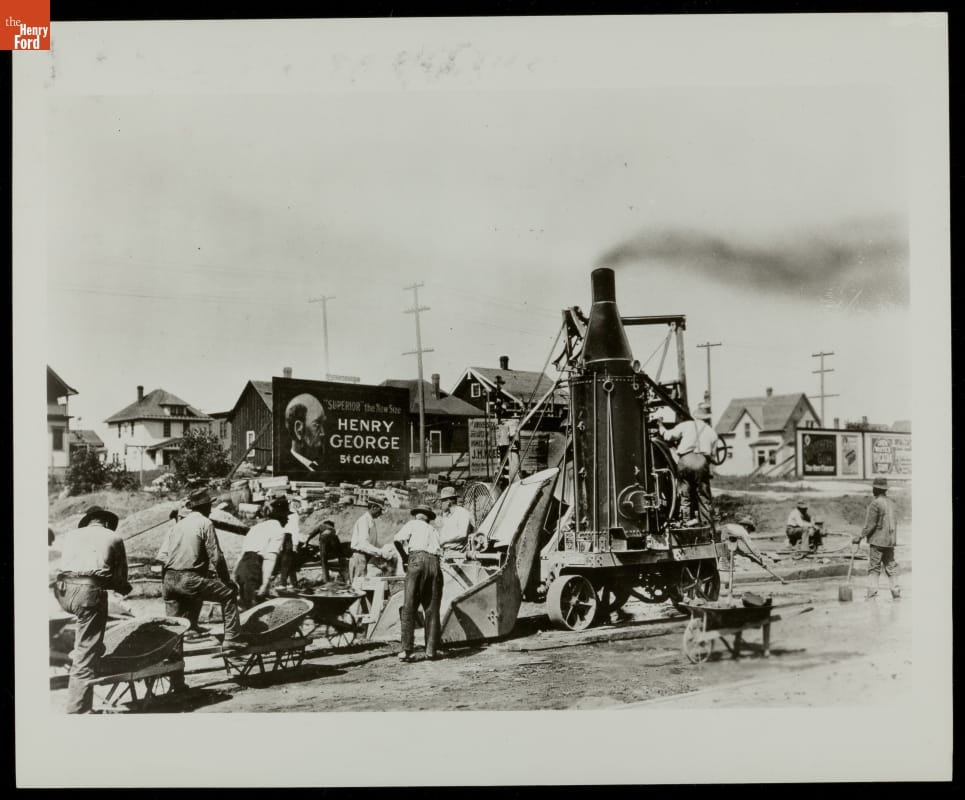
- Steam Mixer Laying Concrete during Road Construction, 1910-1920 - Even in the automotive age, many road construction projects relied heavily on steam and man power. In this photograph, workers line up to feed wheelbarrow loads into a steam-powered concrete mixer. Behind them, other men work to smooth out the freshly laid concrete with shovels.
- 1910-1920
- Collections - Artifact
Steam Mixer Laying Concrete during Road Construction, 1910-1920
Even in the automotive age, many road construction projects relied heavily on steam and man power. In this photograph, workers line up to feed wheelbarrow loads into a steam-powered concrete mixer. Behind them, other men work to smooth out the freshly laid concrete with shovels.
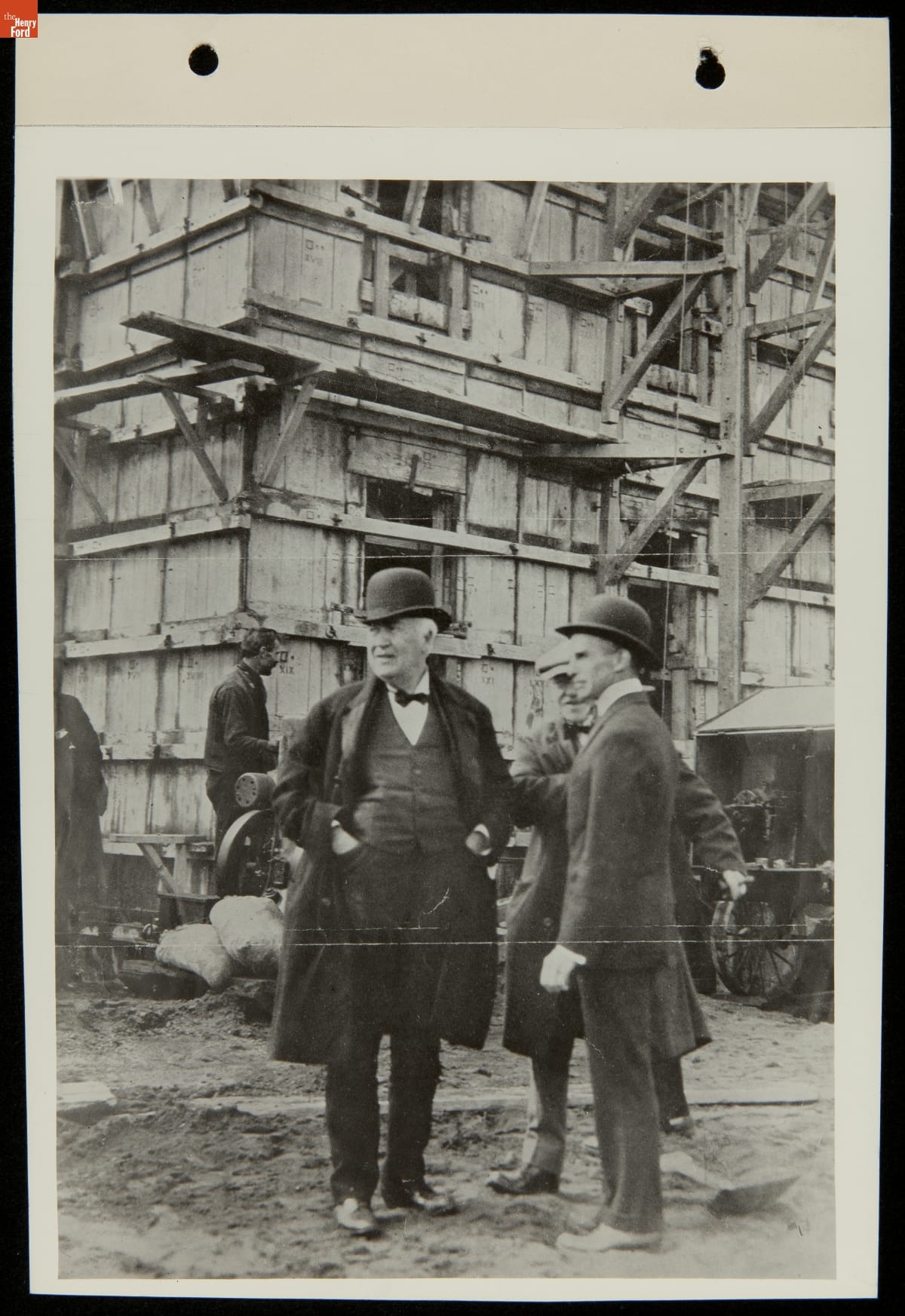
- Thomas Edison and William Meadowcroft Inspecting a Poured Concrete House with Fred Fowler, 1919 - In 1899, after a failed attempt at ore mining, Thomas Edison formed the Edison Portland Cement Company. At his plant, Edison combined his mining operation's rock-crushing technology with new machinery he developed, like a more efficient cement kiln. These innovations drove overproduction in the cement industry, leading Edison to propose a radical use for the excess product -- concrete houses for working class families.
- October 01, 1919
- Collections - Artifact
Thomas Edison and William Meadowcroft Inspecting a Poured Concrete House with Fred Fowler, 1919
In 1899, after a failed attempt at ore mining, Thomas Edison formed the Edison Portland Cement Company. At his plant, Edison combined his mining operation's rock-crushing technology with new machinery he developed, like a more efficient cement kiln. These innovations drove overproduction in the cement industry, leading Edison to propose a radical use for the excess product -- concrete houses for working class families.
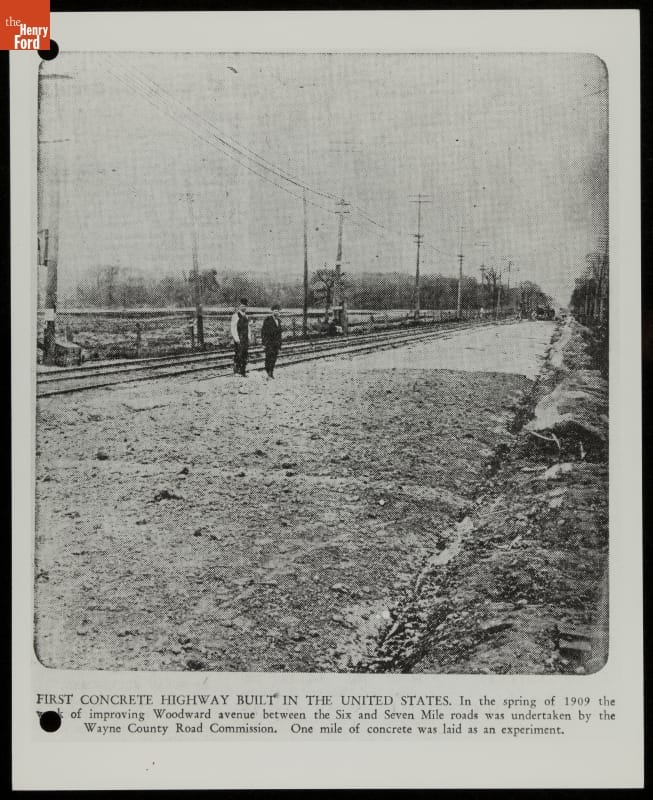
- 1909 News Clipping, "First Concrete Highway Built in the United States" - Good roads meant good road surfaces. This one-mile stretch of Detroit's Woodward Avenue, pictured here, was paved with concrete in 1909. It was the world's first concrete road.
- 1909
- Collections - Artifact
1909 News Clipping, "First Concrete Highway Built in the United States"
Good roads meant good road surfaces. This one-mile stretch of Detroit's Woodward Avenue, pictured here, was paved with concrete in 1909. It was the world's first concrete road.