
Search
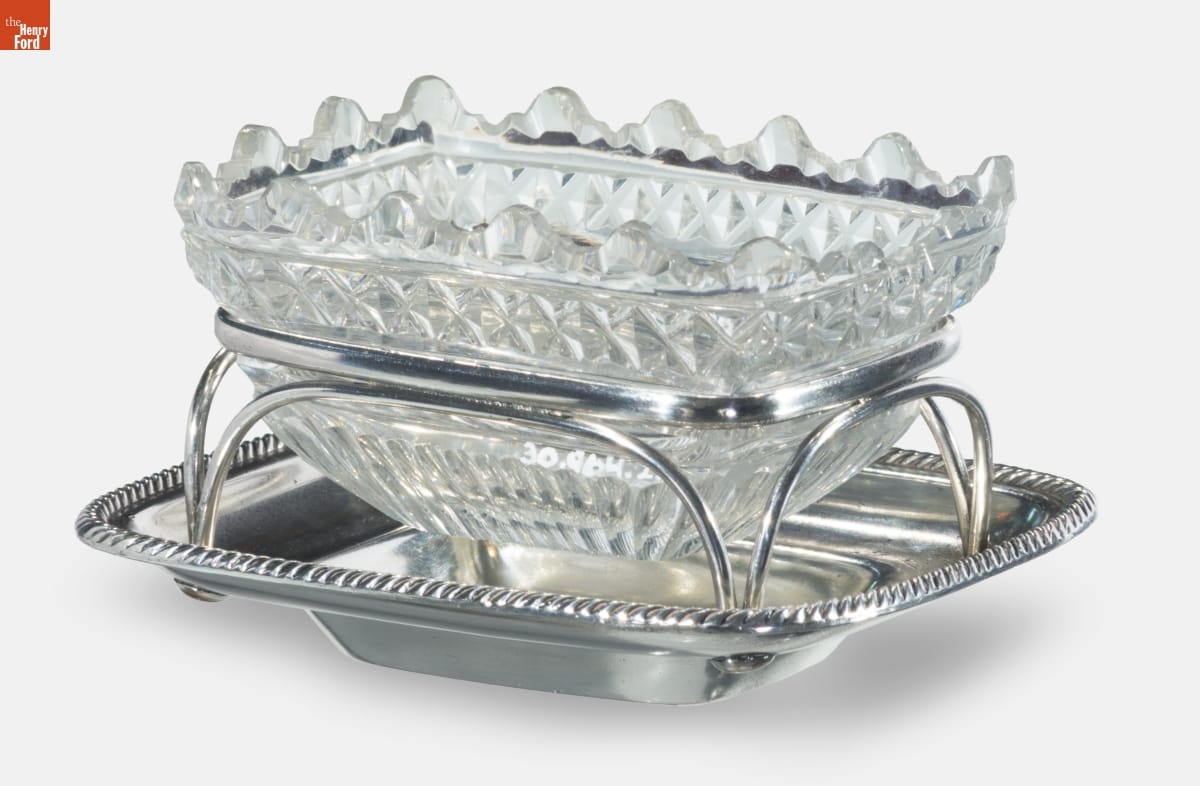
- Castor Set, 1813-1856 -
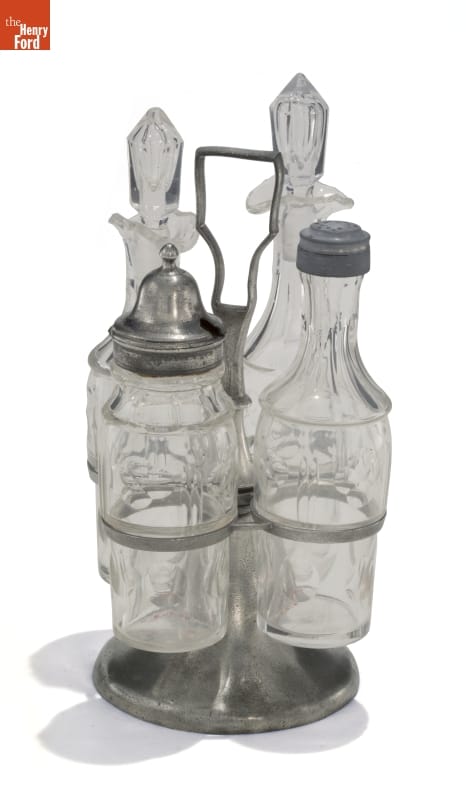
- 1813-1856
- Collections - Artifact
Castor Set, 1813-1856
- Cruet, 1880-1920 -
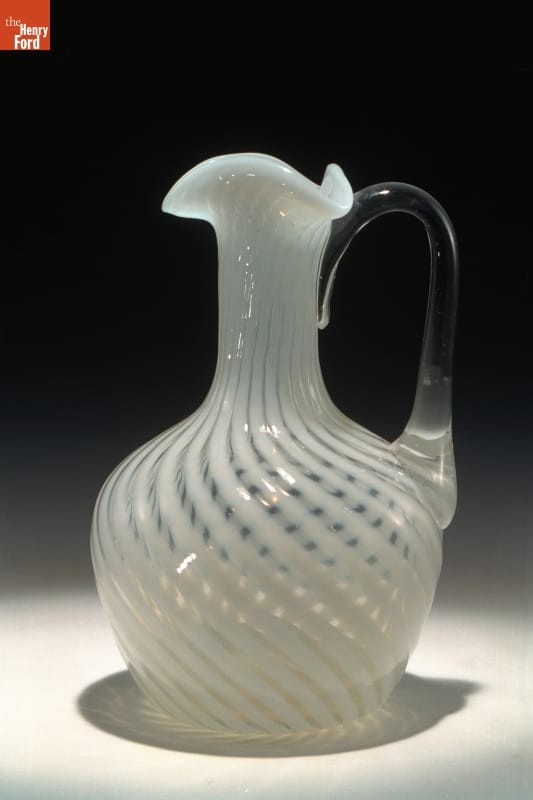
- 1880-1920
- Collections - Artifact
Cruet, 1880-1920
- Favrile Salt, 1900-1914 - Art Glass is ornamental and decorative glass dating from the mid-to-late 19th century through the early 20th century. Makers of Art Glass employed newly developed technologies for producing vibrant colors and surface textures. This is most famously seen in the iridescent surfaces of Louis Comfort Tiffany and his contemporaries, although Art Glass took many shapes and forms.
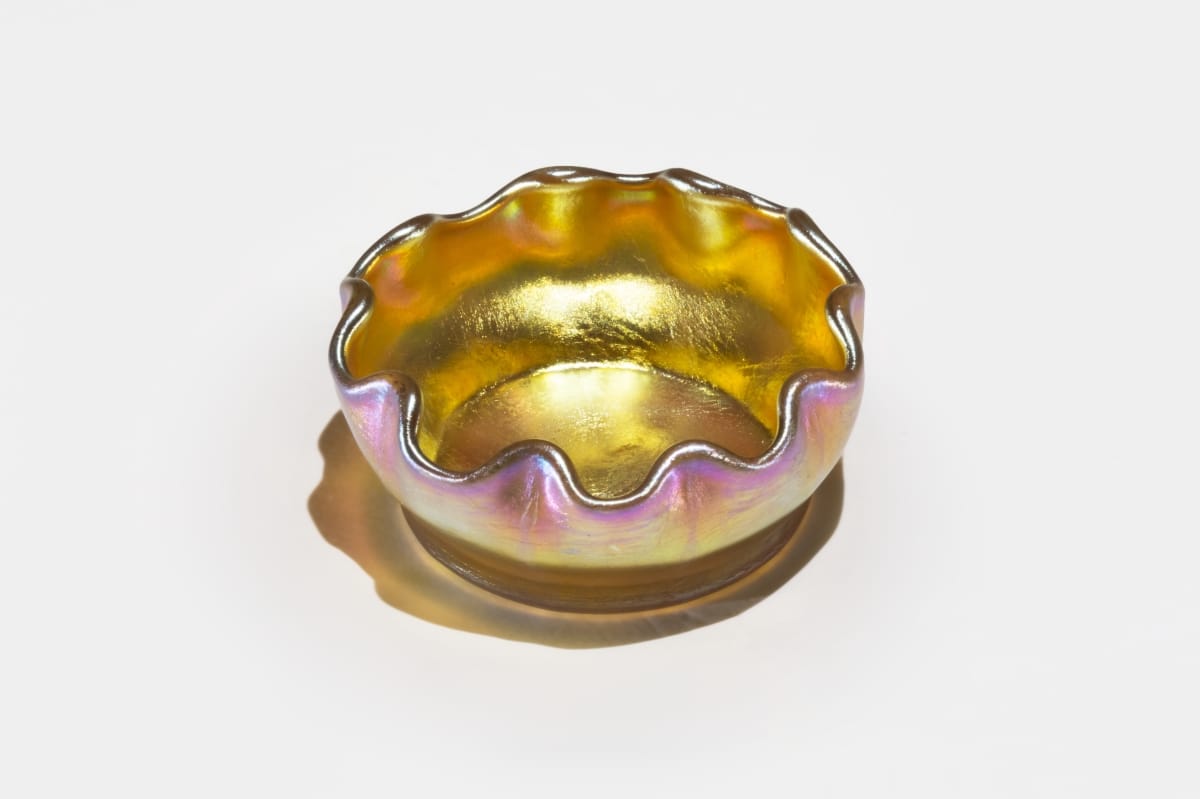
- 1900-1914
- Collections - Artifact
Favrile Salt, 1900-1914
Art Glass is ornamental and decorative glass dating from the mid-to-late 19th century through the early 20th century. Makers of Art Glass employed newly developed technologies for producing vibrant colors and surface textures. This is most famously seen in the iridescent surfaces of Louis Comfort Tiffany and his contemporaries, although Art Glass took many shapes and forms.
- Favrile Salt, 1900-1914 - Art Glass is ornamental and decorative glass dating from the mid-to-late 19th century through the early 20th century. Makers of Art Glass employed newly developed technologies for producing vibrant colors and surface textures. This is most famously seen in the iridescent surfaces of Louis Comfort Tiffany and his contemporaries, although Art Glass took many shapes and forms.
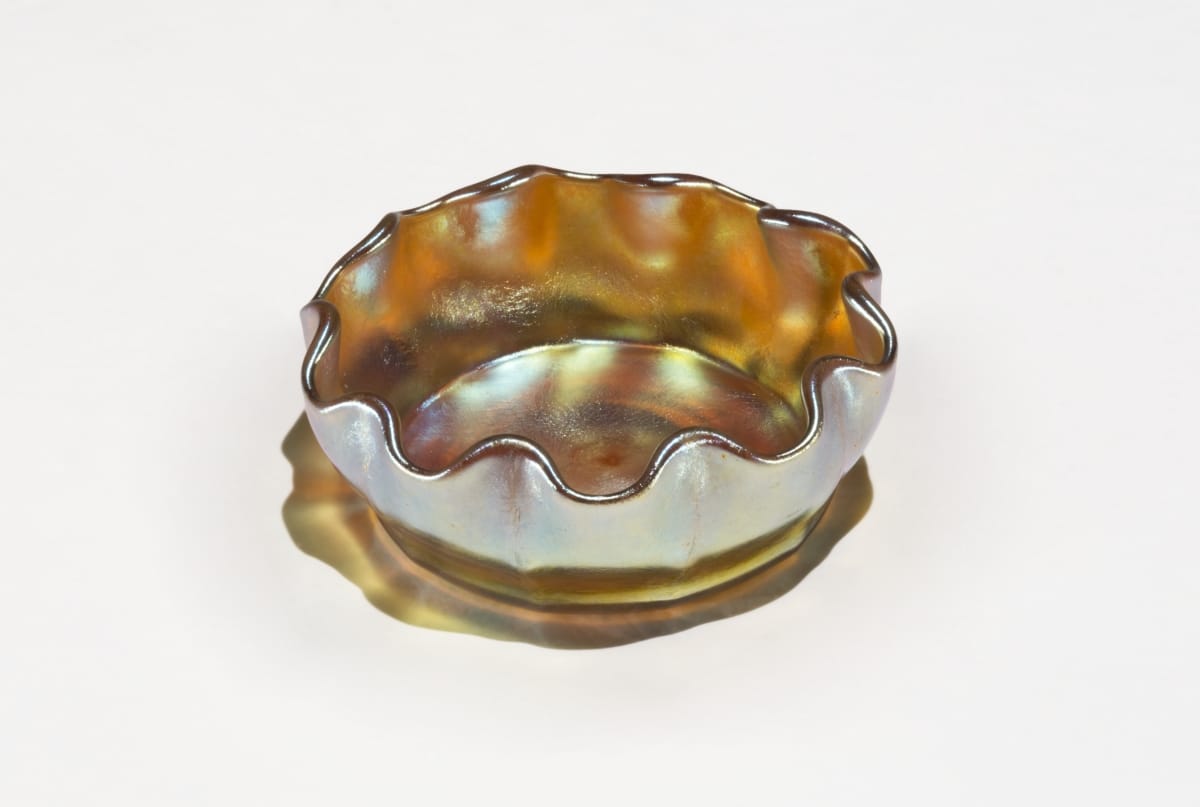
- 1900-1914
- Collections - Artifact
Favrile Salt, 1900-1914
Art Glass is ornamental and decorative glass dating from the mid-to-late 19th century through the early 20th century. Makers of Art Glass employed newly developed technologies for producing vibrant colors and surface textures. This is most famously seen in the iridescent surfaces of Louis Comfort Tiffany and his contemporaries, although Art Glass took many shapes and forms.
- Salts, 1840-1860 -
- 1840-1860
- Collections - Artifact
Salts, 1840-1860
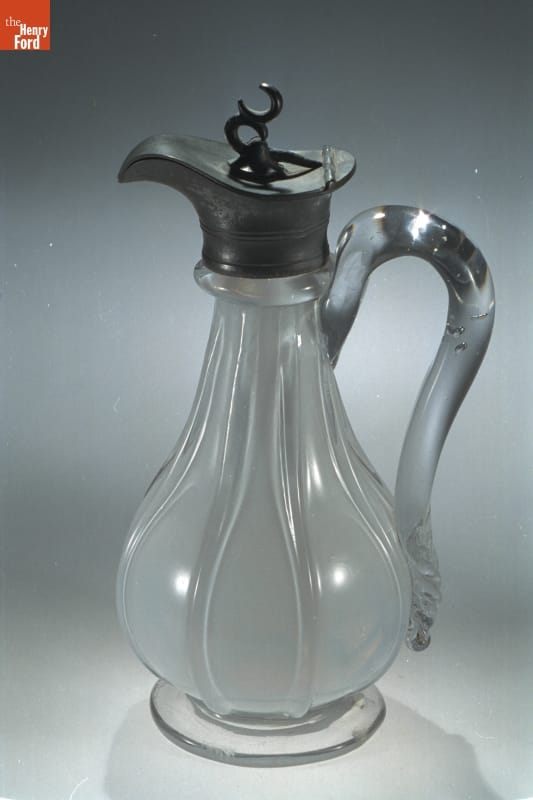
- Syrup Jug, 1840-1860 - Nineteenth-century Americans who could not afford refined white sugar found a sweet alternative with molasses or maple syrup. Syrup jugs or pitchers with their dripless metal pouring spouts held the slow-pouring, sugary liquid. These pressed or mold-blown glass containers became a common fixture on many middle-class Victorian Americans' tables.
- 1840-1860
- Collections - Artifact
Syrup Jug, 1840-1860
Nineteenth-century Americans who could not afford refined white sugar found a sweet alternative with molasses or maple syrup. Syrup jugs or pitchers with their dripless metal pouring spouts held the slow-pouring, sugary liquid. These pressed or mold-blown glass containers became a common fixture on many middle-class Victorian Americans' tables.
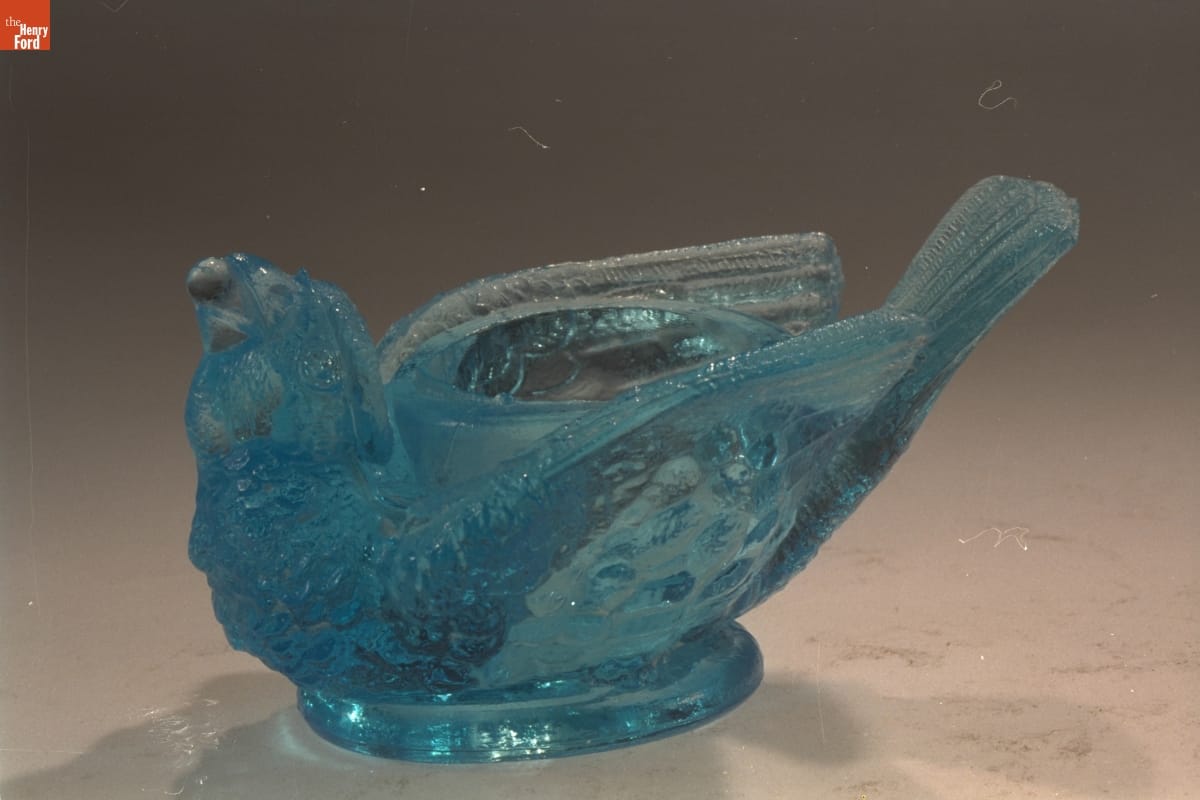
- Salt, 1870-1900 - Small, open dishes filled with salt graced Americans' dining tables into the 20th century -- before the introduction of free-flowing salt and the acceptance of shakers. Diners usually found a large master salt near the head of the table or smaller versions closer to their plate. Novelty-shaped, pressed glass salts, like this bird with seed, appeared in the late 1800s.
- 1870-1900
- Collections - Artifact
Salt, 1870-1900
Small, open dishes filled with salt graced Americans' dining tables into the 20th century -- before the introduction of free-flowing salt and the acceptance of shakers. Diners usually found a large master salt near the head of the table or smaller versions closer to their plate. Novelty-shaped, pressed glass salts, like this bird with seed, appeared in the late 1800s.
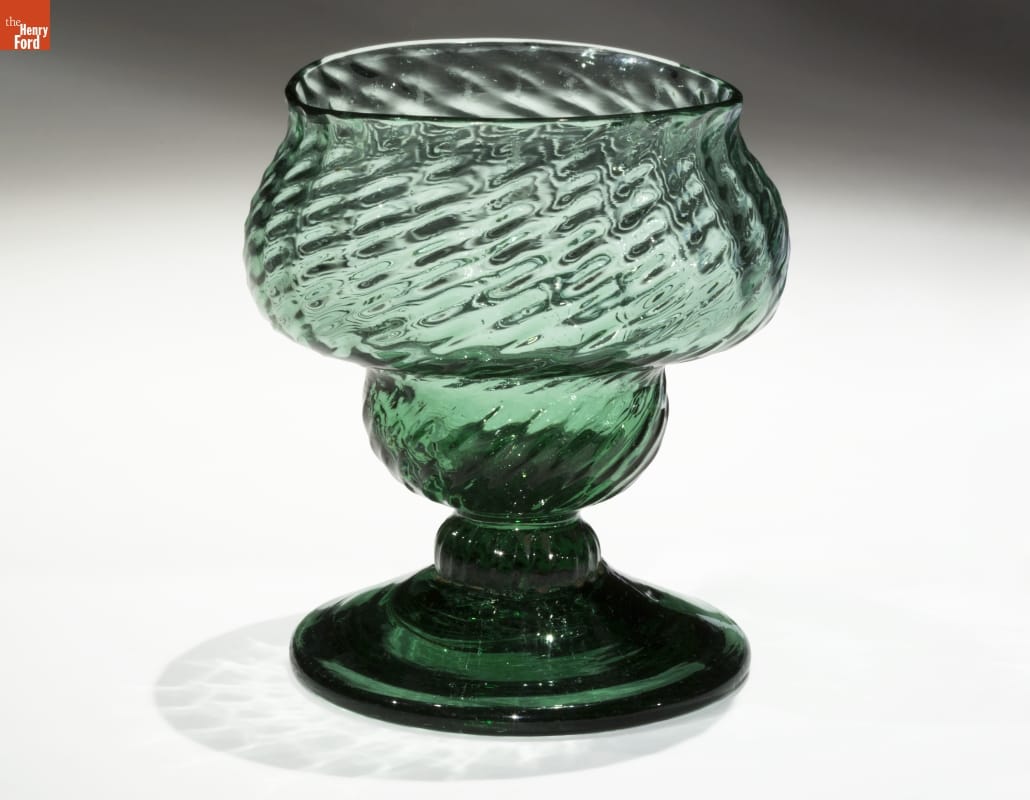
- Salt, 1815-1830 - Prior to the early 20th century, Americans would have put several small, open dishes filled with salt on their dining tables. These "salts" placed the necessary seasoning within easy reach of family and guests. In the early 1800s, pattern-molded or hand-blown "salts" became affordable to the general public from a growing number of regional American glass factories.
- 1815-1830
- Collections - Artifact
Salt, 1815-1830
Prior to the early 20th century, Americans would have put several small, open dishes filled with salt on their dining tables. These "salts" placed the necessary seasoning within easy reach of family and guests. In the early 1800s, pattern-molded or hand-blown "salts" became affordable to the general public from a growing number of regional American glass factories.
- Standing Salt, 1860-1900 - Nineteenth-century American glassmakers experimented with new methods to create products for a growing consumer market. In the 1820s, pressing glass into metal molds by machine was perfected, and by the mid-1800s, manufacturers were creating a variety of inexpensive pressed glass housewares. America's middle-class consumers could now decorate their homes with attractive glass bowls, creamers, dishes, plates, vases, and other tableware.
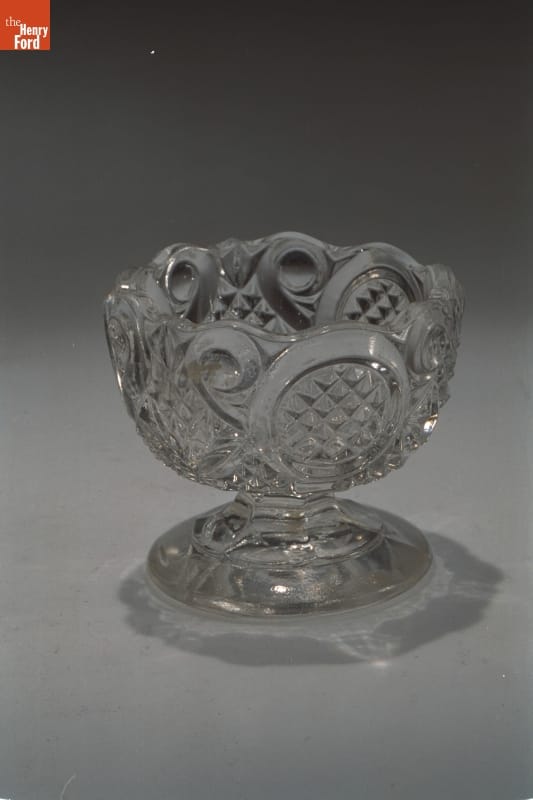
- 1860-1900
- Collections - Artifact
Standing Salt, 1860-1900
Nineteenth-century American glassmakers experimented with new methods to create products for a growing consumer market. In the 1820s, pressing glass into metal molds by machine was perfected, and by the mid-1800s, manufacturers were creating a variety of inexpensive pressed glass housewares. America's middle-class consumers could now decorate their homes with attractive glass bowls, creamers, dishes, plates, vases, and other tableware.
- "The Wigwam, Atlanta, Nebraska" Souvenir Salt and Pepper Set, 1945-1973 -
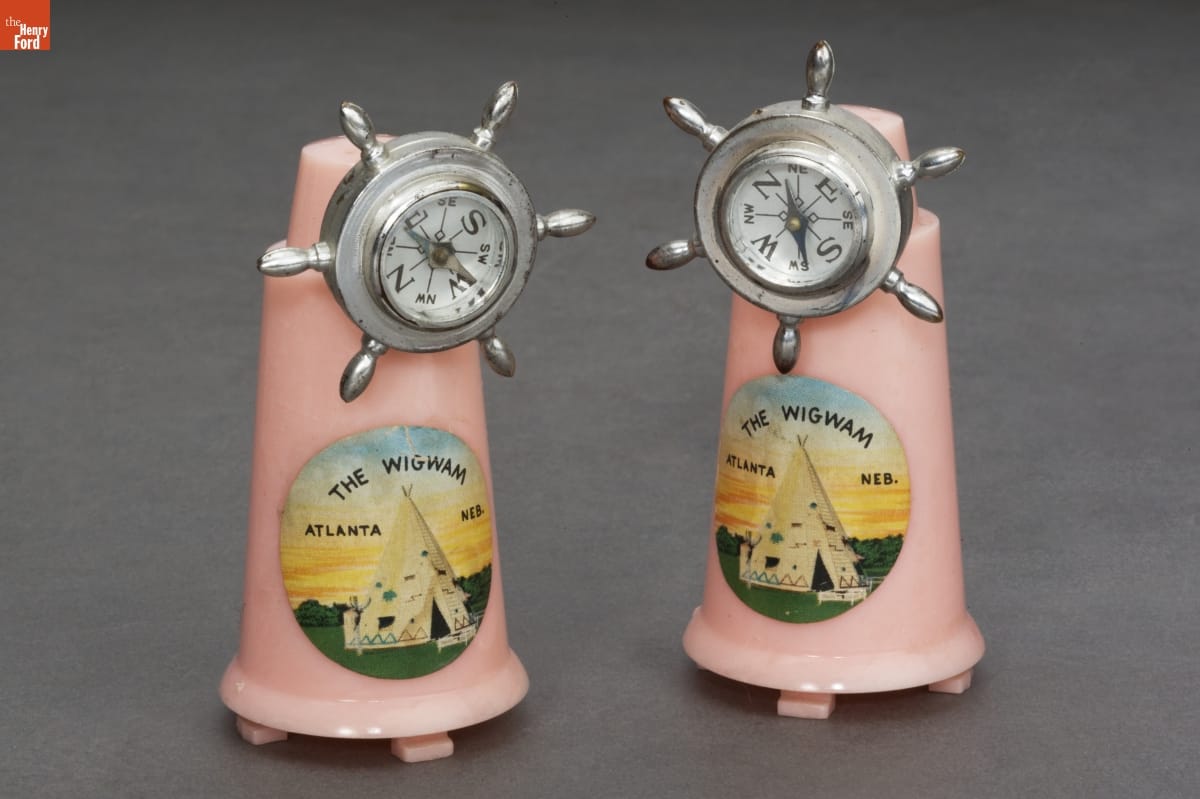
- 1945-1973
- Collections - Artifact
"The Wigwam, Atlanta, Nebraska" Souvenir Salt and Pepper Set, 1945-1973