
Search
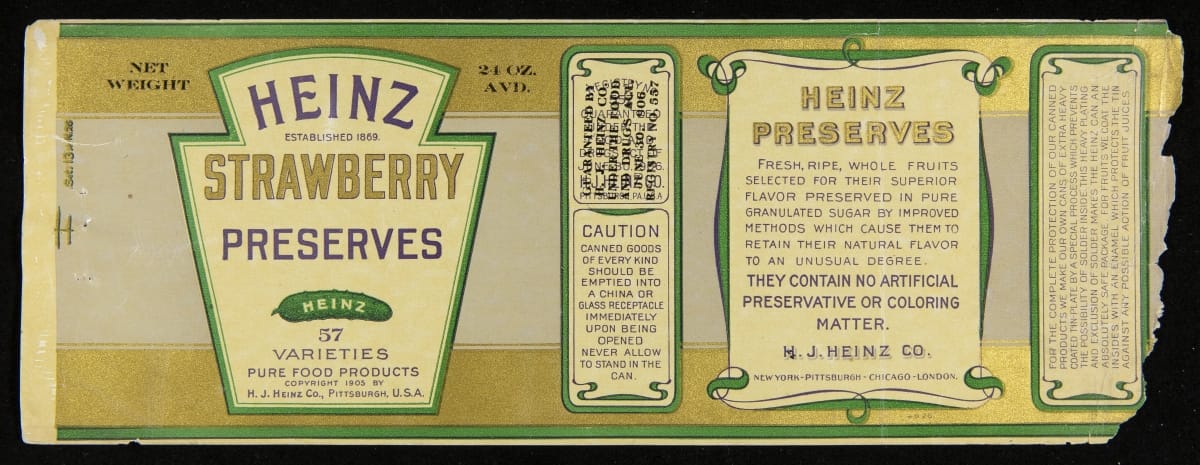
- Can Label, "Heinz Brand Strawberry Preserves," 1906-1910 - Manufacturers of similar products sought ways to make their companies' goods stand out on store shelves. Some companies established a uniform label design for their multi-product offerings -- a strategy which helped customers distinguish one brand over another. H.J. Heinz products were identified by the famous Heinz pickle and signature "keystone" logo. These design features are still found on Heinz products today.
- 1906-1910
- Collections - Artifact
Can Label, "Heinz Brand Strawberry Preserves," 1906-1910
Manufacturers of similar products sought ways to make their companies' goods stand out on store shelves. Some companies established a uniform label design for their multi-product offerings -- a strategy which helped customers distinguish one brand over another. H.J. Heinz products were identified by the famous Heinz pickle and signature "keystone" logo. These design features are still found on Heinz products today.
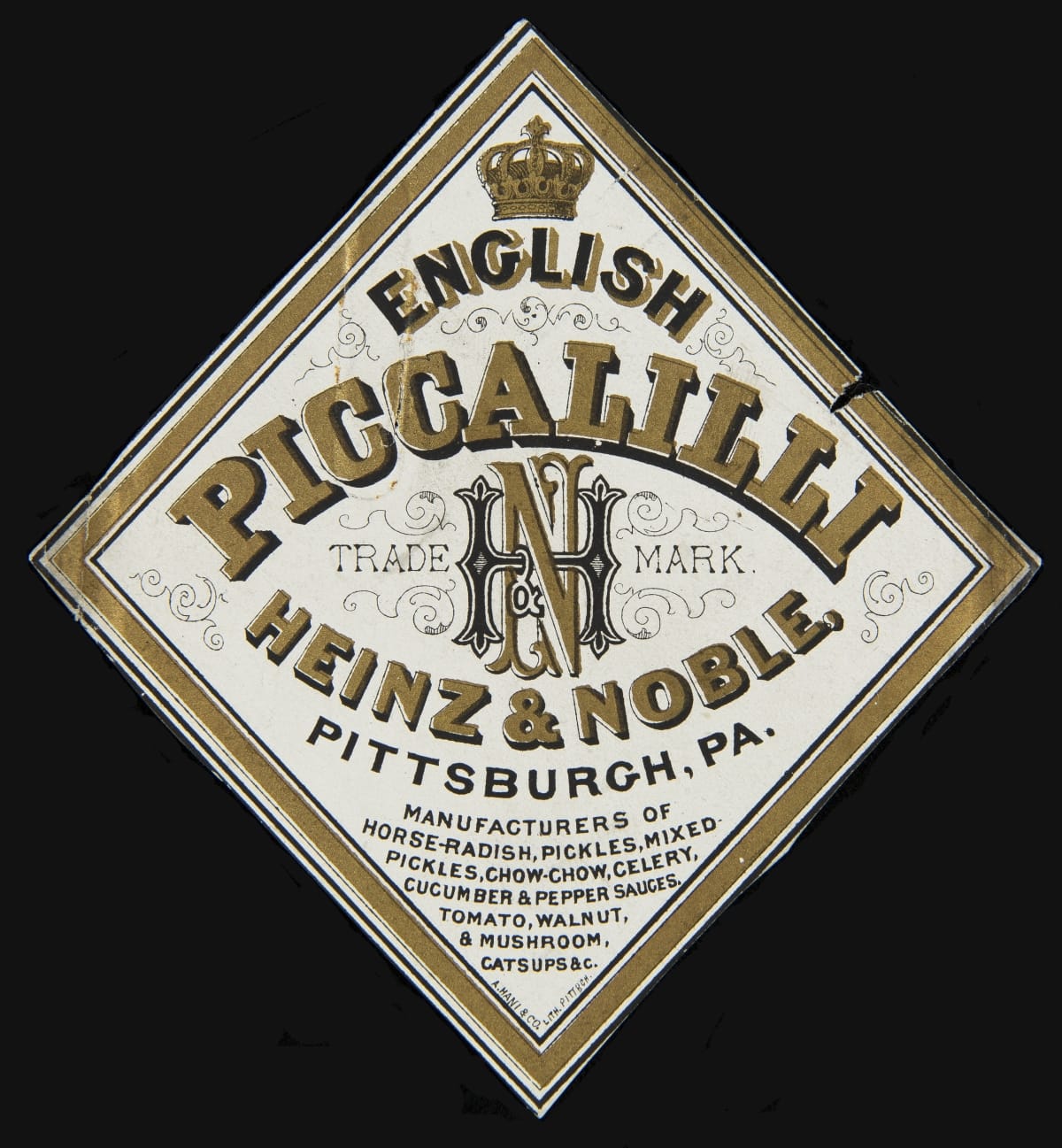
- Label, "Heinz & Noble Brand English Piccalilli," circa 1872 - In 1869, entrepreneur H.J. Heinz entered the processed food business with L.C. Noble to form Heinz & Noble. Horseradish was their first product, quickly followed by celery sauce and pickled cucumbers (pickles today). The company's product line continued to expand to include other varieties of pickled foods and condiments, like English Piccalilli, a type of relish.
- circa 1872
- Collections - Artifact
Label, "Heinz & Noble Brand English Piccalilli," circa 1872
In 1869, entrepreneur H.J. Heinz entered the processed food business with L.C. Noble to form Heinz & Noble. Horseradish was their first product, quickly followed by celery sauce and pickled cucumbers (pickles today). The company's product line continued to expand to include other varieties of pickled foods and condiments, like English Piccalilli, a type of relish.
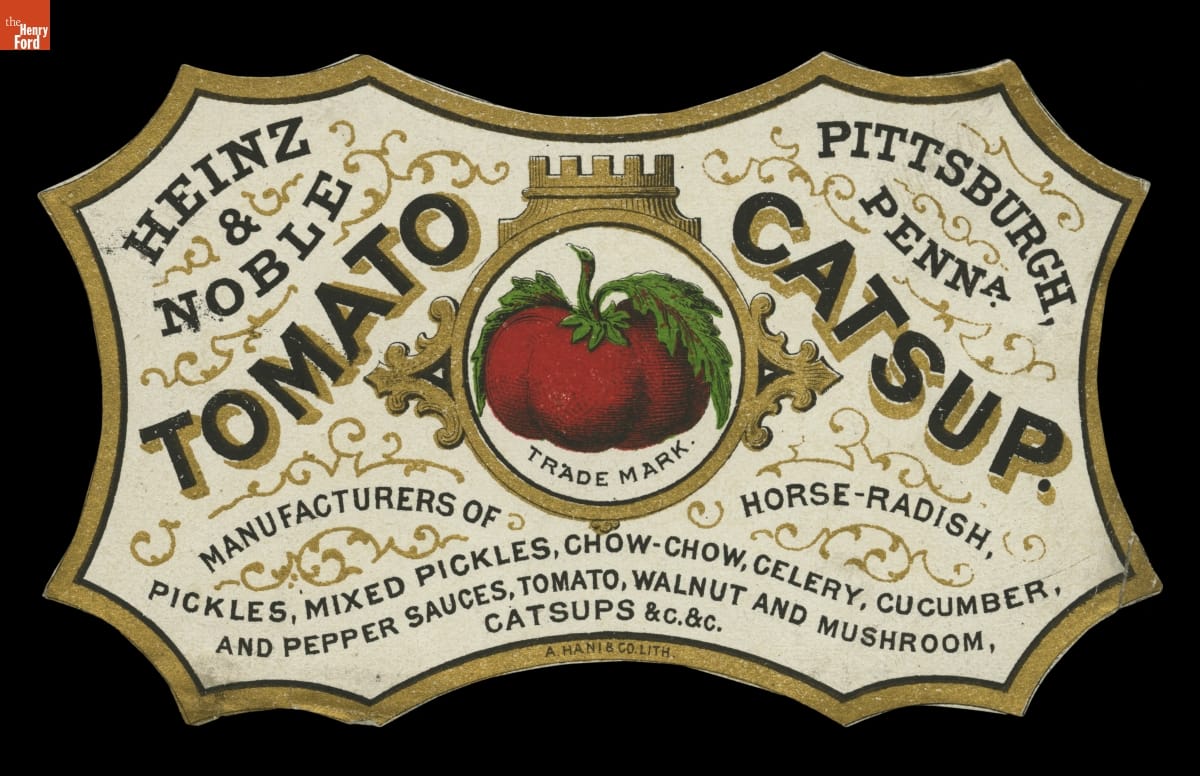
- Product Label for Bottled Tomato Catsup by Heinz, Noble & Company, circa 1873 - Henry J. Heinz introduced tomato ketchup as one of his first bottled condiments in the 1870s. To ensure his success among competing ketchup manufacturers, Heinz employed innovative product packaging. Eye-catching labels attracted customers, and clear glass bottles revealed a high-quality product. By about 1905, the H.J. Heinz Company had become the largest ketchup producer in the nation.
- circa 1873
- Collections - Artifact
Product Label for Bottled Tomato Catsup by Heinz, Noble & Company, circa 1873
Henry J. Heinz introduced tomato ketchup as one of his first bottled condiments in the 1870s. To ensure his success among competing ketchup manufacturers, Heinz employed innovative product packaging. Eye-catching labels attracted customers, and clear glass bottles revealed a high-quality product. By about 1905, the H.J. Heinz Company had become the largest ketchup producer in the nation.
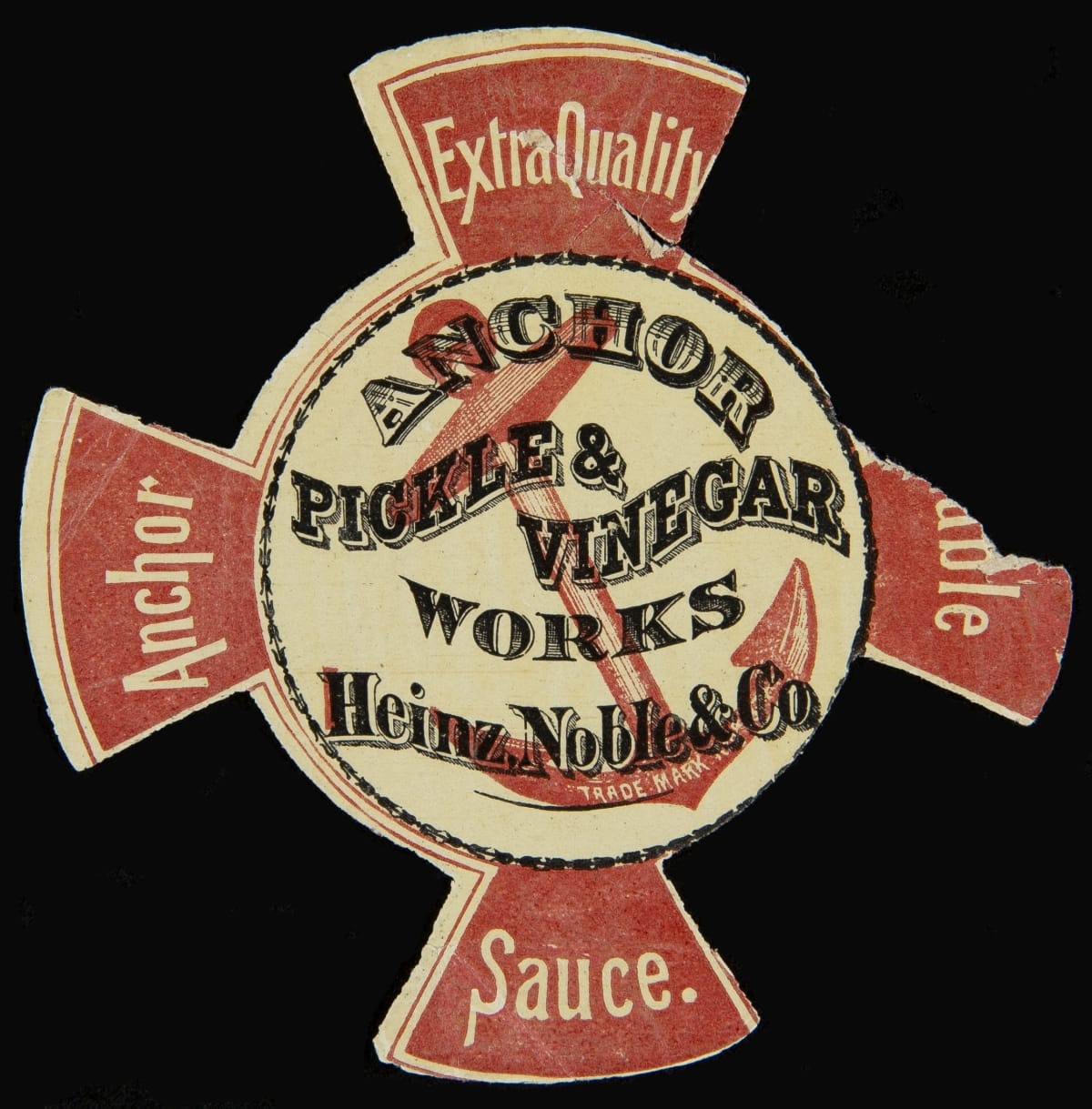
- Label, "Heinz, Noble & Company Brand Sauce Product," circa 1875 - In 1869, entrepreneur H.J. Heinz entered the processed food business with L.C. Noble selling products under the Anchor Brand. Horseradish was their first product, quickly followed by celery sauce and pickled cucumbers (pickles today) among other pickled foods and condiments. In 1872, L.C. Noble's brother joined the partnership and the company's name officially became Heinz, Noble & Co. until it went bankrupt in 1875.
- circa 1875
- Collections - Artifact
Label, "Heinz, Noble & Company Brand Sauce Product," circa 1875
In 1869, entrepreneur H.J. Heinz entered the processed food business with L.C. Noble selling products under the Anchor Brand. Horseradish was their first product, quickly followed by celery sauce and pickled cucumbers (pickles today) among other pickled foods and condiments. In 1872, L.C. Noble's brother joined the partnership and the company's name officially became Heinz, Noble & Co. until it went bankrupt in 1875.
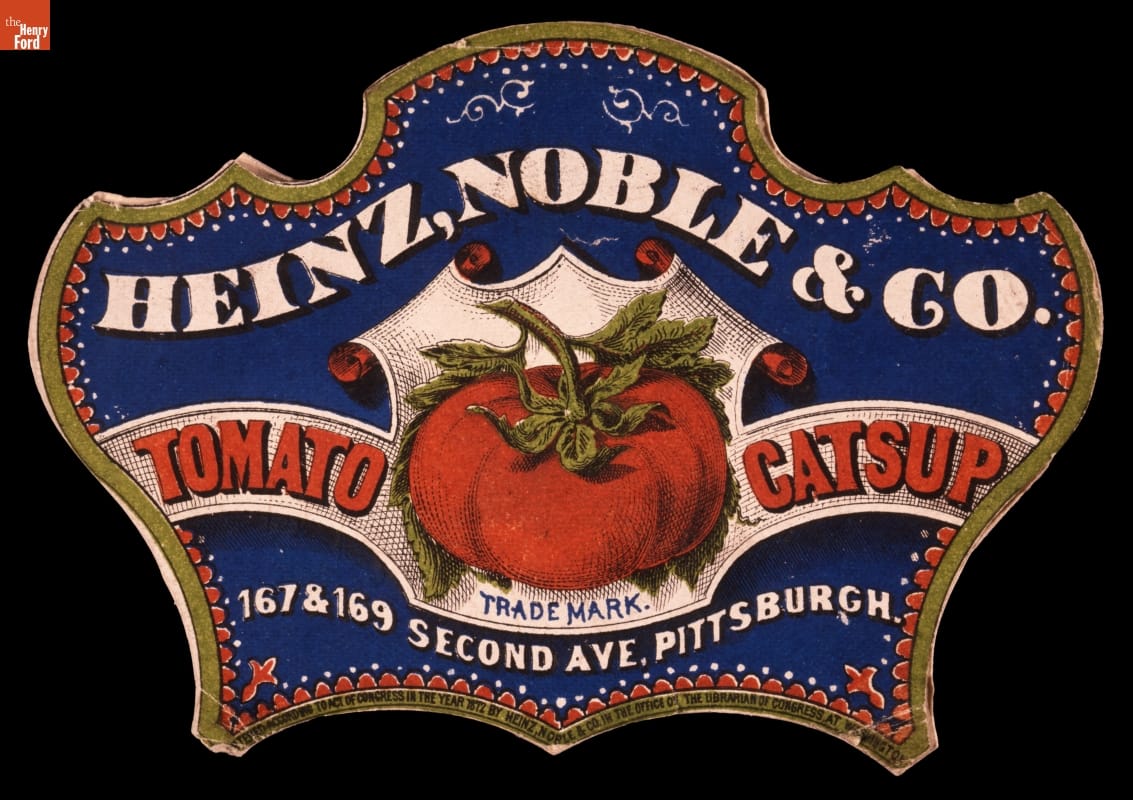
- Product Label for Tomato Catsup by Heinz, Noble & Co., 1872-1873 - Henry J. Heinz introduced tomato ketchup as one of his first bottled condiments in the 1870s. To ensure his success among competing ketchup manufacturers, Heinz employed innovative product packaging. Eye-catching labels attracted customers, and clear glass bottles revealed a high-quality product. By about 1905, the H.J. Heinz Company had become the largest ketchup producer in the nation.
- 1872-1873
- Collections - Artifact
Product Label for Tomato Catsup by Heinz, Noble & Co., 1872-1873
Henry J. Heinz introduced tomato ketchup as one of his first bottled condiments in the 1870s. To ensure his success among competing ketchup manufacturers, Heinz employed innovative product packaging. Eye-catching labels attracted customers, and clear glass bottles revealed a high-quality product. By about 1905, the H.J. Heinz Company had become the largest ketchup producer in the nation.
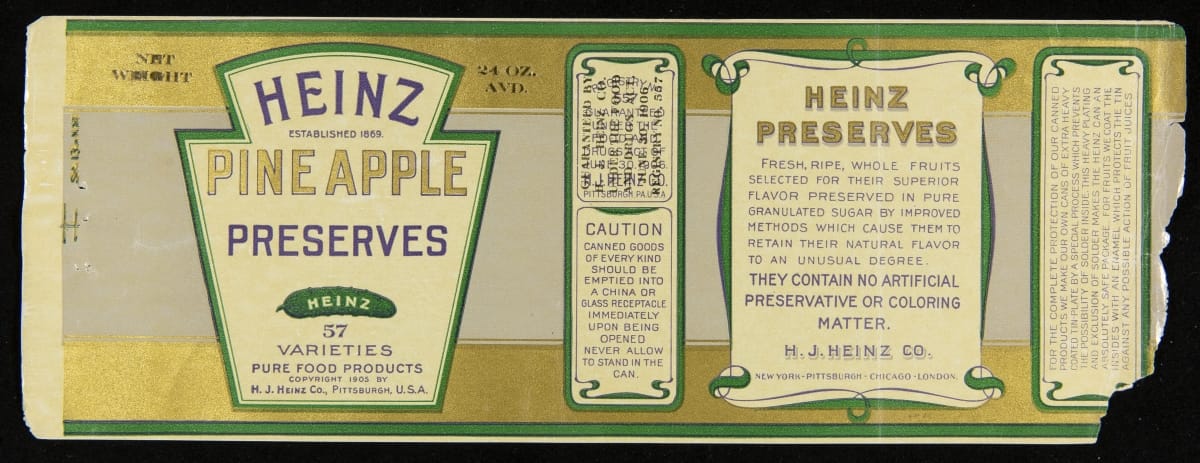
- Can Label, "Heinz Brand Pineapple Preserves," 1906-1910 - Manufacturers of similar products sought ways to make their companies' goods stand out on store shelves. Some companies established a uniform label design for their multi-product offerings -- a strategy which helped customers distinguish one brand over another. H.J. Heinz products were identified by the famous Heinz pickle and signature "keystone" logo. These design features are still found on Heinz products today.
- 1906-1910
- Collections - Artifact
Can Label, "Heinz Brand Pineapple Preserves," 1906-1910
Manufacturers of similar products sought ways to make their companies' goods stand out on store shelves. Some companies established a uniform label design for their multi-product offerings -- a strategy which helped customers distinguish one brand over another. H.J. Heinz products were identified by the famous Heinz pickle and signature "keystone" logo. These design features are still found on Heinz products today.
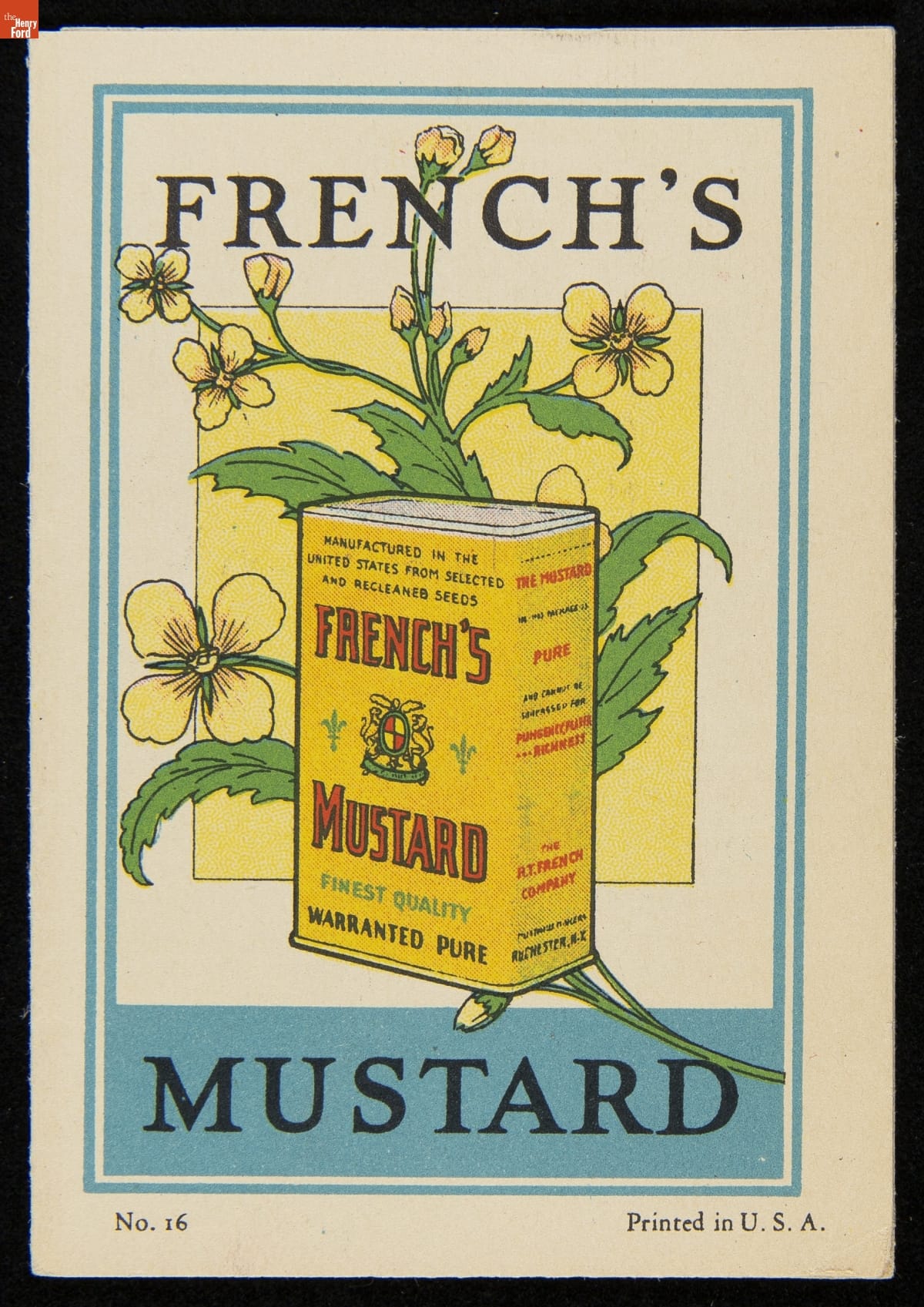
- French's Mustard Recipe Booklet No. 16, 1926 - In 1904, the R.T. French Company introduced its Cream Salad Mustard. Prior to this, mustard was stone ground, thick, and often grainy, but French's new processed condiment was mild in flavor and easy to spread. It soon became a staple in American ballparks, where hot dogs were common fare. This recipe booklet offered additional uses, making it a favorite condiment in home kitchens as well.
- 1926
- Collections - Artifact
French's Mustard Recipe Booklet No. 16, 1926
In 1904, the R.T. French Company introduced its Cream Salad Mustard. Prior to this, mustard was stone ground, thick, and often grainy, but French's new processed condiment was mild in flavor and easy to spread. It soon became a staple in American ballparks, where hot dogs were common fare. This recipe booklet offered additional uses, making it a favorite condiment in home kitchens as well.
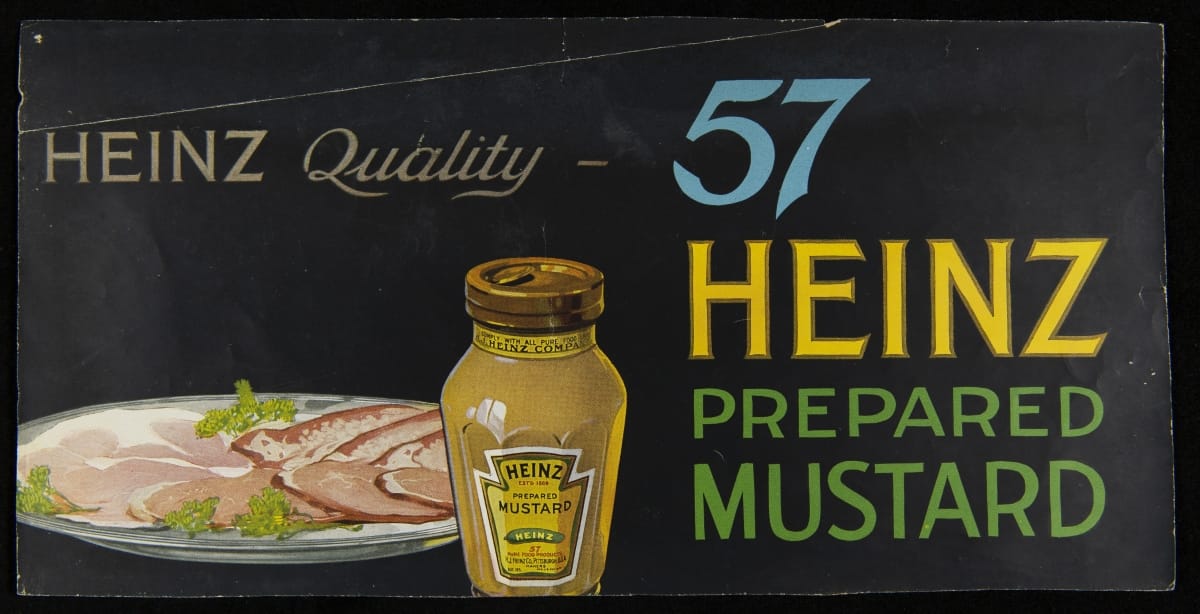
- Streetcar Advertising Poster for Heinz Prepared Mustard, circa 1925 - Henry J. Heinz rarely missed an opportunity to market his "57 Varieties" -- a catchy slogan he created despite offering a line of more than 60 packaged food products. A prolific promoter, Heinz aimed to reach consumers in stores, at home, and everywhere in-between. This colorful poster advertised Heinz Prepared Mustard to passengers riding in a streetcar.
- circa 1925
- Collections - Artifact
Streetcar Advertising Poster for Heinz Prepared Mustard, circa 1925
Henry J. Heinz rarely missed an opportunity to market his "57 Varieties" -- a catchy slogan he created despite offering a line of more than 60 packaged food products. A prolific promoter, Heinz aimed to reach consumers in stores, at home, and everywhere in-between. This colorful poster advertised Heinz Prepared Mustard to passengers riding in a streetcar.
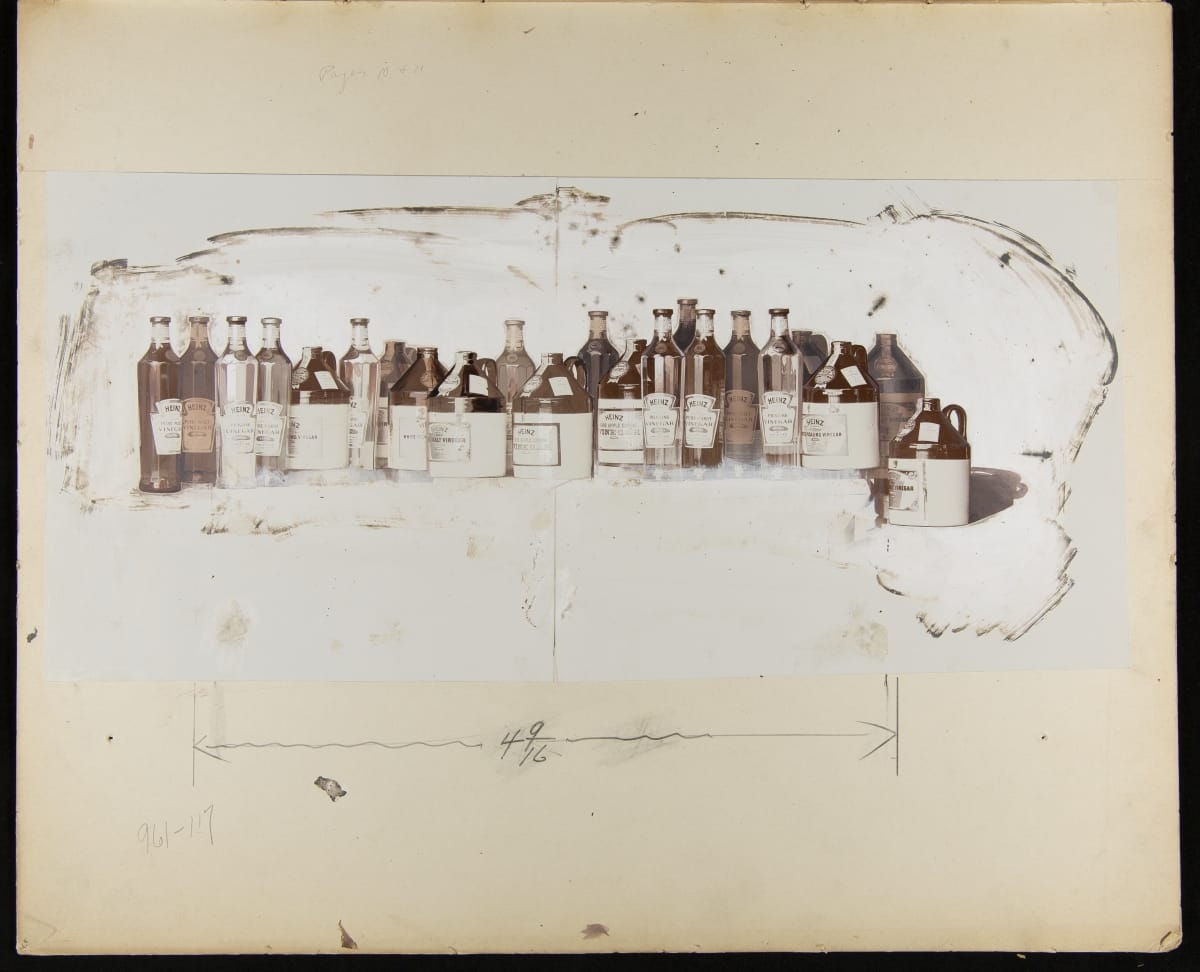
- Advertising Layout for Heinz Vinegar, circa 1908 - The H.J. Heinz Company employed ambitious and comprehensive advertising strategies to meet consumers at home, in stores, and everywhere in between. Drawings, illustrations and modified photographs of Heinz products were often used for advertising and in publications. This advertising layout represents a step in the marketing process where the size and arrangement are taken into consideration before the final advertisement is created.
- circa 1908
- Collections - Artifact
Advertising Layout for Heinz Vinegar, circa 1908
The H.J. Heinz Company employed ambitious and comprehensive advertising strategies to meet consumers at home, in stores, and everywhere in between. Drawings, illustrations and modified photographs of Heinz products were often used for advertising and in publications. This advertising layout represents a step in the marketing process where the size and arrangement are taken into consideration before the final advertisement is created.
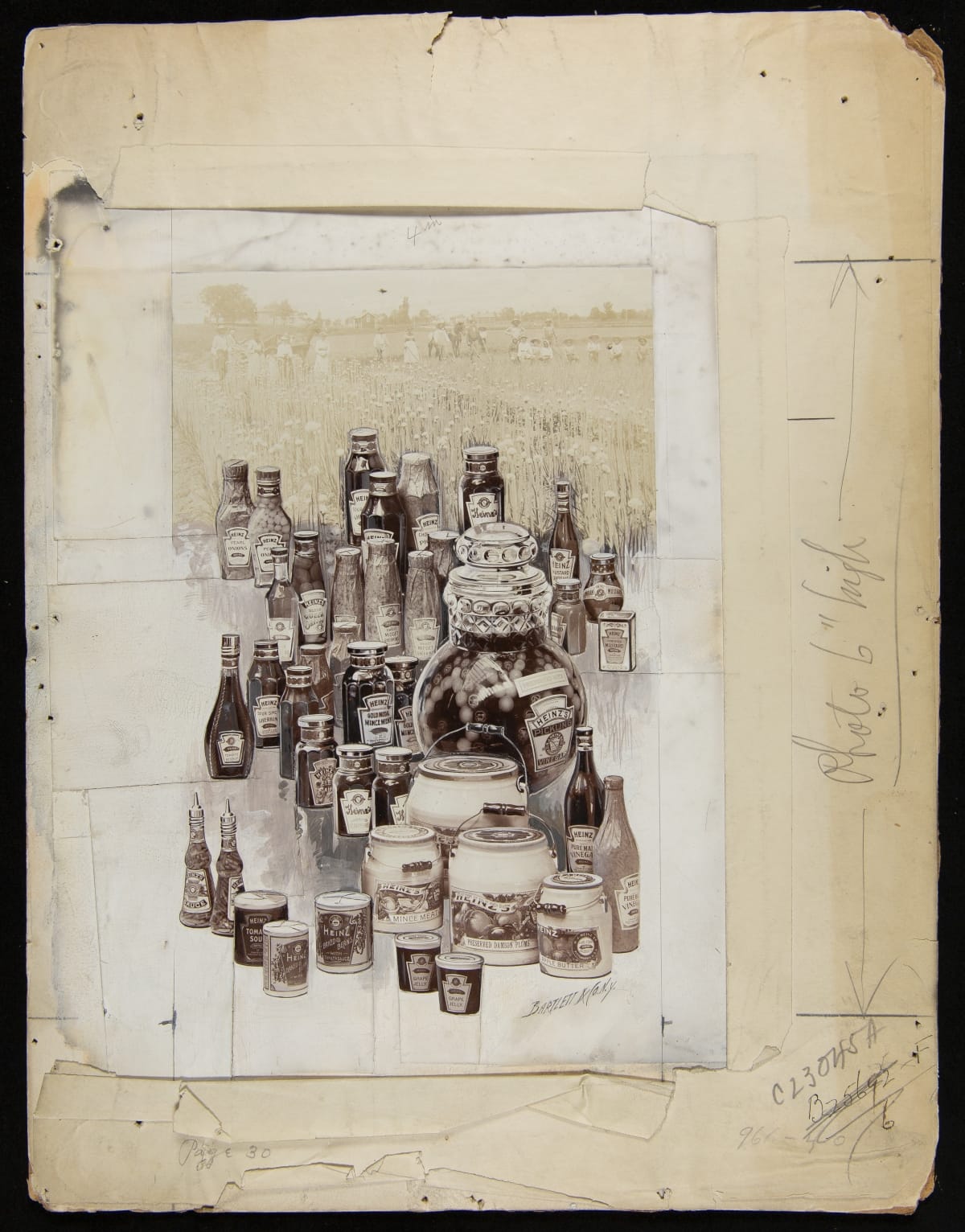
- Advertising Layout of Heinz Products, Farm Field and Employees in Background, circa 1909 - The H.J. Heinz Company employed ambitious and comprehensive advertising strategies to meet consumers at home, in stores, and everywhere in between. Drawings, illustrations and modified photographs of Heinz products were often used for advertising and in publications. This advertising layout represents a step in the marketing process where the size and arrangement are taken into consideration before the final advertisement is created.
- circa 1909
- Collections - Artifact
Advertising Layout of Heinz Products, Farm Field and Employees in Background, circa 1909
The H.J. Heinz Company employed ambitious and comprehensive advertising strategies to meet consumers at home, in stores, and everywhere in between. Drawings, illustrations and modified photographs of Heinz products were often used for advertising and in publications. This advertising layout represents a step in the marketing process where the size and arrangement are taken into consideration before the final advertisement is created.