
Search
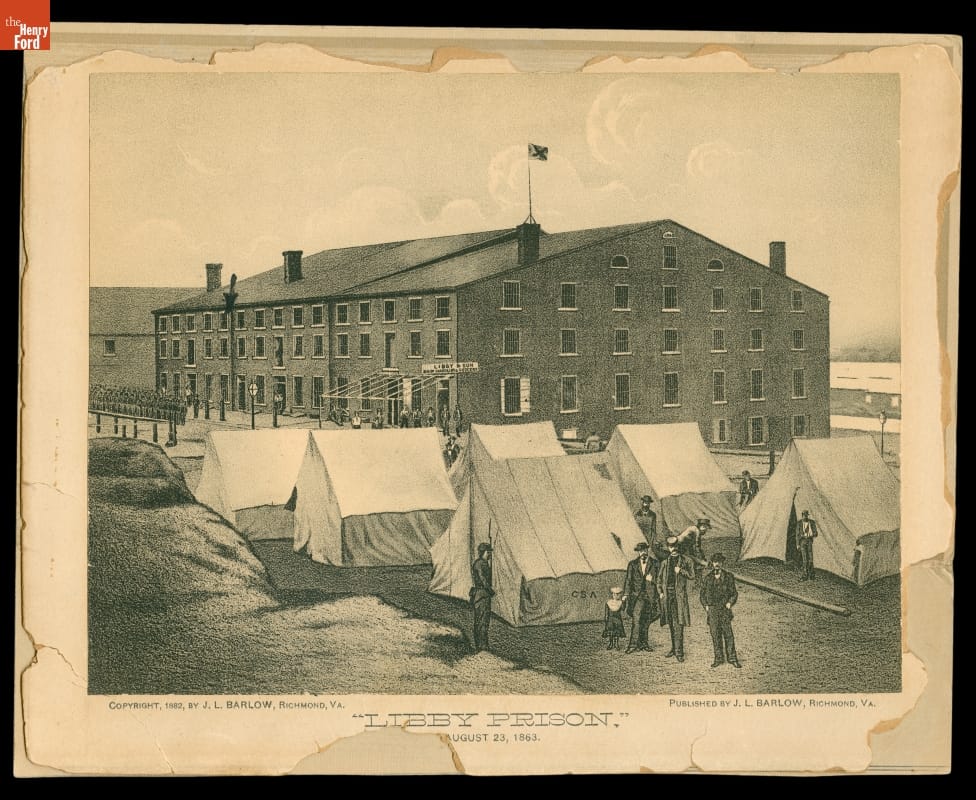
- Lithograph, Libby Prison as it Appeared on August 23, 1863 - This 1880s print is based on an 1863 photograph of the infamous Libby Prison in Richmond, Virginia. It belonged to Union Army Captain Milton Russell, who spent a year in the harsh conditions of this warehouse-turned-prison as a prisoner of war. Russell drew the arrow to mark the top floor room where he was allotted living space during his imprisonment.
- August 23, 1863
- Collections - Artifact
Lithograph, Libby Prison as it Appeared on August 23, 1863
This 1880s print is based on an 1863 photograph of the infamous Libby Prison in Richmond, Virginia. It belonged to Union Army Captain Milton Russell, who spent a year in the harsh conditions of this warehouse-turned-prison as a prisoner of war. Russell drew the arrow to mark the top floor room where he was allotted living space during his imprisonment.
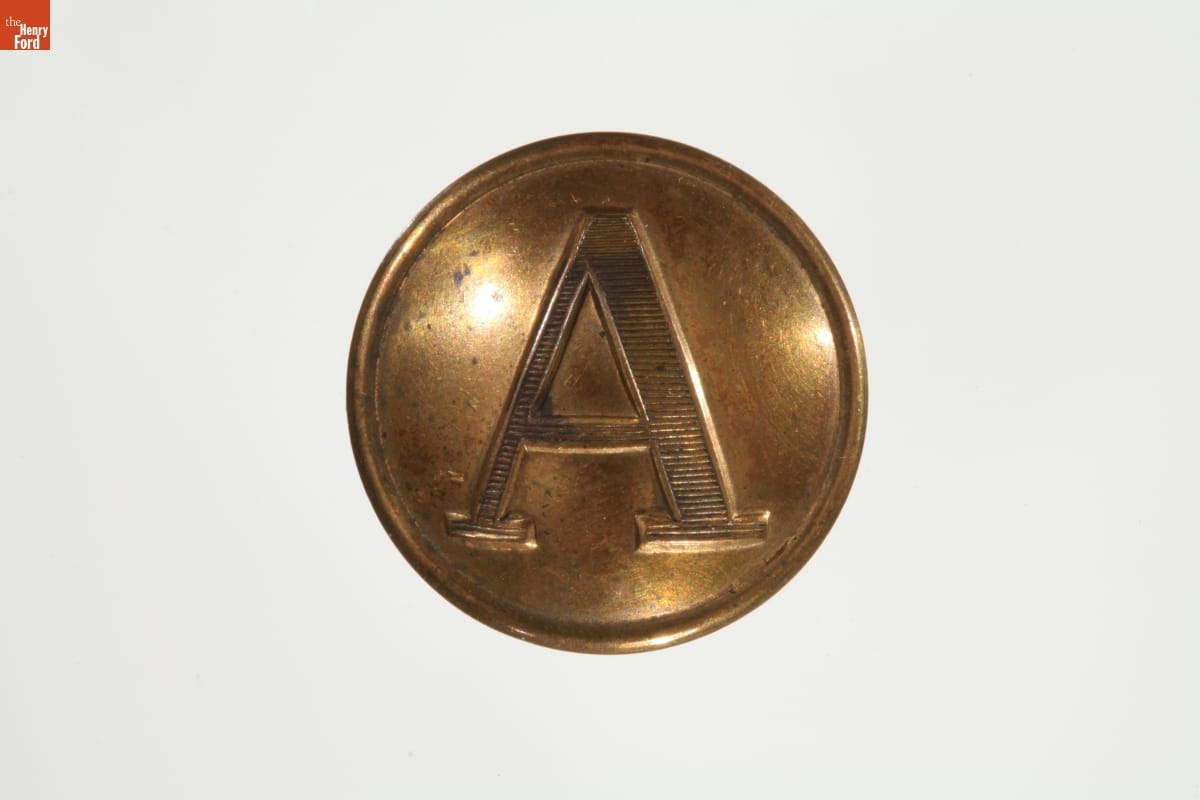
- Confederate Artillery Uniform Button, 1861-1864 - During the Civil War, military uniform buttons might identify the branch of service, state, or rank of the wearer. This button design was used by Confederate artillery units in the South.
- 1861-1864
- Collections - Artifact
Confederate Artillery Uniform Button, 1861-1864
During the Civil War, military uniform buttons might identify the branch of service, state, or rank of the wearer. This button design was used by Confederate artillery units in the South.
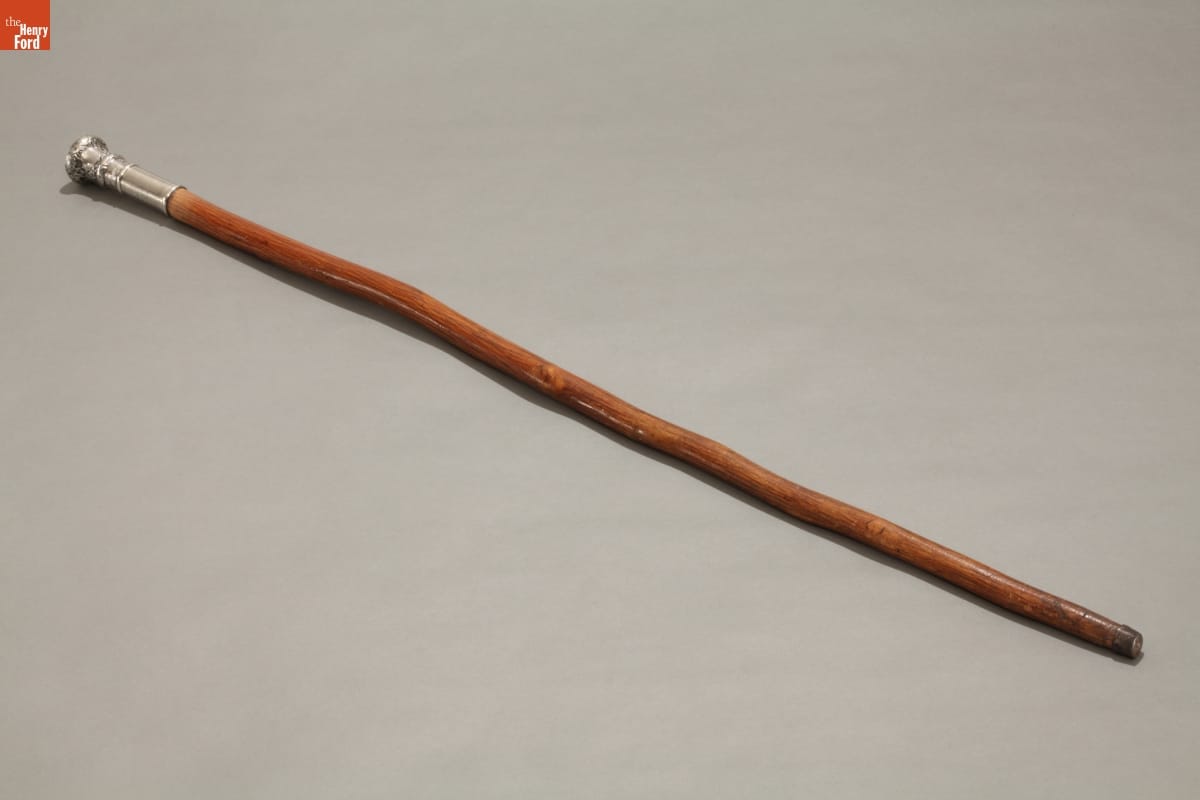
- Walking Stick Commemorating Battle of Shiloh - In April 1862, Union Army Captain Milton Russell retrieved a tree branch from the battlefield just after the fighting ended at Shiloh in Tennessee -- a costly Union victory with a staggering loss of life. Russell sent the branch home to his father in Indiana. It was later made into this walking stick as a memento of the Civil War.
- April 07, 1862
- Collections - Artifact
Walking Stick Commemorating Battle of Shiloh
In April 1862, Union Army Captain Milton Russell retrieved a tree branch from the battlefield just after the fighting ended at Shiloh in Tennessee -- a costly Union victory with a staggering loss of life. Russell sent the branch home to his father in Indiana. It was later made into this walking stick as a memento of the Civil War.
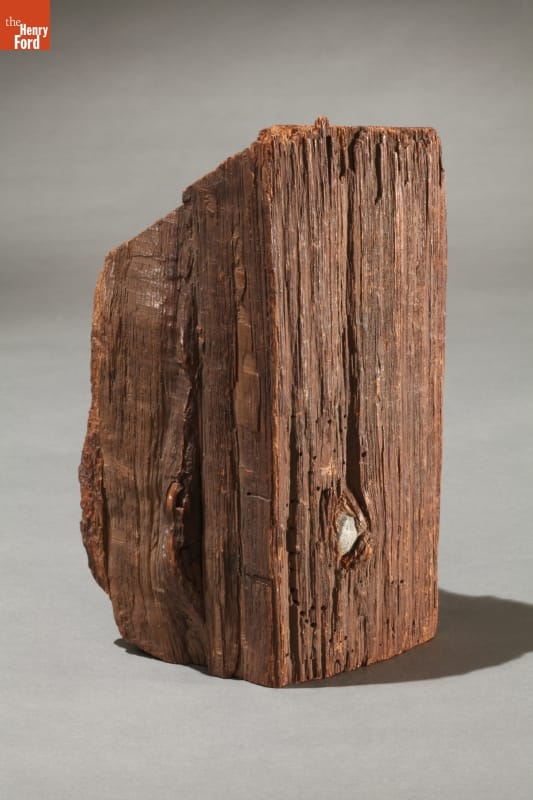
- Souvenir Tree Limb Containing Battlefield Bullet, 1861-1865 - Some Civil War soldiers took home mementos from the battlefield. Others retrieved "souvenirs" during visits to the site of an earlier battle. These bullet-pierced pieces of wood belonged to Union Army Captain Milton Russell.
- 1861-1865
- Collections - Artifact
Souvenir Tree Limb Containing Battlefield Bullet, 1861-1865
Some Civil War soldiers took home mementos from the battlefield. Others retrieved "souvenirs" during visits to the site of an earlier battle. These bullet-pierced pieces of wood belonged to Union Army Captain Milton Russell.
- "Capture of Fort Fisher, January 15, 1865" -
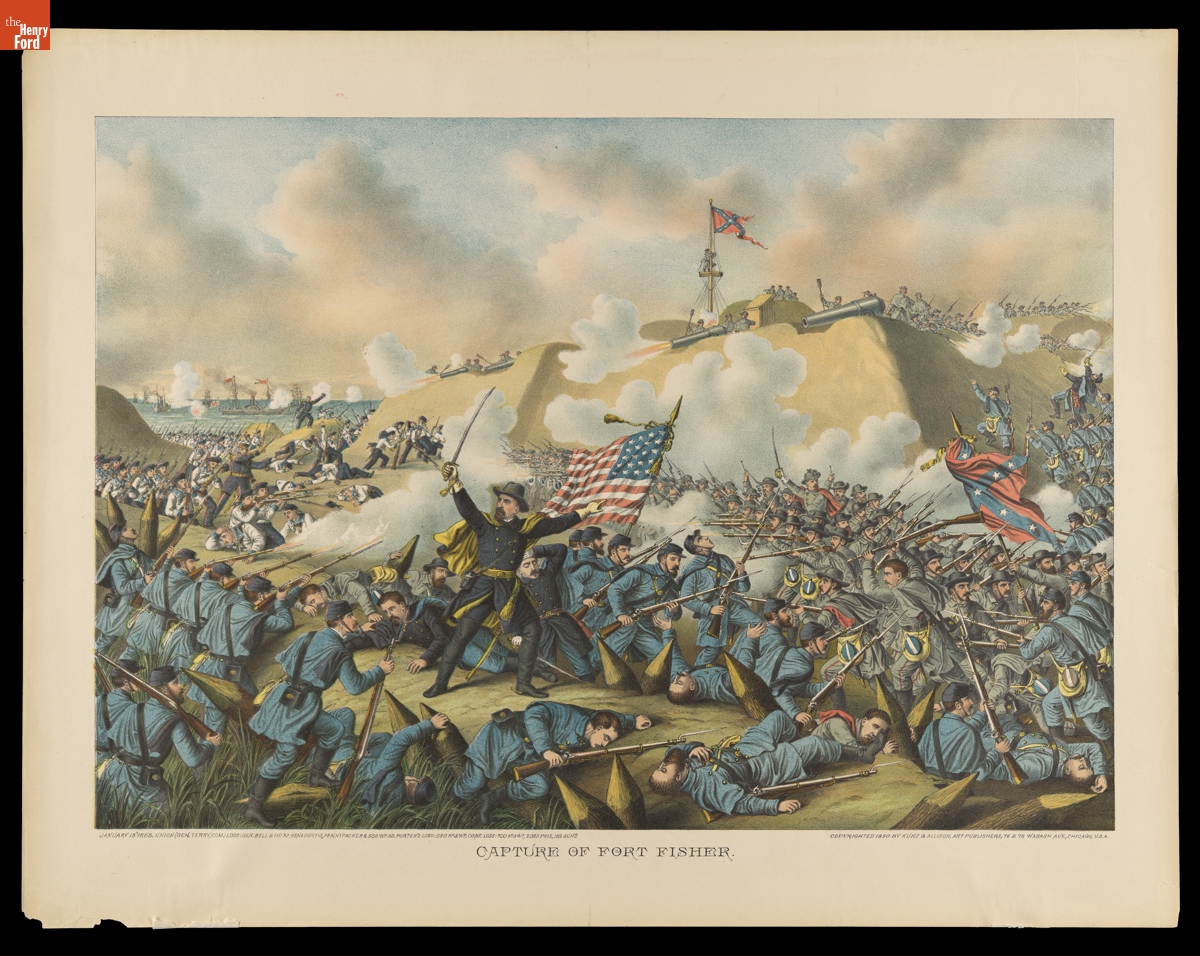
- January 01, 1865
- Collections - Artifact
"Capture of Fort Fisher, January 15, 1865"
- "Battle Scenes of the Rebellion" Aftermath of Battle, Civil War Panorama - In the 1880s, Thomas Clarkson Gordon, a self-taught artist and Civil War veteran, created a panorama depicting scenes from the Civil War. Gordon stitched together 15 paintings -- each 7 by 14 feet -- into a canvas roll more than 100 feet long. He toured his multi-paneled panorama throughout eastern Indiana, retelling the history of the conflict through his vivid illustrations.
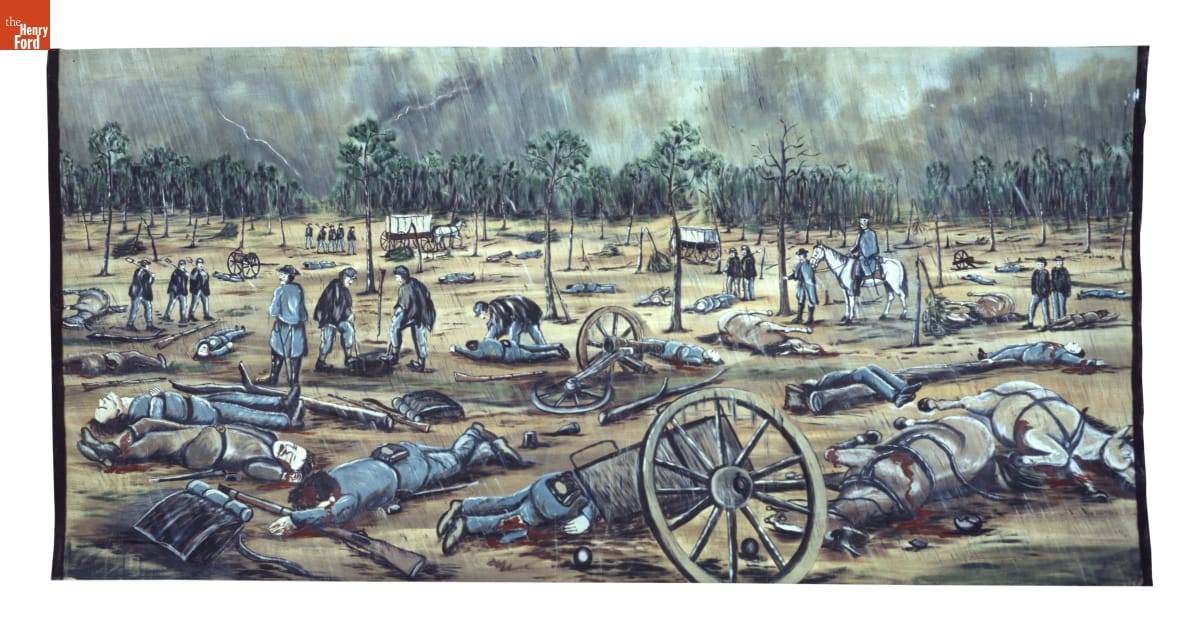
- 1861-1865
- Collections - Artifact
"Battle Scenes of the Rebellion" Aftermath of Battle, Civil War Panorama
In the 1880s, Thomas Clarkson Gordon, a self-taught artist and Civil War veteran, created a panorama depicting scenes from the Civil War. Gordon stitched together 15 paintings -- each 7 by 14 feet -- into a canvas roll more than 100 feet long. He toured his multi-paneled panorama throughout eastern Indiana, retelling the history of the conflict through his vivid illustrations.
- "Battle Scenes of the Rebellion" Battle of Stones River, Civil War Panorama - In the 1880s, Thomas Clarkson Gordon, a self-taught artist and Civil War veteran, created a panorama depicting scenes from the Civil War. Gordon stitched together 15 paintings -- each 7 by 14 feet -- into a canvas roll more than 100 feet long. He toured his multi-paneled panorama throughout eastern Indiana, retelling the history of the conflict through his vivid illustrations.
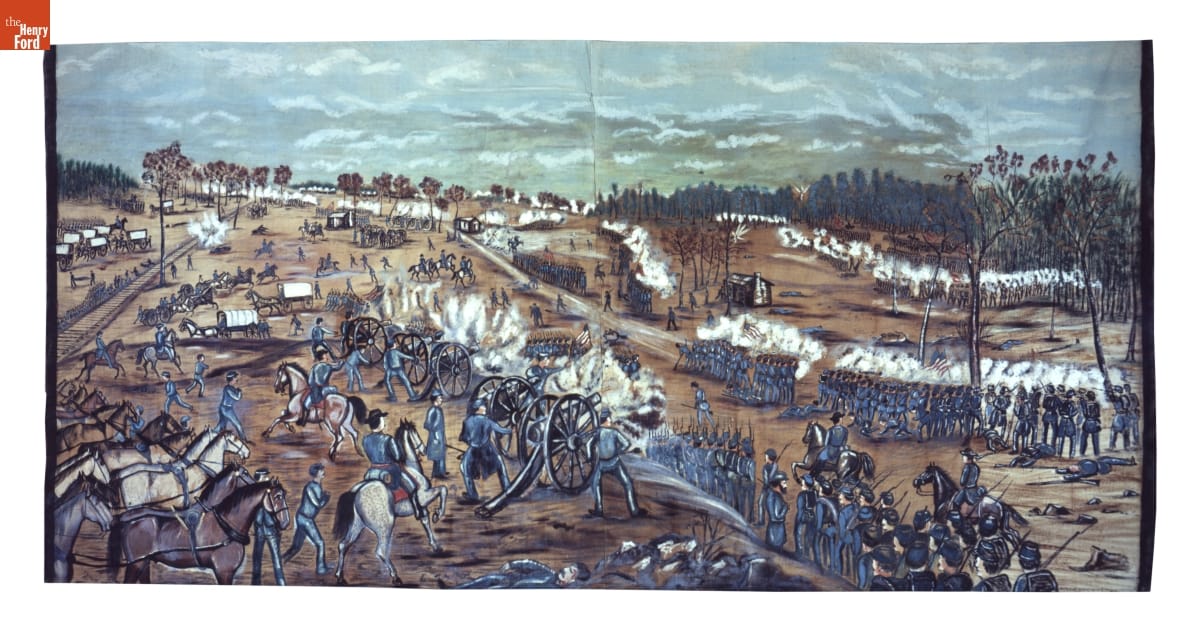
- 31 December 1862-02 January 1863
- Collections - Artifact
"Battle Scenes of the Rebellion" Battle of Stones River, Civil War Panorama
In the 1880s, Thomas Clarkson Gordon, a self-taught artist and Civil War veteran, created a panorama depicting scenes from the Civil War. Gordon stitched together 15 paintings -- each 7 by 14 feet -- into a canvas roll more than 100 feet long. He toured his multi-paneled panorama throughout eastern Indiana, retelling the history of the conflict through his vivid illustrations.
- "Battle Scenes of the Rebellion" Jackson's Forces Crossing the Potomac at White's Ford, Civil War Panorama - In the 1880s, Thomas Clarkson Gordon, a self-taught artist and Civil War veteran, created a panorama depicting scenes from the Civil War. Gordon stitched together 15 paintings -- each 7 by 14 feet -- into a canvas roll more than 100 feet long. He toured his multi-paneled panorama throughout eastern Indiana, retelling the history of the conflict through his vivid illustrations.
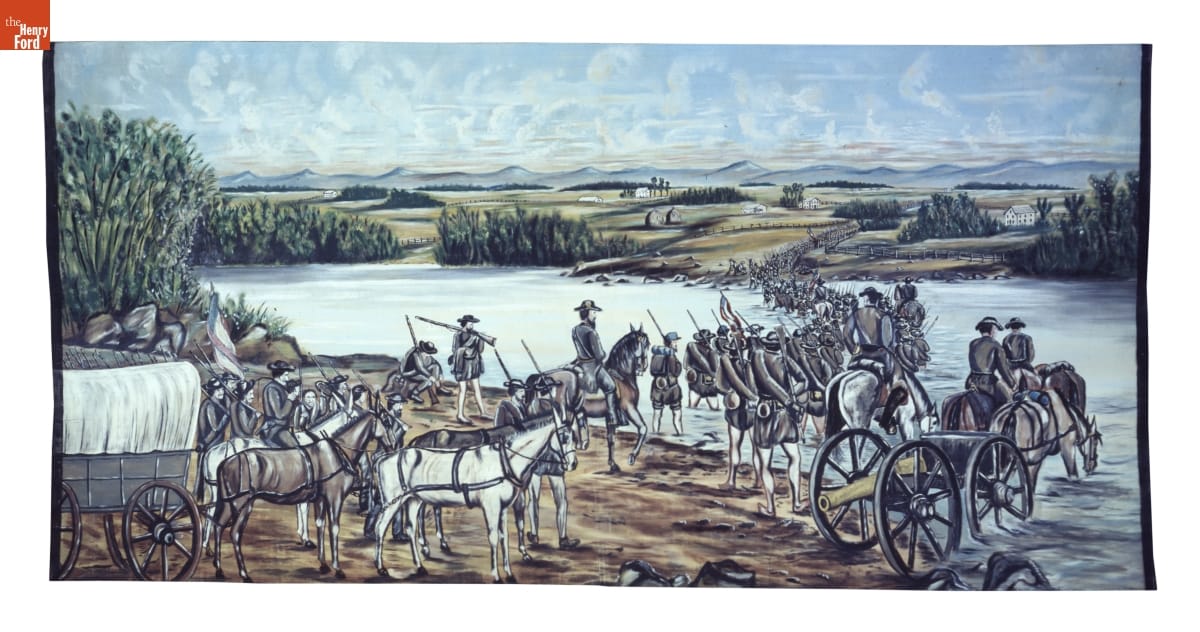
- October 10, 1862
- Collections - Artifact
"Battle Scenes of the Rebellion" Jackson's Forces Crossing the Potomac at White's Ford, Civil War Panorama
In the 1880s, Thomas Clarkson Gordon, a self-taught artist and Civil War veteran, created a panorama depicting scenes from the Civil War. Gordon stitched together 15 paintings -- each 7 by 14 feet -- into a canvas roll more than 100 feet long. He toured his multi-paneled panorama throughout eastern Indiana, retelling the history of the conflict through his vivid illustrations.
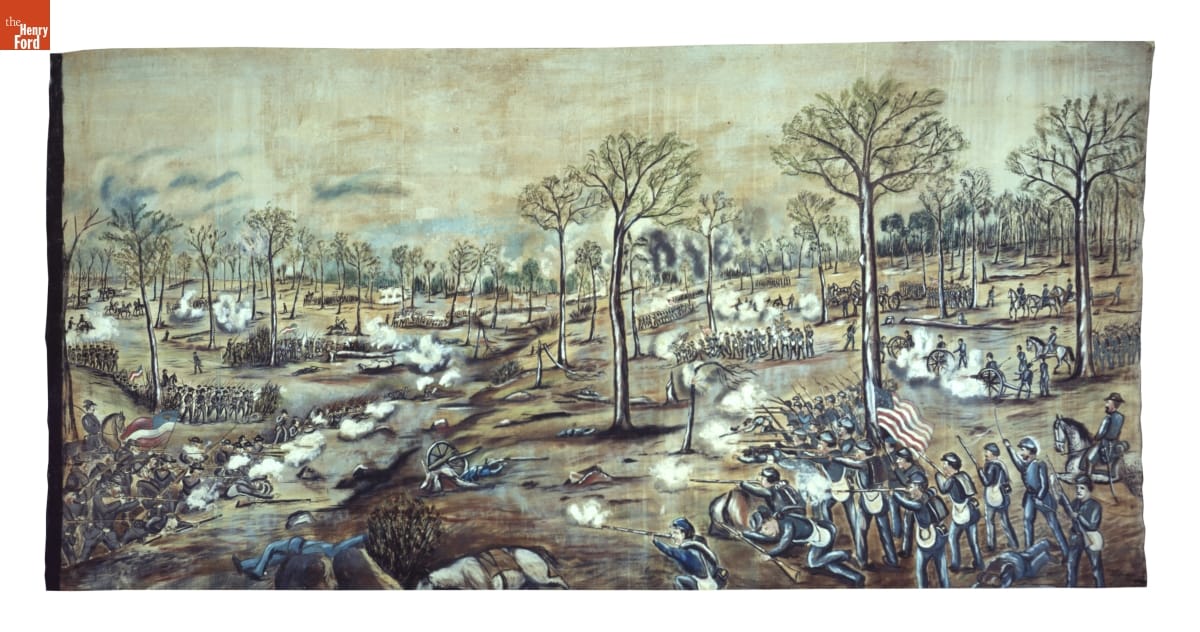
- "Battle Scenes of the Rebellion" Battle of Shiloh, April, 1862, Civil War Panorama - In the 1880s, Thomas Clarkson Gordon, a self-taught artist and Civil War veteran, created a panorama depicting scenes from the Civil War. Gordon stitched together 15 paintings -- each 7 by 14 feet -- into a canvas roll more than 100 feet long. He toured his multi-paneled panorama throughout eastern Indiana, retelling the history of the conflict through his vivid illustrations.
- April 01, 1862
- Collections - Artifact
"Battle Scenes of the Rebellion" Battle of Shiloh, April, 1862, Civil War Panorama
In the 1880s, Thomas Clarkson Gordon, a self-taught artist and Civil War veteran, created a panorama depicting scenes from the Civil War. Gordon stitched together 15 paintings -- each 7 by 14 feet -- into a canvas roll more than 100 feet long. He toured his multi-paneled panorama throughout eastern Indiana, retelling the history of the conflict through his vivid illustrations.
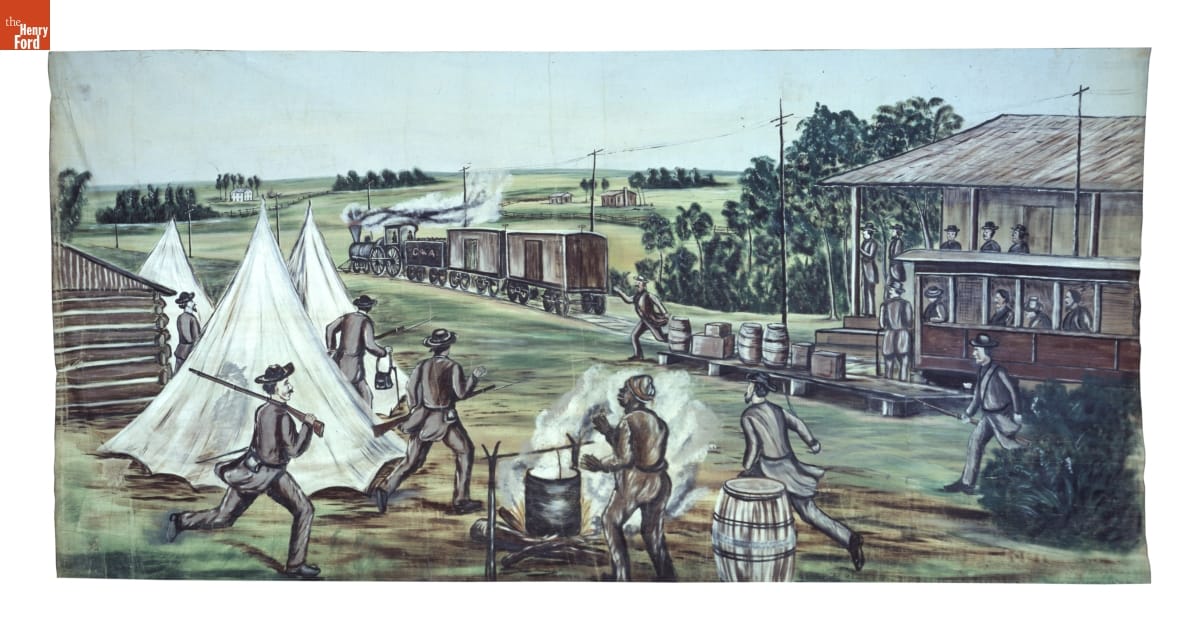
- "Battle Scenes of the Rebellion" Captured Train, April 12, 1862, Civil War Panorama - In the 1880s, Thomas Clarkson Gordon, a self-taught artist and Civil War veteran, created a panorama depicting scenes from the Civil War. Gordon stitched together 15 paintings -- each 7 by 14 feet -- into a canvas roll more than 100 feet long. He toured his multi-paneled panorama throughout eastern Indiana, retelling the history of the conflict through his vivid illustrations.
- April 12, 1862
- Collections - Artifact
"Battle Scenes of the Rebellion" Captured Train, April 12, 1862, Civil War Panorama
In the 1880s, Thomas Clarkson Gordon, a self-taught artist and Civil War veteran, created a panorama depicting scenes from the Civil War. Gordon stitched together 15 paintings -- each 7 by 14 feet -- into a canvas roll more than 100 feet long. He toured his multi-paneled panorama throughout eastern Indiana, retelling the history of the conflict through his vivid illustrations.