
Search
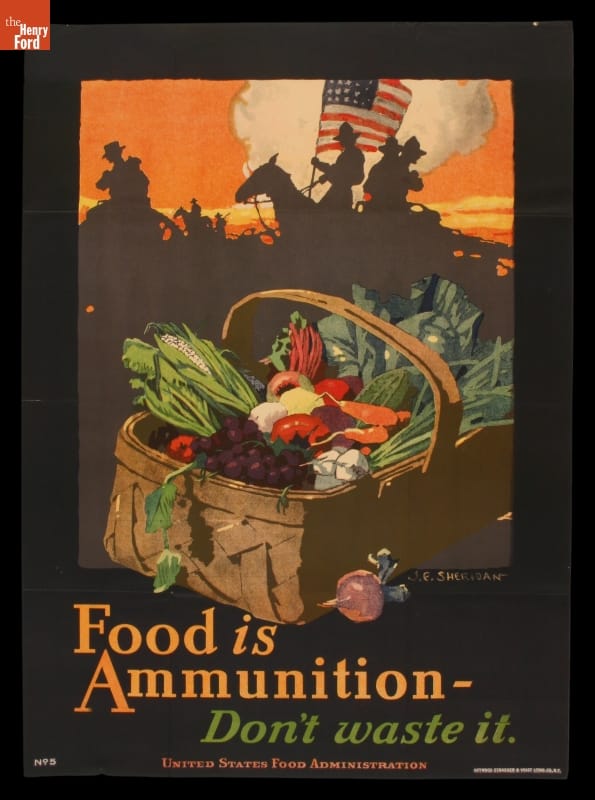
- World War I Poster, "Food is Ammunition-- Don't Waste It," circa 1918 - During the First World War, governments of all the warring nations used poster campaigns to encourage civilian and military support of the war effort. Artists widely used an innovative advertising technique for these posters that moved away from a factual depiction of a product's material or event's subject to an emphasis on appealing to the viewer's emotions.
- circa 1918
- Collections - Artifact
World War I Poster, "Food is Ammunition-- Don't Waste It," circa 1918
During the First World War, governments of all the warring nations used poster campaigns to encourage civilian and military support of the war effort. Artists widely used an innovative advertising technique for these posters that moved away from a factual depiction of a product's material or event's subject to an emphasis on appealing to the viewer's emotions.
- Book, "Successful Farming's Soils Book," 1959 -

- 1959
- Collections - Artifact
Book, "Successful Farming's Soils Book," 1959
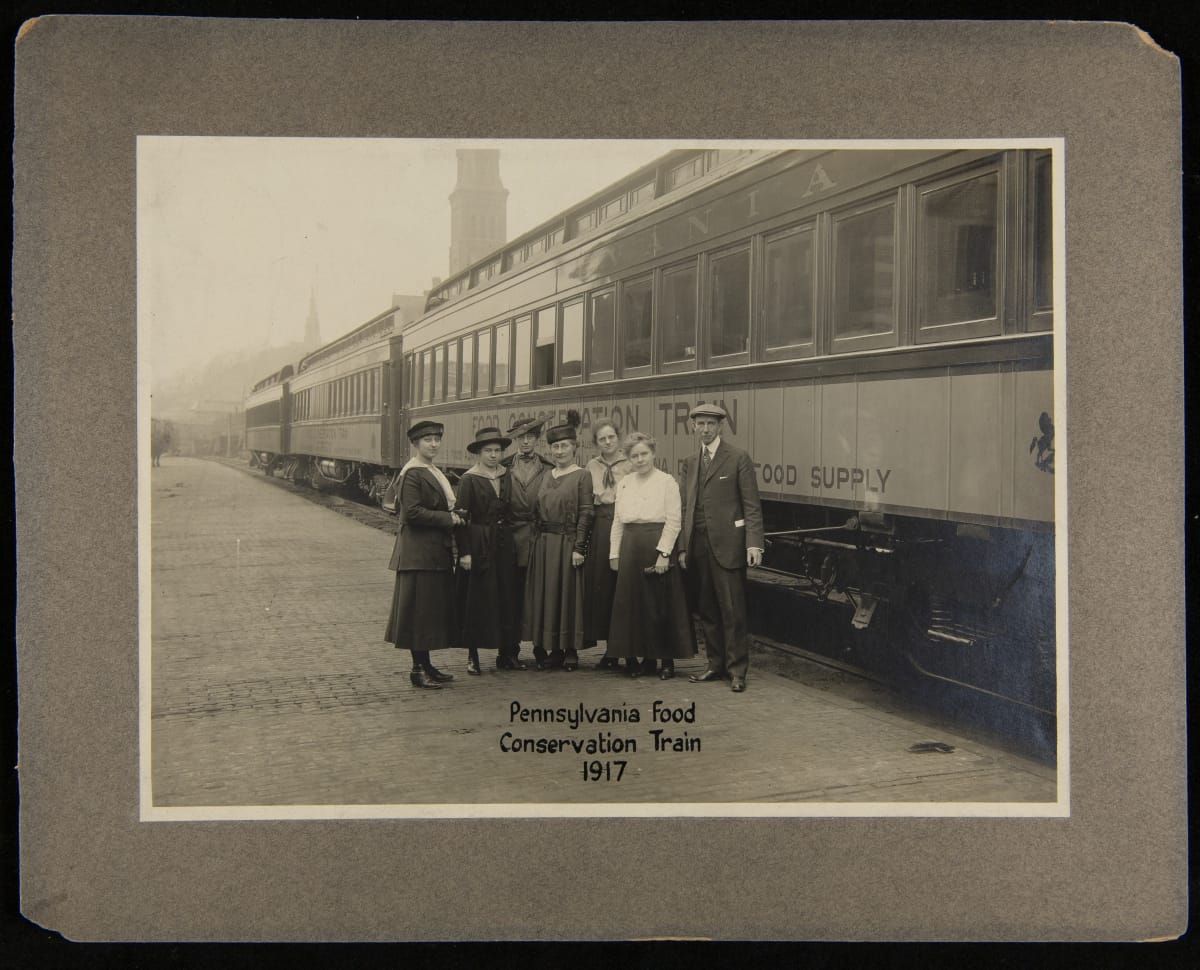
- Food Conservation Train, Pennsylvania, October 1917 - The H.J. Heinz Company had humble beginnings in 1869 and has since become one of the most recognized names in the food industry today. This artifact, from the H.J. Heinz Company Collection, is one from The Henry Ford's sizeable collection of material dedicated to telling the company's history of innovative business practices and marketing techniques.
- October 01, 1917
- Collections - Artifact
Food Conservation Train, Pennsylvania, October 1917
The H.J. Heinz Company had humble beginnings in 1869 and has since become one of the most recognized names in the food industry today. This artifact, from the H.J. Heinz Company Collection, is one from The Henry Ford's sizeable collection of material dedicated to telling the company's history of innovative business practices and marketing techniques.
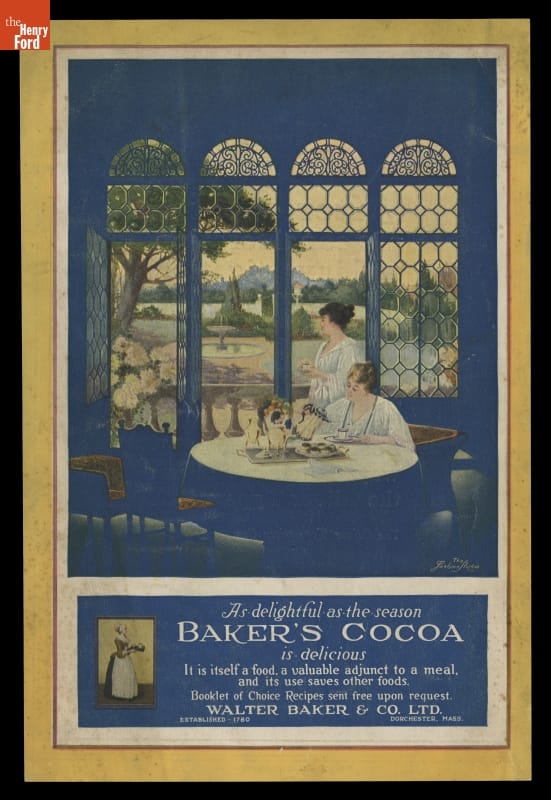
- Baker's Cocoa Advertisement, 1918, "As Delightful as the Season" - Baker's Chocolate Company is the oldest manufacturer of chocolate in the United States, dating back to 1780. It remained within the Baker family for over a century before being purchased by the Forbes Syndicate in 1896. Through advertisements, like this one, found in local and national newspapers as well as magazines, the company became a household name.
- 1918
- Collections - Artifact
Baker's Cocoa Advertisement, 1918, "As Delightful as the Season"
Baker's Chocolate Company is the oldest manufacturer of chocolate in the United States, dating back to 1780. It remained within the Baker family for over a century before being purchased by the Forbes Syndicate in 1896. Through advertisements, like this one, found in local and national newspapers as well as magazines, the company became a household name.
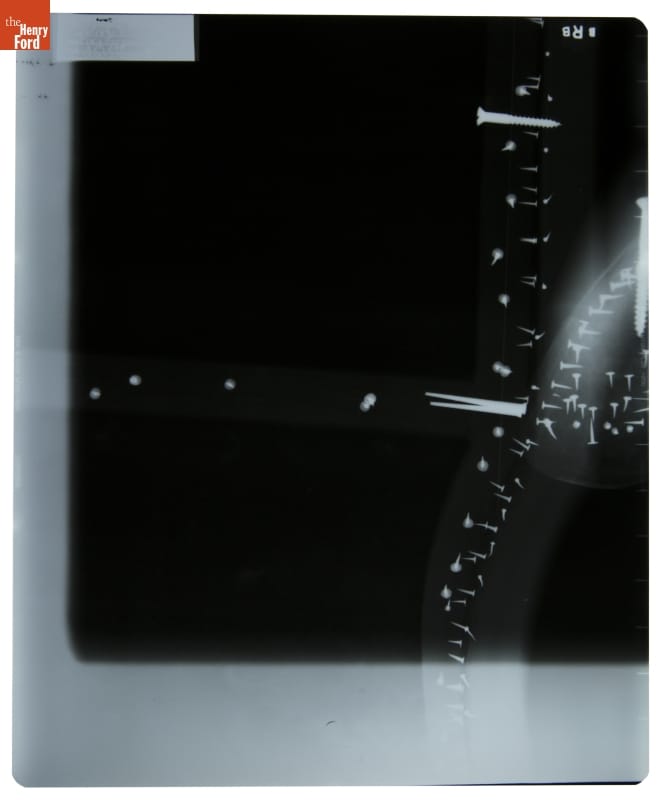
- X-Ray of the Chair in Which Abraham Lincoln Was Shot at Fords Theatre, Imaged 1999 - In 1999, The Henry Ford carefully assessed and treated its Lincoln rocker. X-Ray photography helped conservators locate seat springs and identify the grid and condition of the seat's lashing twines. Conservators then compressed and secured some of the springs to alleviate tension on the fragile upholstery fabric. This preservation effort ensured that visitors can view this historic American icon for years to come.
- February 01, 1999
- Collections - Artifact
X-Ray of the Chair in Which Abraham Lincoln Was Shot at Fords Theatre, Imaged 1999
In 1999, The Henry Ford carefully assessed and treated its Lincoln rocker. X-Ray photography helped conservators locate seat springs and identify the grid and condition of the seat's lashing twines. Conservators then compressed and secured some of the springs to alleviate tension on the fragile upholstery fabric. This preservation effort ensured that visitors can view this historic American icon for years to come.
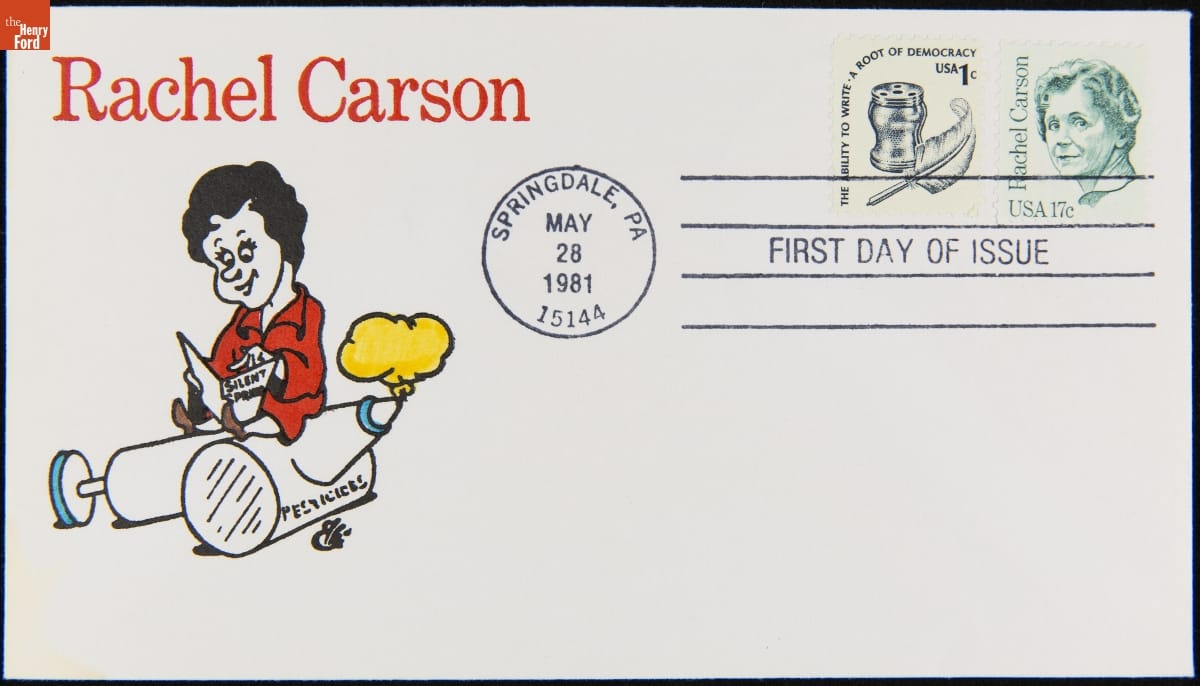
- First Day Cover Honoring Rachel Carson, May 28, 1981 - Marine biologist Rachel Carson helped spark the environmental movements of the 1960s with her book <EM>Silent Spring</EM>. It described how widespread pesticide use, in particular DDT, was harming and killing birds and other animals as well as threatening the health of humans. Her book helped the general population understand the interconnected nature of ecosystems and how localized polluting affects larger natural systems.
- May 28, 1981
- Collections - Artifact
First Day Cover Honoring Rachel Carson, May 28, 1981
Marine biologist Rachel Carson helped spark the environmental movements of the 1960s with her book Silent Spring. It described how widespread pesticide use, in particular DDT, was harming and killing birds and other animals as well as threatening the health of humans. Her book helped the general population understand the interconnected nature of ecosystems and how localized polluting affects larger natural systems.
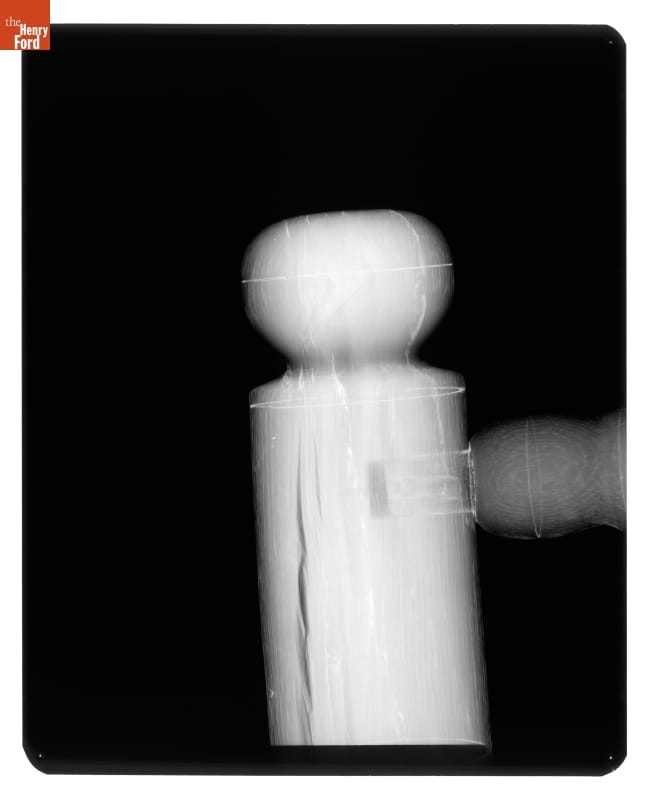
- X-Ray of "Brewster" Chair, Imaged 1977 - In 1977, questions arose about the authenticity of a celebrated 17th-century chair known as the "Brewster Chair" at The Henry Ford. X-Rays showed the mortise holes on the chair were made by drill bits developed in the late 18th or early 19th centuries. Comparisons with 17th-century chairs and woodworking tools helped conservators and curators prove the museum's chair was a modern woodworker's intentional fake.
- June 01, 1977
- Collections - Artifact
X-Ray of "Brewster" Chair, Imaged 1977
In 1977, questions arose about the authenticity of a celebrated 17th-century chair known as the "Brewster Chair" at The Henry Ford. X-Rays showed the mortise holes on the chair were made by drill bits developed in the late 18th or early 19th centuries. Comparisons with 17th-century chairs and woodworking tools helped conservators and curators prove the museum's chair was a modern woodworker's intentional fake.
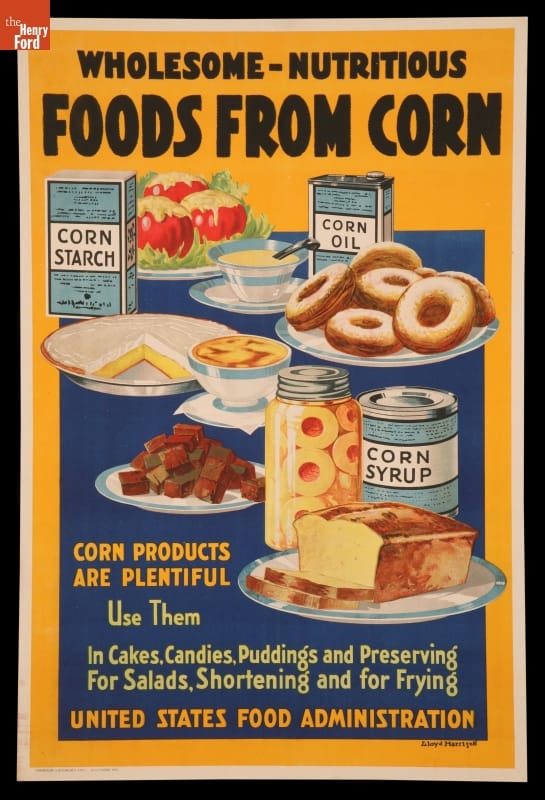
- World War I Poster, "Wholesome - Nutritious Foods from Corn, " 1918 - During the First World War, governments of all the warring nations used poster campaigns to encourage civilian and military support of the war effort. Artists widely used an innovative advertising technique for these posters that moved away from a factual depiction of a product's material or event's subject to an emphasis on appealing to the viewer's emotions.
- 1918
- Collections - Artifact
World War I Poster, "Wholesome - Nutritious Foods from Corn, " 1918
During the First World War, governments of all the warring nations used poster campaigns to encourage civilian and military support of the war effort. Artists widely used an innovative advertising technique for these posters that moved away from a factual depiction of a product's material or event's subject to an emphasis on appealing to the viewer's emotions.
- Simpson's Diner before Restoration, October 7, 1994 -

- October 07, 1994
- Collections - Artifact
Simpson's Diner before Restoration, October 7, 1994
- Simpson's Diner before Restoration, October 7, 1994 -

- October 07, 1994
- Collections - Artifact
Simpson's Diner before Restoration, October 7, 1994