
Search
- Letter from John Quincy Adams to James Madison, 1819 -
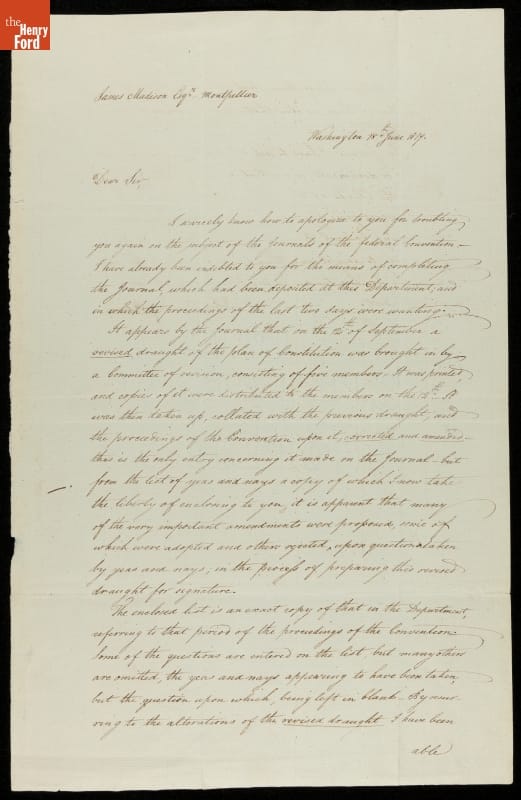
- June 18, 1819
- Collections - Artifact
Letter from John Quincy Adams to James Madison, 1819
- Rights Card, 2025 -
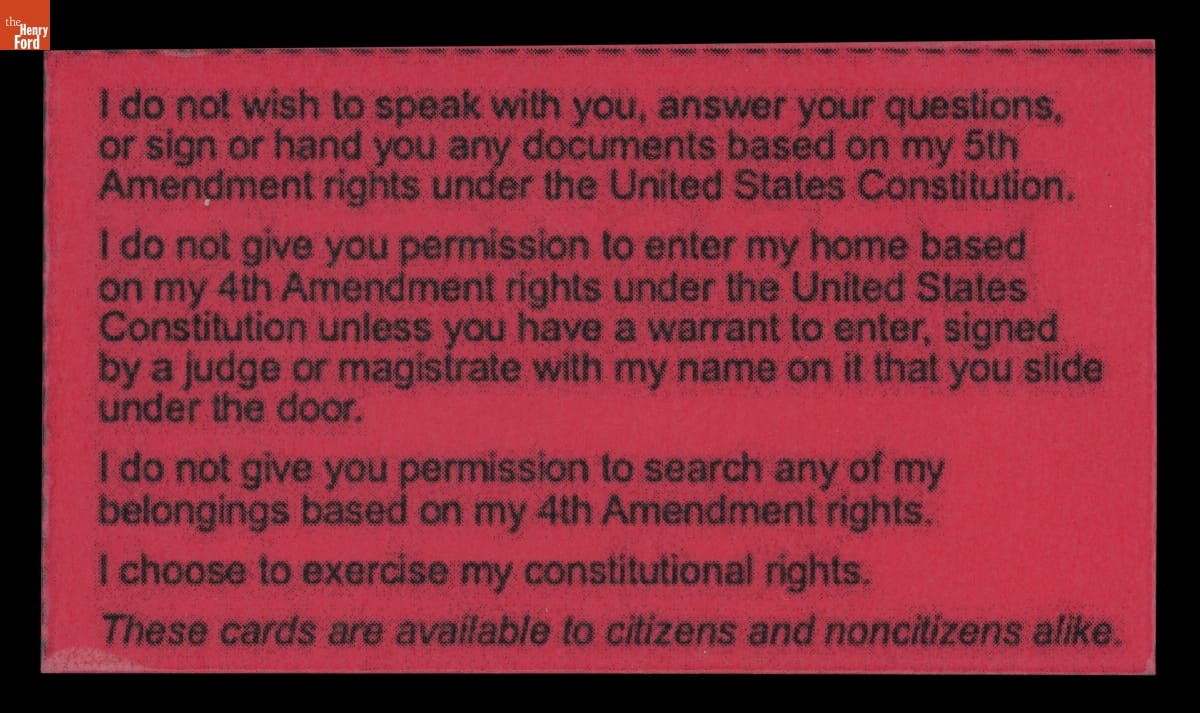
- January 01, 2025
- Collections - Artifact
Rights Card, 2025
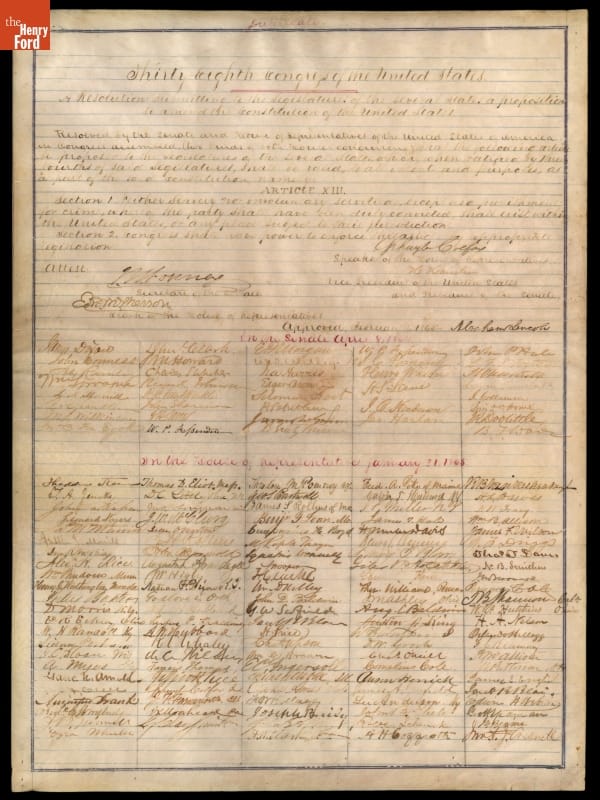
- Joint Resolution of the United States Congress, Proposing the 13th Amendment to Abolish Slavery, 1865 - The 13th Amendment to the Constitution, not the Emancipation Proclamation, formally abolished slavery in the United States, settling the issue which had long plagued the nation. Congress adopted the Amendment in January 1865 and sent it to states, which ratified it in December. The word "Duplicate" at the top of this document indicates the bill had been passed by Congress but had not yet been ratified.
- February 01, 1865
- Collections - Artifact
Joint Resolution of the United States Congress, Proposing the 13th Amendment to Abolish Slavery, 1865
The 13th Amendment to the Constitution, not the Emancipation Proclamation, formally abolished slavery in the United States, settling the issue which had long plagued the nation. Congress adopted the Amendment in January 1865 and sent it to states, which ratified it in December. The word "Duplicate" at the top of this document indicates the bill had been passed by Congress but had not yet been ratified.
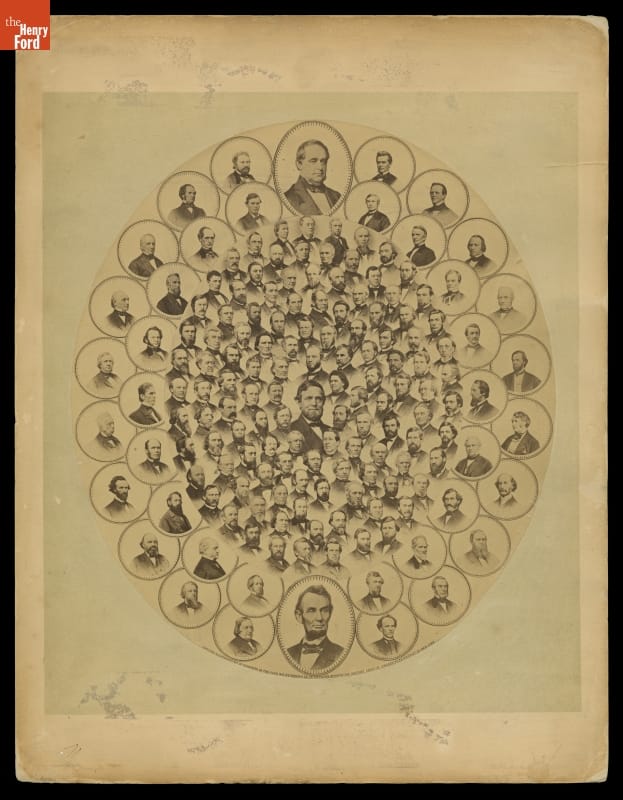
- Photomontage Showing President Lincoln with Congressional Supporters of the Proposed Anti-Slavery Constitutional Amendment, 1865 - The Emancipation Proclamation only declared freedom to slaves in rebel states. So in 1864, President Lincoln drafted a U.S. Constitutional Amendment to legally abolish slavery forever. Congress approved this Thirteenth Amendment January 31, 1865, but it took 10 months before the necessary states ratified it so it would become law. Unfortunately, President Lincoln did not live to see that happen.
- 1865
- Collections - Artifact
Photomontage Showing President Lincoln with Congressional Supporters of the Proposed Anti-Slavery Constitutional Amendment, 1865
The Emancipation Proclamation only declared freedom to slaves in rebel states. So in 1864, President Lincoln drafted a U.S. Constitutional Amendment to legally abolish slavery forever. Congress approved this Thirteenth Amendment January 31, 1865, but it took 10 months before the necessary states ratified it so it would become law. Unfortunately, President Lincoln did not live to see that happen.
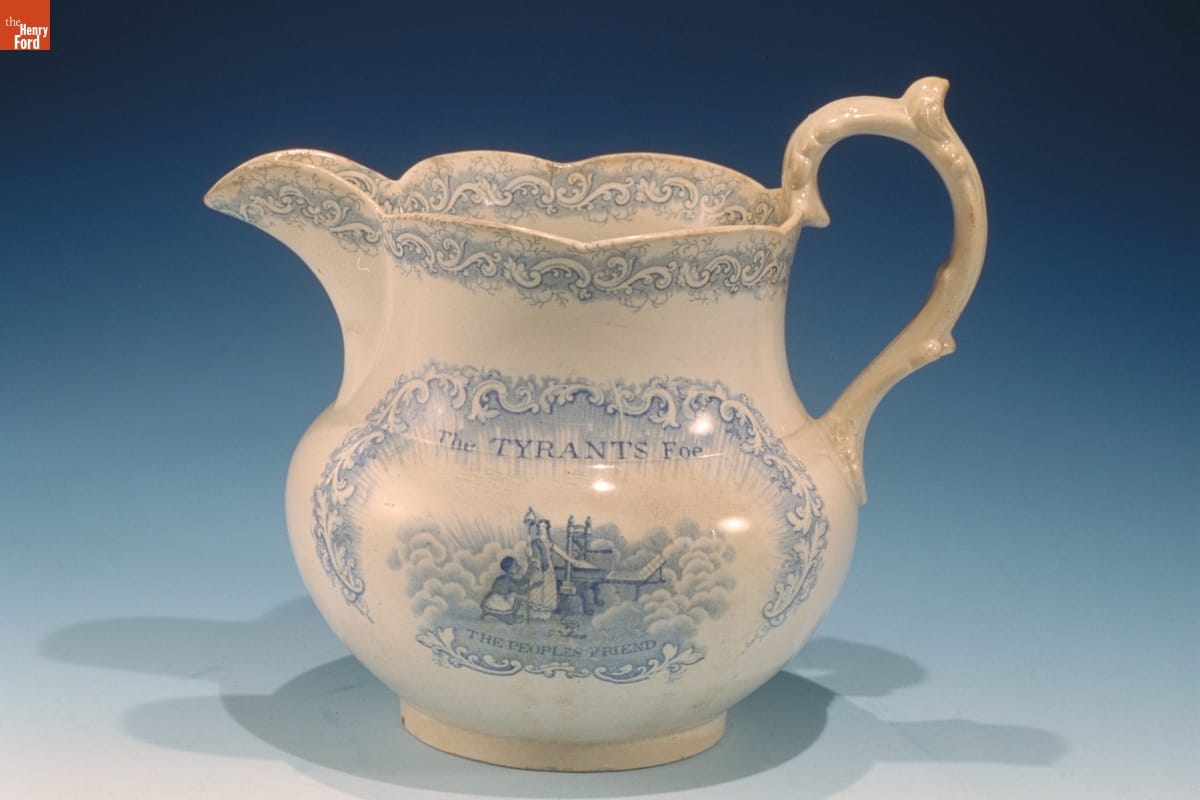
- Transferware Pitcher, circa 1840 - Beginning in the 1830s, some people began to speak out against slavery. Most of these "abolitionists" were white Northerners who had never actually come in contact with enslaved people. This pitcher commemorates the martyrdom of Elijah P. Lovejoy, an anti-slavery newspaper editor in southern Illinois who was murdered by a mob of pro-slavery advocates.
- circa 1840
- Collections - Artifact
Transferware Pitcher, circa 1840
Beginning in the 1830s, some people began to speak out against slavery. Most of these "abolitionists" were white Northerners who had never actually come in contact with enslaved people. This pitcher commemorates the martyrdom of Elijah P. Lovejoy, an anti-slavery newspaper editor in southern Illinois who was murdered by a mob of pro-slavery advocates.
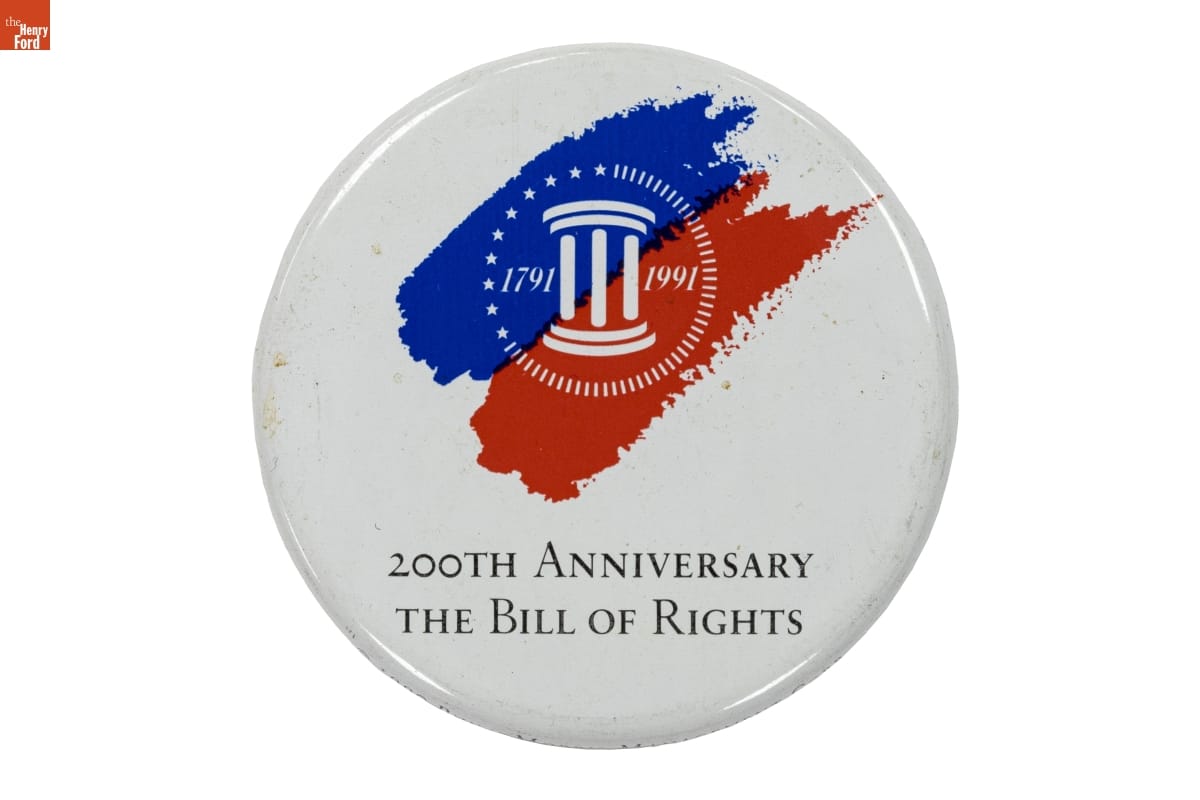
- "200th Anniversary The Bill of Rights" Button, circa 1991 - <html><body>Many Americans in the late 1780s opposed the formation of a new American government under the U.S. Constitution because it lacked a bill of rights. Through compromise, Congress eventually sent twelve rights-related amendments to the states. Ten were ultimately ratified in 1791, becoming known as the "Bill of Rights." This button commemorated the bicentennial of one of the core documents of democracy.</body></html>
- 1991
- Collections - Artifact
"200th Anniversary The Bill of Rights" Button, circa 1991
Many Americans in the late 1780s opposed the formation of a new American government under the U.S. Constitution because it lacked a bill of rights. Through compromise, Congress eventually sent twelve rights-related amendments to the states. Ten were ultimately ratified in 1791, becoming known as the "Bill of Rights." This button commemorated the bicentennial of one of the core documents of democracy.