
Search
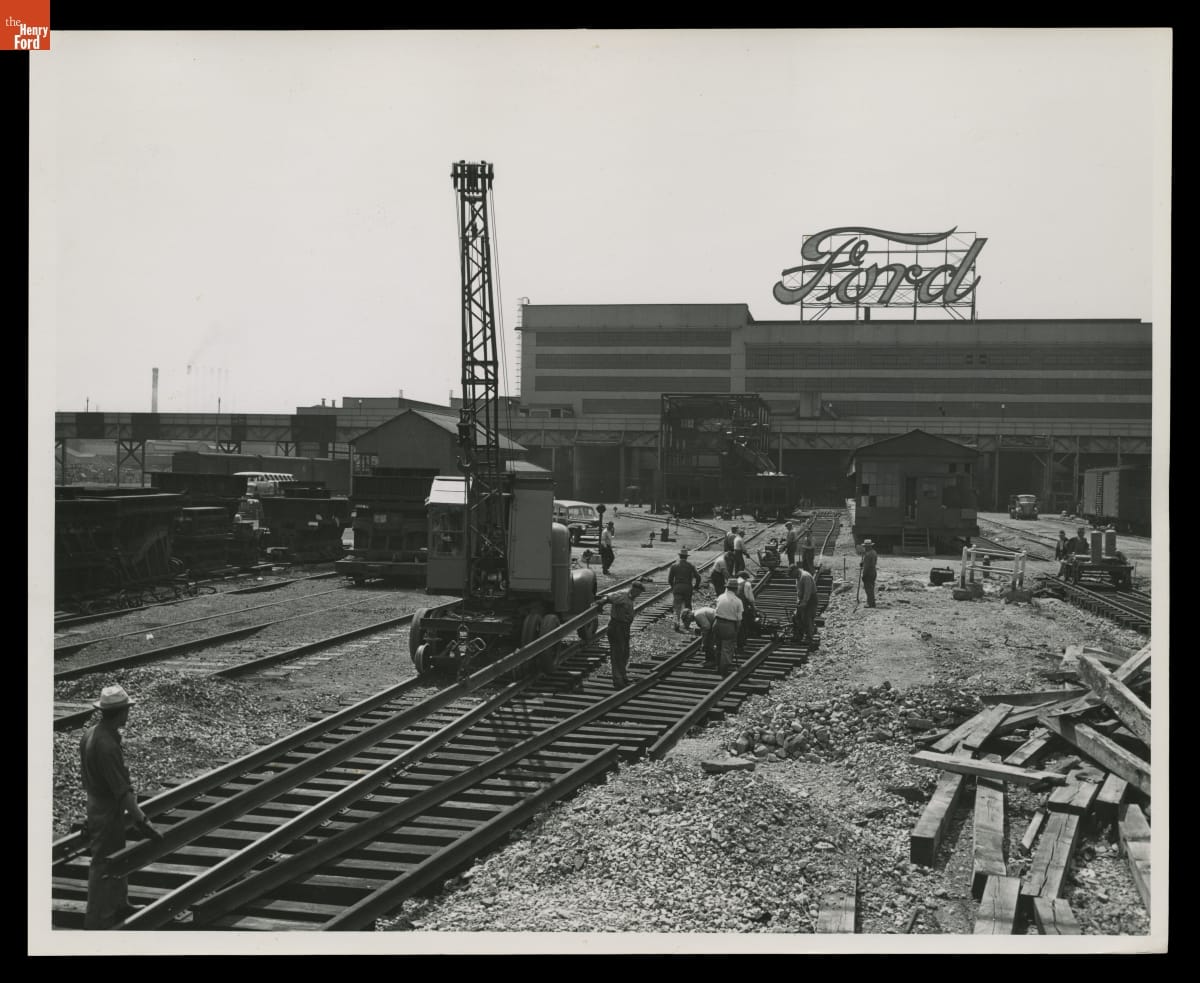
- Construction of Railroad Tracks at the Ford Rouge Plant, 1947 - Some 100 miles of railroad track covered the grounds of Ford Motor Company's Rouge plant. The automaker maintained its own fleet of locomotives to move incoming railcars loaded with raw materials, and outgoing railcars filled with finished parts and automobiles, around the complex. Additionally, specialized tank cars ferried molten iron from the factory's blast furnaces to its foundry.
- June 20, 1947
- Collections - Artifact
Construction of Railroad Tracks at the Ford Rouge Plant, 1947
Some 100 miles of railroad track covered the grounds of Ford Motor Company's Rouge plant. The automaker maintained its own fleet of locomotives to move incoming railcars loaded with raw materials, and outgoing railcars filled with finished parts and automobiles, around the complex. Additionally, specialized tank cars ferried molten iron from the factory's blast furnaces to its foundry.
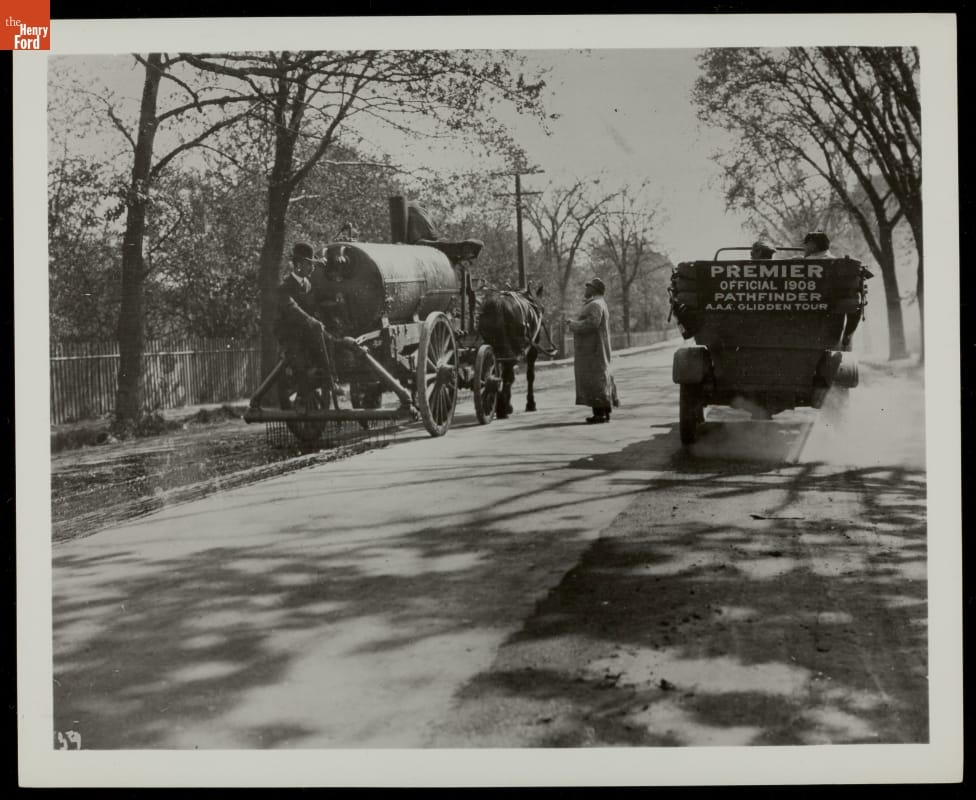
- Glidden Tour 1908 Pathfinder Automobile and Horse-Drawn Road Oiling Tank - In this 1908 photograph, the driver of the Automobile Association of America's (AAA) Official Glidden Tour Pathfinder vehicle talks to a construction worker on the back of a road-oiling tank. The AAA organized Glidden Tours from 1904 through 1913. These grueling endurance runs of several hundred miles brought attention to the poor condition of American roads.
- 1908
- Collections - Artifact
Glidden Tour 1908 Pathfinder Automobile and Horse-Drawn Road Oiling Tank
In this 1908 photograph, the driver of the Automobile Association of America's (AAA) Official Glidden Tour Pathfinder vehicle talks to a construction worker on the back of a road-oiling tank. The AAA organized Glidden Tours from 1904 through 1913. These grueling endurance runs of several hundred miles brought attention to the poor condition of American roads.
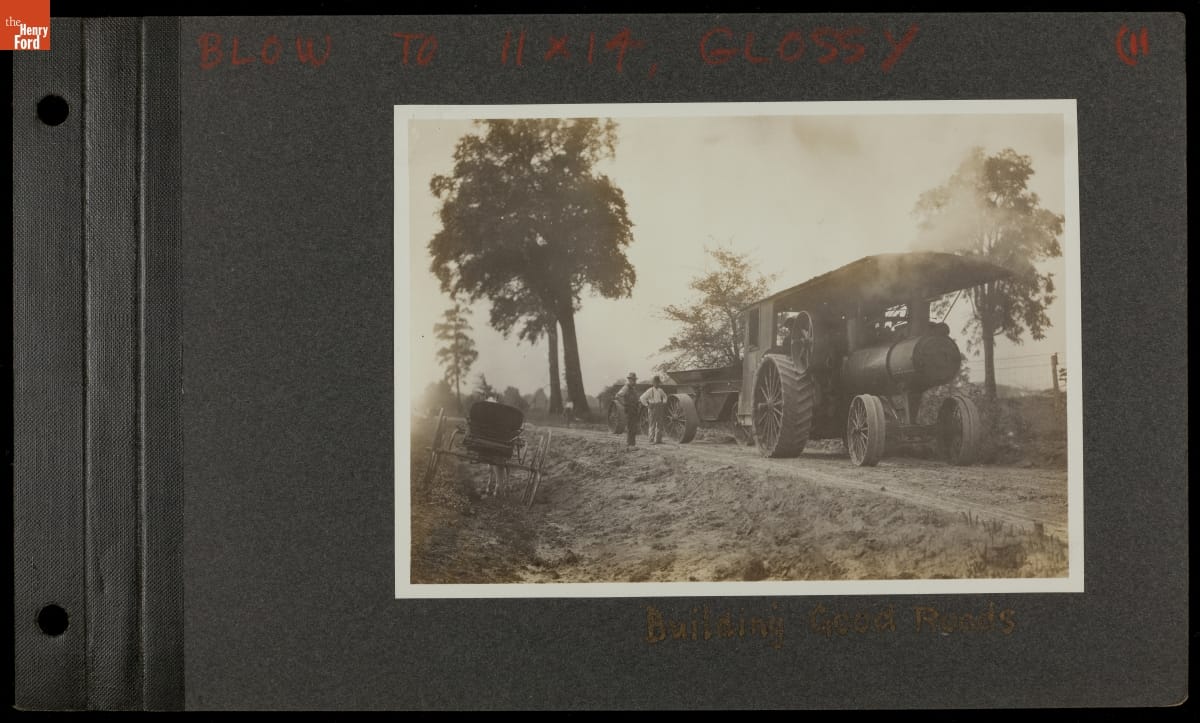
- "Building Good Roads," circa 1910 - In 1913, Henry Ford established Ford Motor Company's photographic department. Though few internal records describe company photography, remaining photographs reveal a wide range of departmental activity. Among many other things, Ford photographers documented a variety of road conditions and road building. This photograph of a construction site includes a horse-drawn wagon and a large steam traction engine.
- circa 1910
- Collections - Artifact
"Building Good Roads," circa 1910
In 1913, Henry Ford established Ford Motor Company's photographic department. Though few internal records describe company photography, remaining photographs reveal a wide range of departmental activity. Among many other things, Ford photographers documented a variety of road conditions and road building. This photograph of a construction site includes a horse-drawn wagon and a large steam traction engine.
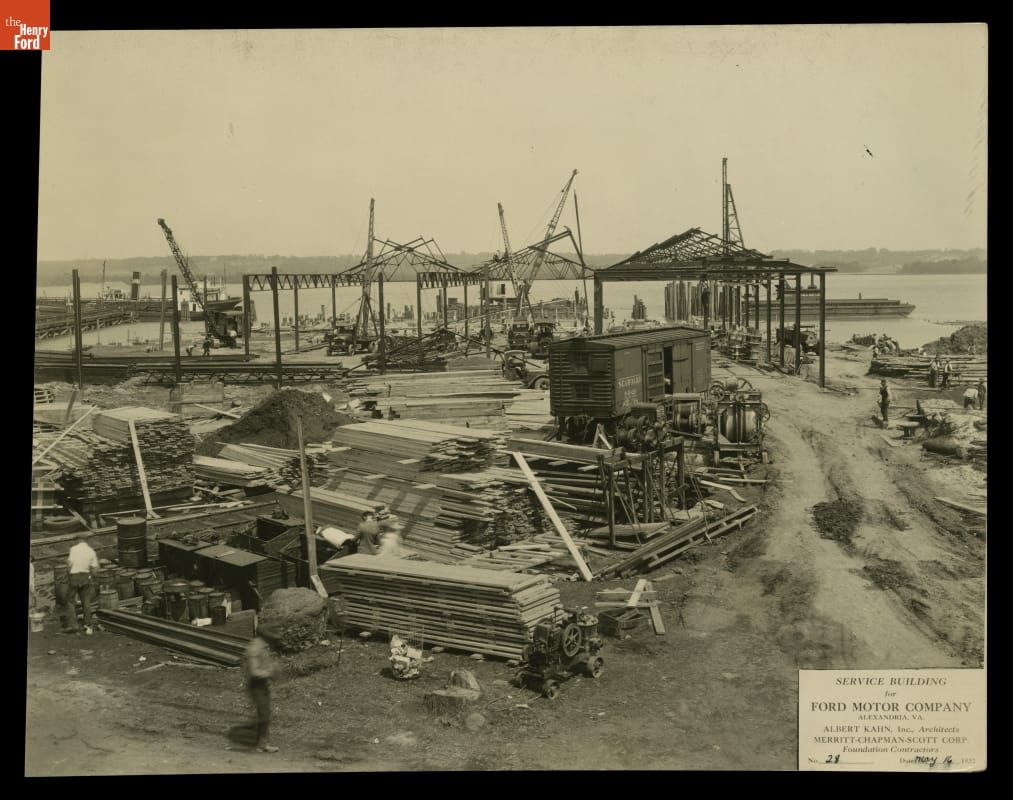
- Construction Progress, B.R. Brown Service Building at Ford Motor Company Plant, Alexandria, Virginia, 1932 - Starting in the 1910s, Ford Motor Company opened domestic assembly plants throughout the United States. These branches were located near most major American cities. Ford's first Alexandria, Virginia, branch -- near Washington, D.C. -- opened in 1917. The company opened a new facility on the Potomac River in 1932. The U.S. Navy converted Ford's waterfront factory into a munitions plant in 1942.
- May 16, 1932
- Collections - Artifact
Construction Progress, B.R. Brown Service Building at Ford Motor Company Plant, Alexandria, Virginia, 1932
Starting in the 1910s, Ford Motor Company opened domestic assembly plants throughout the United States. These branches were located near most major American cities. Ford's first Alexandria, Virginia, branch -- near Washington, D.C. -- opened in 1917. The company opened a new facility on the Potomac River in 1932. The U.S. Navy converted Ford's waterfront factory into a munitions plant in 1942.
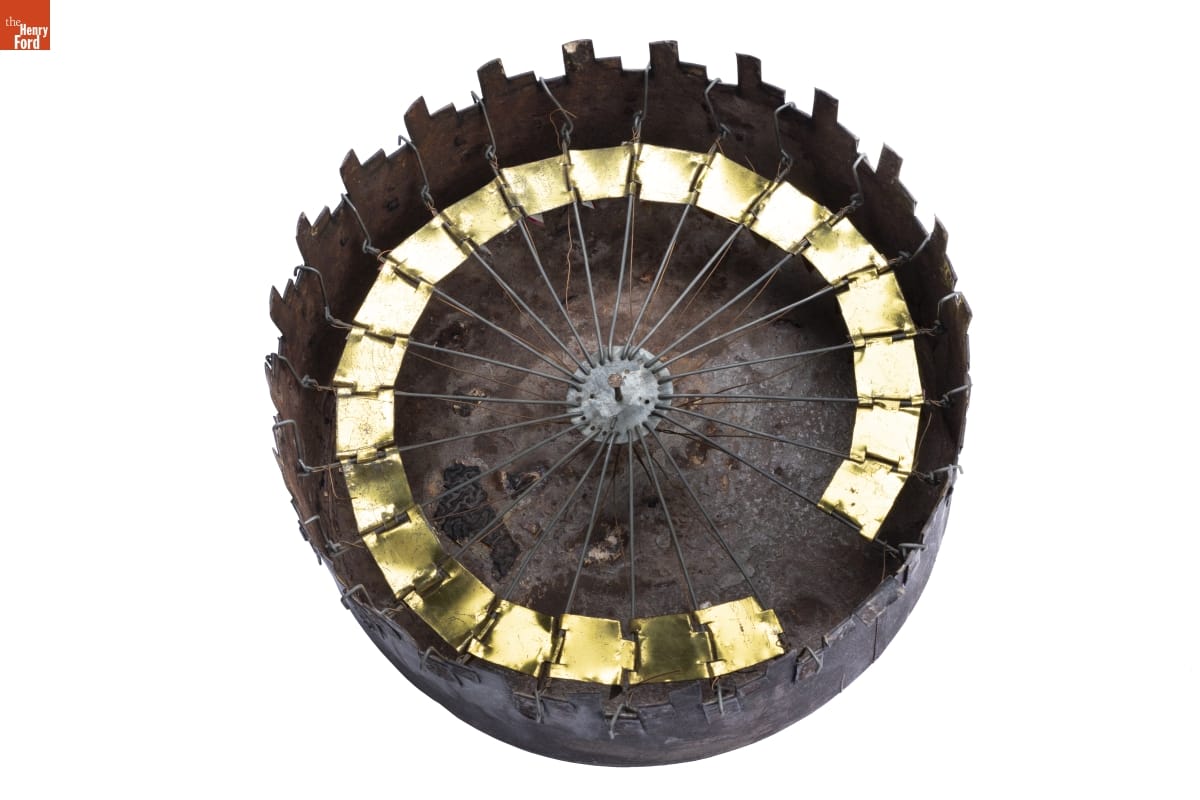
- Silo and Silo Staging Device Model, circa 1950 - In 1909, Hiram Smith of Paw Paw, Michigan, developed a technique of building silos like a barrel, with cement staves and hoops of steel cables. The Smith Silo Company endured until 1980 and was one of the largest concrete-silo manufacturers in the Midwest. Salespersons used models like this to show the construction of the innovative Smith Silos to buyers.
- 1917
- Collections - Artifact
Silo and Silo Staging Device Model, circa 1950
In 1909, Hiram Smith of Paw Paw, Michigan, developed a technique of building silos like a barrel, with cement staves and hoops of steel cables. The Smith Silo Company endured until 1980 and was one of the largest concrete-silo manufacturers in the Midwest. Salespersons used models like this to show the construction of the innovative Smith Silos to buyers.
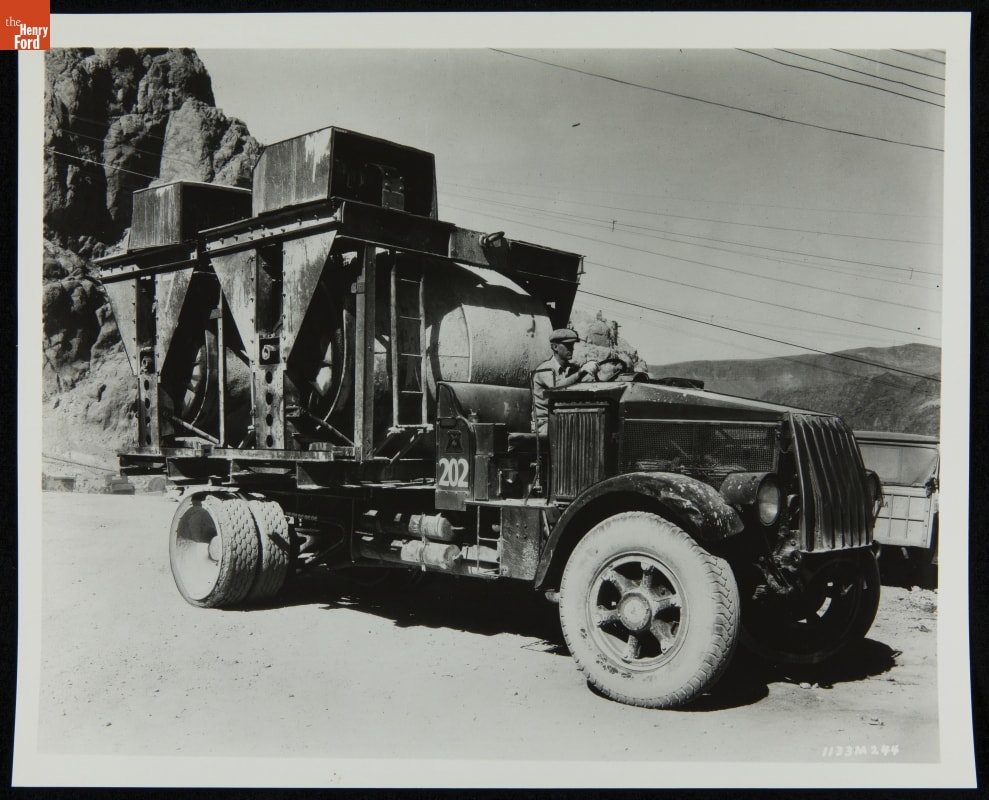
- Mack Model AC Dump Truck with Concrete Mixers at Hoover Dam Construction Site, 1933 - Founded in Brooklyn, New York, in 1900, Mack Brothers Company relocated to Allentown, Pennsylvania, five years later. In 1922, the company renamed itself Mack Trucks and chose a bulldog as its mascot. Mack-built trucks were widely used in the construction of Hoover Dam, located on the Colorado River. Work on the dam started in 1931 and was completed in 1936.
- November 01, 1933
- Collections - Artifact
Mack Model AC Dump Truck with Concrete Mixers at Hoover Dam Construction Site, 1933
Founded in Brooklyn, New York, in 1900, Mack Brothers Company relocated to Allentown, Pennsylvania, five years later. In 1922, the company renamed itself Mack Trucks and chose a bulldog as its mascot. Mack-built trucks were widely used in the construction of Hoover Dam, located on the Colorado River. Work on the dam started in 1931 and was completed in 1936.
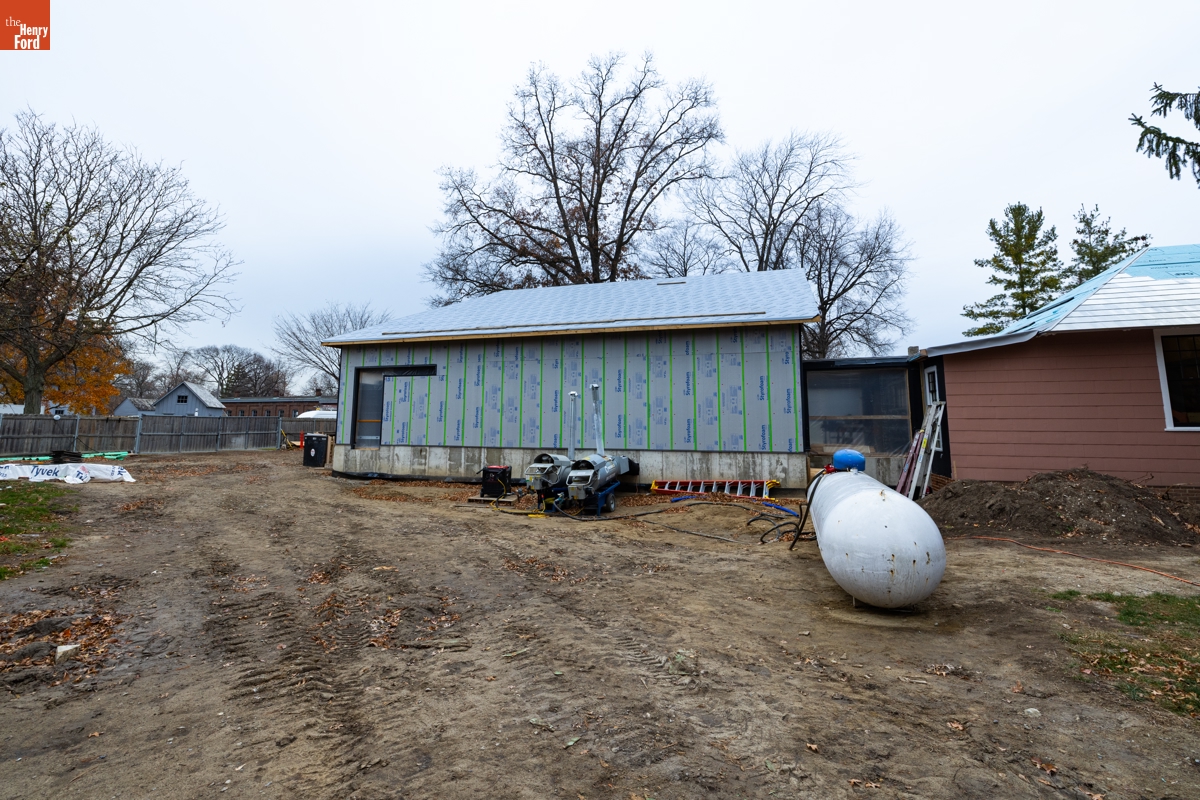
- Jackson Home under Construction in Greenfield Village, November 18, 2025 - The Dr. Sullivan and Mrs. Richie Jean Sherrod Jackson Home, originally located in Selma, Alabama, served as a refuge for Dr. Martin Luther King, Jr. and other civil rights leaders who planned the 1965 Selma-to-Montgomery marches. In 2023, The Henry Ford acquired the home from Jawana Jackson, the couple's only child. The home was moved and reconstructed in Greenfield Village in Dearborn, Michigan.
- November 18, 2025
- Collections - Artifact
Jackson Home under Construction in Greenfield Village, November 18, 2025
The Dr. Sullivan and Mrs. Richie Jean Sherrod Jackson Home, originally located in Selma, Alabama, served as a refuge for Dr. Martin Luther King, Jr. and other civil rights leaders who planned the 1965 Selma-to-Montgomery marches. In 2023, The Henry Ford acquired the home from Jawana Jackson, the couple's only child. The home was moved and reconstructed in Greenfield Village in Dearborn, Michigan.
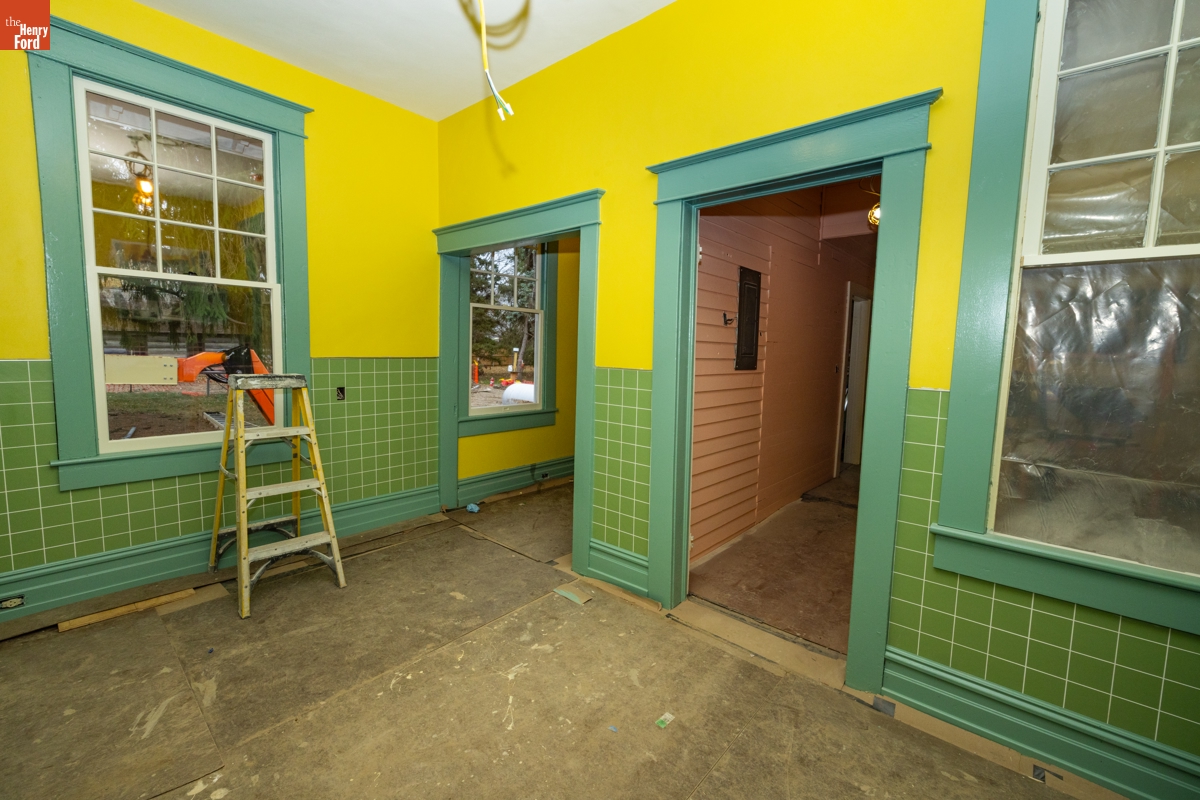
- Jackson Home Interior, Kitchen under Construction, November 18, 2025 - The Dr. Sullivan and Mrs. Richie Jean Sherrod Jackson Home, originally located in Selma, Alabama, served as a refuge for Dr. Martin Luther King, Jr. and other civil rights leaders who planned the 1965 Selma-to-Montgomery marches. In 2023, The Henry Ford acquired the home from Jawana Jackson, the couple's only child. The home was moved and reconstructed in Greenfield Village in Dearborn, Michigan.
- November 18, 2025
- Collections - Artifact
Jackson Home Interior, Kitchen under Construction, November 18, 2025
The Dr. Sullivan and Mrs. Richie Jean Sherrod Jackson Home, originally located in Selma, Alabama, served as a refuge for Dr. Martin Luther King, Jr. and other civil rights leaders who planned the 1965 Selma-to-Montgomery marches. In 2023, The Henry Ford acquired the home from Jawana Jackson, the couple's only child. The home was moved and reconstructed in Greenfield Village in Dearborn, Michigan.
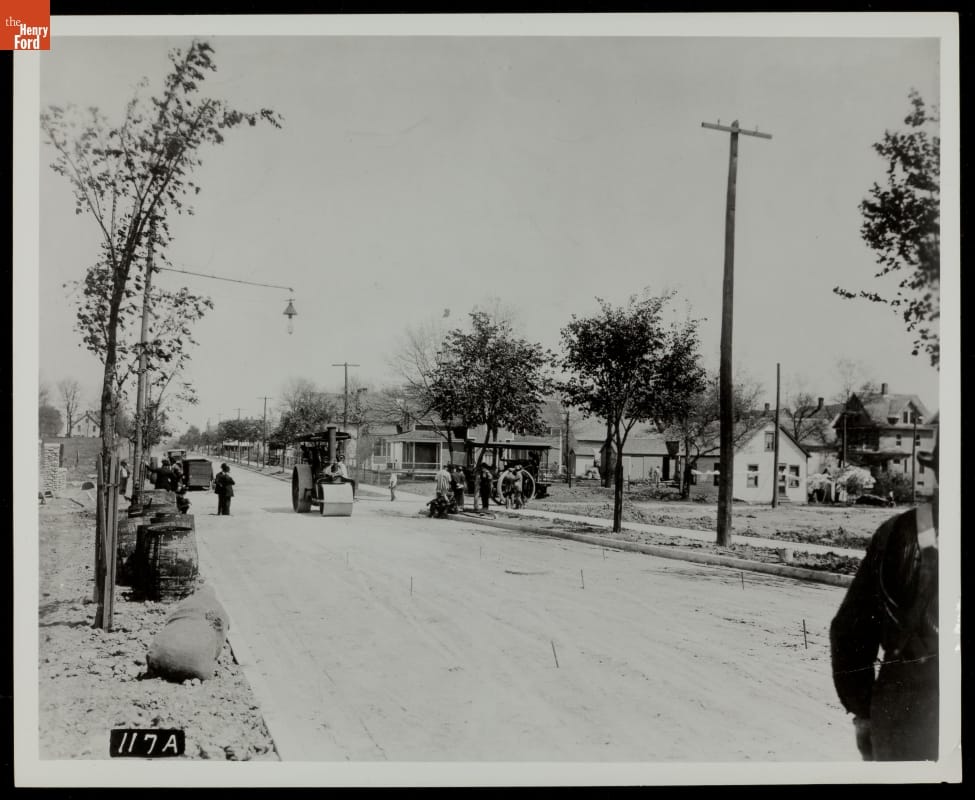
- Road Construction and Equipment on a Residential Street, circa 1912 - By the 1910s, most township and county road commissions in the United States were supported by state highway departments. This substantial local construction project probably received funding, equipment, or materials form the state. In this photograph, a steam traction engine powers a heavy roller over a residential roadway in preparation for paving.
- circa 1912
- Collections - Artifact
Road Construction and Equipment on a Residential Street, circa 1912
By the 1910s, most township and county road commissions in the United States were supported by state highway departments. This substantial local construction project probably received funding, equipment, or materials form the state. In this photograph, a steam traction engine powers a heavy roller over a residential roadway in preparation for paving.
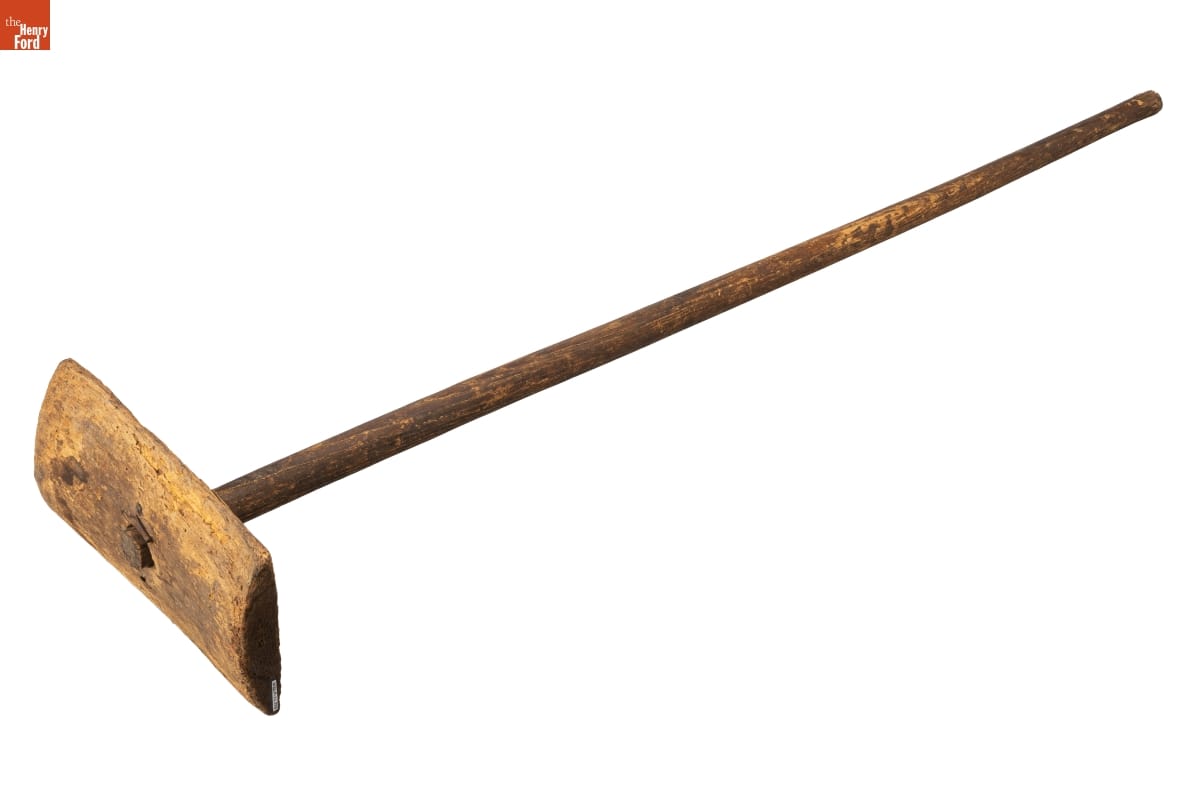
- Tamper -
- Collections - Artifact
Tamper