
Search
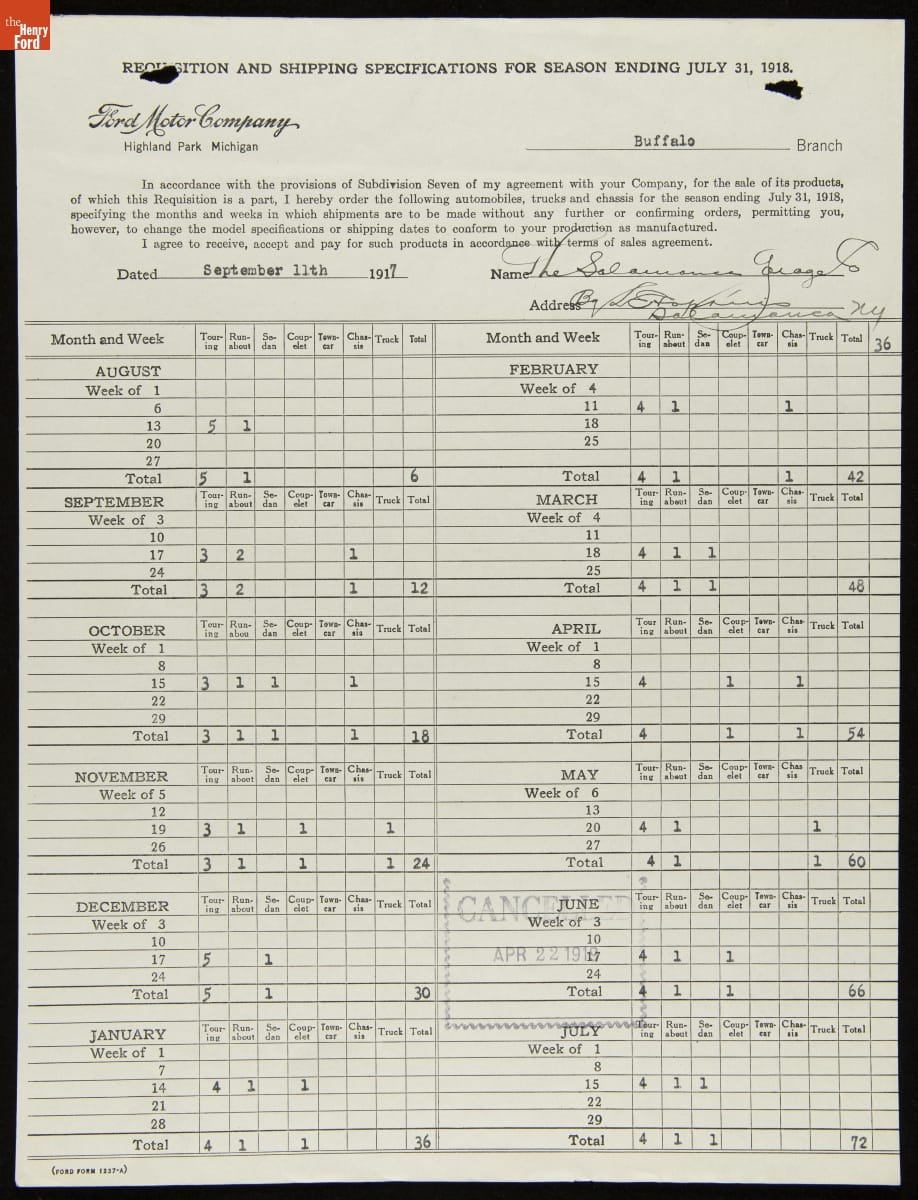
- Cancelled Requisition Form for Hopkins-Chase Motor Company, Salamanca, New York, April 22, 1919 - Though it operated some direct-sales offices in major cities, Ford Motor Company sold most of its Model T cars through franchise agreements with independent dealers. Each franchisee received the right to sell Ford cars within a specific territory. Ford encouraged dealers by offering discounts and rebates to high sellers. But low-selling dealers risked losing their territories.
- April 22, 1919
- Collections - Artifact
Cancelled Requisition Form for Hopkins-Chase Motor Company, Salamanca, New York, April 22, 1919
Though it operated some direct-sales offices in major cities, Ford Motor Company sold most of its Model T cars through franchise agreements with independent dealers. Each franchisee received the right to sell Ford cars within a specific territory. Ford encouraged dealers by offering discounts and rebates to high sellers. But low-selling dealers risked losing their territories.
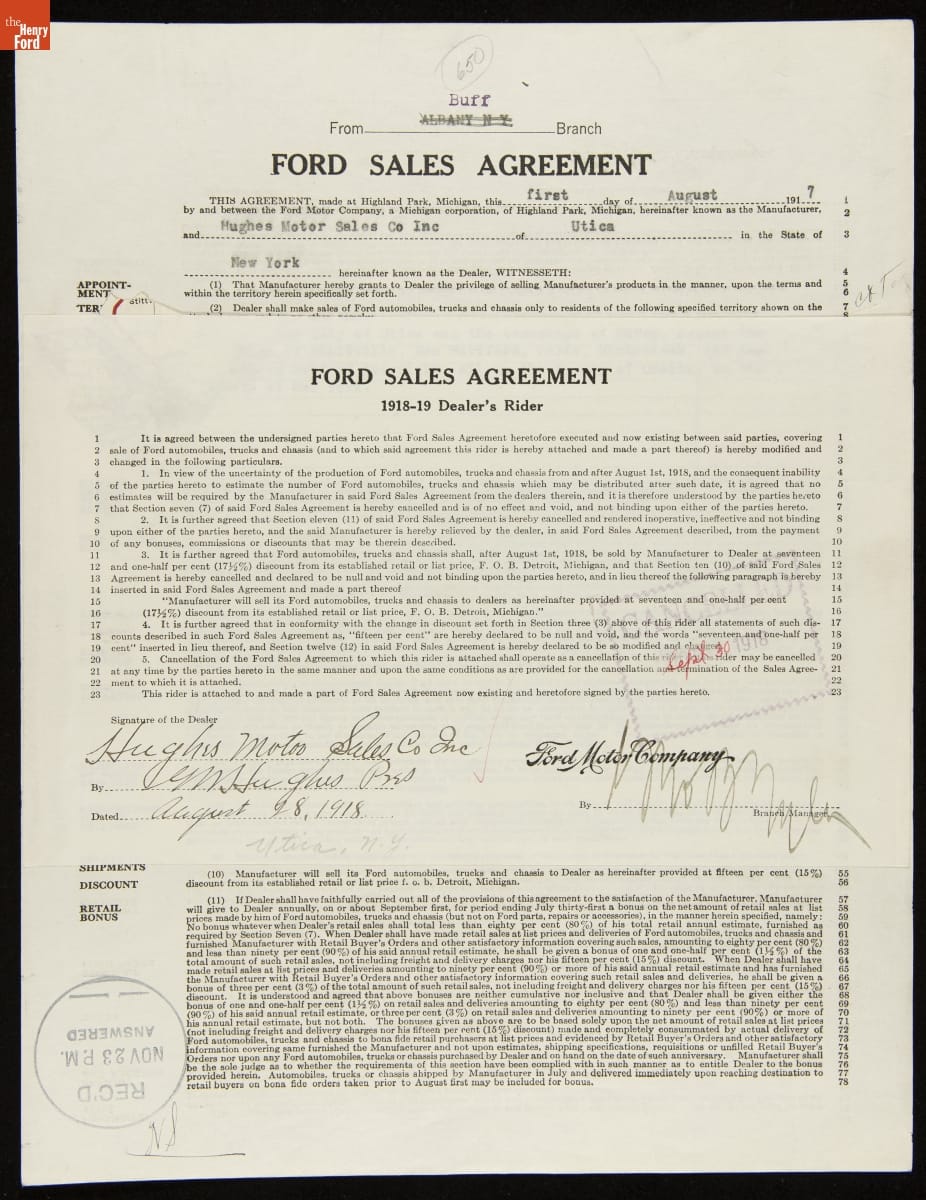
- Cancelled Ford Sales Agreement for Hughes Motor Sales Company, Utica, New York, September 30, 1918 - Though it operated some direct-sales offices in major cities, Ford Motor Company sold most of its Model T cars through franchise agreements with independent dealers. Each franchisee received the right to sell Ford cars within a specific territory. Ford encouraged dealers by offering discounts and rebates to high sellers. But low-selling dealers risked losing their territories.
- September 30, 1918
- Collections - Artifact
Cancelled Ford Sales Agreement for Hughes Motor Sales Company, Utica, New York, September 30, 1918
Though it operated some direct-sales offices in major cities, Ford Motor Company sold most of its Model T cars through franchise agreements with independent dealers. Each franchisee received the right to sell Ford cars within a specific territory. Ford encouraged dealers by offering discounts and rebates to high sellers. But low-selling dealers risked losing their territories.
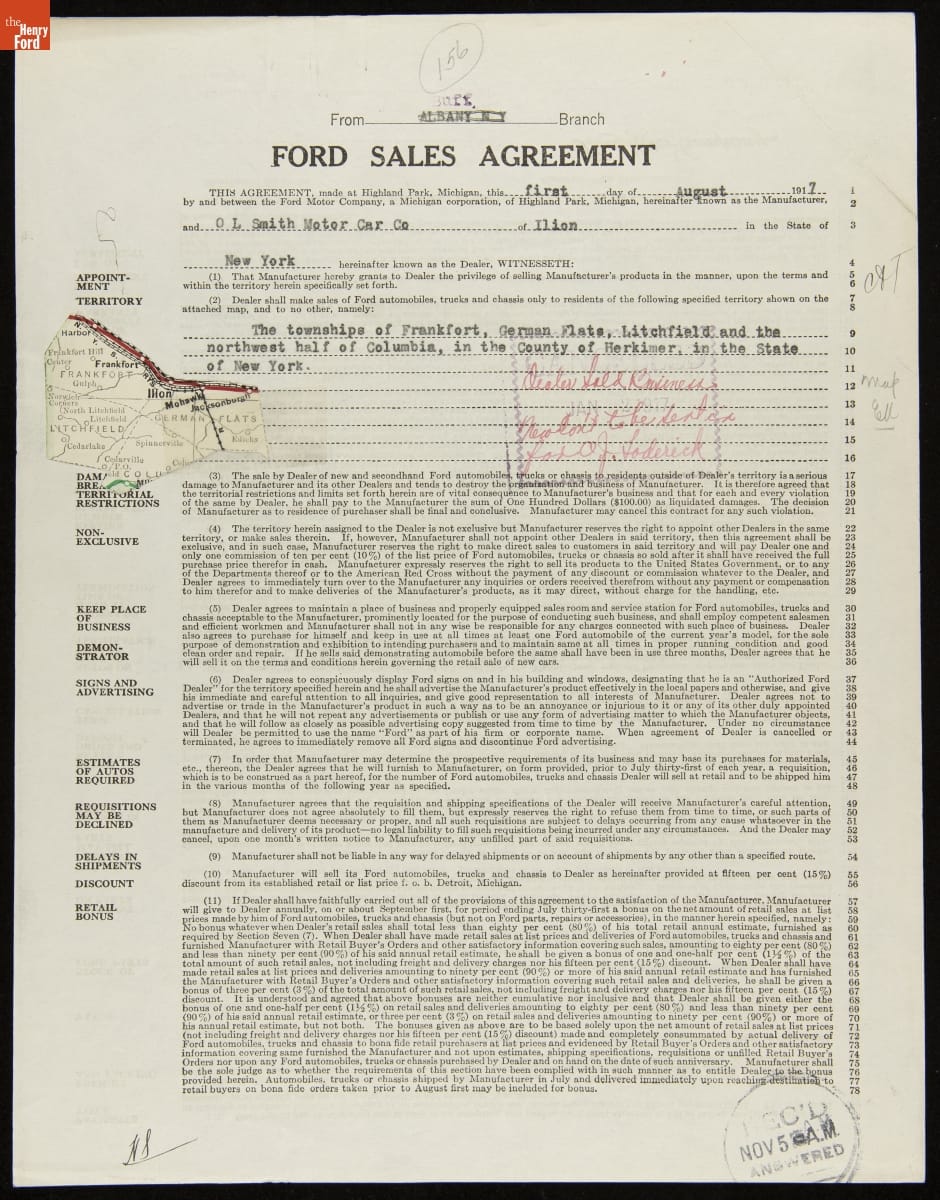
- Cancelled Ford Sales Agreement for O.L. Smith Motor Car Co., Ilion, New York, August 1, 1917 - Though it operated some direct-sales offices in major cities, Ford Motor Company sold most of its Model T cars through franchise agreements with independent dealers. Each franchisee received the right to sell Ford cars within a specific territory. Ford encouraged dealers by offering discounts and rebates to high sellers. But low-selling dealers risked losing their territories.
- August 01, 1917
- Collections - Artifact
Cancelled Ford Sales Agreement for O.L. Smith Motor Car Co., Ilion, New York, August 1, 1917
Though it operated some direct-sales offices in major cities, Ford Motor Company sold most of its Model T cars through franchise agreements with independent dealers. Each franchisee received the right to sell Ford cars within a specific territory. Ford encouraged dealers by offering discounts and rebates to high sellers. But low-selling dealers risked losing their territories.
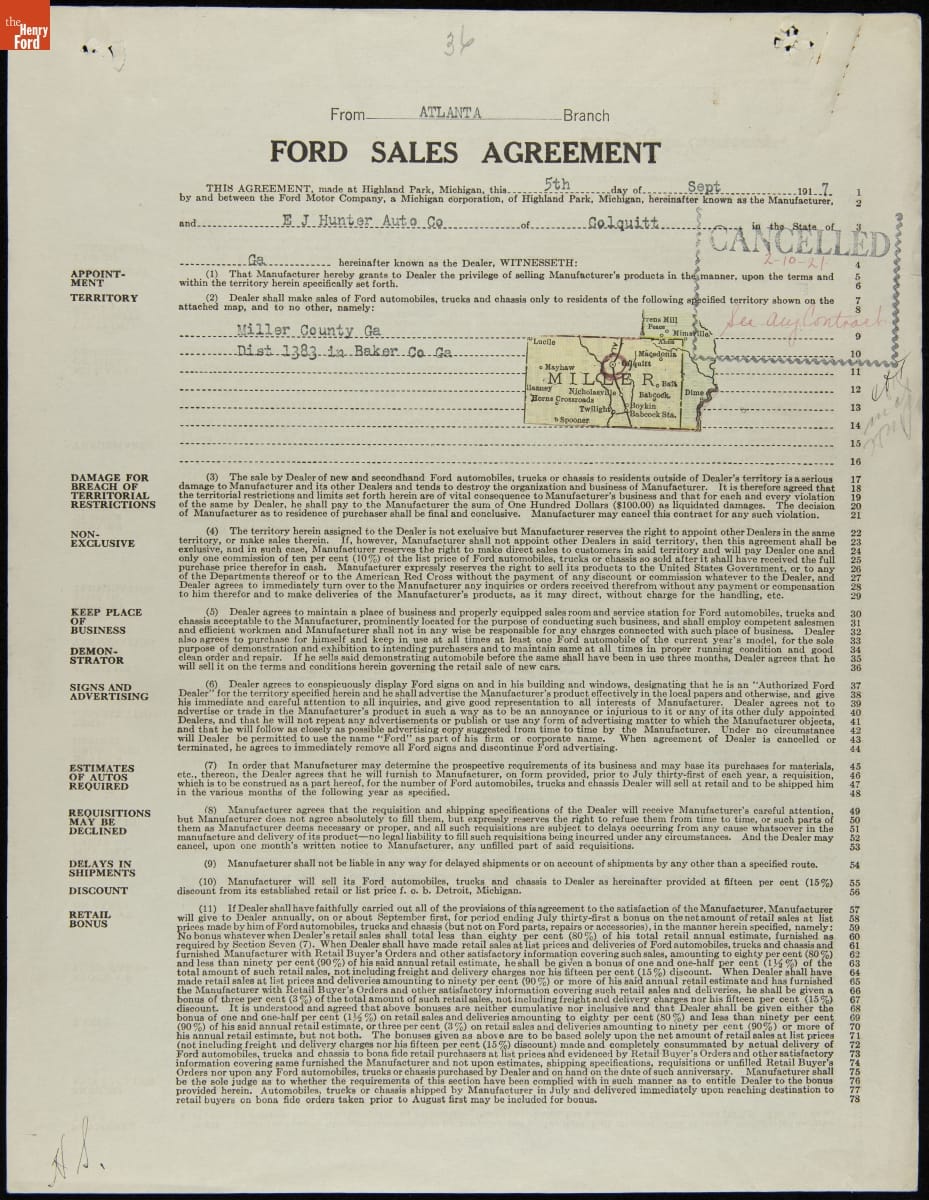
- Cancelled Ford Sales Agreement for E.J. Hunter Auto Company, Colquitt, Georgia, February 10, 1921 - Though it operated some direct-sales offices in major cities, Ford Motor Company sold most of its Model T cars through franchise agreements with independent dealers. Each franchisee received the right to sell Ford cars within a specific territory. Ford encouraged dealers by offering discounts and rebates to high sellers. But low-selling dealers risked losing their territories.
- February 10, 1921
- Collections - Artifact
Cancelled Ford Sales Agreement for E.J. Hunter Auto Company, Colquitt, Georgia, February 10, 1921
Though it operated some direct-sales offices in major cities, Ford Motor Company sold most of its Model T cars through franchise agreements with independent dealers. Each franchisee received the right to sell Ford cars within a specific territory. Ford encouraged dealers by offering discounts and rebates to high sellers. But low-selling dealers risked losing their territories.
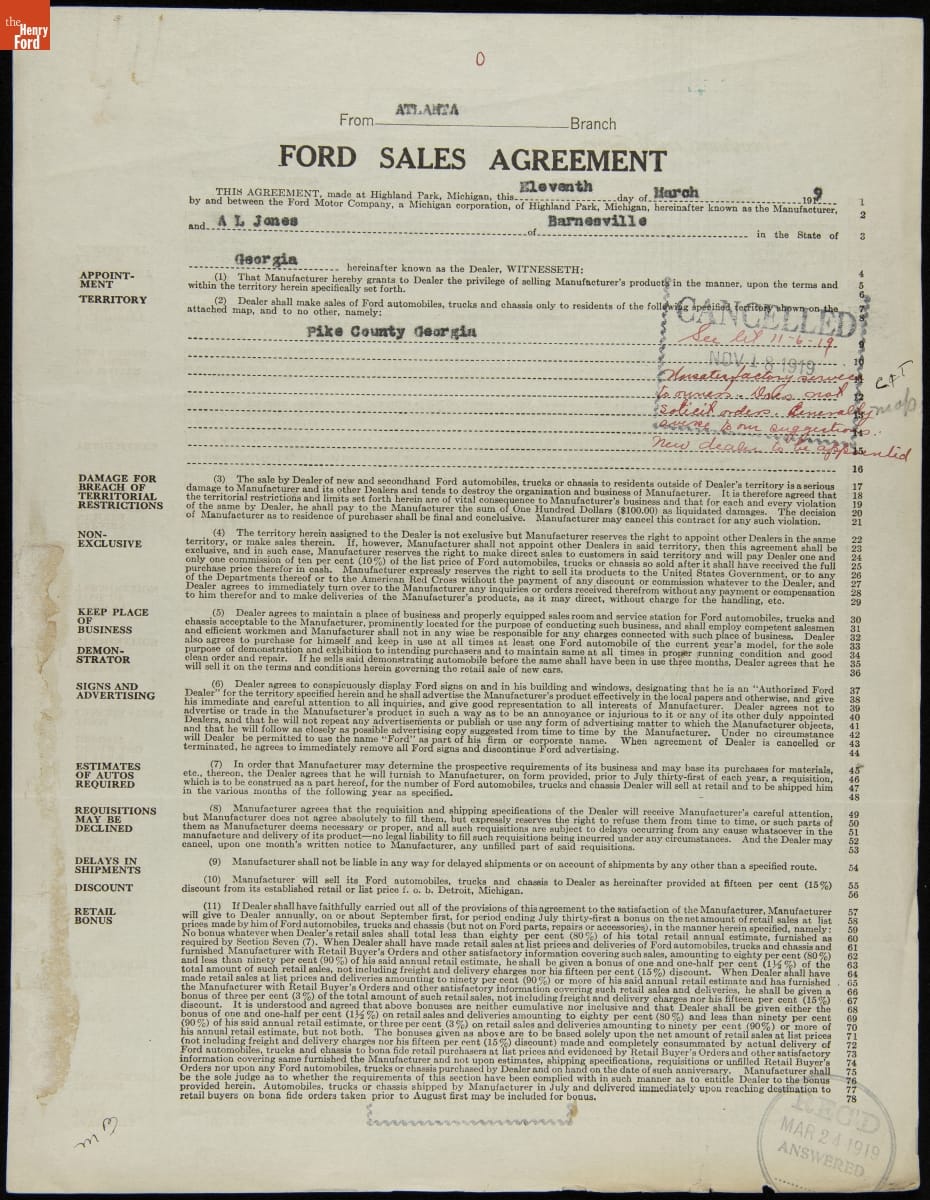
- Cancelled Ford Sales Agreement for A.L. Jones, Barnesville, Georgia, November 6, 1919 - Though it operated some direct-sales offices in major cities, Ford Motor Company sold most of its Model T cars through franchise agreements with independent dealers. Each franchisee received the right to sell Ford cars within a specific territory. Ford encouraged dealers by offering discounts and rebates to high sellers. But low-selling dealers risked losing their territories.
- November 06, 1919
- Collections - Artifact
Cancelled Ford Sales Agreement for A.L. Jones, Barnesville, Georgia, November 6, 1919
Though it operated some direct-sales offices in major cities, Ford Motor Company sold most of its Model T cars through franchise agreements with independent dealers. Each franchisee received the right to sell Ford cars within a specific territory. Ford encouraged dealers by offering discounts and rebates to high sellers. But low-selling dealers risked losing their territories.
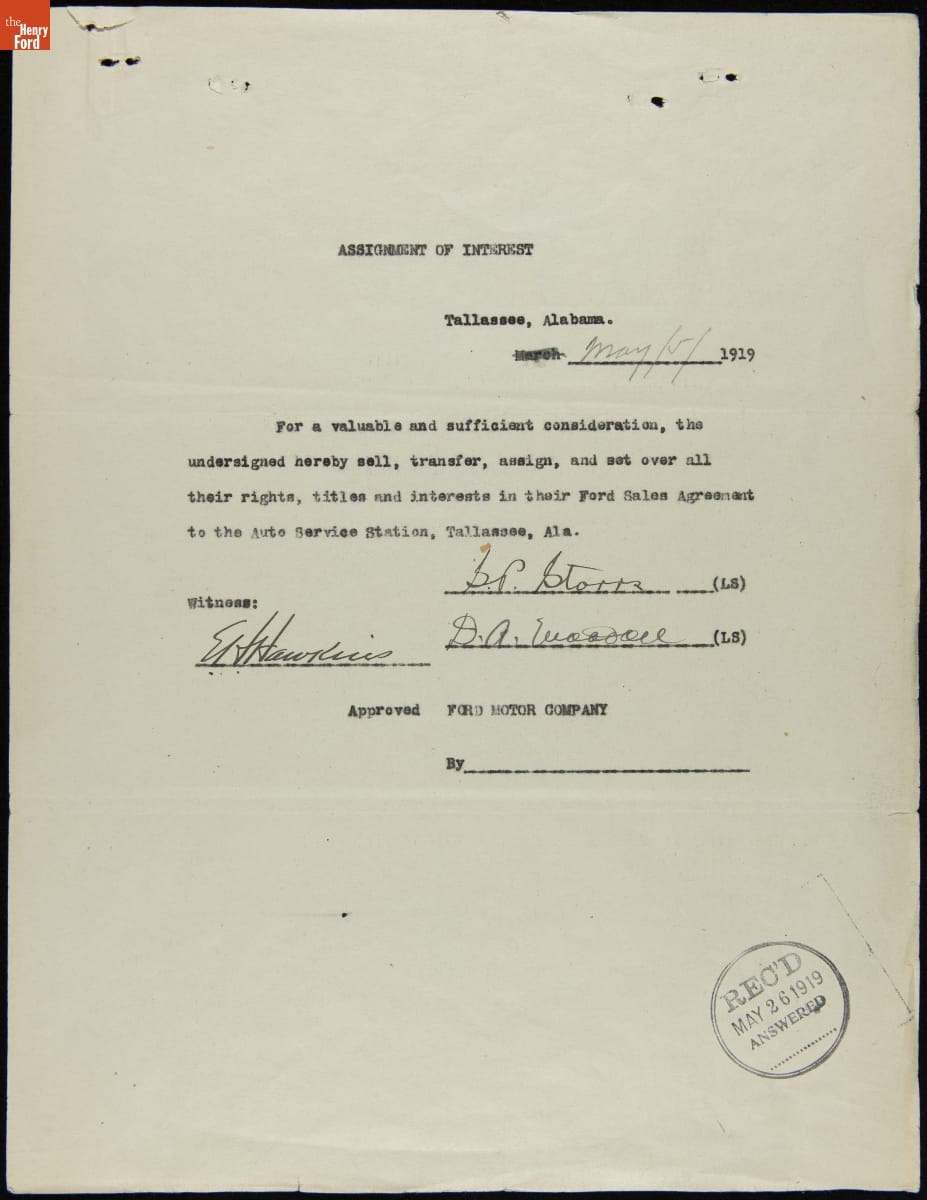
- Assignment of Interest for Auto Service Station from Storrs and Wooddall, Tallassee, Alabama, May 1919 - Though it operated some direct-sales offices in major cities, Ford Motor Company sold most of its Model T cars through franchise agreements with independent dealers. Each franchisee received the right to sell Ford cars within a specific territory. Ford encouraged dealers by offering discounts and rebates to high sellers. But low-selling dealers risked losing their territories.
- May 26, 1919
- Collections - Artifact
Assignment of Interest for Auto Service Station from Storrs and Wooddall, Tallassee, Alabama, May 1919
Though it operated some direct-sales offices in major cities, Ford Motor Company sold most of its Model T cars through franchise agreements with independent dealers. Each franchisee received the right to sell Ford cars within a specific territory. Ford encouraged dealers by offering discounts and rebates to high sellers. But low-selling dealers risked losing their territories.
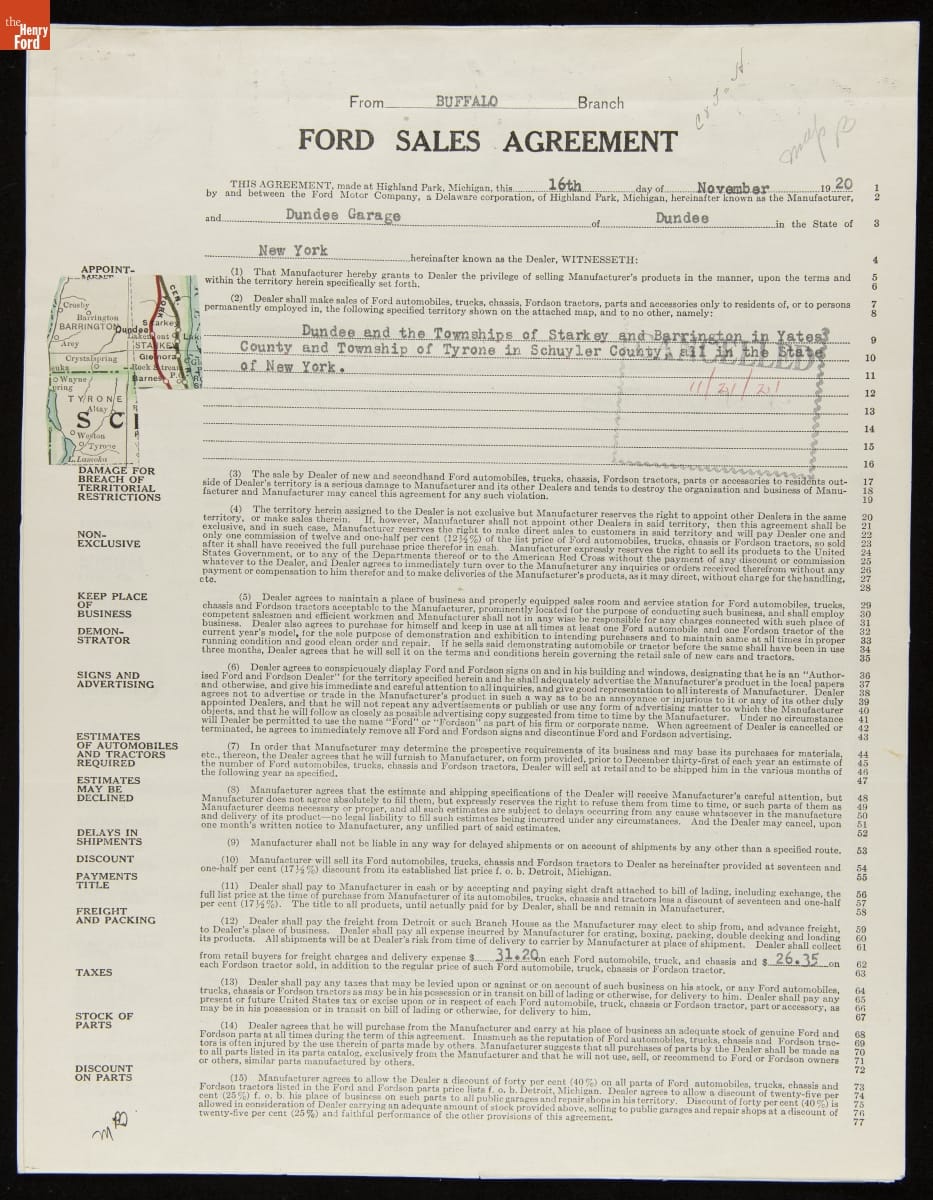
- Cancelled Ford Sales Agreement for Dundee Garage, Dundee, New York, November 21, 1921 - Though it operated some direct-sales offices in major cities, Ford Motor Company sold most of its Model T cars through franchise agreements with independent dealers. Each franchisee received the right to sell Ford cars within a specific territory. Ford encouraged dealers by offering discounts and rebates to high sellers. But low-selling dealers risked losing their territories.
- November 11, 1921
- Collections - Artifact
Cancelled Ford Sales Agreement for Dundee Garage, Dundee, New York, November 21, 1921
Though it operated some direct-sales offices in major cities, Ford Motor Company sold most of its Model T cars through franchise agreements with independent dealers. Each franchisee received the right to sell Ford cars within a specific territory. Ford encouraged dealers by offering discounts and rebates to high sellers. But low-selling dealers risked losing their territories.
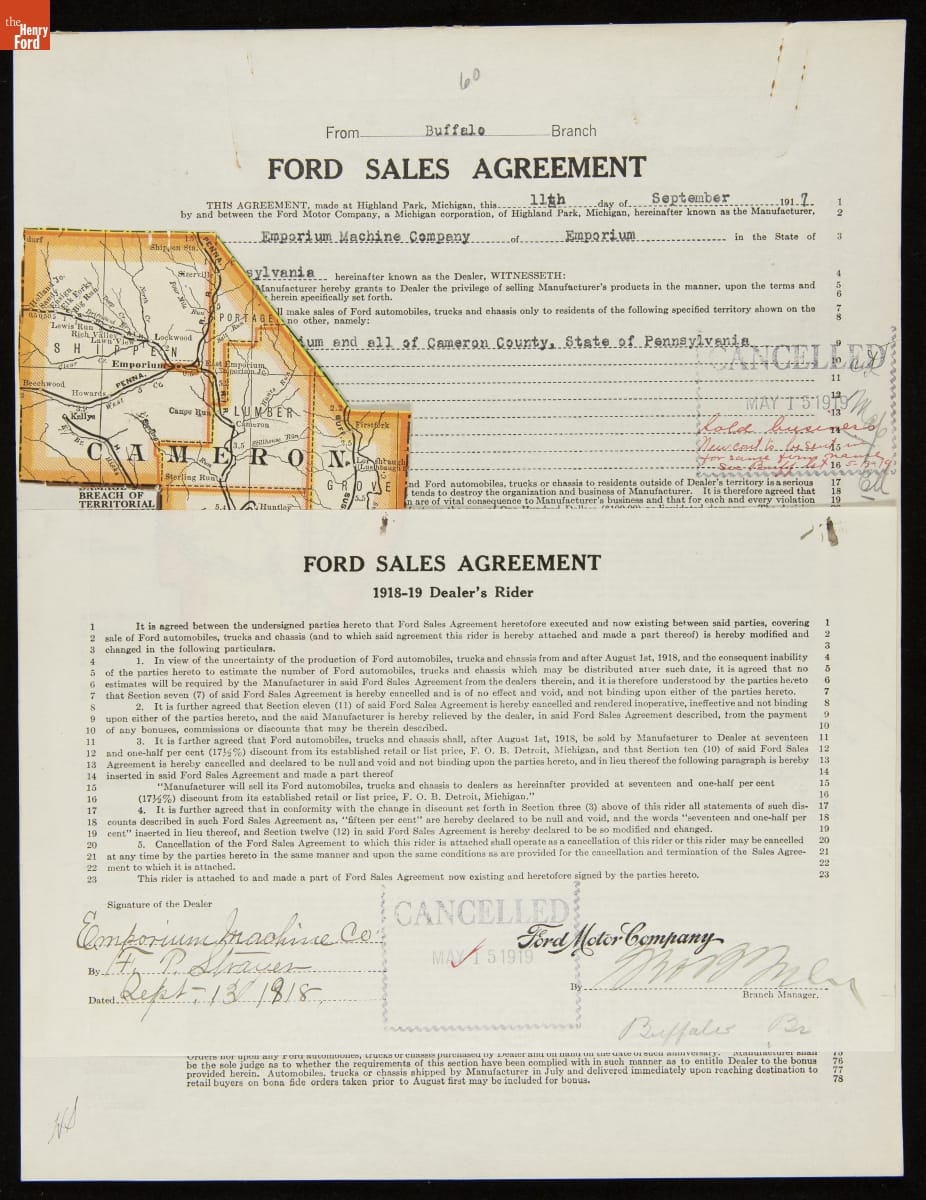
- Cancelled Ford Sales Agreement for Emporium Machine Company, Emporium, Pennsylvania, May 15, 1919 - Though it operated some direct-sales offices in major cities, Ford Motor Company sold most of its Model T cars through franchise agreements with independent dealers. Each franchisee received the right to sell Ford cars within a specific territory. Ford encouraged dealers by offering discounts and rebates to high sellers. But low-selling dealers risked losing their territories.
- May 15, 1919
- Collections - Artifact
Cancelled Ford Sales Agreement for Emporium Machine Company, Emporium, Pennsylvania, May 15, 1919
Though it operated some direct-sales offices in major cities, Ford Motor Company sold most of its Model T cars through franchise agreements with independent dealers. Each franchisee received the right to sell Ford cars within a specific territory. Ford encouraged dealers by offering discounts and rebates to high sellers. But low-selling dealers risked losing their territories.
- Cancelled Ford Sales Agreement for Hayesville Motor Company, Hayesville, North Carolina, October 3, 1921 - Though it operated some direct-sales offices in major cities, Ford Motor Company sold most of its Model T cars through franchise agreements with independent dealers. Each franchisee received the right to sell Ford cars within a specific territory. Ford encouraged dealers by offering discounts and rebates to high sellers. But low-selling dealers risked losing their territories.
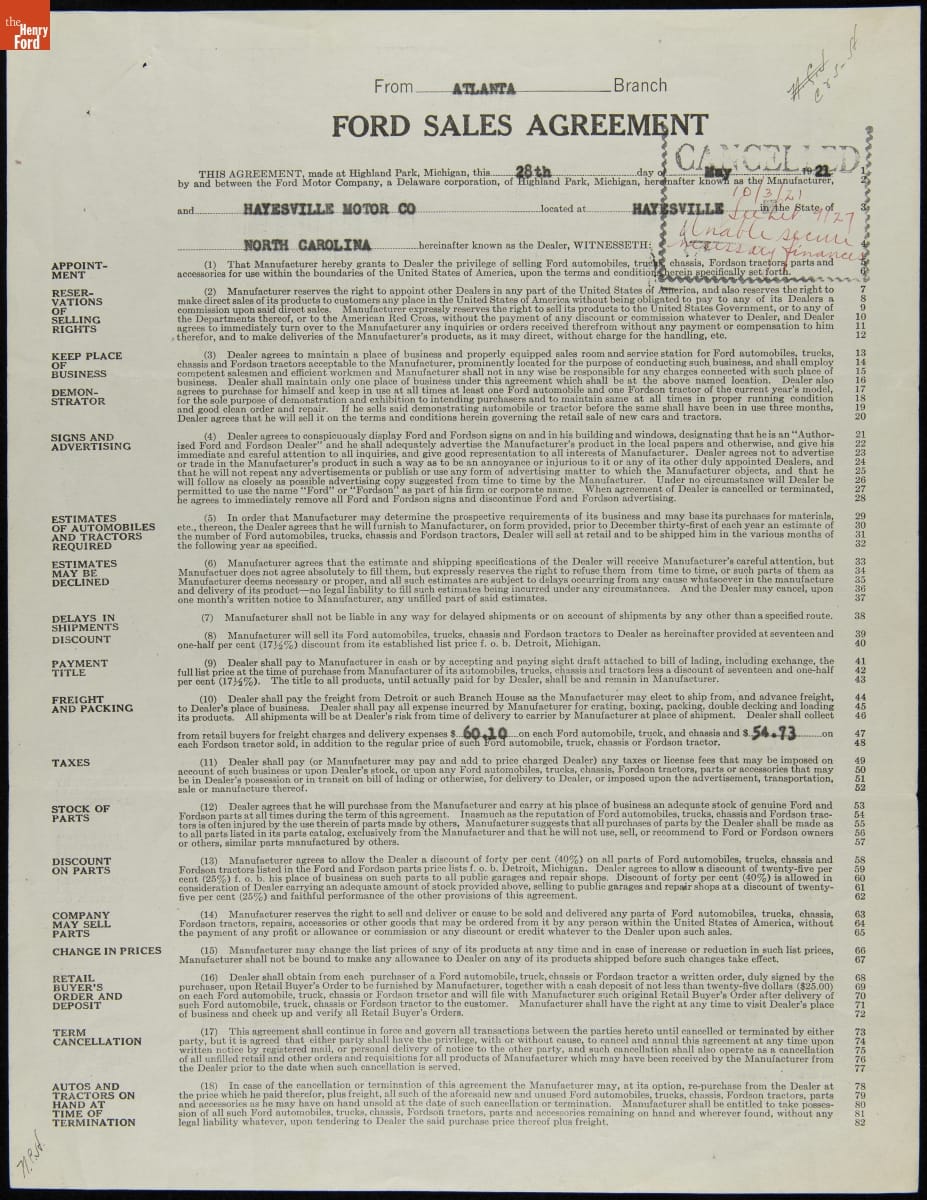
- October 03, 1921
- Collections - Artifact
Cancelled Ford Sales Agreement for Hayesville Motor Company, Hayesville, North Carolina, October 3, 1921
Though it operated some direct-sales offices in major cities, Ford Motor Company sold most of its Model T cars through franchise agreements with independent dealers. Each franchisee received the right to sell Ford cars within a specific territory. Ford encouraged dealers by offering discounts and rebates to high sellers. But low-selling dealers risked losing their territories.
- Cancelled Ford Sales Agreement for Amann and Kany, Dolgeville, New York, August 29, 1919 - Though it operated some direct-sales offices in major cities, Ford Motor Company sold most of its Model T cars through franchise agreements with independent dealers. Each franchisee received the right to sell Ford cars within a specific territory. Ford encouraged dealers by offering discounts and rebates to high sellers. But low-selling dealers risked losing their territories.
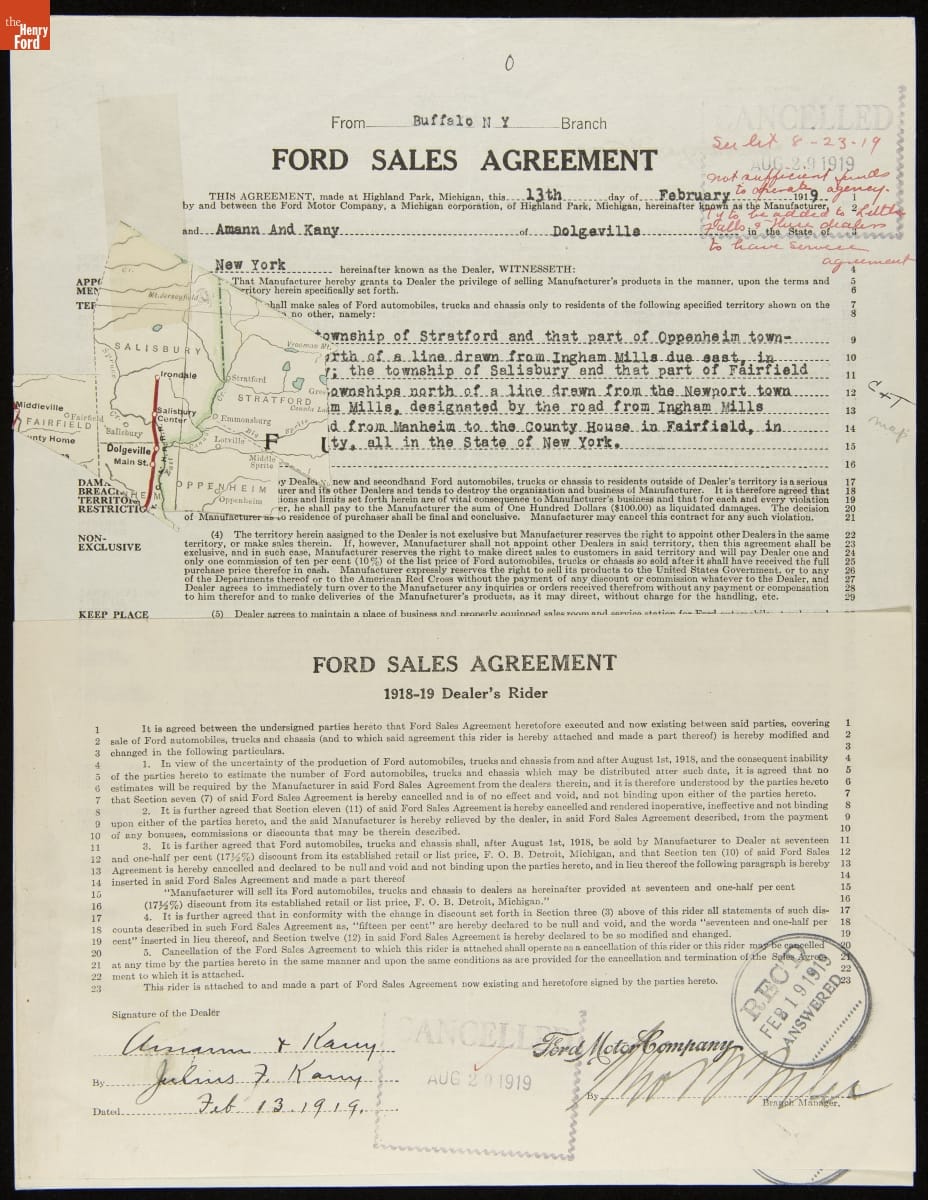
- August 29, 1919
- Collections - Artifact
Cancelled Ford Sales Agreement for Amann and Kany, Dolgeville, New York, August 29, 1919
Though it operated some direct-sales offices in major cities, Ford Motor Company sold most of its Model T cars through franchise agreements with independent dealers. Each franchisee received the right to sell Ford cars within a specific territory. Ford encouraged dealers by offering discounts and rebates to high sellers. But low-selling dealers risked losing their territories.