
Search
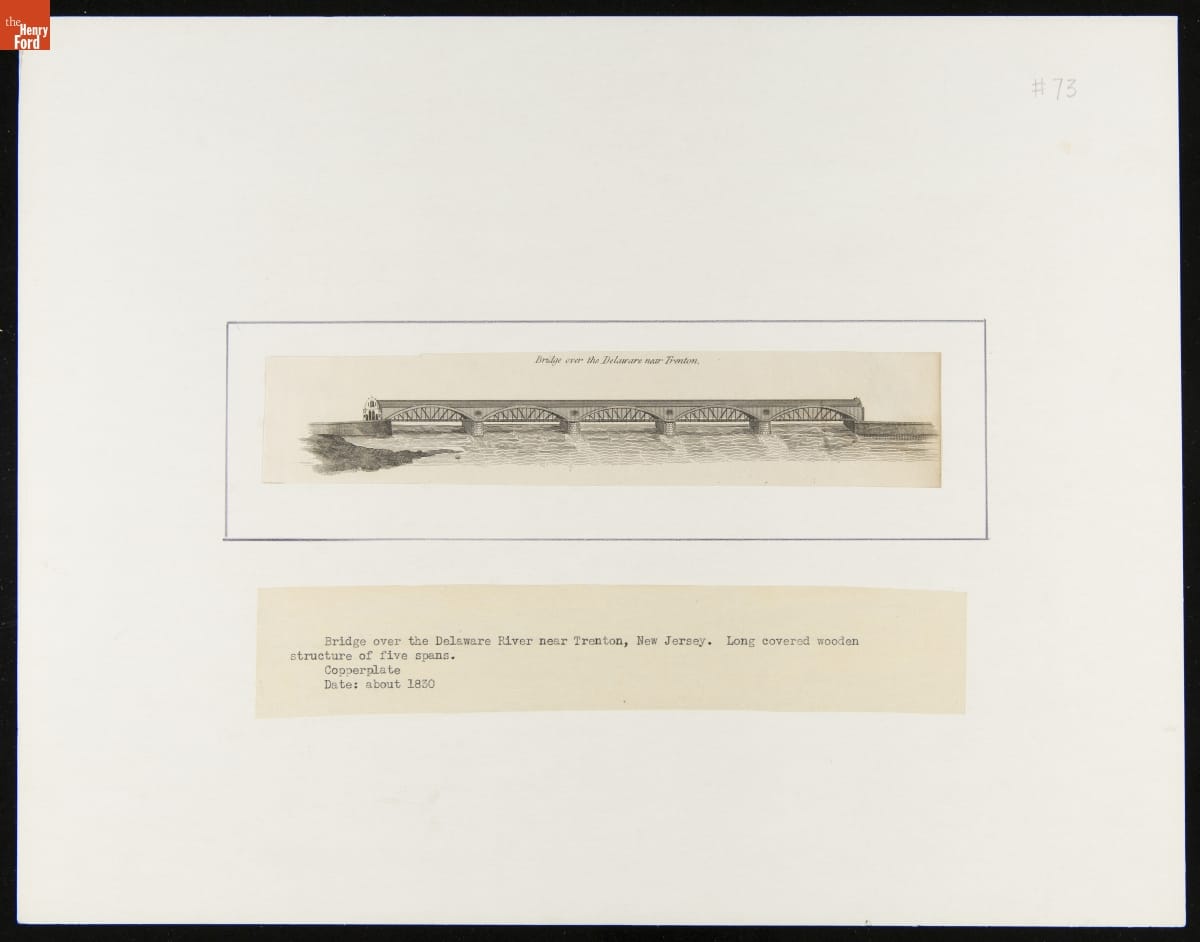
- "Bridge over the Delaware River near Trenton," Copper Engraving, circa 1830 - Covered bridges were built across the United States throughout the 19th and into the early 20th centuries. Bridges provided important commercial and community connections, but constructing them required careful planning and a substantial investment of time, labor, and materials. Walls and a roof helped preserve these valuable structures by protecting the truss system and keeping structural timbers dry.
- circa 1830
- Collections - Artifact
"Bridge over the Delaware River near Trenton," Copper Engraving, circa 1830
Covered bridges were built across the United States throughout the 19th and into the early 20th centuries. Bridges provided important commercial and community connections, but constructing them required careful planning and a substantial investment of time, labor, and materials. Walls and a roof helped preserve these valuable structures by protecting the truss system and keeping structural timbers dry.
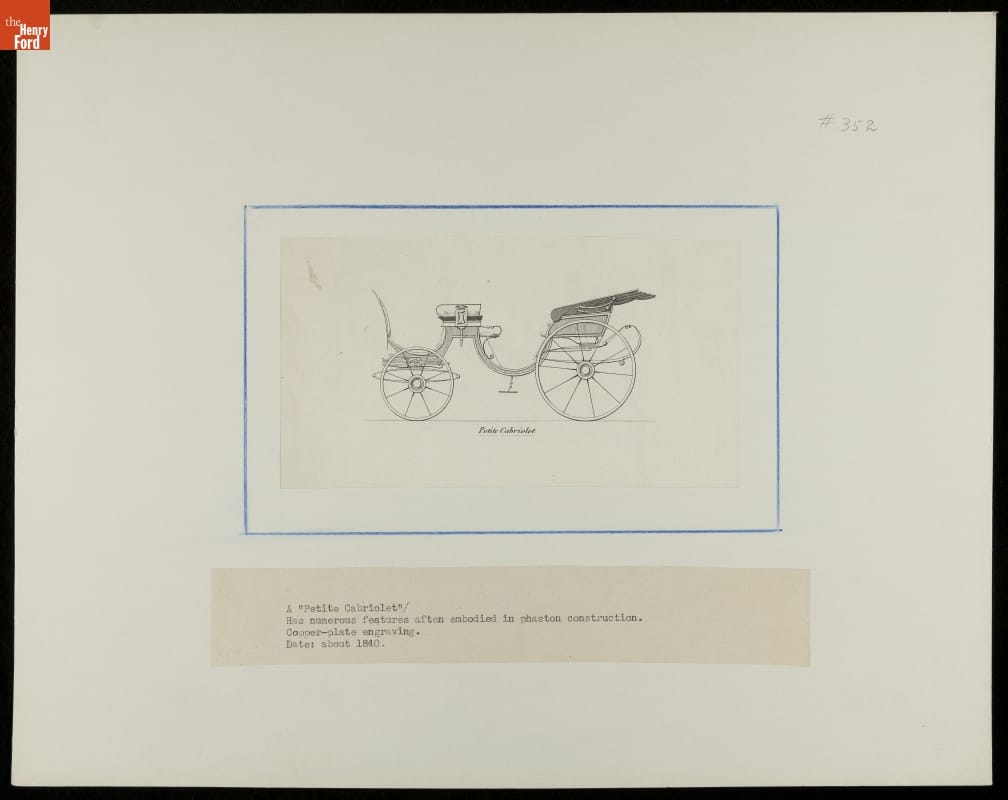
- "Petite Cabriolet," circa 1840 -
- circa 1840
- Collections - Artifact
"Petite Cabriolet," circa 1840
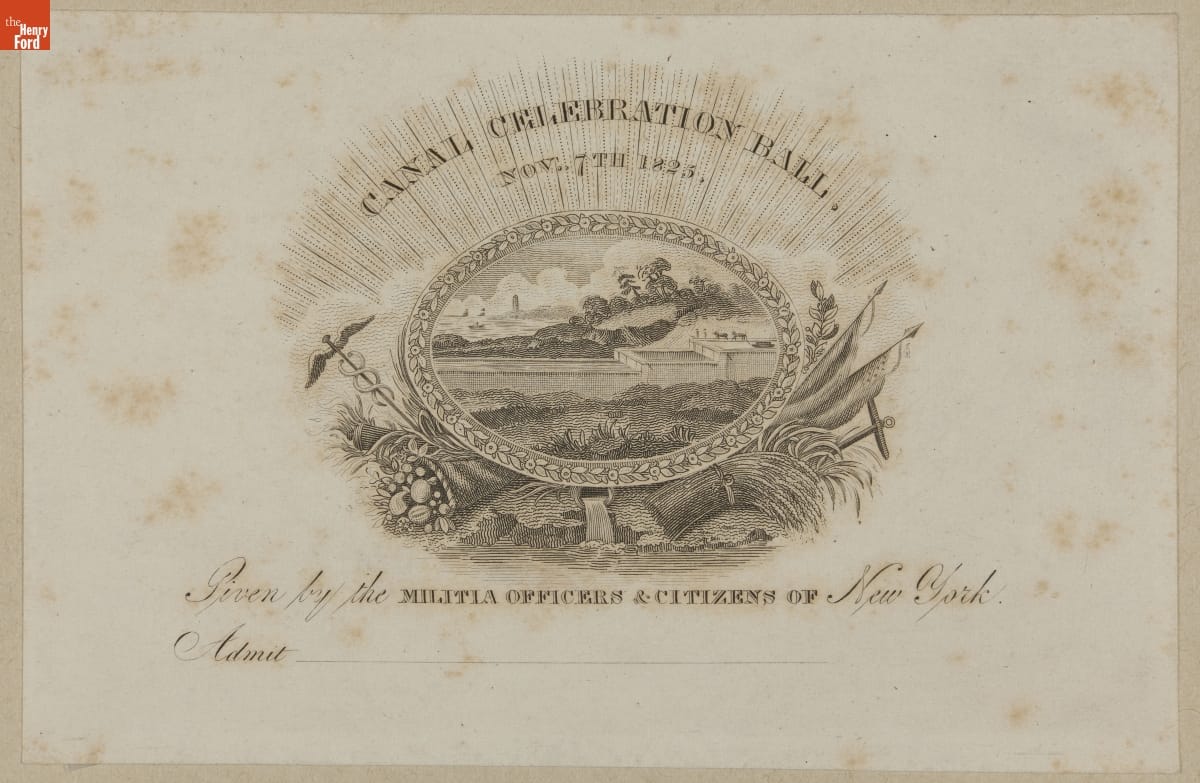
- "Canal Celebration Ball Given by the Militia Officers & Citizens of New York," November 7, 1825 - The construction of Erie Canal, which ran from Albany, New York to Buffalo, New York, began in 1817 and was completed in 1825, opened the Midwest of the United States to settlement and commerce. This copperplate engraving is an impression, or copy, of the invitation to the ball celebrating the completion of the Erie Canal.
- November 07, 1825
- Collections - Artifact
"Canal Celebration Ball Given by the Militia Officers & Citizens of New York," November 7, 1825
The construction of Erie Canal, which ran from Albany, New York to Buffalo, New York, began in 1817 and was completed in 1825, opened the Midwest of the United States to settlement and commerce. This copperplate engraving is an impression, or copy, of the invitation to the ball celebrating the completion of the Erie Canal.
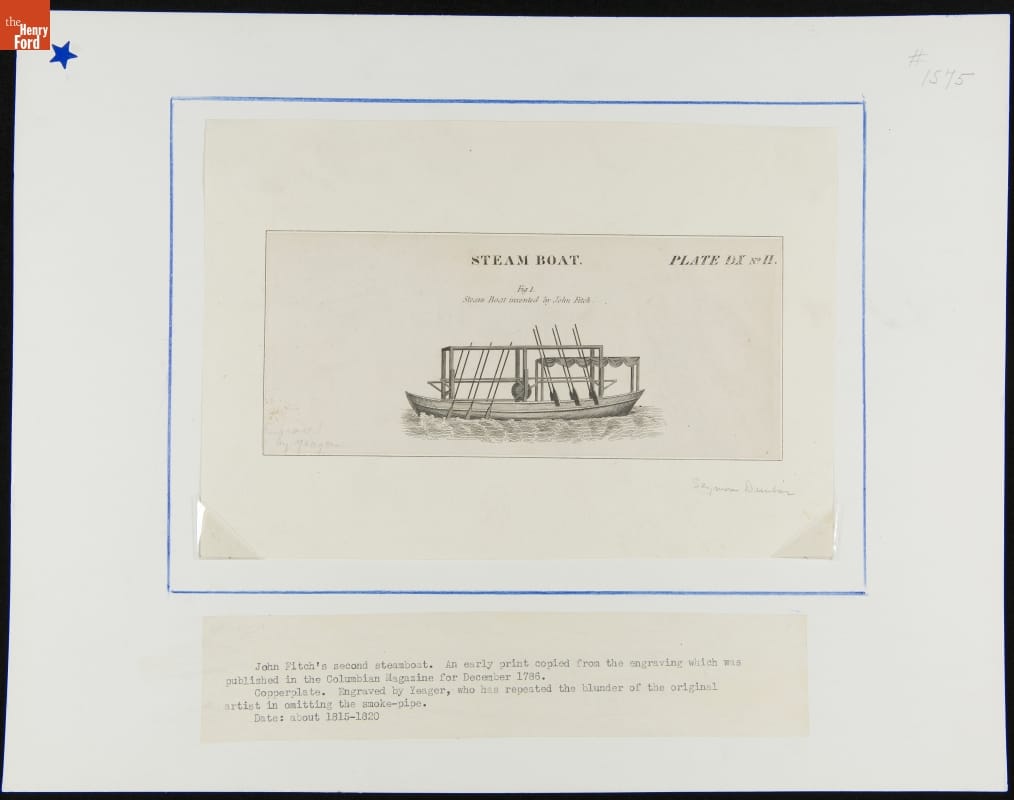
- "Steam Boat Invented by John Fitch," Copperplate Engraving, circa 1818 - Connecticut-born entrepreneur and inventor John Fitch began building steam-powered boats in the 1780s. His first, <em>Perseverance</em>, was propelled by an unusual drivetrain of mechanized oars along both sides of the craft. The system was effective, but not particularly efficient. Fitch later experimented with screw propellers. He was unable to find commercial success with his designs.
- 1786-1787
- Collections - Artifact
"Steam Boat Invented by John Fitch," Copperplate Engraving, circa 1818
Connecticut-born entrepreneur and inventor John Fitch began building steam-powered boats in the 1780s. His first, Perseverance, was propelled by an unusual drivetrain of mechanized oars along both sides of the craft. The system was effective, but not particularly efficient. Fitch later experimented with screw propellers. He was unable to find commercial success with his designs.
- "Auberge et Voiture Publique Dans les Etats Unis" (American Stage Coach, 1800-1810), Copperplate Engraving, circa 1810 - Stage wagons were light and open, though not as comfortable as later Concord stagecoaches. They could go about five miles per hour, barring bad weather or road obstructions. The gaily painted signboards of roadside taverns beckoned weary travelers, promising rest, meals, and a chance to catch up on news. Stage wagon drivers used the stop to care for their horses.
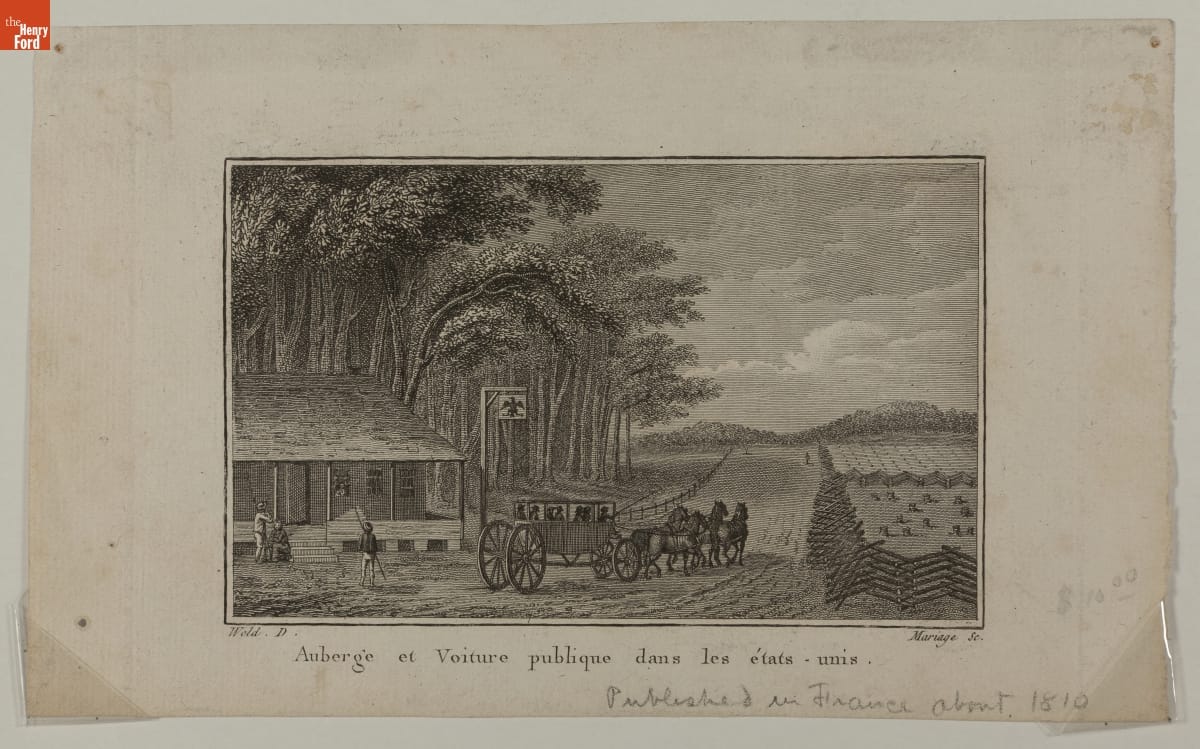
- 1800-1810
- Collections - Artifact
"Auberge et Voiture Publique Dans les Etats Unis" (American Stage Coach, 1800-1810), Copperplate Engraving, circa 1810
Stage wagons were light and open, though not as comfortable as later Concord stagecoaches. They could go about five miles per hour, barring bad weather or road obstructions. The gaily painted signboards of roadside taverns beckoned weary travelers, promising rest, meals, and a chance to catch up on news. Stage wagon drivers used the stop to care for their horses.
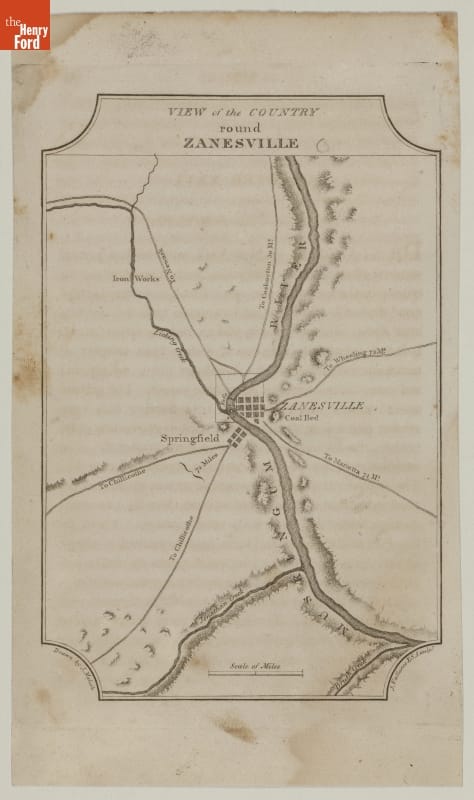
- Map, "View of the Country Round Zanesville," 1812 - This 1812 copper-plate engraving features a map of the area surrounding and the wilderness roads leading to and from Zanesville, Ohio. Zanesville was settled in 1797 where Colonel Ebenezer Zane's frontier road known as "Zane's Trace" crossed the Muskingum River in present-day Ohio.
- 1812
- Collections - Artifact
Map, "View of the Country Round Zanesville," 1812
This 1812 copper-plate engraving features a map of the area surrounding and the wilderness roads leading to and from Zanesville, Ohio. Zanesville was settled in 1797 where Colonel Ebenezer Zane's frontier road known as "Zane's Trace" crossed the Muskingum River in present-day Ohio.
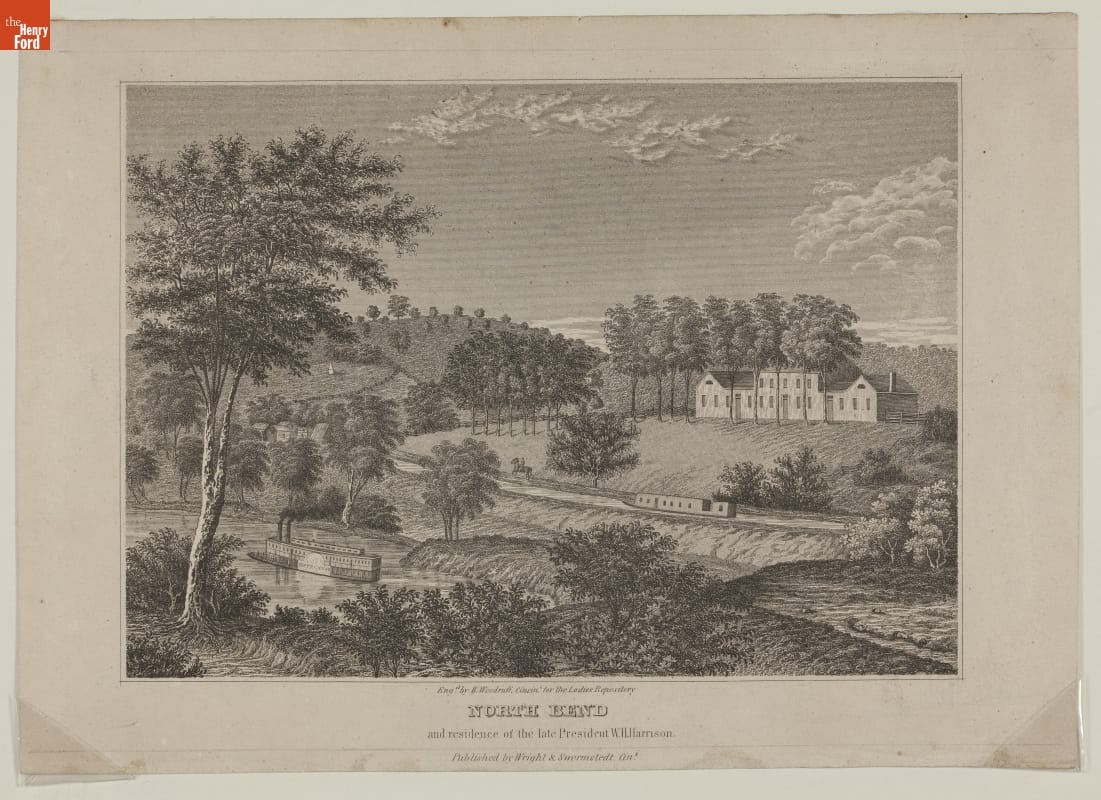
- "North Bend and Residence of the Late President W.H. Harrison," circa 1843 - This 1840s engraving shows an Ohio River steamboat and a passenger packet boat passing by the home of President William Henry Harrison in North Bend, Ohio. The print features the Cincinnati-Whitewater Canal, which included one of only twelve canal tunnels built in the United States.
- 1840-1845
- Collections - Artifact
"North Bend and Residence of the Late President W.H. Harrison," circa 1843
This 1840s engraving shows an Ohio River steamboat and a passenger packet boat passing by the home of President William Henry Harrison in North Bend, Ohio. The print features the Cincinnati-Whitewater Canal, which included one of only twelve canal tunnels built in the United States.
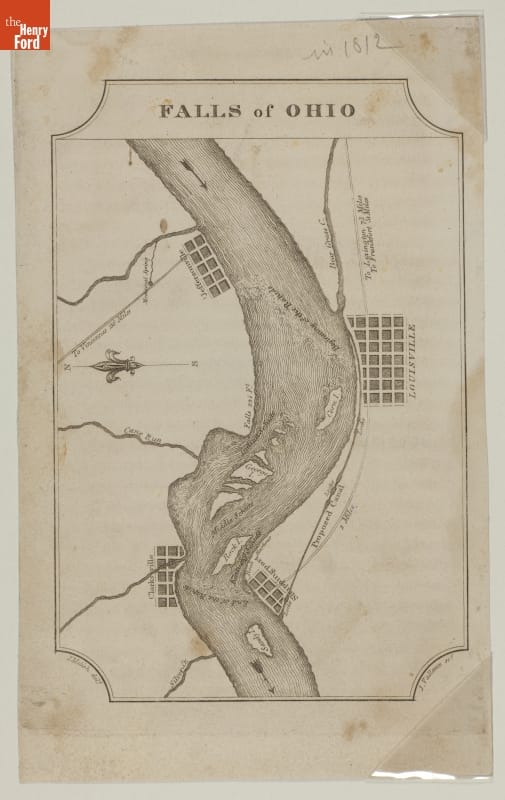
- Map, "Falls of Ohio," 1812 - This 1812 map engraving focuses on the falls of the Ohio River near Louisville, Kentucky. The map features roads in Indiana and Kentucky, and a proposed canal to skirt the falls.
- 1812
- Collections - Artifact
Map, "Falls of Ohio," 1812
This 1812 map engraving focuses on the falls of the Ohio River near Louisville, Kentucky. The map features roads in Indiana and Kentucky, and a proposed canal to skirt the falls.
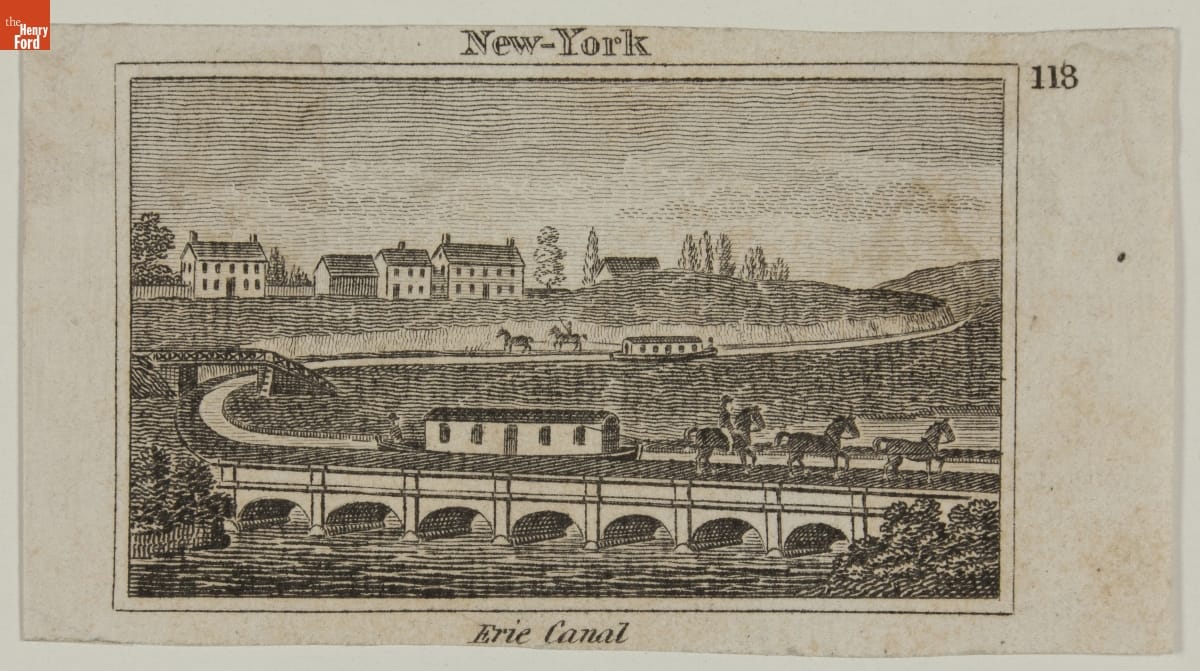
- Canal Boat Crossing a River Using a Viaduct, circa 1830 - The construction of Erie Canal, connecting the Hudson River to Lake Erie, began in 1817 and completed in 1825, opened the Midwest of the United States to settlement and commerce. This small print shows a packet boat crossing a river by means of a viaduct on the Erie Canal.
- circa 1830
- Collections - Artifact
Canal Boat Crossing a River Using a Viaduct, circa 1830
The construction of Erie Canal, connecting the Hudson River to Lake Erie, began in 1817 and completed in 1825, opened the Midwest of the United States to settlement and commerce. This small print shows a packet boat crossing a river by means of a viaduct on the Erie Canal.
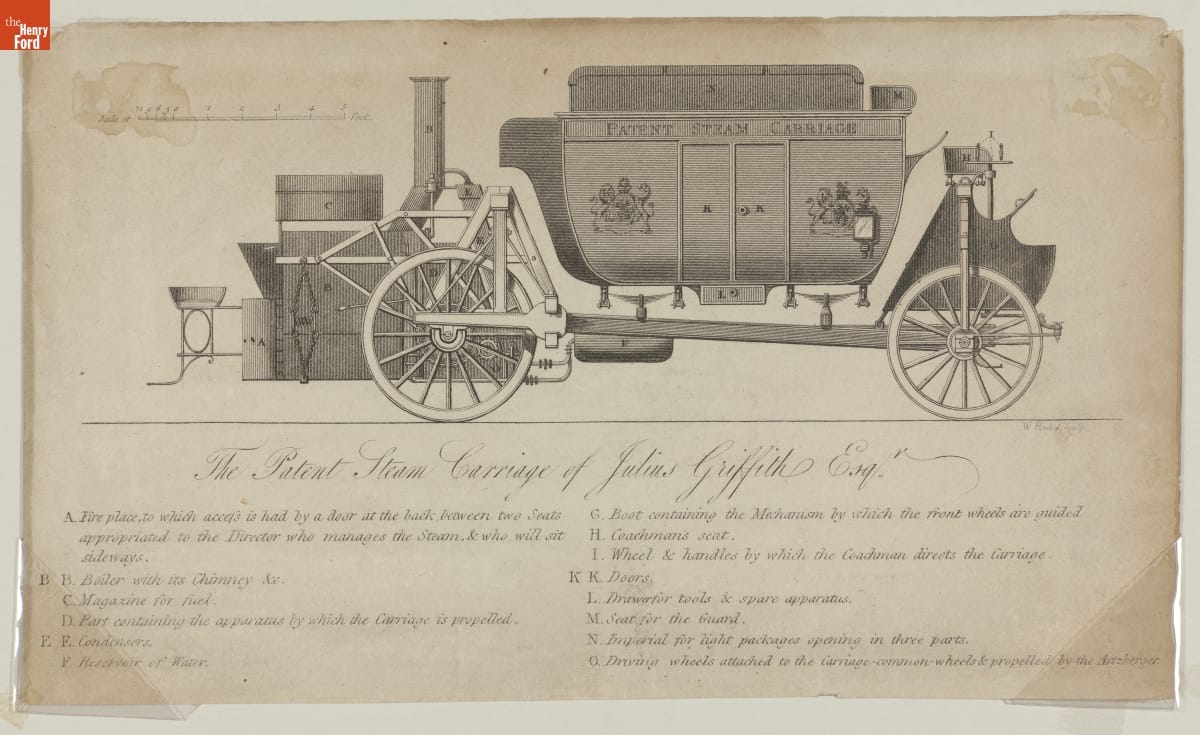
- Copperplate Engraving, "Patent Steam Carriage of Julius Griffith Esq.," circa 1821 -
- circa 1821
- Collections - Artifact
Copperplate Engraving, "Patent Steam Carriage of Julius Griffith Esq.," circa 1821