
Search
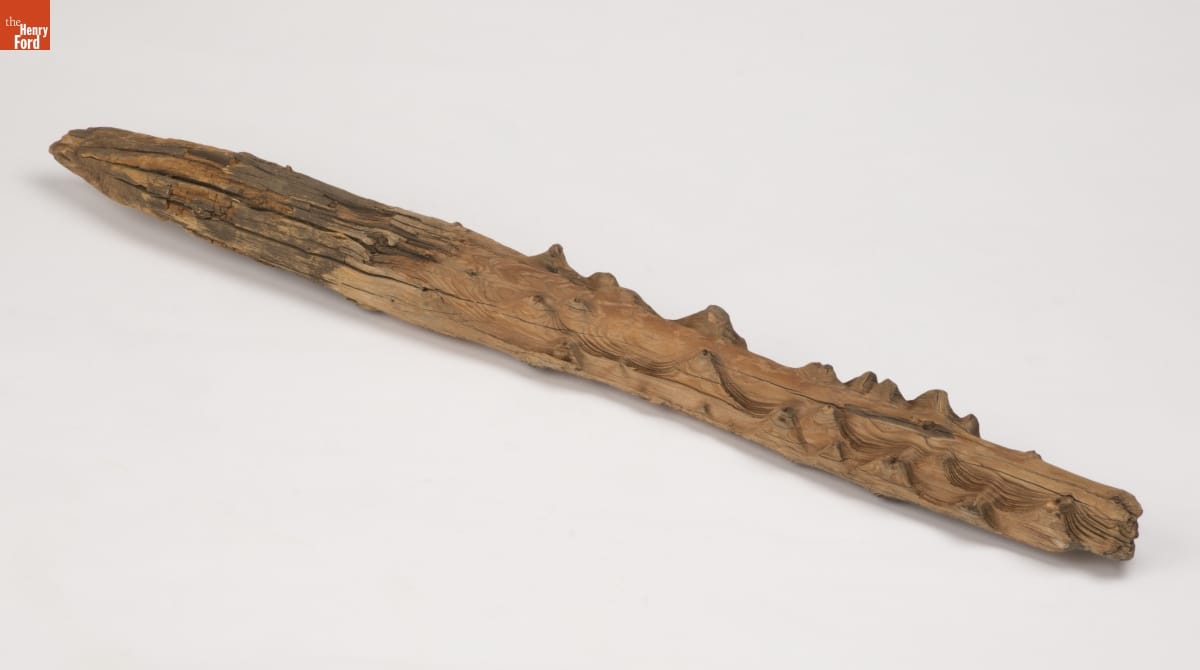
- Prospector's Claim Stake, Used near Battle Lake, Wyoming, 1880-1910 - This prospector's cedar stake was used on a mining claim near a "Lake Edison" in Wyoming. This is the site where Thomas Edison allegedly conceived the idea for the incandescent lamp. The donor retrieved the stake several decades after Edison's encampment, noting that sand-laden winds blowing from the West had eroded only one side of the stake.
- 1880-1910
- Collections - Artifact
Prospector's Claim Stake, Used near Battle Lake, Wyoming, 1880-1910
This prospector's cedar stake was used on a mining claim near a "Lake Edison" in Wyoming. This is the site where Thomas Edison allegedly conceived the idea for the incandescent lamp. The donor retrieved the stake several decades after Edison's encampment, noting that sand-laden winds blowing from the West had eroded only one side of the stake.
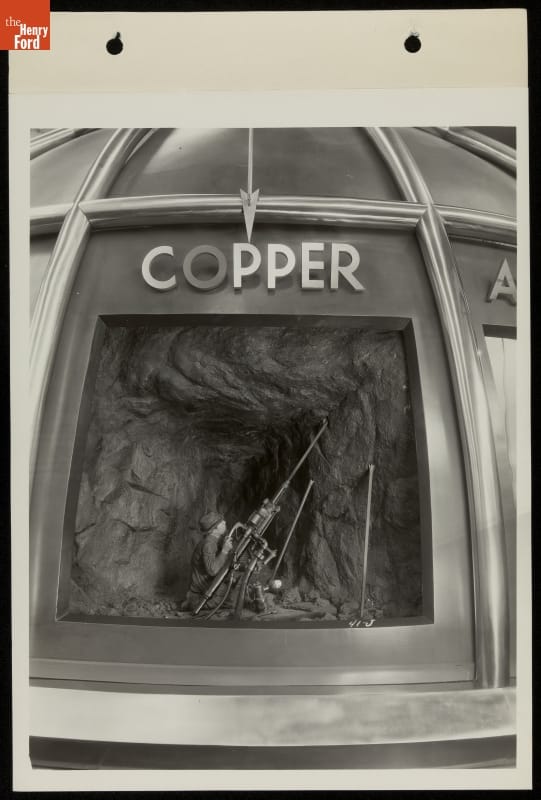
- Copper Mining Diorama, Ford Exhibition Building, Century of Progress International Exposition, Chicago, Illinois, 1934 - Chicago's 1933-34 Century of Progress Exposition used the theme of progress to encourage optimism during the Depression. The Ford Exhibition Building, which sat on eleven acres at the fair and featured industrial demonstrations and informative displays like this, became the most talked-about exhibit of 1934.
- 1934
- Collections - Artifact
Copper Mining Diorama, Ford Exhibition Building, Century of Progress International Exposition, Chicago, Illinois, 1934
Chicago's 1933-34 Century of Progress Exposition used the theme of progress to encourage optimism during the Depression. The Ford Exhibition Building, which sat on eleven acres at the fair and featured industrial demonstrations and informative displays like this, became the most talked-about exhibit of 1934.
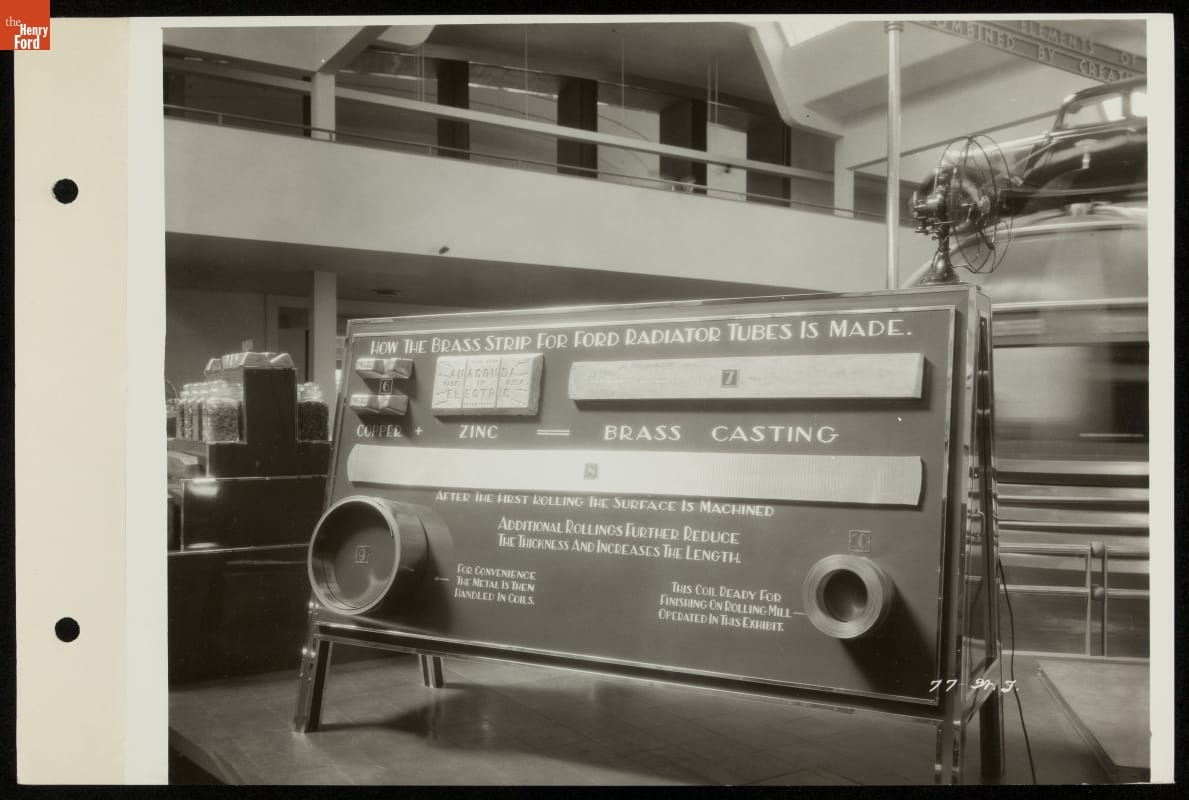
- American Brass Company Exhibit, Ford Exhibition Building, Century of Progress International Exposition, Chicago, Illinois, 1934 - Chicago's 1933-34 Century of Progress Exposition used the theme of progress to encourage optimism during the Depression. After Ford Motor Company opened its massive exhibition building in 1934, fairgoers could peruse acres of industrial demonstrations and informative displays.
- 1934
- Collections - Artifact
American Brass Company Exhibit, Ford Exhibition Building, Century of Progress International Exposition, Chicago, Illinois, 1934
Chicago's 1933-34 Century of Progress Exposition used the theme of progress to encourage optimism during the Depression. After Ford Motor Company opened its massive exhibition building in 1934, fairgoers could peruse acres of industrial demonstrations and informative displays.
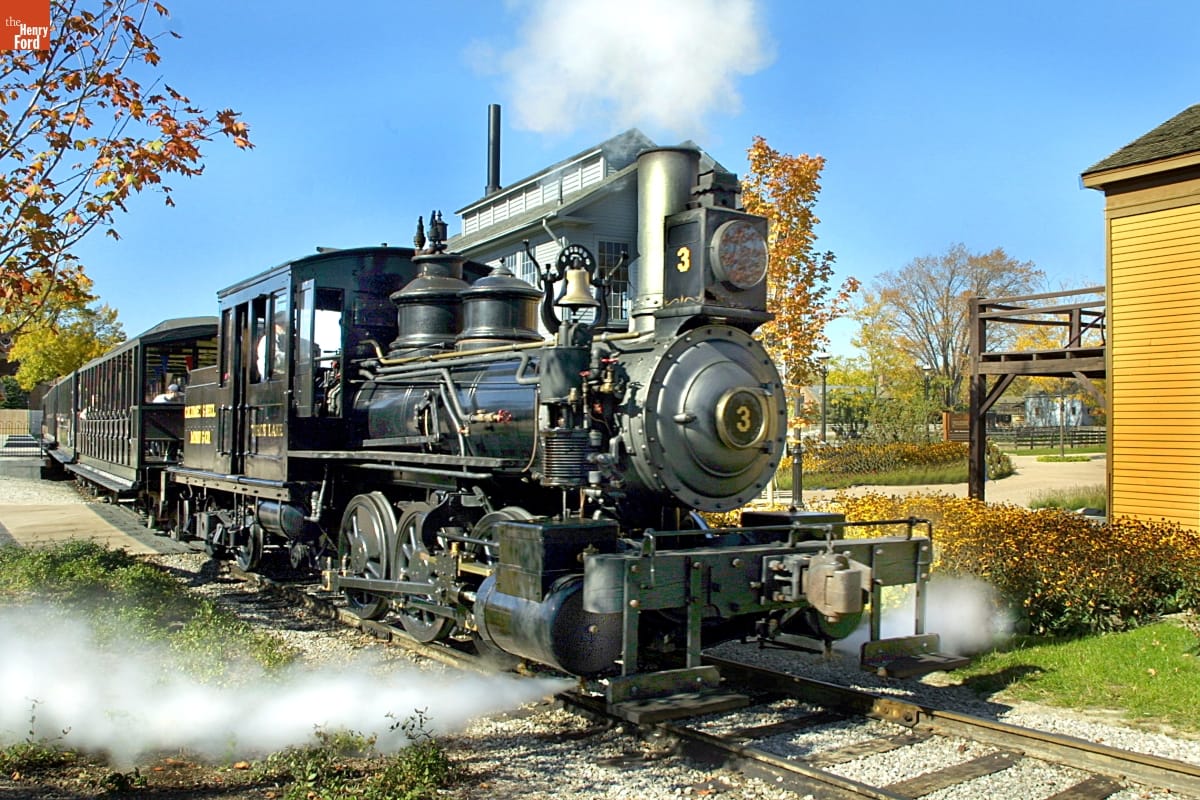
- Torch Lake Steam Locomotive, 1873 - <EM>Torch Lake</EM>, built by Mason Machine Works in 1873, hauled ore for the Calumet and Hecla Mining Company on Michigan's Keweenaw Peninsula. The engine is an articulated design. The driving wheels pivot under the boiler, allowing the locomotive to handle sharp curves. <EM>Torch Lake</EM> joined The Henry Ford's collection in 1969.
- 1873
- Collections - Artifact
Torch Lake Steam Locomotive, 1873
Torch Lake, built by Mason Machine Works in 1873, hauled ore for the Calumet and Hecla Mining Company on Michigan's Keweenaw Peninsula. The engine is an articulated design. The driving wheels pivot under the boiler, allowing the locomotive to handle sharp curves. Torch Lake joined The Henry Ford's collection in 1969.
- Anaconda Copper Mining Company Display, Ford Exhibition Building, Century of Progress International Exposition, Chicago, 1934 - Chicago's 1933-34 Century of Progress Exposition used the theme of progress to encourage optimism during the Depression. The Ford Exhibition Building, which sat on eleven acres at the fair and featured industrial demonstrations and informative displays like this, became the most talked-about exhibit of 1934.
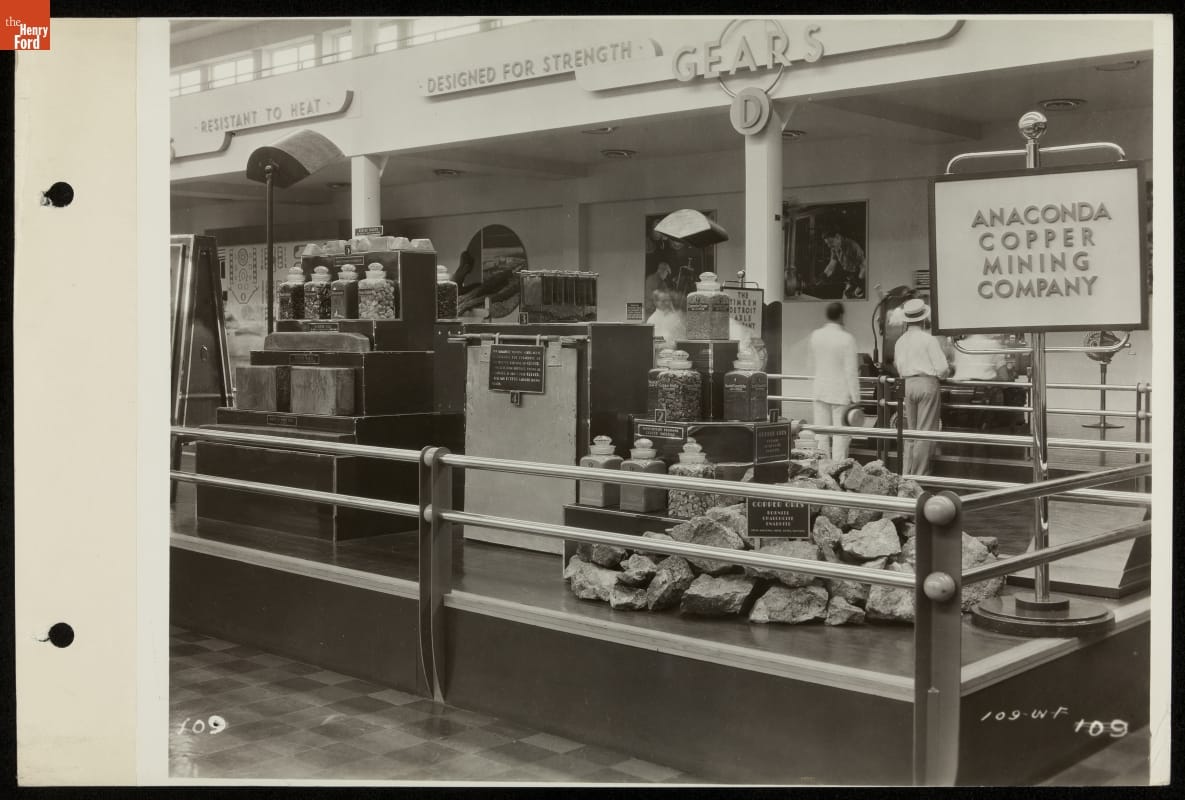
- 1934
- Collections - Artifact
Anaconda Copper Mining Company Display, Ford Exhibition Building, Century of Progress International Exposition, Chicago, 1934
Chicago's 1933-34 Century of Progress Exposition used the theme of progress to encourage optimism during the Depression. The Ford Exhibition Building, which sat on eleven acres at the fair and featured industrial demonstrations and informative displays like this, became the most talked-about exhibit of 1934.
- Anaconda Copper Exhibit, Ford Exhibition Building, Century of Progress International Exposition, Chicago, Illinois, 1934 - Chicago's 1933-34 Century of Progress Exposition used the theme of progress to encourage optimism during the Depression. The Ford Exhibition Building, which sat on eleven acres at the fair and featured industrial demonstrations and informative displays like this, became the most talked-about exhibit of 1934.
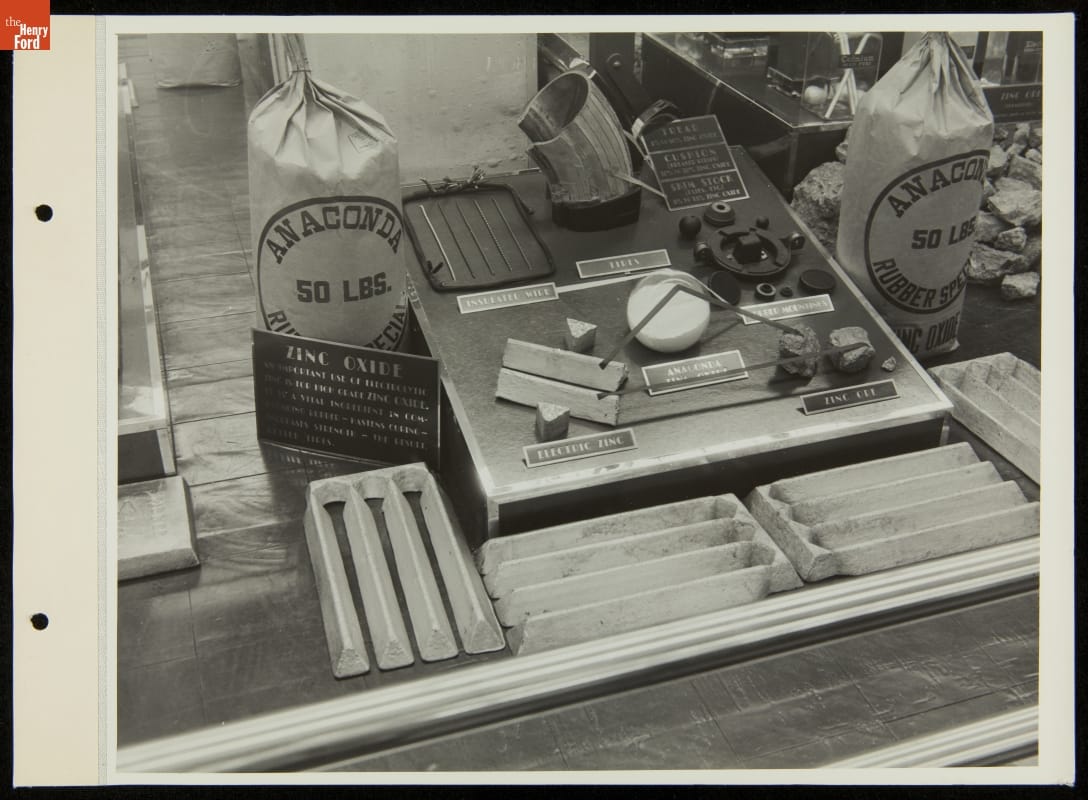
- 1934
- Collections - Artifact
Anaconda Copper Exhibit, Ford Exhibition Building, Century of Progress International Exposition, Chicago, Illinois, 1934
Chicago's 1933-34 Century of Progress Exposition used the theme of progress to encourage optimism during the Depression. The Ford Exhibition Building, which sat on eleven acres at the fair and featured industrial demonstrations and informative displays like this, became the most talked-about exhibit of 1934.
- Shaft #2, Quincy Mine, Hancock, Michigan, circa 1906 - From 1895 to 1924, the Detroit Publishing Company was one of the major image publishers in the world. The company's wide-ranging stock of original photographs documented life and landscapes from across the nation and around the globe. From the tens of thousands of negatives, the company created prints, postcards, lantern slides, panoramas, and other merchandise for sale to educators, businessmen, advertisers, homeowners and travelers.
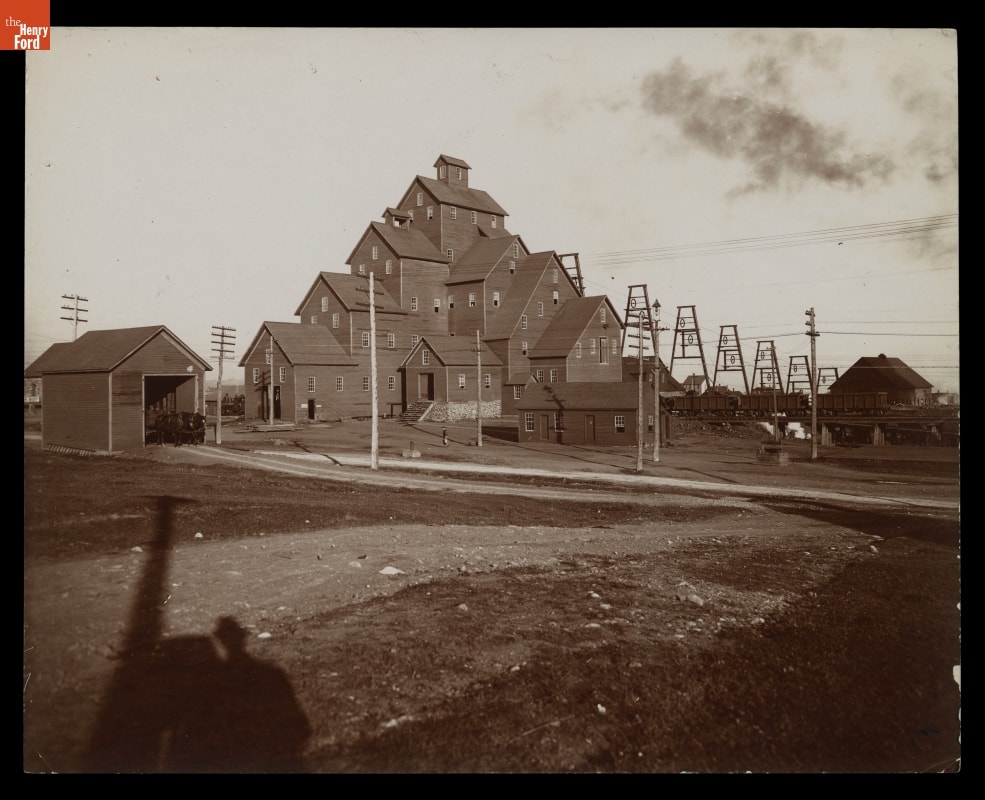
- circa 1906
- Collections - Artifact
Shaft #2, Quincy Mine, Hancock, Michigan, circa 1906
From 1895 to 1924, the Detroit Publishing Company was one of the major image publishers in the world. The company's wide-ranging stock of original photographs documented life and landscapes from across the nation and around the globe. From the tens of thousands of negatives, the company created prints, postcards, lantern slides, panoramas, and other merchandise for sale to educators, businessmen, advertisers, homeowners and travelers.
- Miner Operating Pneumatic Drill, Anaconda Copper Mine, Montana, 1935 -
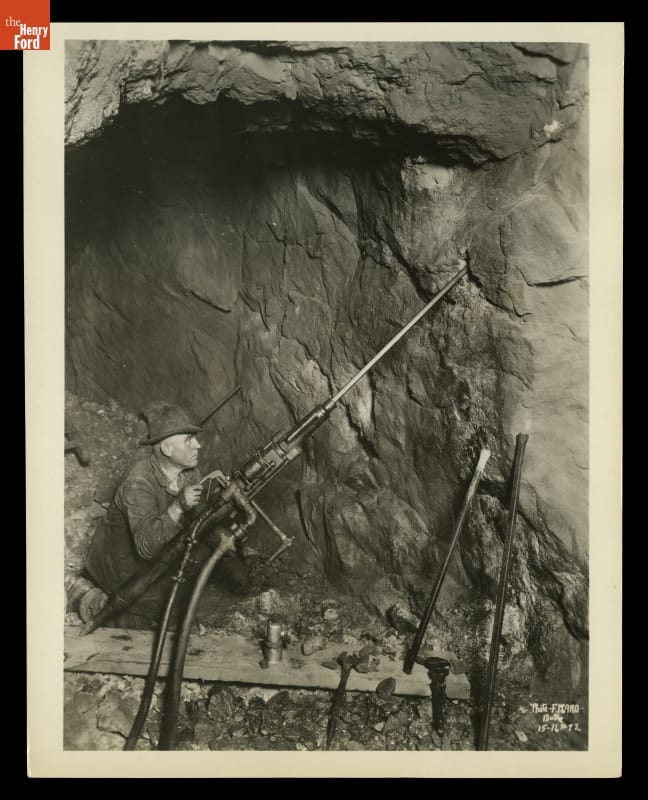
- April 15, 1935
- Collections - Artifact
Miner Operating Pneumatic Drill, Anaconda Copper Mine, Montana, 1935
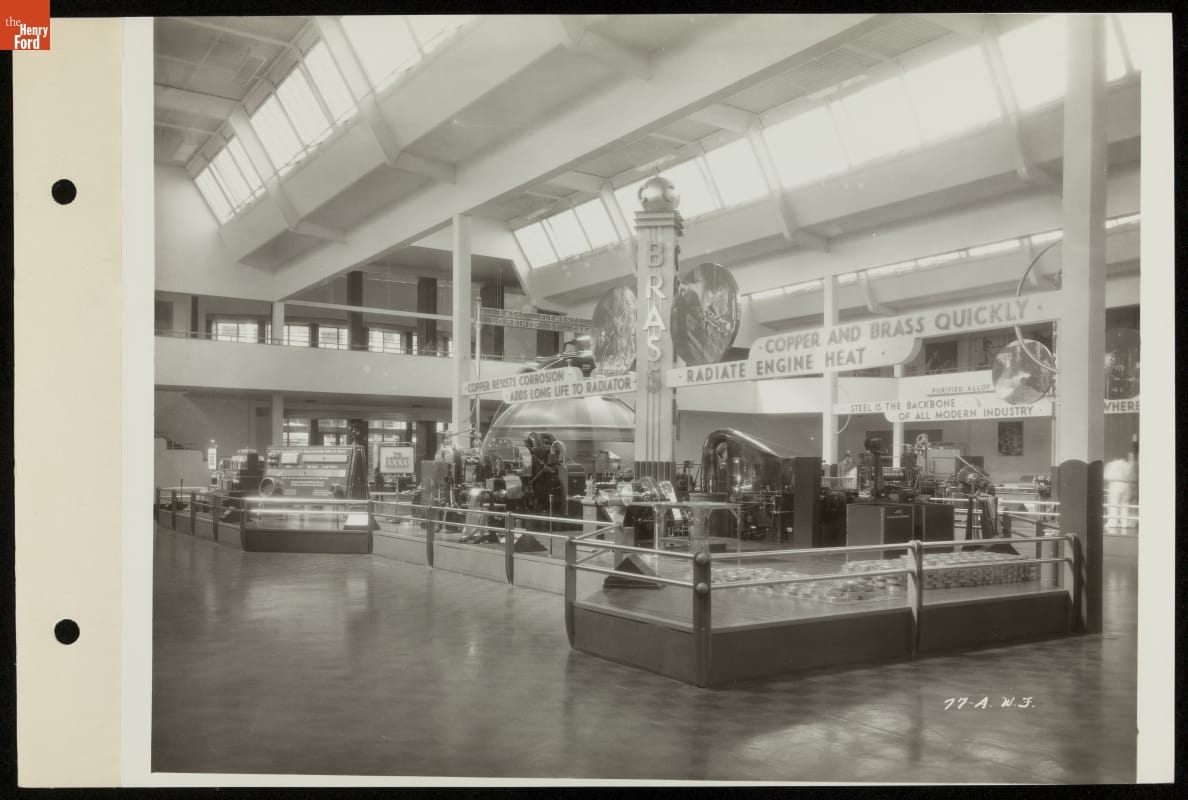
- American Brass Company Exhibit, Ford Exhibition Building, Century of Progress International Exposition, Chicago, Illinois, 1934 - Chicago's 1933-34 Century of Progress Exposition used the theme of progress to encourage optimism during the Depression. The Ford Exhibition Building, which sat on eleven acres at the fair and featured industrial demonstrations and informative displays like this, became the most talked-about exhibit of 1934.
- 1934
- Collections - Artifact
American Brass Company Exhibit, Ford Exhibition Building, Century of Progress International Exposition, Chicago, Illinois, 1934
Chicago's 1933-34 Century of Progress Exposition used the theme of progress to encourage optimism during the Depression. The Ford Exhibition Building, which sat on eleven acres at the fair and featured industrial demonstrations and informative displays like this, became the most talked-about exhibit of 1934.
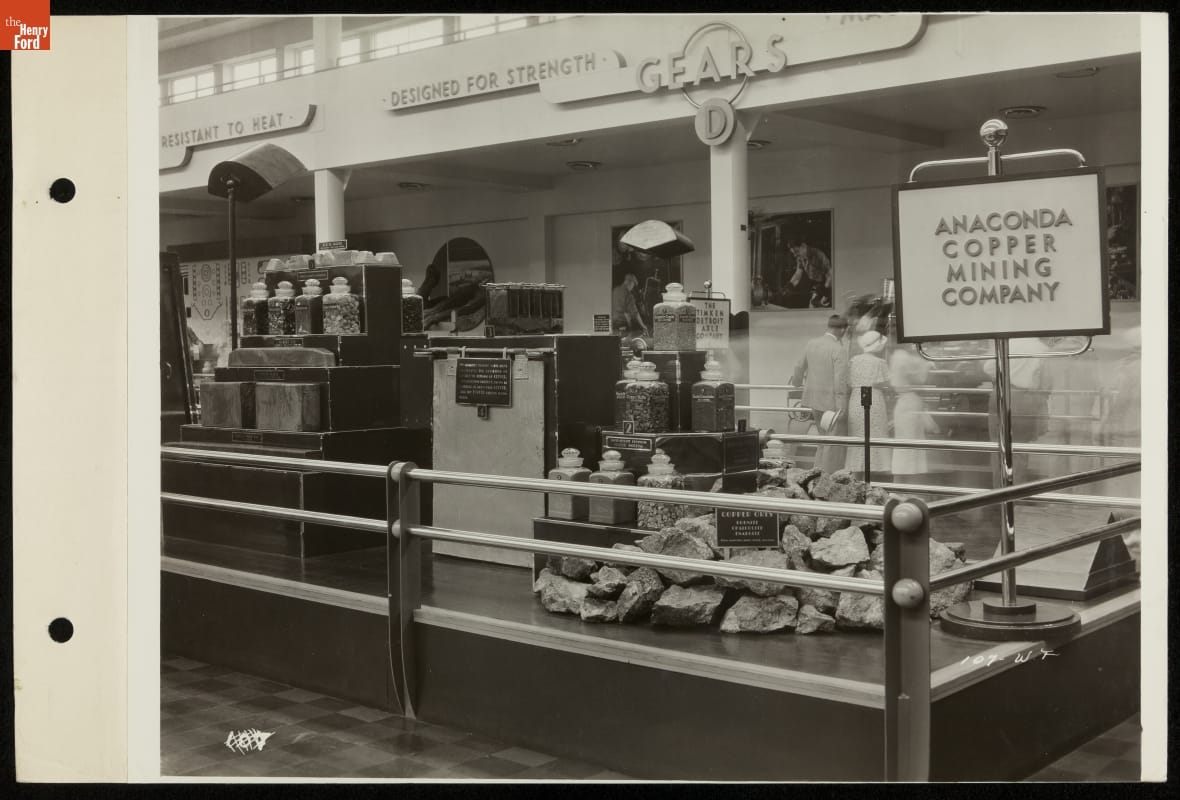
- Anaconda Copper Mining Company Display, Ford Exhibition Building, Century of Progress International Exposition, Chicago, 1934 - Chicago's 1933-34 Century of Progress Exposition used the theme of progress to encourage optimism during the Depression. The Ford Exhibition Building, which sat on eleven acres at the fair and featured industrial demonstrations and informative displays like this, became the most talked-about exhibit of 1934.
- 1934
- Collections - Artifact
Anaconda Copper Mining Company Display, Ford Exhibition Building, Century of Progress International Exposition, Chicago, 1934
Chicago's 1933-34 Century of Progress Exposition used the theme of progress to encourage optimism during the Depression. The Ford Exhibition Building, which sat on eleven acres at the fair and featured industrial demonstrations and informative displays like this, became the most talked-about exhibit of 1934.