
Search
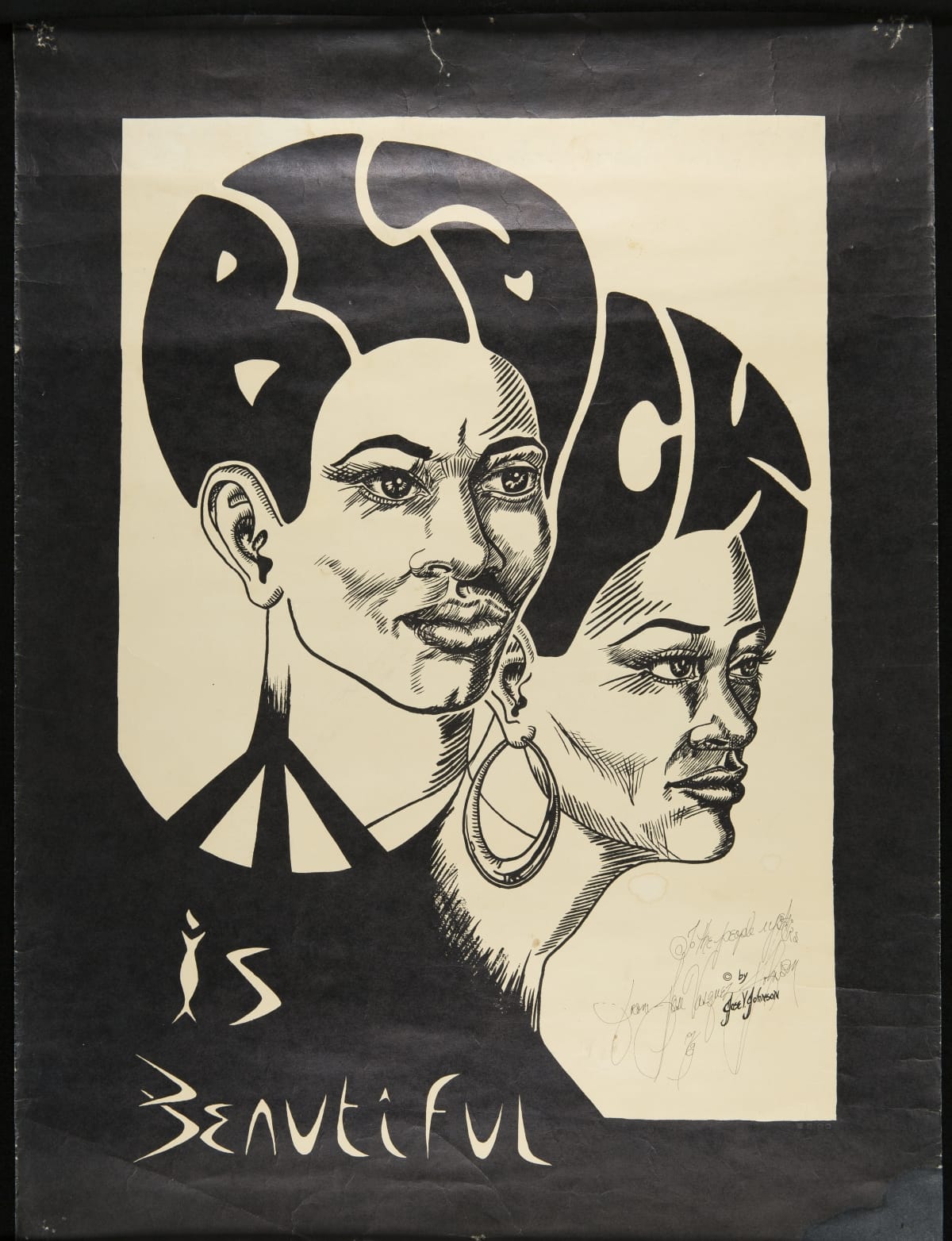
- "Black is Beautiful," 1969 -
- 1969
- Collections - Artifact
"Black is Beautiful," 1969
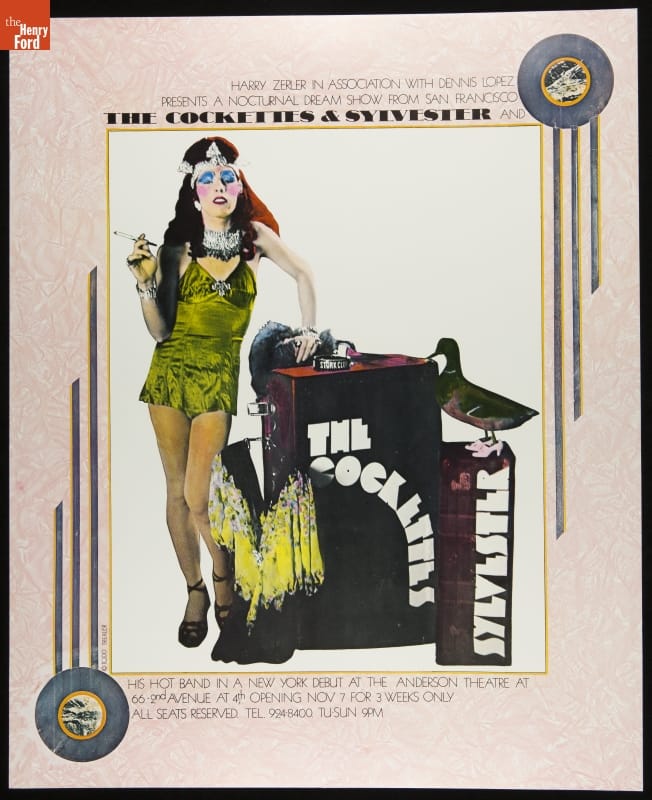
- "The Cockettes and Sylvester," November 1971 - The Cockettes were an influential theater troupe from San Francisco. The group, which consisted of hippies and members of the LGBTQ+ community, produced elaborate drag musicals that subverted societal norms around gender and sexuality. One former Cockette, Sylvester (1947-1988), began a solo singing career in 1971; famous for his falsetto voice and androgynous appearance, he became a beloved disco artist.
- 1971
- Collections - Artifact
"The Cockettes and Sylvester," November 1971
The Cockettes were an influential theater troupe from San Francisco. The group, which consisted of hippies and members of the LGBTQ+ community, produced elaborate drag musicals that subverted societal norms around gender and sexuality. One former Cockette, Sylvester (1947-1988), began a solo singing career in 1971; famous for his falsetto voice and androgynous appearance, he became a beloved disco artist.
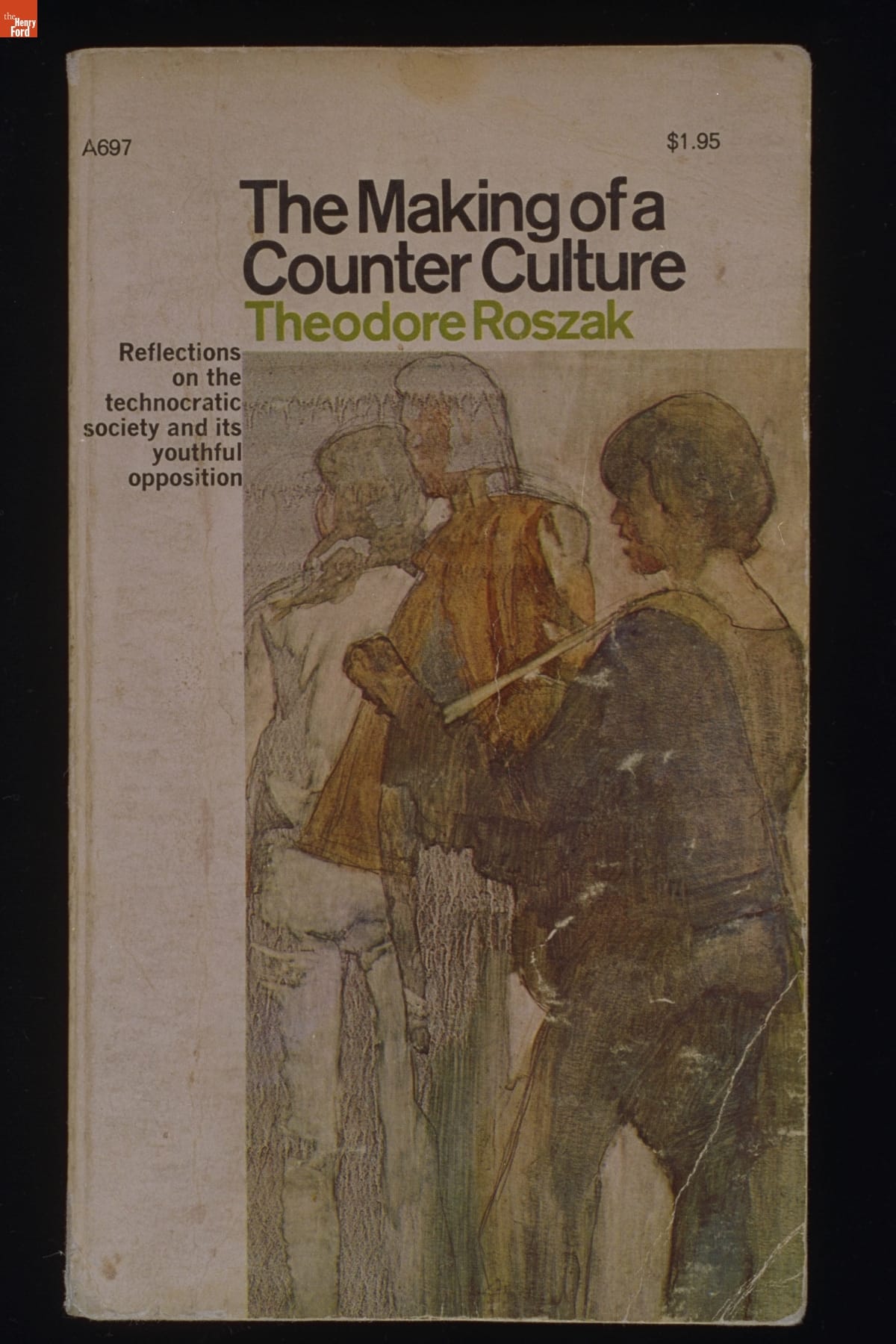
- The Making of a Counter Culture, 1969 -
- 1969
- Collections - Artifact
The Making of a Counter Culture, 1969
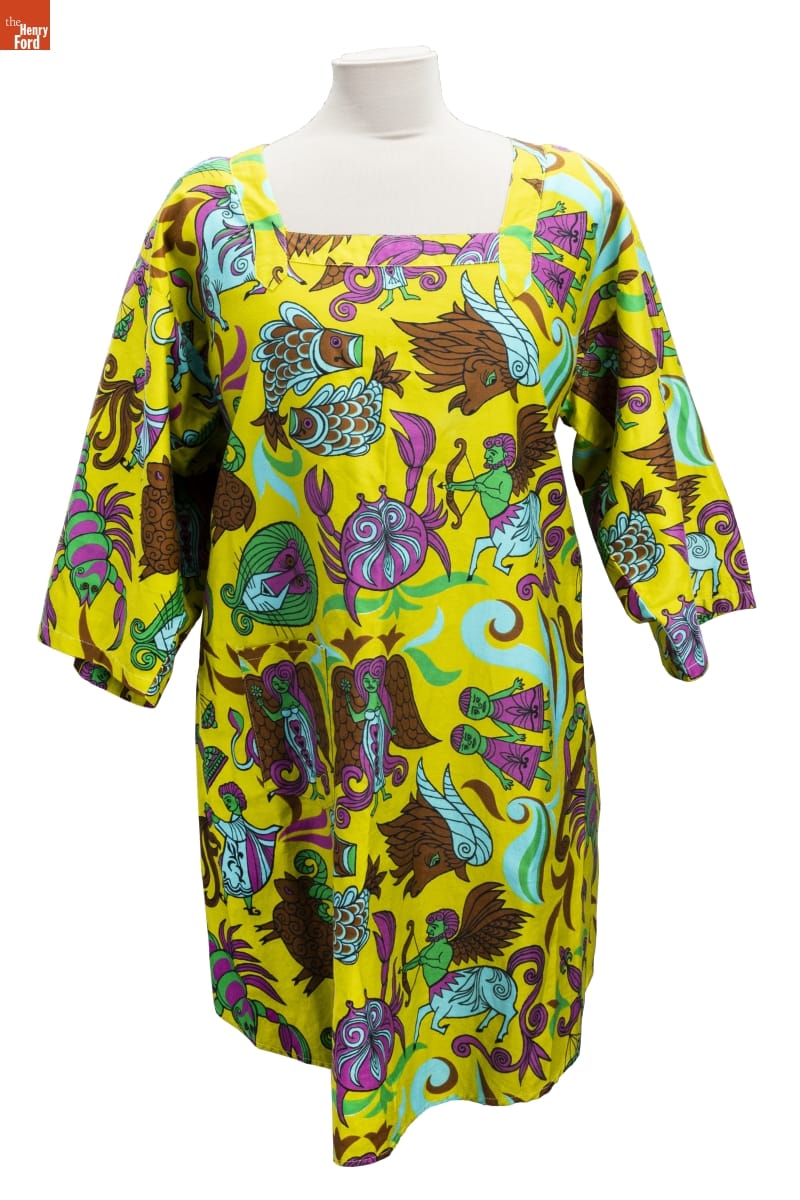
- Design House Smock, 1970-1975 -
- 1970-1975
- Collections - Artifact
Design House Smock, 1970-1975
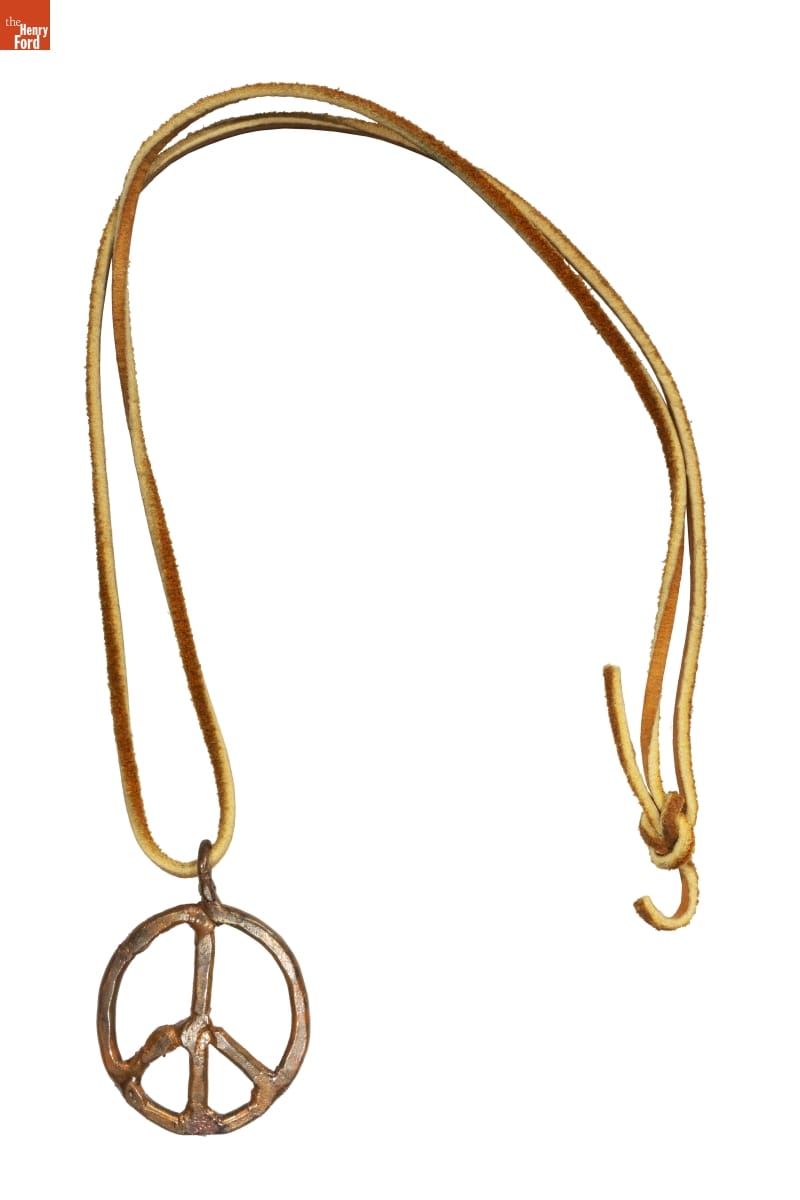
- Peace Symbol Pendant Necklace, Worn by Kathy Duquette, 1970-1975 - The "peace sign" was first designed in 1958 as part of the British Campaign for Nuclear Disarmament. By the late 1960s and 1970s, the symbol -- shown on this necklace -- came to mean that the wearer was an opponent of the Vietnam War. Ultimately, the peace sign came to represent opposition to war in general.
- 1970-1975
- Collections - Artifact
Peace Symbol Pendant Necklace, Worn by Kathy Duquette, 1970-1975
The "peace sign" was first designed in 1958 as part of the British Campaign for Nuclear Disarmament. By the late 1960s and 1970s, the symbol -- shown on this necklace -- came to mean that the wearer was an opponent of the Vietnam War. Ultimately, the peace sign came to represent opposition to war in general.
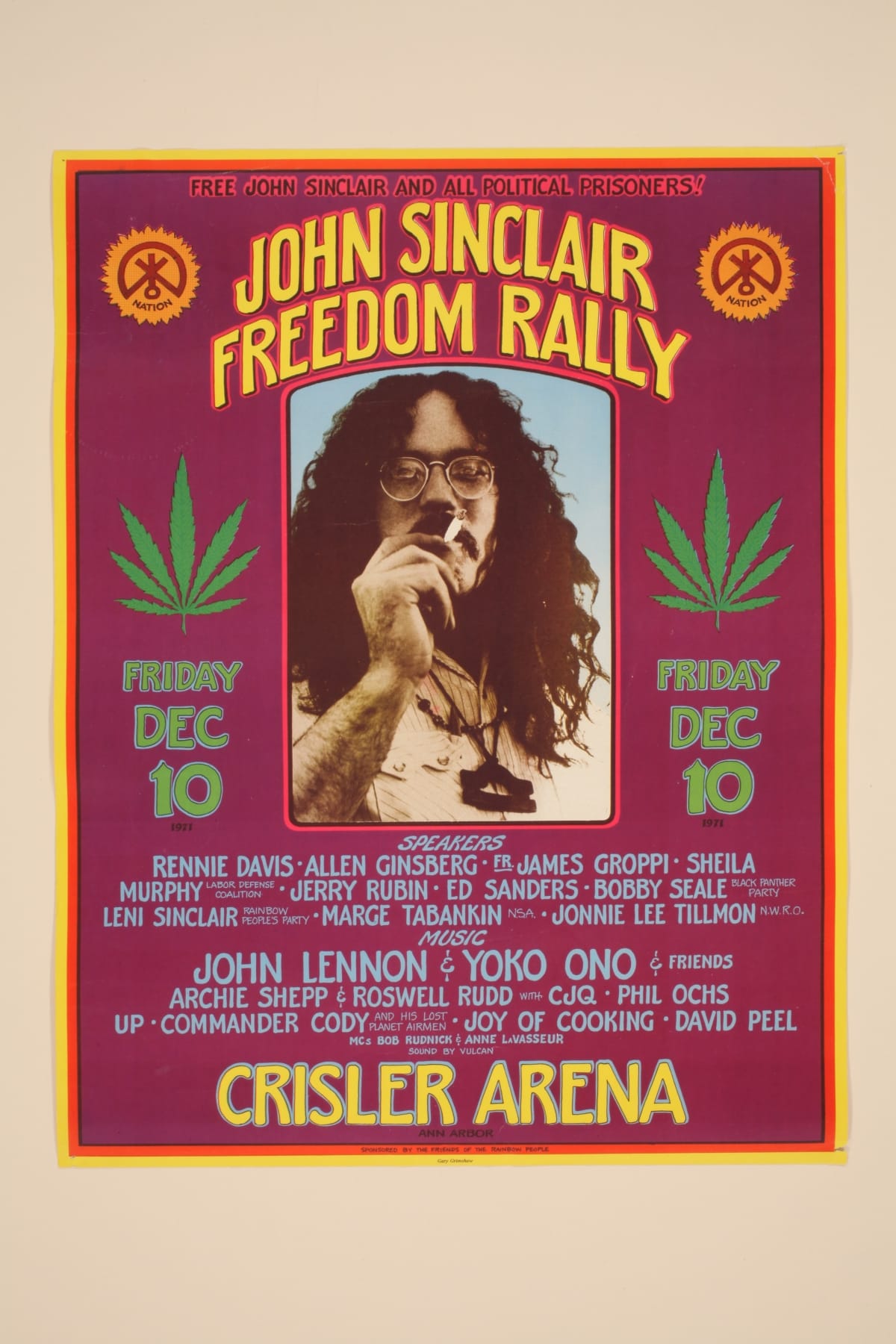
- Advertising Poster, "John Sinclair Freedom Rally," December 10, 1971 - In 1970, Michigan-based writer and activist John Sinclair (1941-2024) was sentenced to ten years in prison for possession of marijuana. In December 1971, 15,000 people protested his incarceration at the John Sinclair Freedom Rally held in Ann Arbor, Michigan. The 8-hour event featured political speeches, music, and poetry performances from countercultural celebrities like Jerry Rubin, John Lennon, and Allen Ginsberg.
- December 10, 1971
- Collections - Artifact
Advertising Poster, "John Sinclair Freedom Rally," December 10, 1971
In 1970, Michigan-based writer and activist John Sinclair (1941-2024) was sentenced to ten years in prison for possession of marijuana. In December 1971, 15,000 people protested his incarceration at the John Sinclair Freedom Rally held in Ann Arbor, Michigan. The 8-hour event featured political speeches, music, and poetry performances from countercultural celebrities like Jerry Rubin, John Lennon, and Allen Ginsberg.
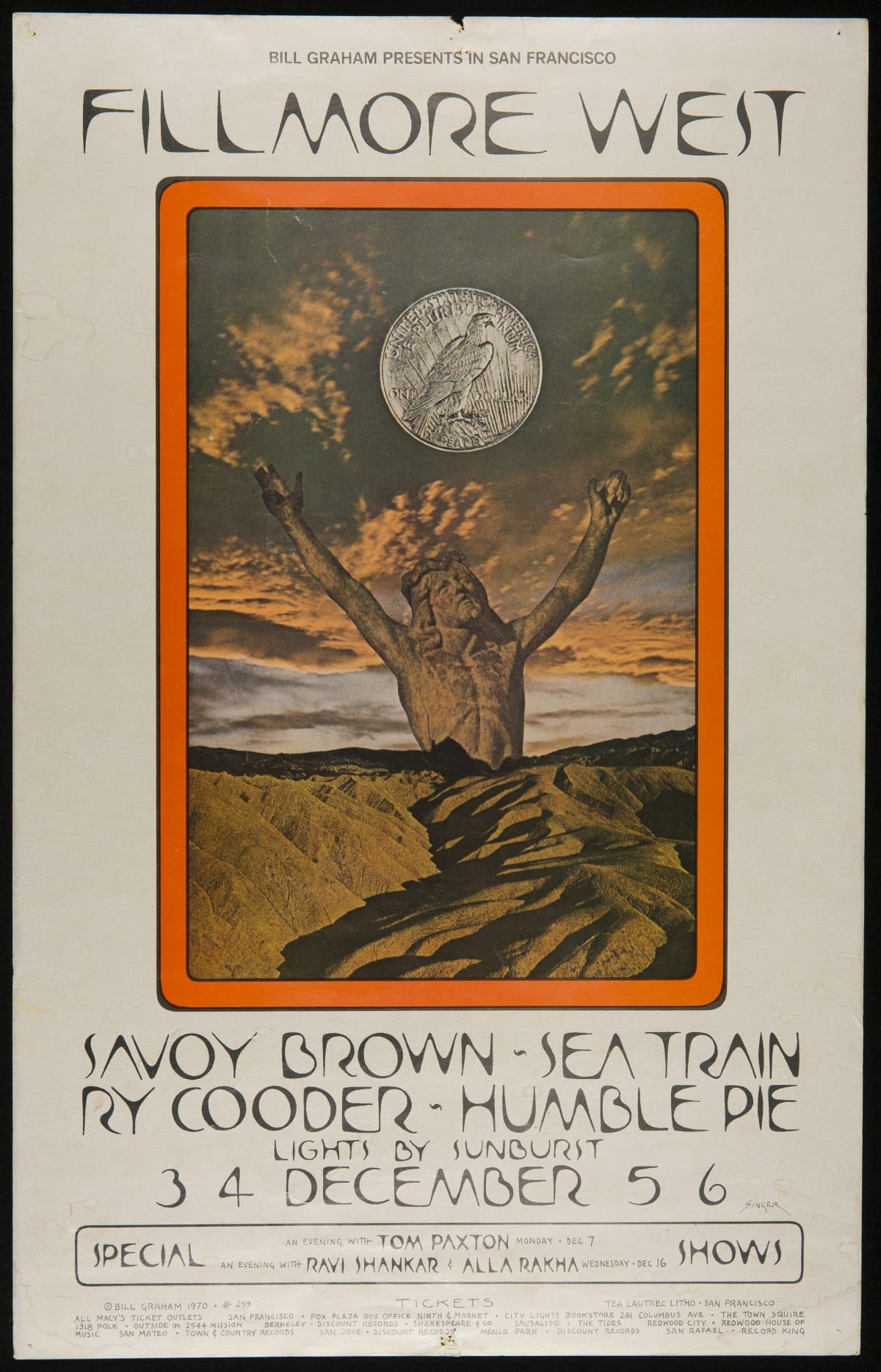
- "Fillmore West: Savoy Brown, Sea Train, Ry Cooder, Humble Pie," December 1970 - In the 1960s and 1970s, Tea Lautrec Litho's posters were a common sight in and around San Francisco, California. The company, owned and operated by Levon Mosgofian, produced hundreds of posters that were used to promote concerts by both local and internationally famous bands. Turn-of-the-20th-century Art Nouveau design, which had a resurgence in the 1960s, heavily influenced Tea Lautrec's signature style.
- December 01, 1970
- Collections - Artifact
"Fillmore West: Savoy Brown, Sea Train, Ry Cooder, Humble Pie," December 1970
In the 1960s and 1970s, Tea Lautrec Litho's posters were a common sight in and around San Francisco, California. The company, owned and operated by Levon Mosgofian, produced hundreds of posters that were used to promote concerts by both local and internationally famous bands. Turn-of-the-20th-century Art Nouveau design, which had a resurgence in the 1960s, heavily influenced Tea Lautrec's signature style.
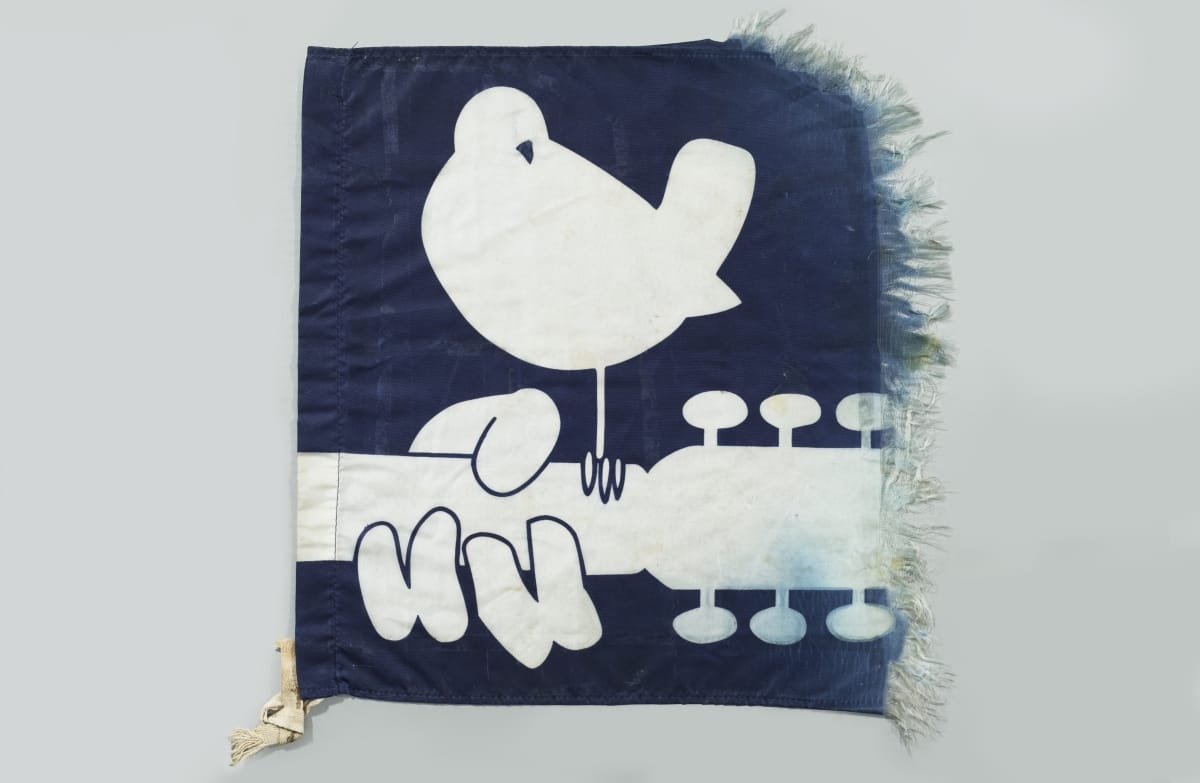
- Woodstock Music Festival Flag, 1969 - On August 15-18, 1969, over 400,000 people attended the Woodstock Music and Art Fair in Bethel, New York. Vendors, musicians, and technical crew used this flag, which features the event logo, to access the festival grounds and backstage area and to distinguish themselves from other attendees. Woodstock is often remembered as a high point of the 1960s countercultural movement.
- 1969
- Collections - Artifact
Woodstock Music Festival Flag, 1969
On August 15-18, 1969, over 400,000 people attended the Woodstock Music and Art Fair in Bethel, New York. Vendors, musicians, and technical crew used this flag, which features the event logo, to access the festival grounds and backstage area and to distinguish themselves from other attendees. Woodstock is often remembered as a high point of the 1960s countercultural movement.
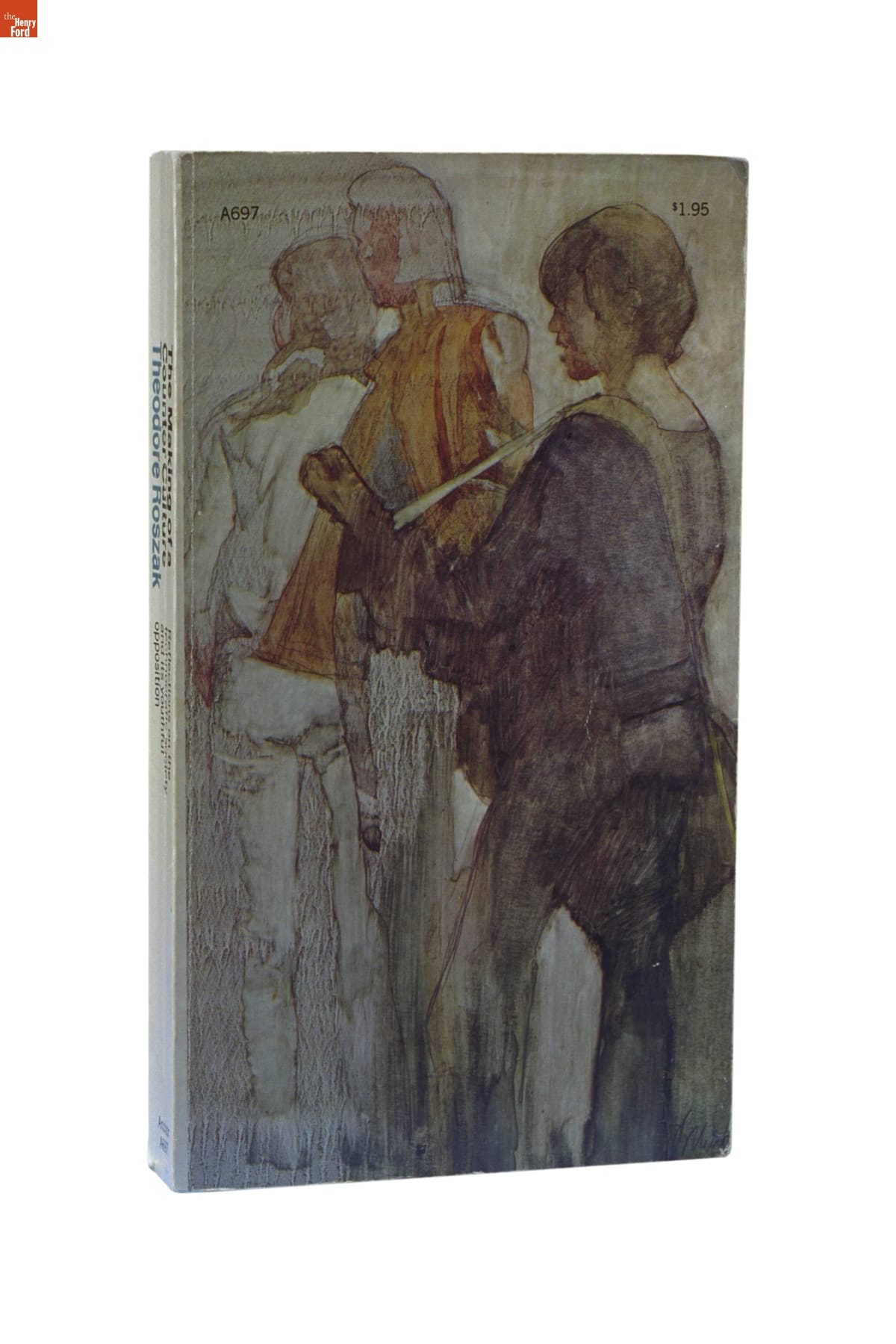
- The Making of a Counter Culture: Reflections on the Tecnocratic Socity and its Youthful Opposition, 1969 -
- 1969
- Collections - Artifact
The Making of a Counter Culture: Reflections on the Tecnocratic Socity and its Youthful Opposition, 1969
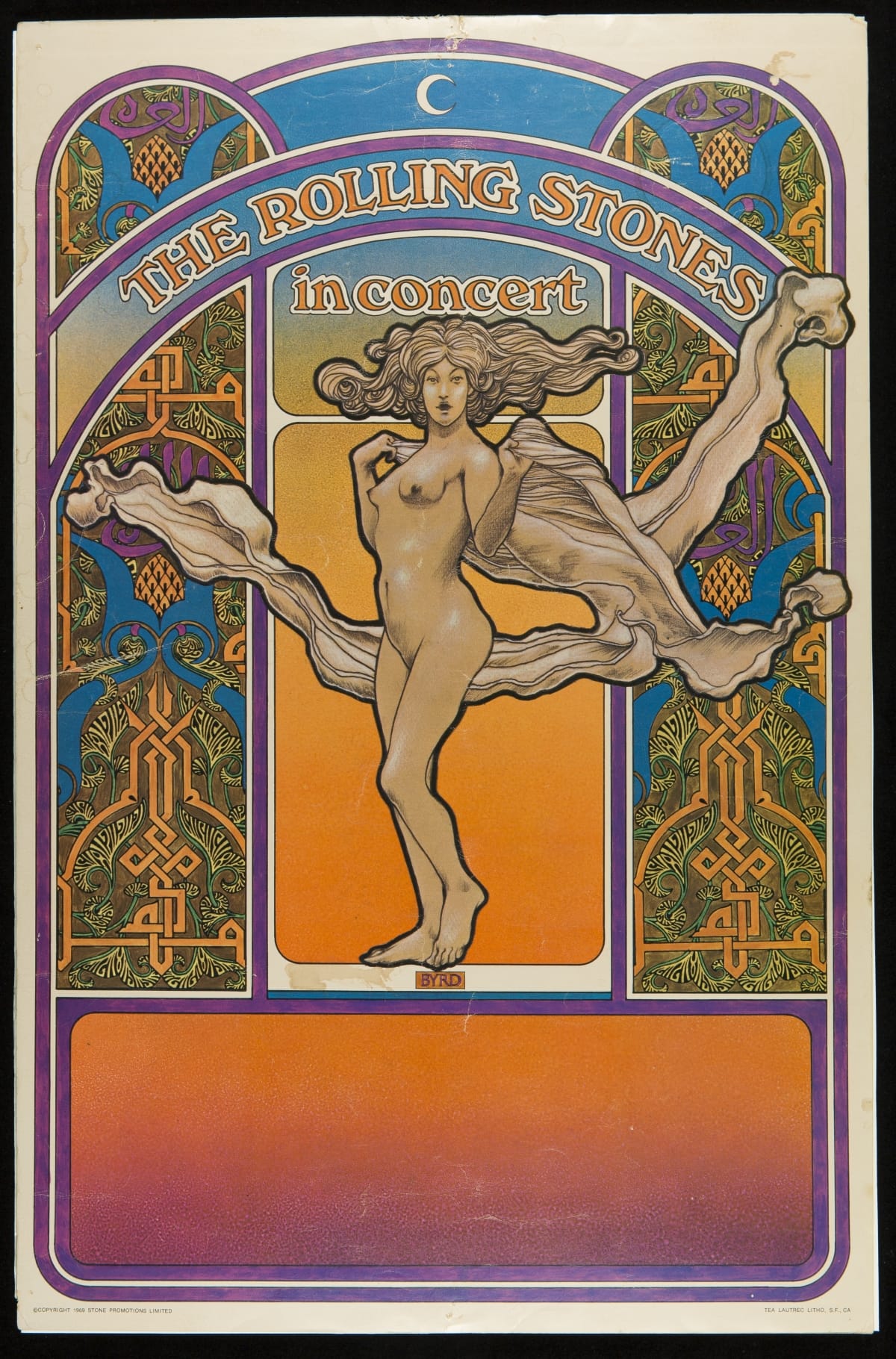
- Concert Tour Poster Blank, "The Rolling Stones in Concert," 1969 - As part of the counterculture of the 1960s, graphic artists looked to the 1890s for an alternative to mainstream design. Concert posters influenced by the Art Nouveau style became ubiquitous. For this Rolling Stones poster, artist David Byrd took the visual structure, central female figure, and color gradation used by Art Nouveau artist Alphonse Mucha and updated them for the 1960s.
- 1969
- Collections - Artifact
Concert Tour Poster Blank, "The Rolling Stones in Concert," 1969
As part of the counterculture of the 1960s, graphic artists looked to the 1890s for an alternative to mainstream design. Concert posters influenced by the Art Nouveau style became ubiquitous. For this Rolling Stones poster, artist David Byrd took the visual structure, central female figure, and color gradation used by Art Nouveau artist Alphonse Mucha and updated them for the 1960s.