
Search
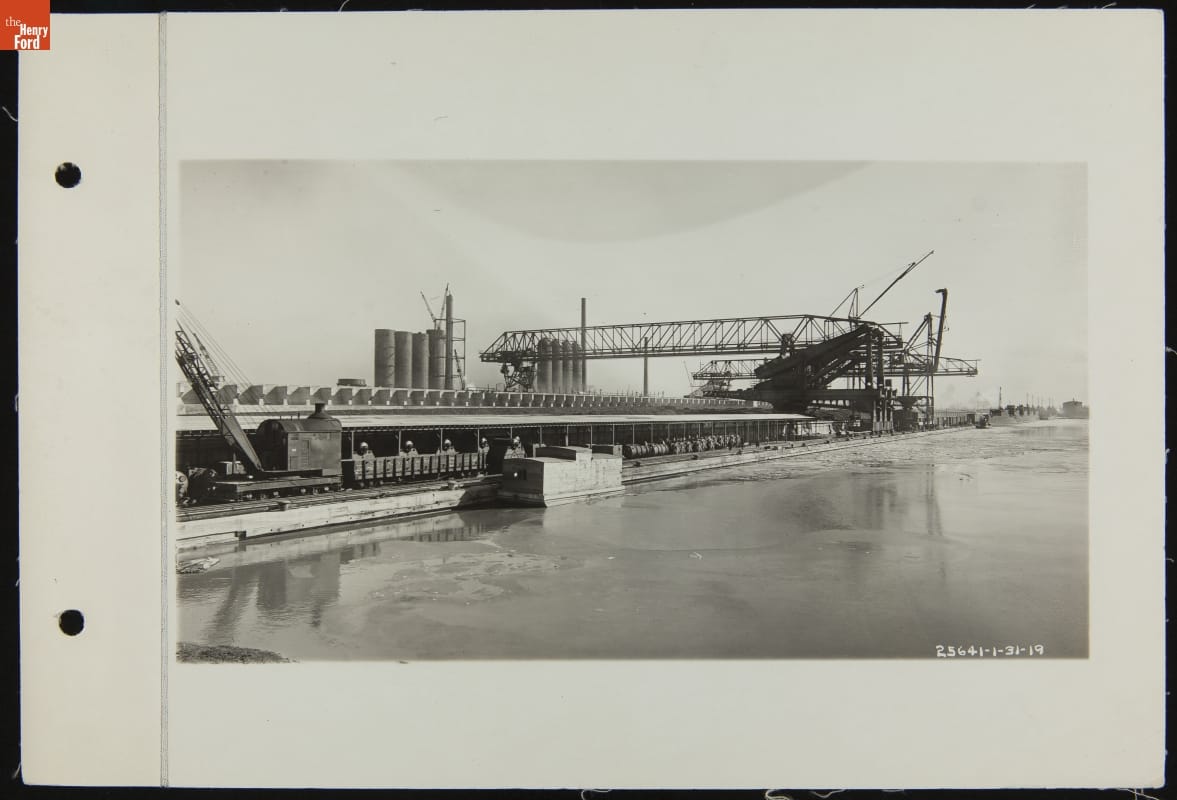
- Unloading Cranes at Dock by the Ford Rouge Plant Blast Furnace, January 1919 - Iron ore and limestone used at the Rouge were sourced from Great Lakes mines and quarries. These bulk commodities generally were delivered to the plant by lake-going freighters. Large cranes at the Rouge's mile-long boat slip unloaded the materials and moved them to nearby storage bins.
- January 31, 1919
- Collections - Artifact
Unloading Cranes at Dock by the Ford Rouge Plant Blast Furnace, January 1919
Iron ore and limestone used at the Rouge were sourced from Great Lakes mines and quarries. These bulk commodities generally were delivered to the plant by lake-going freighters. Large cranes at the Rouge's mile-long boat slip unloaded the materials and moved them to nearby storage bins.
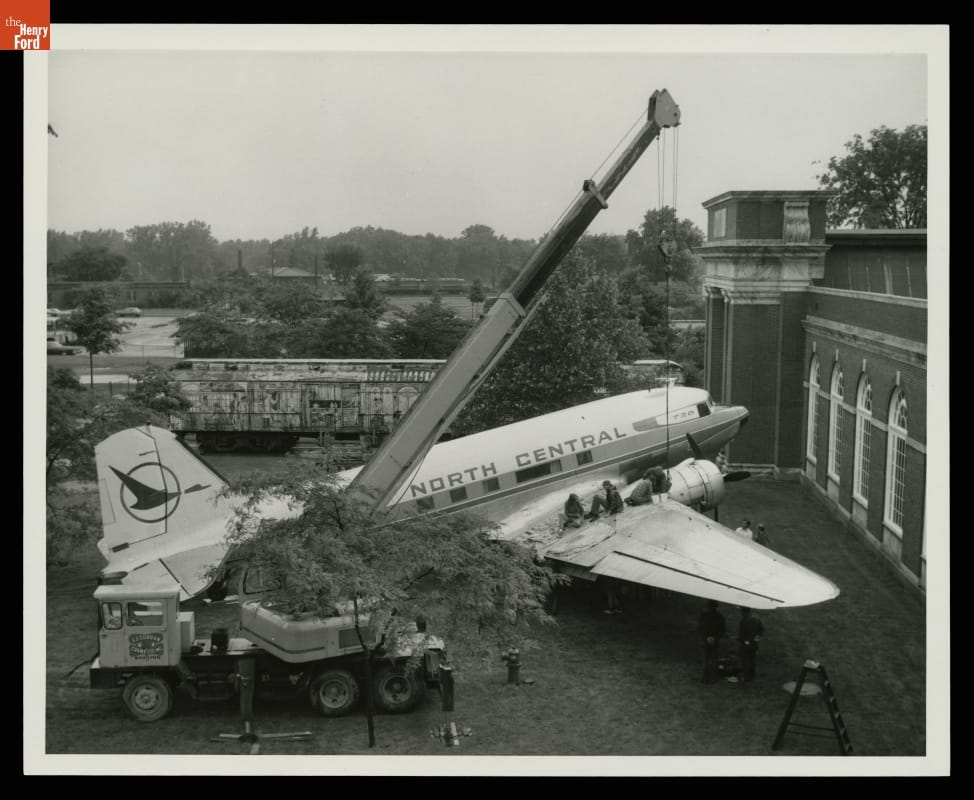
- 1939 Douglas DC-3 Being Moved to Its Place behind Henry Ford Museum, June 2, 1975 - North Central Airlines donated a Douglas DC-3 airplane to The Henry Ford in 1975. After the plane flew to Ford Motor Company's proving ground -- first developed as an airport in 1924 -- its wings were removed and the aircraft was transported by crane to Henry Ford Museum. It was reassembled and displayed outside the museum until moved indoors in 2003.
- June 02, 1975
- Collections - Artifact
1939 Douglas DC-3 Being Moved to Its Place behind Henry Ford Museum, June 2, 1975
North Central Airlines donated a Douglas DC-3 airplane to The Henry Ford in 1975. After the plane flew to Ford Motor Company's proving ground -- first developed as an airport in 1924 -- its wings were removed and the aircraft was transported by crane to Henry Ford Museum. It was reassembled and displayed outside the museum until moved indoors in 2003.
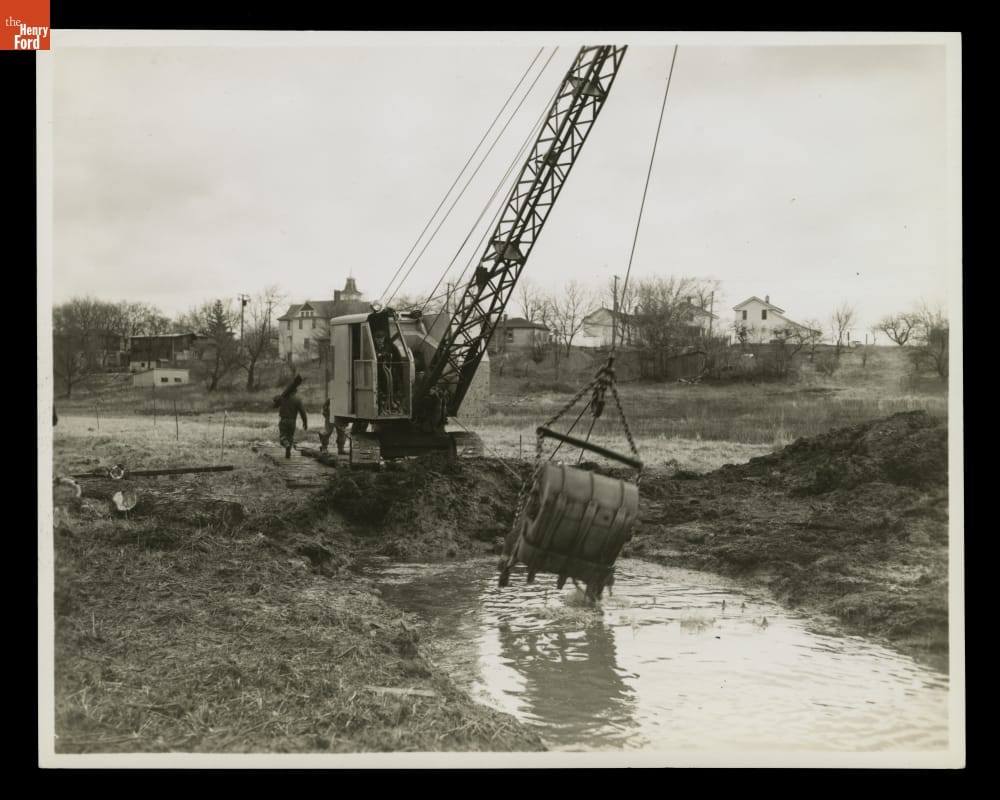
- Hydroelectric Plant Construction, Ford Village Industries, Clarkston, Michigan, 1940 - Henry Ford began setting up small-scale factories in towns throughout southeast Michigan in the 1920s. These "Village Industries" -- usually located at the site of an old mill -- employed local residents and supplied parts, tools and equipment for Ford's massive industrial operations. The factory in Clarkston, which opened in 1942, supplied Ford with seat covers, drill bushings and other material.
- November 15, 1940
- Collections - Artifact
Hydroelectric Plant Construction, Ford Village Industries, Clarkston, Michigan, 1940
Henry Ford began setting up small-scale factories in towns throughout southeast Michigan in the 1920s. These "Village Industries" -- usually located at the site of an old mill -- employed local residents and supplied parts, tools and equipment for Ford's massive industrial operations. The factory in Clarkston, which opened in 1942, supplied Ford with seat covers, drill bushings and other material.
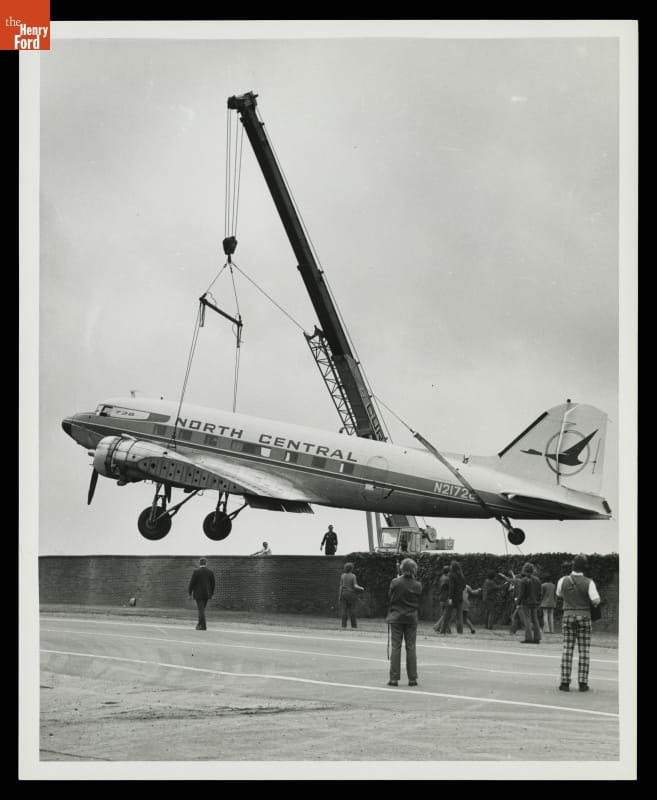
- 1939 Douglas DC-3 Being Moved from Ford Proving Ground to Henry Ford Museum, June 2, 1975 - North Central Airlines donated a Douglas DC-3 airplane to The Henry Ford in 1975. After the plane flew to Ford Motor Company's proving ground, moving it to nearby Henry Ford Museum was no simple task. The wings were removed and the airplane was lifted by crane over a fence before being transported to the museum.
- June 02, 1975
- Collections - Artifact
1939 Douglas DC-3 Being Moved from Ford Proving Ground to Henry Ford Museum, June 2, 1975
North Central Airlines donated a Douglas DC-3 airplane to The Henry Ford in 1975. After the plane flew to Ford Motor Company's proving ground, moving it to nearby Henry Ford Museum was no simple task. The wings were removed and the airplane was lifted by crane over a fence before being transported to the museum.
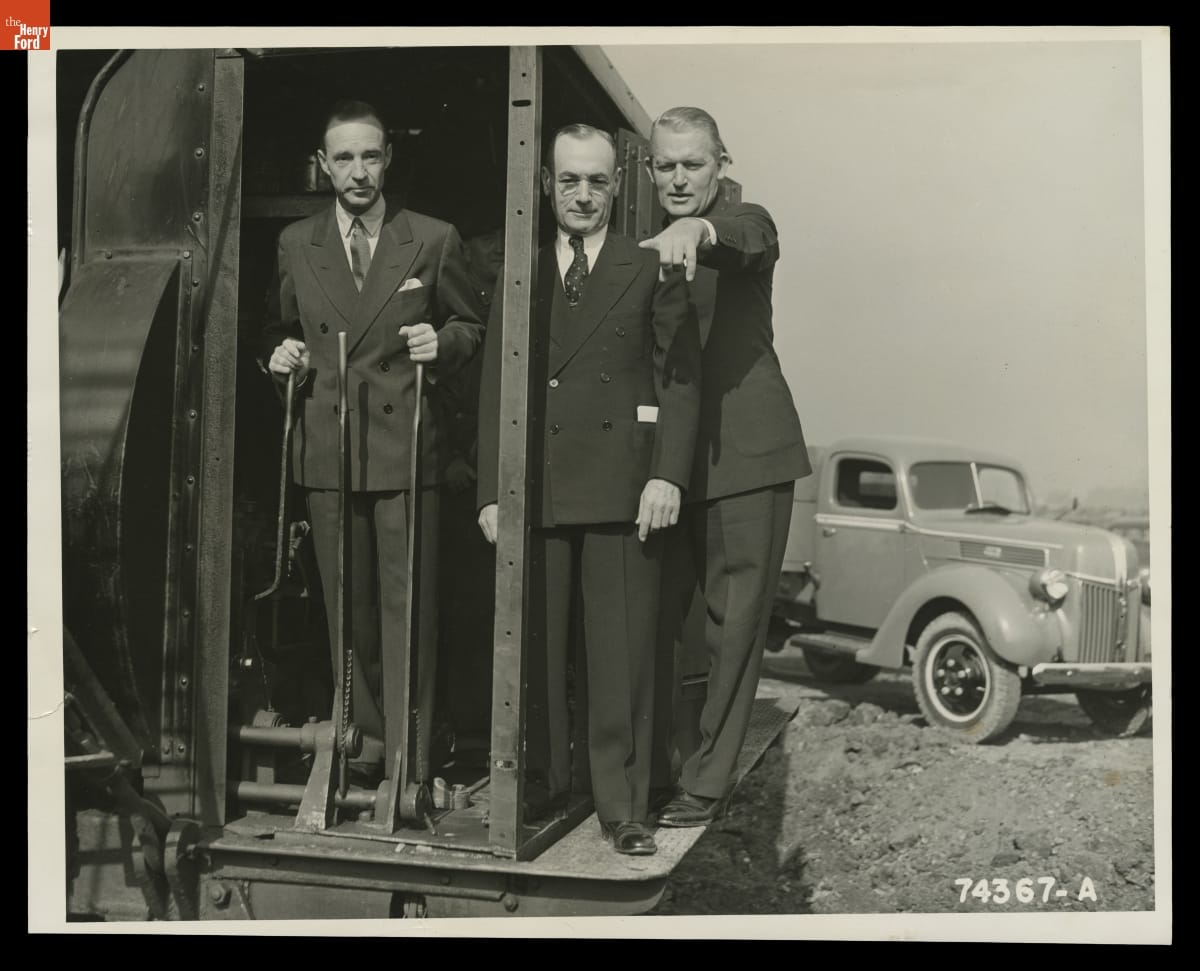
- Edsel Ford, P.E. Martin, and Charles Sorensen Breaking Ground at Ford Motor Company Willow Run Bomber Plant, September 17, 1940 - Ford Motor Company president Edsel Ford joined production managers P.E. Martin and Charles Sorensen in a September 1940 groundbreaking ceremony for the company's Willow Run bomber plant, 35 miles west of Detroit. When finished, the complex employed more than 42,000 people and included more than seven million square feet of floor space. Workers there built one B-24 bomber every 63 minutes.
- September 17, 1940
- Collections - Artifact
Edsel Ford, P.E. Martin, and Charles Sorensen Breaking Ground at Ford Motor Company Willow Run Bomber Plant, September 17, 1940
Ford Motor Company president Edsel Ford joined production managers P.E. Martin and Charles Sorensen in a September 1940 groundbreaking ceremony for the company's Willow Run bomber plant, 35 miles west of Detroit. When finished, the complex employed more than 42,000 people and included more than seven million square feet of floor space. Workers there built one B-24 bomber every 63 minutes.
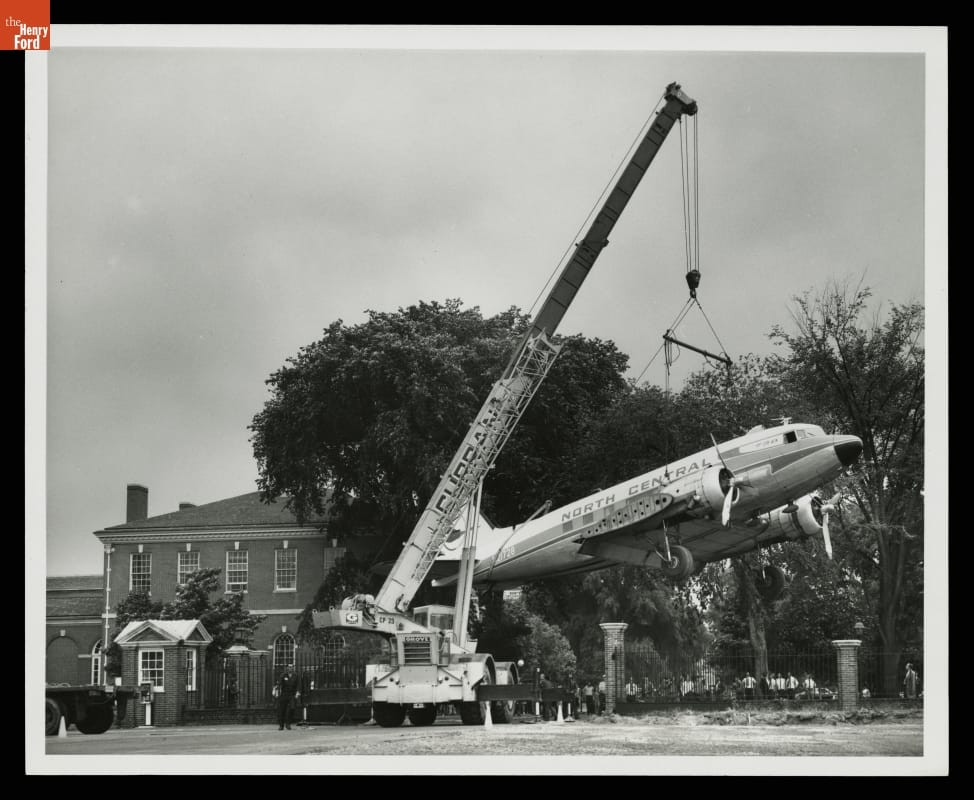
- 1939 Douglas DC-3 Being Moved to Its Place behind Henry Ford Museum, June 2, 1975 - North Central Airlines donated a Douglas DC-3 airplane to The Henry Ford in 1975. After the plane flew to Ford Motor Company's proving ground -- first developed as an airport in 1924 -- its wings were removed and the aircraft was transported by crane to Henry Ford Museum. It was reassembled and displayed outside the museum until moved indoors in 2003.
- June 02, 1975
- Collections - Artifact
1939 Douglas DC-3 Being Moved to Its Place behind Henry Ford Museum, June 2, 1975
North Central Airlines donated a Douglas DC-3 airplane to The Henry Ford in 1975. After the plane flew to Ford Motor Company's proving ground -- first developed as an airport in 1924 -- its wings were removed and the aircraft was transported by crane to Henry Ford Museum. It was reassembled and displayed outside the museum until moved indoors in 2003.
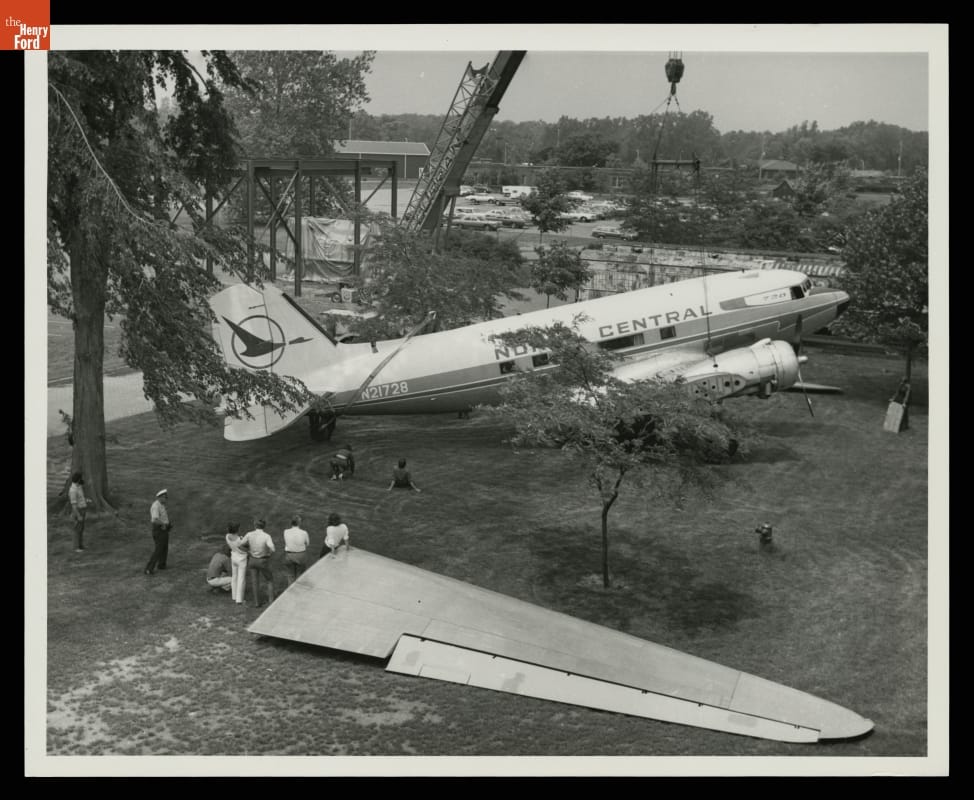
- 1939 Douglas DC-3 Being Moved to Its Place behind Henry Ford Museum, June 2, 1975 - North Central Airlines donated a Douglas DC-3 airplane to The Henry Ford in 1975. After the plane flew to Ford Motor Company's proving ground -- first developed as an airport in 1924 -- its wings were removed and the aircraft was transported by crane to Henry Ford Museum. It was reassembled and displayed outside the museum until moved indoors in 2003.
- June 02, 1975
- Collections - Artifact
1939 Douglas DC-3 Being Moved to Its Place behind Henry Ford Museum, June 2, 1975
North Central Airlines donated a Douglas DC-3 airplane to The Henry Ford in 1975. After the plane flew to Ford Motor Company's proving ground -- first developed as an airport in 1924 -- its wings were removed and the aircraft was transported by crane to Henry Ford Museum. It was reassembled and displayed outside the museum until moved indoors in 2003.
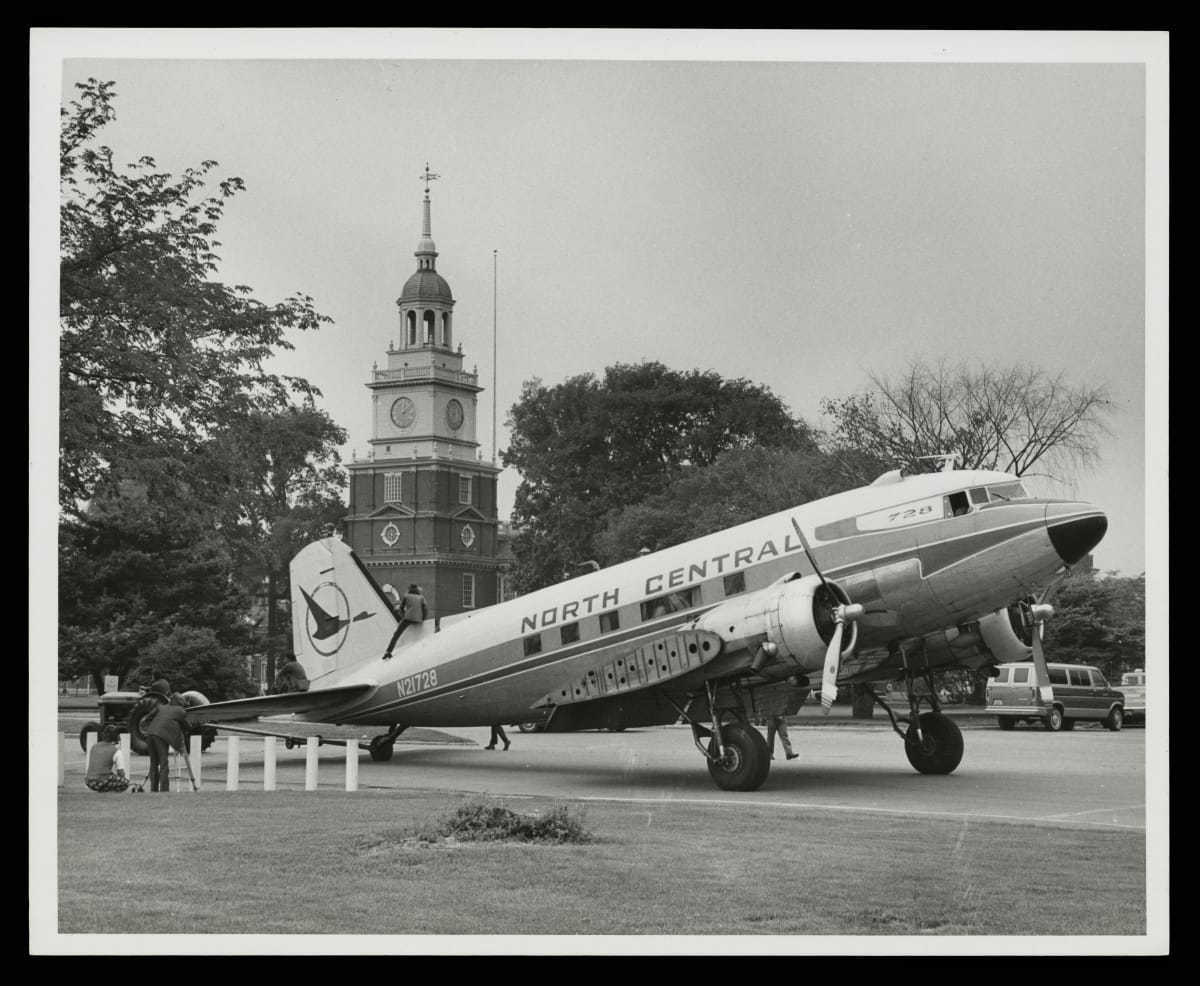
- 1939 Douglas DC-3 after Move from Ford Proving Ground to Henry Ford Museum, June 2, 1975 - North Central Airlines donated a Douglas DC-3 airplane to The Henry Ford in 1975. After the plane flew to Ford Motor Company's proving ground -- first developed as an airport in 1924 -- its wings were removed and the aircraft was transported by crane to Henry Ford Museum. It was reassembled and displayed outside the museum until moved indoors in 2003.
- June 02, 1975
- Collections - Artifact
1939 Douglas DC-3 after Move from Ford Proving Ground to Henry Ford Museum, June 2, 1975
North Central Airlines donated a Douglas DC-3 airplane to The Henry Ford in 1975. After the plane flew to Ford Motor Company's proving ground -- first developed as an airport in 1924 -- its wings were removed and the aircraft was transported by crane to Henry Ford Museum. It was reassembled and displayed outside the museum until moved indoors in 2003.
- Crane Moving Air-Handling Units onto Roof of Henry Ford Museum, 1998 -
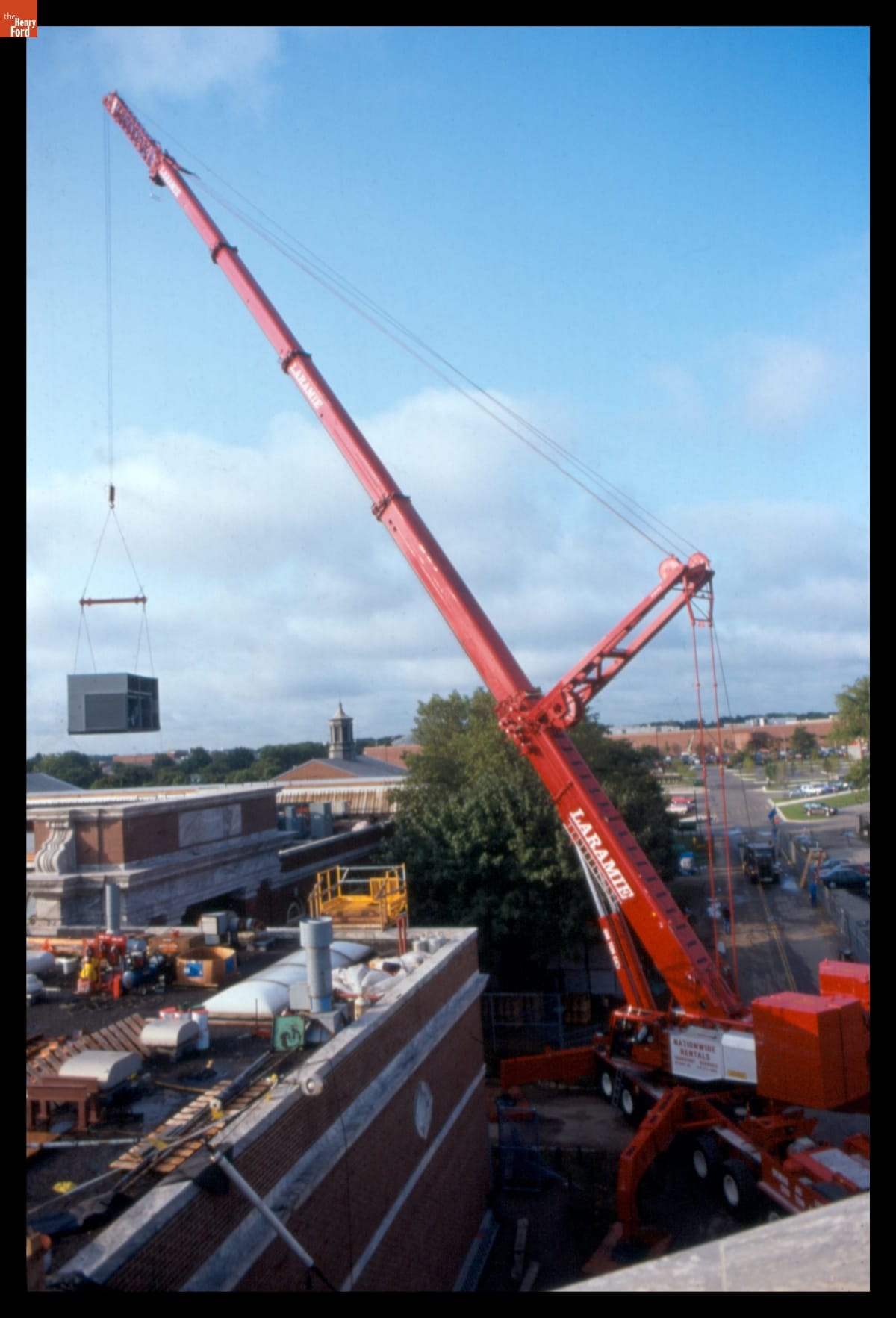
- 31 August 1998 - 01 September 1998
- Collections - Artifact
Crane Moving Air-Handling Units onto Roof of Henry Ford Museum, 1998
- Edsel Ford, P.E. Martin, and Charles Sorensen Breaking Ground at Ford Motor Company Willow Run Bomber Plant, September 17, 1940 - Ford Motor Company president Edsel Ford joined production managers P.E. Martin and Charles Sorensen in a September 1940 groundbreaking ceremony for the company's Willow Run bomber plant, 35 miles west of Detroit. When finished, the complex employed more than 42,000 people and included more than seven million square feet of floor space. Workers there built one B-24 bomber every 63 minutes.
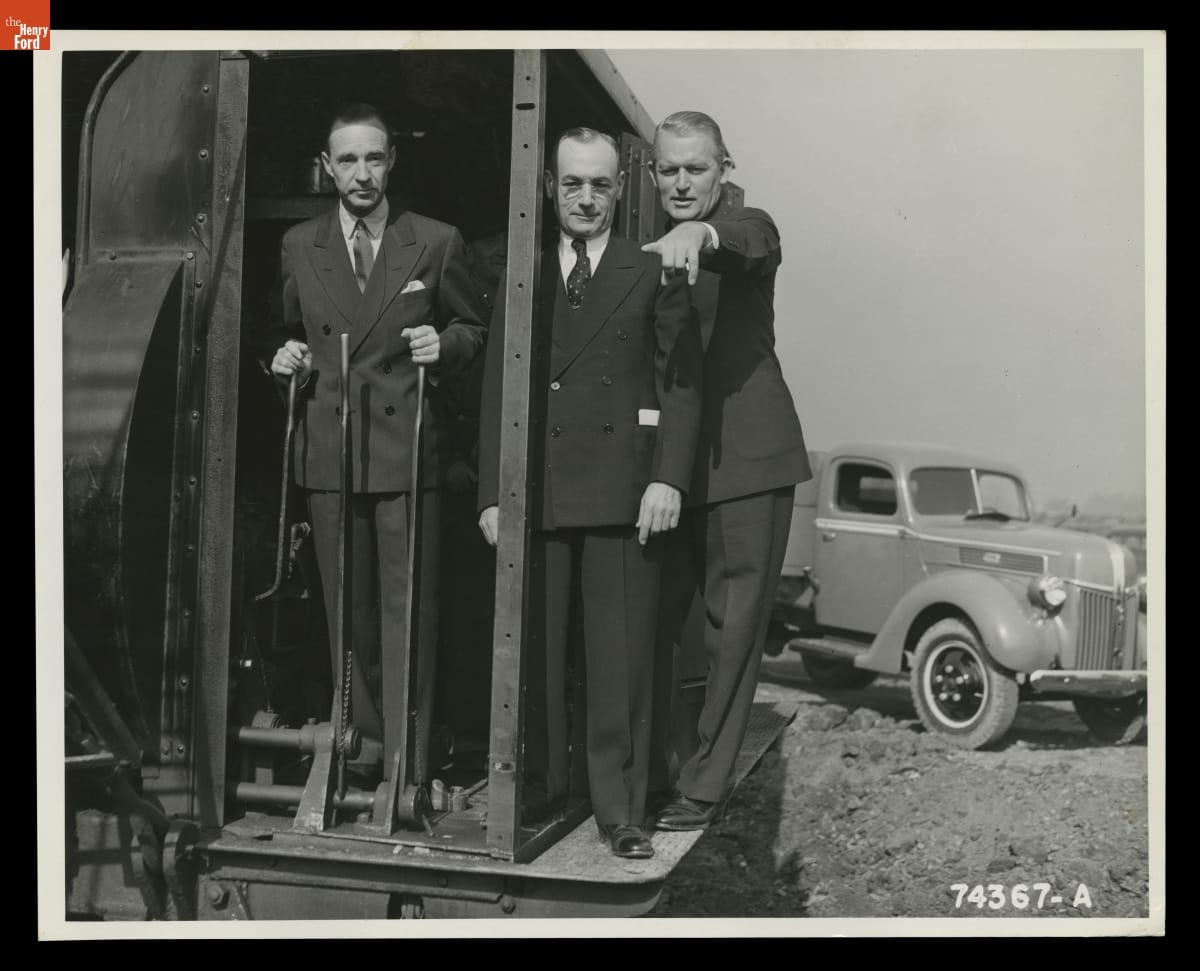
- September 17, 1940
- Collections - Artifact
Edsel Ford, P.E. Martin, and Charles Sorensen Breaking Ground at Ford Motor Company Willow Run Bomber Plant, September 17, 1940
Ford Motor Company president Edsel Ford joined production managers P.E. Martin and Charles Sorensen in a September 1940 groundbreaking ceremony for the company's Willow Run bomber plant, 35 miles west of Detroit. When finished, the complex employed more than 42,000 people and included more than seven million square feet of floor space. Workers there built one B-24 bomber every 63 minutes.