
Search
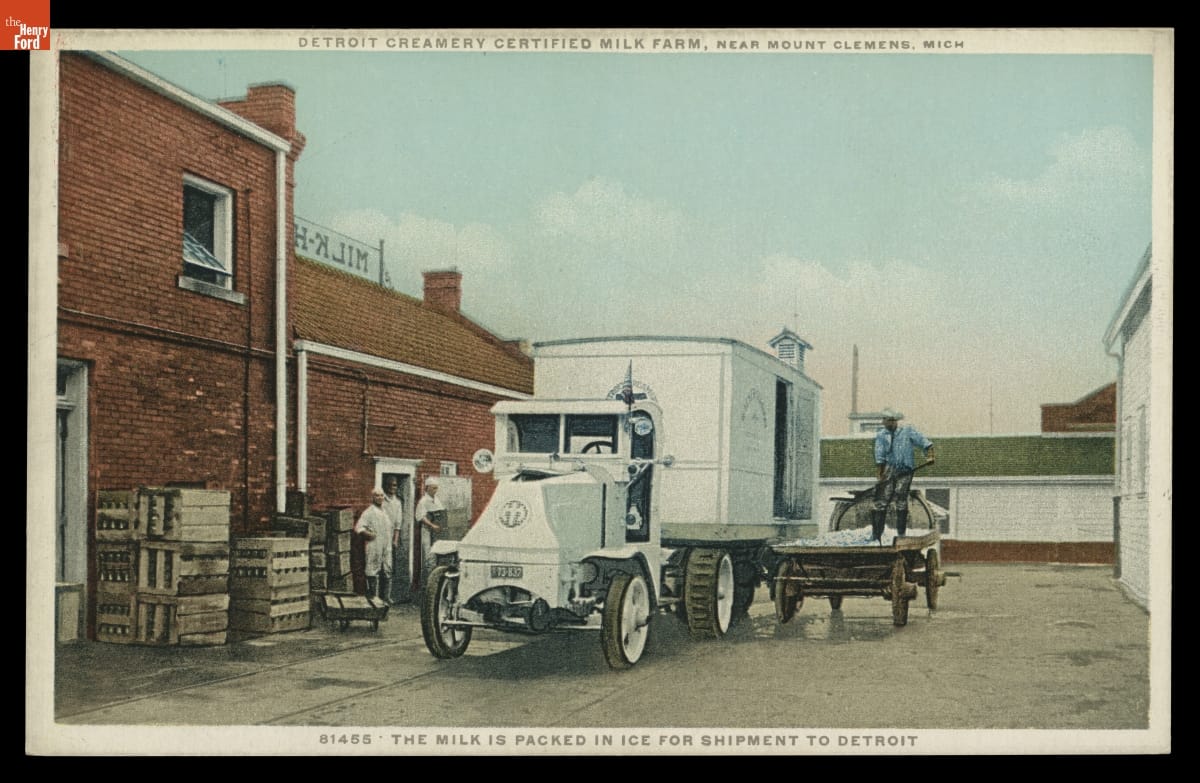
- The Milk is Packed in Ice for Shipment to Detroit, 1920-1930 - The Detroit Creamery Milk Farm produced milk for the Detroit area from 1910 until 1929. At its peak, it was the second largest milk farm in the country, with 2,300 acres and over 900 cattle. Their milk was certified by the Walker-Gordon milk laboratory, demonstrating its safety and purity. Souvenir postcards showcased the modern cleanliness of the Clinton Township farm.
- 1920-1930
- Collections - Artifact
The Milk is Packed in Ice for Shipment to Detroit, 1920-1930
The Detroit Creamery Milk Farm produced milk for the Detroit area from 1910 until 1929. At its peak, it was the second largest milk farm in the country, with 2,300 acres and over 900 cattle. Their milk was certified by the Walker-Gordon milk laboratory, demonstrating its safety and purity. Souvenir postcards showcased the modern cleanliness of the Clinton Township farm.
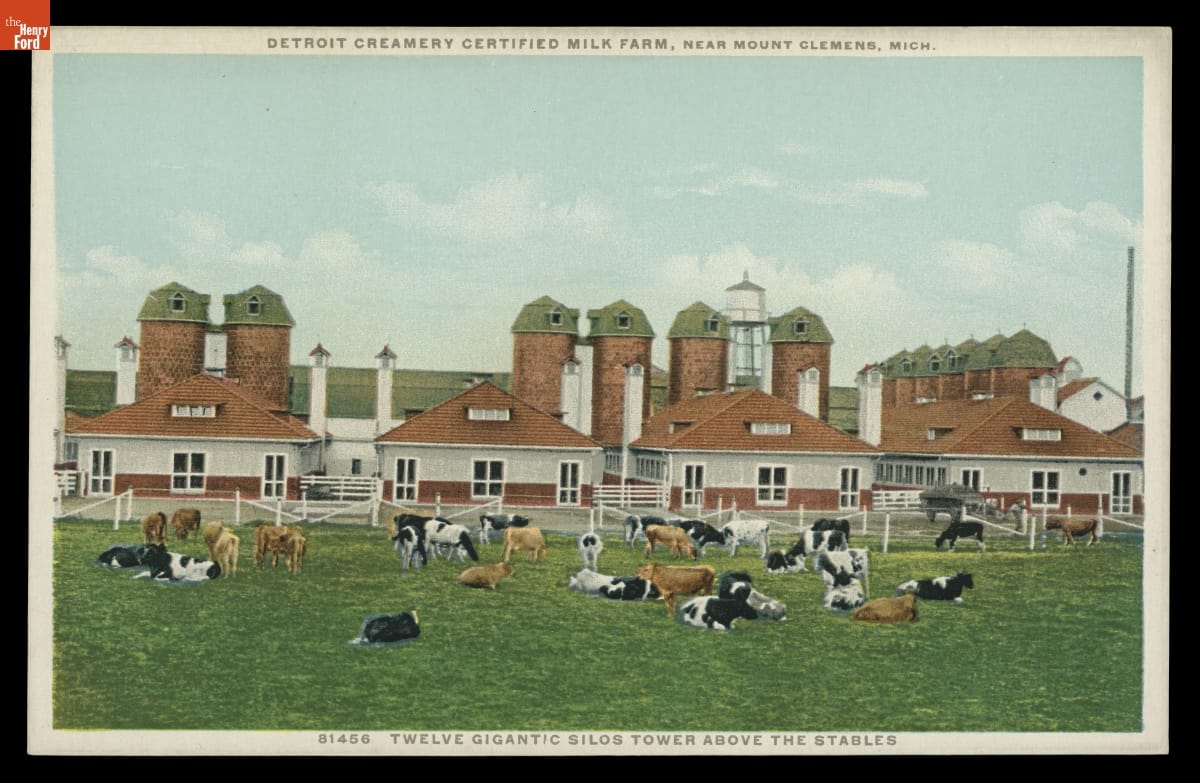
- Twelve Gigantic Silos Tower above the Stables, 1920-1930 - The Detroit Creamery Milk Farm produced milk for the Detroit area from 1910 until 1929. At its peak, it was the second largest milk farm in the country, with 2,300 acres and over 900 cattle. Their milk was certified by the Walker-Gordon milk laboratory, demonstrating its safety and purity. Souvenir postcards showcased the modern cleanliness of the Clinton Township farm.
- 1920-1930
- Collections - Artifact
Twelve Gigantic Silos Tower above the Stables, 1920-1930
The Detroit Creamery Milk Farm produced milk for the Detroit area from 1910 until 1929. At its peak, it was the second largest milk farm in the country, with 2,300 acres and over 900 cattle. Their milk was certified by the Walker-Gordon milk laboratory, demonstrating its safety and purity. Souvenir postcards showcased the modern cleanliness of the Clinton Township farm.
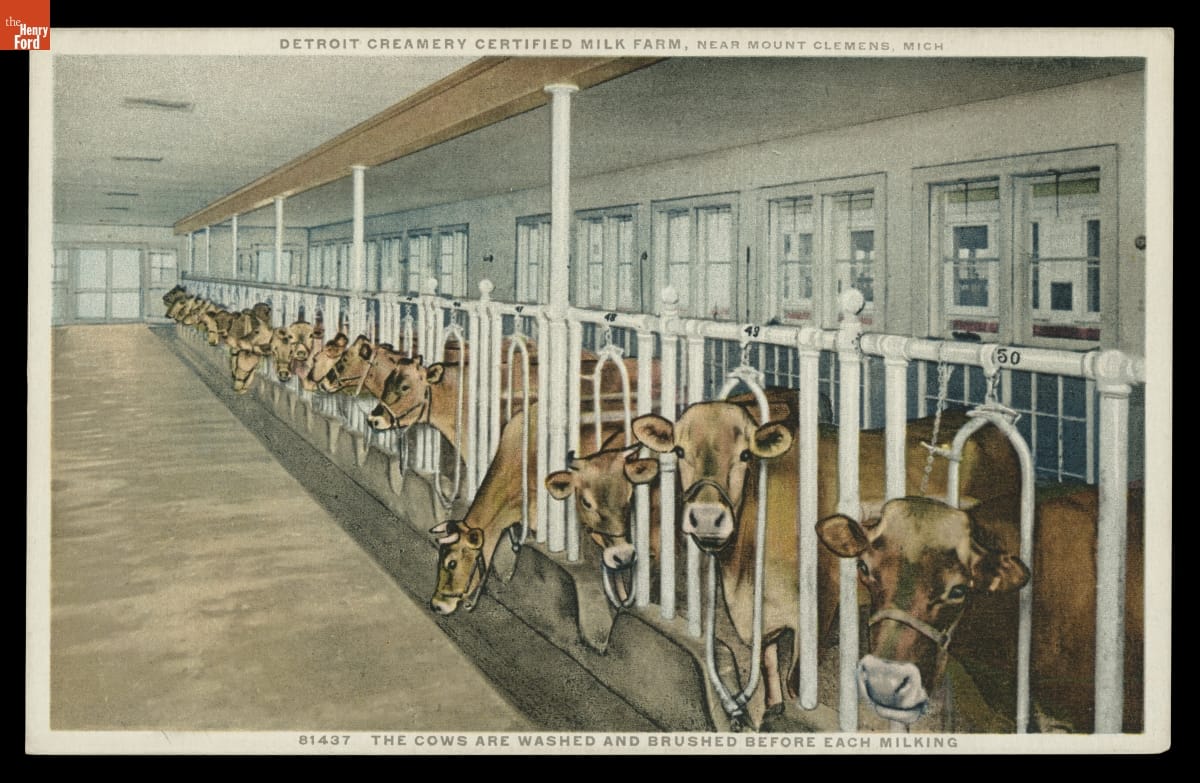
- The Cows are Washed and Brushed before Each Milking, 1920-1930 - The Detroit Creamery Milk Farm produced milk for the Detroit area from 1910 until 1929. At its peak, it was the second largest milk farm in the country, with 2,300 acres and over 900 cattle. Their milk was certified by the Walker-Gordon milk laboratory, demonstrating its safety and purity. Souvenir postcards showcased the modern cleanliness of the Clinton Township farm.
- 1920-1930
- Collections - Artifact
The Cows are Washed and Brushed before Each Milking, 1920-1930
The Detroit Creamery Milk Farm produced milk for the Detroit area from 1910 until 1929. At its peak, it was the second largest milk farm in the country, with 2,300 acres and over 900 cattle. Their milk was certified by the Walker-Gordon milk laboratory, demonstrating its safety and purity. Souvenir postcards showcased the modern cleanliness of the Clinton Township farm.
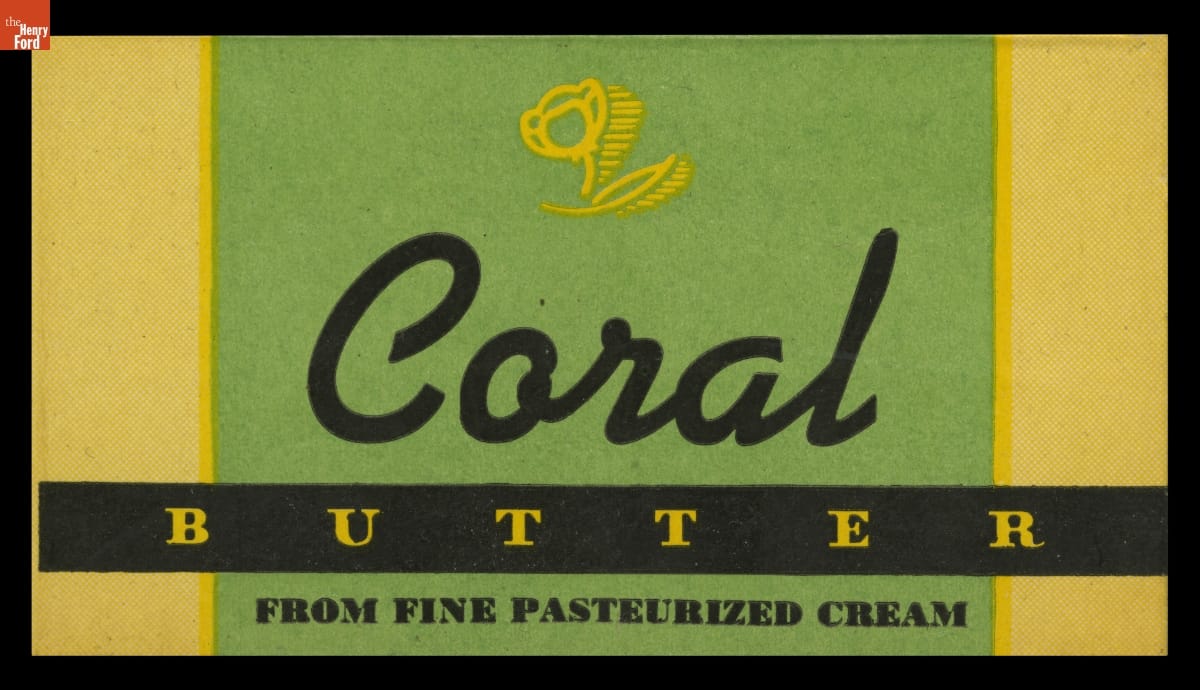
- "Coral Butter from Fine Pasteurized Cream," 1934 -
- 1934
- Collections - Artifact
"Coral Butter from Fine Pasteurized Cream," 1934
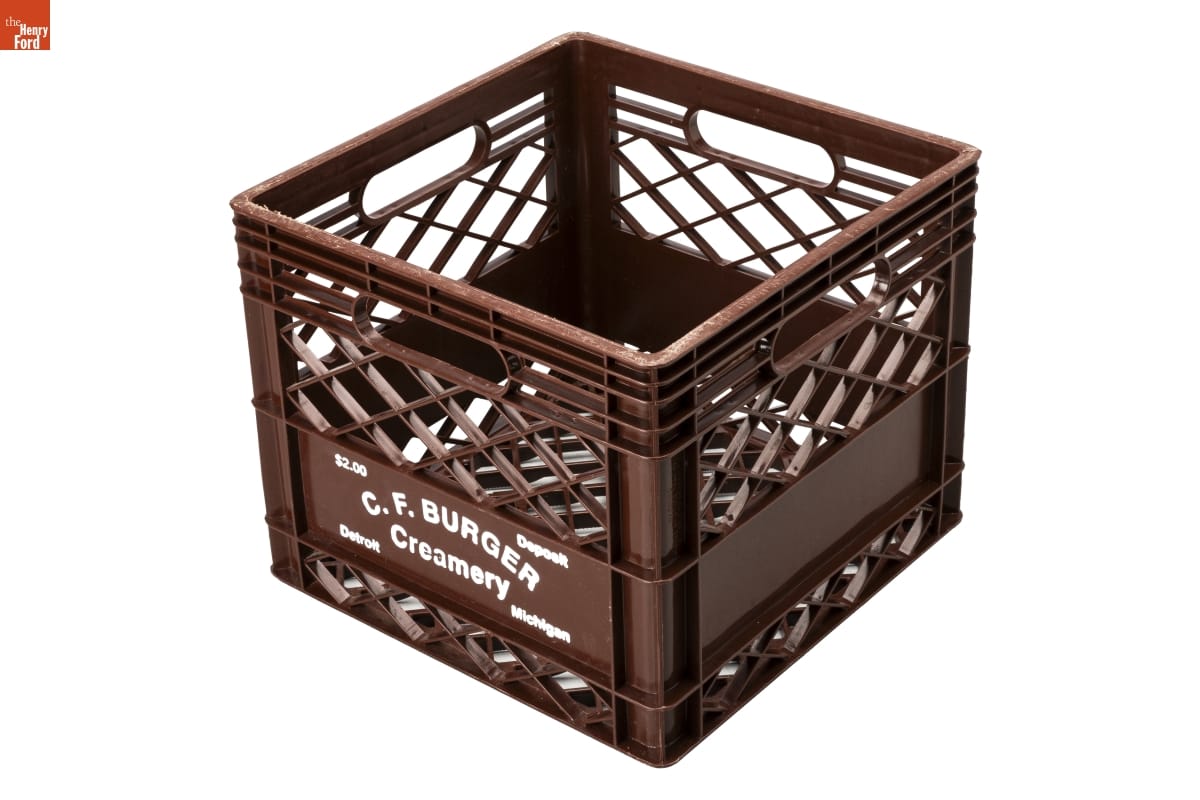
- Milk Crate, 1967-1996 - Dairies transport their packaged products to retailers and other customers in milk crates. During the 1950s, dairies switched from wood or metal crates designed for glass bottles to molded plastic crates -- better for single-use paper and plastic cartons. The changes reduced processing and shipping costs but contributed to a growing waste problem, even though many nabbed plastic crates and reused them for storage.
- 1967-1996
- Collections - Artifact
Milk Crate, 1967-1996
Dairies transport their packaged products to retailers and other customers in milk crates. During the 1950s, dairies switched from wood or metal crates designed for glass bottles to molded plastic crates -- better for single-use paper and plastic cartons. The changes reduced processing and shipping costs but contributed to a growing waste problem, even though many nabbed plastic crates and reused them for storage.
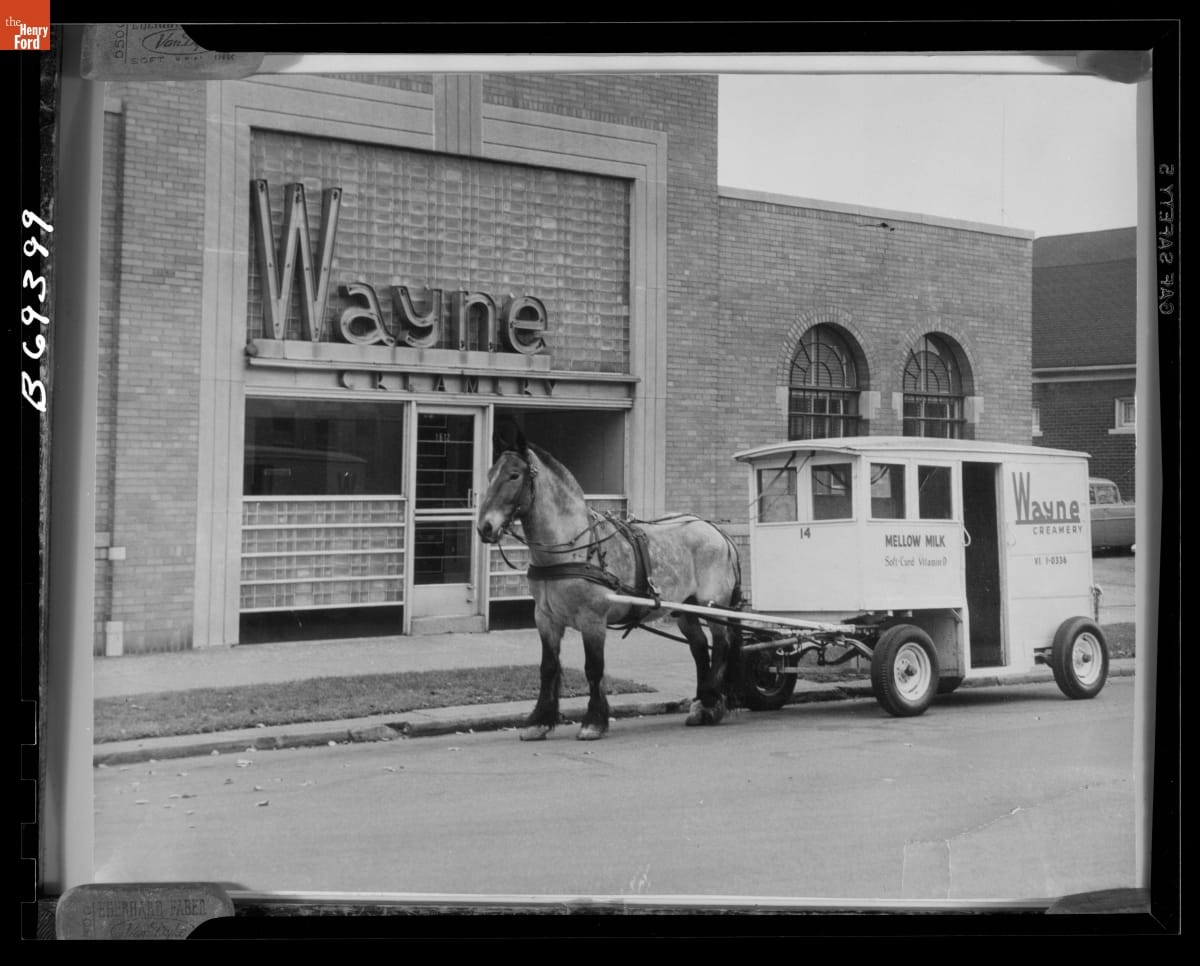
- Delivery Wagon Used by Wayne Creamery until 1962 - Wayne Creamery of Detroit, Michigan, used this horse-drawn wagon to deliver milk to its customers. The wagon's metal-tired wooden wheels were replaced with rubber automobile tires in the mid-1940s -- after residents in the delivery area complained about noise made by the metal tires during the wagon's early morning rounds. Wayne Creamery relied on horse-powered deliveries until 1962.
- 1947-1962
- Collections - Artifact
Delivery Wagon Used by Wayne Creamery until 1962
Wayne Creamery of Detroit, Michigan, used this horse-drawn wagon to deliver milk to its customers. The wagon's metal-tired wooden wheels were replaced with rubber automobile tires in the mid-1940s -- after residents in the delivery area complained about noise made by the metal tires during the wagon's early morning rounds. Wayne Creamery relied on horse-powered deliveries until 1962.
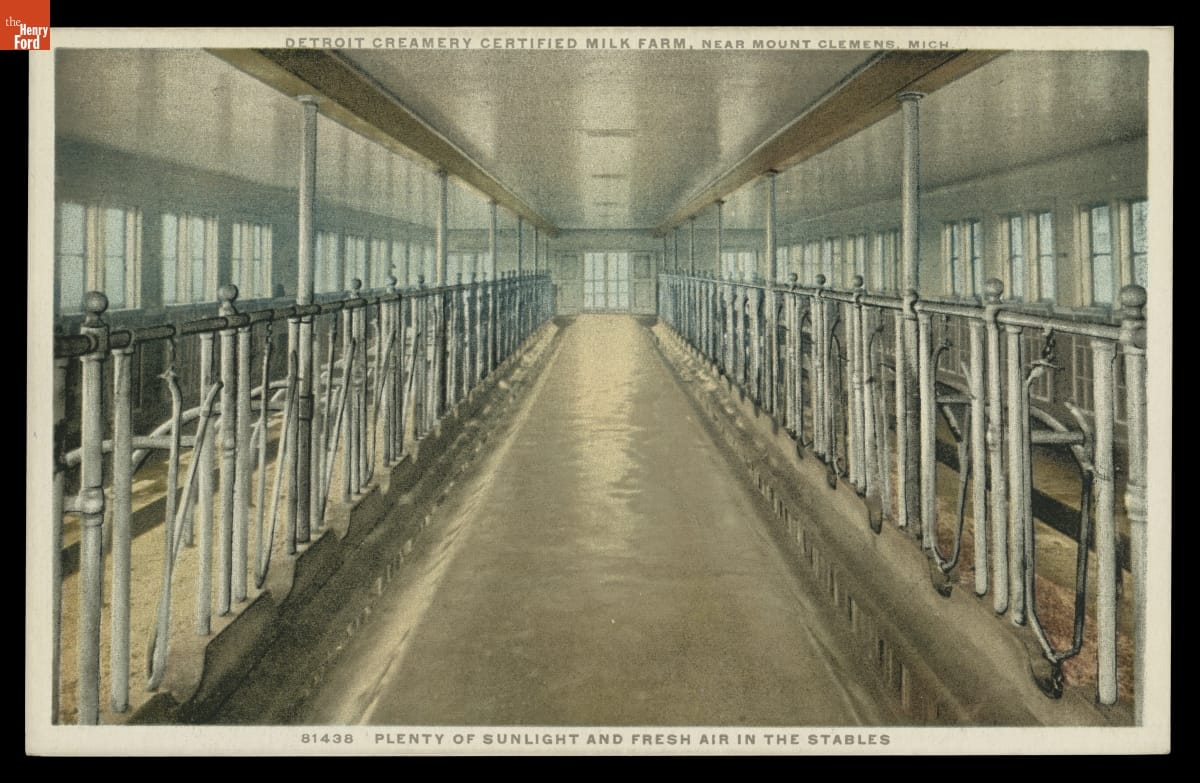
- Plenty of Sunlight and Fresh Air in the Stables, 1920-1930 - The Detroit Creamery Milk Farm produced milk for the Detroit area from 1910 until 1929. At its peak, it was the second largest milk farm in the country, with 2,300 acres and over 900 cattle. Their milk was certified by the Walker-Gordon milk laboratory, demonstrating its safety and purity. Souvenir postcards showcased the modern cleanliness of the Clinton Township farm.
- 1920-1930
- Collections - Artifact
Plenty of Sunlight and Fresh Air in the Stables, 1920-1930
The Detroit Creamery Milk Farm produced milk for the Detroit area from 1910 until 1929. At its peak, it was the second largest milk farm in the country, with 2,300 acres and over 900 cattle. Their milk was certified by the Walker-Gordon milk laboratory, demonstrating its safety and purity. Souvenir postcards showcased the modern cleanliness of the Clinton Township farm.
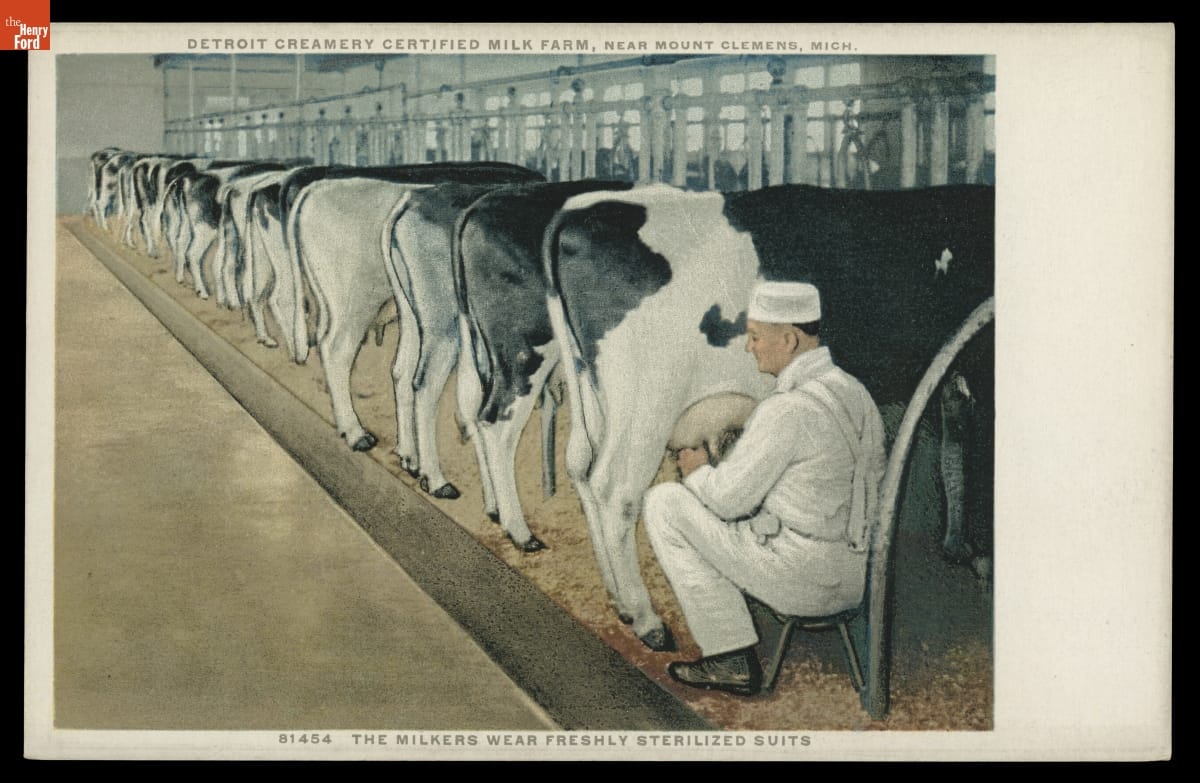
- The Milkers Wear Freshly Sterilized Suits, 1920-1930 - The Detroit Creamery Milk Farm produced milk for the Detroit area from 1910 until 1929. At its peak, it was the second largest milk farm in the country, with 2,300 acres and over 900 cattle. Their milk was certified by the Walker-Gordon milk laboratory, demonstrating its safety and purity. Souvenir postcards showcased the modern cleanliness of the Clinton Township farm.
- 1920-1930
- Collections - Artifact
The Milkers Wear Freshly Sterilized Suits, 1920-1930
The Detroit Creamery Milk Farm produced milk for the Detroit area from 1910 until 1929. At its peak, it was the second largest milk farm in the country, with 2,300 acres and over 900 cattle. Their milk was certified by the Walker-Gordon milk laboratory, demonstrating its safety and purity. Souvenir postcards showcased the modern cleanliness of the Clinton Township farm.
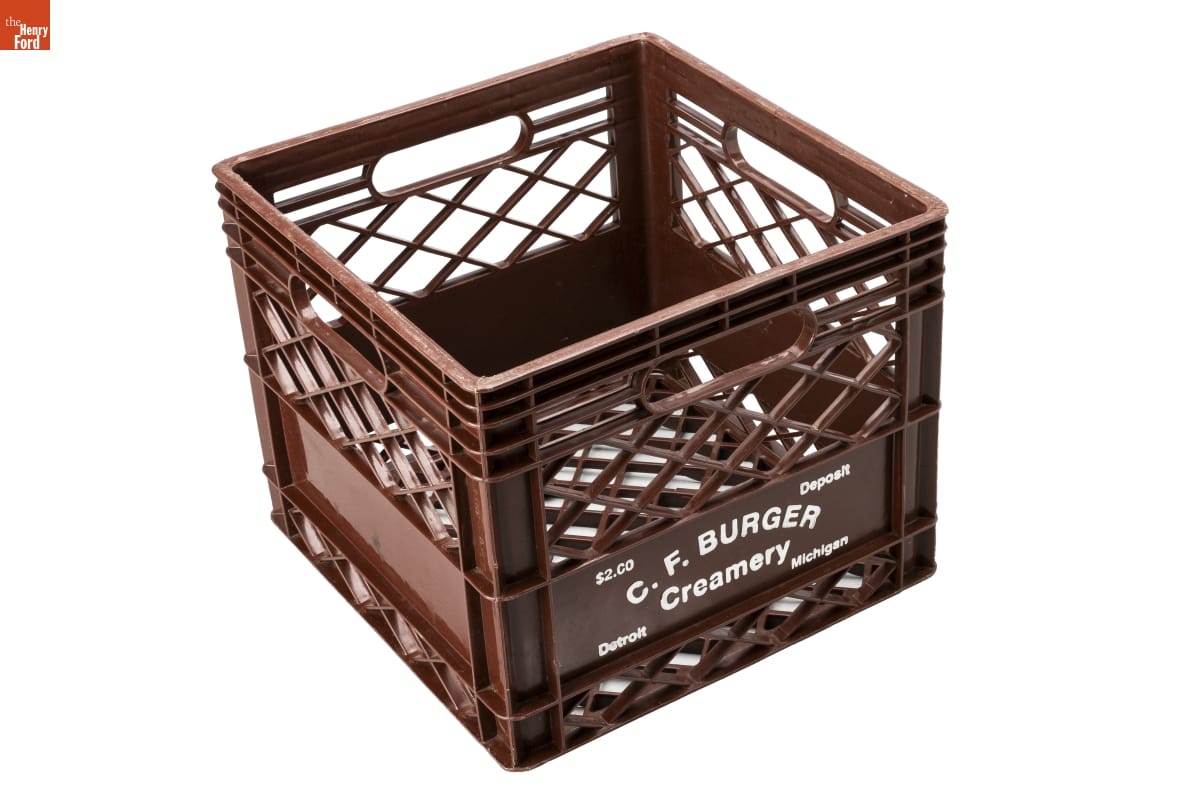
- Milk Crate, 1967-1996 - Dairies transport their packaged products to retailers and other customers in milk crates. During the 1950s, dairies switched from wood or metal crates designed for glass bottles to molded plastic crates -- better for single-use paper and plastic cartons. The changes reduced processing and shipping costs but contributed to a growing waste problem, even though many nabbed plastic crates and reused them for storage.
- 1967-1996
- Collections - Artifact
Milk Crate, 1967-1996
Dairies transport their packaged products to retailers and other customers in milk crates. During the 1950s, dairies switched from wood or metal crates designed for glass bottles to molded plastic crates -- better for single-use paper and plastic cartons. The changes reduced processing and shipping costs but contributed to a growing waste problem, even though many nabbed plastic crates and reused them for storage.
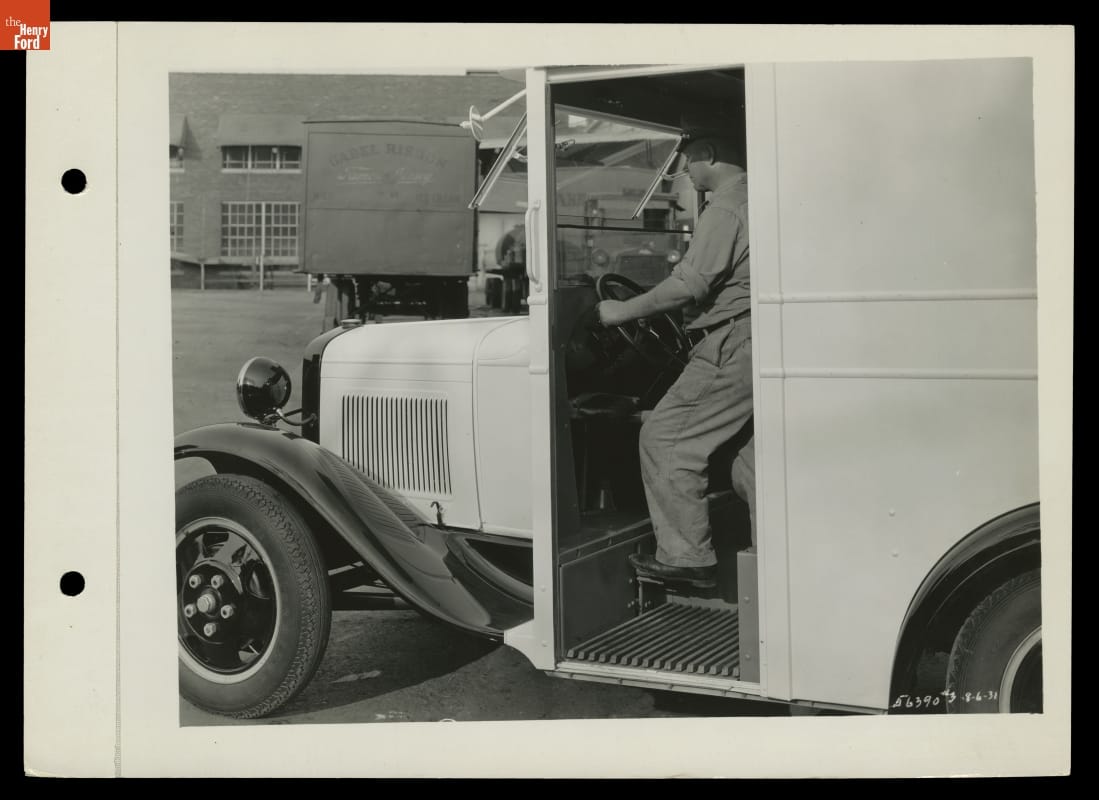
- Ford Model AA Standrive Delivery Truck Showing a Driver at the Wheel, 1931 - Ford Motor Company's Model AA truck was based on its Model A automobile platform, but with a longer wheelbase, a stronger frame, and generally sturdier chassis components. The Model AA was available in several body styles to permit its use as a panel truck, an express delivery truck, a garbage truck, a bus, or an ambulance, among other options.
- 1931
- Collections - Artifact
Ford Model AA Standrive Delivery Truck Showing a Driver at the Wheel, 1931
Ford Motor Company's Model AA truck was based on its Model A automobile platform, but with a longer wheelbase, a stronger frame, and generally sturdier chassis components. The Model AA was available in several body styles to permit its use as a panel truck, an express delivery truck, a garbage truck, a bus, or an ambulance, among other options.