
Search
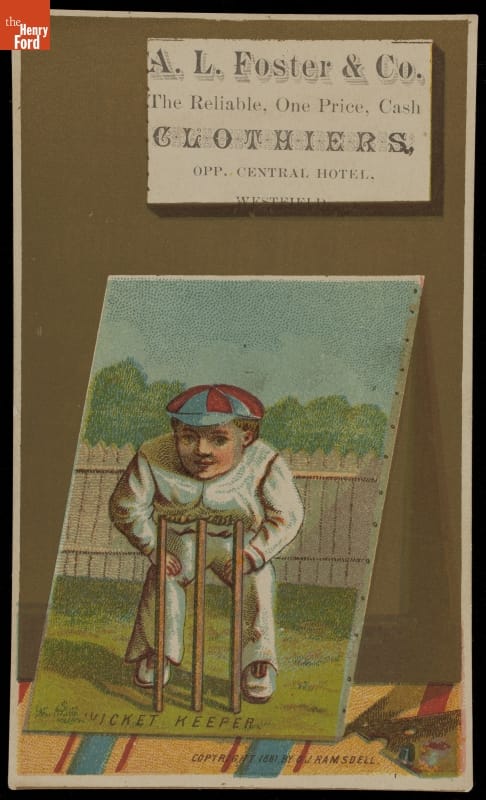
- Trade Card for Men's and Children's Clothing, A. L. Foster & Co., "Wicket Keeper," 1881 - In the last third of the nineteenth century, an unprecedented variety of consumer goods and services flooded the American market. Advertisers, armed with new methods of color printing, bombarded potential customers with trade cards. Americans enjoyed and often saved the vibrant little advertisements found in product packages or distributed by local merchants. Many survive as historical records of commercialism in the United States.
- 1881
- Collections - Artifact
Trade Card for Men's and Children's Clothing, A. L. Foster & Co., "Wicket Keeper," 1881
In the last third of the nineteenth century, an unprecedented variety of consumer goods and services flooded the American market. Advertisers, armed with new methods of color printing, bombarded potential customers with trade cards. Americans enjoyed and often saved the vibrant little advertisements found in product packages or distributed by local merchants. Many survive as historical records of commercialism in the United States.
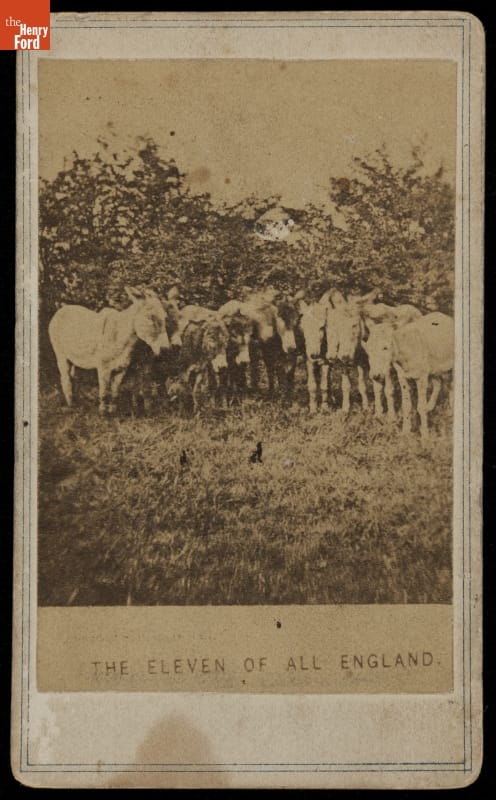
- Poking Fun at the Famous English Cricket Team, "The Eleven of All England," circa 1865 - Cartes-de-visites were professionally made photographs that remained popular in the United States from the Civil War in the 1860s through the 1880s. This carte-de-visite from about 1865 mockingly depicts players of the famed first All-England cricket team, "the Eleven of All England," as donkeys. Americans commonly collected and exchanged the small cartes-de-visites to help them remember family, celebrities, places, or events.
- circa 1865
- Collections - Artifact
Poking Fun at the Famous English Cricket Team, "The Eleven of All England," circa 1865
Cartes-de-visites were professionally made photographs that remained popular in the United States from the Civil War in the 1860s through the 1880s. This carte-de-visite from about 1865 mockingly depicts players of the famed first All-England cricket team, "the Eleven of All England," as donkeys. Americans commonly collected and exchanged the small cartes-de-visites to help them remember family, celebrities, places, or events.
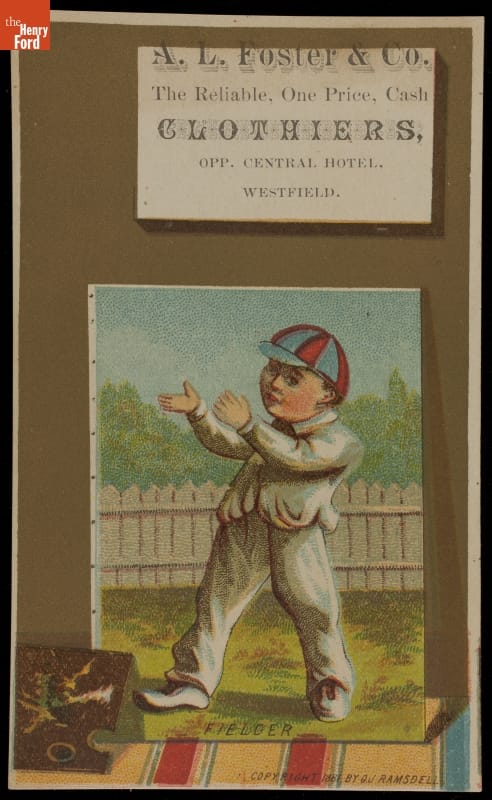
- Trade Card for Men's and Children's Clothing, A. L. Foster & Co., "Fielder," 1881 - In the last third of the nineteenth century, an unprecedented variety of consumer goods and services flooded the American market. Advertisers, armed with new methods of color printing, bombarded potential customers with trade cards. Americans enjoyed and often saved the vibrant little advertisements found in product packages or distributed by local merchants. Many survive as historical records of commercialism in the United States.
- 1881
- Collections - Artifact
Trade Card for Men's and Children's Clothing, A. L. Foster & Co., "Fielder," 1881
In the last third of the nineteenth century, an unprecedented variety of consumer goods and services flooded the American market. Advertisers, armed with new methods of color printing, bombarded potential customers with trade cards. Americans enjoyed and often saved the vibrant little advertisements found in product packages or distributed by local merchants. Many survive as historical records of commercialism in the United States.