
Search
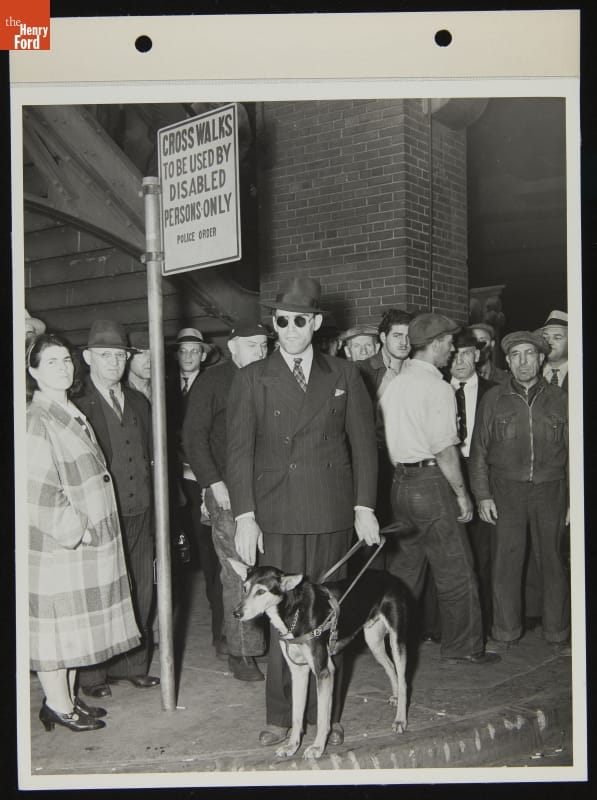
- Ford Employee Sylvester Rypkowski with Service Dog "Blackie," Waiting at Cross Walk, October 1942 - Henry Ford believed in providing equal employment opportunities to people with disabilities -- a practice he began in the early years of his company. During World War II, Ford employed thousands of workers with disabilities. In October 1942, Ford Motor Company photographed Sylvester Rypkowski and his service dog, Blackie, as they became members of the Rouge plant's workforce.
- October 05, 1942
- Collections - Artifact
Ford Employee Sylvester Rypkowski with Service Dog "Blackie," Waiting at Cross Walk, October 1942
Henry Ford believed in providing equal employment opportunities to people with disabilities -- a practice he began in the early years of his company. During World War II, Ford employed thousands of workers with disabilities. In October 1942, Ford Motor Company photographed Sylvester Rypkowski and his service dog, Blackie, as they became members of the Rouge plant's workforce.
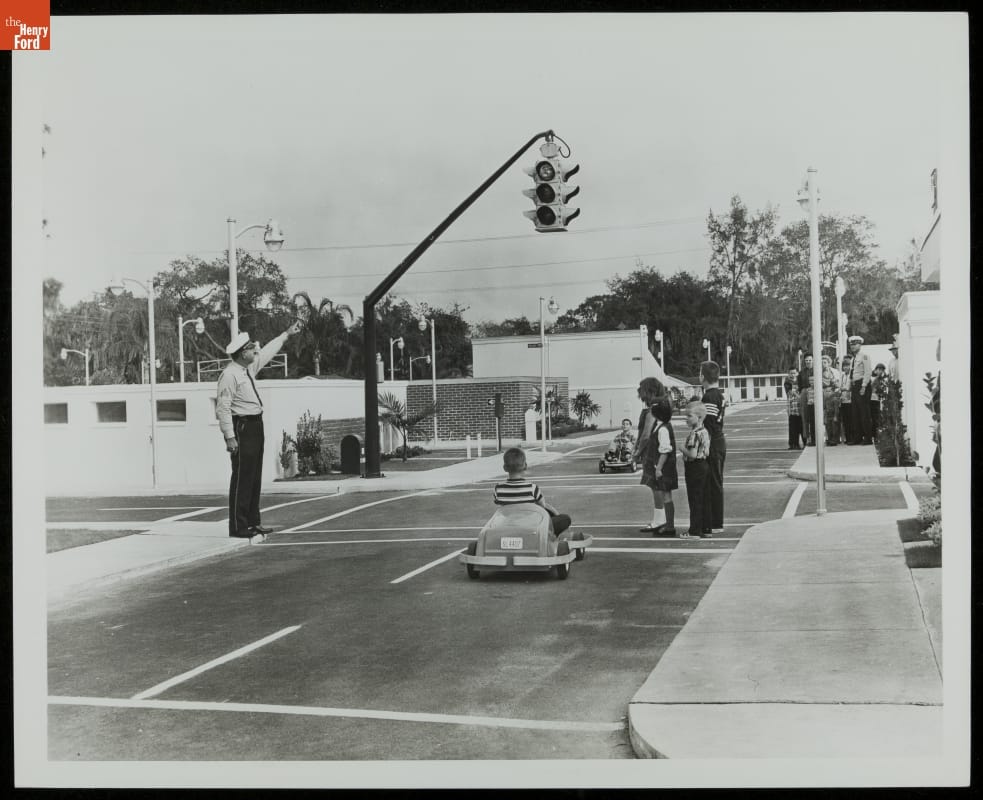
- Children's Safety Village, Tampa, Florida, 1966 - Tampa's "Safety Village" was a unique experiment in preventive safety for children. Long before they were old enough to ask for the keys to the family car, these children practiced traffic safety by driving small electric-powered cars on child-sized streets. Hopefully, they would remember these lessons a few years later, as teens at the wheel of their own cars.
- July 01, 1966
- Collections - Artifact
Children's Safety Village, Tampa, Florida, 1966
Tampa's "Safety Village" was a unique experiment in preventive safety for children. Long before they were old enough to ask for the keys to the family car, these children practiced traffic safety by driving small electric-powered cars on child-sized streets. Hopefully, they would remember these lessons a few years later, as teens at the wheel of their own cars.
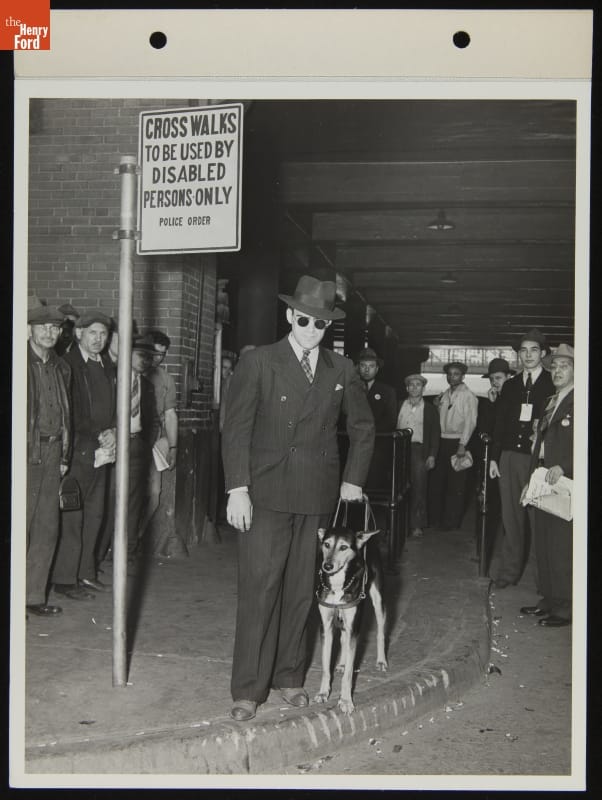
- Ford Employee Sylvester Rypkowski with Service Dog "Blackie," Waiting at Cross Walk, October 1942 - Henry Ford believed in providing equal employment opportunities to people with disabilities -- a practice he began in the early years of his company. During World War II, Ford employed thousands of workers with disabilities. In October 1942, Ford Motor Company photographed Sylvester Rypkowski and his service dog, Blackie, as they became members of the Rouge plant's workforce.
- October 05, 1942
- Collections - Artifact
Ford Employee Sylvester Rypkowski with Service Dog "Blackie," Waiting at Cross Walk, October 1942
Henry Ford believed in providing equal employment opportunities to people with disabilities -- a practice he began in the early years of his company. During World War II, Ford employed thousands of workers with disabilities. In October 1942, Ford Motor Company photographed Sylvester Rypkowski and his service dog, Blackie, as they became members of the Rouge plant's workforce.
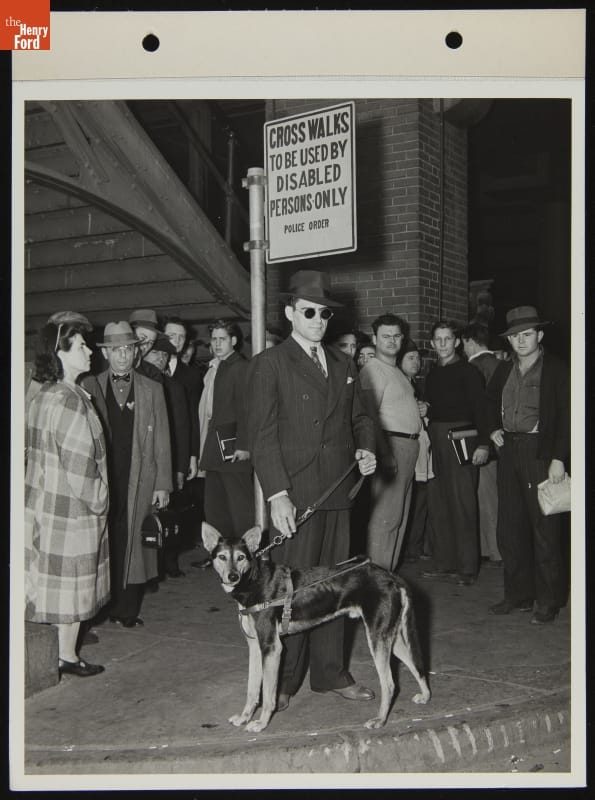
- Ford Employee Sylvester Rypkowski with Service Dog "Blackie," Waiting at Cross Walk, October 1942 - Henry Ford believed in providing equal employment opportunities to people with disabilities -- a practice he began in the early years of his company. During World War II, Ford employed thousands of workers with disabilities. In October 1942, Ford Motor Company photographed Sylvester Rypkowski and his service dog, Blackie, as they became members of the Rouge plant's workforce.
- October 05, 1942
- Collections - Artifact
Ford Employee Sylvester Rypkowski with Service Dog "Blackie," Waiting at Cross Walk, October 1942
Henry Ford believed in providing equal employment opportunities to people with disabilities -- a practice he began in the early years of his company. During World War II, Ford employed thousands of workers with disabilities. In October 1942, Ford Motor Company photographed Sylvester Rypkowski and his service dog, Blackie, as they became members of the Rouge plant's workforce.