
Search
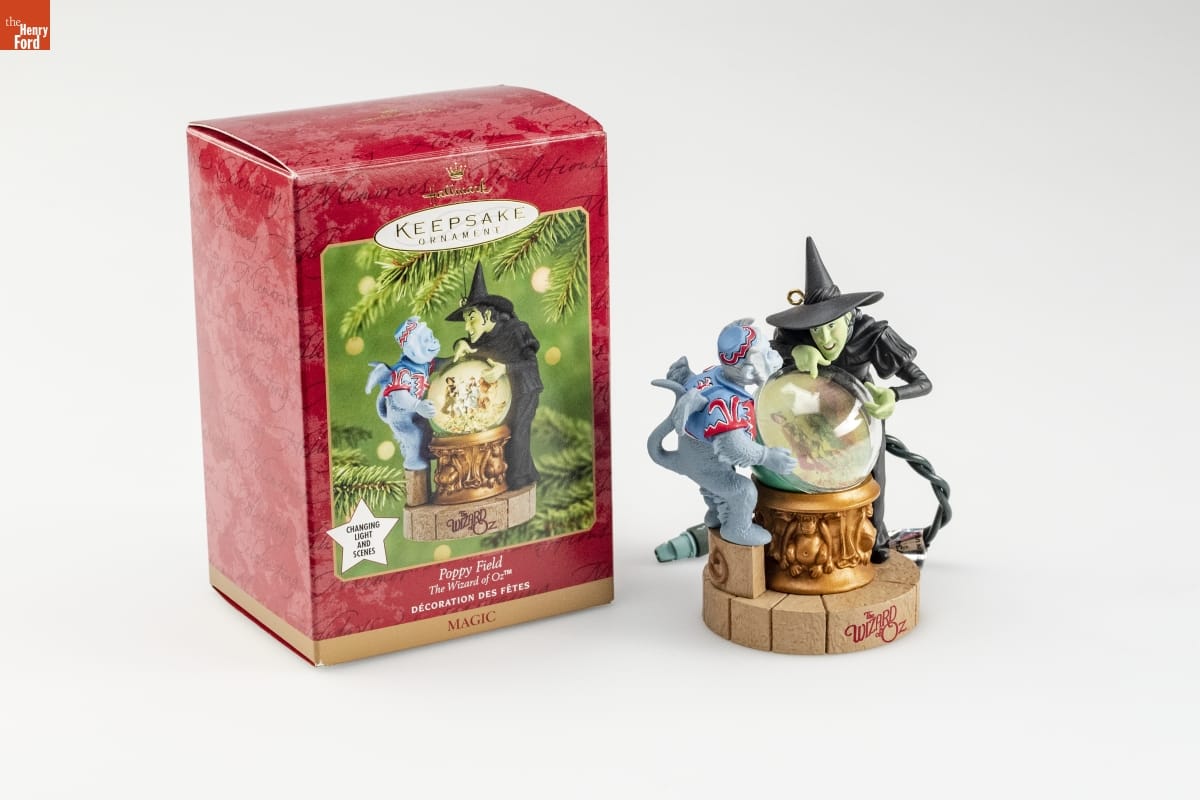
- Hallmark "The Wizard of Oz: Poppy Field" Christmas Ornament, 2001 - Already known for greeting cards, Hallmark introduced a line of Christmas ornaments in 1973. The company's annual release of an increasing array of ornaments revolutionized Christmas decorating, appealing to customers' interest in marking memories and milestones as well as expressing one's personality and unique tastes.
- 2001
- Collections - Artifact
Hallmark "The Wizard of Oz: Poppy Field" Christmas Ornament, 2001
Already known for greeting cards, Hallmark introduced a line of Christmas ornaments in 1973. The company's annual release of an increasing array of ornaments revolutionized Christmas decorating, appealing to customers' interest in marking memories and milestones as well as expressing one's personality and unique tastes.
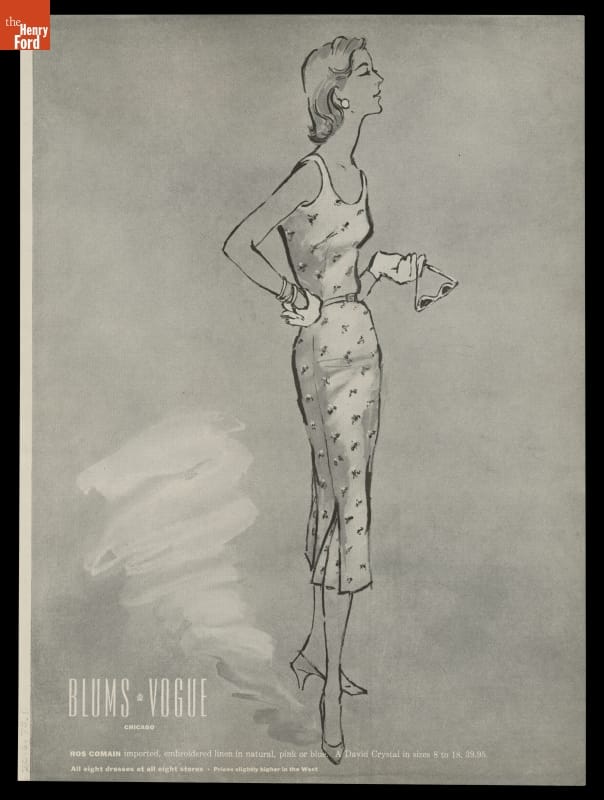
- Advertisement for "Blums Vogue Chicago," 1957 -
- 1957
- Collections - Artifact
Advertisement for "Blums Vogue Chicago," 1957
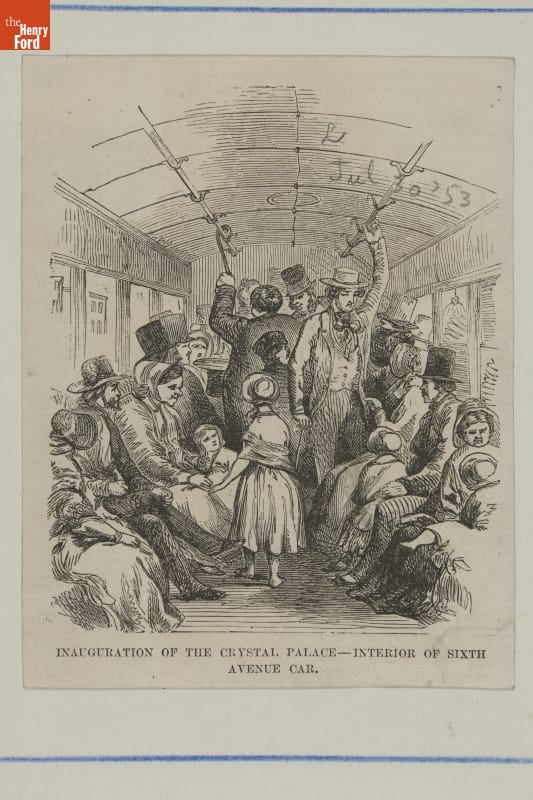
- "Inauguration of the Crystal Palace - Interior of Sixth Avenue Car," 1853 - In the mid-1800s, horse-drawn streetcars provided a convenient and affordable way to get around a growing city. Streetcars traveled the main urban thoroughfares and took passengers to workplaces, local shops and businesses, parks and other destinations. This print from 1853 shows New Yorkers headed to the opening of the city's Crystal Palace exhibition.
- 1853
- Collections - Artifact
"Inauguration of the Crystal Palace - Interior of Sixth Avenue Car," 1853
In the mid-1800s, horse-drawn streetcars provided a convenient and affordable way to get around a growing city. Streetcars traveled the main urban thoroughfares and took passengers to workplaces, local shops and businesses, parks and other destinations. This print from 1853 shows New Yorkers headed to the opening of the city's Crystal Palace exhibition.
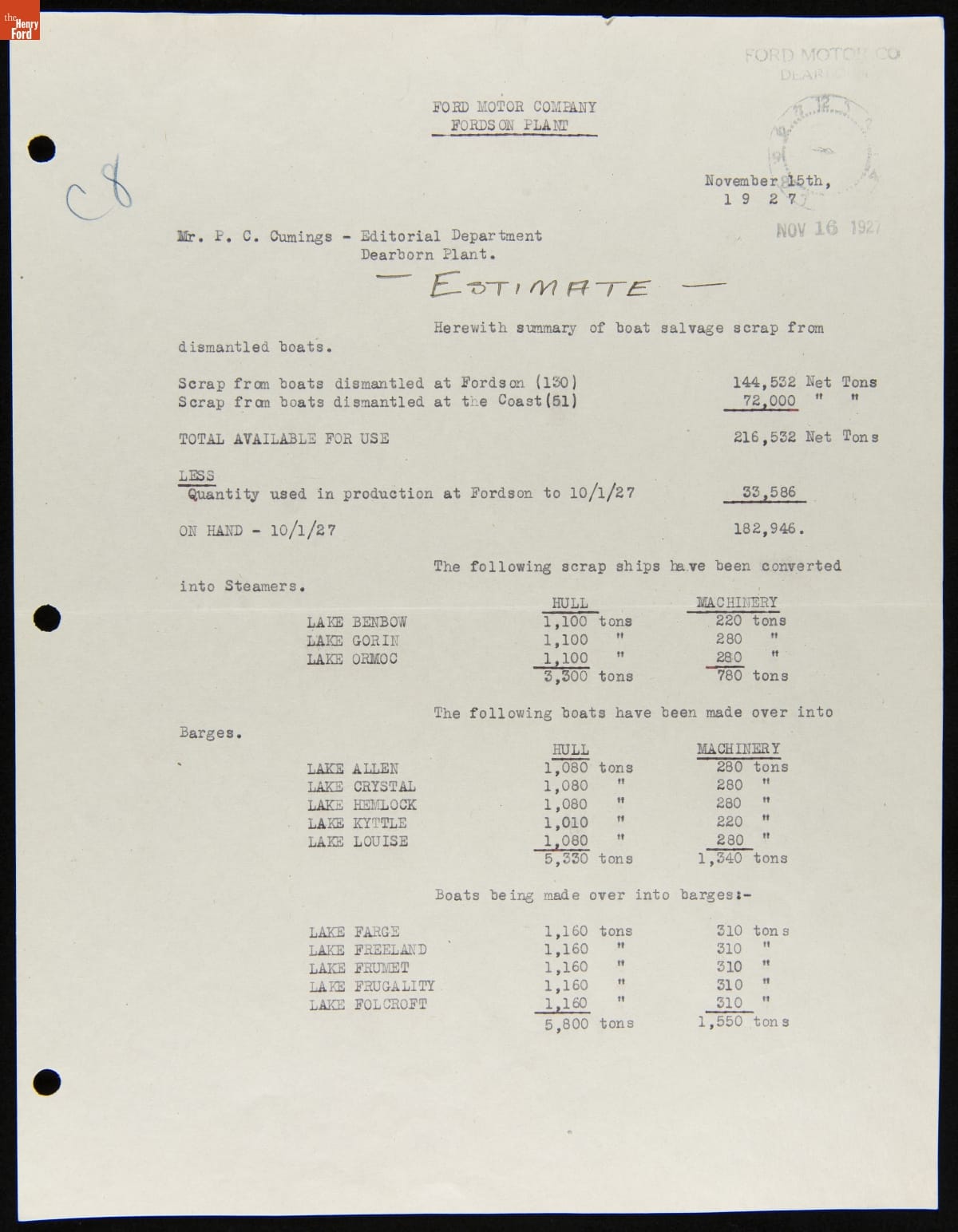
- Summary of Scrap from Dismantled Boats in the Ford Motor Company Ship Salvage Program, November 15, 1927 - Henry Ford purchased 199 surplus World War I merchant ships from the United States government in 1925. Many of these ships were towed to Ford's River Rouge Plant and dismantled -- their steel, metal, and salvageable parts were recycled. The other vessels were refurbished or converted to help transport raw materials and finished products as part of Ford's operations.
- October 01, 1927
- Collections - Artifact
Summary of Scrap from Dismantled Boats in the Ford Motor Company Ship Salvage Program, November 15, 1927
Henry Ford purchased 199 surplus World War I merchant ships from the United States government in 1925. Many of these ships were towed to Ford's River Rouge Plant and dismantled -- their steel, metal, and salvageable parts were recycled. The other vessels were refurbished or converted to help transport raw materials and finished products as part of Ford's operations.
- Crystal Palace Premium Soda Water Bottle, 1853-1856 -
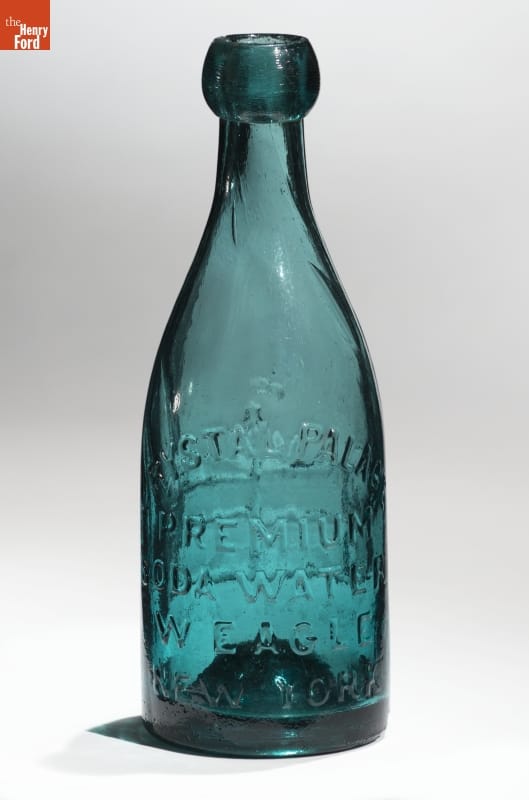
- 1853-1856
- Collections - Artifact
Crystal Palace Premium Soda Water Bottle, 1853-1856
- Crystal Palace International Horse and Horseless Carriage and Roads Locomotion Exhibition Official Catalogue, 1896 -
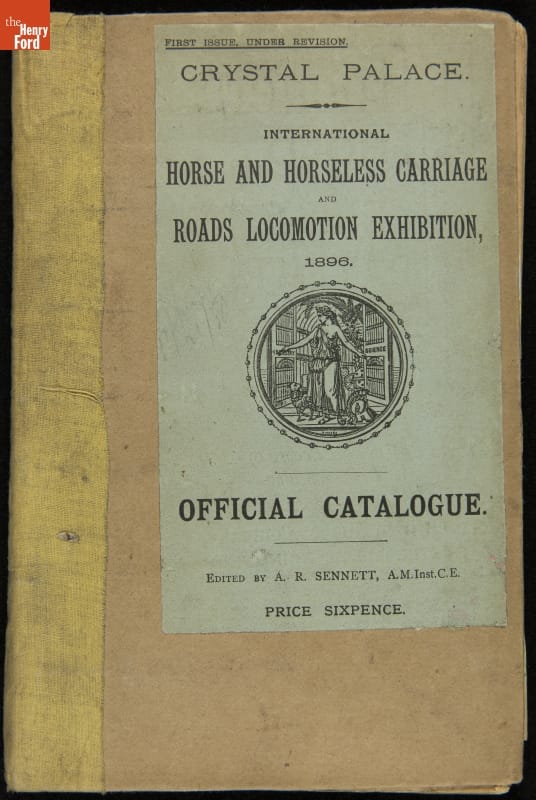
- 1896
- Collections - Artifact
Crystal Palace International Horse and Horseless Carriage and Roads Locomotion Exhibition Official Catalogue, 1896
- Post-World War II Ford Advertisement, "You'll Plan to Go the Long Way 'Round, There's a Ford in Your Future," 1945 - This 1946 advertisement was part of a Ford Motor Company marketing campaign to assure consumer loyalty with the car shortages during and just after World War II. Created by the J. Walter Thompson agency -- newly appointed to develop Ford's advertising -- this campaign not only promised a new car on every family's horizon but also a new, prosperous lifestyle to accompany it.
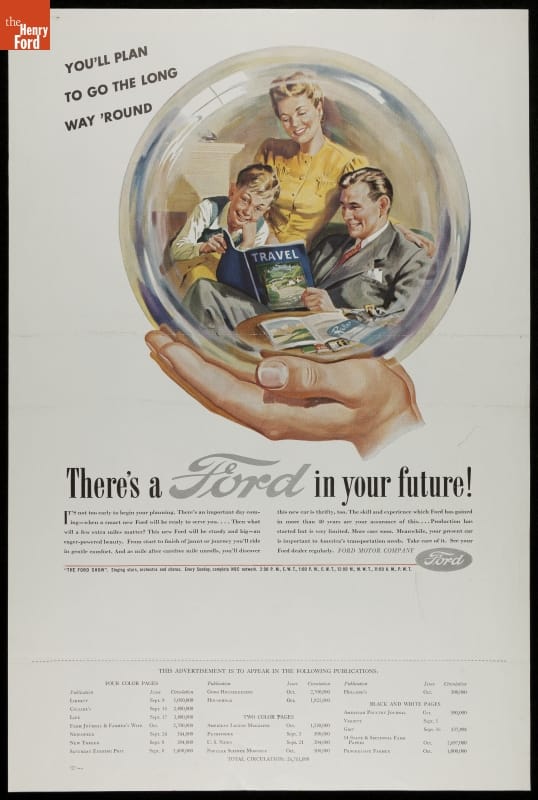
- September 1945-October 1945
- Collections - Artifact
Post-World War II Ford Advertisement, "You'll Plan to Go the Long Way 'Round, There's a Ford in Your Future," 1945
This 1946 advertisement was part of a Ford Motor Company marketing campaign to assure consumer loyalty with the car shortages during and just after World War II. Created by the J. Walter Thompson agency -- newly appointed to develop Ford's advertising -- this campaign not only promised a new car on every family's horizon but also a new, prosperous lifestyle to accompany it.
- Ford Advertisement, "You'll Go High, Wide and Handsome...There's a Ford in Your Future," July 1945 - In 1945, after nearly four years of war, Americans looked forward to peace. This advertisement -- created by Ford's newly appointed ad agency J. Walter Thompson -- anticipated victory, the return of millions of servicemen, and the production of new Ford vehicles. The imaginative campaign and slogan, "There's a Ford in Your Future!," remained a fixture in Ford advertising over the next several years.
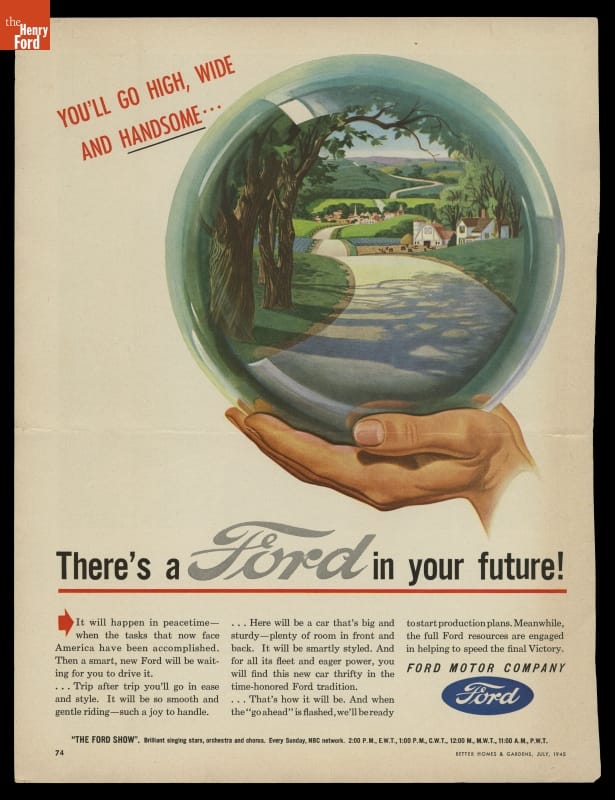
- July 01, 1945
- Collections - Artifact
Ford Advertisement, "You'll Go High, Wide and Handsome...There's a Ford in Your Future," July 1945
In 1945, after nearly four years of war, Americans looked forward to peace. This advertisement -- created by Ford's newly appointed ad agency J. Walter Thompson -- anticipated victory, the return of millions of servicemen, and the production of new Ford vehicles. The imaginative campaign and slogan, "There's a Ford in Your Future!," remained a fixture in Ford advertising over the next several years.
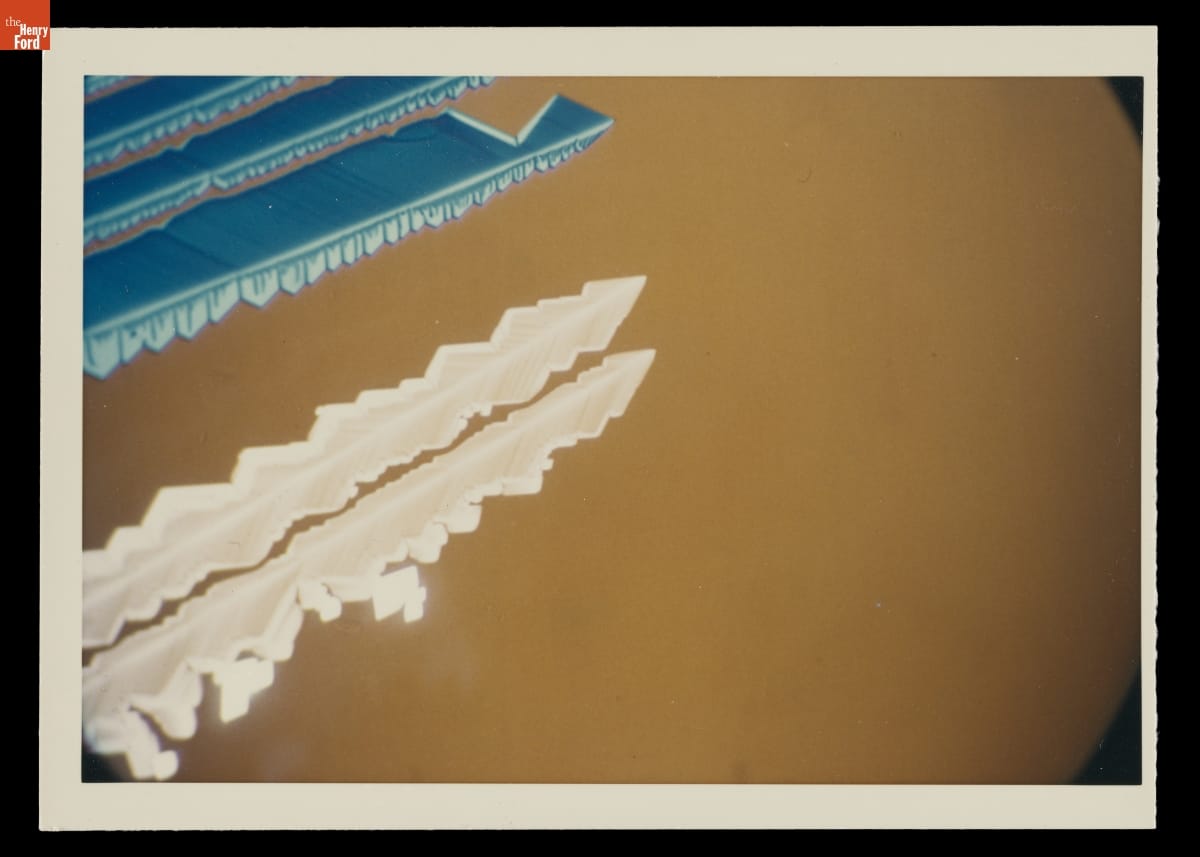
- Crystal Growth, "Trichloracetic Acid" - Lillian Schwartz is a pioneer of computer-generated art. From 1969-2002, she was a "resident visitor" at Bell Laboratories, producing groundbreaking films, videos, and multimedia works. The Schwartz Collection spans Lillian's childhood into her late career, documenting an expansive mindset, mastery over traditional and experimental mediums alike--and above all--an ability to create inspirational connections between science, art, and technology.
- Collections - Artifact
Crystal Growth, "Trichloracetic Acid"
Lillian Schwartz is a pioneer of computer-generated art. From 1969-2002, she was a "resident visitor" at Bell Laboratories, producing groundbreaking films, videos, and multimedia works. The Schwartz Collection spans Lillian's childhood into her late career, documenting an expansive mindset, mastery over traditional and experimental mediums alike--and above all--an ability to create inspirational connections between science, art, and technology.
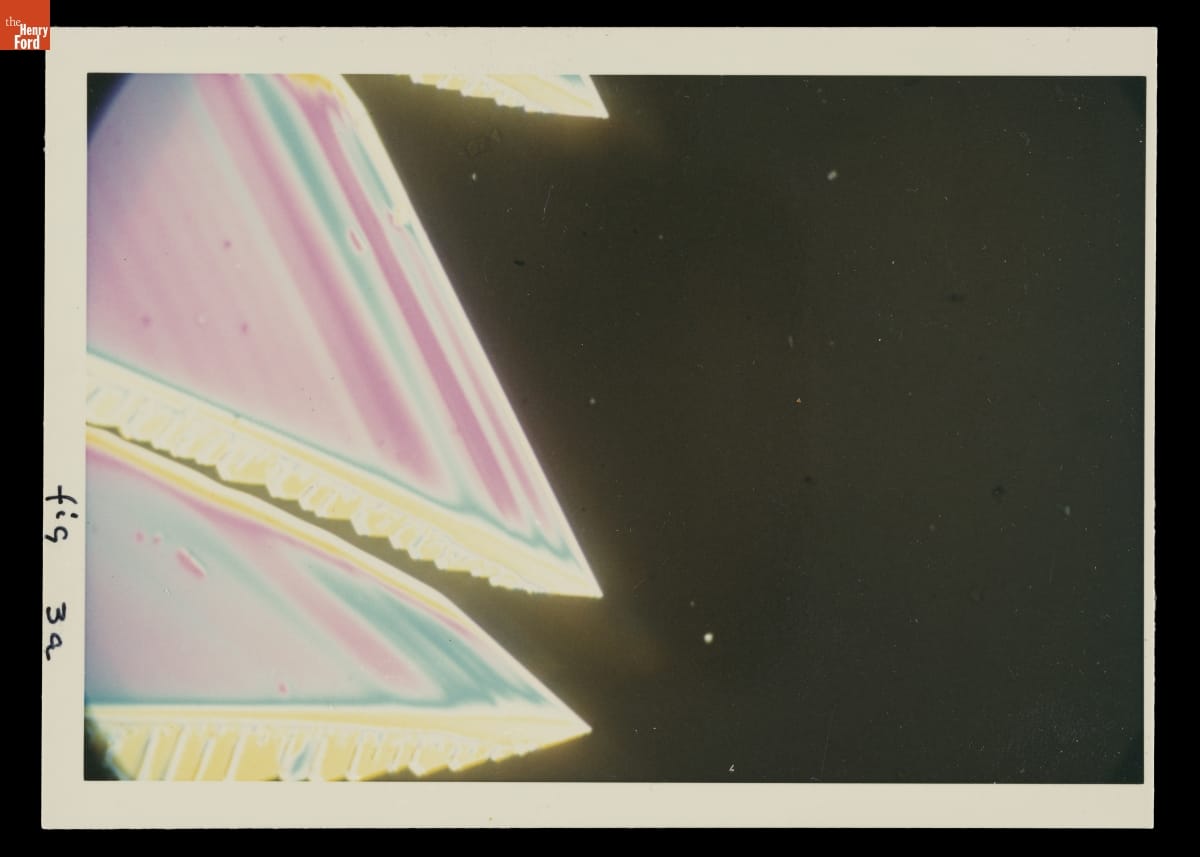
- Crystal Growth - Lillian Schwartz is a pioneer of computer-generated art. From 1969-2002, she was a "resident visitor" at Bell Laboratories, producing groundbreaking films, videos, and multimedia works. The Schwartz Collection spans Lillian's childhood into her late career, documenting an expansive mindset, mastery over traditional and experimental mediums alike--and above all--an ability to create inspirational connections between science, art, and technology.
- Collections - Artifact
Crystal Growth
Lillian Schwartz is a pioneer of computer-generated art. From 1969-2002, she was a "resident visitor" at Bell Laboratories, producing groundbreaking films, videos, and multimedia works. The Schwartz Collection spans Lillian's childhood into her late career, documenting an expansive mindset, mastery over traditional and experimental mediums alike--and above all--an ability to create inspirational connections between science, art, and technology.