
Search
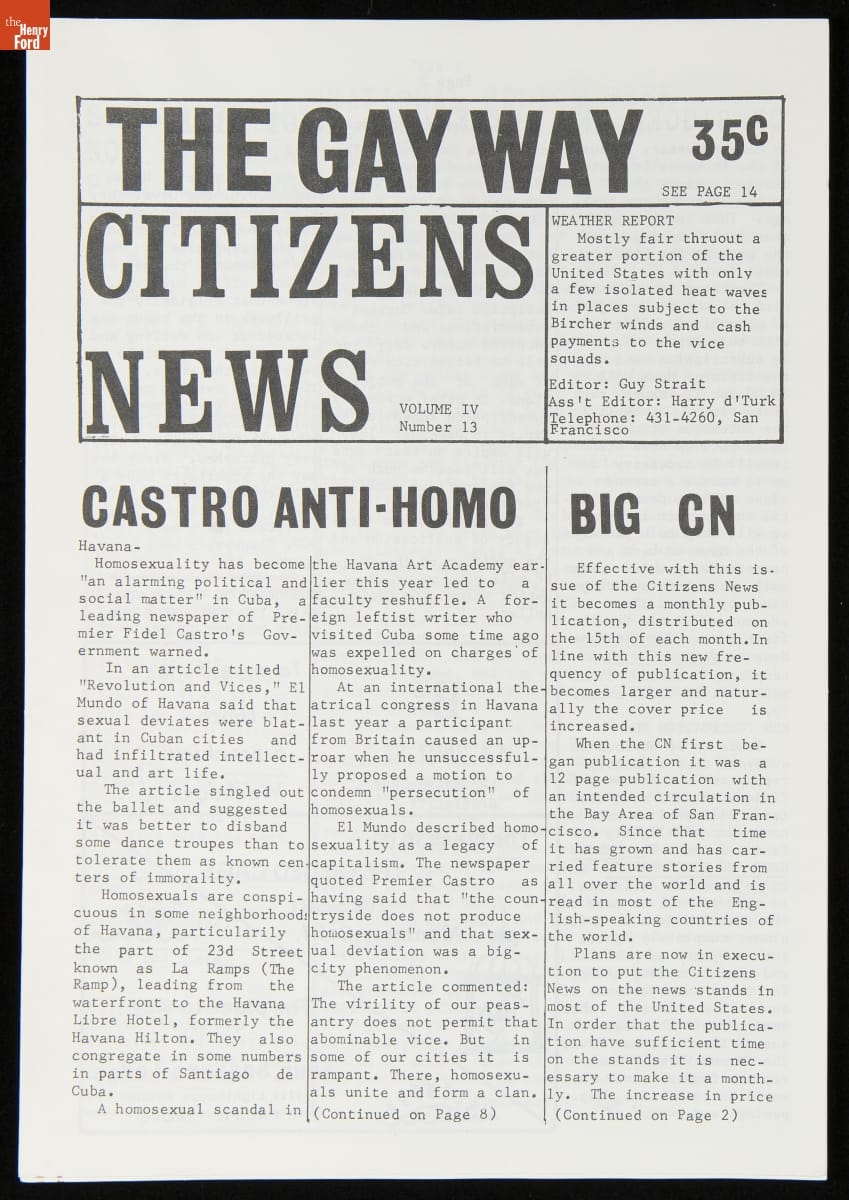
- Citizens News, Volume IV, Number13, 1964-1965 - LGBTQ+ newspapers became more available beginning in the 1950s as organizations added print media to their activist tool kit. These newspapers were a regionally focused way to rally the LGBTQ+ community, share information, and fight discrimination. Many of these newspapers came to rely on gay bars as a location for disbursement as they were among the only private gay spaces in many cities.
- 1964-1965
- Collections - Artifact
Citizens News, Volume IV, Number13, 1964-1965
LGBTQ+ newspapers became more available beginning in the 1950s as organizations added print media to their activist tool kit. These newspapers were a regionally focused way to rally the LGBTQ+ community, share information, and fight discrimination. Many of these newspapers came to rely on gay bars as a location for disbursement as they were among the only private gay spaces in many cities.
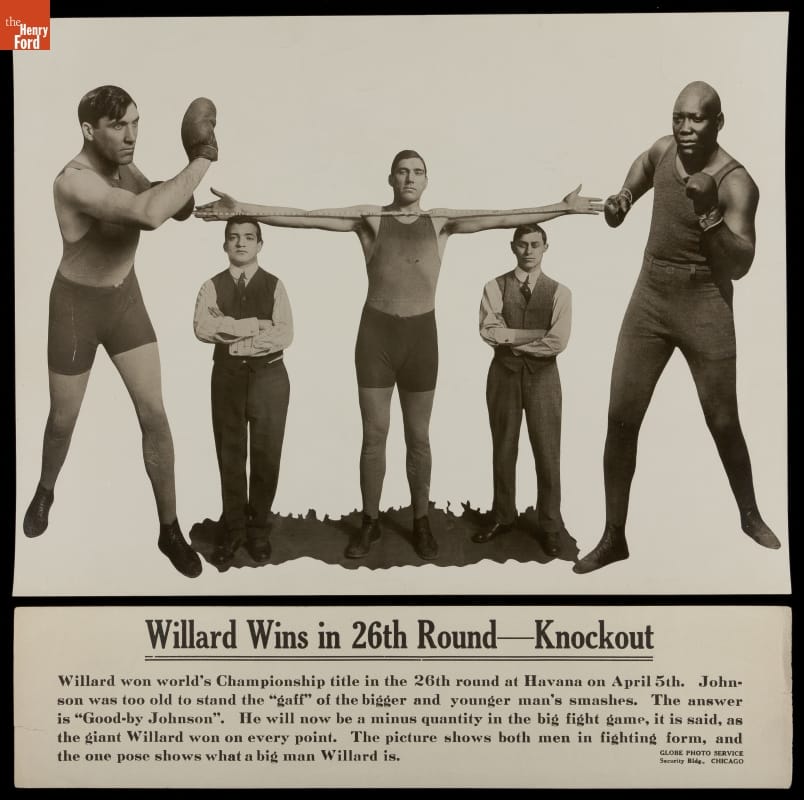
- "Willard Wins in 26th Round -- Knockout," April 5, 1915 - In a 1915 fight in Cuba, Jess Willard defeated Jack Johnson and became the new heavyweight boxing champion. The two men, in fighting stance, are depicted in this composite photograph. Another image illustrates Willard's 83-inch reach. At 6 feet, 6 inches (and a quarter), he was one of the tallest heavyweight champions in history.
- April 05, 1915
- Collections - Artifact
"Willard Wins in 26th Round -- Knockout," April 5, 1915
In a 1915 fight in Cuba, Jess Willard defeated Jack Johnson and became the new heavyweight boxing champion. The two men, in fighting stance, are depicted in this composite photograph. Another image illustrates Willard's 83-inch reach. At 6 feet, 6 inches (and a quarter), he was one of the tallest heavyweight champions in history.
- "Life" Bound Volume of Issues, April-June 1947 - First published in 1883 as a general-interest and humor publication, Life magazine became America's first all-photographic weekly news magazine after being purchased and re-envisioned by publisher Henry Luce in 1936. Under Luce, its popularity boomed, and by the 1950s more than 22 million Americans read the publication. This bound volume contains issues from April to June 1947.

- April 1947-June 1947
- Collections - Artifact
"Life" Bound Volume of Issues, April-June 1947
First published in 1883 as a general-interest and humor publication, Life magazine became America's first all-photographic weekly news magazine after being purchased and re-envisioned by publisher Henry Luce in 1936. Under Luce, its popularity boomed, and by the 1950s more than 22 million Americans read the publication. This bound volume contains issues from April to June 1947.
- Sales Catalog of the H. J. Heinz Company and Products, Pittsburgh, Pennsylvania, circa 1910 - With humble beginnings exclusively selling horseradish in 1869, H.J. Heinz continued to expand his product line to build the "House of Heinz" and become a leader in the manufactured food industry. This sales catalog highlights the manufacturing process and provides photographs of the factories, branch houses, and employees. It also contains information and photographs of each of the "57 Varieties" of Heinz products.
- 1910
- Collections - Artifact
Sales Catalog of the H. J. Heinz Company and Products, Pittsburgh, Pennsylvania, circa 1910
With humble beginnings exclusively selling horseradish in 1869, H.J. Heinz continued to expand his product line to build the "House of Heinz" and become a leader in the manufactured food industry. This sales catalog highlights the manufacturing process and provides photographs of the factories, branch houses, and employees. It also contains information and photographs of each of the "57 Varieties" of Heinz products.
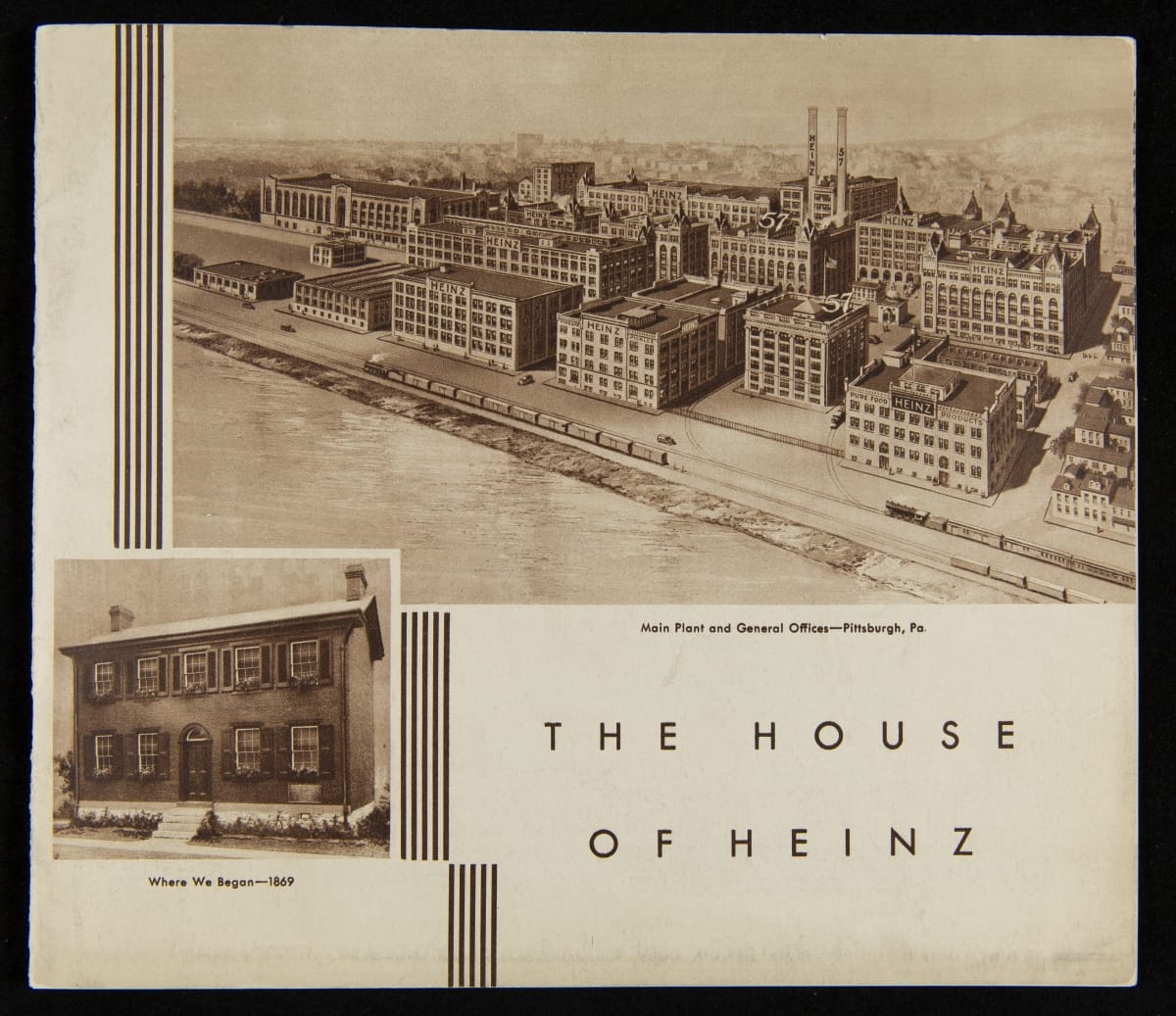
- The House of Heinz, circa 1929 - The H.J. Heinz Company was founded from humble beginnings in 1869. By the turn of the century it had become a well-known manufacturer of processed food. Its rapid success resulted in the expansion of its operations at home and abroad. This booklet from 1929 provides an overview of the many branch factories and buildings operated by the company, referred to as "The House of Heinz."
- circa 1929
- Collections - Artifact
The House of Heinz, circa 1929
The H.J. Heinz Company was founded from humble beginnings in 1869. By the turn of the century it had become a well-known manufacturer of processed food. Its rapid success resulted in the expansion of its operations at home and abroad. This booklet from 1929 provides an overview of the many branch factories and buildings operated by the company, referred to as "The House of Heinz."
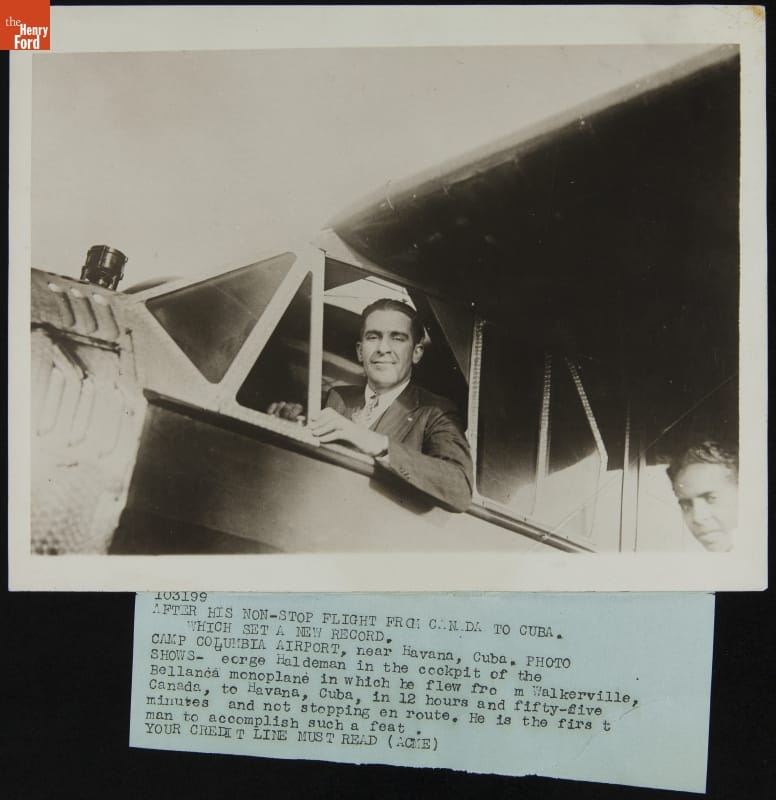
- George Haldeman in "Bellanca" after Record-Setting Non-Stop Flight from Canada to Cuba, February 24, 1929 - George Haldeman engaged in several aviation pursuits. He was an aerobatic pilot and a wing-walker, he inspected engines and propellers during the first World War, he operated flying schools, and he even sold airplanes for a time. Although Haldeman set records himself, he is best remembered as Ruth Elder's flight instructor and her co-pilot on Elder's failed 1927 transatlantic flight.
- February 24, 1929
- Collections - Artifact
George Haldeman in "Bellanca" after Record-Setting Non-Stop Flight from Canada to Cuba, February 24, 1929
George Haldeman engaged in several aviation pursuits. He was an aerobatic pilot and a wing-walker, he inspected engines and propellers during the first World War, he operated flying schools, and he even sold airplanes for a time. Although Haldeman set records himself, he is best remembered as Ruth Elder's flight instructor and her co-pilot on Elder's failed 1927 transatlantic flight.
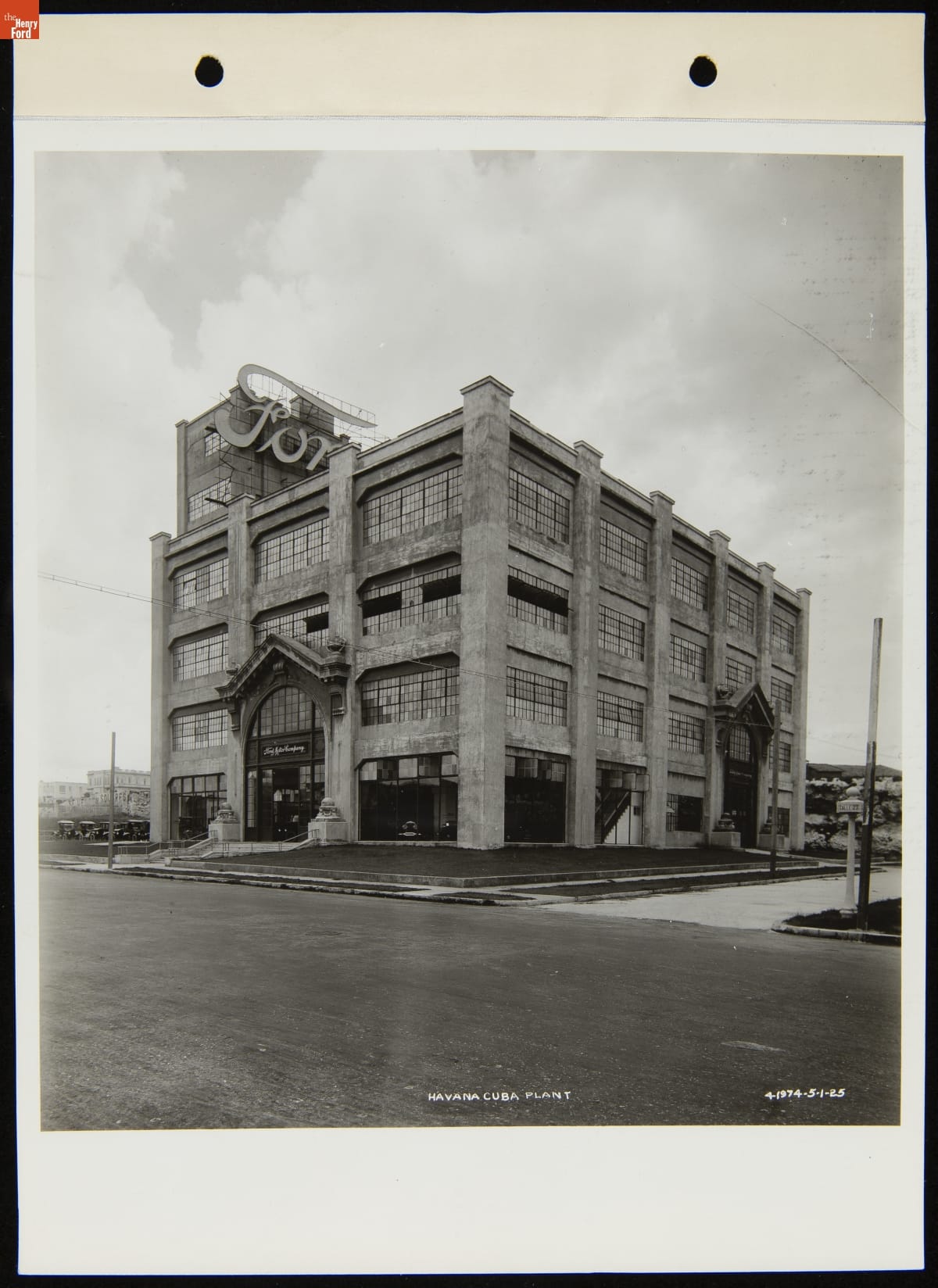
- Ford Motor Company Branch in Havana, Cuba, May 1, 1925 - Ford Motor Company operated sales and service branches, as well as assembly plants, in cities around the world. These facilities allowed the company to better serve its global customers. This photograph shows Ford's branch in Havana, Cuba, as it appeared in 1925.
- May 01, 1925
- Collections - Artifact
Ford Motor Company Branch in Havana, Cuba, May 1, 1925
Ford Motor Company operated sales and service branches, as well as assembly plants, in cities around the world. These facilities allowed the company to better serve its global customers. This photograph shows Ford's branch in Havana, Cuba, as it appeared in 1925.
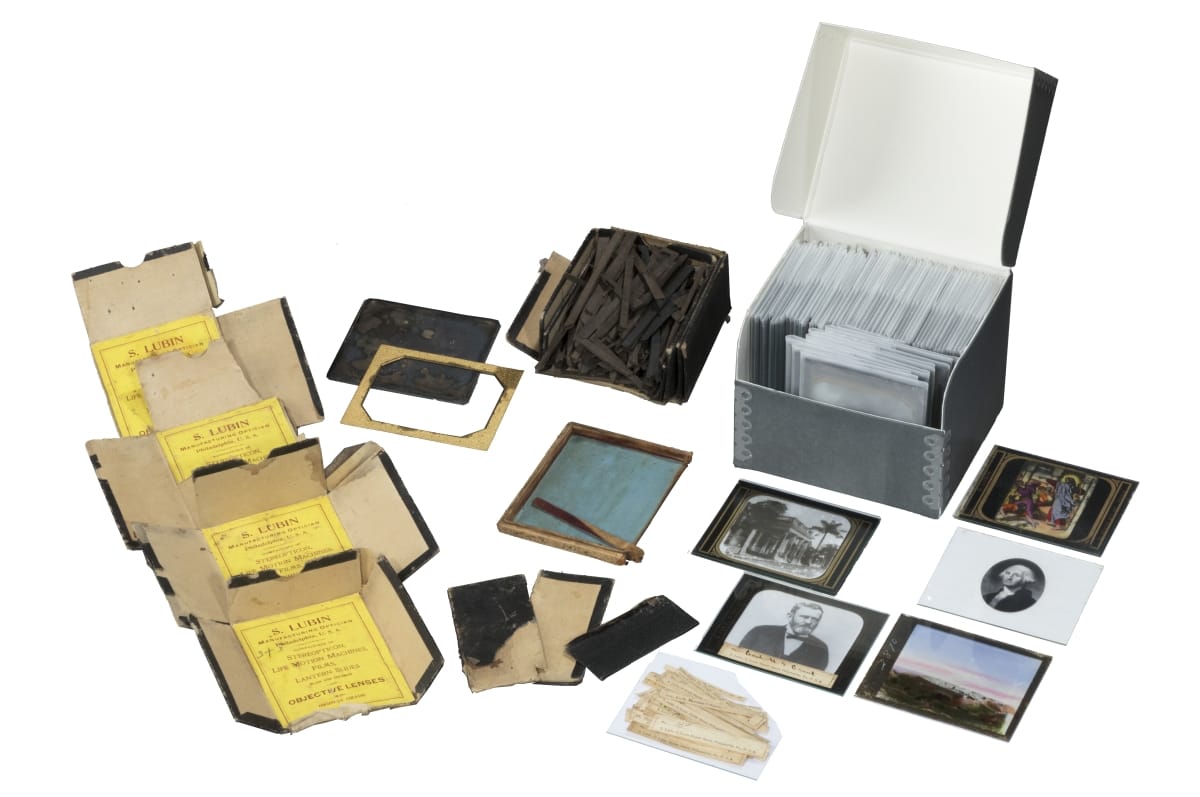
- Lot of Lantern Slides, 1900-1902 - Magic lanterns use a concave mirror and light source to project images on glass slides with painted or photographic scenes. Developed in the 17th century, magic lanterns predate slide projectors and motion pictures. In the hands of magicians, they became "lanterns of fright," projecting wondrous images and apparitions. Slide themes ranged widely: exotic travel, folklore, advertising, history, science, and art.
- 1900-1902
- Collections - Artifact
Lot of Lantern Slides, 1900-1902
Magic lanterns use a concave mirror and light source to project images on glass slides with painted or photographic scenes. Developed in the 17th century, magic lanterns predate slide projectors and motion pictures. In the hands of magicians, they became "lanterns of fright," projecting wondrous images and apparitions. Slide themes ranged widely: exotic travel, folklore, advertising, history, science, and art.
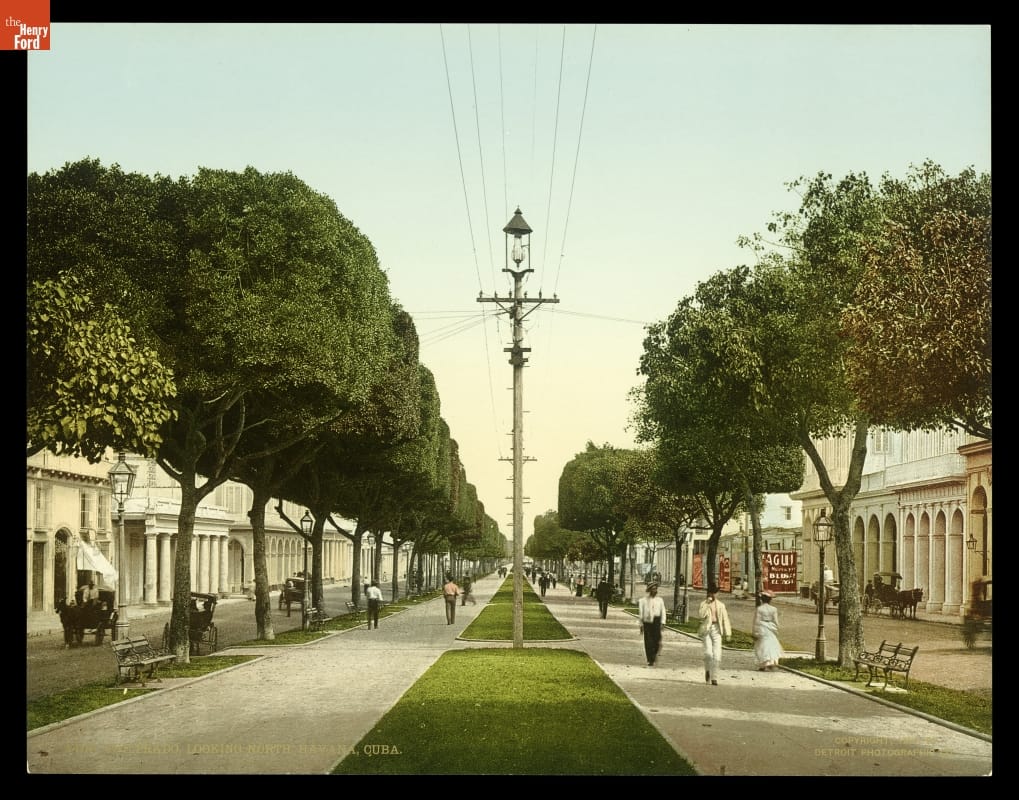
- "The Prado, Looking North, Havana, Cuba," circa 1904 - From 1895 to 1924, the Detroit Publishing Company was one of the major image publishers in the world. The company had a wide-ranging stock of original photographs, including many scenes from around the world. These colorful prints were reproduced for ads, purchased to decorate homes and offices, bought as souvenirs, and used as teaching tools in schools and libraries.
- circa 1904
- Collections - Artifact
"The Prado, Looking North, Havana, Cuba," circa 1904
From 1895 to 1924, the Detroit Publishing Company was one of the major image publishers in the world. The company had a wide-ranging stock of original photographs, including many scenes from around the world. These colorful prints were reproduced for ads, purchased to decorate homes and offices, bought as souvenirs, and used as teaching tools in schools and libraries.
- Internet Access Card, "Nauta, 1 Hora," ETECSA, Cuba, 2015 - The late arrival of the Internet to Cuba is complicated, fueled by political and technological issues. In July of 2015, accessibility somewhat improved with the creation of 35 public Wi-Fi spots. Previous use relied upon slow satellite and dial-up connections. Now citizens can purchase one of these cards, allowing an hour of improved Internet access with a laptop or smartphone.

- 2015
- Collections - Artifact
Internet Access Card, "Nauta, 1 Hora," ETECSA, Cuba, 2015
The late arrival of the Internet to Cuba is complicated, fueled by political and technological issues. In July of 2015, accessibility somewhat improved with the creation of 35 public Wi-Fi spots. Previous use relied upon slow satellite and dial-up connections. Now citizens can purchase one of these cards, allowing an hour of improved Internet access with a laptop or smartphone.