
Search
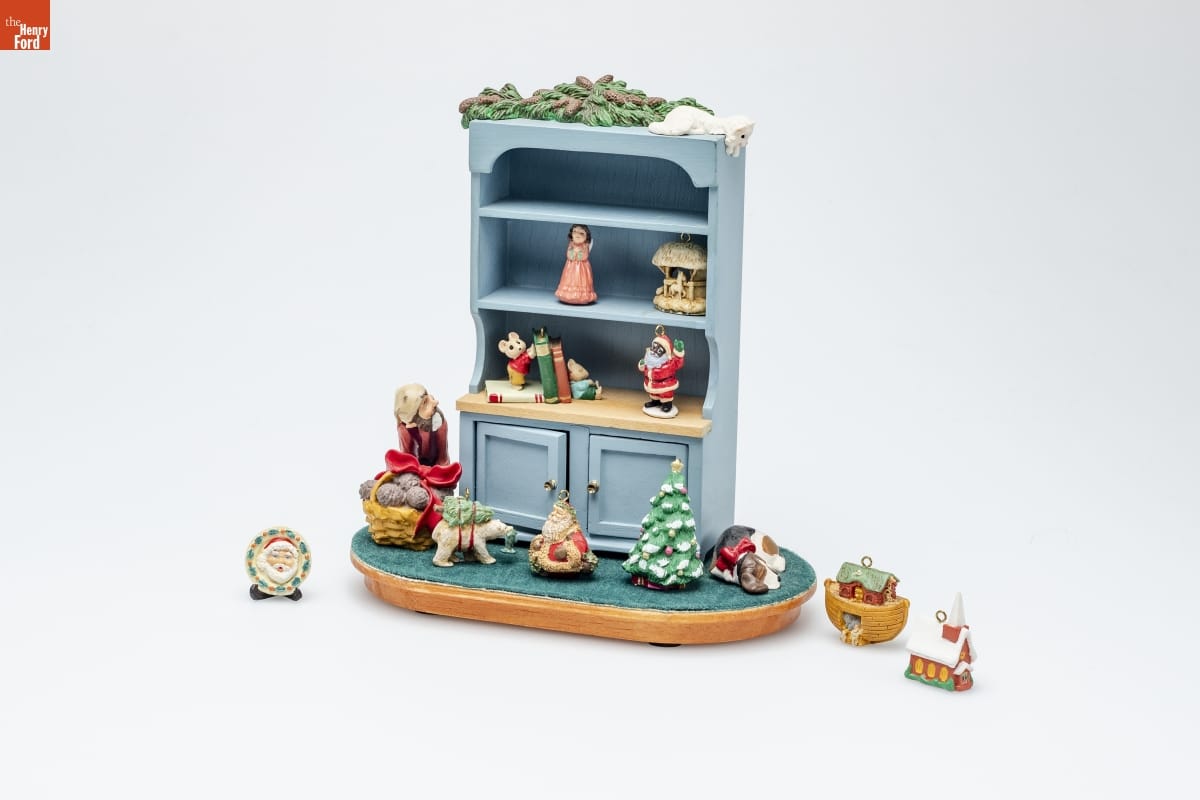
- Hallmark "Keepsake Signature Collection: Mrs. Claus' Cupboard" Christmas Ornaments with Display Base, 1994 - Already known for greeting cards, Hallmark introduced a line of Christmas ornaments in 1973. The company's annual release of an increasing array of ornaments revolutionized Christmas decorating, appealing to customers' interest in marking memories and milestones as well as expressing one's personality and unique tastes.
- 1994
- Collections - Artifact
Hallmark "Keepsake Signature Collection: Mrs. Claus' Cupboard" Christmas Ornaments with Display Base, 1994
Already known for greeting cards, Hallmark introduced a line of Christmas ornaments in 1973. The company's annual release of an increasing array of ornaments revolutionized Christmas decorating, appealing to customers' interest in marking memories and milestones as well as expressing one's personality and unique tastes.
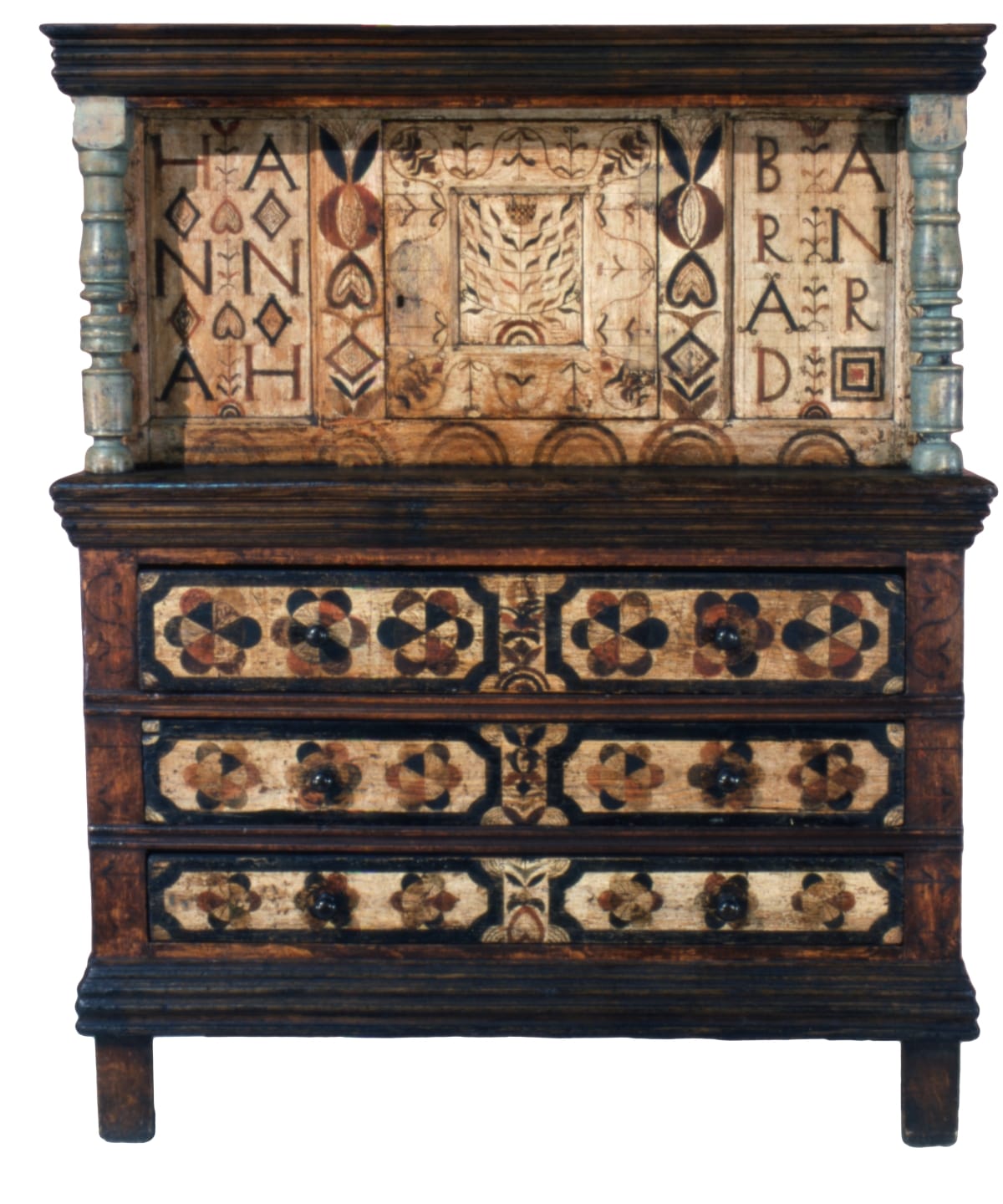
- Court Cupboard, Owned by Hannah Barnard, 1710-1720 - This court cupboard is remarkable because it was made for a woman and prominently features her name. It held newlywed Hannah Barnard's precious household belongings -- silver or pewter, ceramics, and linens. In addition to providing storage space, the gloriously decorated cupboard symbolized Hannah's wealth and status and served as a vibrant work of art in her Hadley, Massachusetts, home.
- 1710-1720
- Collections - Artifact
Court Cupboard, Owned by Hannah Barnard, 1710-1720
This court cupboard is remarkable because it was made for a woman and prominently features her name. It held newlywed Hannah Barnard's precious household belongings -- silver or pewter, ceramics, and linens. In addition to providing storage space, the gloriously decorated cupboard symbolized Hannah's wealth and status and served as a vibrant work of art in her Hadley, Massachusetts, home.
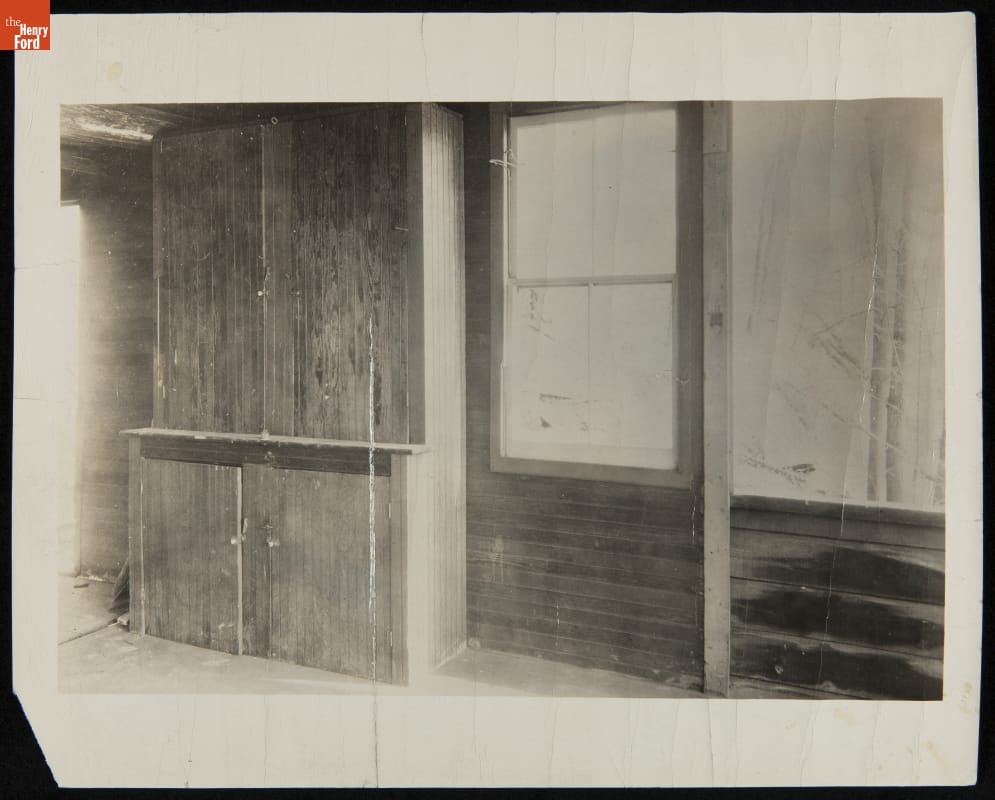
- Interior of the Charles Steinmetz Cabin at its Original Site on the Mohawk River, Schenectady, New York, February 22, 1930 - Charles Steinmetz owned this cabin overlooking a tributary of the Mohawk River, just outside of Schenectady, New York. The cabin's simplicity was a contrast to the General Electric laboratories where Steinmetz spent his workweek. It served as a getaway -- for quiet study or writing, but also for more animated weekend camp gatherings for selected friends and associates.
- February 22, 1930
- Collections - Artifact
Interior of the Charles Steinmetz Cabin at its Original Site on the Mohawk River, Schenectady, New York, February 22, 1930
Charles Steinmetz owned this cabin overlooking a tributary of the Mohawk River, just outside of Schenectady, New York. The cabin's simplicity was a contrast to the General Electric laboratories where Steinmetz spent his workweek. It served as a getaway -- for quiet study or writing, but also for more animated weekend camp gatherings for selected friends and associates.
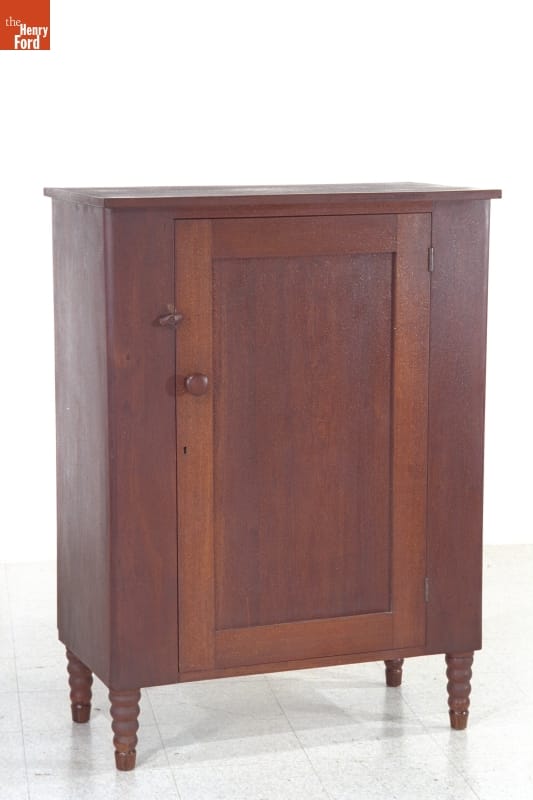
- Cupboard, 1850-1880 -
- 1850-1880
- Collections - Artifact
Cupboard, 1850-1880
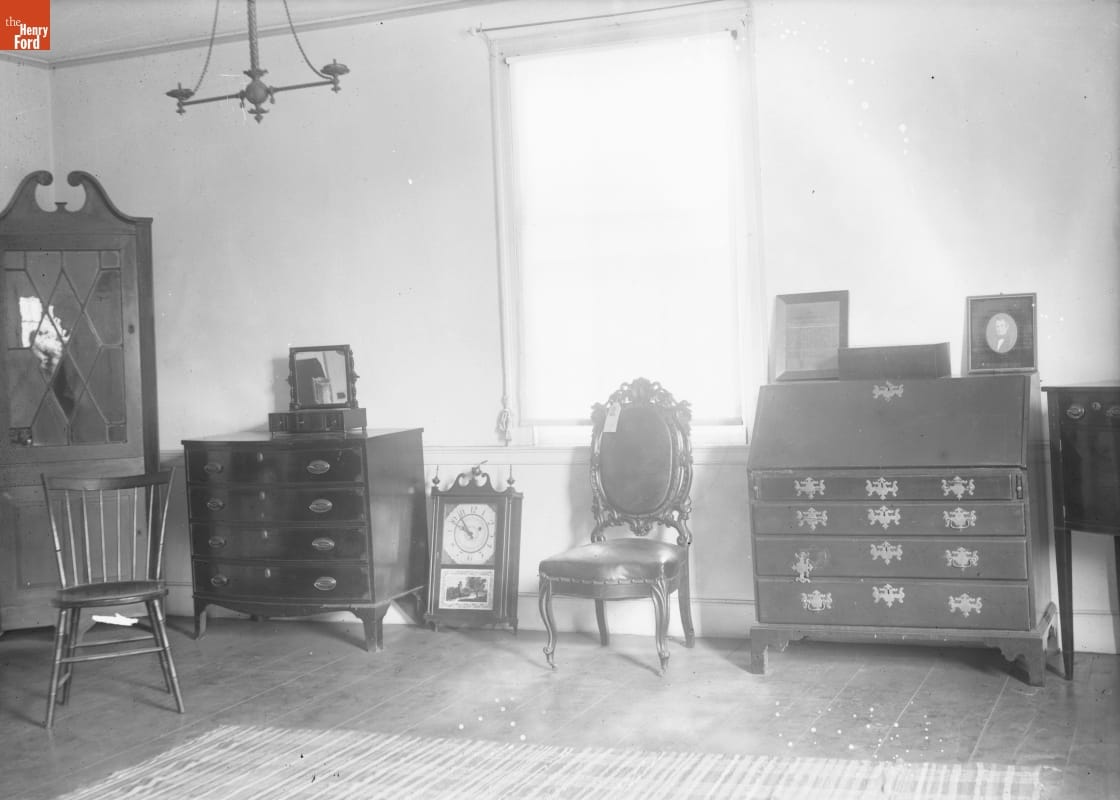
- Furniture, Miscellaneous Pieces, 1890-1915 - In 1890, Jenny Young Chandler, 25 years old and recently widowed, began working for the <EM>New York Herald</EM>. As a photojournalist and feature writer, Chandler captured life in Brooklyn, New York, and vicinity. She also documented collections of private individuals and museums -- some of which were featured in magazine articles for collectors. By 1922, the time of her death, she had produced over 800 glass plate negatives.
- 1890-1915
- Collections - Artifact
Furniture, Miscellaneous Pieces, 1890-1915
In 1890, Jenny Young Chandler, 25 years old and recently widowed, began working for the New York Herald. As a photojournalist and feature writer, Chandler captured life in Brooklyn, New York, and vicinity. She also documented collections of private individuals and museums -- some of which were featured in magazine articles for collectors. By 1922, the time of her death, she had produced over 800 glass plate negatives.
- Painted Corner Cupboard, 1825-1850 -
- 1825-1850
- Collections - Artifact
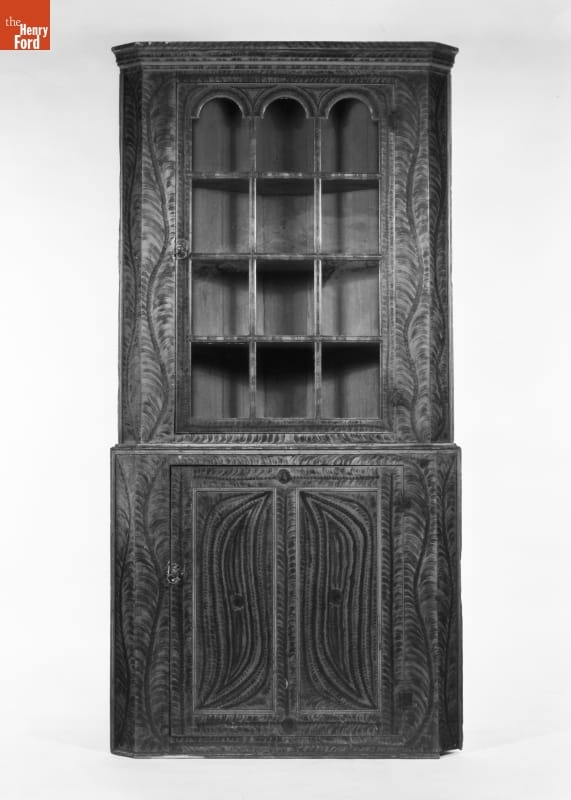
Painted Corner Cupboard, 1825-1850
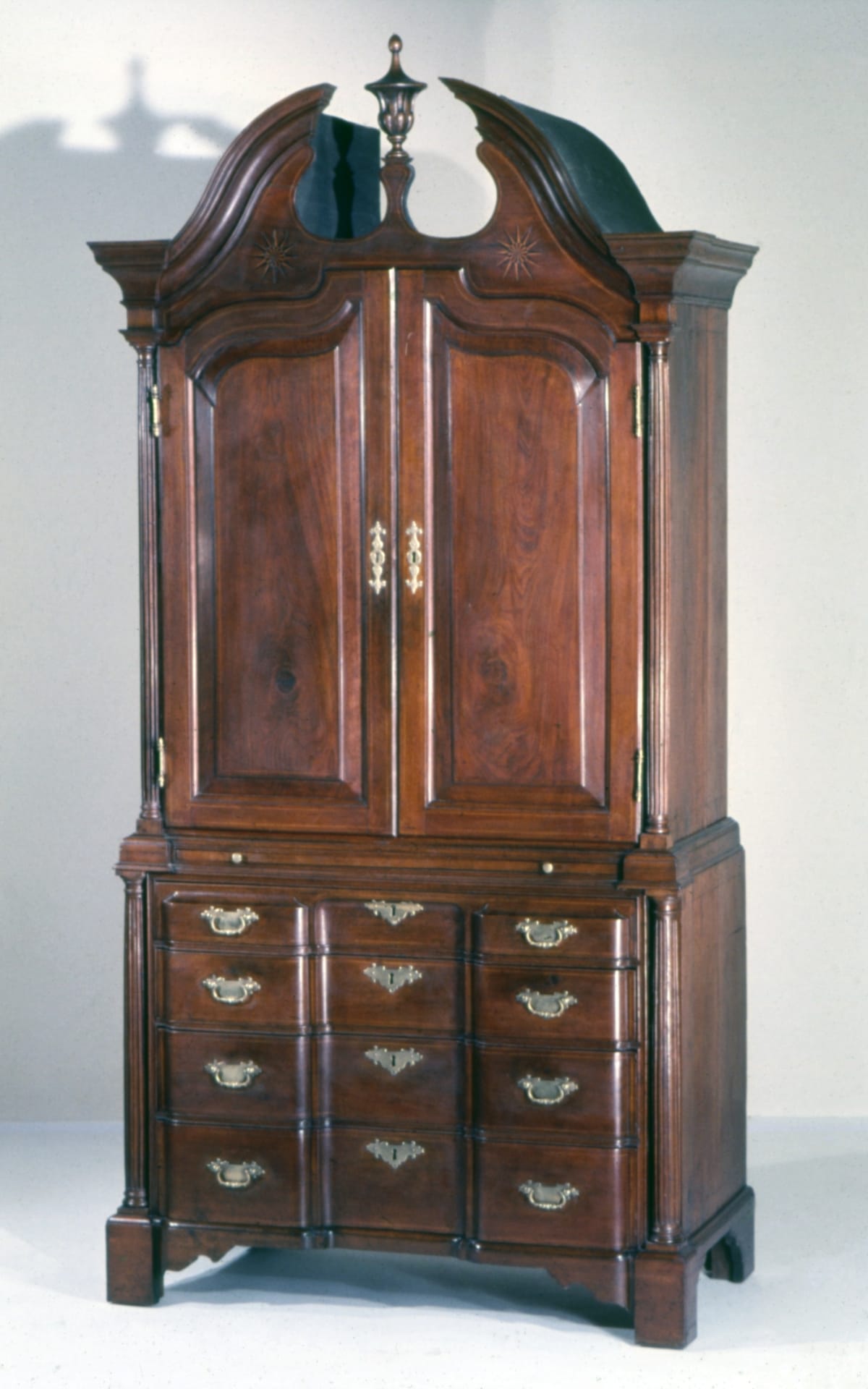
- Linen Press, 1730-1740 - This finely carved and inlaid press held a grand household's best linens. Impressive yet practical, this press was the finest pieces of furniture a person could purchase in early 18th century Boston. Owners often displayed such pieces in their parlors where they could be admired as symbols of wealth and good taste.
- 1730-1740
- Collections - Artifact
Linen Press, 1730-1740
This finely carved and inlaid press held a grand household's best linens. Impressive yet practical, this press was the finest pieces of furniture a person could purchase in early 18th century Boston. Owners often displayed such pieces in their parlors where they could be admired as symbols of wealth and good taste.
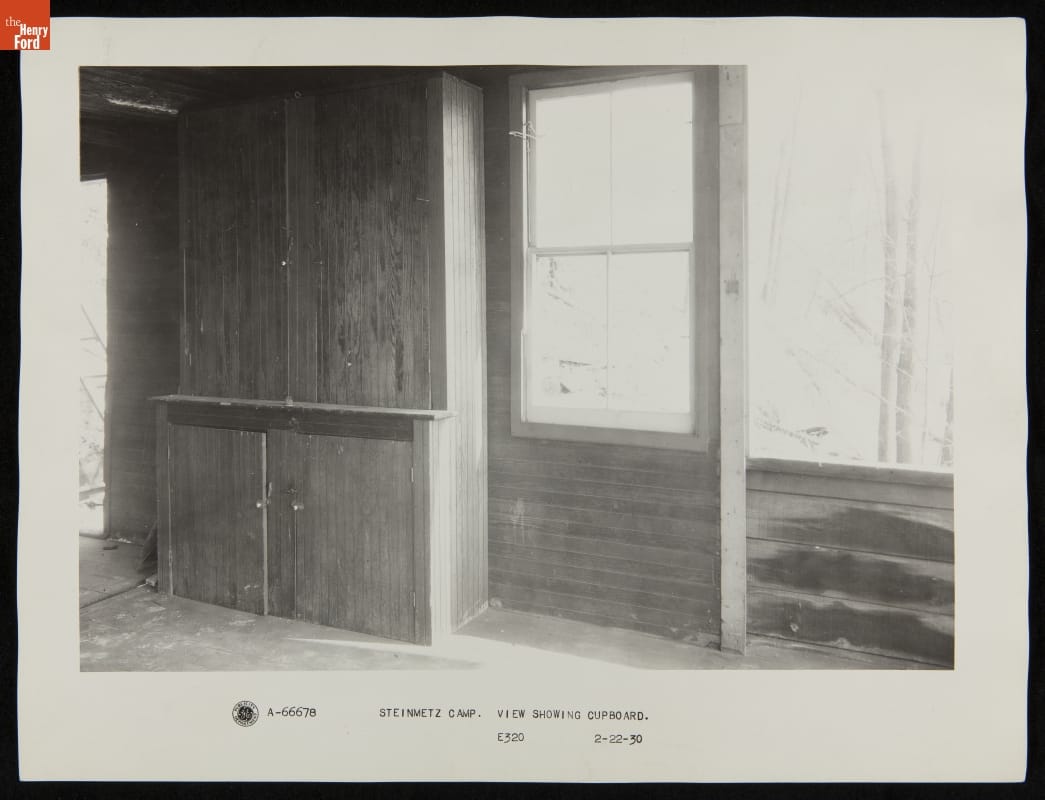
- Interior of the Charles Steinmetz Cabin at its Original Site on the Mohawk River, Schenectady, New York, February 22, 1930 - Charles Steinmetz owned this cabin overlooking a tributary of the Mohawk River, just outside of Schenectady, New York. The cabin's simplicity was a contrast to the General Electric laboratories where Steinmetz spent his workweek. It served as a getaway -- for quiet study or writing, but also for more animated weekend camp gatherings for selected friends and associates.
- February 22, 1930
- Collections - Artifact
Interior of the Charles Steinmetz Cabin at its Original Site on the Mohawk River, Schenectady, New York, February 22, 1930
Charles Steinmetz owned this cabin overlooking a tributary of the Mohawk River, just outside of Schenectady, New York. The cabin's simplicity was a contrast to the General Electric laboratories where Steinmetz spent his workweek. It served as a getaway -- for quiet study or writing, but also for more animated weekend camp gatherings for selected friends and associates.
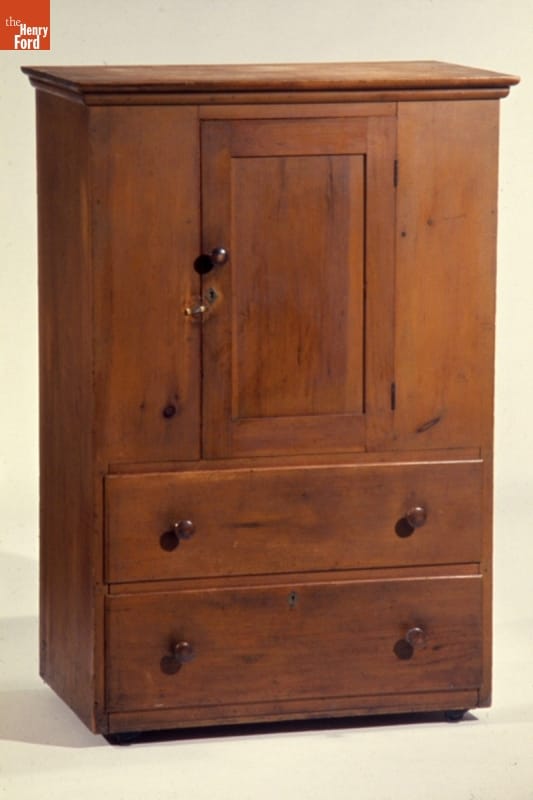
- Cupboard, 1830-1860 - The United Society of Believers in Christ's Second Appearing, commonly known as the Shakers, is a religious sect begun in the late 1700s. Members banded together into small, mostly self-sufficient, communal enclaves scattered from Maine to Kentucky. Shaker craftsmen fashioned household furnishings with plain lines, little ornamentation, and painted or stained in a uniform color. Their craftsmanship expressed honesty, simplicity, and utility--in keeping with the guiding principles of the Shaker faith.
- 1830-1860
- Collections - Artifact
Cupboard, 1830-1860
The United Society of Believers in Christ's Second Appearing, commonly known as the Shakers, is a religious sect begun in the late 1700s. Members banded together into small, mostly self-sufficient, communal enclaves scattered from Maine to Kentucky. Shaker craftsmen fashioned household furnishings with plain lines, little ornamentation, and painted or stained in a uniform color. Their craftsmanship expressed honesty, simplicity, and utility--in keeping with the guiding principles of the Shaker faith.
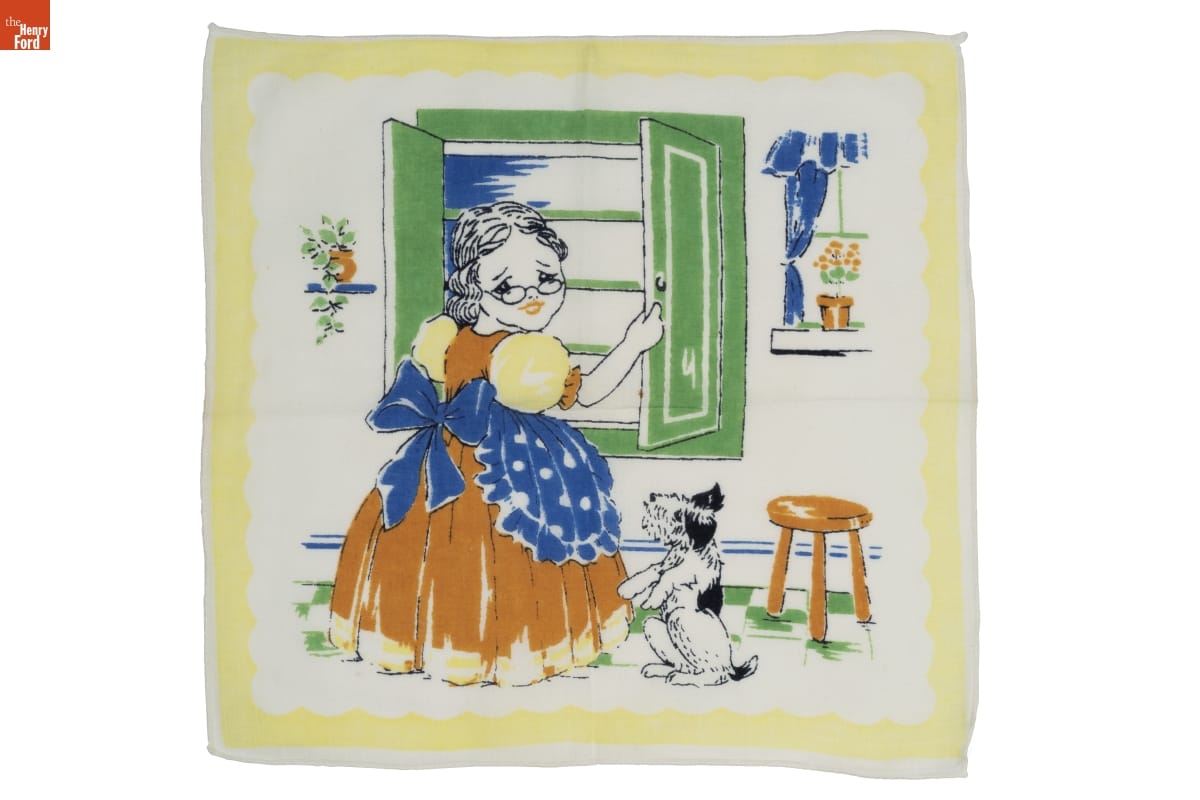
- Child's Handkerchief, 1945-1955 - Before disposable tissues became popular, people carried cloth handkerchiefs to help with sneezes and sniffles. Children's versions were made with images and in colors designed to appeal to these smaller folk.
- 1945-1955
- Collections - Artifact
Child's Handkerchief, 1945-1955
Before disposable tissues became popular, people carried cloth handkerchiefs to help with sneezes and sniffles. Children's versions were made with images and in colors designed to appeal to these smaller folk.