
Search
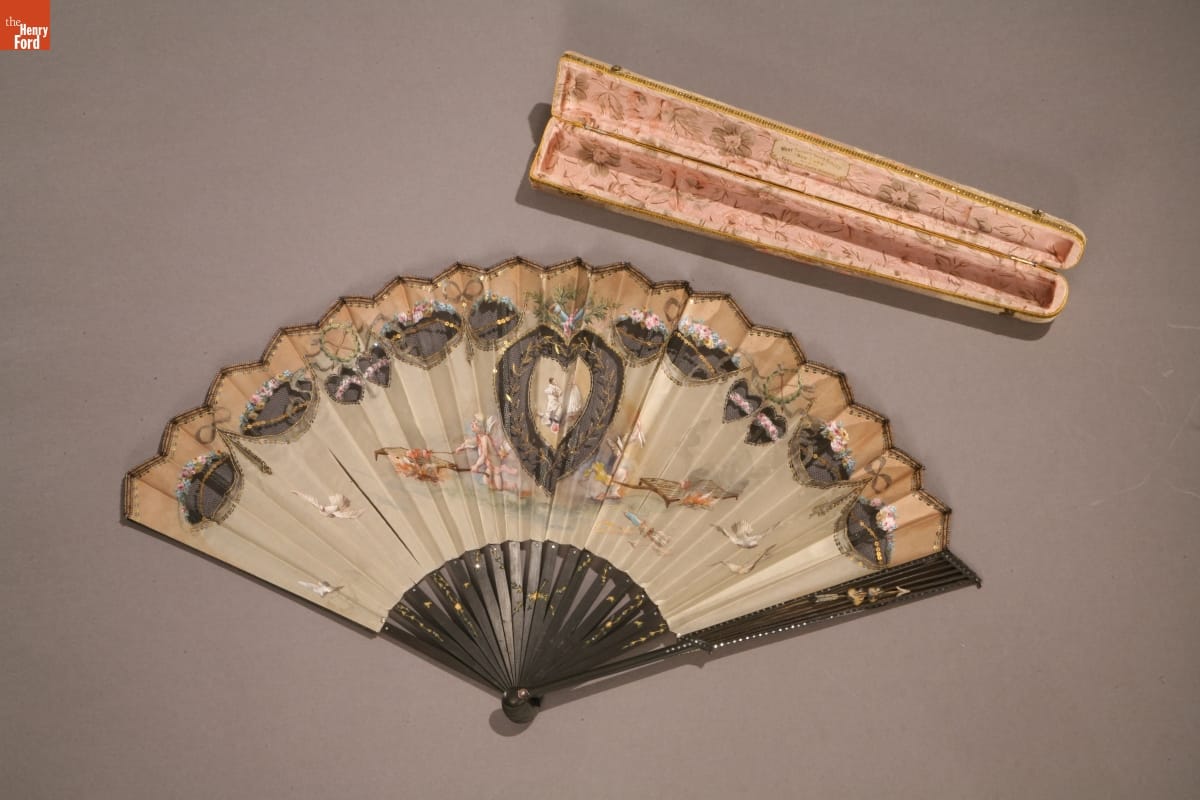
- Stern Brothers Fan, 1895-1900 -
- 1895-1900
- Collections - Artifact
Stern Brothers Fan, 1895-1900
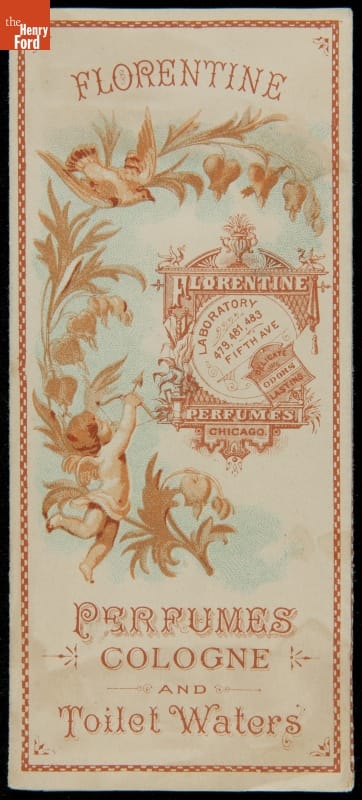
- Trade Card for Florentine Perfumes, Allen B. Wrisley Co., 1890-1910 - In the last third of the nineteenth century, an unprecedented variety of consumer goods and services flooded the American market. Advertisers, armed with new methods of color printing, bombarded potential customers with trade cards. Americans enjoyed and often saved the vibrant little advertisements found in product packages or distributed by local merchants. Many survive as historical records of commercialism in the United States.
- 1890-1910
- Collections - Artifact
Trade Card for Florentine Perfumes, Allen B. Wrisley Co., 1890-1910
In the last third of the nineteenth century, an unprecedented variety of consumer goods and services flooded the American market. Advertisers, armed with new methods of color printing, bombarded potential customers with trade cards. Americans enjoyed and often saved the vibrant little advertisements found in product packages or distributed by local merchants. Many survive as historical records of commercialism in the United States.
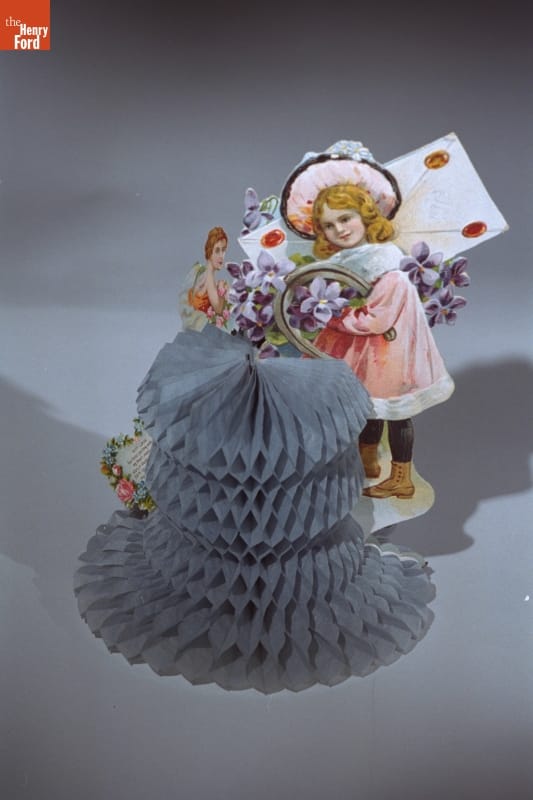
- Three-Dimensional Valentine Card, "With Love," 1900-1920 - The custom of sending messages of affection on February 14 dates back to Roman times, when mid-February was a time to meet and court prospective mates. The earliest American valentines were labors of love, handmade by the sender. The spread of commercially produced valentines in the second half of the nineteenth century made sending and receiving Valentine's Day cards a more lighthearted activity.
- 1900-1920
- Collections - Artifact
Three-Dimensional Valentine Card, "With Love," 1900-1920
The custom of sending messages of affection on February 14 dates back to Roman times, when mid-February was a time to meet and court prospective mates. The earliest American valentines were labors of love, handmade by the sender. The spread of commercially produced valentines in the second half of the nineteenth century made sending and receiving Valentine's Day cards a more lighthearted activity.
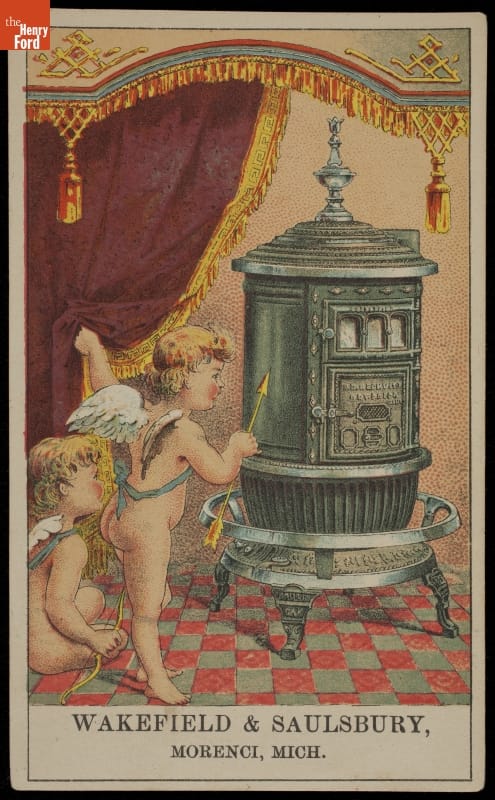
- Trade Card for Round Oak Stoves, P. D. Beckwith, 1880-1889 - In the last third of the nineteenth century, an unprecedented variety of consumer goods and services flooded the American market. Advertisers, armed with new methods of color printing, bombarded potential customers with trade cards. Americans enjoyed and often saved the vibrant little advertisements found in product packages or distributed by local merchants. Many survive as historical records of commercialism in the United States.
- 1880-1889
- Collections - Artifact
Trade Card for Round Oak Stoves, P. D. Beckwith, 1880-1889
In the last third of the nineteenth century, an unprecedented variety of consumer goods and services flooded the American market. Advertisers, armed with new methods of color printing, bombarded potential customers with trade cards. Americans enjoyed and often saved the vibrant little advertisements found in product packages or distributed by local merchants. Many survive as historical records of commercialism in the United States.
- Valentine Card, circa 1900 - The custom of sending messages of affection on February 14 dates back to Roman times, when mid-February was a time to meet and court prospective mates. The earliest American valentines were labors of love, handmade by the sender. The spread of commercially produced valentines in the second half of the nineteenth century made sending and receiving Valentine's Day cards a more lighthearted activity.
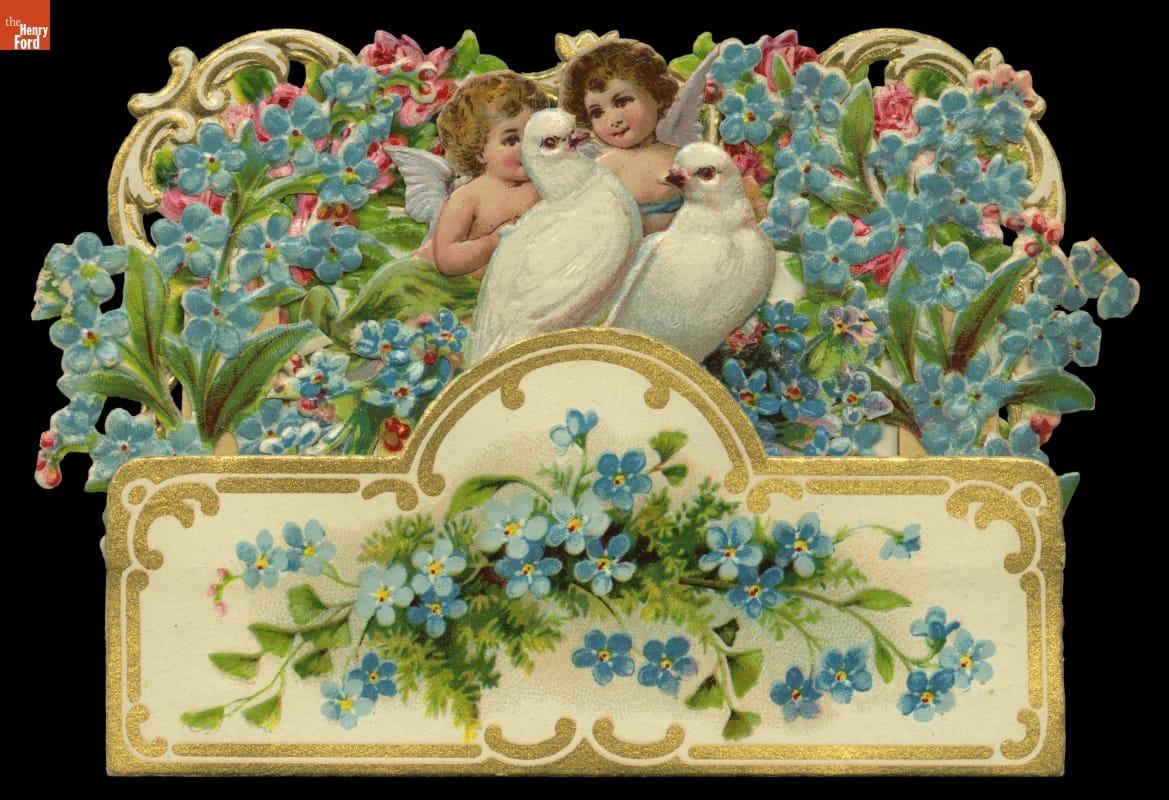
- circa 1900
- Collections - Artifact
Valentine Card, circa 1900
The custom of sending messages of affection on February 14 dates back to Roman times, when mid-February was a time to meet and court prospective mates. The earliest American valentines were labors of love, handmade by the sender. The spread of commercially produced valentines in the second half of the nineteenth century made sending and receiving Valentine's Day cards a more lighthearted activity.
- Valentine Postcard, "Greetings to My Valentine," circa 1910 - The custom of sending messages of affection on February 14 dates back to Roman times, when mid-February was a time to meet and court prospective mates. The earliest American valentines were labors of love, handmade by the sender. The spread of commercially produced valentines in the second half of the nineteenth century made sending and receiving Valentine's Day cards a more lighthearted activity.
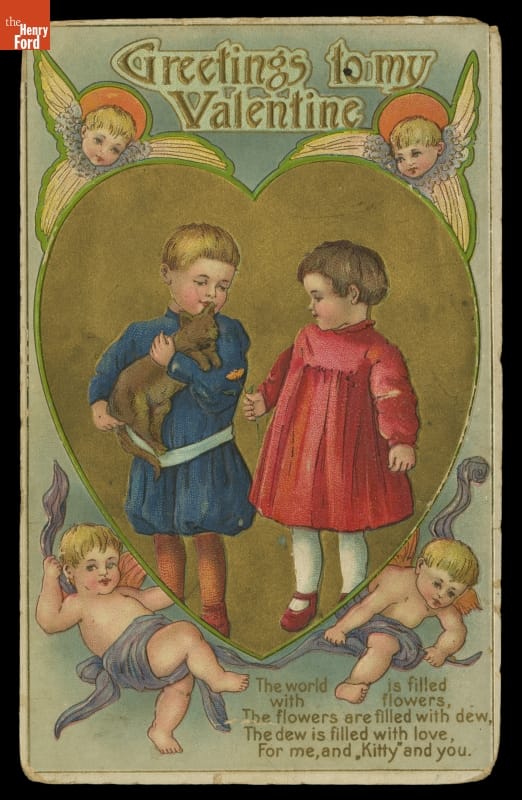
- circa 1910
- Collections - Artifact
Valentine Postcard, "Greetings to My Valentine," circa 1910
The custom of sending messages of affection on February 14 dates back to Roman times, when mid-February was a time to meet and court prospective mates. The earliest American valentines were labors of love, handmade by the sender. The spread of commercially produced valentines in the second half of the nineteenth century made sending and receiving Valentine's Day cards a more lighthearted activity.
- Valentine Card, "For Grandma and Grandpa," circa 1975 - The custom of sending messages of affection on February 14 dates back to Roman times, when mid-February was a time to meet and court prospective mates. The earliest American valentines were labors of love, handmade by the sender. The spread of commercially produced valentines in the second half of the nineteenth century made sending and receiving Valentine's Day cards a more lighthearted activity.
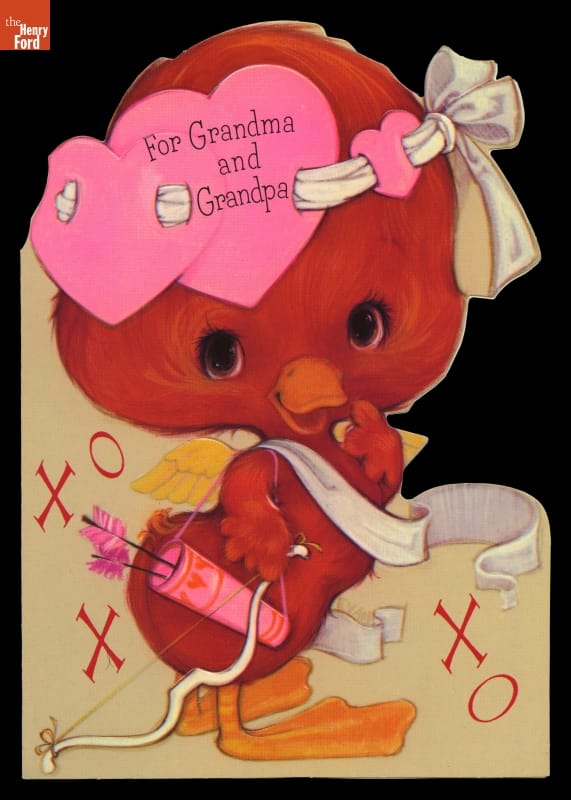
- circa 1975
- Collections - Artifact
Valentine Card, "For Grandma and Grandpa," circa 1975
The custom of sending messages of affection on February 14 dates back to Roman times, when mid-February was a time to meet and court prospective mates. The earliest American valentines were labors of love, handmade by the sender. The spread of commercially produced valentines in the second half of the nineteenth century made sending and receiving Valentine's Day cards a more lighthearted activity.
- Spoon Holder, 1875-1895 - Specialized tableware proliferated in American households during the late 19th century. Pressed glass spoon holders held silver or silver-plated spoons needed at a moment's notice. Guests who dropped by for a visit would judge the hostess as being well-prepared when seeing a spoon holder filled and at the ready.
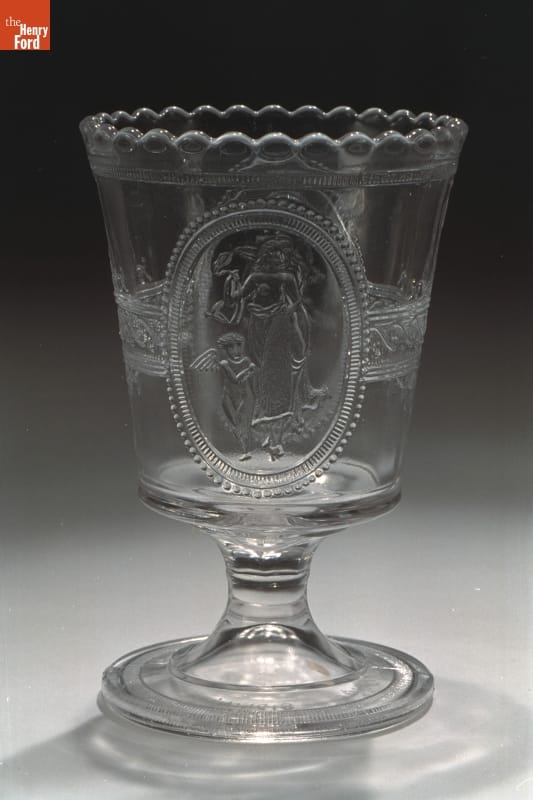
- 1875-1895
- Collections - Artifact
Spoon Holder, 1875-1895
Specialized tableware proliferated in American households during the late 19th century. Pressed glass spoon holders held silver or silver-plated spoons needed at a moment's notice. Guests who dropped by for a visit would judge the hostess as being well-prepared when seeing a spoon holder filled and at the ready.
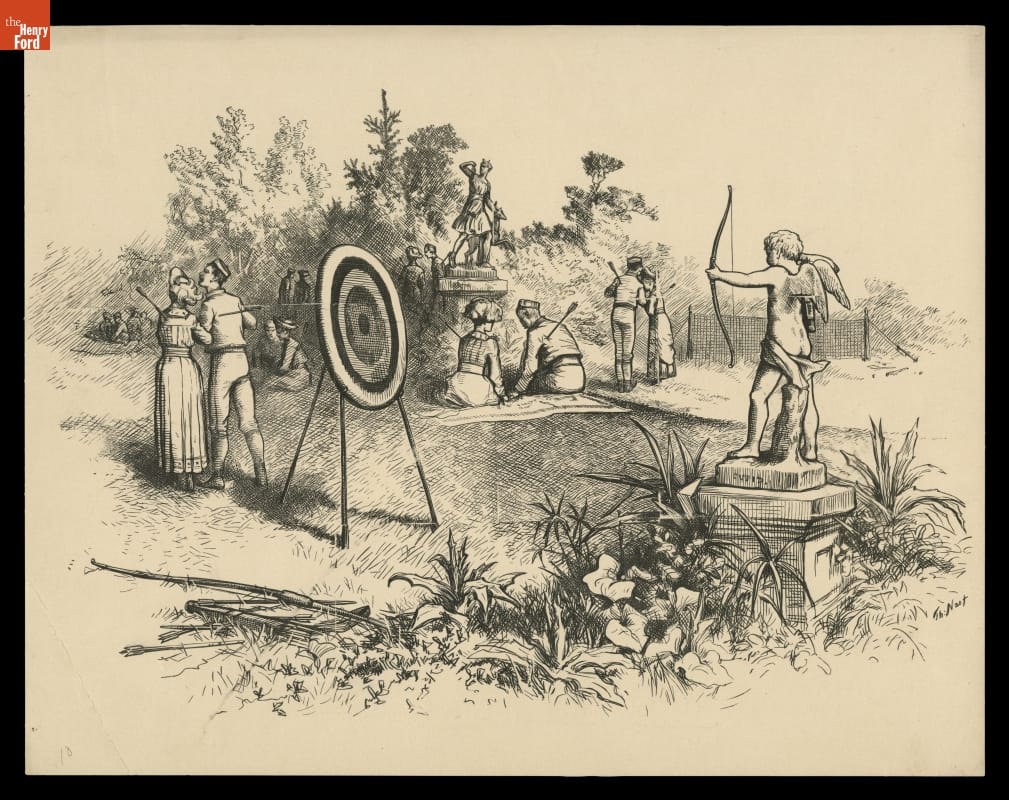
- Etching Proof from a Thomas Nast Drawing for Valentine's Day, "A Dangerous Game, But Nobody Seems to Mind It," 1879 - Thomas Nast (1840-1902) was an influential illustrator and political cartoonist. Though he is best known for the creation of our modern image of Santa Claus, Nast created many endearing illustrations depicting other legendary characters. This image, originally published in the September 13, 1879, issue of <EM>Harper's Bazar</EM>, depicts the sharp-eyed Cupid hitting his marks.
- September 13, 1879
- Collections - Artifact
Etching Proof from a Thomas Nast Drawing for Valentine's Day, "A Dangerous Game, But Nobody Seems to Mind It," 1879
Thomas Nast (1840-1902) was an influential illustrator and political cartoonist. Though he is best known for the creation of our modern image of Santa Claus, Nast created many endearing illustrations depicting other legendary characters. This image, originally published in the September 13, 1879, issue of Harper's Bazar, depicts the sharp-eyed Cupid hitting his marks.
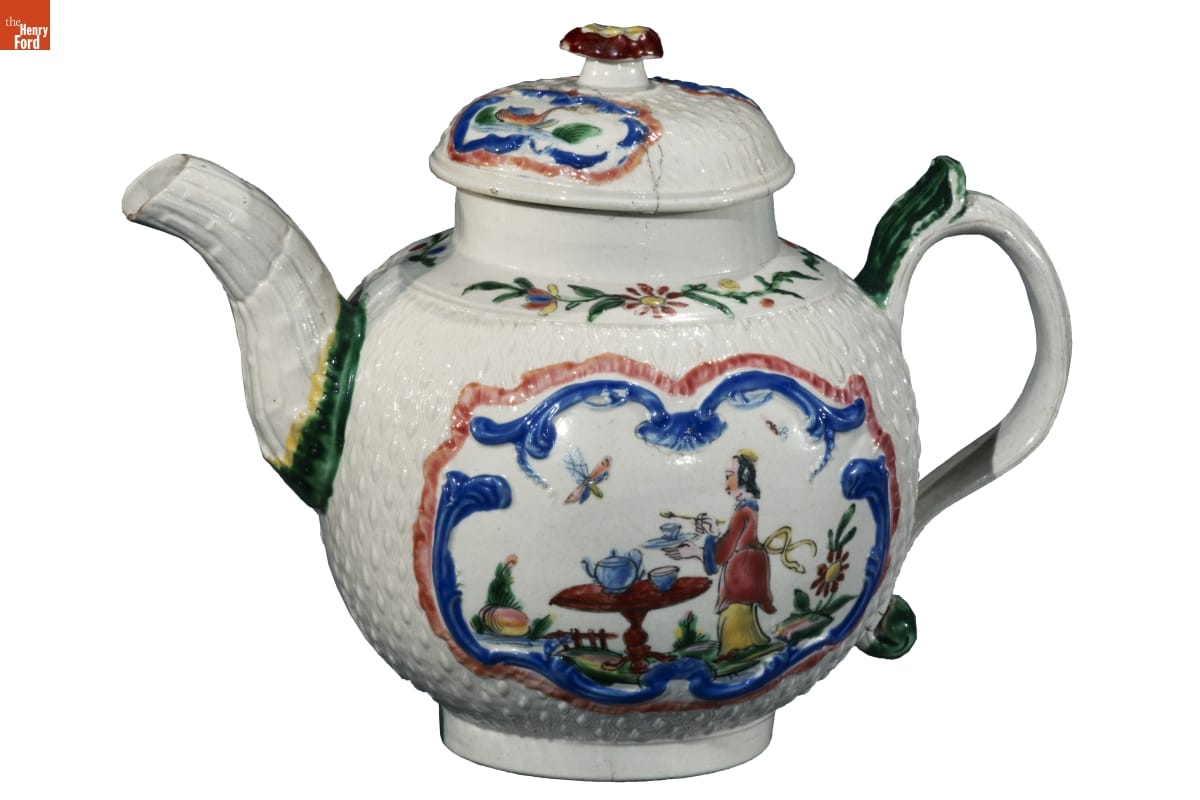
- Teapot, 1750-1765 -
- 1750-1765
- Collections - Artifact
Teapot, 1750-1765