
Search
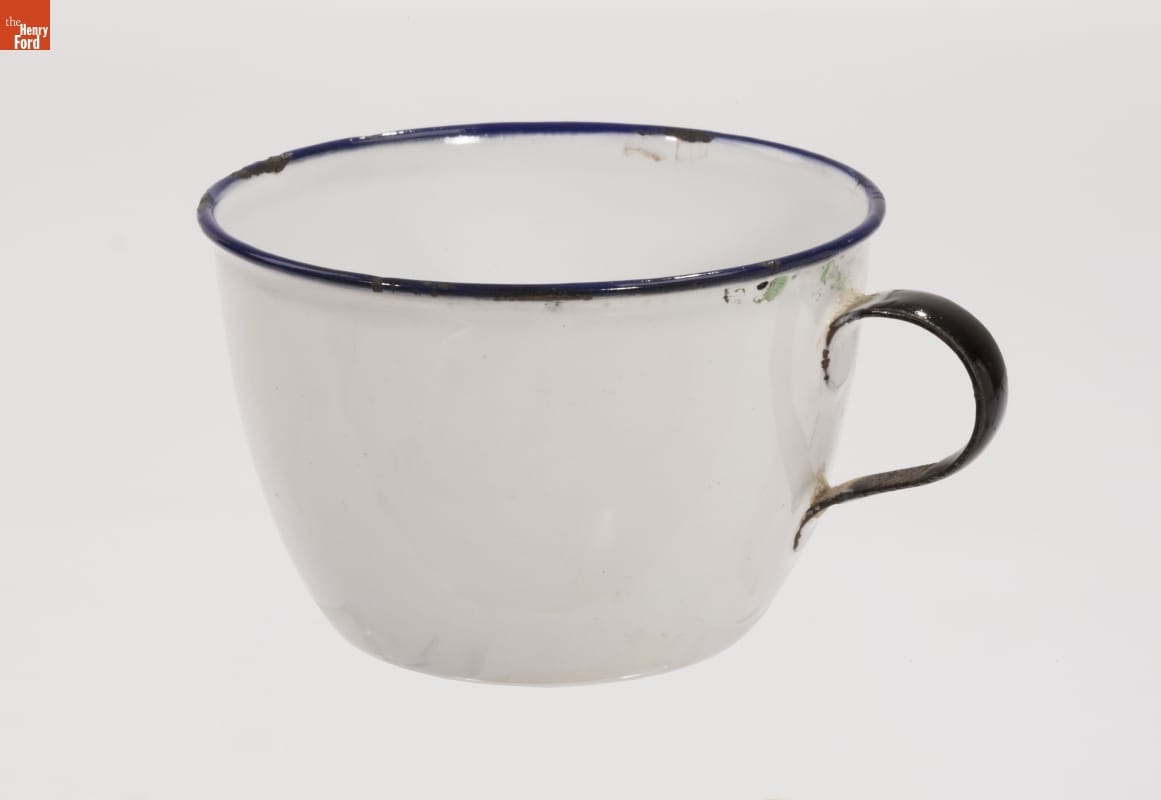
- Enamelware Cup Used on Henry Ford's "Vagabonds" Camping Trips, 1920-1930 - This white enameled cup was used during one of the yearly camping trips taken by the Vagabonds in the early 1920s. The self-named group consisted of Thomas Edison, Henry Ford, Harvey Firestone, and naturalist John Burroughs. The Vagabonds brought along all needed equipment and utensils, as well as support staff to cook, serve, and maintain the camp.
- 1920-1930
- Collections - Artifact
Enamelware Cup Used on Henry Ford's "Vagabonds" Camping Trips, 1920-1930
This white enameled cup was used during one of the yearly camping trips taken by the Vagabonds in the early 1920s. The self-named group consisted of Thomas Edison, Henry Ford, Harvey Firestone, and naturalist John Burroughs. The Vagabonds brought along all needed equipment and utensils, as well as support staff to cook, serve, and maintain the camp.
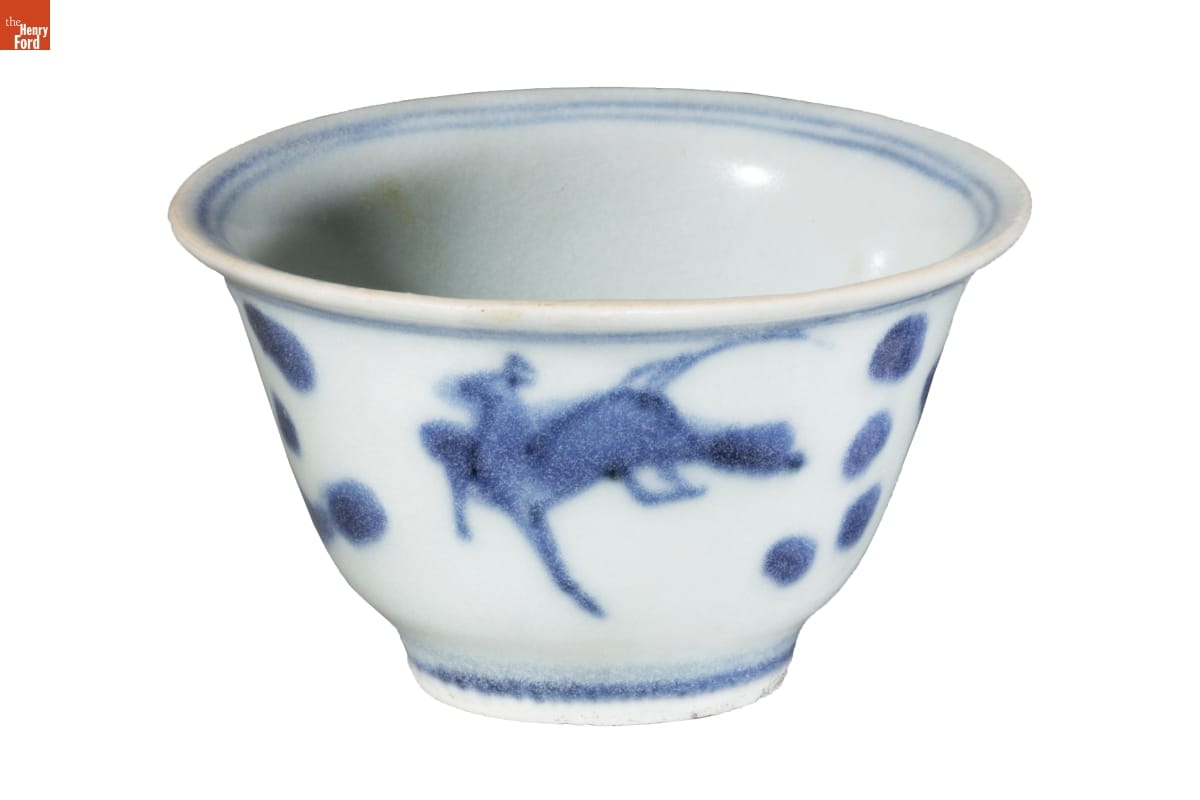
- Tea Cup from Vung Tau Shipwreck, 1675-1690 - Wealthy 17th-century Europeans craved Chinese porcelains. The clay of these export wares contains kaolin. When fired, the body of the clay and glaze fused into a glass-like form that resisted chipping and breaking--holding up to everyday use, which amazed Europeans. This teacup never made it to the table; it was found in a shipwreck on its way to Europe--a beautiful and rugged survivor.
- 1675-1690
- Collections - Artifact
Tea Cup from Vung Tau Shipwreck, 1675-1690
Wealthy 17th-century Europeans craved Chinese porcelains. The clay of these export wares contains kaolin. When fired, the body of the clay and glaze fused into a glass-like form that resisted chipping and breaking--holding up to everyday use, which amazed Europeans. This teacup never made it to the table; it was found in a shipwreck on its way to Europe--a beautiful and rugged survivor.
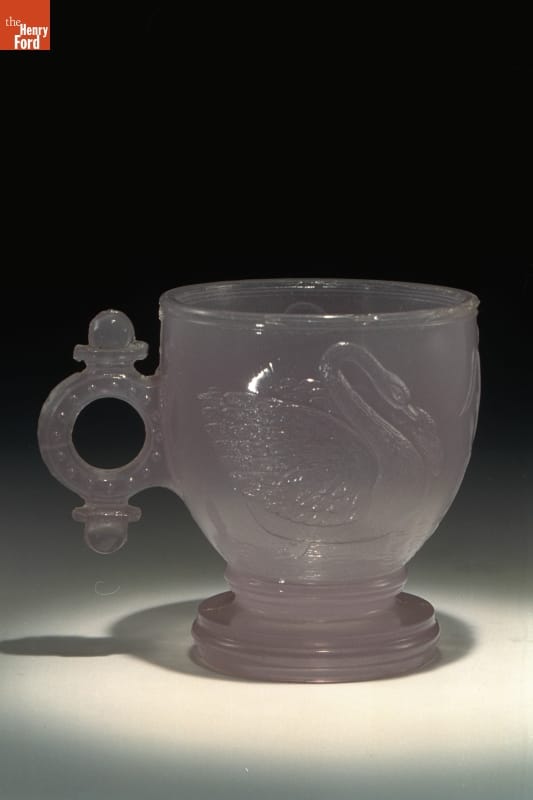
- Cup, 1875-1895 - Nineteenth-century American glassmakers experimented with new methods to create products for a growing consumer market. In the 1820s, pressing glass into metal molds by machine was perfected, and by the mid-1800s, manufacturers were creating a variety of inexpensive pressed glass housewares. America's middle-class consumers could now decorate their homes with attractive glass bowls, creamers, dishes, plates, vases, and other tableware.
- 1875-1895
- Collections - Artifact
Cup, 1875-1895
Nineteenth-century American glassmakers experimented with new methods to create products for a growing consumer market. In the 1820s, pressing glass into metal molds by machine was perfected, and by the mid-1800s, manufacturers were creating a variety of inexpensive pressed glass housewares. America's middle-class consumers could now decorate their homes with attractive glass bowls, creamers, dishes, plates, vases, and other tableware.
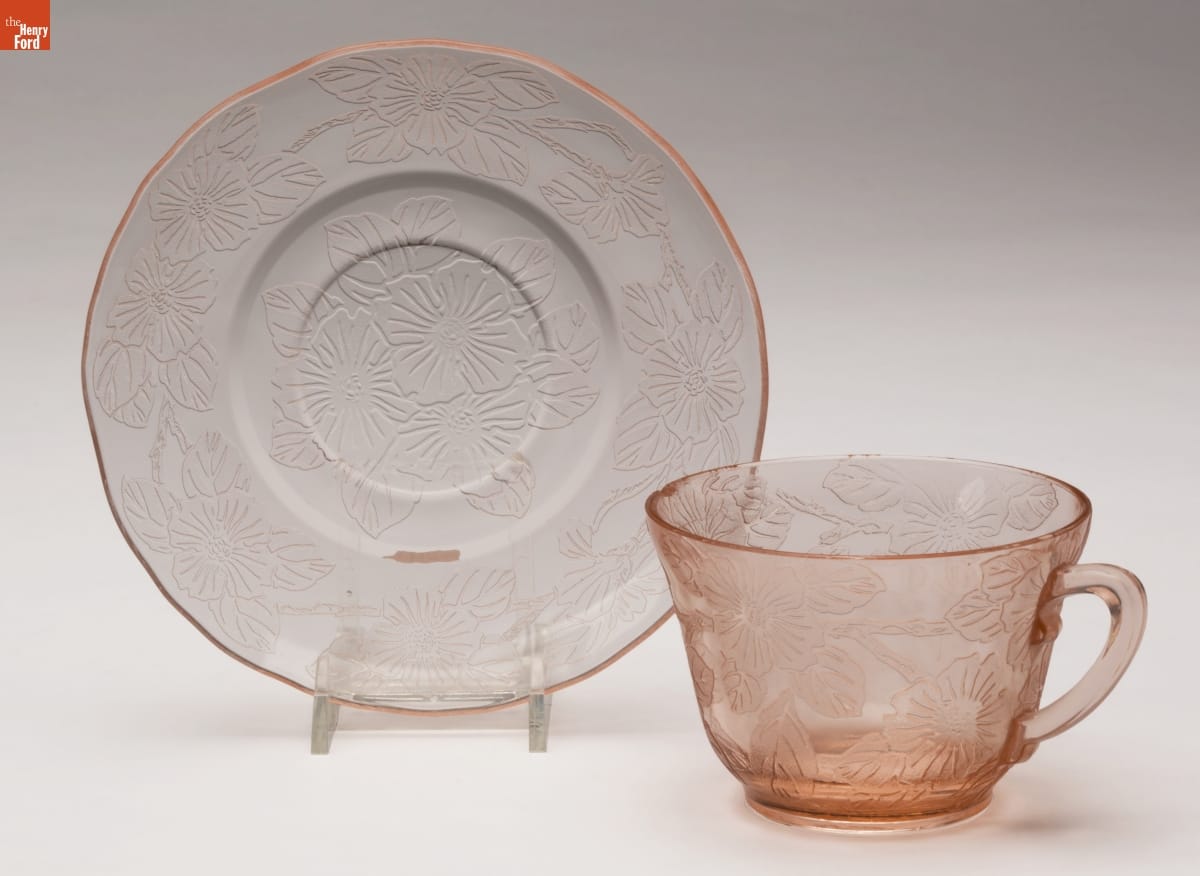
- Cup and Saucer Set 1930-1934 - During the 1930s, some American glass manufacturers produced inexpensive, pressed glass serving ware. The glassware, which came in a variety of colors and scores of distinct patterns, could be bought at many lower-end retailers as well as through catalogue merchants. Movie theaters and other businesses also gave it away -- intending to lure the cash-strapped Depression-era public inside.
- 1930-1934
- Collections - Artifact
Cup and Saucer Set 1930-1934
During the 1930s, some American glass manufacturers produced inexpensive, pressed glass serving ware. The glassware, which came in a variety of colors and scores of distinct patterns, could be bought at many lower-end retailers as well as through catalogue merchants. Movie theaters and other businesses also gave it away -- intending to lure the cash-strapped Depression-era public inside.
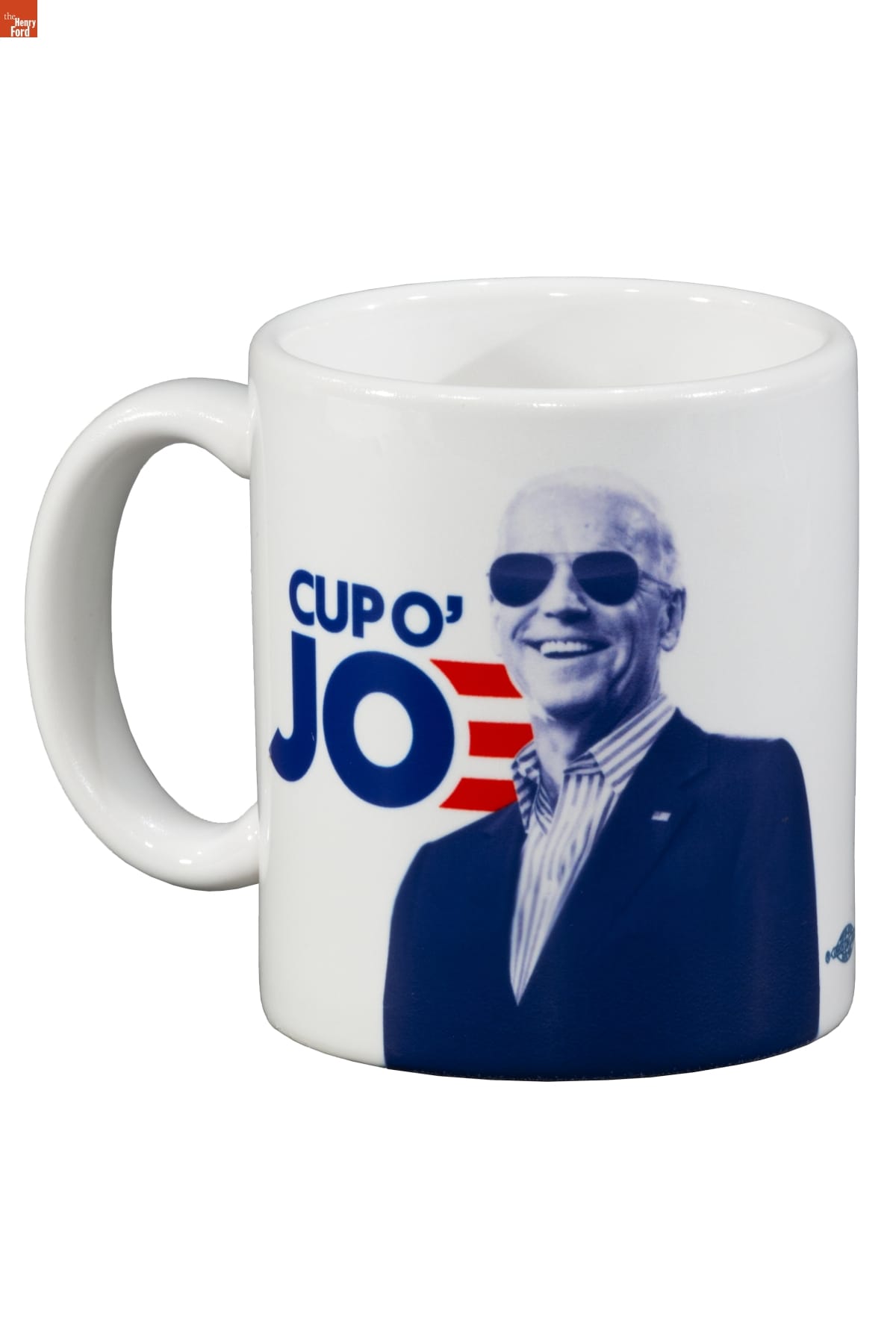
- "Cup O' Joe" Biden Campaign Mug, 2020 - Joe Biden's aviator sunglasses became a common graphic on both official and unofficial campaign merchandise, reflecting a more casual, "everyman" view of the presidential hopeful. The official campaign produced this mug, choosing to play off his name and featuring the "Joe" logo used on other merchandise.
- 2020
- Collections - Artifact
"Cup O' Joe" Biden Campaign Mug, 2020
Joe Biden's aviator sunglasses became a common graphic on both official and unofficial campaign merchandise, reflecting a more casual, "everyman" view of the presidential hopeful. The official campaign produced this mug, choosing to play off his name and featuring the "Joe" logo used on other merchandise.
- Toy Cups, 1830-1845 -
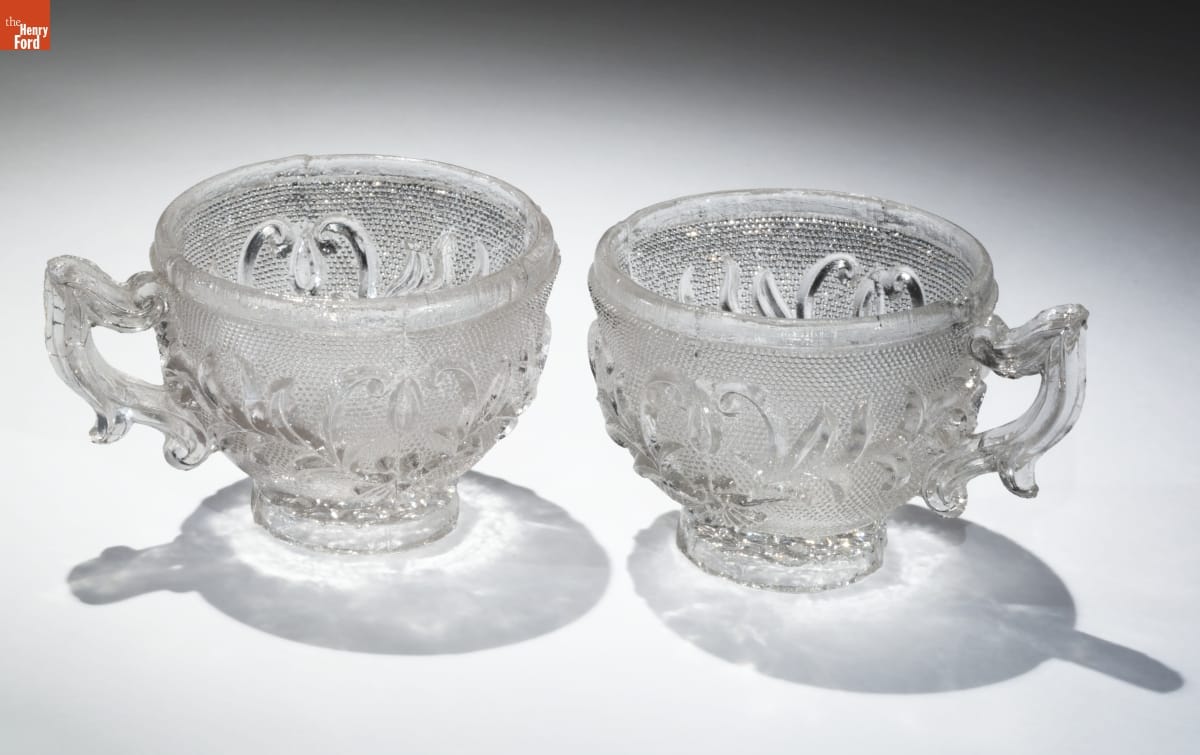
- 1830-1845
- Collections - Artifact
Toy Cups, 1830-1845
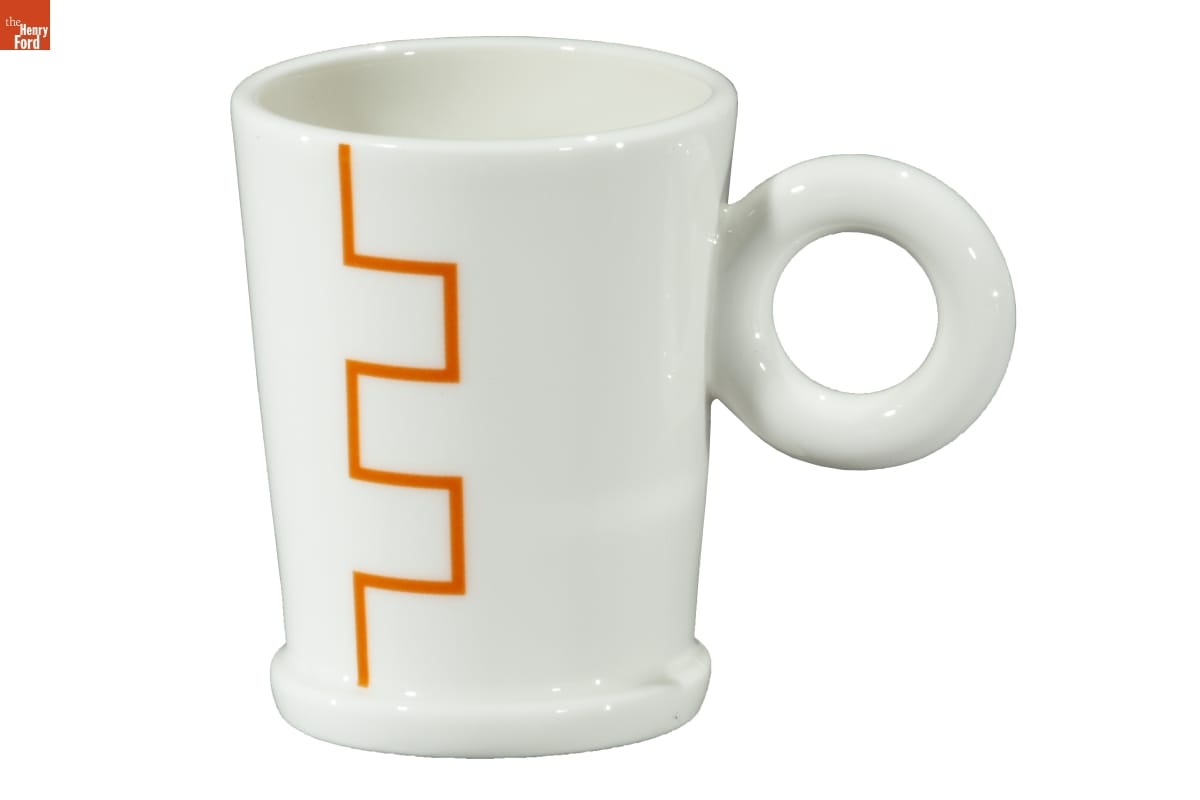
- Espresso Cup, 2010 - Starting in the early 1980s--and already established as an internationally recognized architect--Michael Graves began to pursue a parallel career as a product designer. Over the following three and a half decades he and his collaborators designed everything from humble household goods to limited edition luxury items for clients as diverse as Steuben, Alessi, Target, J. C. Penney, and Disney.
- 2010
- Collections - Artifact
Espresso Cup, 2010
Starting in the early 1980s--and already established as an internationally recognized architect--Michael Graves began to pursue a parallel career as a product designer. Over the following three and a half decades he and his collaborators designed everything from humble household goods to limited edition luxury items for clients as diverse as Steuben, Alessi, Target, J. C. Penney, and Disney.
- Cup, 1795-1810 -
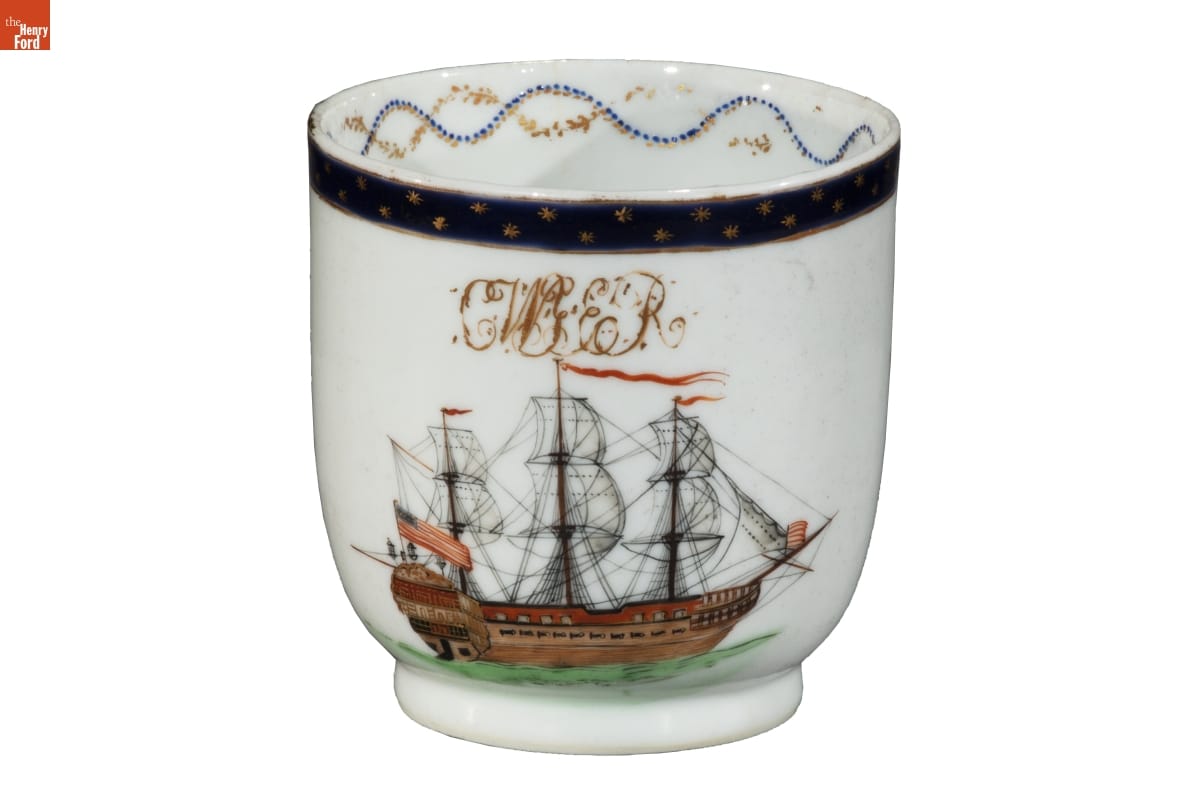
- 1795-1810
- Collections - Artifact
Cup, 1795-1810
- Mug, 1920-1960 -
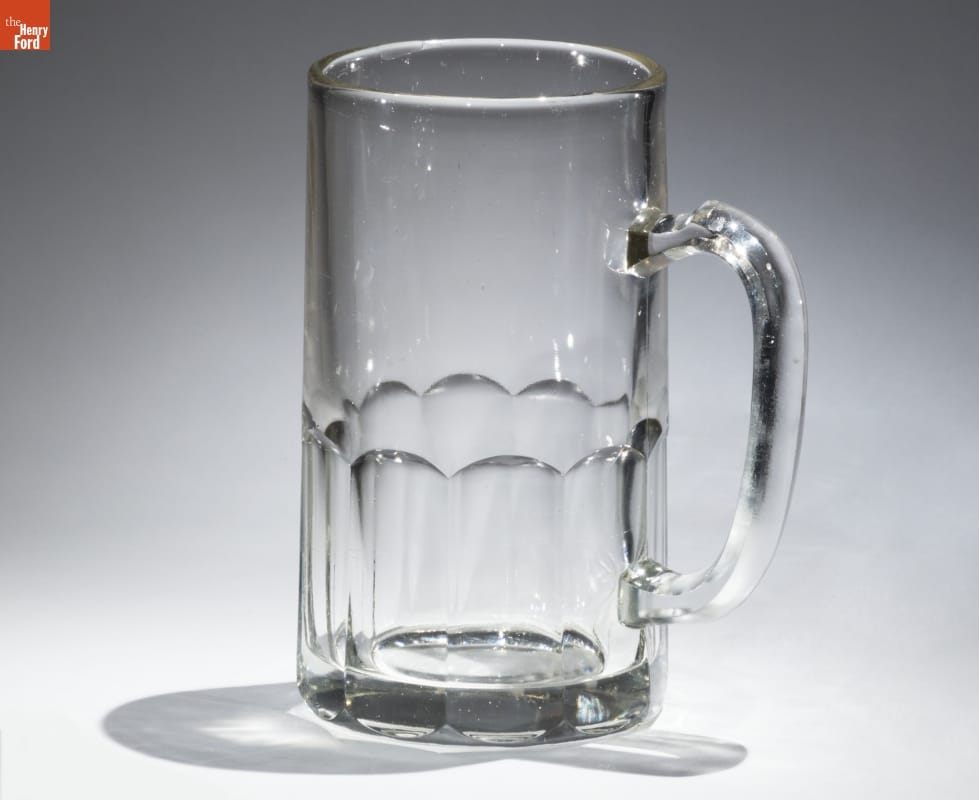
- 1920-1960
- Collections - Artifact
Mug, 1920-1960
- Mug, 1850-1900 -
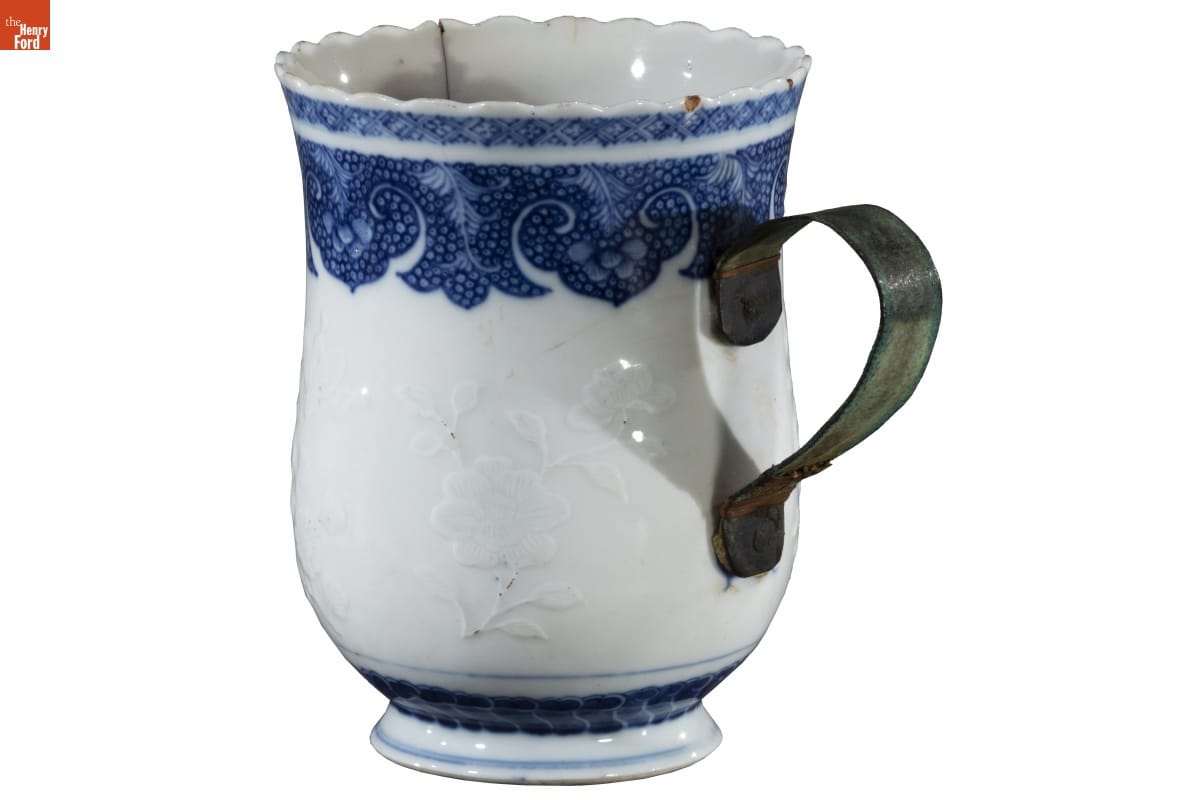
- 1850-1900
- Collections - Artifact
Mug, 1850-1900