
Search
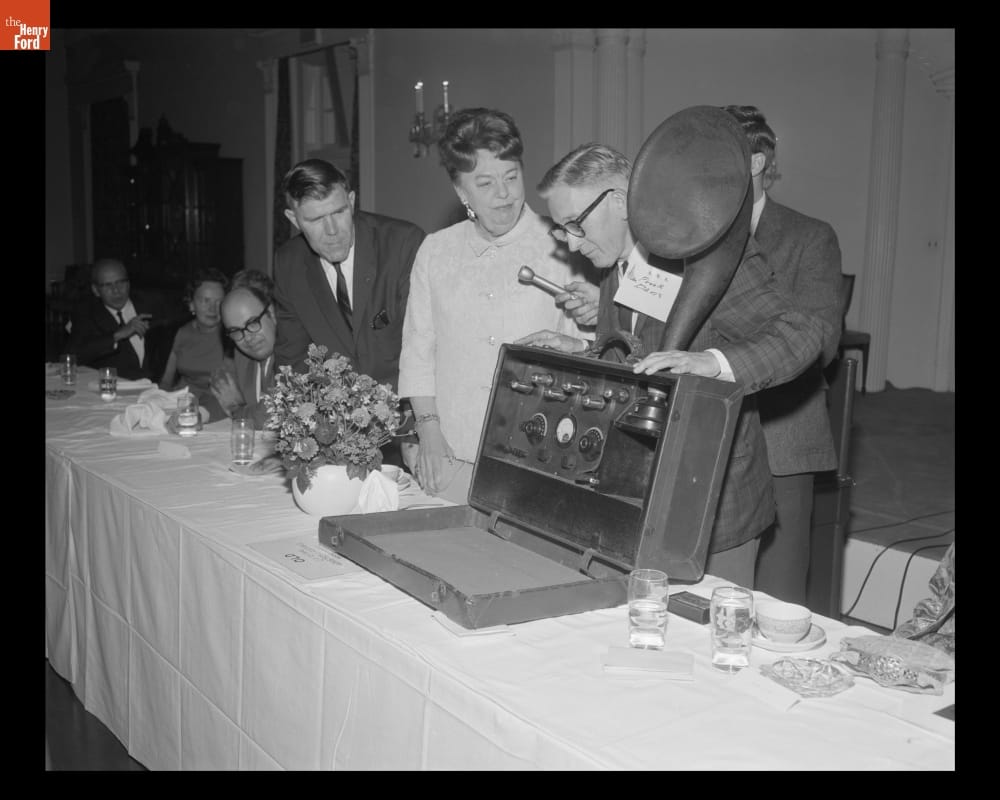
- Marion Armstrong Presents the First Portable Superheterodyne Radio Receiver to Henry Ford Museum, September 22, 1967 - This photograph shows the first portable superheterodyne radio receiver, designed by Edwin Armstrong. Superheterodying was a major communications discovery made by Armstrong. High and low frequencies were mixed to produce powerful, selective radio waves. Following his untimely death, Edwin's wife Marion Armstrong continued to preserve his legacy; she donated this radio to The Henry Ford museum in 1967.
- September 22, 1967
- Collections - Artifact
Marion Armstrong Presents the First Portable Superheterodyne Radio Receiver to Henry Ford Museum, September 22, 1967
This photograph shows the first portable superheterodyne radio receiver, designed by Edwin Armstrong. Superheterodying was a major communications discovery made by Armstrong. High and low frequencies were mixed to produce powerful, selective radio waves. Following his untimely death, Edwin's wife Marion Armstrong continued to preserve his legacy; she donated this radio to The Henry Ford museum in 1967.
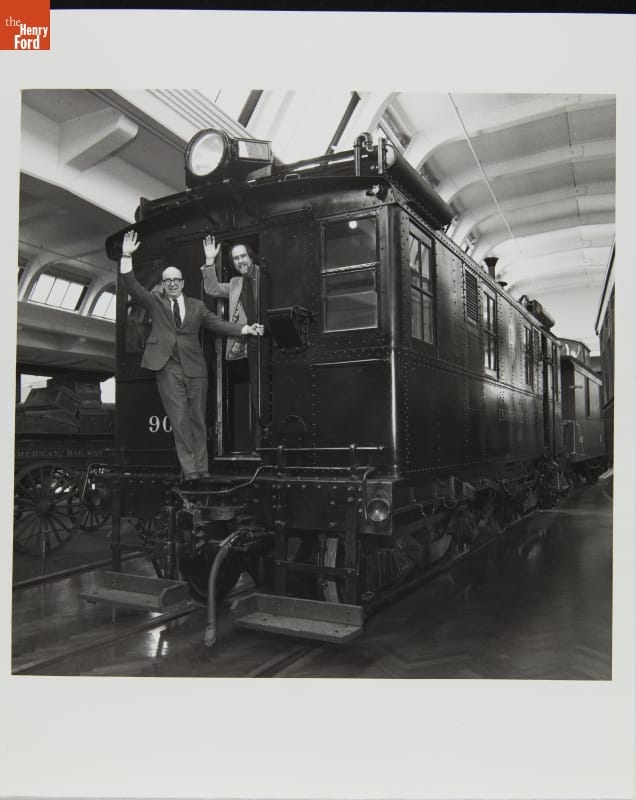
- M. William Grant and Randy Mason with Restored Ingersoll-Rand Diesel-Electric Locomotive No. 90 in Henry Ford Museum, January 1985 - Ingersoll-Rand, in collaboration with General Electric and American Locomotive Company, built diesel-electric locomotive #90 in 1926. Ingersoll-Rand used the locomotive in the railyard at its Phillipsburg, New Jersey, plant for some 40 years. Diesel-electric power proved more efficient and cost-effective than steam. Donated to The Henry Ford in 1970, the locomotive received a cosmetic restoration in 1983.
- January 01, 1985
- Collections - Artifact
M. William Grant and Randy Mason with Restored Ingersoll-Rand Diesel-Electric Locomotive No. 90 in Henry Ford Museum, January 1985
Ingersoll-Rand, in collaboration with General Electric and American Locomotive Company, built diesel-electric locomotive #90 in 1926. Ingersoll-Rand used the locomotive in the railyard at its Phillipsburg, New Jersey, plant for some 40 years. Diesel-electric power proved more efficient and cost-effective than steam. Donated to The Henry Ford in 1970, the locomotive received a cosmetic restoration in 1983.
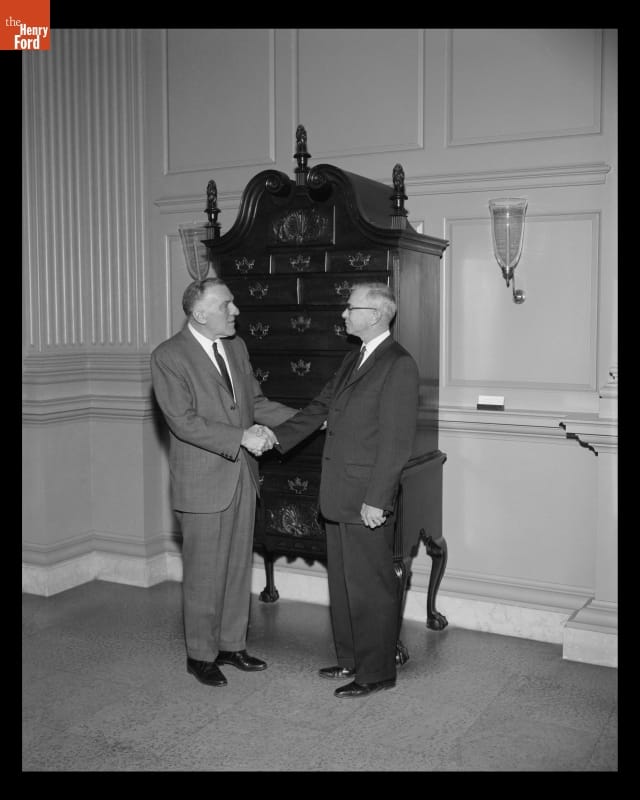
- William Bendix Visiting Henry Ford Museum, March 16, 1964 - Many famous individuals have visited Greenfield Village and Henry Ford Museum. Actors, authors, and artists have passed through the entrance gates; business leaders, royalty, politicians, and a host of others have toured the exhibits. Photographs by the institution's photographer were taken if the celebrity allowed it. Actor William Bendix, best known for his role as the bumbling Chester Riley, stopped by in 1964.
- March 16, 1964
- Collections - Artifact
William Bendix Visiting Henry Ford Museum, March 16, 1964
Many famous individuals have visited Greenfield Village and Henry Ford Museum. Actors, authors, and artists have passed through the entrance gates; business leaders, royalty, politicians, and a host of others have toured the exhibits. Photographs by the institution's photographer were taken if the celebrity allowed it. Actor William Bendix, best known for his role as the bumbling Chester Riley, stopped by in 1964.
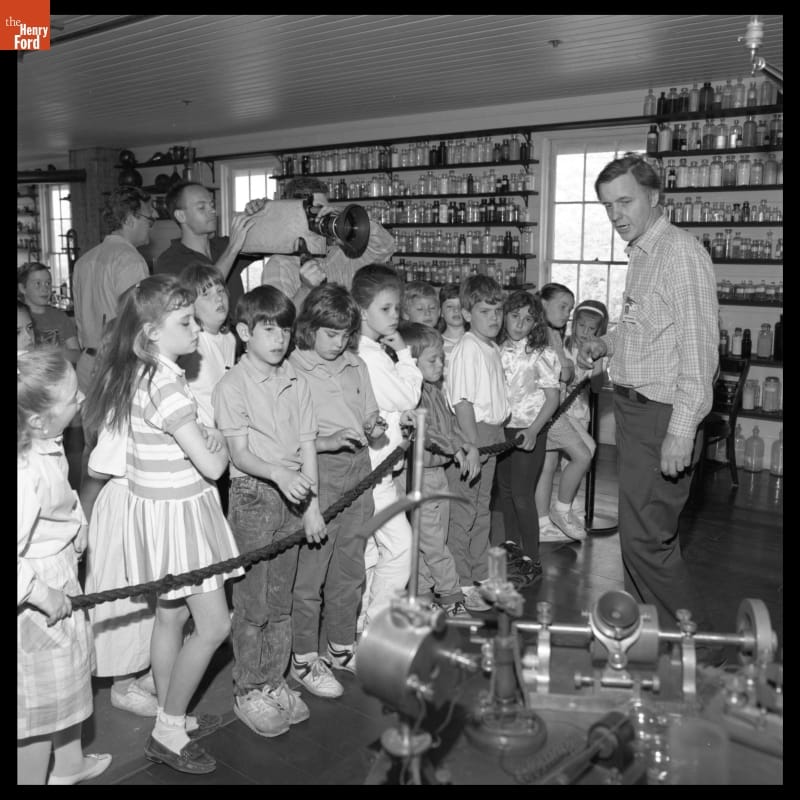
- Filming ABC-TV's World of Discovery at Menlo Park Laboratory in Greenfield Village, May 22, 1989 - In May 1989, ABC television crews filmed segments of <EM>World of Discovery - Inventors: Out of their Minds</EM> at the Henry Ford Museum and Greenfield Village. The show linked the experiences of late 20th-century inventors with Thomas Edison's innovative work. In one of the program's final segments, museum curator John Bowditch explains Edison's greatest invention -- the research laboratory -- to a group of students.
- May 22, 1989
- Collections - Artifact
Filming ABC-TV's World of Discovery at Menlo Park Laboratory in Greenfield Village, May 22, 1989
In May 1989, ABC television crews filmed segments of World of Discovery - Inventors: Out of their Minds at the Henry Ford Museum and Greenfield Village. The show linked the experiences of late 20th-century inventors with Thomas Edison's innovative work. In one of the program's final segments, museum curator John Bowditch explains Edison's greatest invention -- the research laboratory -- to a group of students.
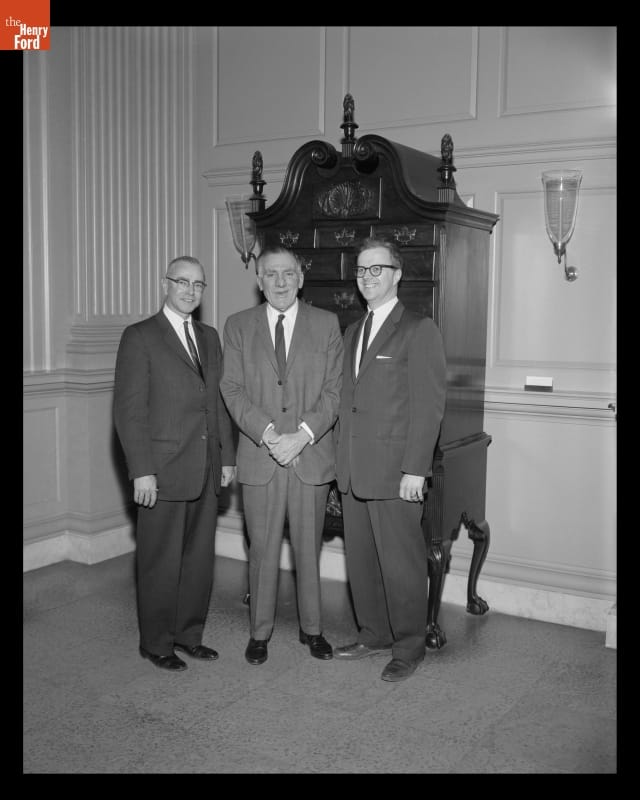
- William Bendix (center) Visiting Henry Ford Museum, March 16, 1964 - Many famous individuals have visited Greenfield Village and Henry Ford Museum. Actors, authors, and artists have passed through the entrance gates; business leaders, royalty, politicians, and a host of others have toured the exhibits. Photographs by the institution's photographer were taken if the celebrity allowed it. Actor William Bendix, best known for his role as the bumbling Chester Riley, stopped by in 1964.
- March 16, 1964
- Collections - Artifact
William Bendix (center) Visiting Henry Ford Museum, March 16, 1964
Many famous individuals have visited Greenfield Village and Henry Ford Museum. Actors, authors, and artists have passed through the entrance gates; business leaders, royalty, politicians, and a host of others have toured the exhibits. Photographs by the institution's photographer were taken if the celebrity allowed it. Actor William Bendix, best known for his role as the bumbling Chester Riley, stopped by in 1964.
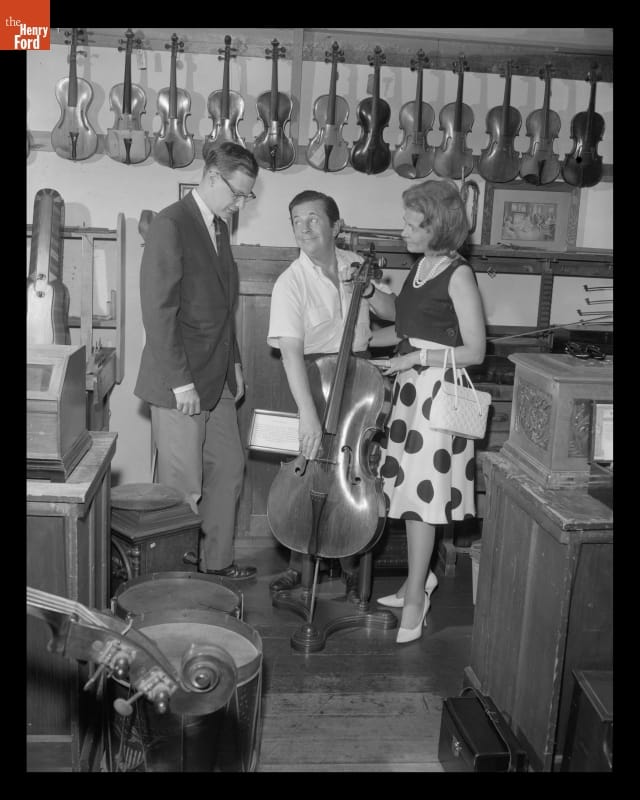
- Morey Amsterdam and Kay Amsterdam in the "Street of Shops" at Henry Ford Museum, July 22, 1964 - Many famous individuals have visited Greenfield Village and Henry Ford Museum over the years. Actors, authors, and artists have passed through the entrance gates; business leaders, royalty, politicians, and a host of others have toured the exhibits. Photographs by the institution's photographer were taken if the celebrity allowed it. Comedian and songwriter Morey Amsterdam and his wife Kay stopped by in 1964.
- July 22, 1964
- Collections - Artifact
Morey Amsterdam and Kay Amsterdam in the "Street of Shops" at Henry Ford Museum, July 22, 1964
Many famous individuals have visited Greenfield Village and Henry Ford Museum over the years. Actors, authors, and artists have passed through the entrance gates; business leaders, royalty, politicians, and a host of others have toured the exhibits. Photographs by the institution's photographer were taken if the celebrity allowed it. Comedian and songwriter Morey Amsterdam and his wife Kay stopped by in 1964.
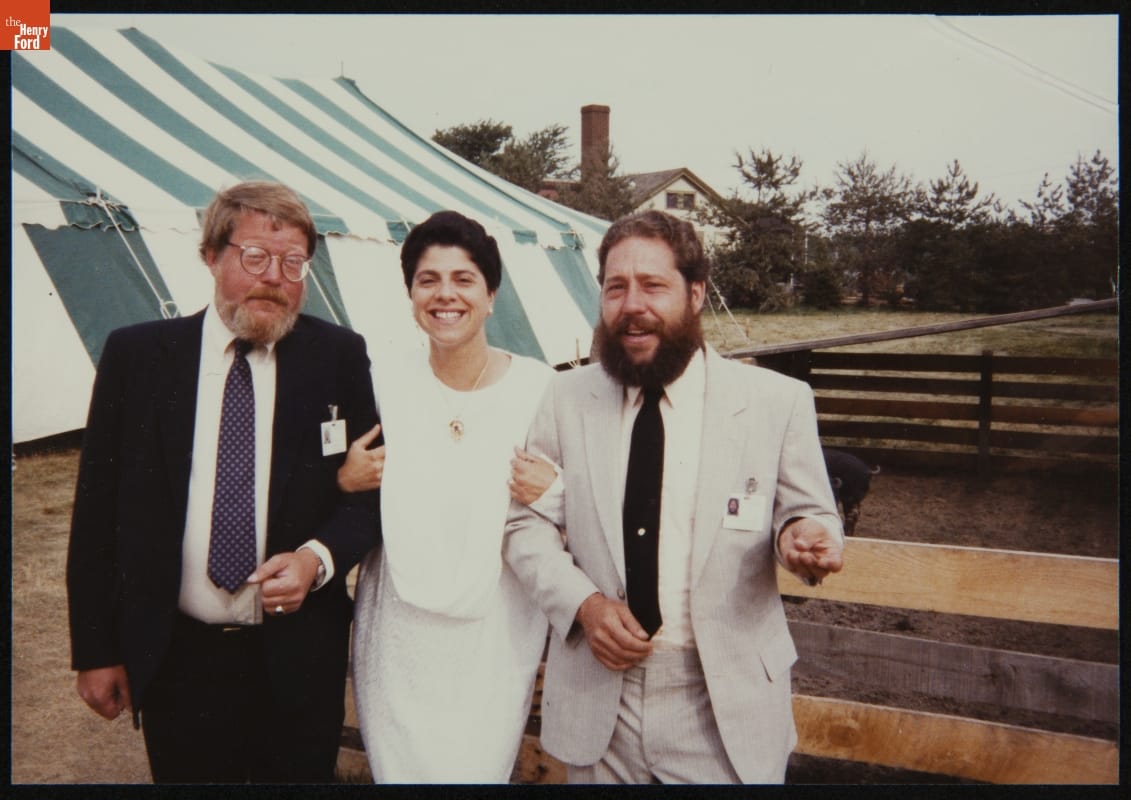
- Peter Cousins, Nancy Bryk, and Blake Hayes at the Firestone Farm Dedication, Greenfield Village, June 29, 1985 - On June 29, 1985, the newly installed Firestone Farm was dedicated in Greenfield Village. The Firestone family had donated their circa 1828 Columbiana County, Ohio, farmstead--boyhood home of Harvey Firestone, who later became a tire and rubber magnate and friend of Henry Ford--in 1983. Among the invited guests to the ceremonies were curators and staff of Henry Ford Museum and Greenfield Village.
- June 29, 1985
- Collections - Artifact
Peter Cousins, Nancy Bryk, and Blake Hayes at the Firestone Farm Dedication, Greenfield Village, June 29, 1985
On June 29, 1985, the newly installed Firestone Farm was dedicated in Greenfield Village. The Firestone family had donated their circa 1828 Columbiana County, Ohio, farmstead--boyhood home of Harvey Firestone, who later became a tire and rubber magnate and friend of Henry Ford--in 1983. Among the invited guests to the ceremonies were curators and staff of Henry Ford Museum and Greenfield Village.
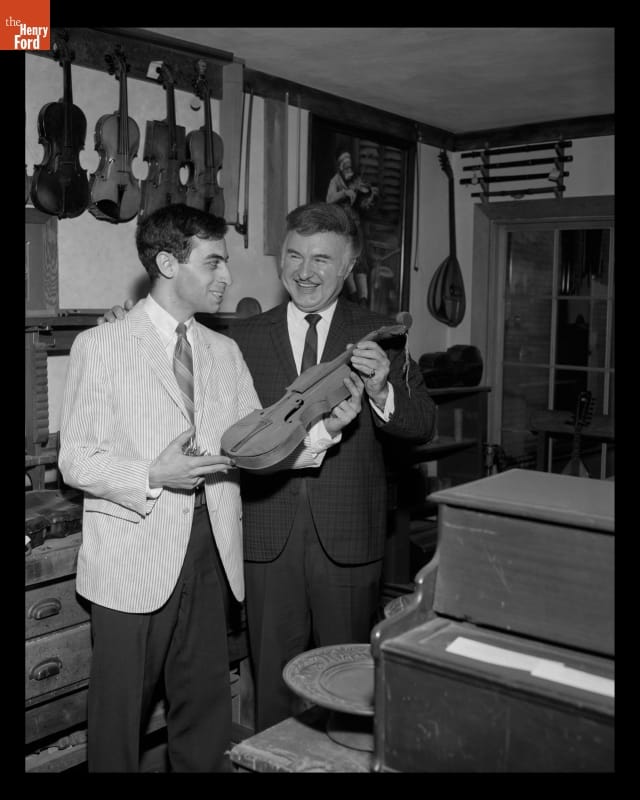
- George Liberace Visiting Henry Ford Museum's "Street of Shops," March 20, 1969 - Many famous individuals have visited Greenfield Village and Henry Ford Museum. Actors, authors, and artists have passed through the entrance gates; business leaders, royalty, politicians, and a host of others have toured the exhibits. Photographs by the institution's photographer were taken if the celebrity allowed it. George Liberace, brother of pianist and showman Liberace and a musician in his own right, explored the museum's violin exhibits.
- March 20, 1969
- Collections - Artifact
George Liberace Visiting Henry Ford Museum's "Street of Shops," March 20, 1969
Many famous individuals have visited Greenfield Village and Henry Ford Museum. Actors, authors, and artists have passed through the entrance gates; business leaders, royalty, politicians, and a host of others have toured the exhibits. Photographs by the institution's photographer were taken if the celebrity allowed it. George Liberace, brother of pianist and showman Liberace and a musician in his own right, explored the museum's violin exhibits.
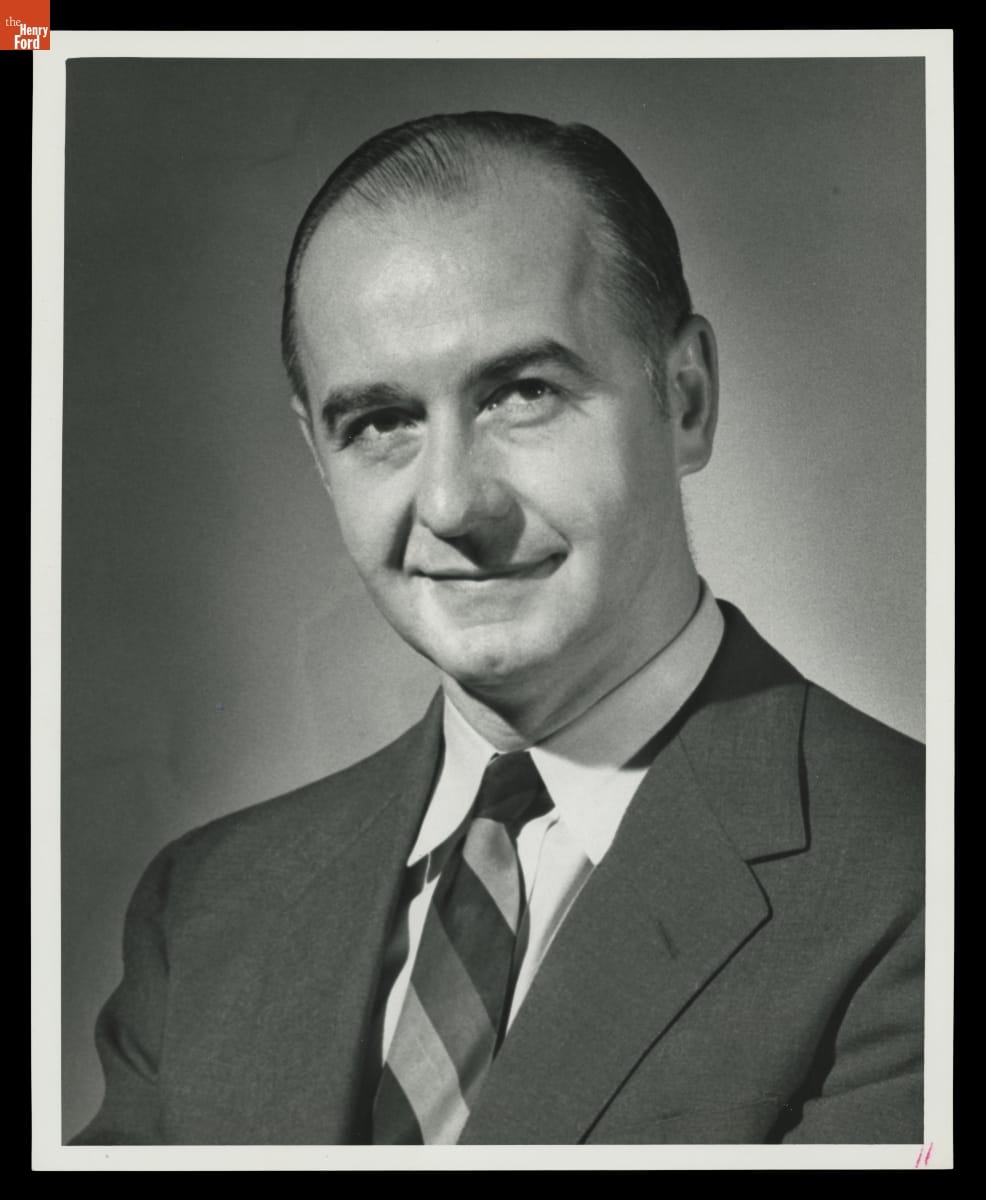
- Donald A. Shelley, 1954 - Donald A. Shelley earned advanced degrees in art history from Harvard and New York University. He became fine arts curator at the Edison Institute -- today's The Henry Ford -- in 1952, and two years later he was appointed executive director. Shelley's academic training and outlook helped professionalize the organization. He led the Edison Institute until 1976.
- 1954
- Collections - Artifact
Donald A. Shelley, 1954
Donald A. Shelley earned advanced degrees in art history from Harvard and New York University. He became fine arts curator at the Edison Institute -- today's The Henry Ford -- in 1952, and two years later he was appointed executive director. Shelley's academic training and outlook helped professionalize the organization. He led the Edison Institute until 1976.
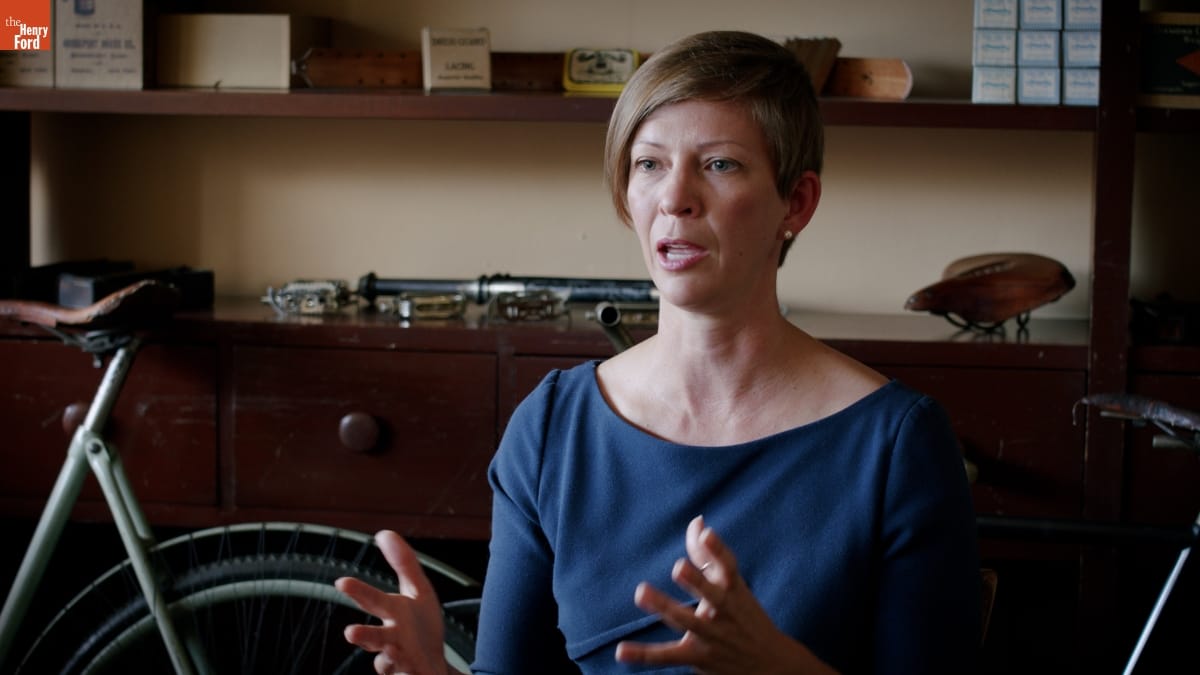
- "Reflections on the Residency," Clip for Interview with Jessica Robinson, August 28, 2020 - Jessica Robinson, co-founder of Detroit Mobility Lab, Michigan Mobility Institute, and Assembly Ventures, was the Spring 2020 Entrepreneur-in-Residence at The Henry Ford, funded by the William Davidson Foundation Initiative for Entrepreneurship. During her interview, Robinson describes how her organizations -- and her residency projects -- encourage technological education in the midst of dramatic new transportation technologies.
- August 28, 2020
- Collections - Artifact
"Reflections on the Residency," Clip for Interview with Jessica Robinson, August 28, 2020
Jessica Robinson, co-founder of Detroit Mobility Lab, Michigan Mobility Institute, and Assembly Ventures, was the Spring 2020 Entrepreneur-in-Residence at The Henry Ford, funded by the William Davidson Foundation Initiative for Entrepreneurship. During her interview, Robinson describes how her organizations -- and her residency projects -- encourage technological education in the midst of dramatic new transportation technologies.