
Search
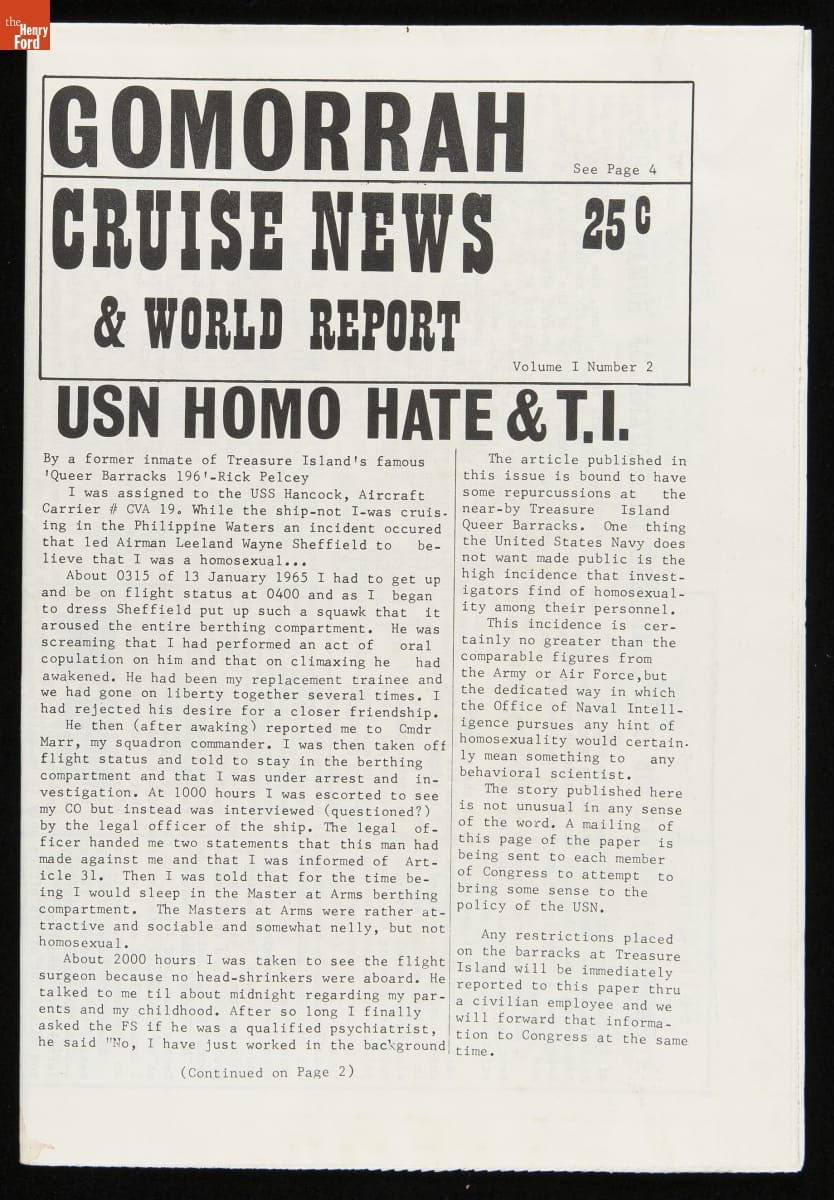
- Cruise News & World Report, Volume I, Number 2, circa 1965 - LGBTQ+ newspapers became more available beginning in the 1950s as organizations added print media to their activist tool kit. These newspapers were a regionally focused way to rally the LGBTQ+ community, share information, and fight discrimination. Many of these newspapers came to rely on gay bars as a location for disbursement as they were among the only private gay spaces in many cities.
- circa 1965
- Collections - Artifact
Cruise News & World Report, Volume I, Number 2, circa 1965
LGBTQ+ newspapers became more available beginning in the 1950s as organizations added print media to their activist tool kit. These newspapers were a regionally focused way to rally the LGBTQ+ community, share information, and fight discrimination. Many of these newspapers came to rely on gay bars as a location for disbursement as they were among the only private gay spaces in many cities.
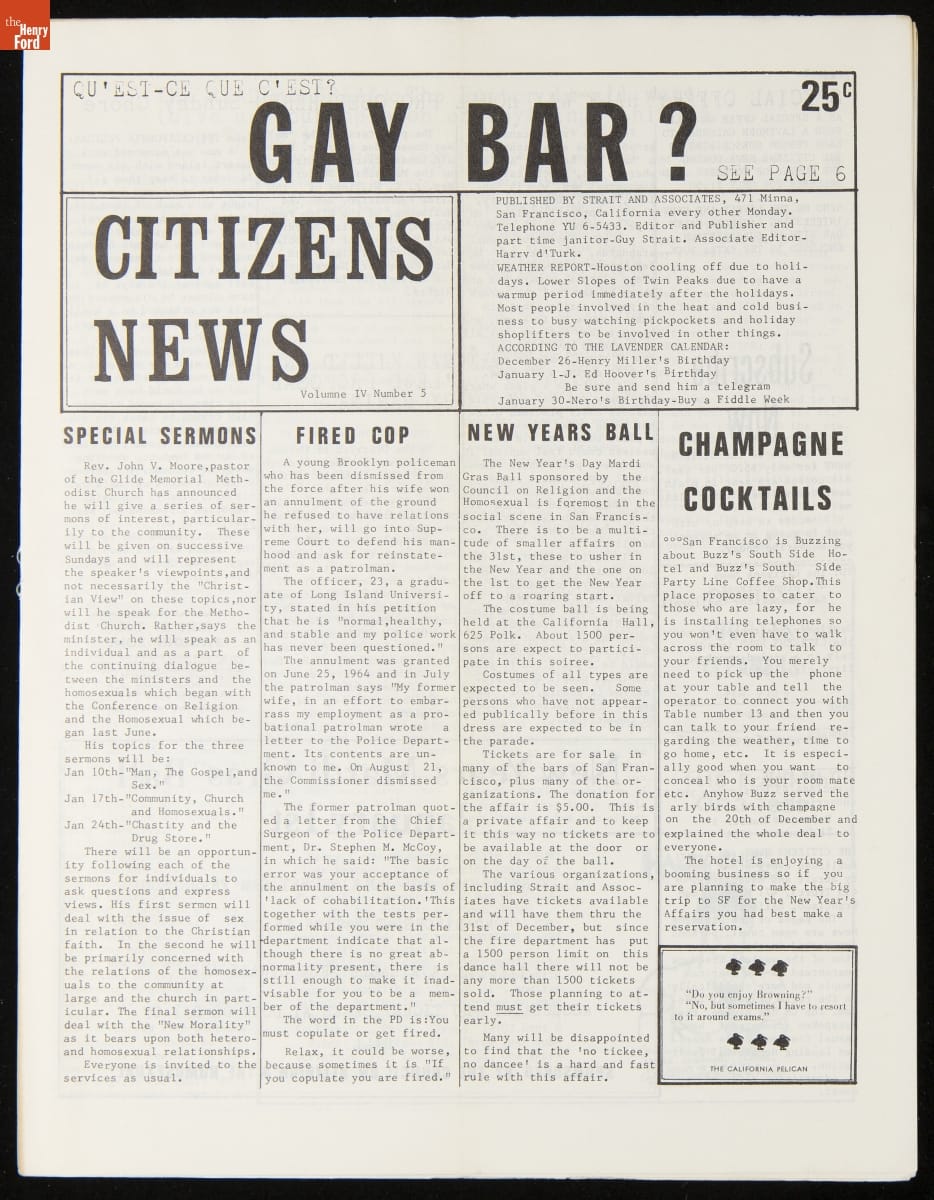
- Citizens News, Volume IV, Number 5, 1964-1965 - LGBTQ+ newspapers became more available beginning in the 1950s as organizations added print media to their activist tool kit. These newspapers were a regionally focused way to rally the LGBTQ+ community, share information, and fight discrimination. Many of these newspapers came to rely on gay bars as a location for disbursement as they were among the only private gay spaces in many cities.
- 1964-1965
- Collections - Artifact
Citizens News, Volume IV, Number 5, 1964-1965
LGBTQ+ newspapers became more available beginning in the 1950s as organizations added print media to their activist tool kit. These newspapers were a regionally focused way to rally the LGBTQ+ community, share information, and fight discrimination. Many of these newspapers came to rely on gay bars as a location for disbursement as they were among the only private gay spaces in many cities.
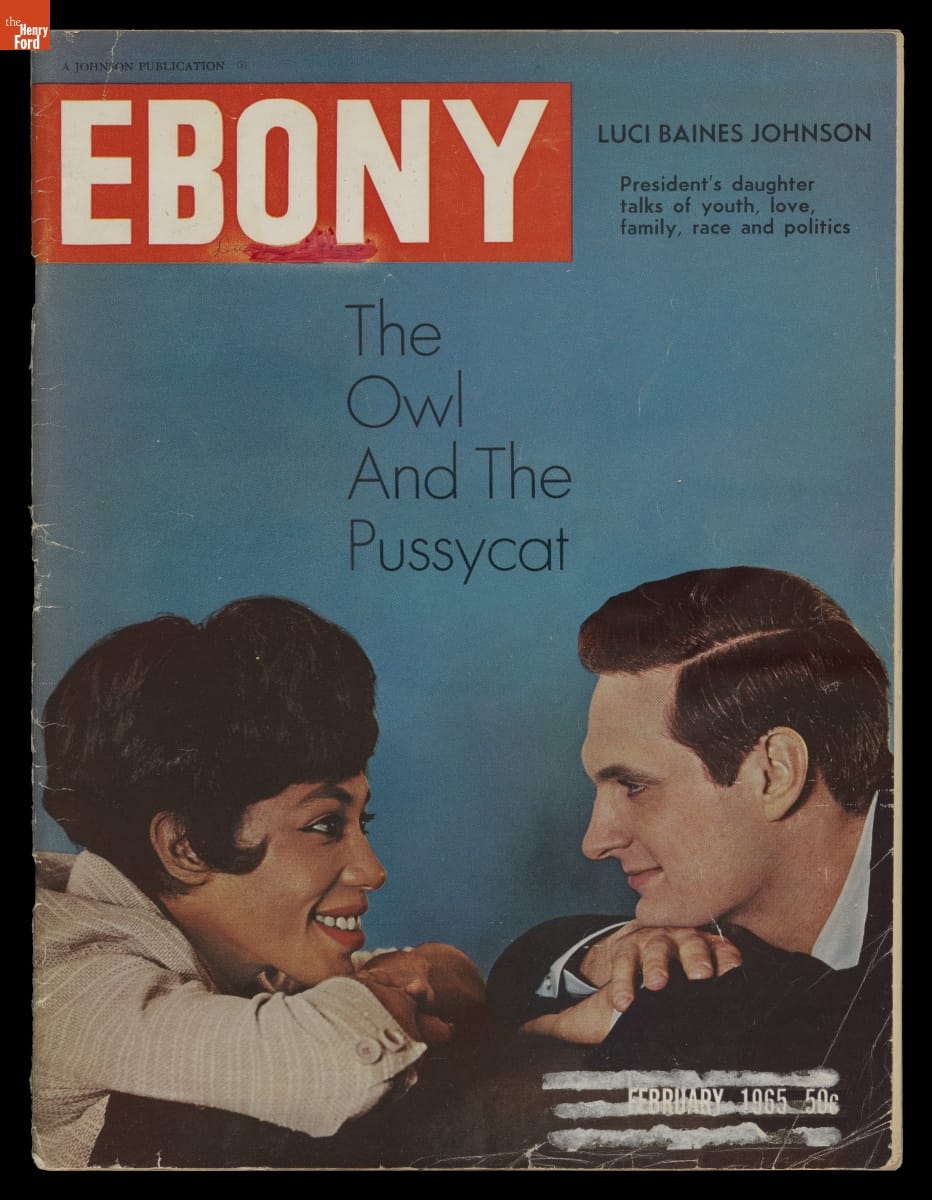
- "Ebony," February 1965 -
- February 01, 1965
- Collections - Artifact
"Ebony," February 1965
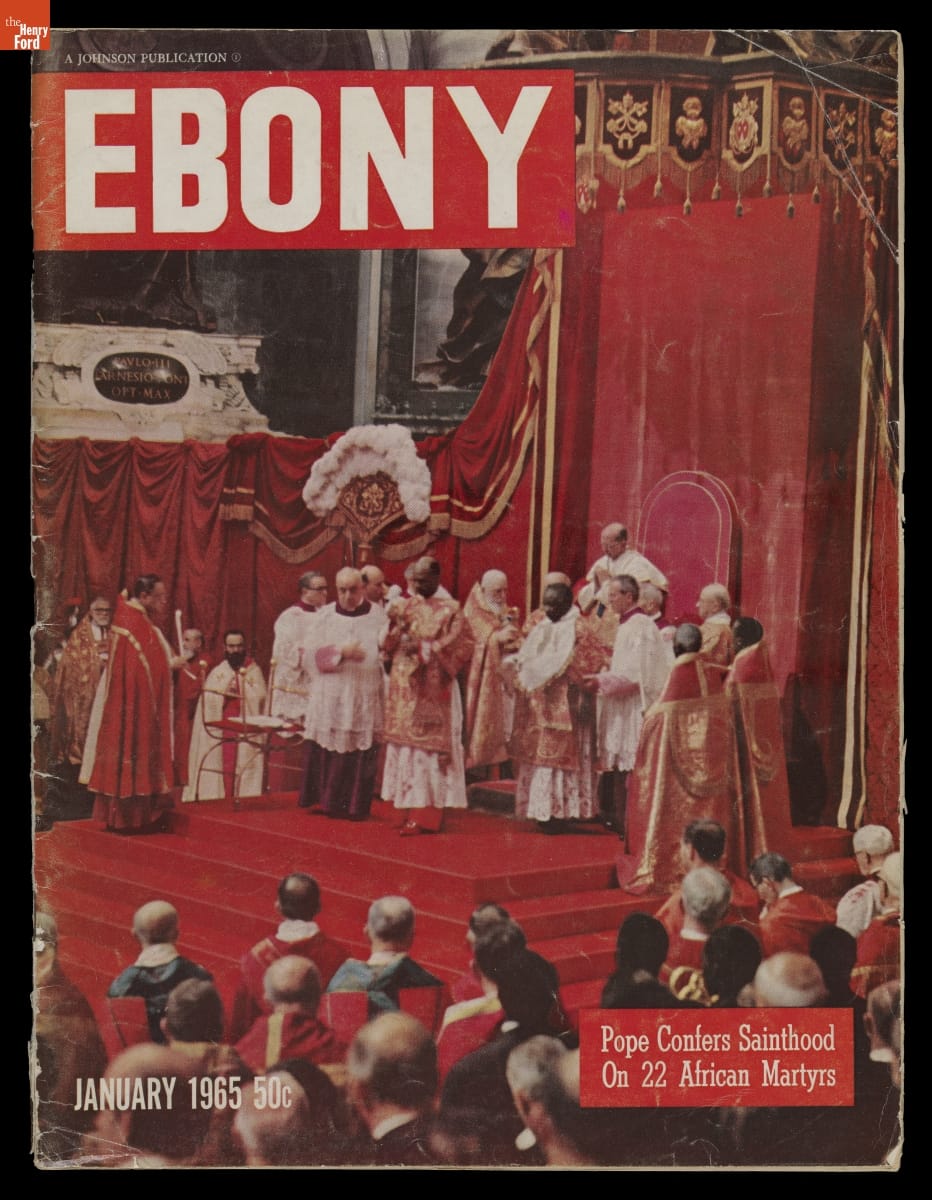
- "Ebony," January 1965 -
- January 01, 1965
- Collections - Artifact
"Ebony," January 1965
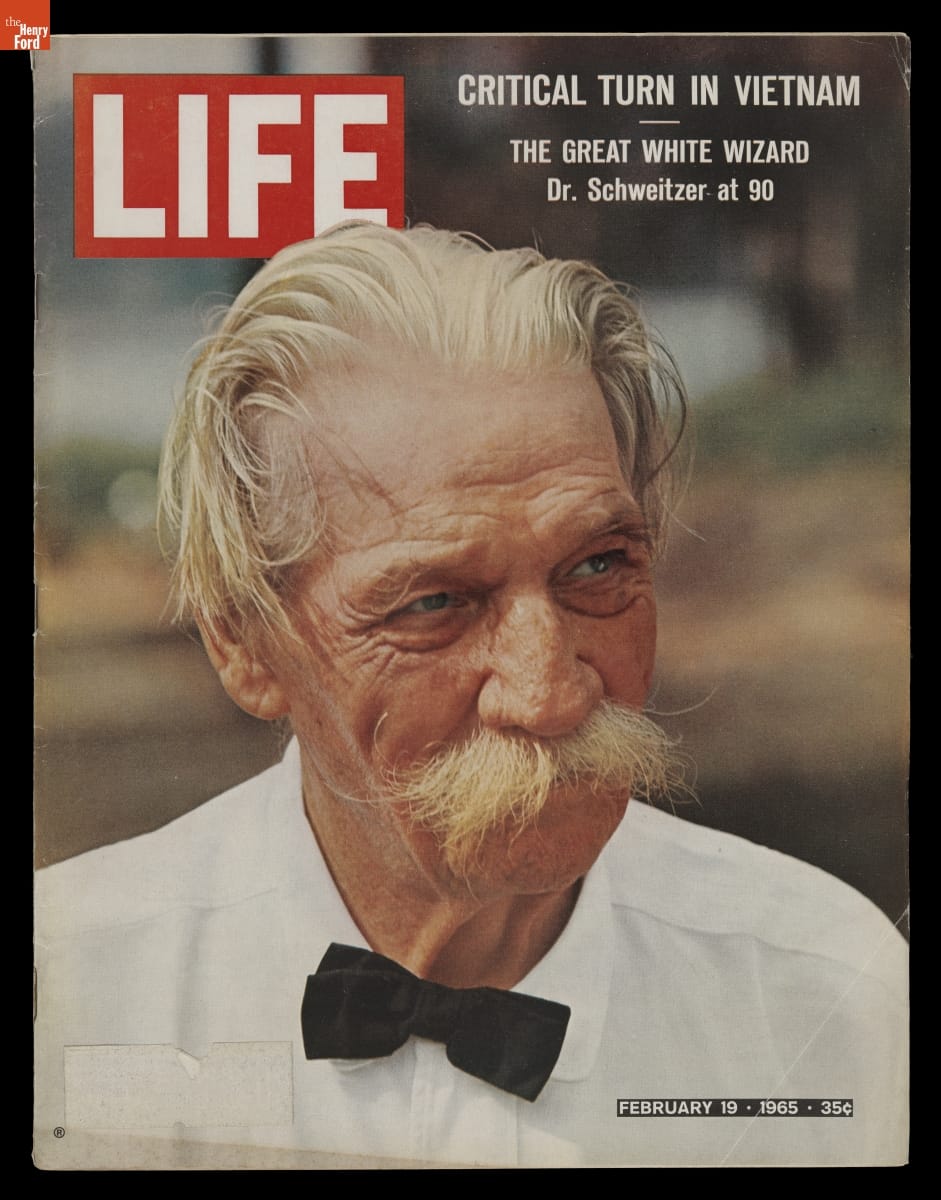
- "Life," February 19, 1965 - Henry Luce re-envisioned Life magazine after he purchased it in 1936. Under Luce's control, Life magazine became America's first all-photographic weekly news magazine, informing Americans on the country's politics, war, race, and national identity through images. Its popularity boomed; by 1970, it had more than eight million subscribers.
- February 19, 1965
- Collections - Artifact
"Life," February 19, 1965
Henry Luce re-envisioned Life magazine after he purchased it in 1936. Under Luce's control, Life magazine became America's first all-photographic weekly news magazine, informing Americans on the country's politics, war, race, and national identity through images. Its popularity boomed; by 1970, it had more than eight million subscribers.
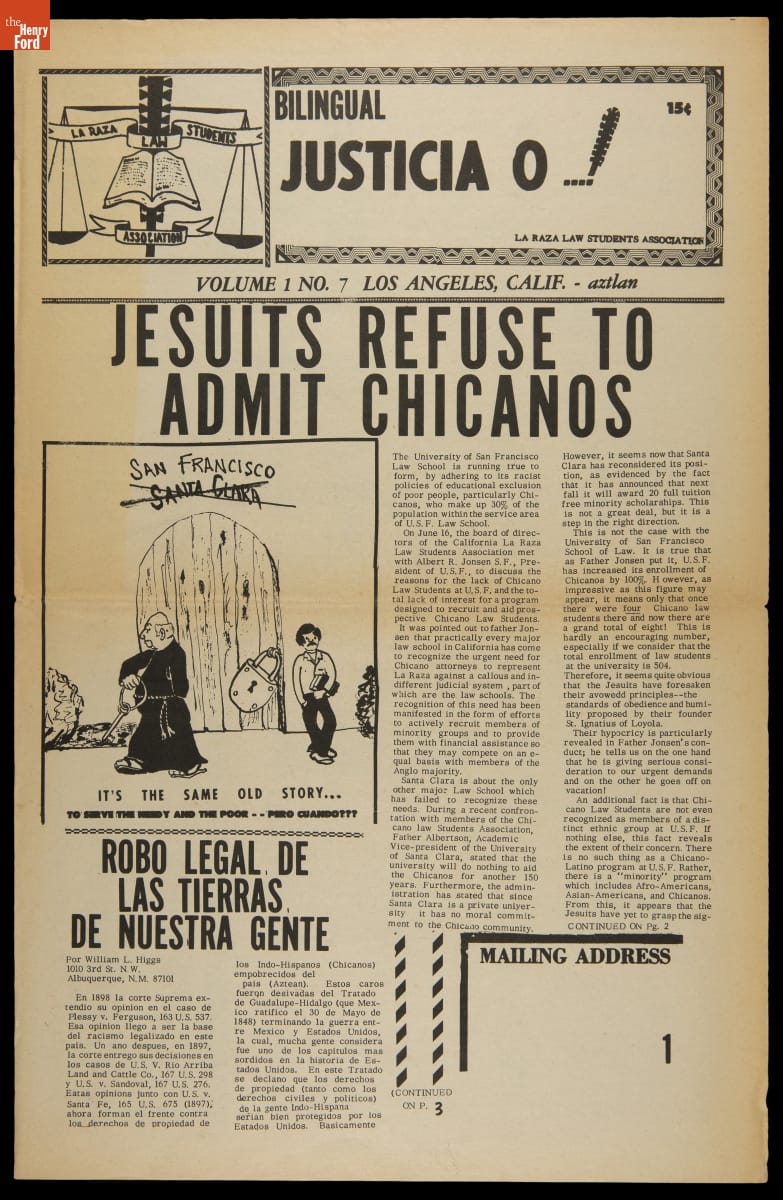
- "Justicia O..!" Vol. 1 No. 7 -
- Collections - Artifact
"Justicia O..!" Vol. 1 No. 7
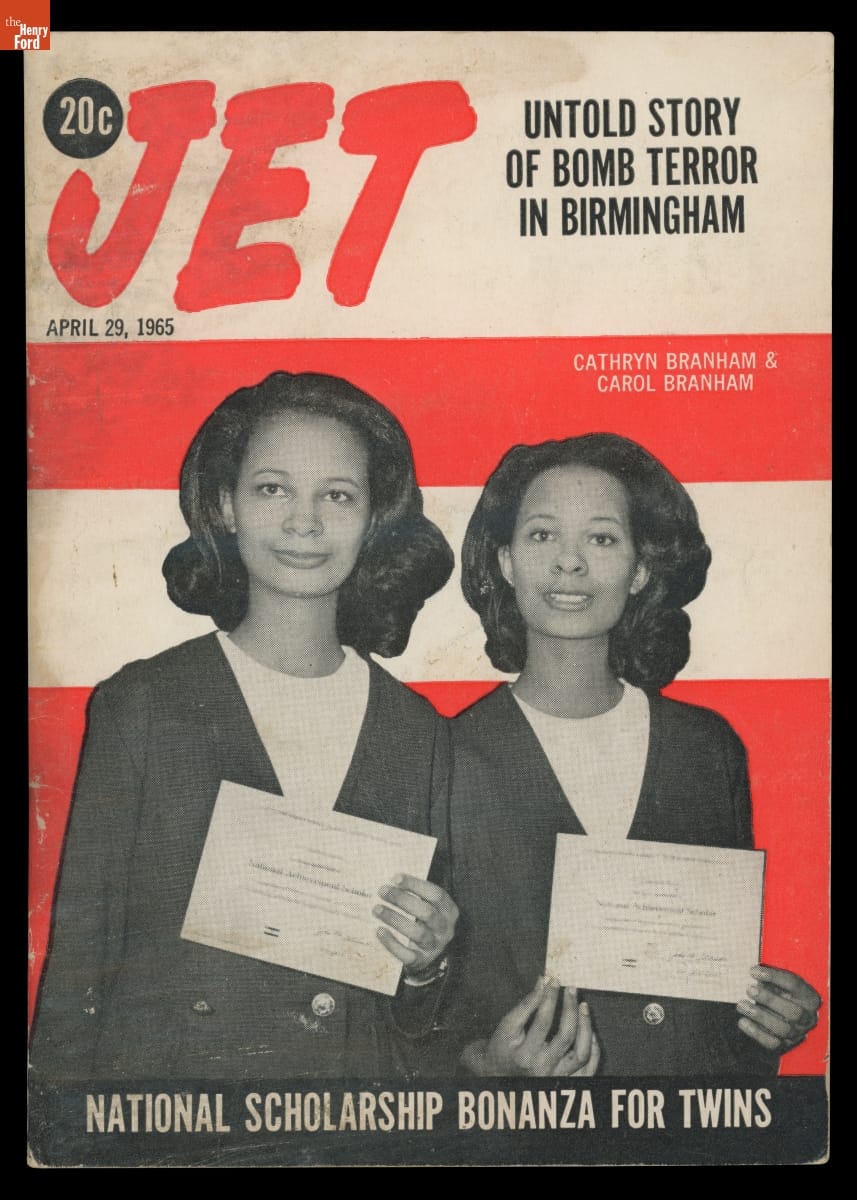
- "Jet" Magazine, April 29, 1965 - John H. Johnson, head of the Chicago-based Johnson Publishing Company, founded Jet magazine in November 1951. Originally billed as "The Weekly Negro News Magazine," the publication printed news, culture, and entertainment articles related to the African American community. Jet also chronicled the civil rights movement from its earliest years, addressing racial violence and inequality in American society.
- April 29, 1965
- Collections - Artifact
"Jet" Magazine, April 29, 1965
John H. Johnson, head of the Chicago-based Johnson Publishing Company, founded Jet magazine in November 1951. Originally billed as "The Weekly Negro News Magazine," the publication printed news, culture, and entertainment articles related to the African American community. Jet also chronicled the civil rights movement from its earliest years, addressing racial violence and inequality in American society.
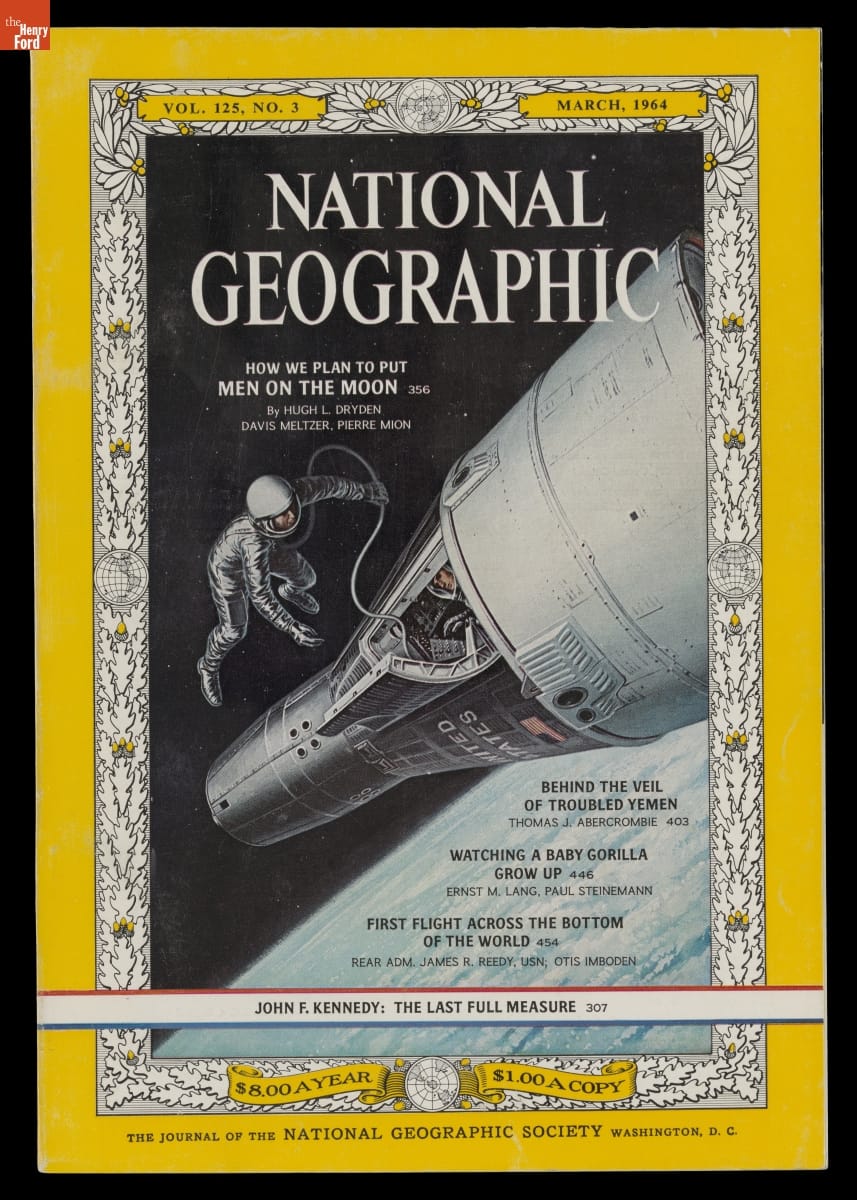
- "National Geographic," Vol. 125, No. 3, March 1964 - The National Geographic Society published the first issue of its magazine in the fall of 1888, within a year of its founding. <i>National Geographic</i>, initially a scholarly magazine for the Society's members, would not include a photograph in its pages until 1905; its distinctive yellow border would not appear until 1910. By 2024, more than one-and-a-half million subscribers received a digital or print version.
- March 01, 1964
- Collections - Artifact
"National Geographic," Vol. 125, No. 3, March 1964
The National Geographic Society published the first issue of its magazine in the fall of 1888, within a year of its founding. National Geographic, initially a scholarly magazine for the Society's members, would not include a photograph in its pages until 1905; its distinctive yellow border would not appear until 1910. By 2024, more than one-and-a-half million subscribers received a digital or print version.
- "Justicia O..!" Vol. 1 No. 1, November 1970 -
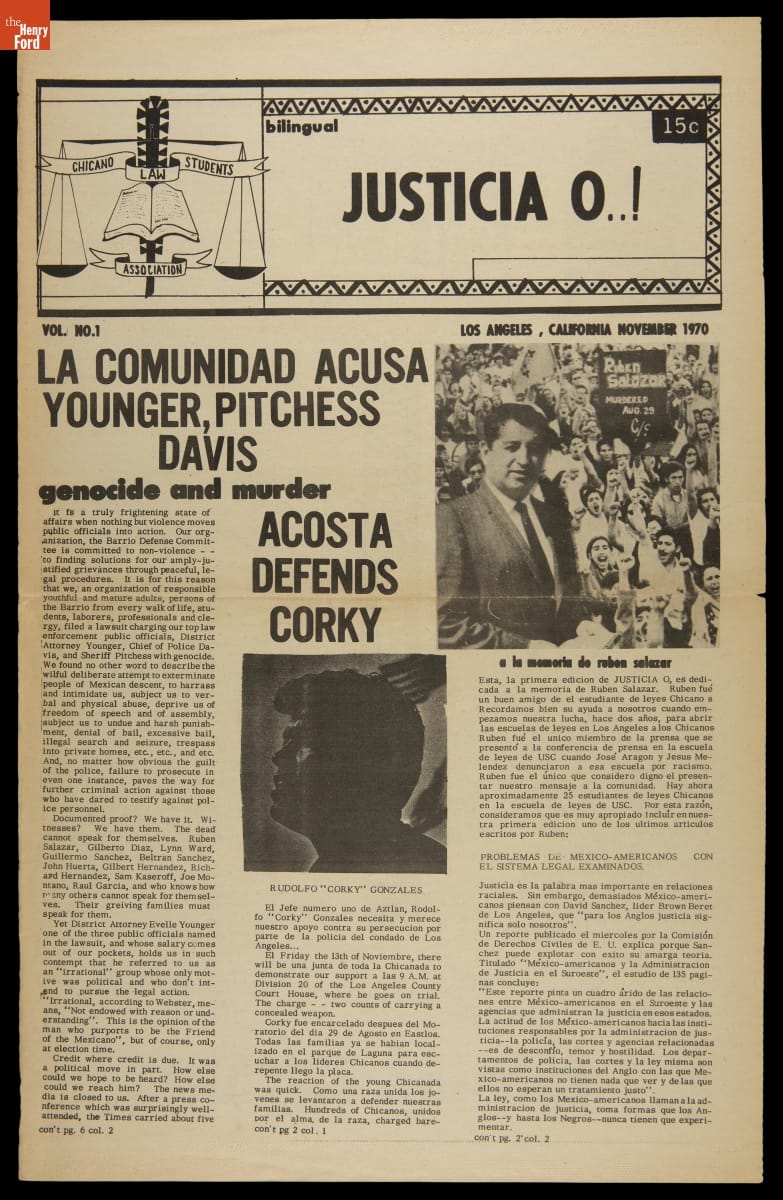
- November 01, 1970
- Collections - Artifact
"Justicia O..!" Vol. 1 No. 1, November 1970
- "Justicia O...!" Vol. 1 No. 2, December 1970 -
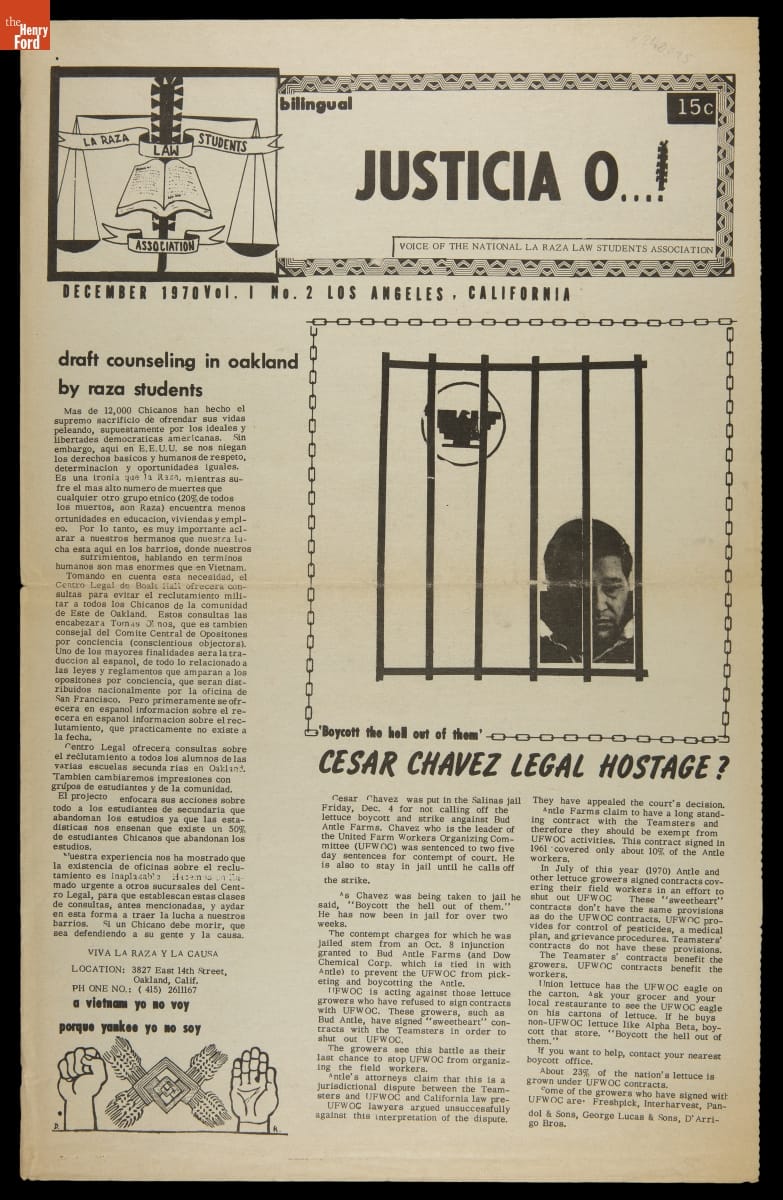
- December 01, 1970
- Collections - Artifact
"Justicia O...!" Vol. 1 No. 2, December 1970