
Search
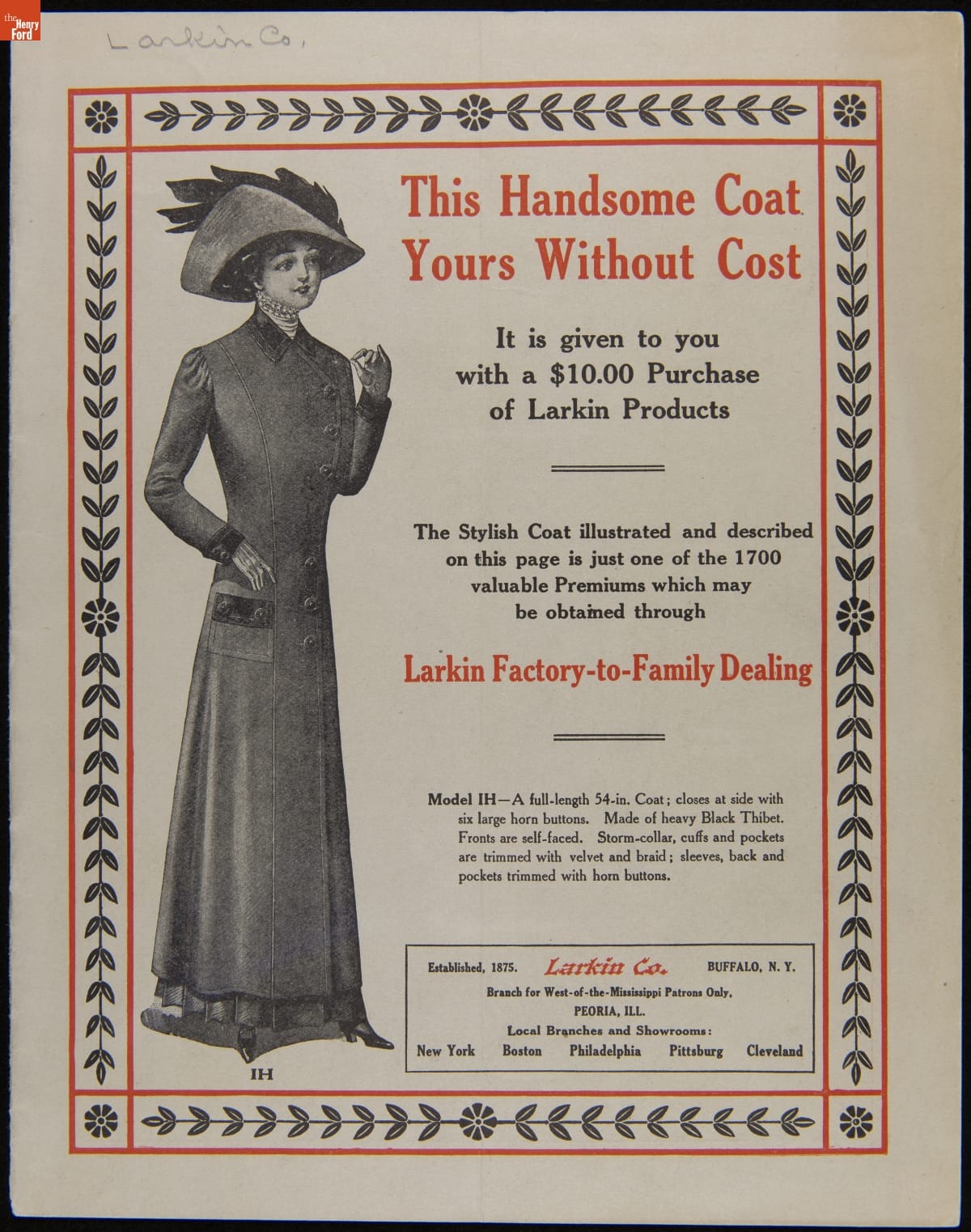
- Larkin Company Trade Catalog, "This Handsome Coat, Yours Without Cost," circa 1910 - John D. Larkin established a soap manufacturing company in 1875. He hired his brother-in-law, Elbert Hubbard, as a salesman. Hubbard developed "The Larkin Idea," a plan that sold goods directly to consumers through mail-order catalogs and offered incentivizing giveaways. It was a success. By the early 1900s, Larkin's catalogs contained pages of products and even more pages of premiums from which customers could choose.
- circa 1910
- Collections - Artifact
Larkin Company Trade Catalog, "This Handsome Coat, Yours Without Cost," circa 1910
John D. Larkin established a soap manufacturing company in 1875. He hired his brother-in-law, Elbert Hubbard, as a salesman. Hubbard developed "The Larkin Idea," a plan that sold goods directly to consumers through mail-order catalogs and offered incentivizing giveaways. It was a success. By the early 1900s, Larkin's catalogs contained pages of products and even more pages of premiums from which customers could choose.
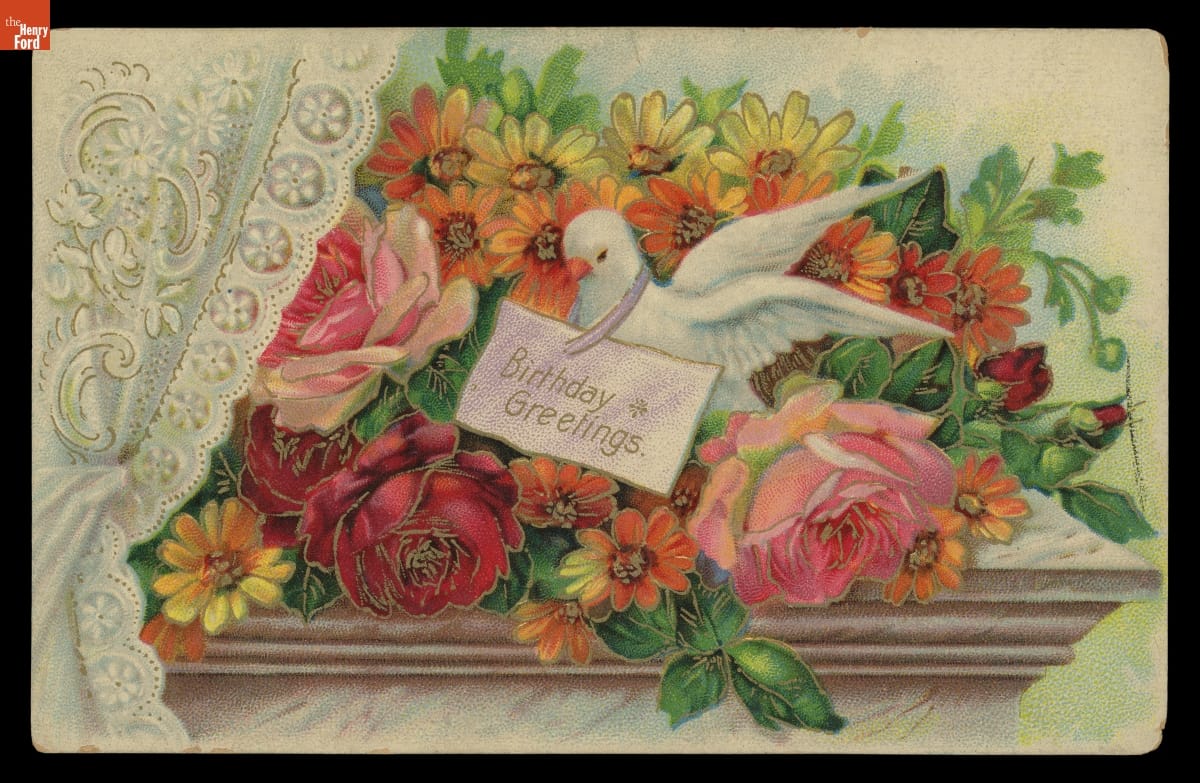
- "Birthday Greetings," Bird in Flower Arrangement, circa 1910 -
- circa 1910
- Collections - Artifact
"Birthday Greetings," Bird in Flower Arrangement, circa 1910
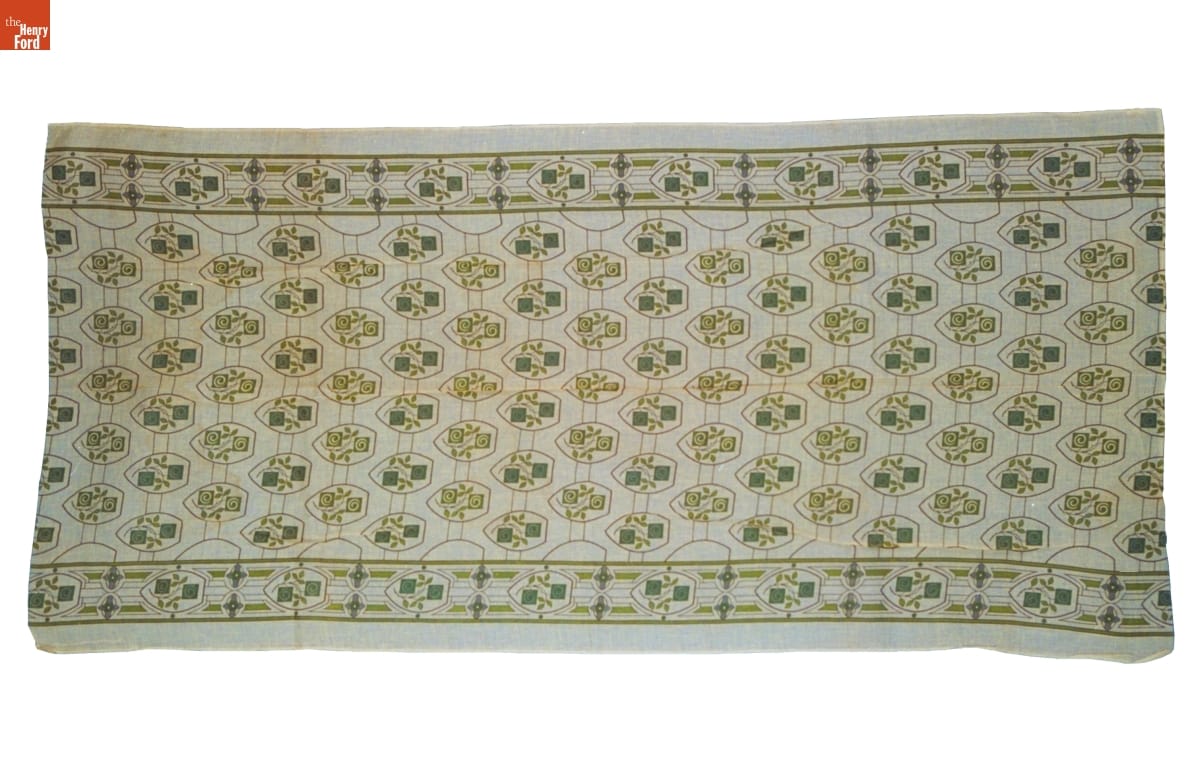
- Drapery Panel, circa 1910 - Textiles were an integral part of the Arts and Crafts interior. Designers emphasized the use of stylized geometrical motifs to harmonize with furniture, ceramics, and artwork. The ideal was to create a simple, yet unified interior environment, which was a reaction against "fussy" Victorian interiors.
- circa 1910
- Collections - Artifact
Drapery Panel, circa 1910
Textiles were an integral part of the Arts and Crafts interior. Designers emphasized the use of stylized geometrical motifs to harmonize with furniture, ceramics, and artwork. The ideal was to create a simple, yet unified interior environment, which was a reaction against "fussy" Victorian interiors.
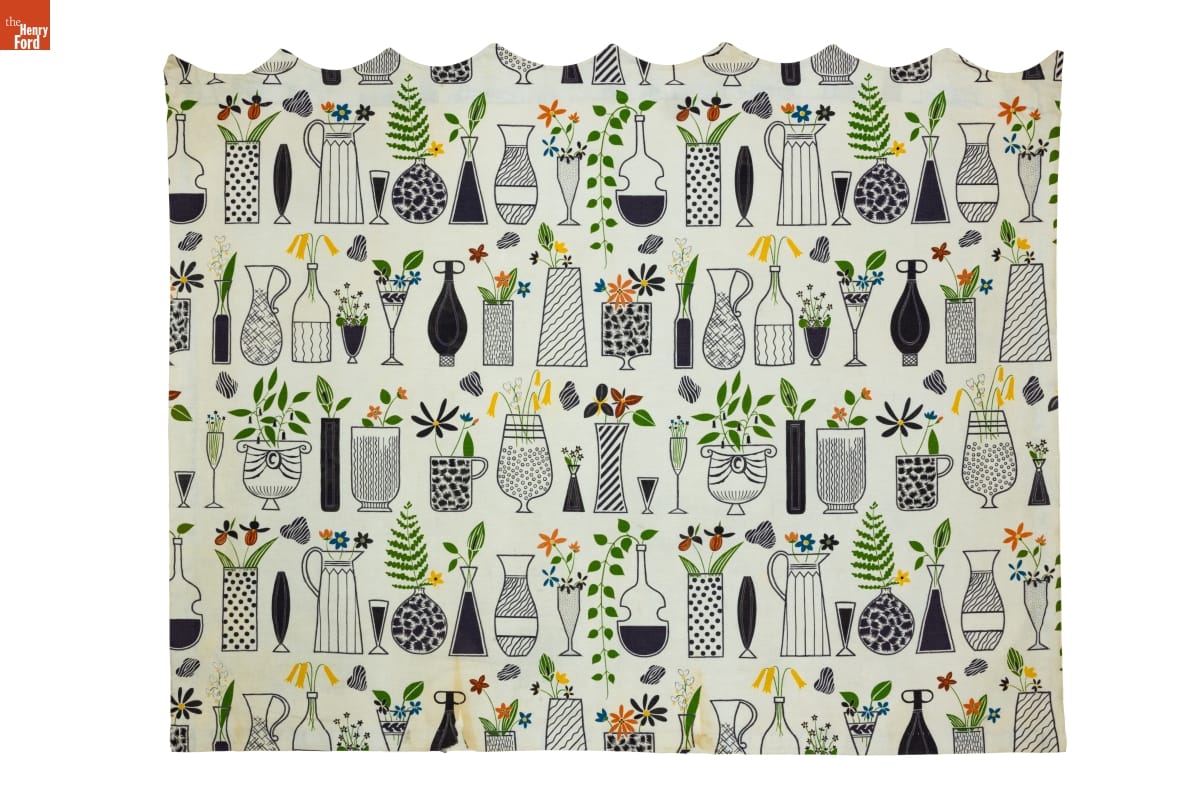
- "The Curio Cabinet" Curtain Panel, circa 1952 - In 1952, artist Doris Lee, in collaboration with Associated American Artists (AAA), produced textile designs for Riverdale Fabric Company. <em>Curio Cabinet</em>, based on one of her earlier paintings, became Lee's most recognizable pattern. The design, available in six colorways, was sold nationally through major department stores, including Macy's. Lee would later produce other textiles for M. Lowenstein & Sons, another AAA collaboration.
- circa 1952
- Collections - Artifact
"The Curio Cabinet" Curtain Panel, circa 1952
In 1952, artist Doris Lee, in collaboration with Associated American Artists (AAA), produced textile designs for Riverdale Fabric Company. Curio Cabinet, based on one of her earlier paintings, became Lee's most recognizable pattern. The design, available in six colorways, was sold nationally through major department stores, including Macy's. Lee would later produce other textiles for M. Lowenstein & Sons, another AAA collaboration.
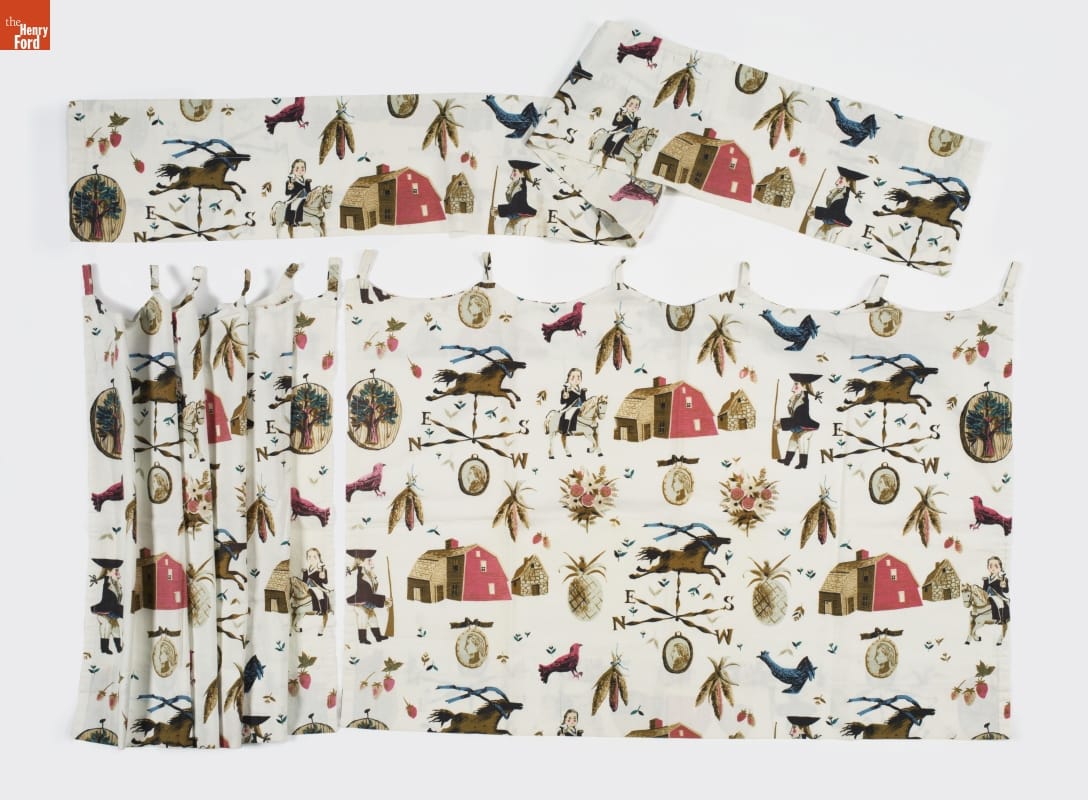
- Curtains with Valance, 1957-1960 -
- 1957-1960
- Collections - Artifact
Curtains with Valance, 1957-1960