
Search
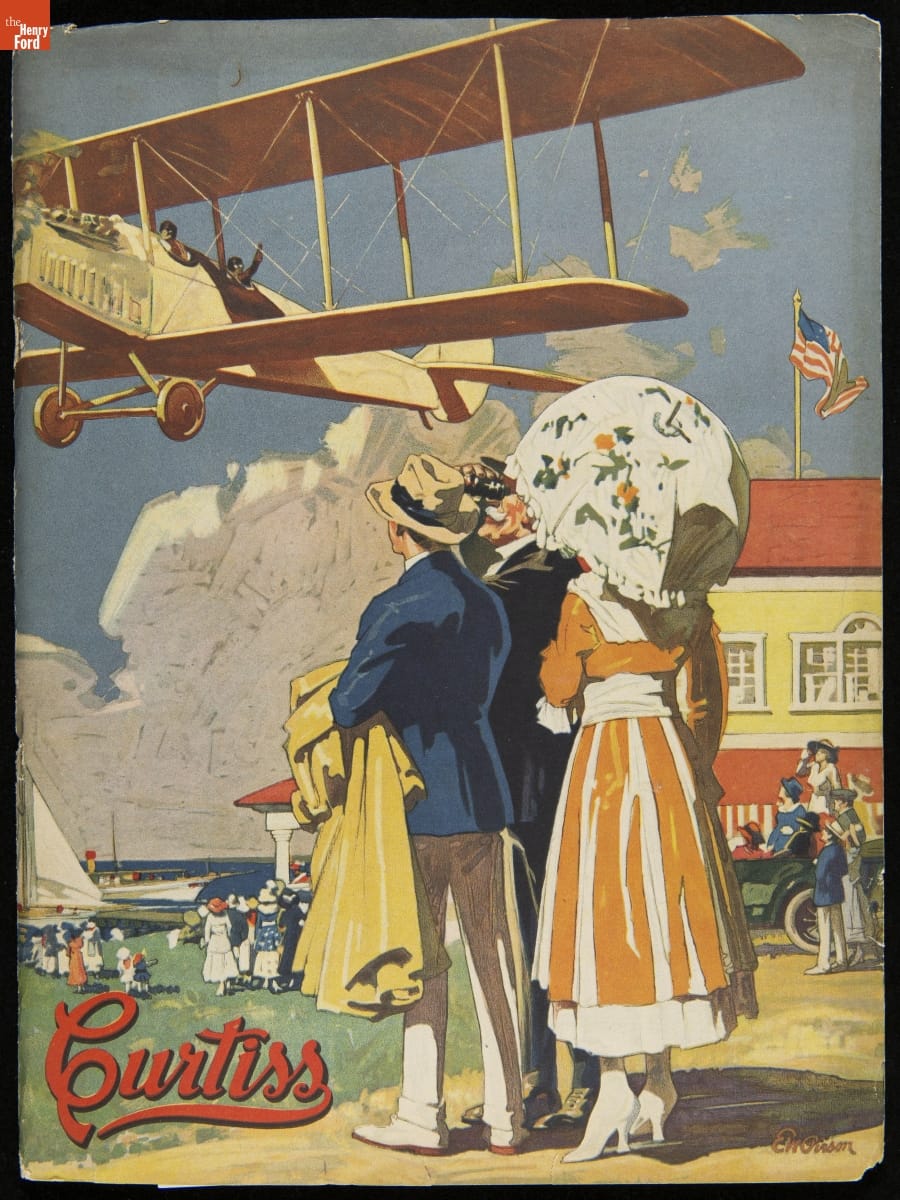
- Curtiss Aeroplane Co. Trade Catalog, "Curtiss Flying Boats, Aeronautical Motors, Aeroplanes, Hydroaeroplanes," 1917 - Glenn Curtiss established what would become the Curtiss Aeroplane and Motor Company in his hometown of Hammondsport, New York, in 1909. As military orders soared during World War I, Curtiss relocated the company to Buffalo, New York, in 1916. Curtiss's firm was acquired by Willys-Overland the following year, and it merged with the Wright Company in 1929.
- 1917
- Collections - Artifact
Curtiss Aeroplane Co. Trade Catalog, "Curtiss Flying Boats, Aeronautical Motors, Aeroplanes, Hydroaeroplanes," 1917
Glenn Curtiss established what would become the Curtiss Aeroplane and Motor Company in his hometown of Hammondsport, New York, in 1909. As military orders soared during World War I, Curtiss relocated the company to Buffalo, New York, in 1916. Curtiss's firm was acquired by Willys-Overland the following year, and it merged with the Wright Company in 1929.
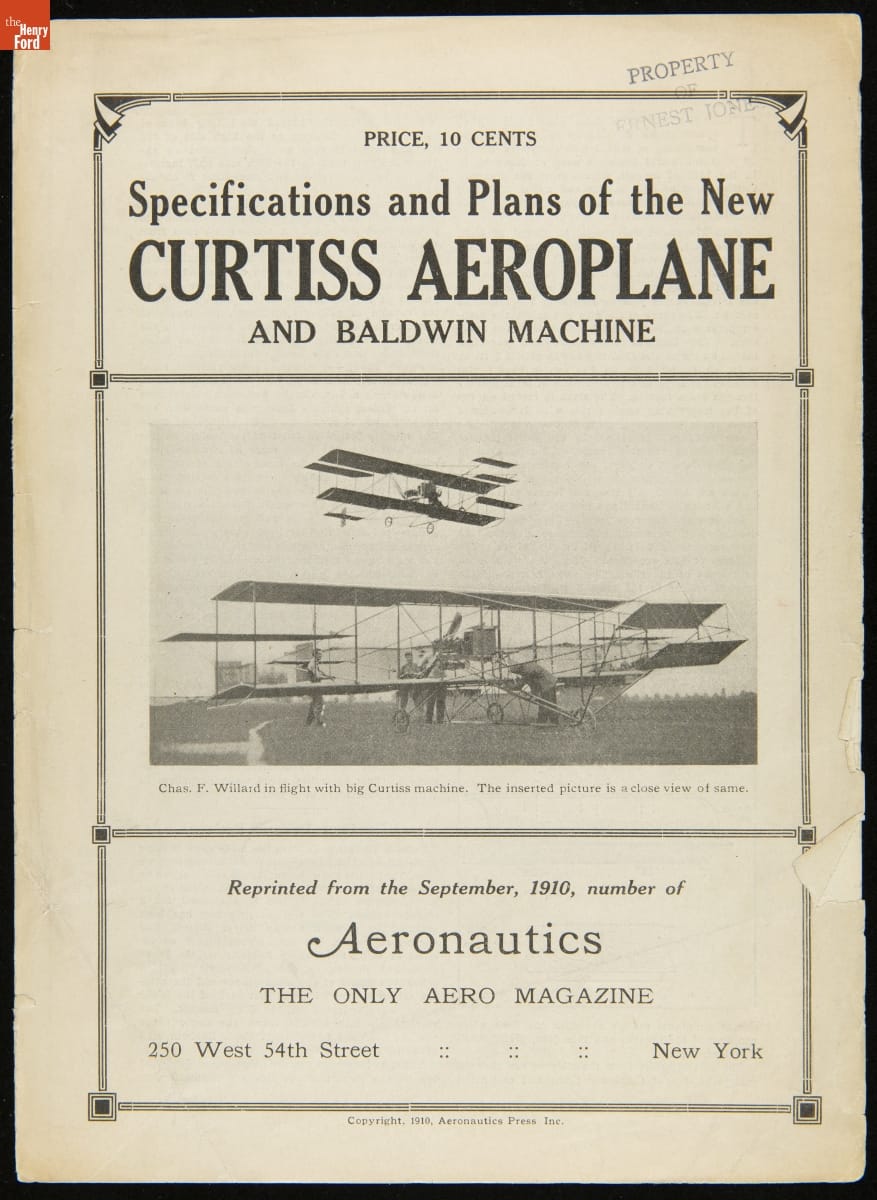
- Specifications and Plans of the New Curtiss Aeroplane and Baldwin Machine, 1910 - This article, reprinted from the September 1910 issue of <em>Aeronautics</em> magazine, included plans for biplanes designed by early American aviators Glenn Curtiss and Thomas Baldwin. Work with Baldwin (who is better known as a pioneering balloonist and airship builder) sparked Curtiss's interest in aviation. Curtiss helped establish the American aircraft industry and is remembered as an architect of aviation infrastructure.
- 1910
- Collections - Artifact
Specifications and Plans of the New Curtiss Aeroplane and Baldwin Machine, 1910
This article, reprinted from the September 1910 issue of Aeronautics magazine, included plans for biplanes designed by early American aviators Glenn Curtiss and Thomas Baldwin. Work with Baldwin (who is better known as a pioneering balloonist and airship builder) sparked Curtiss's interest in aviation. Curtiss helped establish the American aircraft industry and is remembered as an architect of aviation infrastructure.
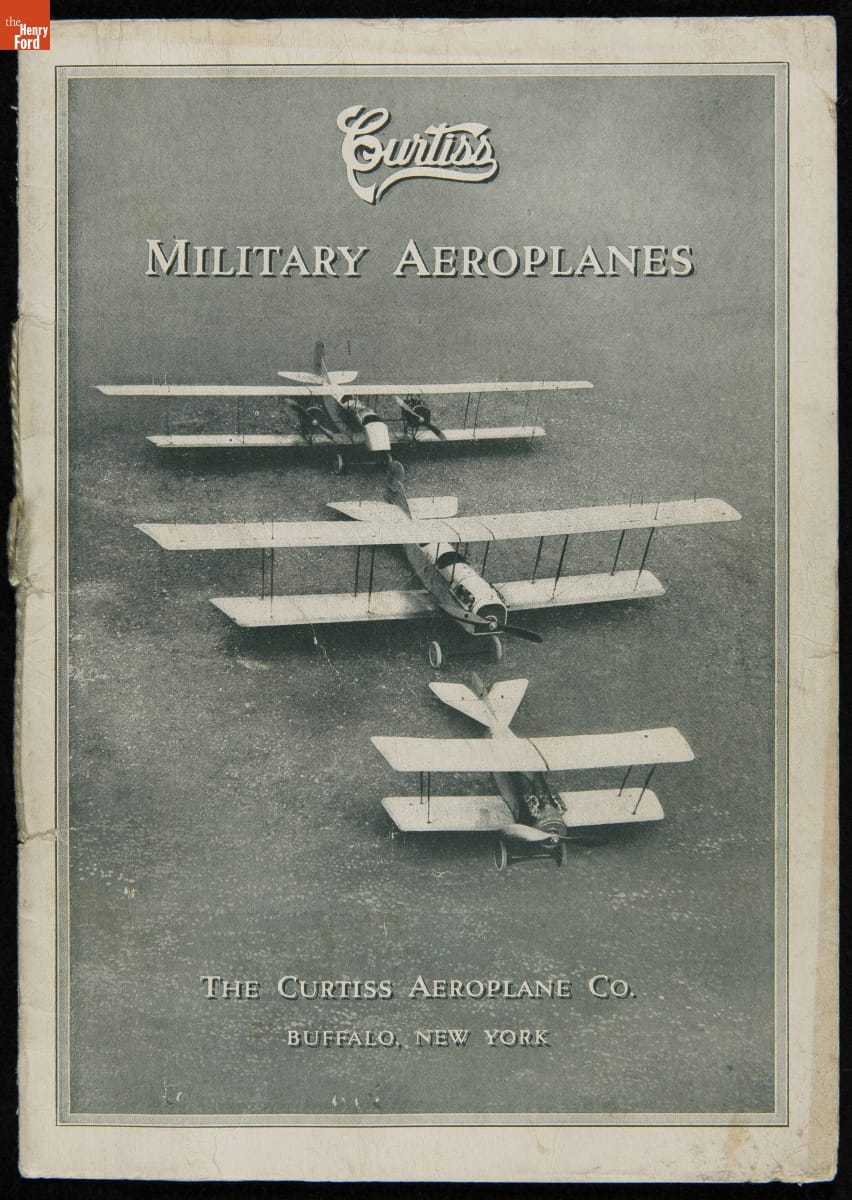
- Curtiss Aeroplane Co. Trade Catalog, "Curtiss Military Aeroplanes," 1916 - Glenn Curtiss established what would become the Curtiss Aeroplane and Motor Company in his hometown of Hammondsport, New York, in 1909. As military orders soared during World War I, Curtiss relocated the company to Buffalo, New York, in 1916. Curtiss's firm was acquired by Willys-Overland the following year, and it merged with the Wright Company in 1929.
- 1916
- Collections - Artifact
Curtiss Aeroplane Co. Trade Catalog, "Curtiss Military Aeroplanes," 1916
Glenn Curtiss established what would become the Curtiss Aeroplane and Motor Company in his hometown of Hammondsport, New York, in 1909. As military orders soared during World War I, Curtiss relocated the company to Buffalo, New York, in 1916. Curtiss's firm was acquired by Willys-Overland the following year, and it merged with the Wright Company in 1929.
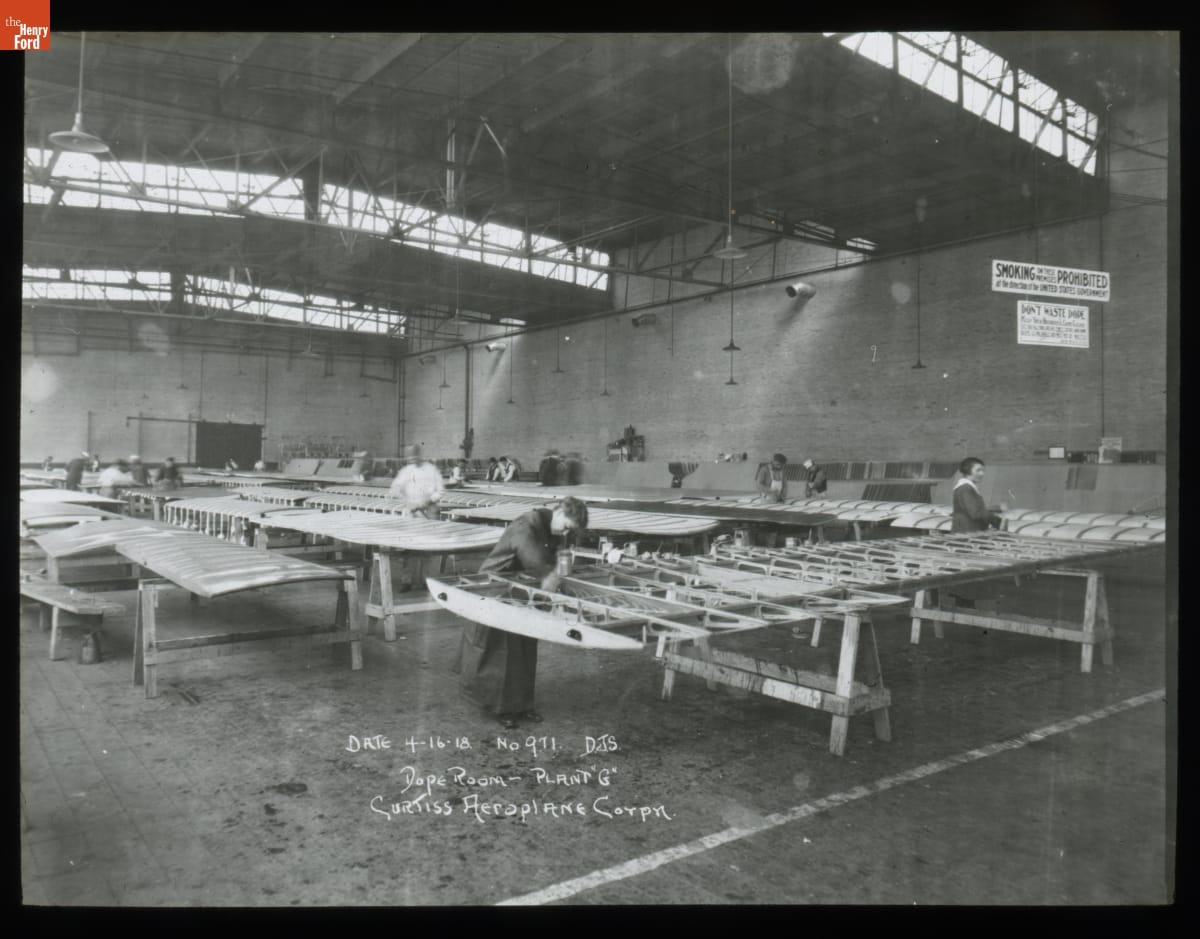
- Dope Room at Curtiss Aeroplane Plant "G," 1918 - Many early airplanes had wings and fuselages covered in lightweight fabric. Manufacturers coated the fabric with a lacquer commonly called dope. The coating increased the fabric's airtightness and weather resistance. This 1918 photograph shows a dope room at the Curtiss Aeroplane and Motor Company. In liquid form, dope could be highly flammable -- note the "Smoking Prohibited" sign.
- April 16, 1918
- Collections - Artifact
Dope Room at Curtiss Aeroplane Plant "G," 1918
Many early airplanes had wings and fuselages covered in lightweight fabric. Manufacturers coated the fabric with a lacquer commonly called dope. The coating increased the fabric's airtightness and weather resistance. This 1918 photograph shows a dope room at the Curtiss Aeroplane and Motor Company. In liquid form, dope could be highly flammable -- note the "Smoking Prohibited" sign.