
Search
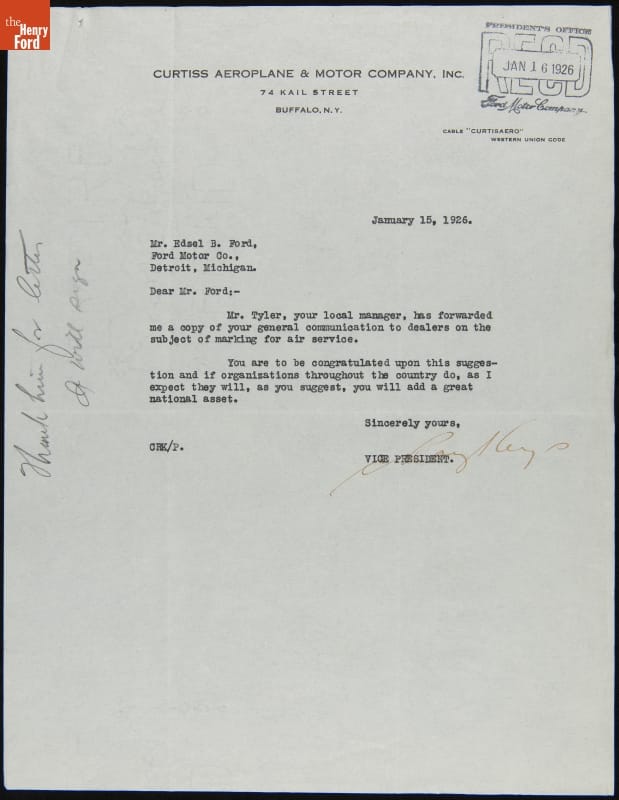
- Letter Congratulating Edsel Ford for Involving Ford Dealers with Airmarking Buildings in Their Towns, January 15, 1926 - Edsel Ford championed the development of commercial aviation in the United States. As an aid to aerial navigation, he wrote letters to Ford dealers encouraging them to paint two things on each dealer's roof: the name of the city and an arrow pointing due north. More than 4,000 communities had aerial markings of some sort by 1929.
- January 15, 1926
- Collections - Artifact
Letter Congratulating Edsel Ford for Involving Ford Dealers with Airmarking Buildings in Their Towns, January 15, 1926
Edsel Ford championed the development of commercial aviation in the United States. As an aid to aerial navigation, he wrote letters to Ford dealers encouraging them to paint two things on each dealer's roof: the name of the city and an arrow pointing due north. More than 4,000 communities had aerial markings of some sort by 1929.
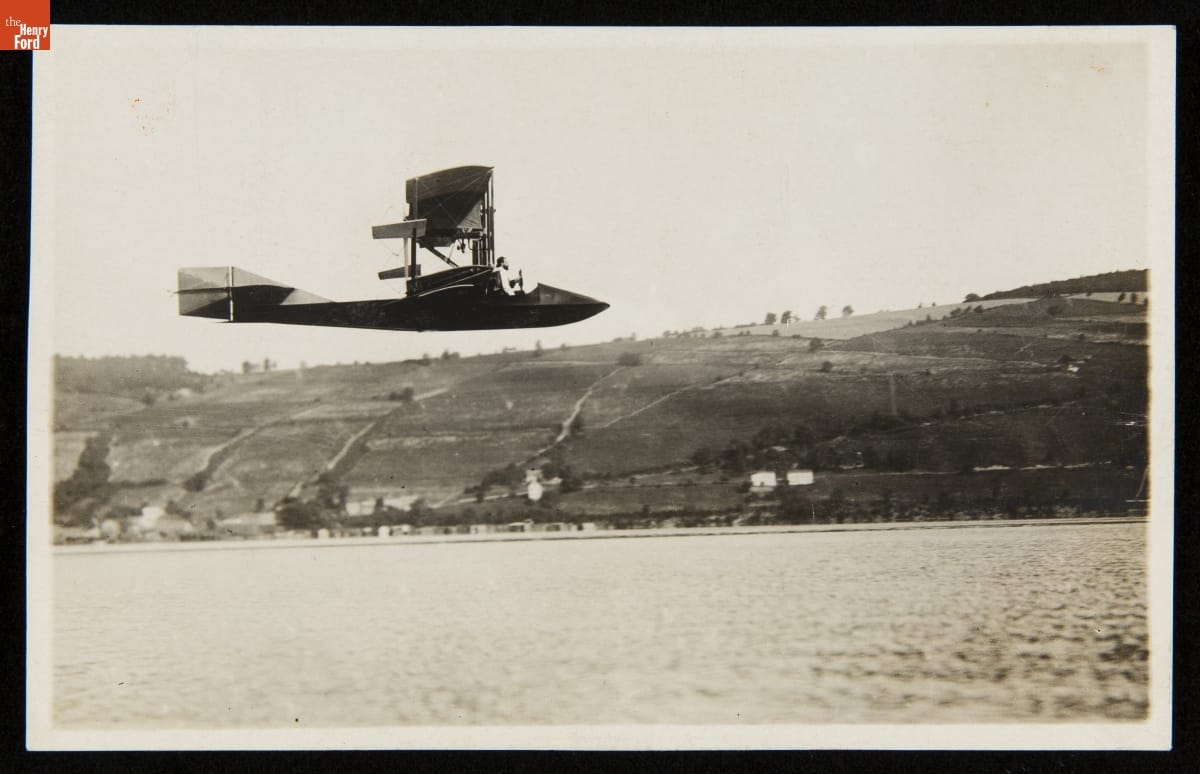
- Curtiss Model E Flying Boat in Flight over Water, 1910-1912 - In addition to his pioneering work with aileron control surfaces, Glenn Curtiss designed and built some of the earliest seaplanes in the United States. His first experiments involved little more than strapping a canoe to the bottom of a standard airplane. But by 1911, the potential of Curtiss's flying boats had earned him a contract with the U.S. Navy.
- 1910-1912
- Collections - Artifact
Curtiss Model E Flying Boat in Flight over Water, 1910-1912
In addition to his pioneering work with aileron control surfaces, Glenn Curtiss designed and built some of the earliest seaplanes in the United States. His first experiments involved little more than strapping a canoe to the bottom of a standard airplane. But by 1911, the potential of Curtiss's flying boats had earned him a contract with the U.S. Navy.
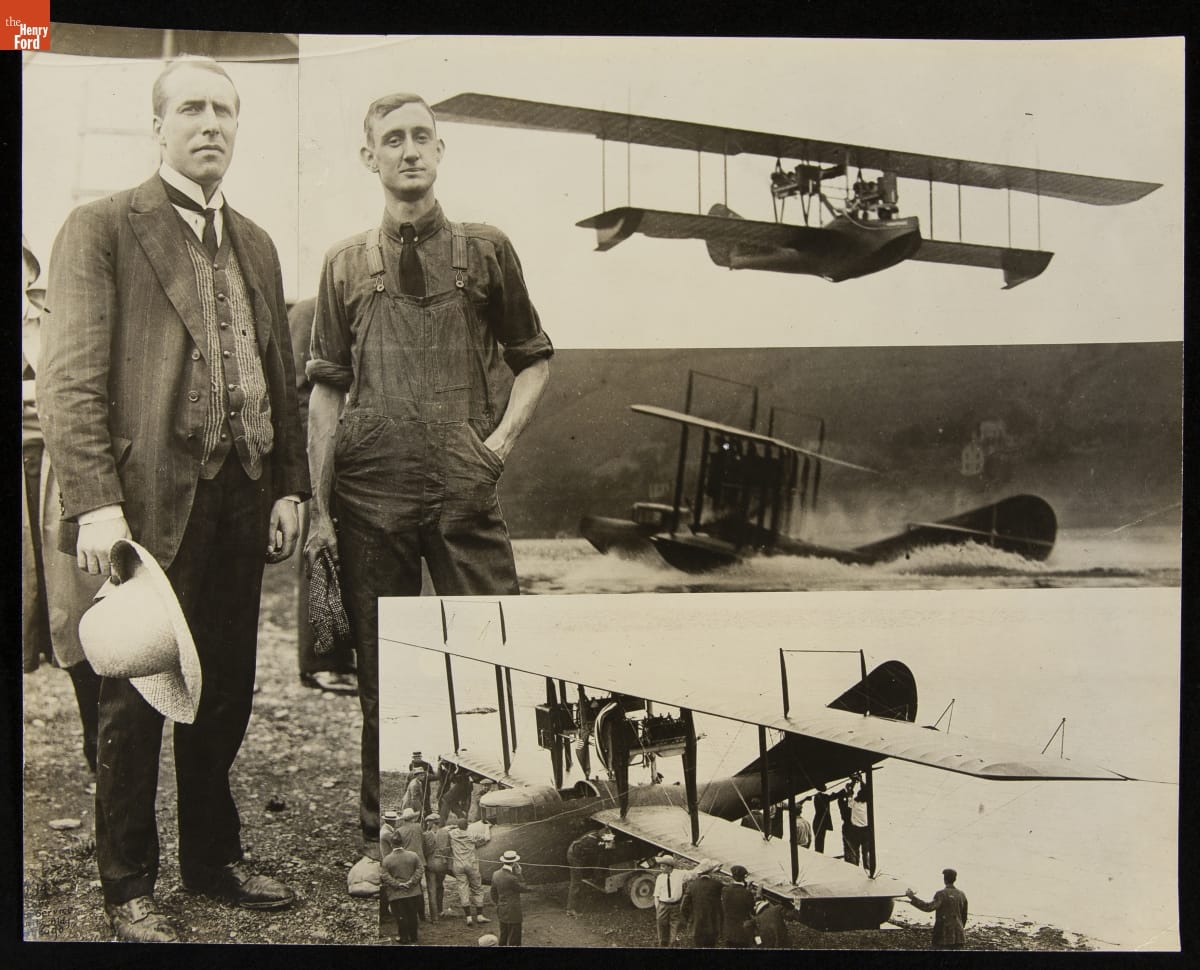
- Lieutenant John Cyril Porte and George Hallet with the Curtiss Aero-Hydroplane "America," 1914 - This photograph advertised what might have been the first flight across the Atlantic Ocean by airplane. In 1914, British lieutenant John Cyril Porte and American mechanic George E. A. Hallett planned to set out on a transatlantic trip aboard the specially designed seaplane, <em>America</em>. The outbreak of World War I intervened, and the <em>America</em> instead joined the British Royal Naval Air Service.
- 1914
- Collections - Artifact
Lieutenant John Cyril Porte and George Hallet with the Curtiss Aero-Hydroplane "America," 1914
This photograph advertised what might have been the first flight across the Atlantic Ocean by airplane. In 1914, British lieutenant John Cyril Porte and American mechanic George E. A. Hallett planned to set out on a transatlantic trip aboard the specially designed seaplane, America. The outbreak of World War I intervened, and the America instead joined the British Royal Naval Air Service.
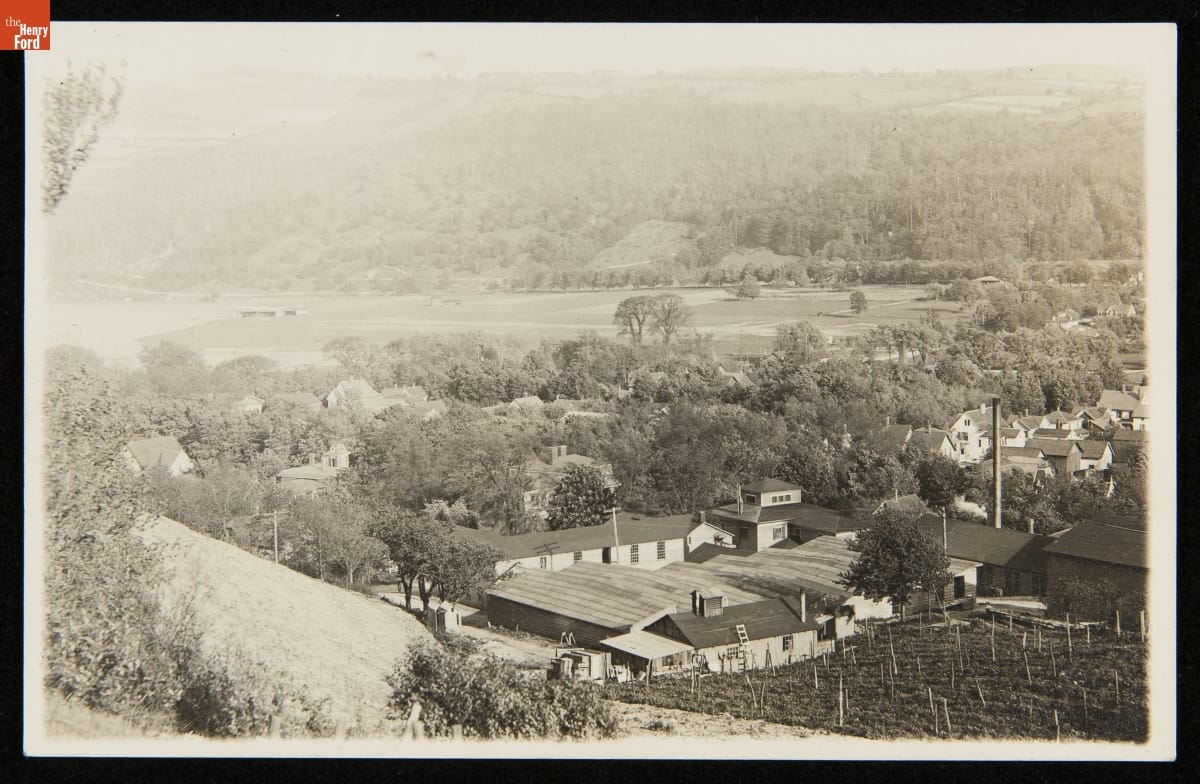
- Aerial View of the Curtiss Aircraft Plant and Curtiss Home, Hammondsport, New York, circa 1911 - Glenn Curtiss established what would become the Curtiss Aeroplane and Motor Company in his hometown of Hammondsport, New York, in 1909. As military orders soared during World War I, Curtiss relocated the company to Buffalo, New York, in 1916. Curtiss's firm was acquired by Willys-Overland the following year, and it merged with the Wright Company in 1929.
- 1910-1912
- Collections - Artifact
Aerial View of the Curtiss Aircraft Plant and Curtiss Home, Hammondsport, New York, circa 1911
Glenn Curtiss established what would become the Curtiss Aeroplane and Motor Company in his hometown of Hammondsport, New York, in 1909. As military orders soared during World War I, Curtiss relocated the company to Buffalo, New York, in 1916. Curtiss's firm was acquired by Willys-Overland the following year, and it merged with the Wright Company in 1929.
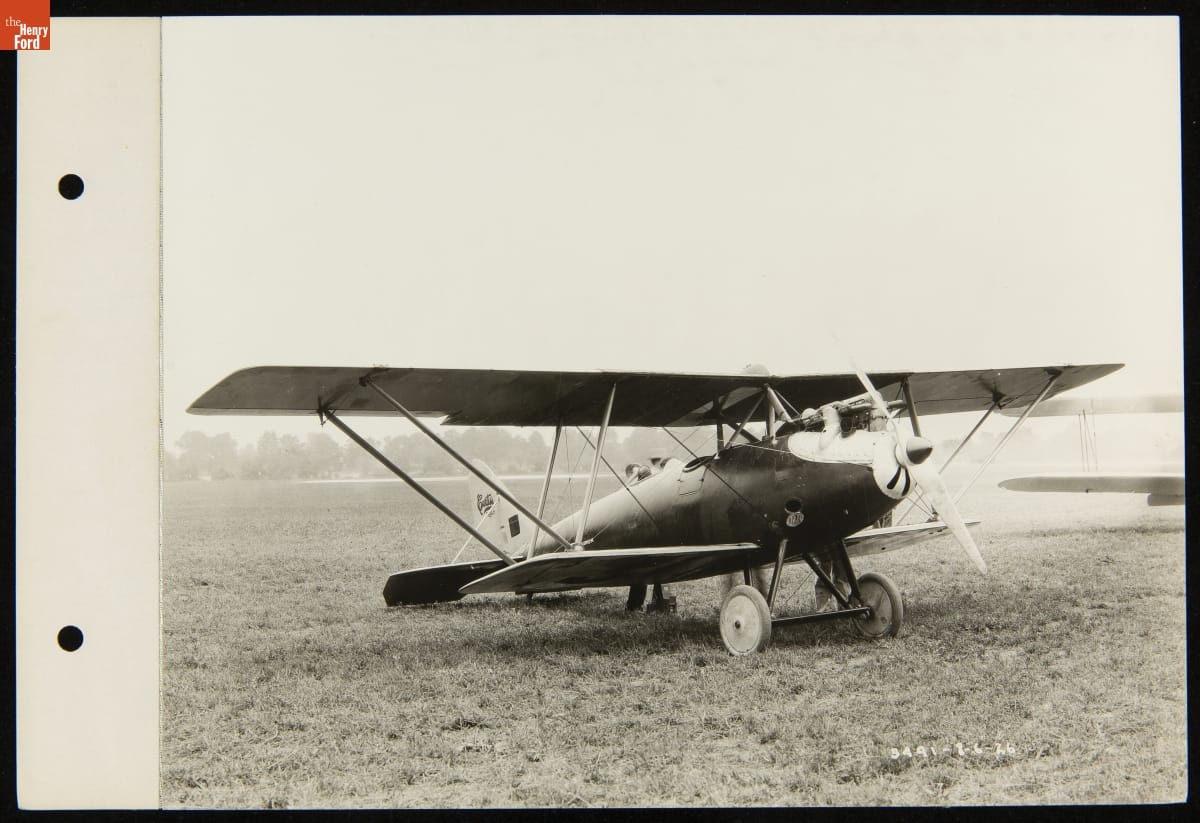
- Curtiss Oriole Airplane, August 6, 1926 - The Curtiss Oriole was first produced in 1919. The three-seat, single-engine biplane featured a monocoque body made from laminated wood. The Oriole had a maximum speed of 86 miles per hour, but it was more comfortable cruising at about 70. Curtiss Oriole biplanes were used in both civil and military operations.
- August 06, 1926
- Collections - Artifact
Curtiss Oriole Airplane, August 6, 1926
The Curtiss Oriole was first produced in 1919. The three-seat, single-engine biplane featured a monocoque body made from laminated wood. The Oriole had a maximum speed of 86 miles per hour, but it was more comfortable cruising at about 70. Curtiss Oriole biplanes were used in both civil and military operations.
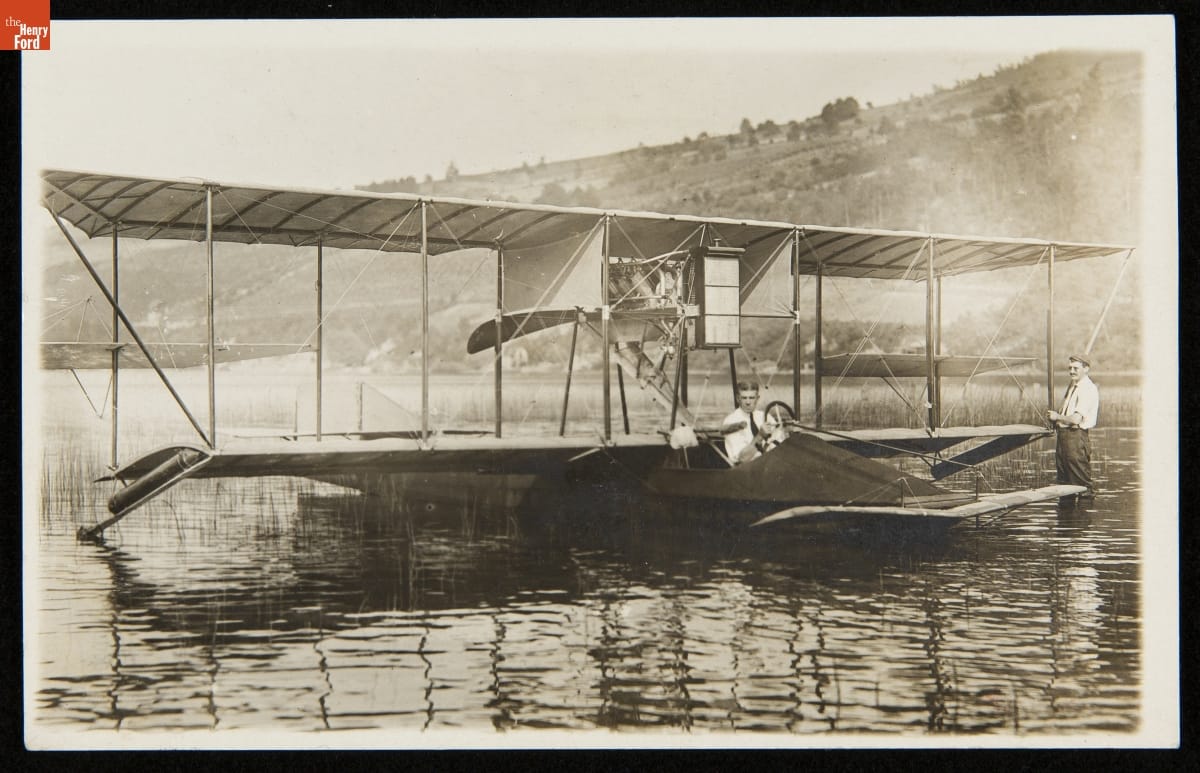
- Two Men with a Curtiss Flying Boat, 1912 - In addition to his pioneering work with aileron control surfaces, Glenn Curtiss designed and built some of the earliest seaplanes in the United States. His first experiments involved little more than strapping a canoe to the bottom of a standard airplane. But by 1911, the potential of Curtiss's flying boats had earned him a contract with the U.S. Navy.
- 1912
- Collections - Artifact
Two Men with a Curtiss Flying Boat, 1912
In addition to his pioneering work with aileron control surfaces, Glenn Curtiss designed and built some of the earliest seaplanes in the United States. His first experiments involved little more than strapping a canoe to the bottom of a standard airplane. But by 1911, the potential of Curtiss's flying boats had earned him a contract with the U.S. Navy.
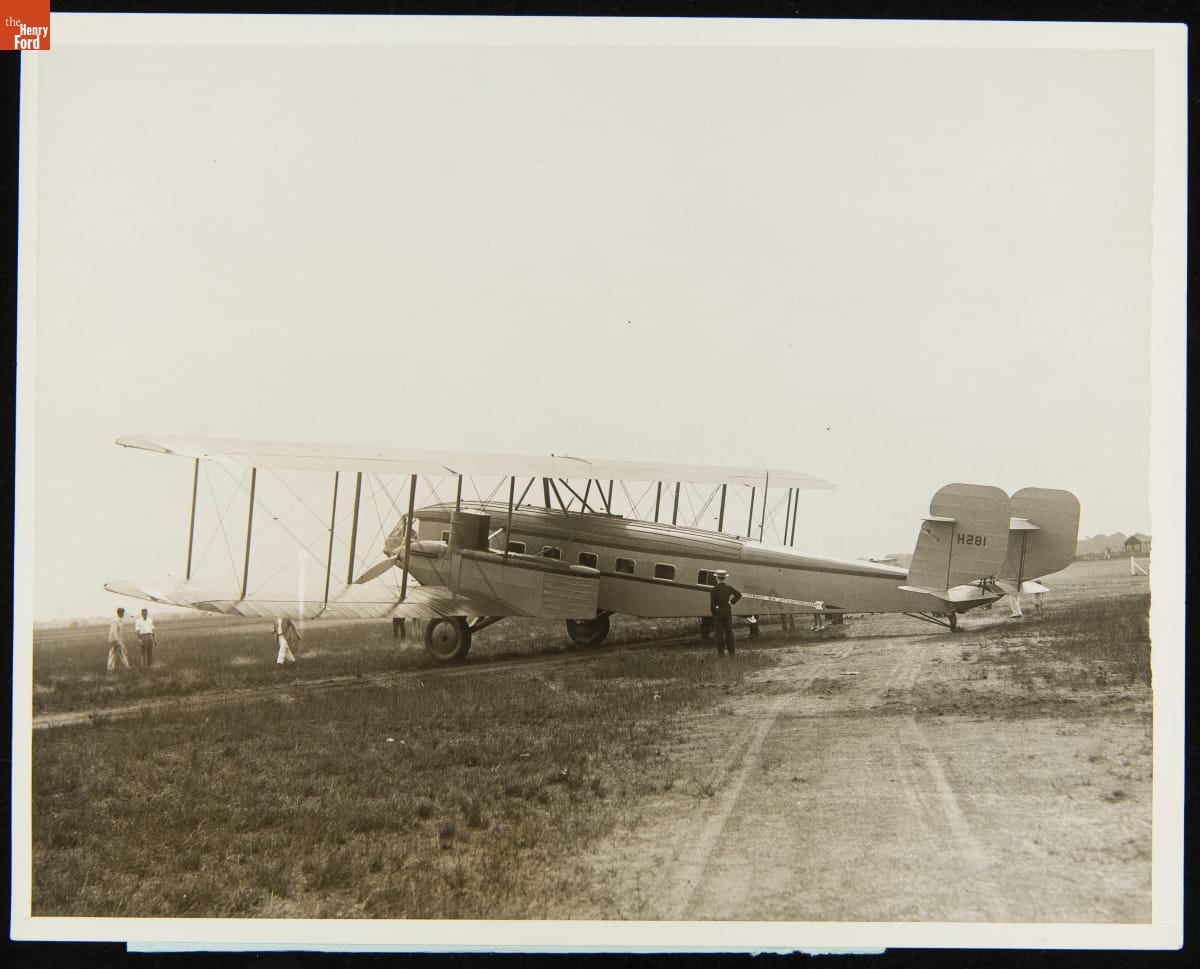
- Curtiss "Condor" Twin-Motor Plane Trial Flight, 1929 - The Curtiss Condor airplane had its origins in a twin-engine military bomber introduced in 1929. The civilian version carried 18 passengers and flew for commercial airlines. With its biplane wings and closed cockpit, the Condor was something of a bridge between pioneering aircraft like Boeing's Model 40 and more modern airliners like Douglas's DC-3.
- 1929
- Collections - Artifact
Curtiss "Condor" Twin-Motor Plane Trial Flight, 1929
The Curtiss Condor airplane had its origins in a twin-engine military bomber introduced in 1929. The civilian version carried 18 passengers and flew for commercial airlines. With its biplane wings and closed cockpit, the Condor was something of a bridge between pioneering aircraft like Boeing's Model 40 and more modern airliners like Douglas's DC-3.
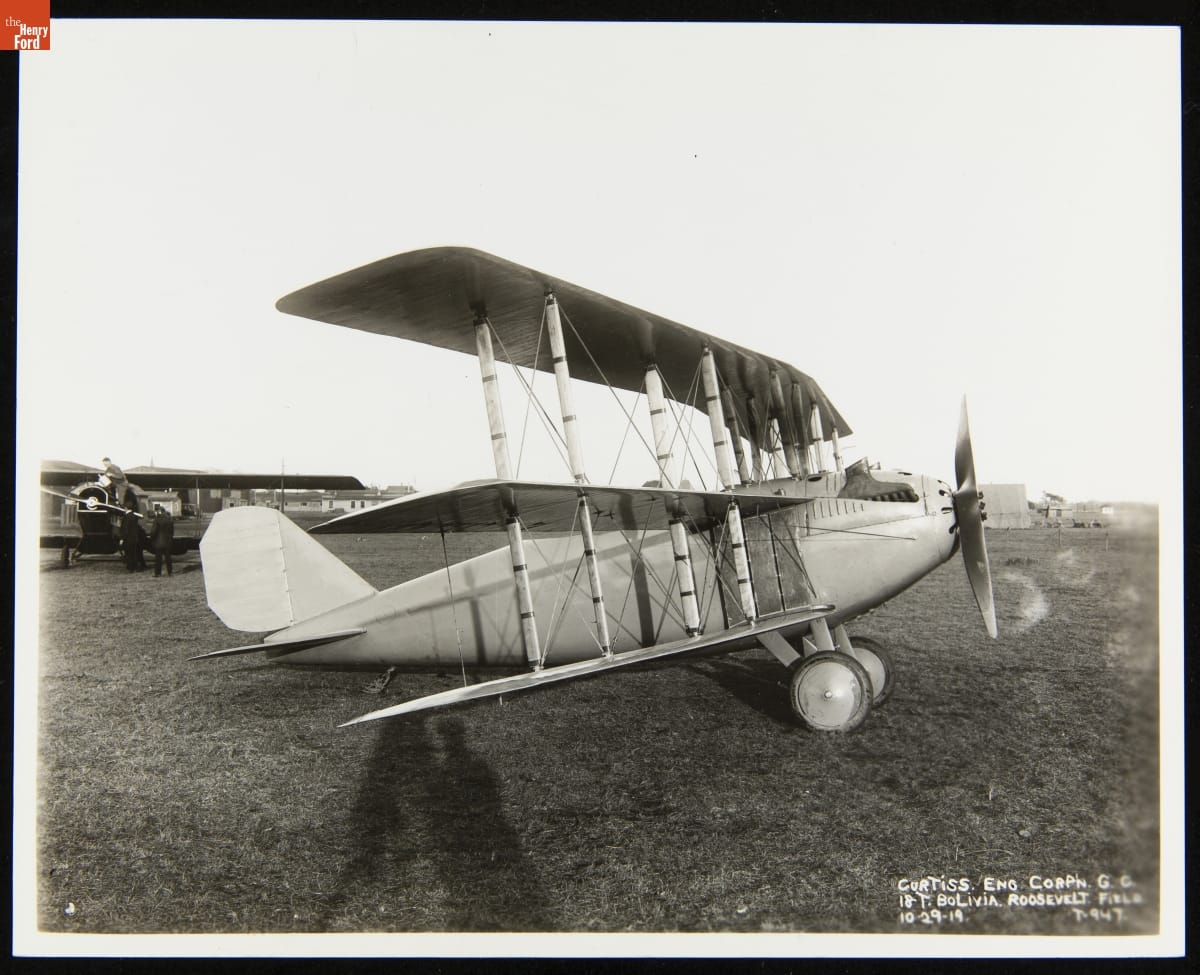
- Curtiss Triplane, October 1919 - Glenn Curtiss, whose airplane business flourished during World War I, established a state-of-the-art research and experimentation facility on Long Island, New York, in 1917. At the Curtiss Engineering Corporation, a handpicked team built, tested, and refined propellers, engines, and airplanes -- including the speedy Curtiss 18-T, a triplane originally designed for military use.
- October 29, 1919
- Collections - Artifact
Curtiss Triplane, October 1919
Glenn Curtiss, whose airplane business flourished during World War I, established a state-of-the-art research and experimentation facility on Long Island, New York, in 1917. At the Curtiss Engineering Corporation, a handpicked team built, tested, and refined propellers, engines, and airplanes -- including the speedy Curtiss 18-T, a triplane originally designed for military use.
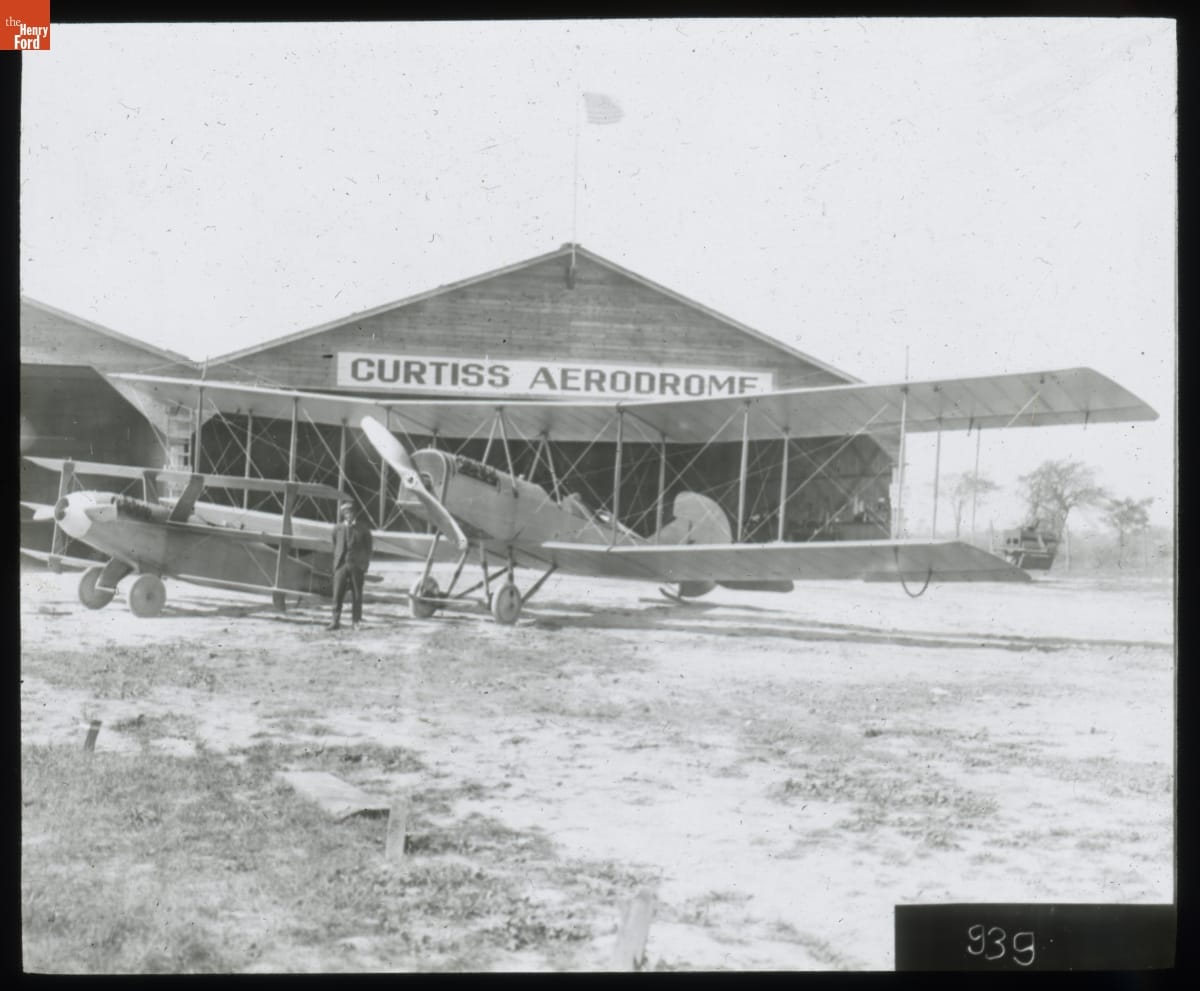
- Curtiss Aerodrome, 1920-1929 - Glenn Curtiss established what would become the Curtiss Aeroplane and Motor Company in his hometown of Hammondsport, New York, in 1909. As military orders soared during World War I, Curtiss relocated the company to Buffalo, New York, in 1916. He built the Curtiss Aerodrome near Buffalo four years later to serve as the company's airport.
- 1920-1929
- Collections - Artifact
Curtiss Aerodrome, 1920-1929
Glenn Curtiss established what would become the Curtiss Aeroplane and Motor Company in his hometown of Hammondsport, New York, in 1909. As military orders soared during World War I, Curtiss relocated the company to Buffalo, New York, in 1916. He built the Curtiss Aerodrome near Buffalo four years later to serve as the company's airport.
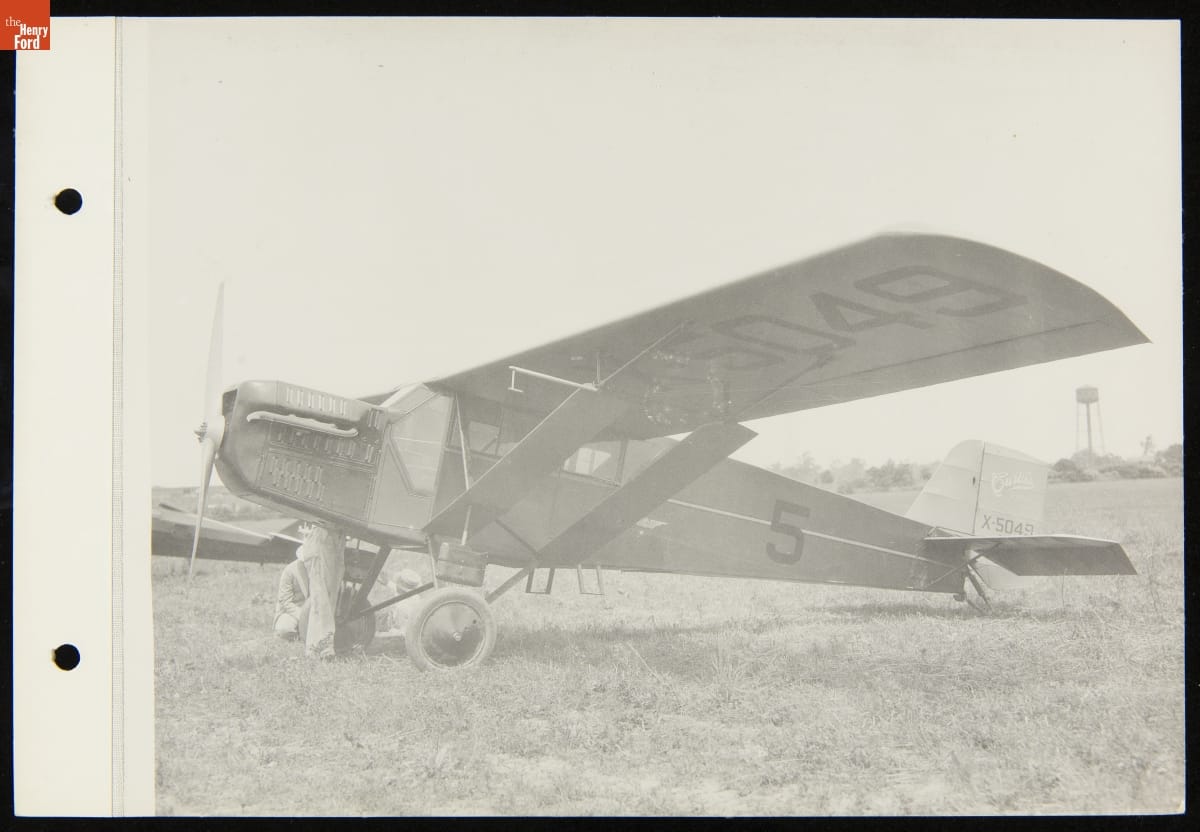
- Curtiss "Robin" in a Field, 1928 - Curtiss-Robertson introduced the Robin in 1928. With its single wooden wing and steel-tube fuselage, the airplane had room for a pilot and two passengers. Early versions, like the one seen here, had fairings covering their wing struts. Operators used Robins for everything from commercial passenger service to rural newspaper deliveries. More than 750 units were produced.
- 1928
- Collections - Artifact
Curtiss "Robin" in a Field, 1928
Curtiss-Robertson introduced the Robin in 1928. With its single wooden wing and steel-tube fuselage, the airplane had room for a pilot and two passengers. Early versions, like the one seen here, had fairings covering their wing struts. Operators used Robins for everything from commercial passenger service to rural newspaper deliveries. More than 750 units were produced.