
Search
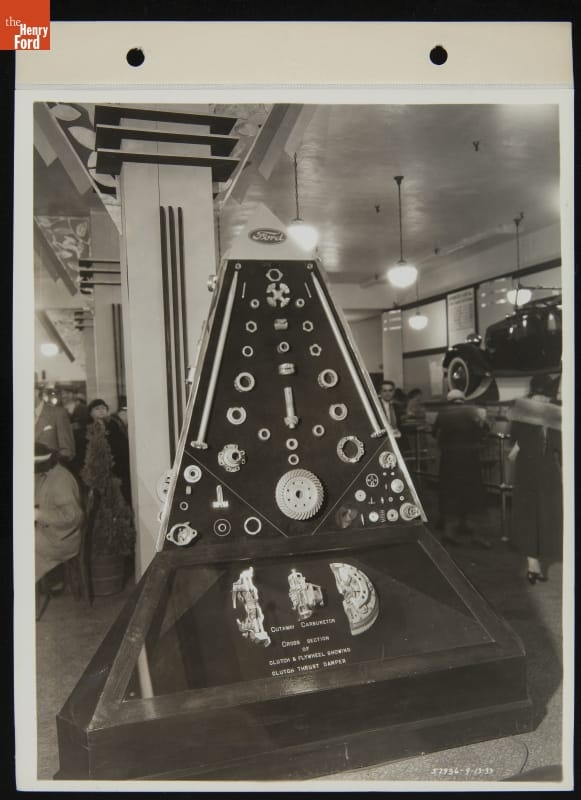
- Display Pyramid with Ford V-8 Model 40 Parts, September 1933 - Ford Motor Company designated its 1933 lineup with the name Model 40. Vehicles continued to be available with either a four-cylinder engine or the affordable V-8 introduced the previous year. This display pyramid featured parts from Ford's V-8 engine, its flywheel and clutch, and its gearbox and rear axle.
- September 13, 1933
- Collections - Artifact
Display Pyramid with Ford V-8 Model 40 Parts, September 1933
Ford Motor Company designated its 1933 lineup with the name Model 40. Vehicles continued to be available with either a four-cylinder engine or the affordable V-8 introduced the previous year. This display pyramid featured parts from Ford's V-8 engine, its flywheel and clutch, and its gearbox and rear axle.
- Customer Receiving Bill at Ford Dealership Parts Counter, August 1936 -
- August 21, 1936
- Collections - Artifact
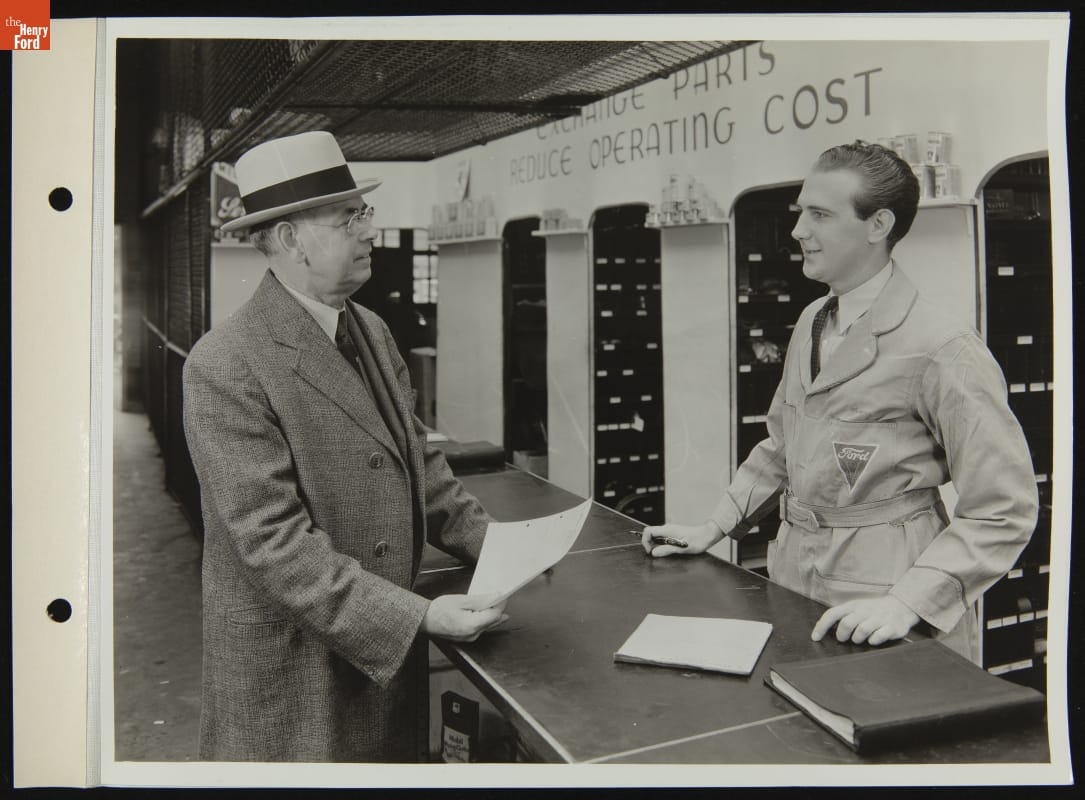
Customer Receiving Bill at Ford Dealership Parts Counter, August 1936
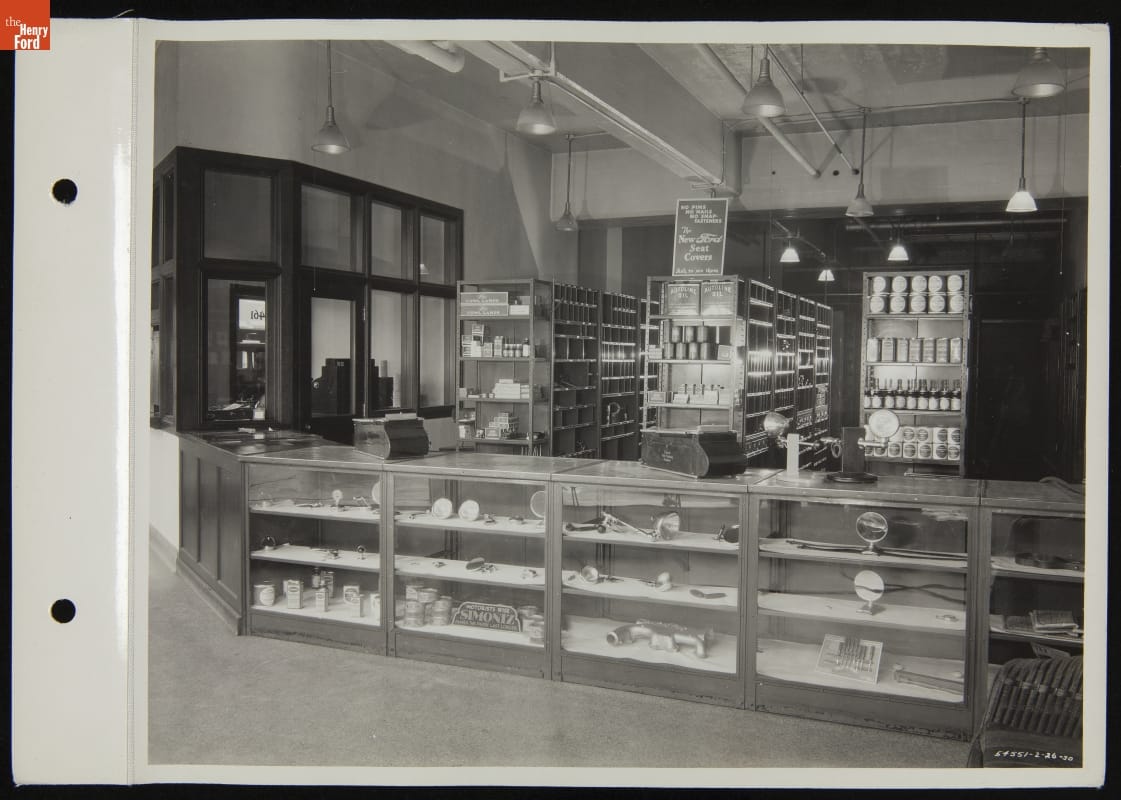
- Customer Service Counter at Stark Hickey Dealership, Detroit, Michigan, 1930 - Ford Motor Company inaugurated a system of competing dealership franchises in 1914. Dealers sold Ford vehicles, offered repair services, and stocked spare parts and automobile accessories. Dealership parts and service departments lured customers with displays and advertisements. The department also served as a reminder to potential car buyers that the dealership provided extra services after the sale.
- February 26, 1930
- Collections - Artifact
Customer Service Counter at Stark Hickey Dealership, Detroit, Michigan, 1930
Ford Motor Company inaugurated a system of competing dealership franchises in 1914. Dealers sold Ford vehicles, offered repair services, and stocked spare parts and automobile accessories. Dealership parts and service departments lured customers with displays and advertisements. The department also served as a reminder to potential car buyers that the dealership provided extra services after the sale.
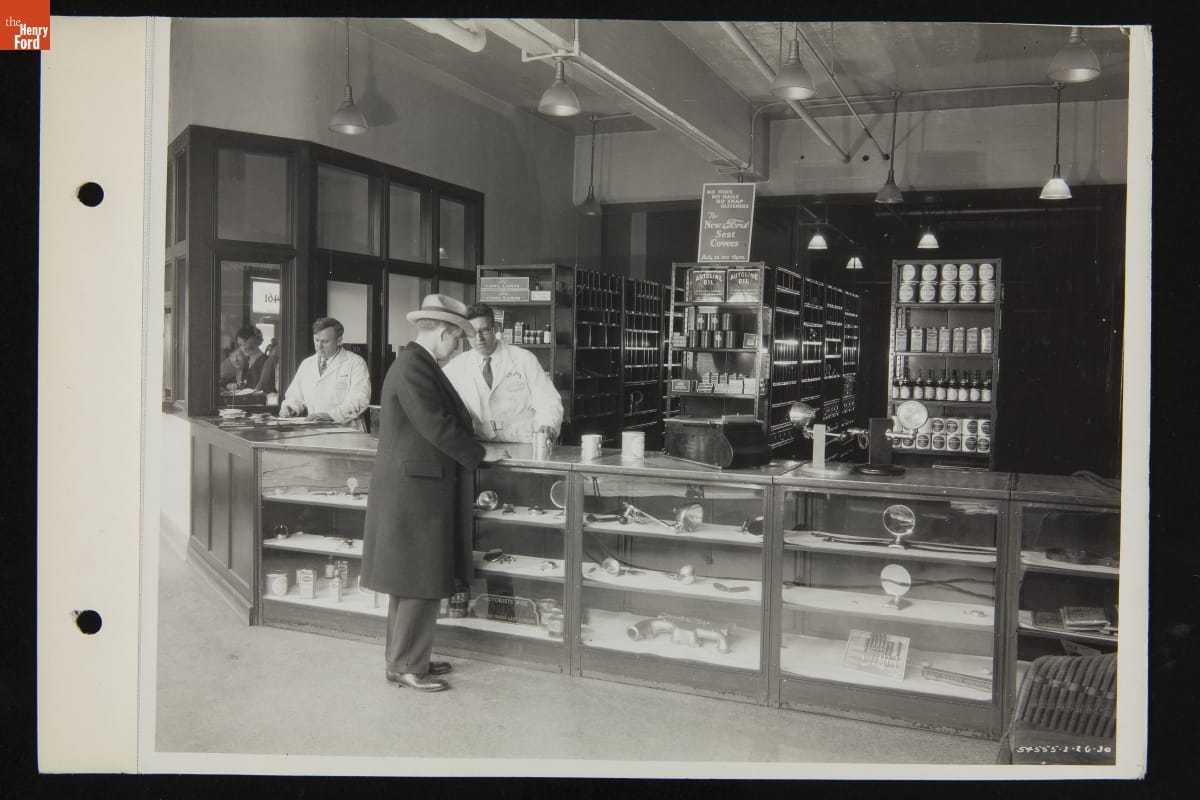
- Customer Service Counter at Stark Hickey Ford Dealership, Detroit, Michigan, 1930 - Ford Motor Company inaugurated a system of competing dealership franchises in 1914. Dealers sold Ford vehicles, offered repair services, and stocked spare parts and automobile accessories. Dealership parts and service departments lured customers with displays and advertisements. The department also served as a reminder to potential car buyers that the dealership provided extra services after the sale.
- February 26, 1930
- Collections - Artifact
Customer Service Counter at Stark Hickey Ford Dealership, Detroit, Michigan, 1930
Ford Motor Company inaugurated a system of competing dealership franchises in 1914. Dealers sold Ford vehicles, offered repair services, and stocked spare parts and automobile accessories. Dealership parts and service departments lured customers with displays and advertisements. The department also served as a reminder to potential car buyers that the dealership provided extra services after the sale.
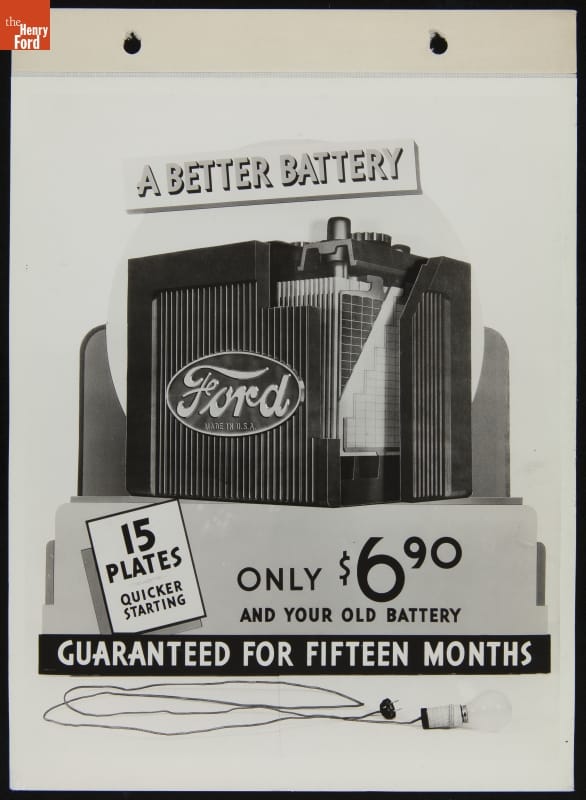
- Ford Battery Exchange Advertising Display Card, September 1933 - Ford sold car batteries as part of its accessories program. Dry-cell batteries were marketed with 13 plates, 15 plates or 17 plates per cell. More plates meant a higher ampere-hours rating. Customers could trade in old batteries toward the purchase of new ones. The Ford-branded batteries were made by Electric Battery Company and Willard Storage Battery Company.
- September 21, 1933
- Collections - Artifact
Ford Battery Exchange Advertising Display Card, September 1933
Ford sold car batteries as part of its accessories program. Dry-cell batteries were marketed with 13 plates, 15 plates or 17 plates per cell. More plates meant a higher ampere-hours rating. Customers could trade in old batteries toward the purchase of new ones. The Ford-branded batteries were made by Electric Battery Company and Willard Storage Battery Company.
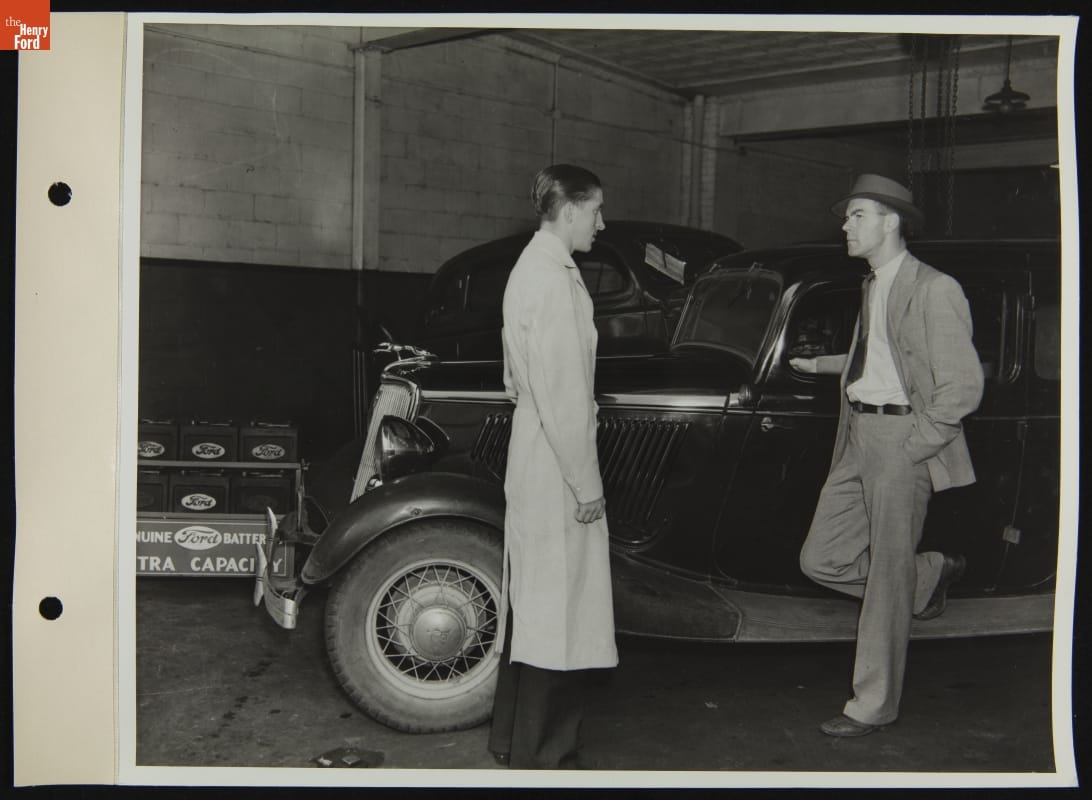
- Service Attendant Selling Battery to Customer, Garvis Brothers Service Station, August 1936 - Ford sold car batteries as part of its accessories program. Dry-cell batteries were marketed with 13 plates, 15 plates or 17 plates per cell. More plates meant a higher ampere-hours rating. Customers could trade in old batteries toward the purchase of new ones. The Ford-branded batteries were made by Electric Battery Company and Willard Storage Battery Company.
- August 28, 1936
- Collections - Artifact
Service Attendant Selling Battery to Customer, Garvis Brothers Service Station, August 1936
Ford sold car batteries as part of its accessories program. Dry-cell batteries were marketed with 13 plates, 15 plates or 17 plates per cell. More plates meant a higher ampere-hours rating. Customers could trade in old batteries toward the purchase of new ones. The Ford-branded batteries were made by Electric Battery Company and Willard Storage Battery Company.
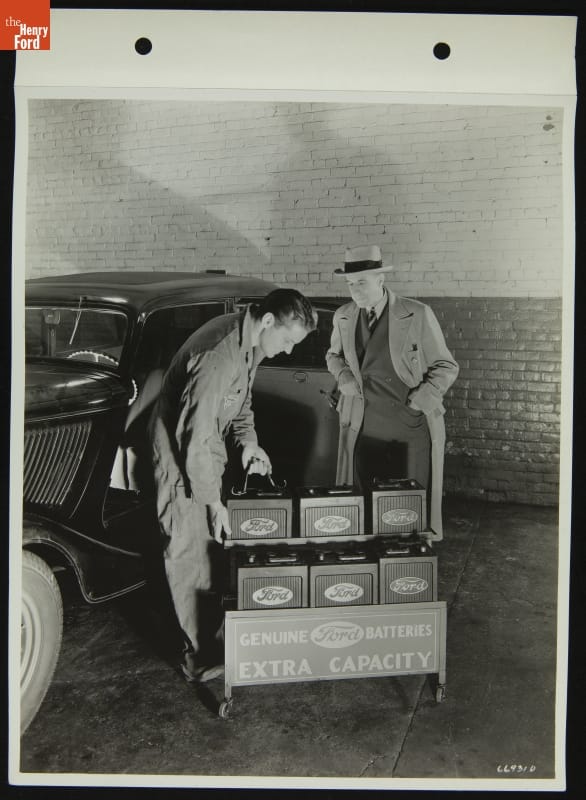
- Service Attendant Selling Battery to Customer, Jarvis Brothers Ford Dealership, October 1936 - Ford sold car batteries as part of its accessories program. Dry-cell batteries were marketed with 13 plates, 15 plates or 17 plates per cell. More plates meant a higher ampere-hours rating. Customers could trade in old batteries toward the purchase of new ones. The Ford-branded batteries were made by Electric Battery Company and Willard Storage Battery Company.
- October 06, 1936
- Collections - Artifact
Service Attendant Selling Battery to Customer, Jarvis Brothers Ford Dealership, October 1936
Ford sold car batteries as part of its accessories program. Dry-cell batteries were marketed with 13 plates, 15 plates or 17 plates per cell. More plates meant a higher ampere-hours rating. Customers could trade in old batteries toward the purchase of new ones. The Ford-branded batteries were made by Electric Battery Company and Willard Storage Battery Company.
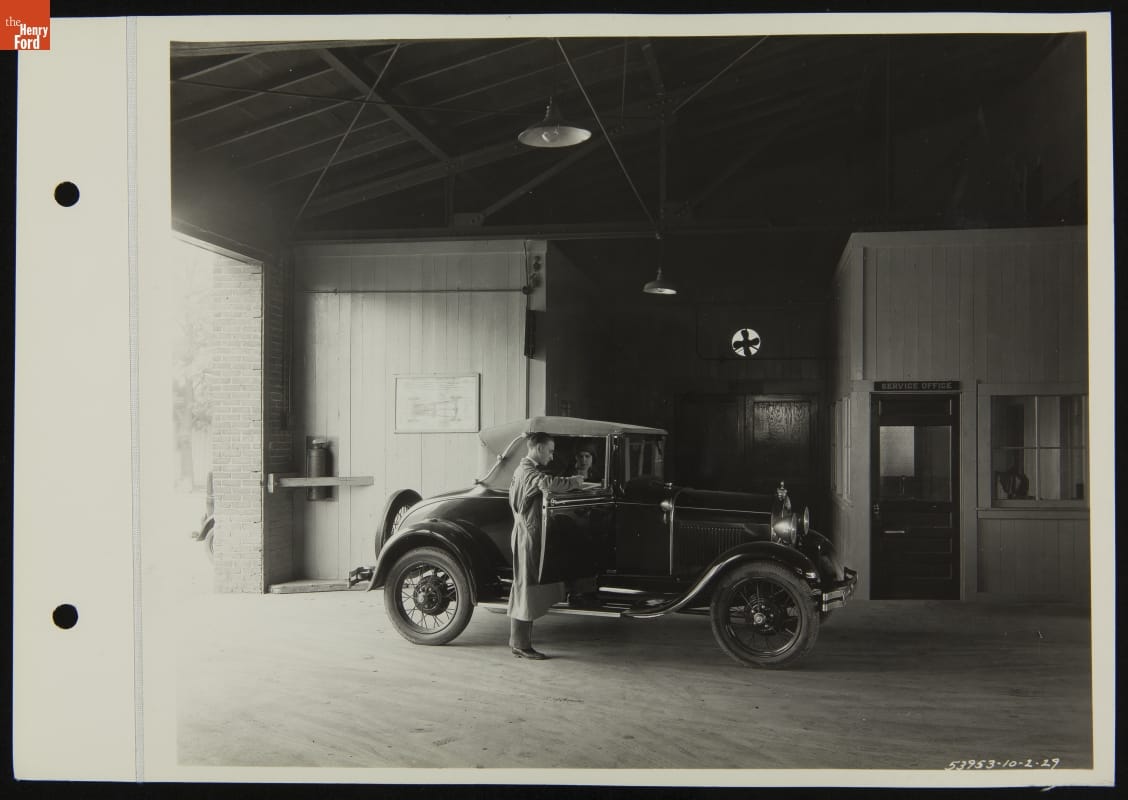
- Service Department Employee with Model A Car inside Ford Dealership, Plymouth Motor Sales Co., Plymouth, Michigan, 1929 - Ford Motor Company built 1.5 million cars in 1929 -- a testament to the Model A's popularity. Changes from the previous year were minor. Nickel plating was replaced with chrome, and fender-well spare tires were added to the options list. Nineteen different body styles were available including the $450 roadster, the $525 business coupe and the $695 Fordor.
- October 02, 1929
- Collections - Artifact
Service Department Employee with Model A Car inside Ford Dealership, Plymouth Motor Sales Co., Plymouth, Michigan, 1929
Ford Motor Company built 1.5 million cars in 1929 -- a testament to the Model A's popularity. Changes from the previous year were minor. Nickel plating was replaced with chrome, and fender-well spare tires were added to the options list. Nineteen different body styles were available including the $450 roadster, the $525 business coupe and the $695 Fordor.
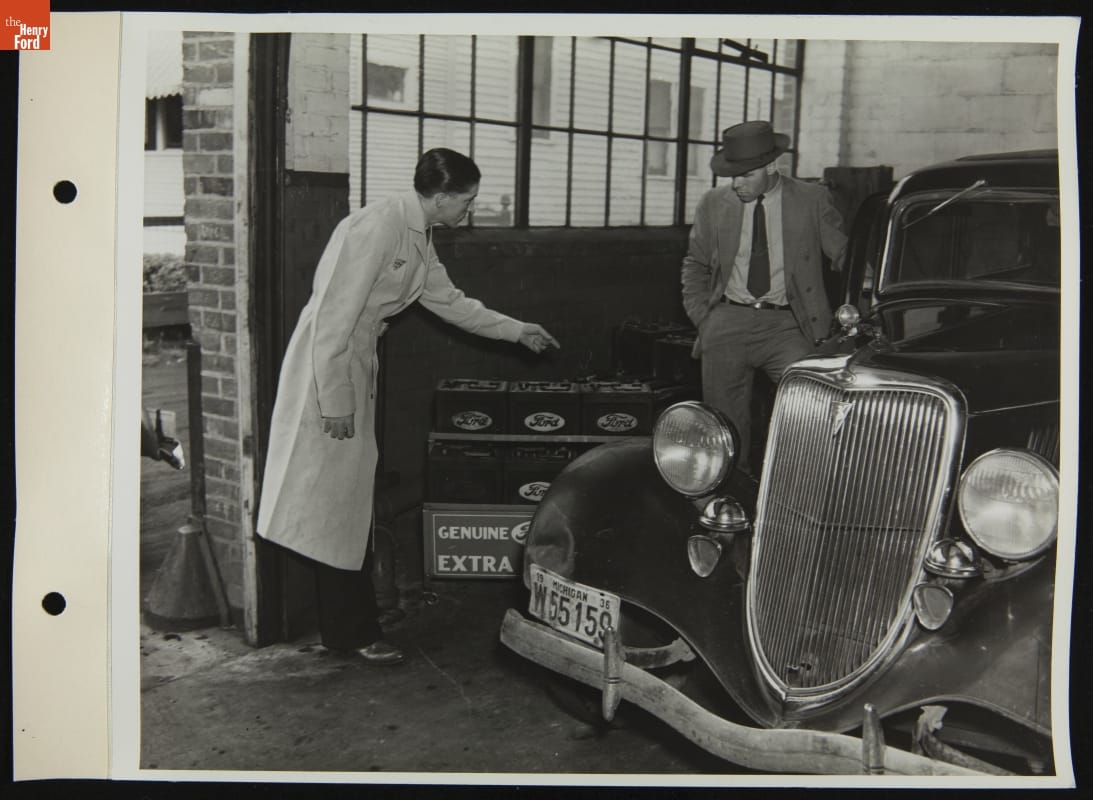
- Service Attendant Selling Battery to Customer, Garvis Brothers Service Station, August 1936 - Ford sold car batteries as part of its accessories program. Dry-cell batteries were marketed with 13 plates, 15 plates or 17 plates per cell. More plates meant a higher ampere-hours rating. Customers could trade in old batteries toward the purchase of new ones. The Ford-branded batteries were made by Electric Battery Company and Willard Storage Battery Company.
- August 28, 1936
- Collections - Artifact
Service Attendant Selling Battery to Customer, Garvis Brothers Service Station, August 1936
Ford sold car batteries as part of its accessories program. Dry-cell batteries were marketed with 13 plates, 15 plates or 17 plates per cell. More plates meant a higher ampere-hours rating. Customers could trade in old batteries toward the purchase of new ones. The Ford-branded batteries were made by Electric Battery Company and Willard Storage Battery Company.
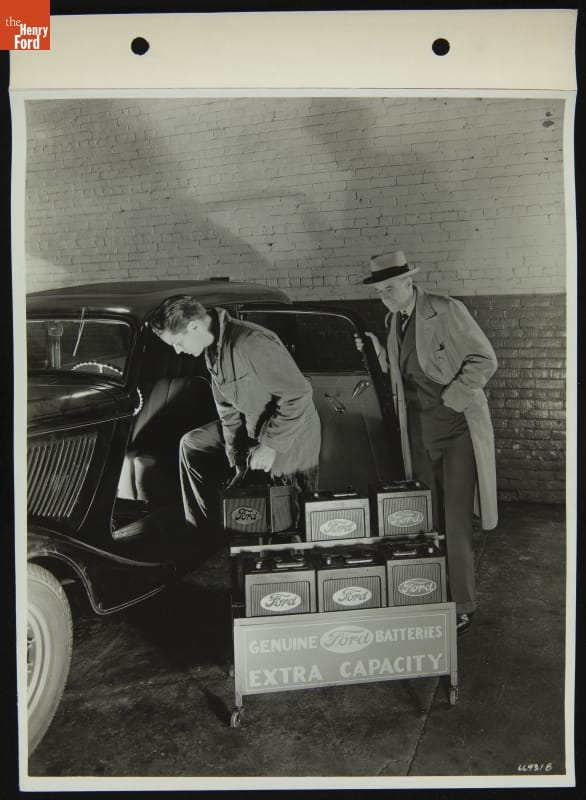
- Service Attendant Selling Battery to Customer, Jarvis Brothers Ford Dealership, October 1936 - Ford sold car batteries as part of its accessories program. Dry-cell batteries were marketed with 13 plates, 15 plates or 17 plates per cell. More plates meant a higher ampere-hours rating. Customers could trade in old batteries toward the purchase of new ones. The Ford-branded batteries were made by Electric Battery Company and Willard Storage Battery Company.
- October 06, 1936
- Collections - Artifact
Service Attendant Selling Battery to Customer, Jarvis Brothers Ford Dealership, October 1936
Ford sold car batteries as part of its accessories program. Dry-cell batteries were marketed with 13 plates, 15 plates or 17 plates per cell. More plates meant a higher ampere-hours rating. Customers could trade in old batteries toward the purchase of new ones. The Ford-branded batteries were made by Electric Battery Company and Willard Storage Battery Company.