
Search
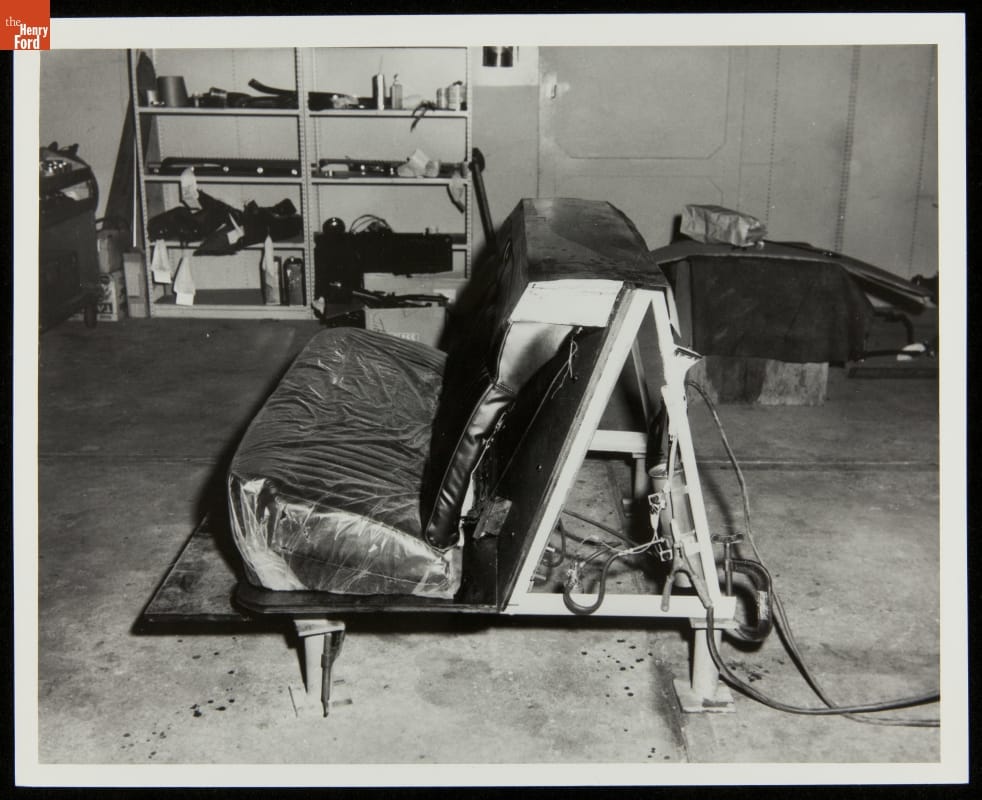
- Lincoln Continental Presidential Limousine Customization, Testing Adjustable Hydraulic Seat, 1961 - The Hess & Eisenhardt Company of Cincinnati, Ohio, transformed a stock 1961 Lincoln Continental convertible into the presidential limousine. Among the special modifications was a hydraulic lift installed on the rear seat. At the touch of a button, the president could raise the seat 10-1/2 inches to make himself and his passengers more visible to crowds watching the limousine pass.
- 1961
- Collections - Artifact
Lincoln Continental Presidential Limousine Customization, Testing Adjustable Hydraulic Seat, 1961
The Hess & Eisenhardt Company of Cincinnati, Ohio, transformed a stock 1961 Lincoln Continental convertible into the presidential limousine. Among the special modifications was a hydraulic lift installed on the rear seat. At the touch of a button, the president could raise the seat 10-1/2 inches to make himself and his passengers more visible to crowds watching the limousine pass.
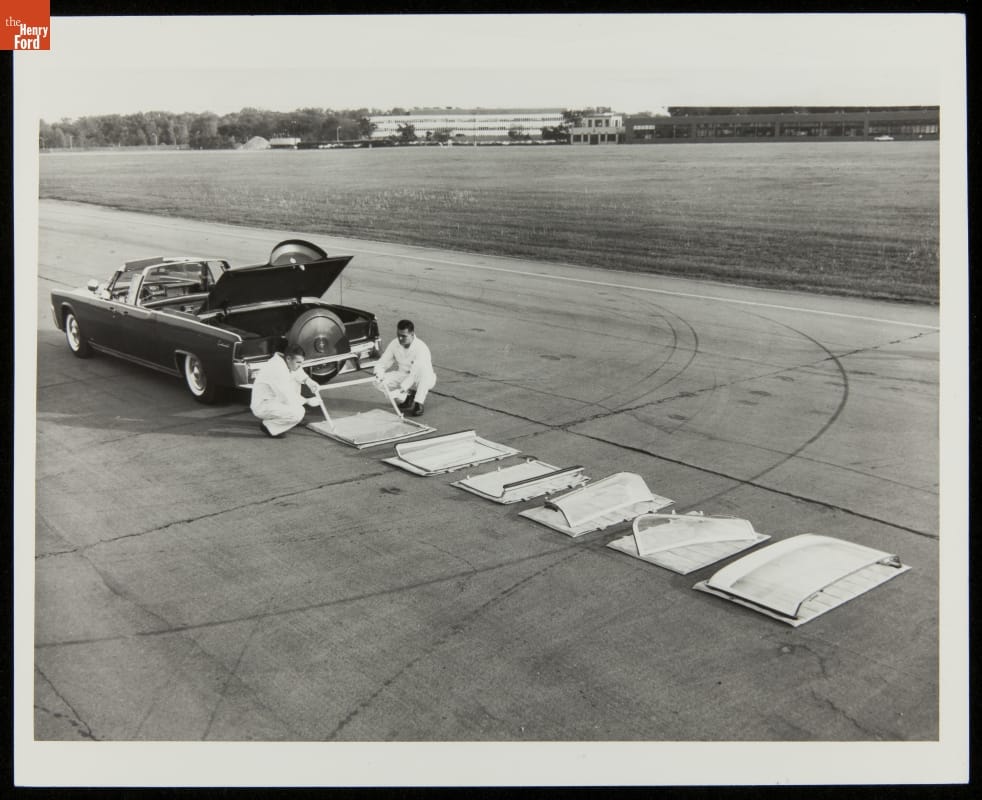
- Lincoln Continental Presidential Limousine Customization, Removable Transparent Top Sections Stored in Trunk, 1961 - As originally built, the 1961 Lincoln Continental Presidential Limousine had three different roof options. A removable steel section provided privacy, clear plastic sections provided weather protection, and a completely open top gave the president maximum visibility. The plastic panels fit neatly into the trunk and were available whenever needed. None of the removable tops was armored.
- 1961
- Collections - Artifact
Lincoln Continental Presidential Limousine Customization, Removable Transparent Top Sections Stored in Trunk, 1961
As originally built, the 1961 Lincoln Continental Presidential Limousine had three different roof options. A removable steel section provided privacy, clear plastic sections provided weather protection, and a completely open top gave the president maximum visibility. The plastic panels fit neatly into the trunk and were available whenever needed. None of the removable tops was armored.
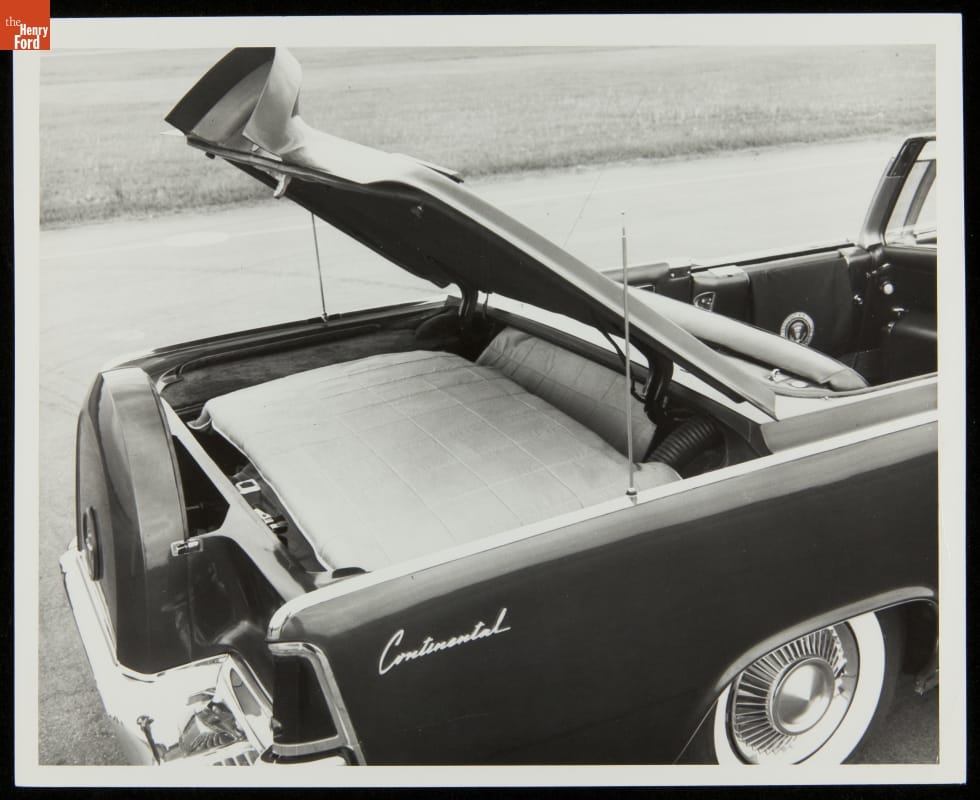
- Lincoln Continental Presidential Limousine, Showing Customized Removable Transparent Top Sections in Trunk, 1961 - As originally built, the 1961 Lincoln Continental Presidential Limousine had three different roof options. A removable steel section provided privacy, clear plastic sections provided weather protection, and a completely open top gave the president maximum visibility. The plastic panels fit neatly into the trunk and were available whenever needed. None of the removable tops was armored.
- 1961
- Collections - Artifact
Lincoln Continental Presidential Limousine, Showing Customized Removable Transparent Top Sections in Trunk, 1961
As originally built, the 1961 Lincoln Continental Presidential Limousine had three different roof options. A removable steel section provided privacy, clear plastic sections provided weather protection, and a completely open top gave the president maximum visibility. The plastic panels fit neatly into the trunk and were available whenever needed. None of the removable tops was armored.
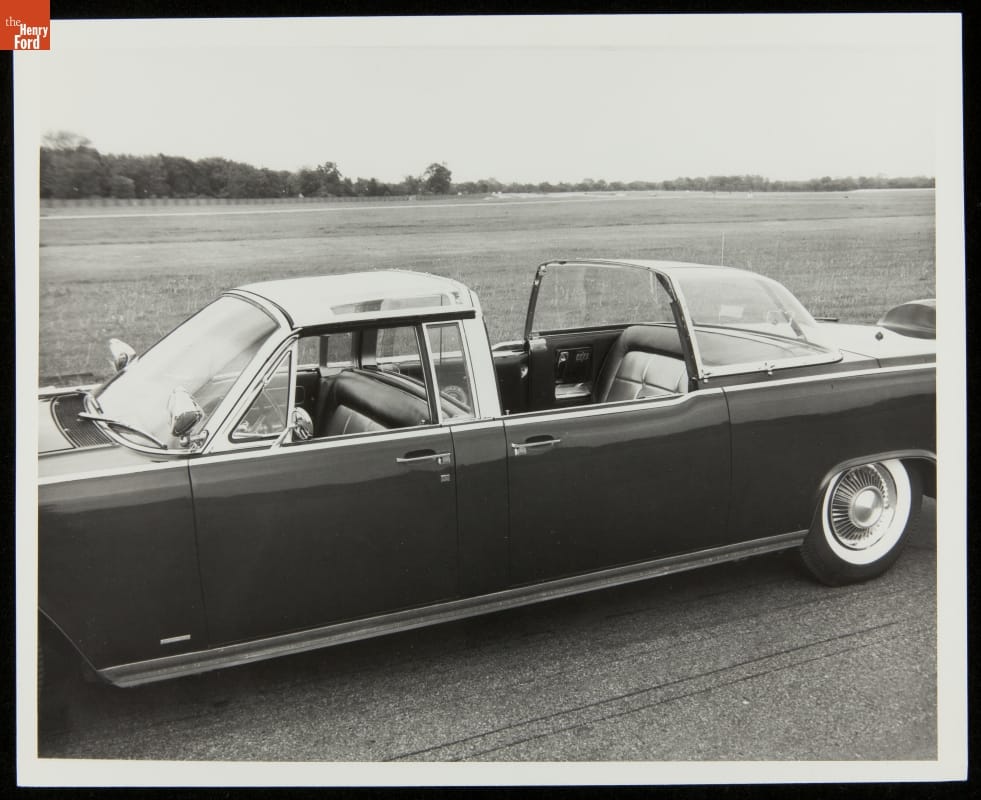
- Lincoln Continental Presidential Limousine, Showing Partial Transparent Tops, 1961 - As originally built, the 1961 Lincoln Continental Presidential Limousine had three different roof options. A removable steel section provided privacy, clear plastic sections provided weather protection, and a completely open top gave the president maximum visibility. The plastic panels fit neatly into the trunk and were available whenever needed. None of the removable tops was armored.
- 1961
- Collections - Artifact
Lincoln Continental Presidential Limousine, Showing Partial Transparent Tops, 1961
As originally built, the 1961 Lincoln Continental Presidential Limousine had three different roof options. A removable steel section provided privacy, clear plastic sections provided weather protection, and a completely open top gave the president maximum visibility. The plastic panels fit neatly into the trunk and were available whenever needed. None of the removable tops was armored.
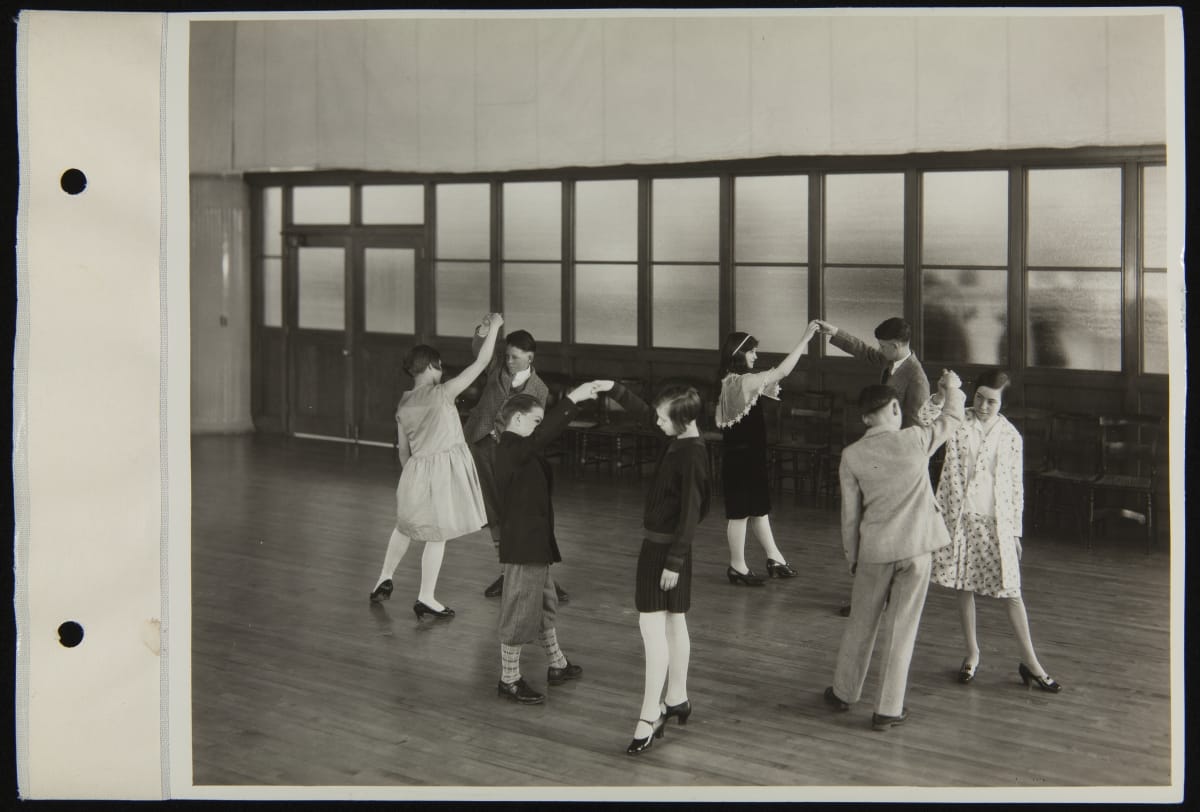
- Edison Institute School Students in the Dance Room of Ford Engineering Laboratory, May 1929 - Henry Ford created a room for dancing at Ford Motor Company's Engineering Lab, where his office and the company's engineering activities were located. These students are learning the traditional American dances of Henry Ford's youth -- along with dance etiquette. Later, Ford built Lovett Hall, an elegant ballroom named for his dancing master.
- May 11, 1929
- Collections - Artifact
Edison Institute School Students in the Dance Room of Ford Engineering Laboratory, May 1929
Henry Ford created a room for dancing at Ford Motor Company's Engineering Lab, where his office and the company's engineering activities were located. These students are learning the traditional American dances of Henry Ford's youth -- along with dance etiquette. Later, Ford built Lovett Hall, an elegant ballroom named for his dancing master.
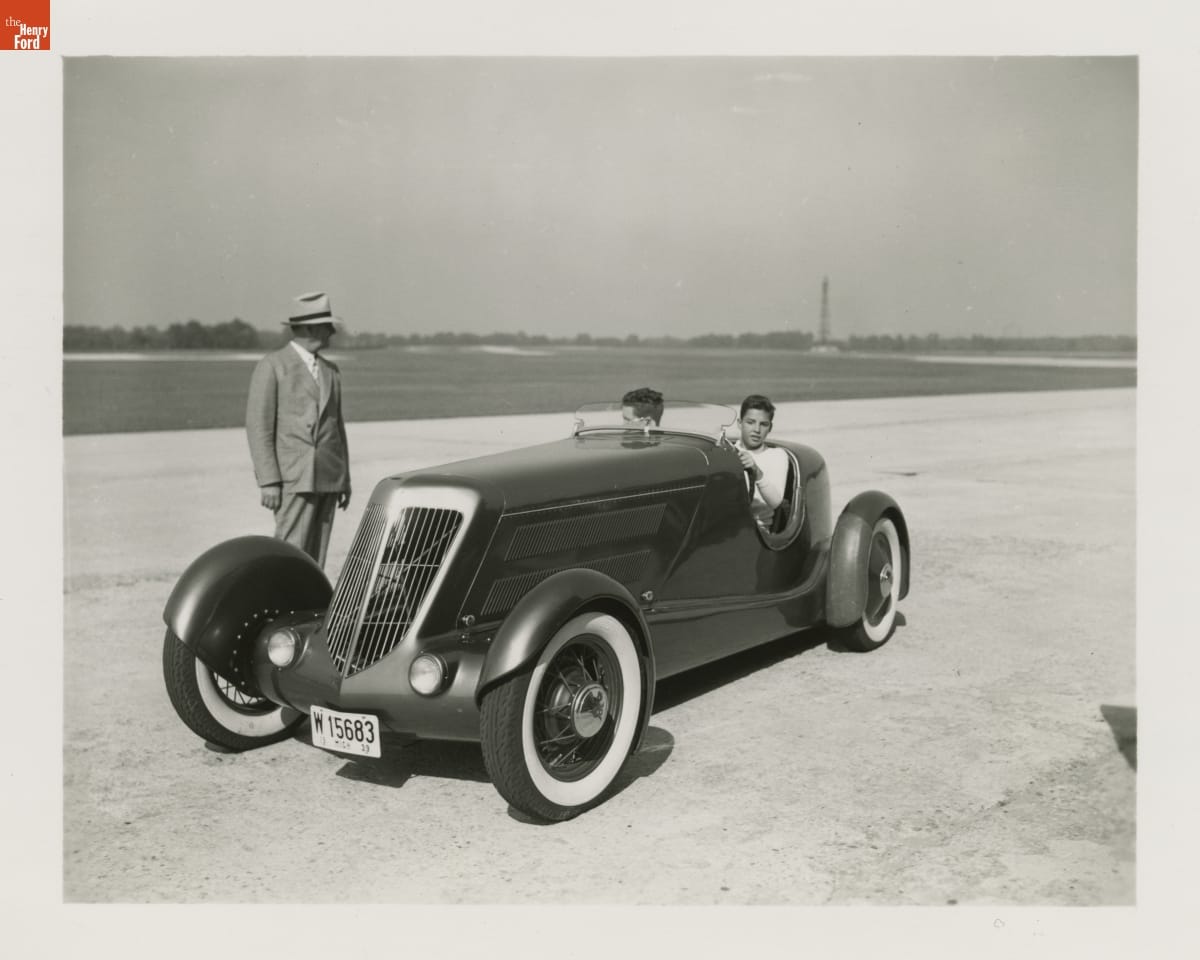
- William Clay Ford Driving a Custom-Built Speedster, June 1939 - Edsel Ford commissioned several special automobiles from Ford Motor Company. He collaborated with designer Bob Gregorie in 1934 to create this speedster based on the company's Model 40. William Clay Ford, Edsel Ford's youngest child, was photographed at the wheel. The Model 40 Special Speedster was prone to overheating, and its front end was modified multiple times to improve engine cooling.
- June 16, 1939
- Collections - Artifact
William Clay Ford Driving a Custom-Built Speedster, June 1939
Edsel Ford commissioned several special automobiles from Ford Motor Company. He collaborated with designer Bob Gregorie in 1934 to create this speedster based on the company's Model 40. William Clay Ford, Edsel Ford's youngest child, was photographed at the wheel. The Model 40 Special Speedster was prone to overheating, and its front end was modified multiple times to improve engine cooling.
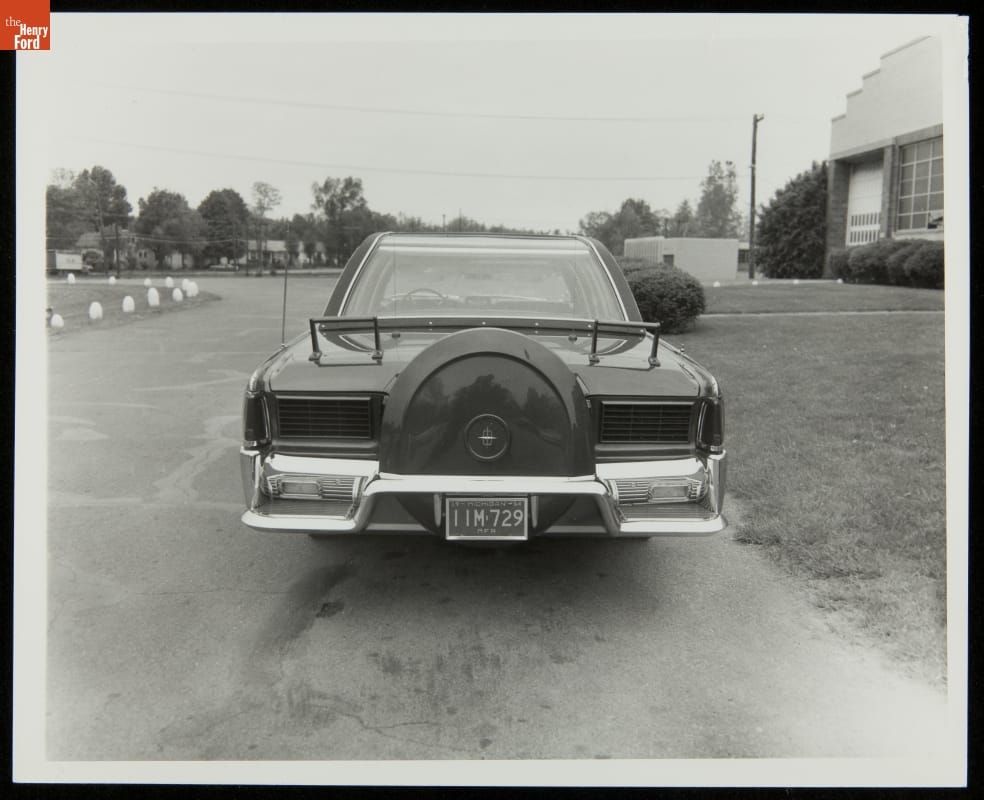
- 1961 Lincoln Continental Presidential Limousine without Sunshade after "Quick Fix," 1964 - After President John F. Kennedy's assassination on November 22, 1963, the Hess & Eisenhardt Company of Cincinnati, Ohio, rebuilt the 1961 Lincoln Continental Presidential Limousine into an armored car. The most prominent change was a permanent top fitted with bullet resistant windows around the sides and in the roof. The rooftop windows could be covered with a black vinyl top.
- June 01, 1964
- Collections - Artifact
1961 Lincoln Continental Presidential Limousine without Sunshade after "Quick Fix," 1964
After President John F. Kennedy's assassination on November 22, 1963, the Hess & Eisenhardt Company of Cincinnati, Ohio, rebuilt the 1961 Lincoln Continental Presidential Limousine into an armored car. The most prominent change was a permanent top fitted with bullet resistant windows around the sides and in the roof. The rooftop windows could be covered with a black vinyl top.
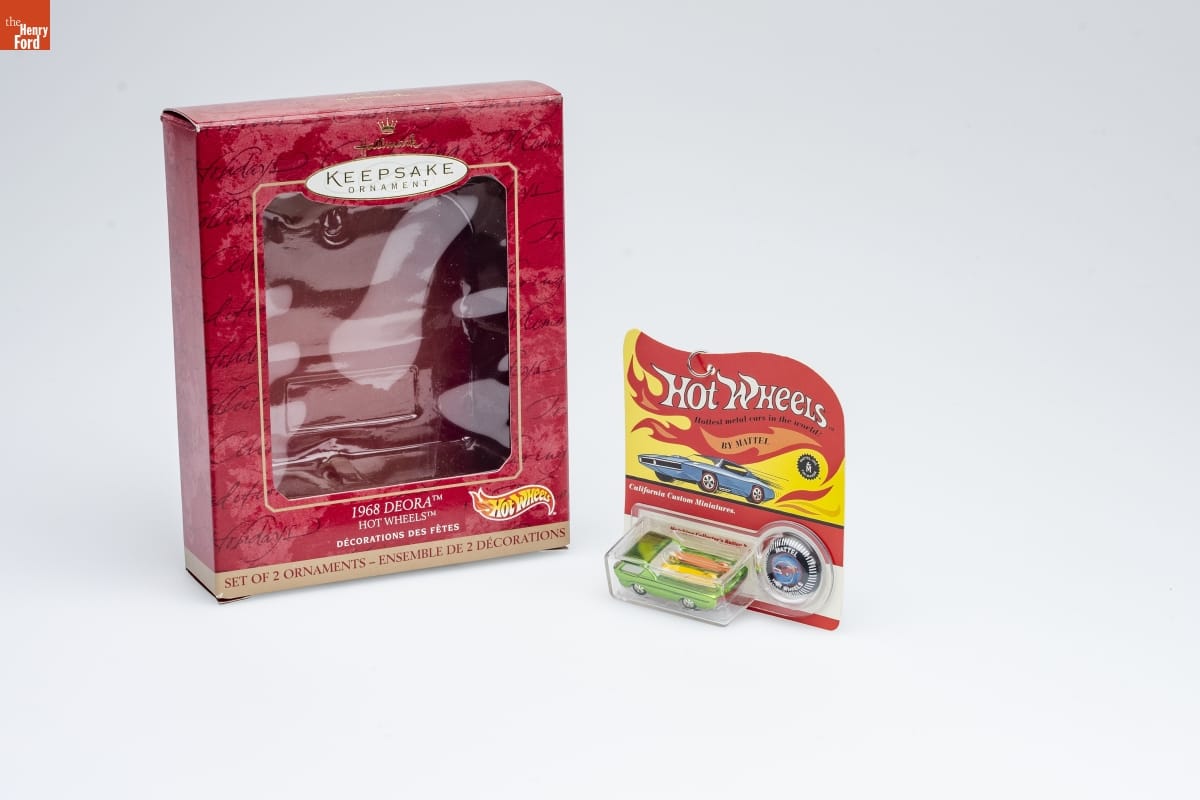
- Hallmark "Hot Wheels: 1968 Deora" Christmas Ornaments, 2000 - Already known for greeting cards, Hallmark introduced a line of Christmas ornaments in 1973. The company's annual release of an increasing array of ornaments revolutionized Christmas decorating, appealing to customers' interest in marking memories and milestones as well as expressing one's personality and unique tastes.
- 1968
- Collections - Artifact
Hallmark "Hot Wheels: 1968 Deora" Christmas Ornaments, 2000
Already known for greeting cards, Hallmark introduced a line of Christmas ornaments in 1973. The company's annual release of an increasing array of ornaments revolutionized Christmas decorating, appealing to customers' interest in marking memories and milestones as well as expressing one's personality and unique tastes.
- Hallmark "Hot Wheels: 1968 Deora" Christmas Ornaments, 2000 - Already known for greeting cards, Hallmark introduced a line of Christmas ornaments in 1973. The company's annual release of an increasing array of ornaments revolutionized Christmas decorating, appealing to customers' interest in marking memories and milestones as well as expressing one's personality and unique tastes.
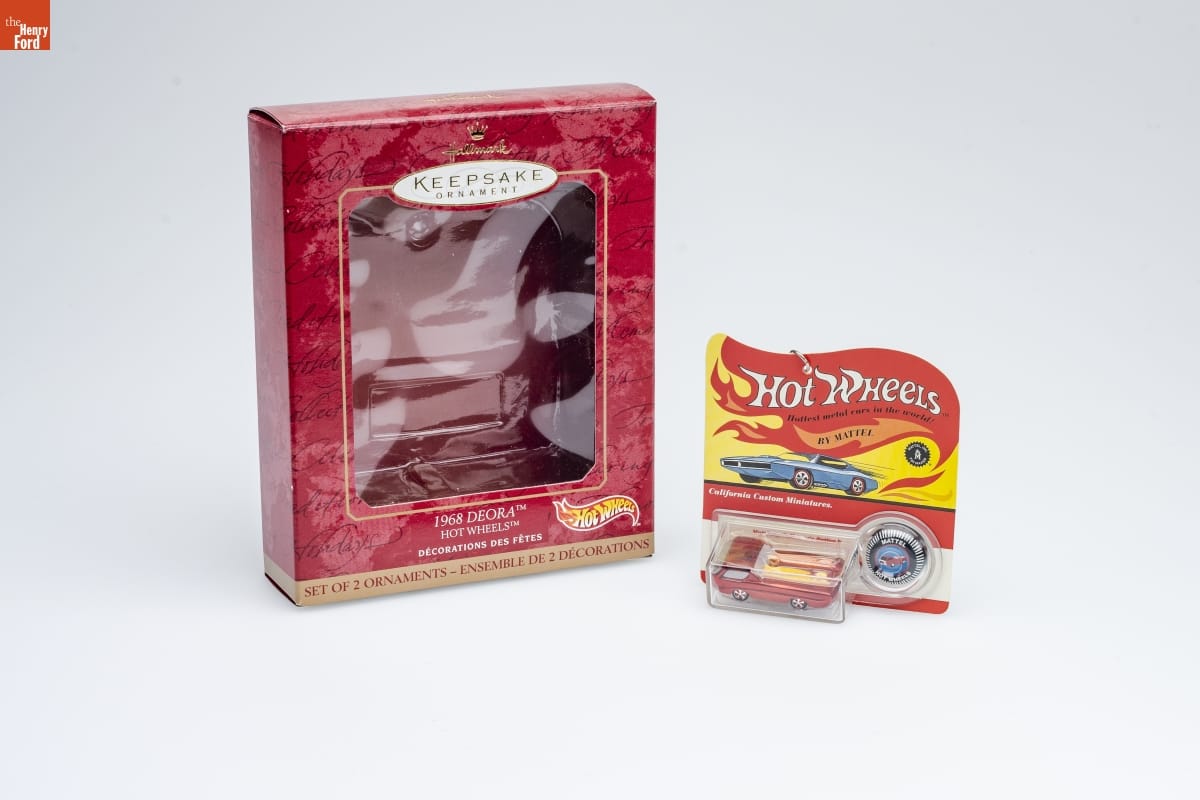
- 1968
- Collections - Artifact
Hallmark "Hot Wheels: 1968 Deora" Christmas Ornaments, 2000
Already known for greeting cards, Hallmark introduced a line of Christmas ornaments in 1973. The company's annual release of an increasing array of ornaments revolutionized Christmas decorating, appealing to customers' interest in marking memories and milestones as well as expressing one's personality and unique tastes.
- Lincoln Continental Presidential Limousine, Showing Transparent Top with Agent Standing on Side Step, 1961 - As originally built, the 1961 Lincoln Continental Presidential Limousine had three different roof options. A removable steel section provided privacy, clear plastic sections provided weather protection, and a completely open top gave the president maximum visibility. The plastic panels fit neatly into the trunk and were available whenever needed. None of the removable tops was armored.
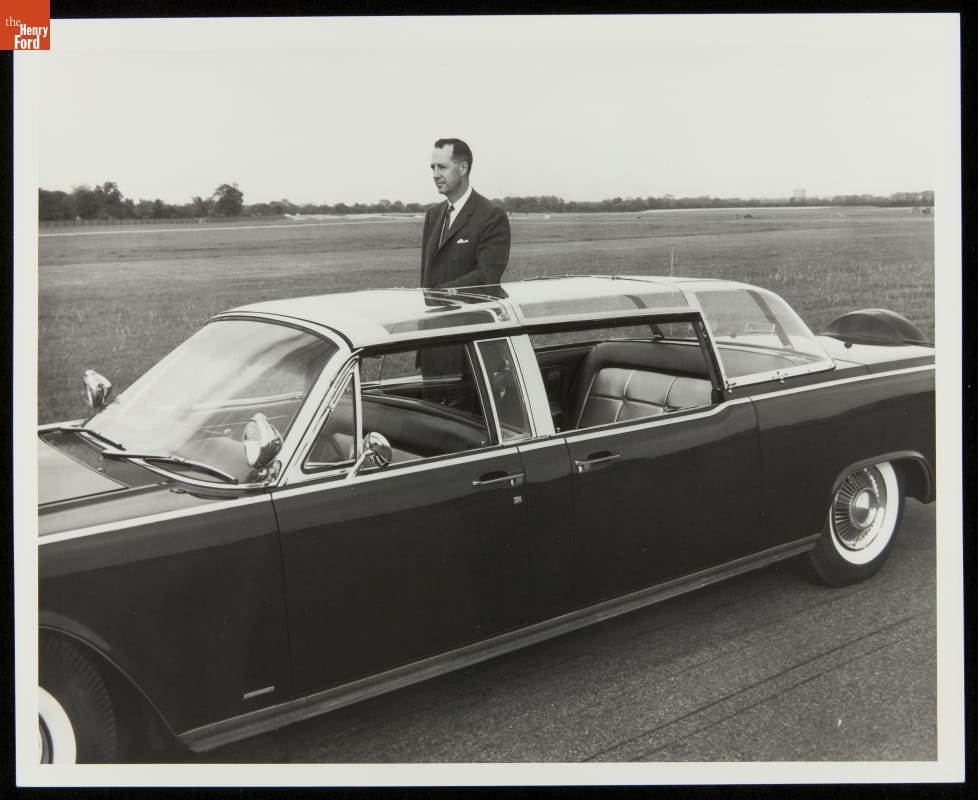
- 1961
- Collections - Artifact
Lincoln Continental Presidential Limousine, Showing Transparent Top with Agent Standing on Side Step, 1961
As originally built, the 1961 Lincoln Continental Presidential Limousine had three different roof options. A removable steel section provided privacy, clear plastic sections provided weather protection, and a completely open top gave the president maximum visibility. The plastic panels fit neatly into the trunk and were available whenever needed. None of the removable tops was armored.