
Search
- "Jim Crow Guide to the U.S.A.," 1959 - Activist, folklorist and author Stetson Kennedy exposed American racism in his book <EM>Jim Crow Guide to the U.S.A.</EM> First published in France in 1956 -- he could find no American publisher to take on the project -- this mock guidebook uncovered the reach of Jim Crow inequality. Kennedy examined a number of areas including where one could live, work, travel, eat, sleep or study.

- 1959
- Collections - Artifact
"Jim Crow Guide to the U.S.A.," 1959
Activist, folklorist and author Stetson Kennedy exposed American racism in his book Jim Crow Guide to the U.S.A. First published in France in 1956 -- he could find no American publisher to take on the project -- this mock guidebook uncovered the reach of Jim Crow inequality. Kennedy examined a number of areas including where one could live, work, travel, eat, sleep or study.
- "Life" Bound Volume of Issues, July-September 1945 - First published in 1883 as a general-interest and humor publication, Life magazine became America's first all-photographic weekly news magazine after being purchased and re-envisioned by publisher Henry Luce in 1936. Under Luce, its popularity boomed, and by the 1950s more than 22 million Americans read the publication. This bound volume contains issues from July through September 1945.

- July 1945-September 1945
- Collections - Artifact
"Life" Bound Volume of Issues, July-September 1945
First published in 1883 as a general-interest and humor publication, Life magazine became America's first all-photographic weekly news magazine after being purchased and re-envisioned by publisher Henry Luce in 1936. Under Luce, its popularity boomed, and by the 1950s more than 22 million Americans read the publication. This bound volume contains issues from July through September 1945.
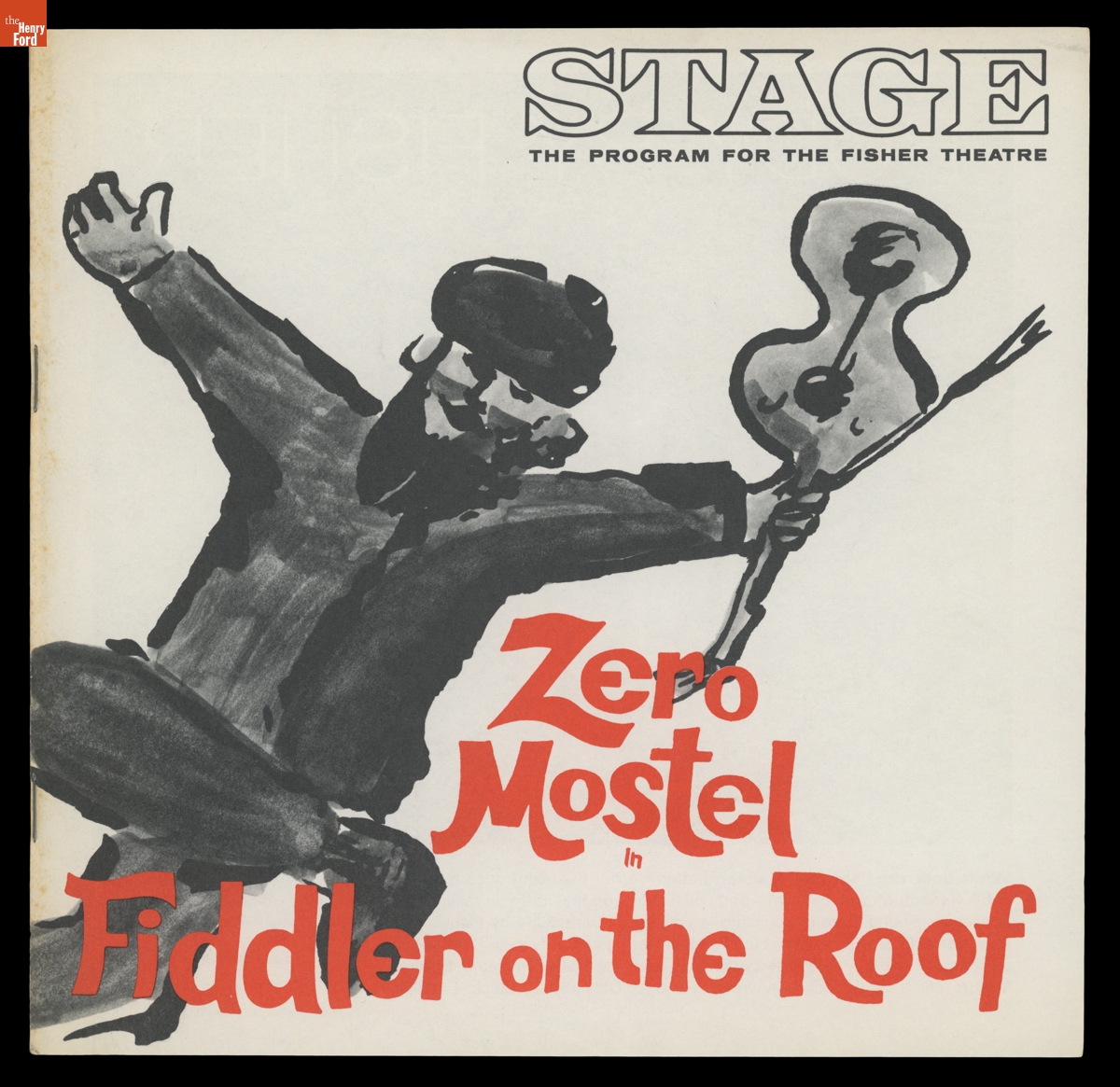
- "Fiddler on the Roof," 1964 - <body>Based on short stories from Yiddish language author Sholem Aleichem,<i> Fiddler on the Roof</i> tells the tale of Jewish milkman Tevye and his family as they struggle to maintain their traditions in the fast-changing world of turn-of-the-century Tsarist Russia. <i>Fiddler</i>, as it is affectionately known, became the first Broadway show to surpass 3,000 performances, and remains popular to this day. </body>
- 25 July 1964 - 25 August 1964
- Collections - Artifact
"Fiddler on the Roof," 1964
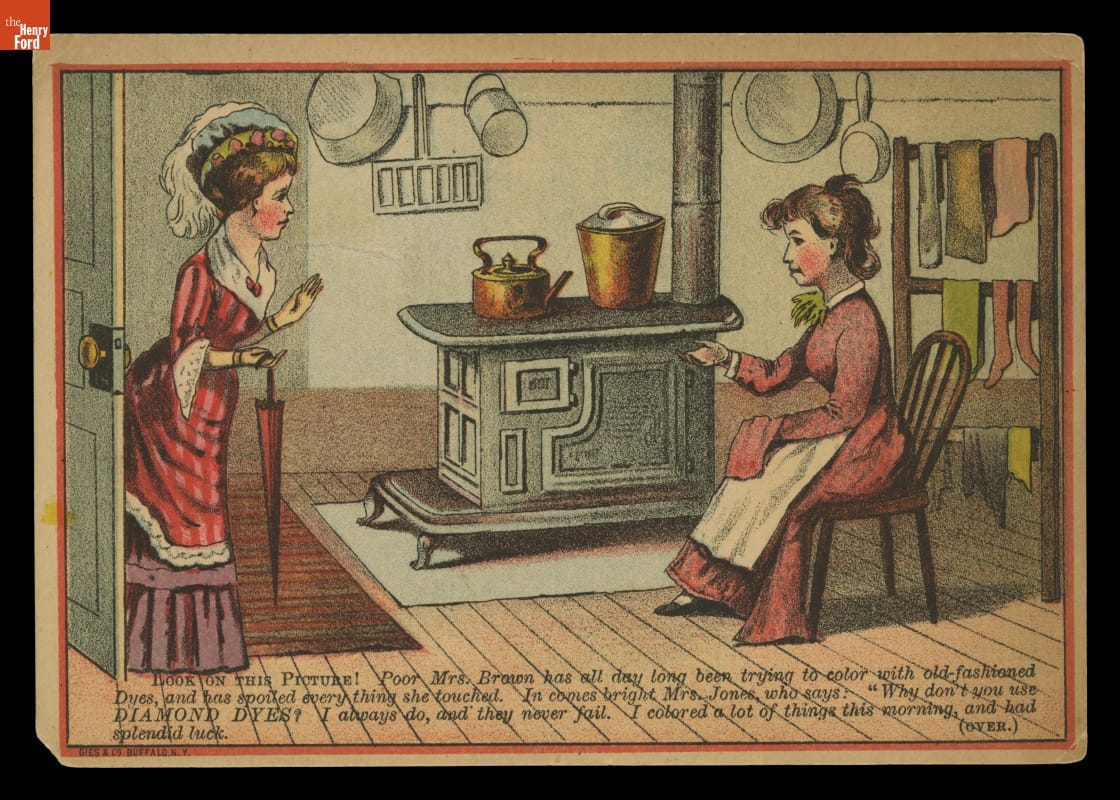
Based on short stories from Yiddish language author Sholem Aleichem, Fiddler on the Roof tells the tale of Jewish milkman Tevye and his family as they struggle to maintain their traditions in the fast-changing world of turn-of-the-century Tsarist Russia. Fiddler, as it is affectionately known, became the first Broadway show to surpass 3,000 performances, and remains popular to this day. - Trade Card for Diamond Dyes, Wells, Richardson & Co., 1880-1885 - In the last third of the nineteenth century, an unprecedented variety of consumer goods and services flooded the American market. Advertisers, armed with new methods of color printing, bombarded potential customers with trade cards. Americans enjoyed and often saved the vibrant little advertisements found in product packages or distributed by local merchants. Many survive as historical records of commercialism in the United States.
- 1880-1885
- Collections - Artifact
Trade Card for Diamond Dyes, Wells, Richardson & Co., 1880-1885
In the last third of the nineteenth century, an unprecedented variety of consumer goods and services flooded the American market. Advertisers, armed with new methods of color printing, bombarded potential customers with trade cards. Americans enjoyed and often saved the vibrant little advertisements found in product packages or distributed by local merchants. Many survive as historical records of commercialism in the United States.
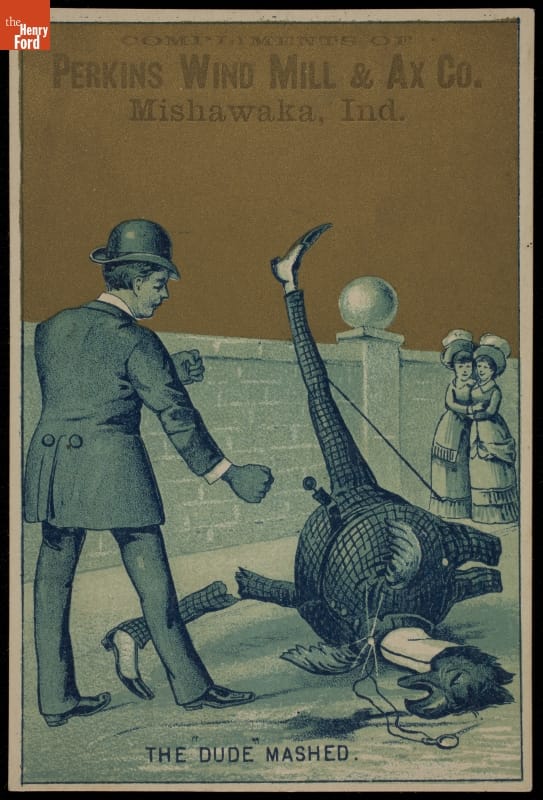
- Trade Card for Perkins Wind Mill & Ax Co., 1880-1900 - In the last third of the nineteenth century, an unprecedented variety of consumer goods and services flooded the American market. Advertisers, armed with new methods of color printing, bombarded potential customers with trade cards. Americans enjoyed and often saved the vibrant little advertisements found in product packages or distributed by local merchants. Many survive as historical records of commercialism in the United States.
- 1886
- Collections - Artifact
Trade Card for Perkins Wind Mill & Ax Co., 1880-1900
In the last third of the nineteenth century, an unprecedented variety of consumer goods and services flooded the American market. Advertisers, armed with new methods of color printing, bombarded potential customers with trade cards. Americans enjoyed and often saved the vibrant little advertisements found in product packages or distributed by local merchants. Many survive as historical records of commercialism in the United States.
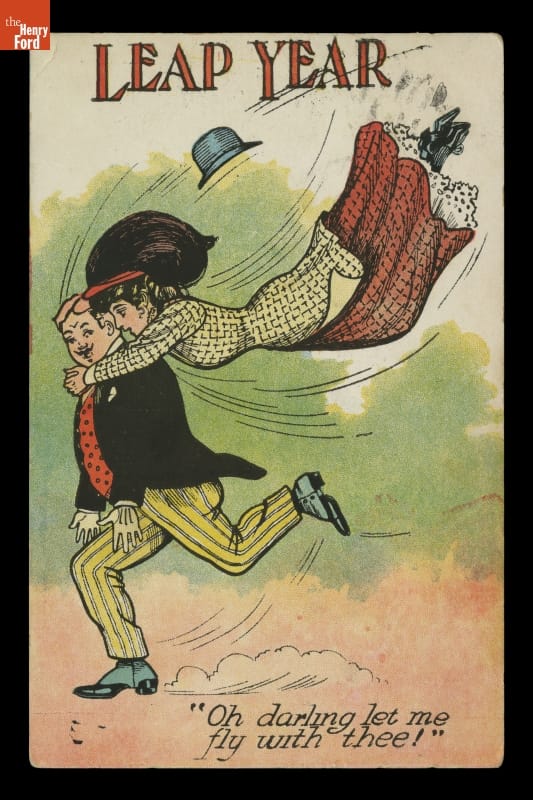
- Leap Year Postcard "Oh Darling Let me Fly with Thee!," 1908 - Leap year--when an extra day is added to the calendar as February 29--offered a special "opportunity" for women. In folk tradition, it was only then that women could propose marriage. Nowadays, marriage proposals are fair game for either gender. In the early 1900s, postcards like this one were an inexpensive and novel way to send colorful greetings to family and friends.
- April 10, 1908
- Collections - Artifact
Leap Year Postcard "Oh Darling Let me Fly with Thee!," 1908
Leap year--when an extra day is added to the calendar as February 29--offered a special "opportunity" for women. In folk tradition, it was only then that women could propose marriage. Nowadays, marriage proposals are fair game for either gender. In the early 1900s, postcards like this one were an inexpensive and novel way to send colorful greetings to family and friends.
- "I Stood Amid the Glitt'ring Throng," circa 1832 -
- circa 1832
- Collections - Artifact
"I Stood Amid the Glitt'ring Throng," circa 1832
- "Porgy," 1925 - <body>DuBose Heyward incorporated real-life elements of Charleston, South Carolina into his 1925 novel <i>Porgy</i>. The book's setting is based on an all-Black tenement in Charleston nicknamed "Cabbage Row"; some characters speak in a regional language called Gullah. Following the novel's critical and commercial success, Heyward and songwriters George and Ira Gershwin wrote the beloved 1935 opera adaptation, <i>Porgy and Bess</i>. </body>

- 1925
- Collections - Artifact
"Porgy," 1925
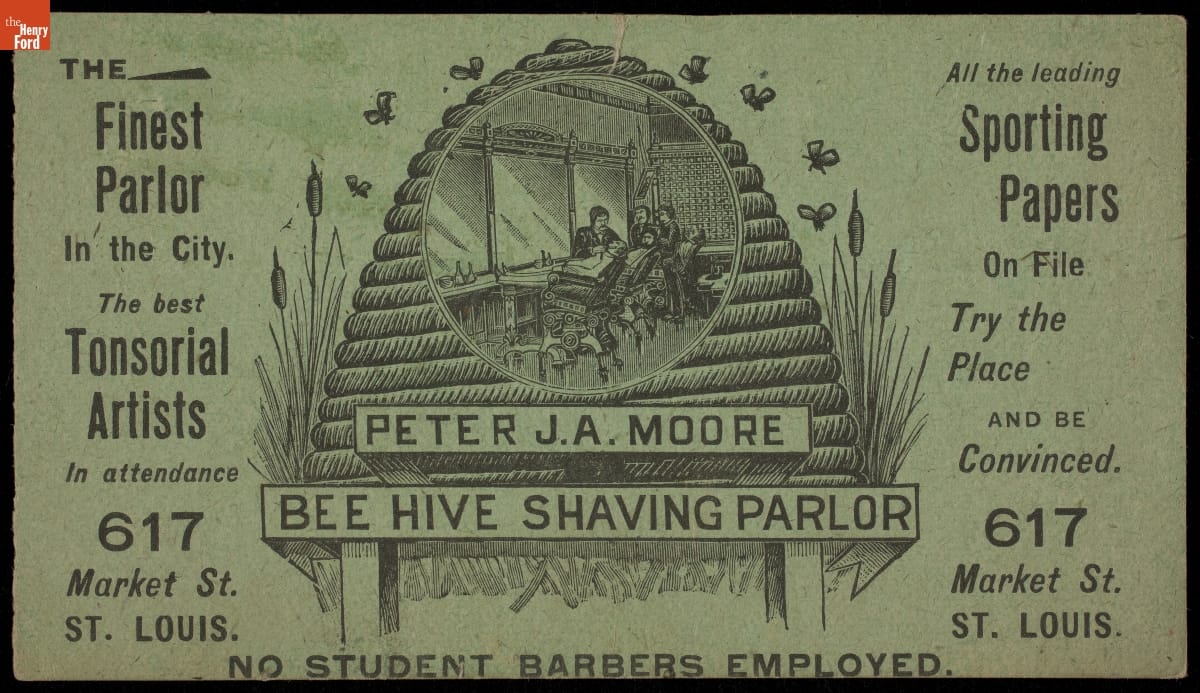
DuBose Heyward incorporated real-life elements of Charleston, South Carolina into his 1925 novel Porgy. The book's setting is based on an all-Black tenement in Charleston nicknamed "Cabbage Row"; some characters speak in a regional language called Gullah. Following the novel's critical and commercial success, Heyward and songwriters George and Ira Gershwin wrote the beloved 1935 opera adaptation, Porgy and Bess. - Trade Card for Moore's Barber Shop and Bee Hive Shaving Parlor, Peter J. A. Moore, 1870-1900 - In the last third of the nineteenth century, an unprecedented variety of consumer goods and services flooded the American market. Advertisers bombarded potential customers with trade cards. Americans enjoyed and saved the often illustrated little advertisements found in product packages or distributed by local merchants. Many survive as historical records of commercialism in the United States.
- 1870-1900
- Collections - Artifact
Trade Card for Moore's Barber Shop and Bee Hive Shaving Parlor, Peter J. A. Moore, 1870-1900
In the last third of the nineteenth century, an unprecedented variety of consumer goods and services flooded the American market. Advertisers bombarded potential customers with trade cards. Americans enjoyed and saved the often illustrated little advertisements found in product packages or distributed by local merchants. Many survive as historical records of commercialism in the United States.