
Search
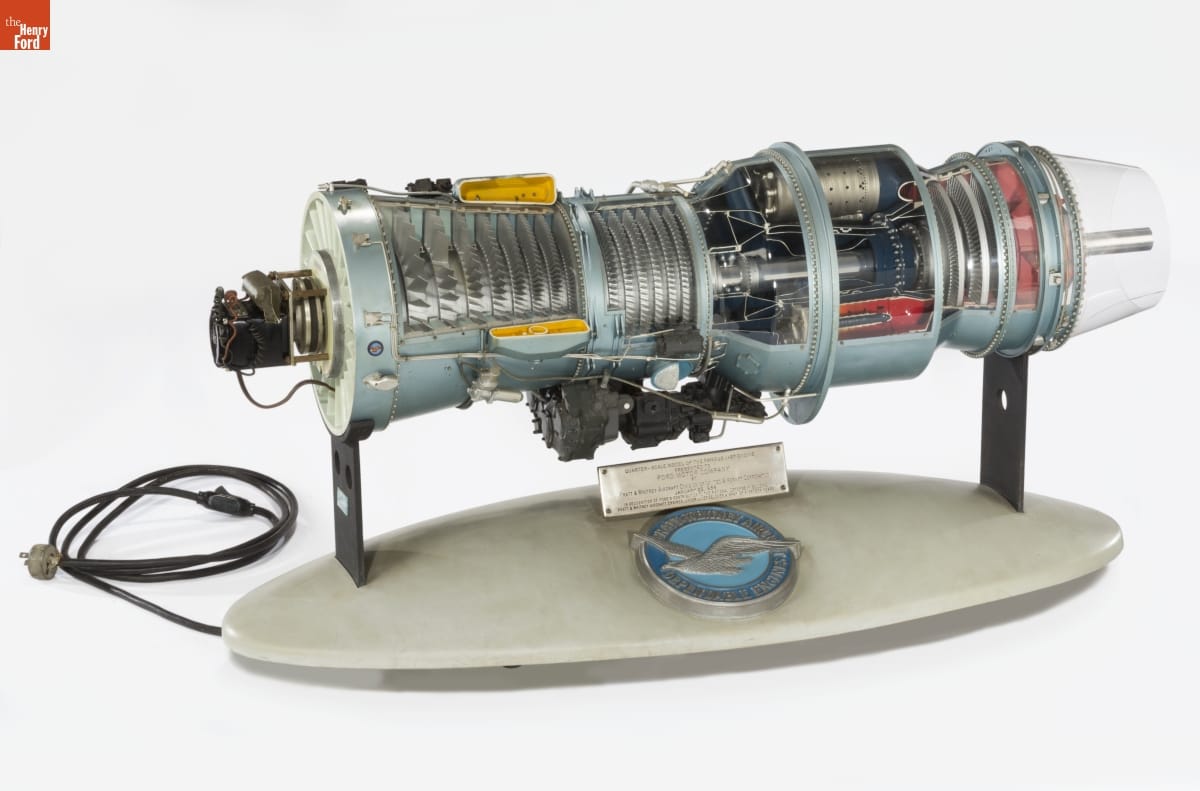
- Model of a Pratt & Whitney J-57 Turbojet Engine, circa 1958 - Pratt & Whitney introduced its J-57 turbojet engine in 1950. The versatile unit powered everything from Boeing 707 passenger airliners to B-52 bombers. Turbojets heat compressed air inside a gas turbine -- the turbine drives the compressor -- and expand the exhaust through a propelling nozzle, which provides thrust for the airplane. This electric-powered cutaway model illustrates the turbojet's operation.
- January 22, 1959
- Collections - Artifact
Model of a Pratt & Whitney J-57 Turbojet Engine, circa 1958
Pratt & Whitney introduced its J-57 turbojet engine in 1950. The versatile unit powered everything from Boeing 707 passenger airliners to B-52 bombers. Turbojets heat compressed air inside a gas turbine -- the turbine drives the compressor -- and expand the exhaust through a propelling nozzle, which provides thrust for the airplane. This electric-powered cutaway model illustrates the turbojet's operation.
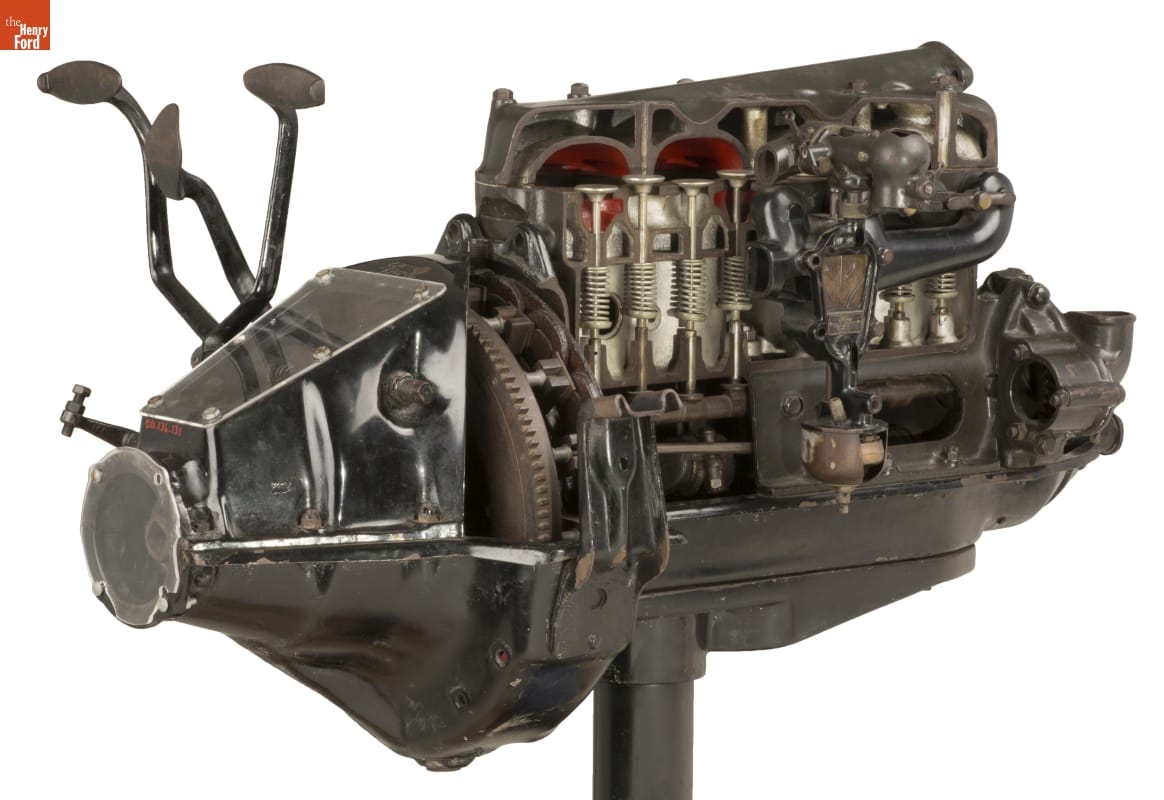
- Cutaway Engine from a Ford Model T, circa 1927 - Mechanical simplicity was one of the secrets behind the Model T's success. The engine had no fuel pump, relying on gravity to feed the carburetor. There was no water pump either, as a thermosiphon effect was used to circulate cooling water. The cylinder head removed in one piece for easier servicing. The engine and transmission shared the same lubricating oil.
- circa 1927
- Collections - Artifact
Cutaway Engine from a Ford Model T, circa 1927
Mechanical simplicity was one of the secrets behind the Model T's success. The engine had no fuel pump, relying on gravity to feed the carburetor. There was no water pump either, as a thermosiphon effect was used to circulate cooling water. The cylinder head removed in one piece for easier servicing. The engine and transmission shared the same lubricating oil.
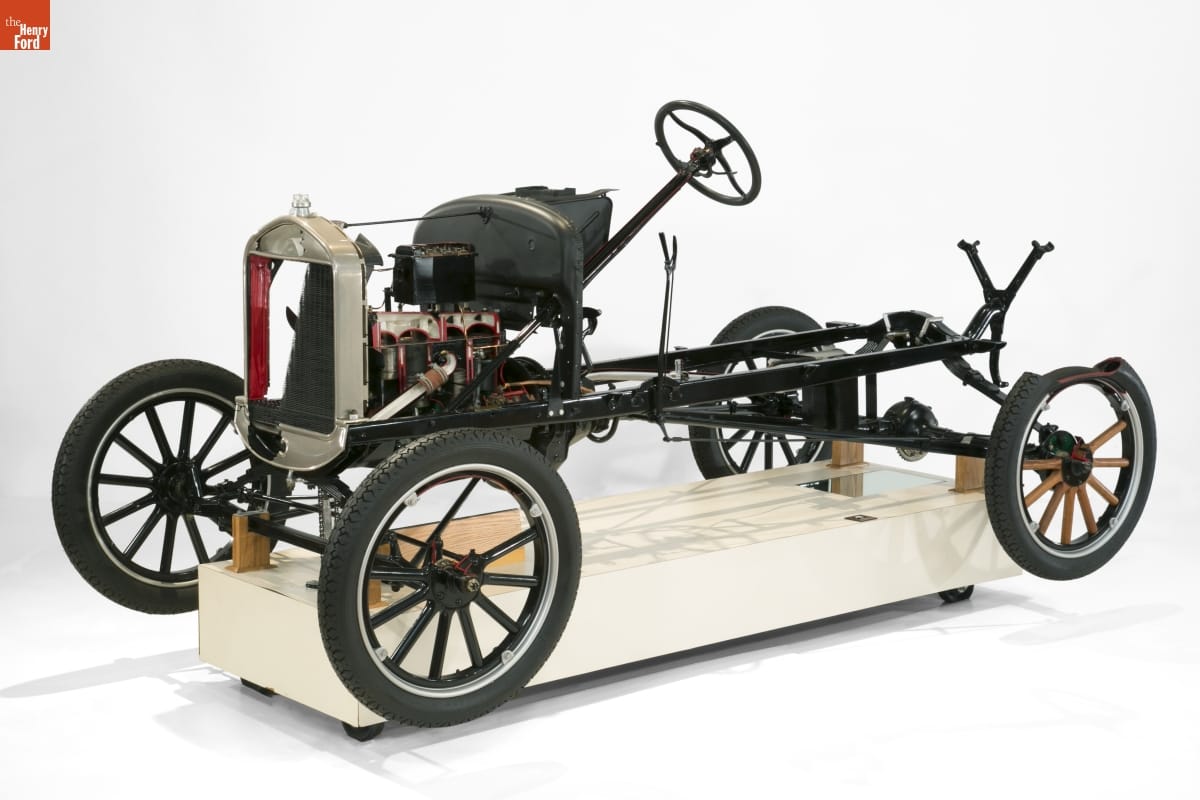
- Ford Model T Cutaway Chassis, circa 1926 - This cutaway was constructed in the workshops of Agencia Ford Stabile, a Ford distributor in Rosario, Argentina. It was assembled using miscellaneous Model T components from several different years (the engine block is 1922) -- amply demonstrating the interchangeability of Model T parts. It was exhibited in the distributor's showroom and at automobile shows in order to better familiarize Argentineans with the Model T.
- circa 1926
- Collections - Artifact
Ford Model T Cutaway Chassis, circa 1926
This cutaway was constructed in the workshops of Agencia Ford Stabile, a Ford distributor in Rosario, Argentina. It was assembled using miscellaneous Model T components from several different years (the engine block is 1922) -- amply demonstrating the interchangeability of Model T parts. It was exhibited in the distributor's showroom and at automobile shows in order to better familiarize Argentineans with the Model T.
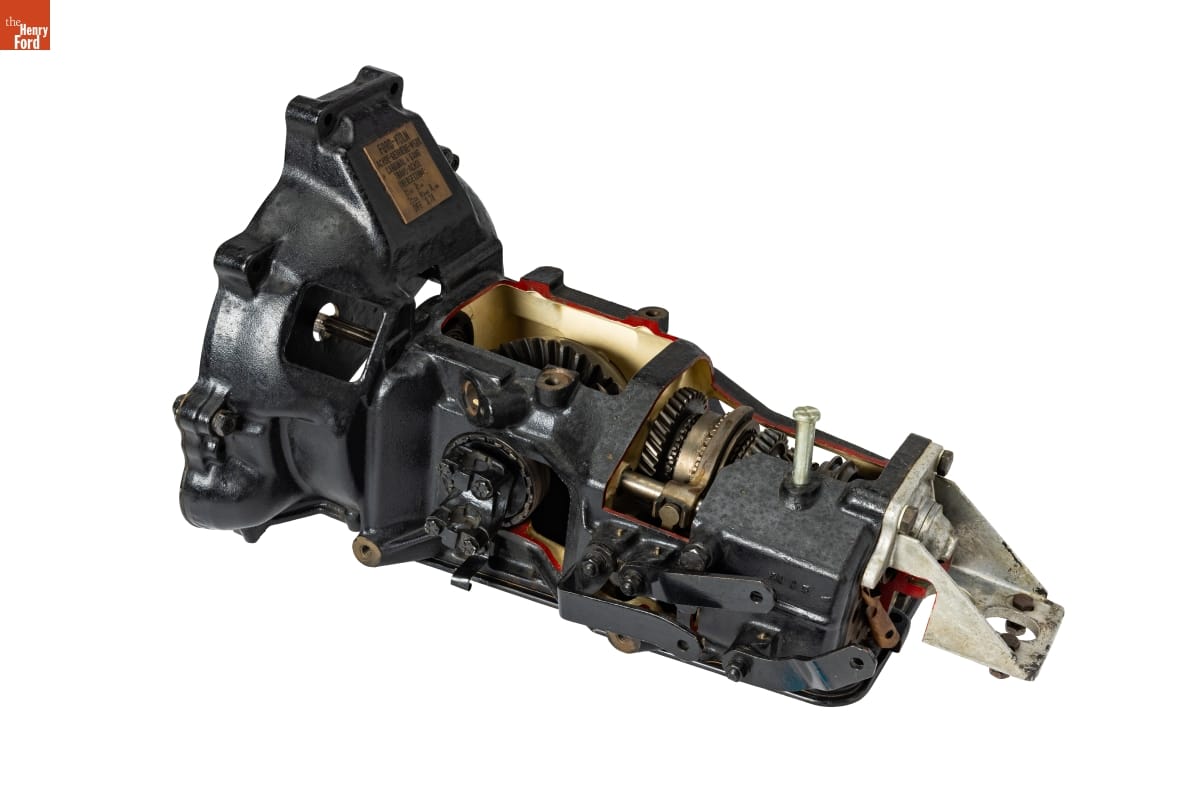
- Ford Cutaway Transaxle, 1962 - In the early 1960s, Ford developed a small front-wheel-drive car named Cardinal. Its front-mounted V-4 engine was connected to a transaxle combining the functions of a transmission, differential and axle. Initially planned for American and international markets, the car was produced only in Germany as the third-generation Taunus 12M. Its V-4 and transaxle were also used on the Mustang I experimental sports car.
- 1962
- Collections - Artifact
Ford Cutaway Transaxle, 1962
In the early 1960s, Ford developed a small front-wheel-drive car named Cardinal. Its front-mounted V-4 engine was connected to a transaxle combining the functions of a transmission, differential and axle. Initially planned for American and international markets, the car was produced only in Germany as the third-generation Taunus 12M. Its V-4 and transaxle were also used on the Mustang I experimental sports car.
- 2016 Ford GT Cutaway - Ford and Multimatic built the GT in racing and production versions. This cutaway is half race car, half road car. The race car has a large fixed spoiler and additional cooling ducts, while the road car has a smaller adjustable spoiler and unique headlamps that meet federal safety regulations. The basic structure of the tub and passenger compartment is identical.

- 2016
- Collections - Artifact
2016 Ford GT Cutaway
Ford and Multimatic built the GT in racing and production versions. This cutaway is half race car, half road car. The race car has a large fixed spoiler and additional cooling ducts, while the road car has a smaller adjustable spoiler and unique headlamps that meet federal safety regulations. The basic structure of the tub and passenger compartment is identical.
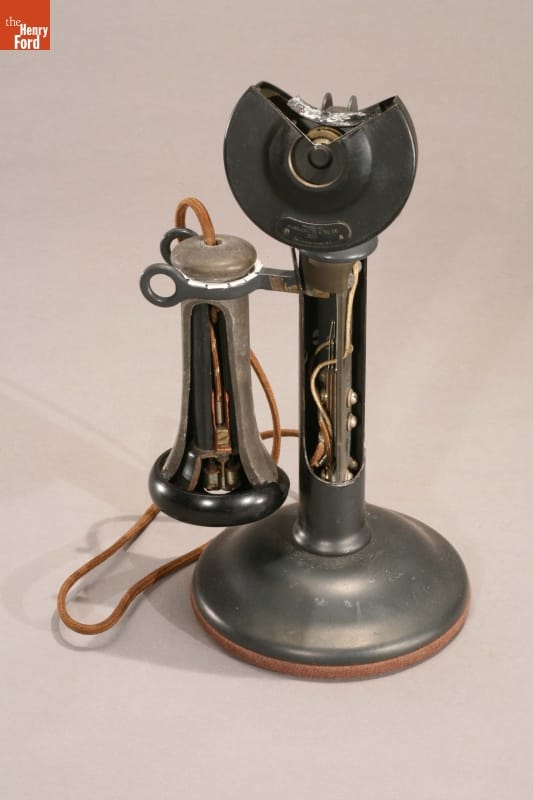
- Telephone Cutaway Model, circa 1915 -
- circa 1915
- Collections - Artifact
Telephone Cutaway Model, circa 1915
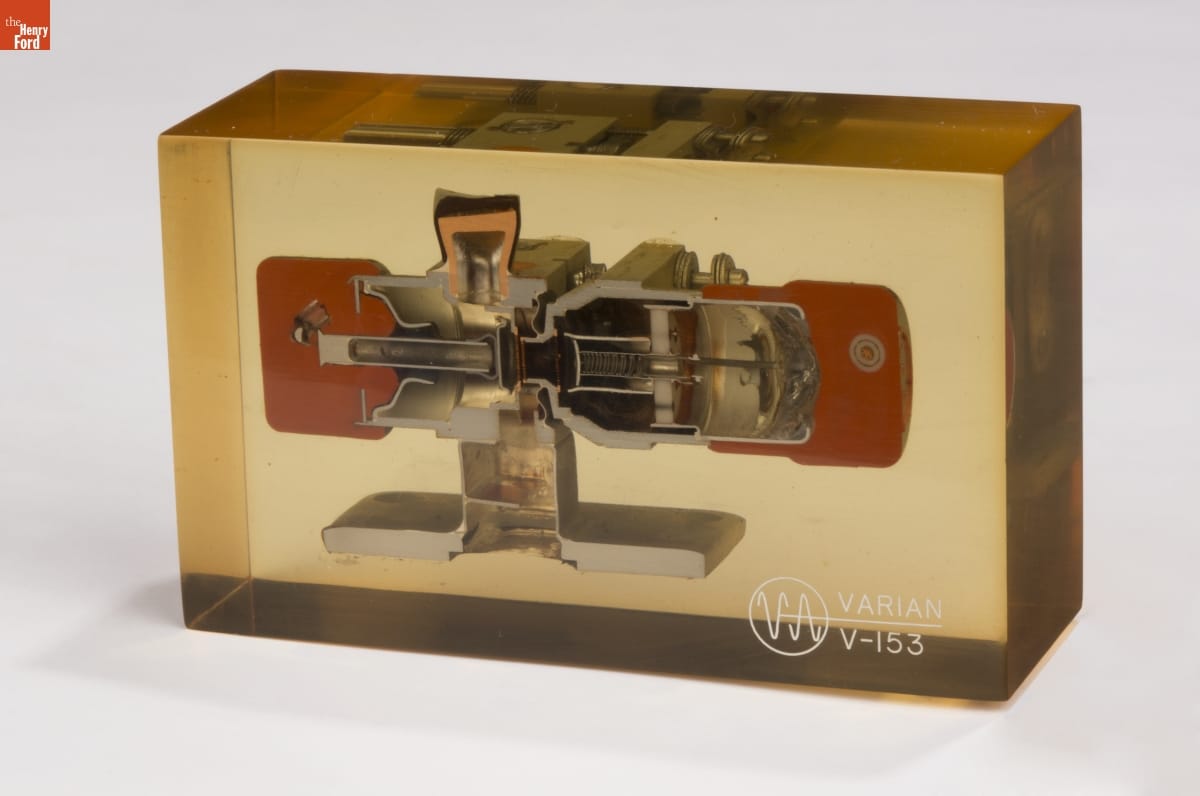
- Cutaway of a Varian V-153 Klystron Tube, circa 1955 - The klystrom is a vacuum tube that amplifies high-range radio frequencies; it is an essential factor in the history of radar, microwave, and telecommunications. Klystroms also power UHF television, particle accelerators, and radiation therapy equipment. In 1937, brothers Russell and Sigurd Varian invented the klystrom, and founded Varian Associates -- one of the first technology companies in Silicon Valley.
- circa 1955
- Collections - Artifact
Cutaway of a Varian V-153 Klystron Tube, circa 1955
The klystrom is a vacuum tube that amplifies high-range radio frequencies; it is an essential factor in the history of radar, microwave, and telecommunications. Klystroms also power UHF television, particle accelerators, and radiation therapy equipment. In 1937, brothers Russell and Sigurd Varian invented the klystrom, and founded Varian Associates -- one of the first technology companies in Silicon Valley.
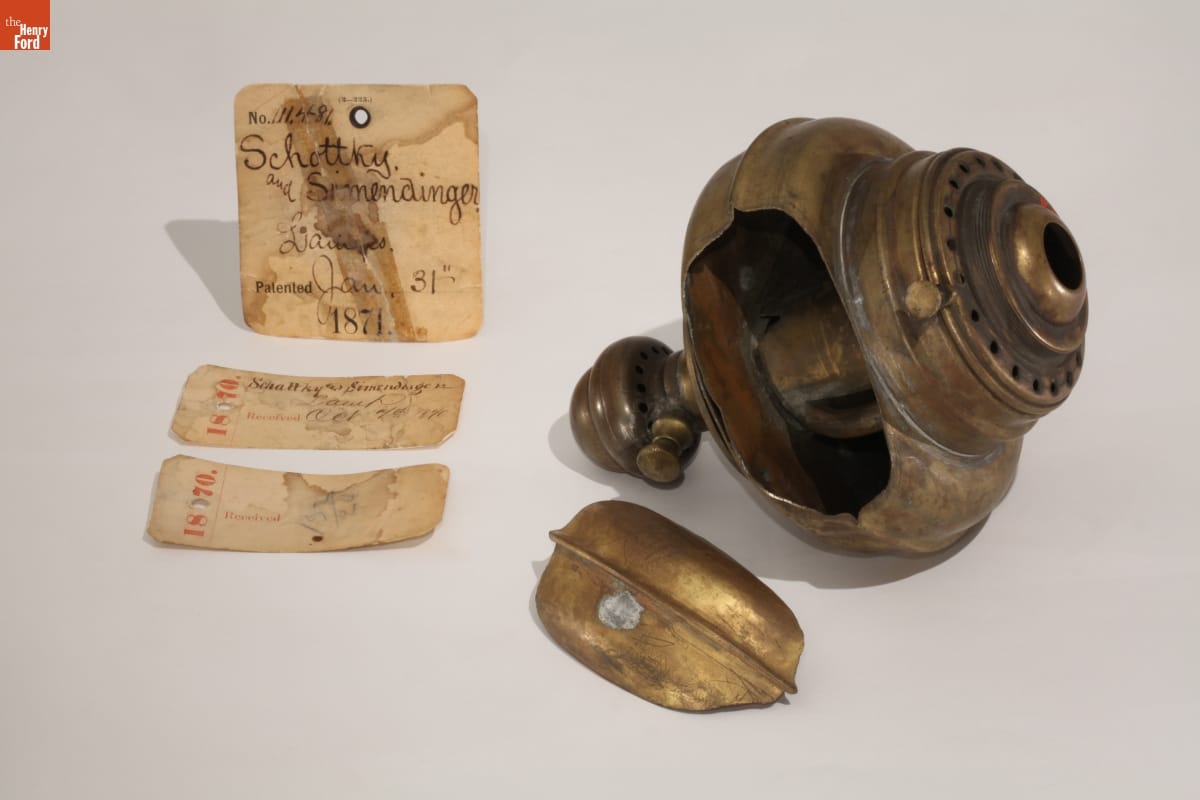
- Patent Model of Solar Lamp, 1871 - From 1790 to 1880, the U.S. Patent Office required applicants to submit a miniature model along with diagrams and written descriptions detailing the operation of their invention. Patent models could be no larger than 12" by 12" by 12". Though they were usually not operational, these models helped explain an inventor's idea and protect it from competitors.
- January 31, 1871
- Collections - Artifact
Patent Model of Solar Lamp, 1871
From 1790 to 1880, the U.S. Patent Office required applicants to submit a miniature model along with diagrams and written descriptions detailing the operation of their invention. Patent models could be no larger than 12" by 12" by 12". Though they were usually not operational, these models helped explain an inventor's idea and protect it from competitors.
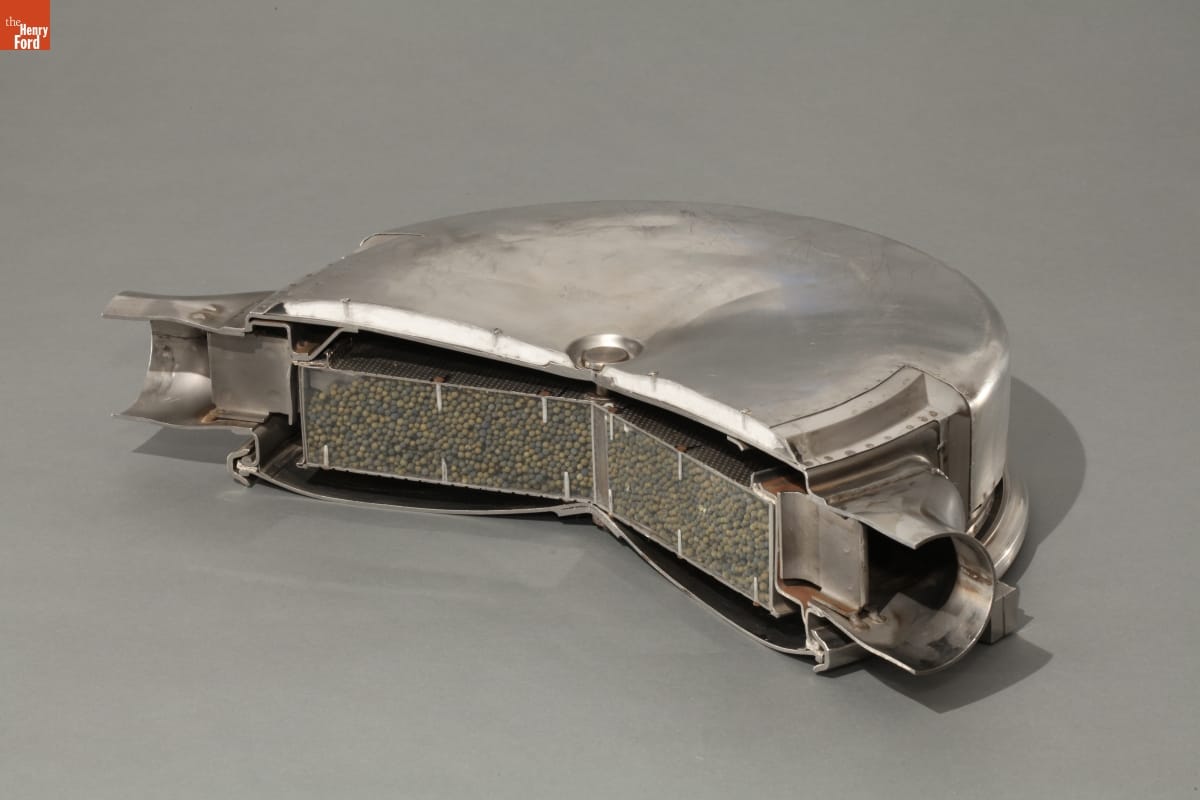
- Catalytic Converter Model, 1970 - The Clean Air Act of 1970 required a dramatic reduction in tailpipe emissions. To comply, automobile manufacturers installed catalytic converters. Noxious byproducts of combustion passed from the engine through the catalytic converter, where chemical reactions converted the emissions to less toxic substances. This particular cutaway catalytic converter was used as evidence in a patent infringement suit.
- 1970
- Collections - Artifact
Catalytic Converter Model, 1970
The Clean Air Act of 1970 required a dramatic reduction in tailpipe emissions. To comply, automobile manufacturers installed catalytic converters. Noxious byproducts of combustion passed from the engine through the catalytic converter, where chemical reactions converted the emissions to less toxic substances. This particular cutaway catalytic converter was used as evidence in a patent infringement suit.
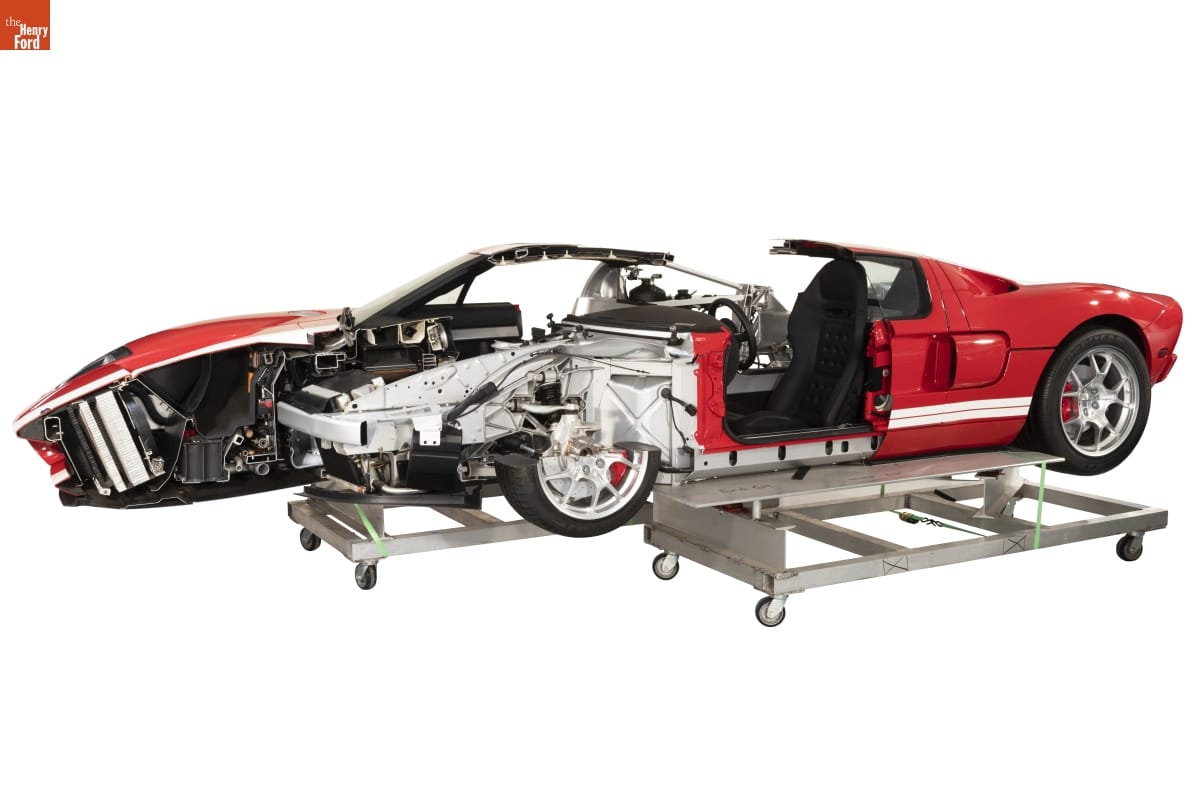
- Ford GT Sports Car Cutaway, 2005 - Ford continued to celebrate its 100th anniversary with an updated version of the company's acclaimed GT sports car. The 2005 Ford GT recalled the look of the original GT40, which beat Ferrari at Le Mans in 1966, but its chassis and supercharged V-8 were entirely new. Ford displayed this elaborate cutaway at major auto shows during the GT's two-year production run.
- 2005
- Collections - Artifact
Ford GT Sports Car Cutaway, 2005
Ford continued to celebrate its 100th anniversary with an updated version of the company's acclaimed GT sports car. The 2005 Ford GT recalled the look of the original GT40, which beat Ferrari at Le Mans in 1966, but its chassis and supercharged V-8 were entirely new. Ford displayed this elaborate cutaway at major auto shows during the GT's two-year production run.