
Search
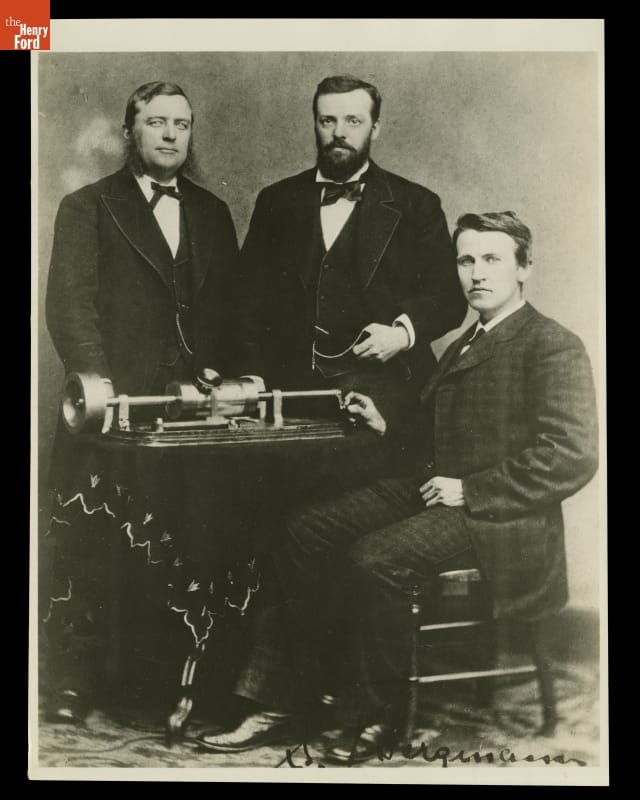
- Thomas Edison, Charles Batchelor, and Uriah Painter with Edison's Phonograph, April 18, 1878 - While in Washington, D.C., for an 1878 presentation to the National Academy of Sciences, inventor Thomas Edison, his lab assistant Charles Batchelor, and Philadelphia Inquirer correspondent Uriah Painter sat for famed Civil War photographer Mathew Brady. They posed with Edison's phonograph, a new invention that could, for the first time, record and reproduce sound. The machine made Edison an overnight celebrity.
- April 18, 1878
- Collections - Artifact
Thomas Edison, Charles Batchelor, and Uriah Painter with Edison's Phonograph, April 18, 1878
While in Washington, D.C., for an 1878 presentation to the National Academy of Sciences, inventor Thomas Edison, his lab assistant Charles Batchelor, and Philadelphia Inquirer correspondent Uriah Painter sat for famed Civil War photographer Mathew Brady. They posed with Edison's phonograph, a new invention that could, for the first time, record and reproduce sound. The machine made Edison an overnight celebrity.
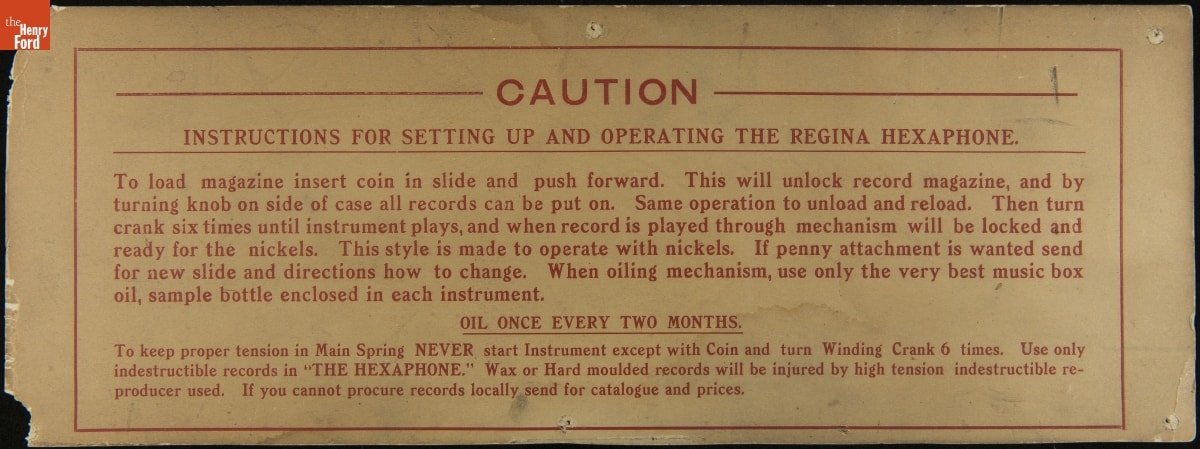
- Instructions for Setting Up and Operating the Regina Hexaphone, circa 1912 -
- circa 1912
- Collections - Artifact
Instructions for Setting Up and Operating the Regina Hexaphone, circa 1912
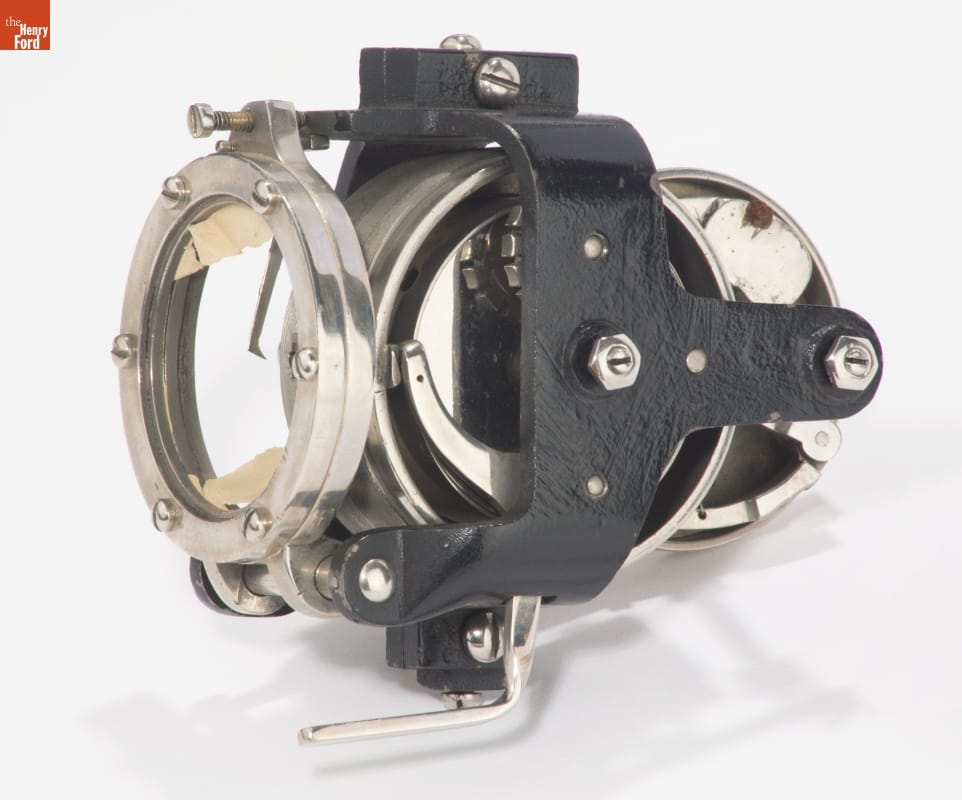
- Edison Talking Doll Phonograph with Cylinder Records, 1888 - Thomas Edison's 1878 patent for a "phonographic" doll resulted in the production of about 100 "talking" dolls between 1889 and 1890. This doll "talked" by means of a scaled-down phonograph inside its body, which played nursery rhymes like "Mary Had a Little Lamb." Only made for a short time, the doll's mechanism was unreliable and the recorded voices scared children.
- 1888
- Collections - Artifact
Edison Talking Doll Phonograph with Cylinder Records, 1888
Thomas Edison's 1878 patent for a "phonographic" doll resulted in the production of about 100 "talking" dolls between 1889 and 1890. This doll "talked" by means of a scaled-down phonograph inside its body, which played nursery rhymes like "Mary Had a Little Lamb." Only made for a short time, the doll's mechanism was unreliable and the recorded voices scared children.
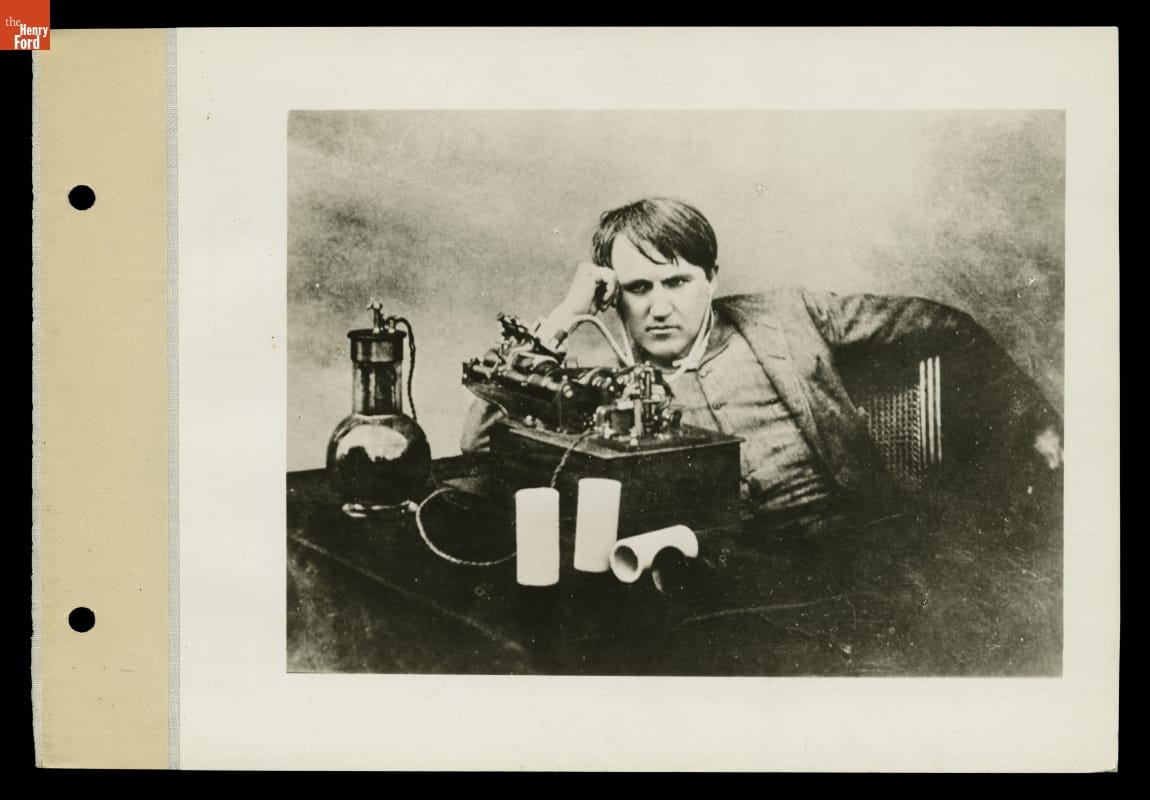
- Thomas Edison Perfecting His Wax Cylinder Phonograph, 1888 - Throughout his life, Thomas Edison continued to develop the phonograph he had invented in 1877. On June 11, 1888, Edison launched a round-the-clock session with his assistants to perfect the phonograph. When he emerged from his West Orange, New Jersey, laboratory days later, the exhausted, slumping inventor posed for this photograph with his improved machine.
- June 10, 1888
- Collections - Artifact
Thomas Edison Perfecting His Wax Cylinder Phonograph, 1888
Throughout his life, Thomas Edison continued to develop the phonograph he had invented in 1877. On June 11, 1888, Edison launched a round-the-clock session with his assistants to perfect the phonograph. When he emerged from his West Orange, New Jersey, laboratory days later, the exhausted, slumping inventor posed for this photograph with his improved machine.
- Tinfoil Phonograph, 1880 -
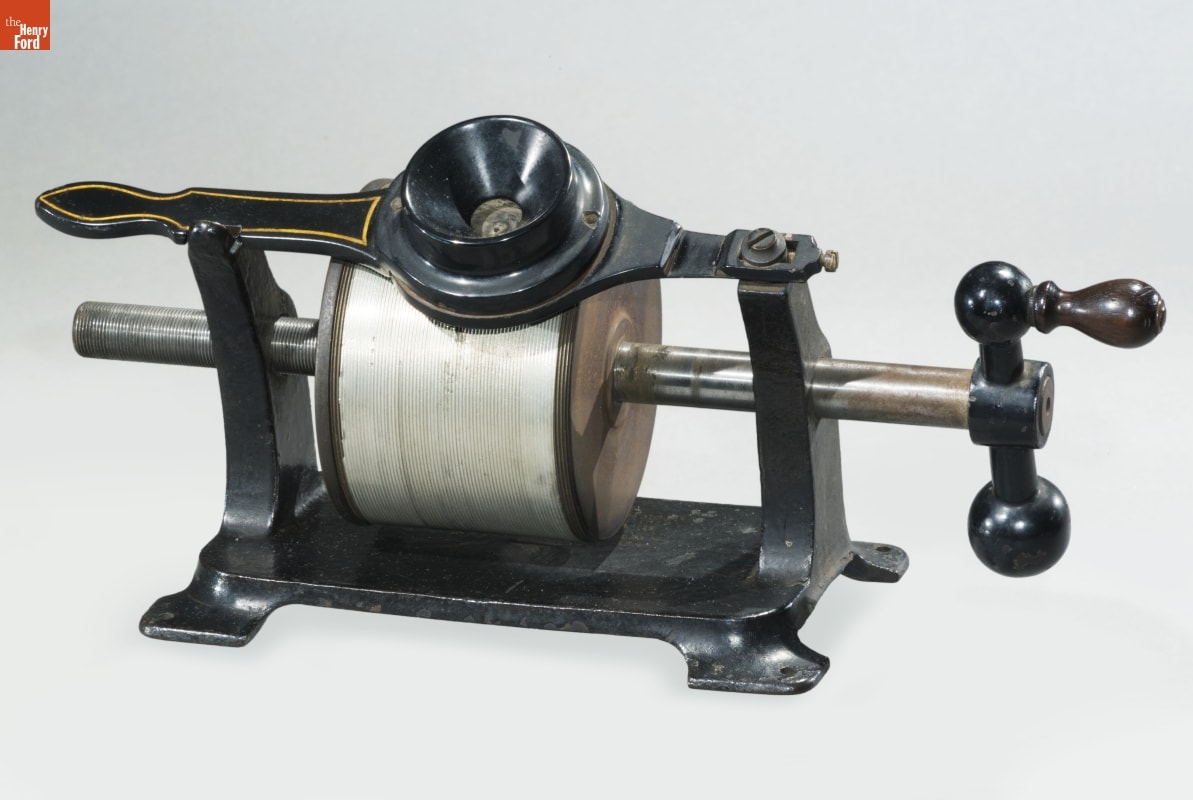
- 1880
- Collections - Artifact
Tinfoil Phonograph, 1880
- Edison Experimental Cylinder Phonograph, 1909 -
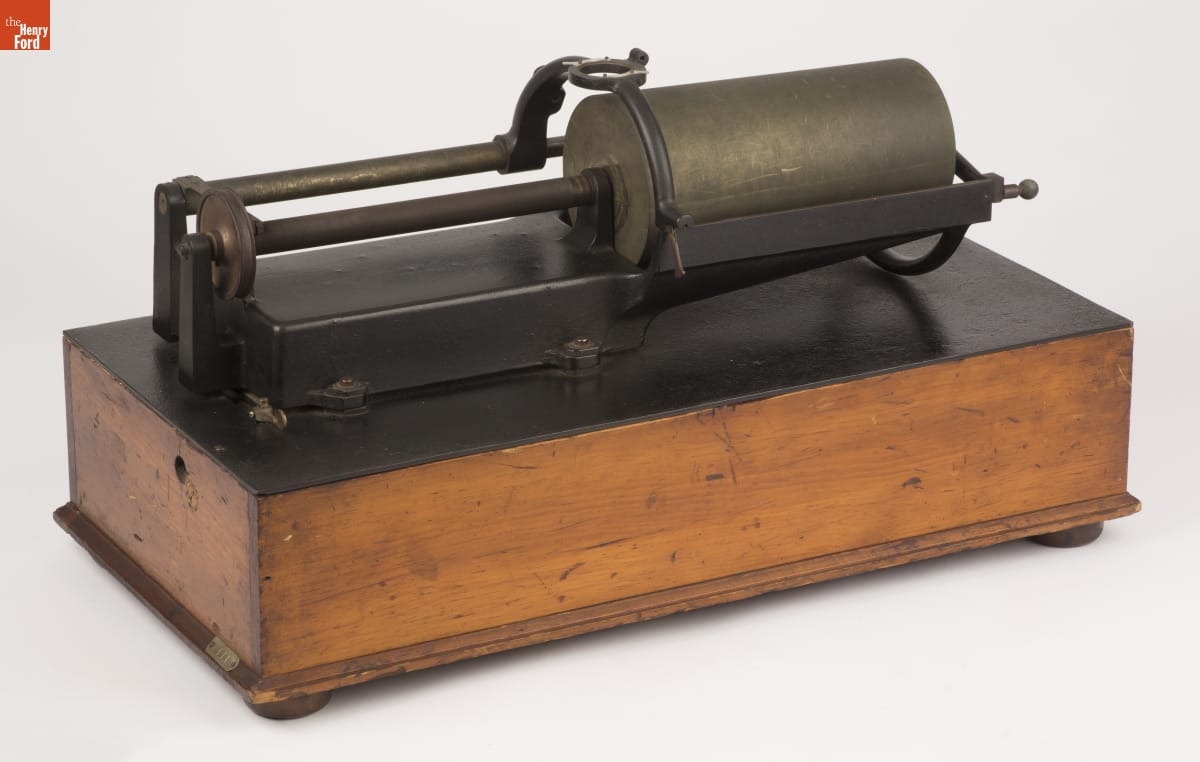
- 1909
- Collections - Artifact
Edison Experimental Cylinder Phonograph, 1909
- Thomas Edison Perfecting His Wax Cylinder Phonograph, 1888 - Throughout his life, Thomas Edison continued to develop the phonograph he had invented in 1877. On June 11, 1888, Edison launched a round-the-clock session with his assistants to perfect the phonograph. When he emerged from his West Orange, New Jersey, laboratory days later, the exhausted, slumping inventor posed for this photograph with his improved machine.
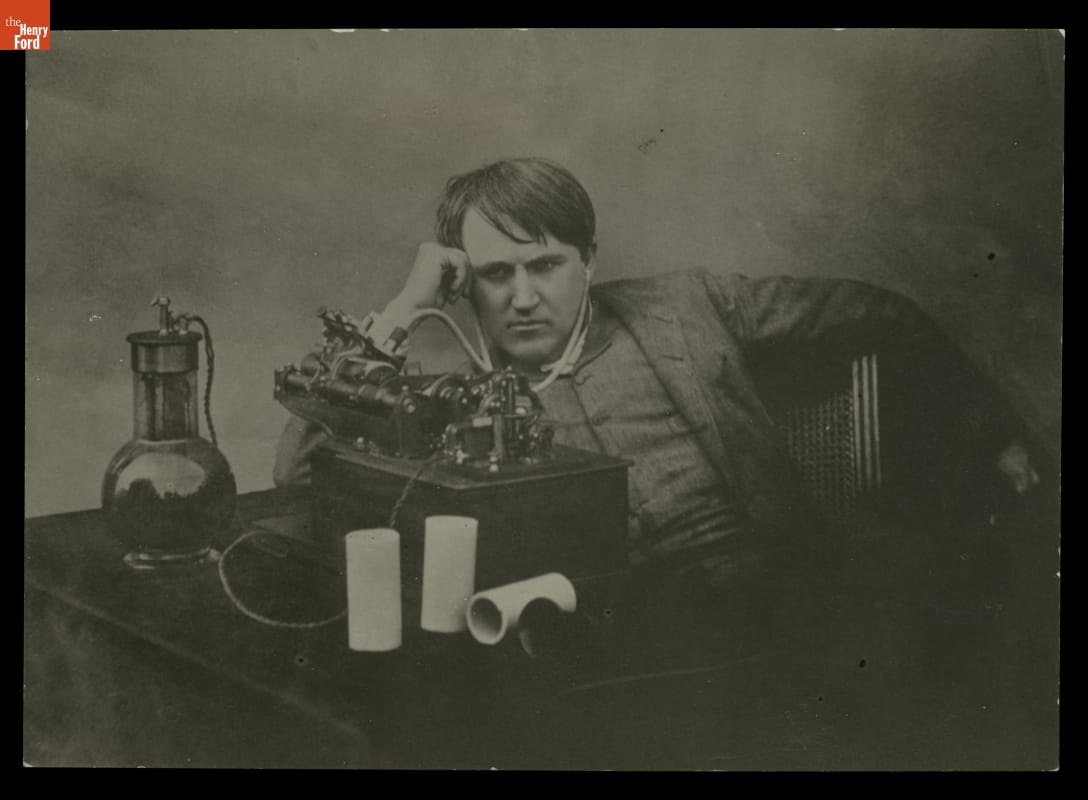
- June 10, 1888
- Collections - Artifact
Thomas Edison Perfecting His Wax Cylinder Phonograph, 1888
Throughout his life, Thomas Edison continued to develop the phonograph he had invented in 1877. On June 11, 1888, Edison launched a round-the-clock session with his assistants to perfect the phonograph. When he emerged from his West Orange, New Jersey, laboratory days later, the exhausted, slumping inventor posed for this photograph with his improved machine.
- Regina Hexaphone, circa 1912 -
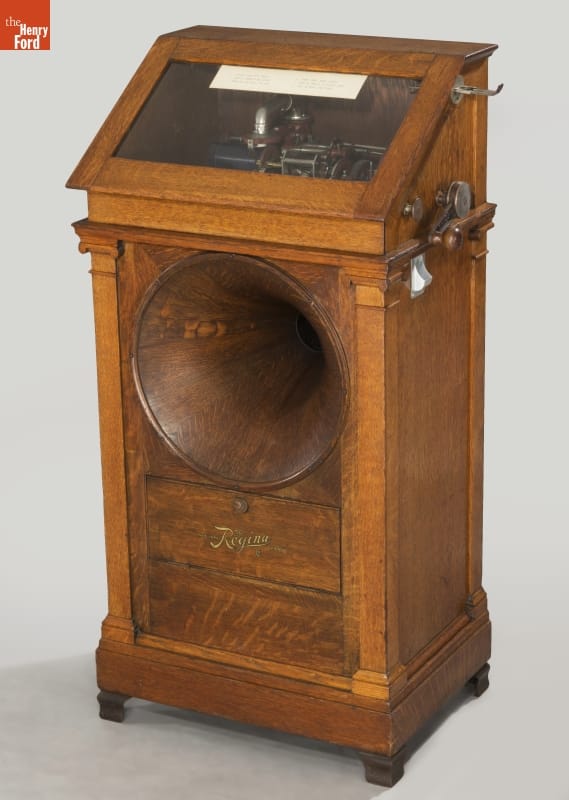
- circa 1912
- Collections - Artifact
Regina Hexaphone, circa 1912
- Tinfoil Phonograph Given to Francis Jehl by Thomas Edison, 1878-1879 -
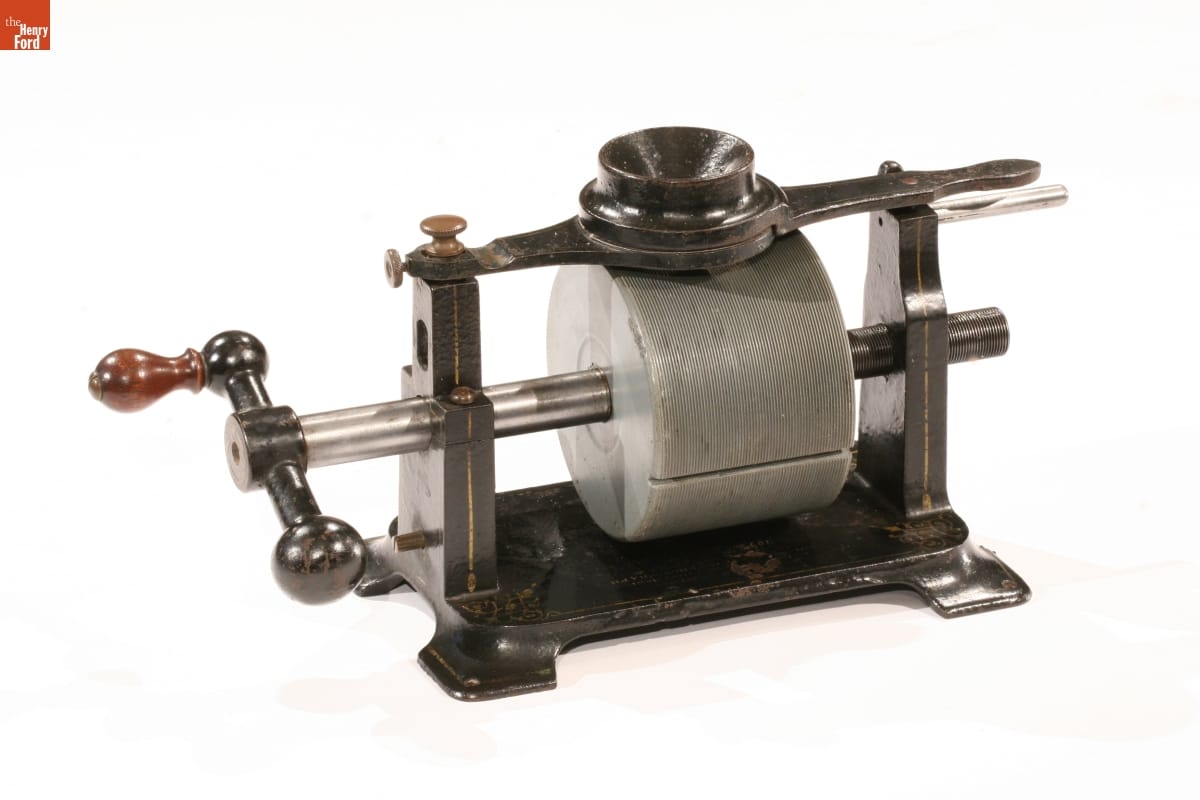
- 1878-1879
- Collections - Artifact
Tinfoil Phonograph Given to Francis Jehl by Thomas Edison, 1878-1879
- Edison Home Phonograph, Model A, 1901-1905 -
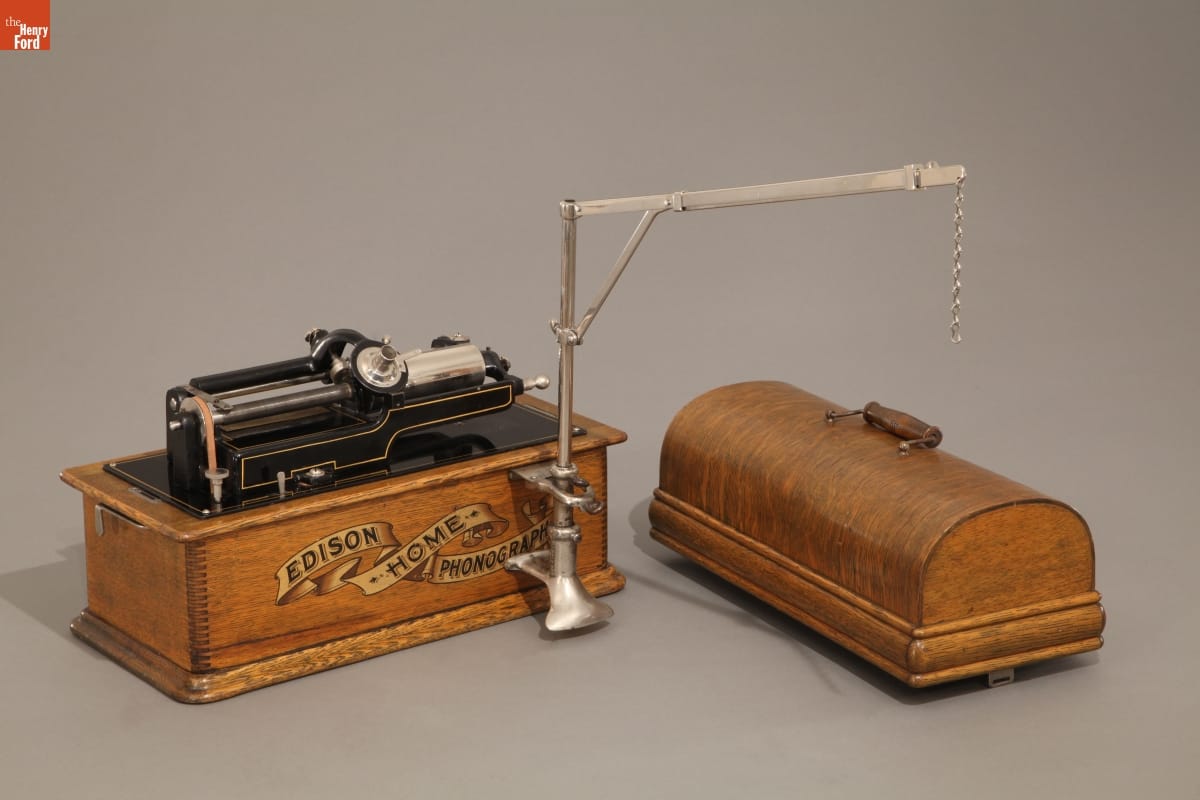
- 1901-1905
- Collections - Artifact
Edison Home Phonograph, Model A, 1901-1905