
Search
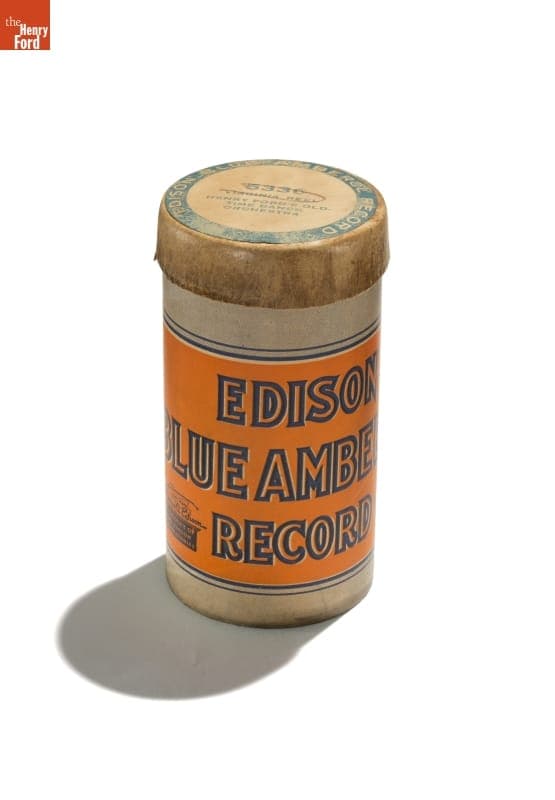
- Blue Amberol Cylinder Record, "Virginia Reel," 1927 - During the 1920s, Henry Ford organized an "Old Time Orchestra" to play at dances Ford hosted to teach his friends and business associates the dances of Ford's rural youth. In 1925, Thomas Edison's staff traveled to Dearborn, Michigan, to record Ford's orchestra. For this recording, they set up their equipment at Fair Lane, Ford's home, capturing the orchestra playing this American country dance.
- 1927
- Collections - Artifact
Blue Amberol Cylinder Record, "Virginia Reel," 1927
During the 1920s, Henry Ford organized an "Old Time Orchestra" to play at dances Ford hosted to teach his friends and business associates the dances of Ford's rural youth. In 1925, Thomas Edison's staff traveled to Dearborn, Michigan, to record Ford's orchestra. For this recording, they set up their equipment at Fair Lane, Ford's home, capturing the orchestra playing this American country dance.
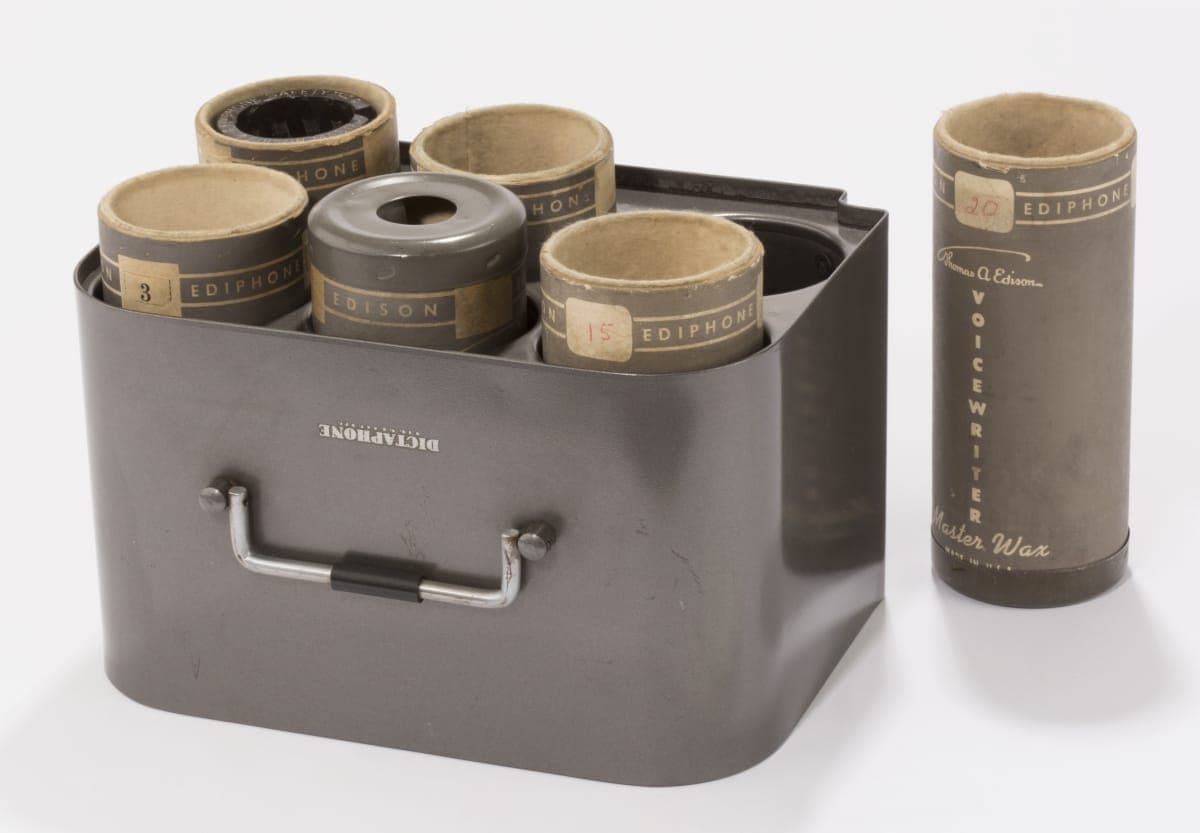
- Dictaphone Cylinder Carrying Case, 1930-1940 - Dictaphones and Ediphones were sound recording devices used for efficient oral dictation in business settings. When Edison invented the phonograph, one proposed use was "dictation without the aid of stenographers." Its tinfoil playback medium lacked quality, however. Alexander Graham Bell's Graphophone (later, Dictaphone) improved the phonograph by using wax cylinders for superior playback; cylinders were also used in the competing Ediphone.
- 1930-1940
- Collections - Artifact
Dictaphone Cylinder Carrying Case, 1930-1940
Dictaphones and Ediphones were sound recording devices used for efficient oral dictation in business settings. When Edison invented the phonograph, one proposed use was "dictation without the aid of stenographers." Its tinfoil playback medium lacked quality, however. Alexander Graham Bell's Graphophone (later, Dictaphone) improved the phonograph by using wax cylinders for superior playback; cylinders were also used in the competing Ediphone.
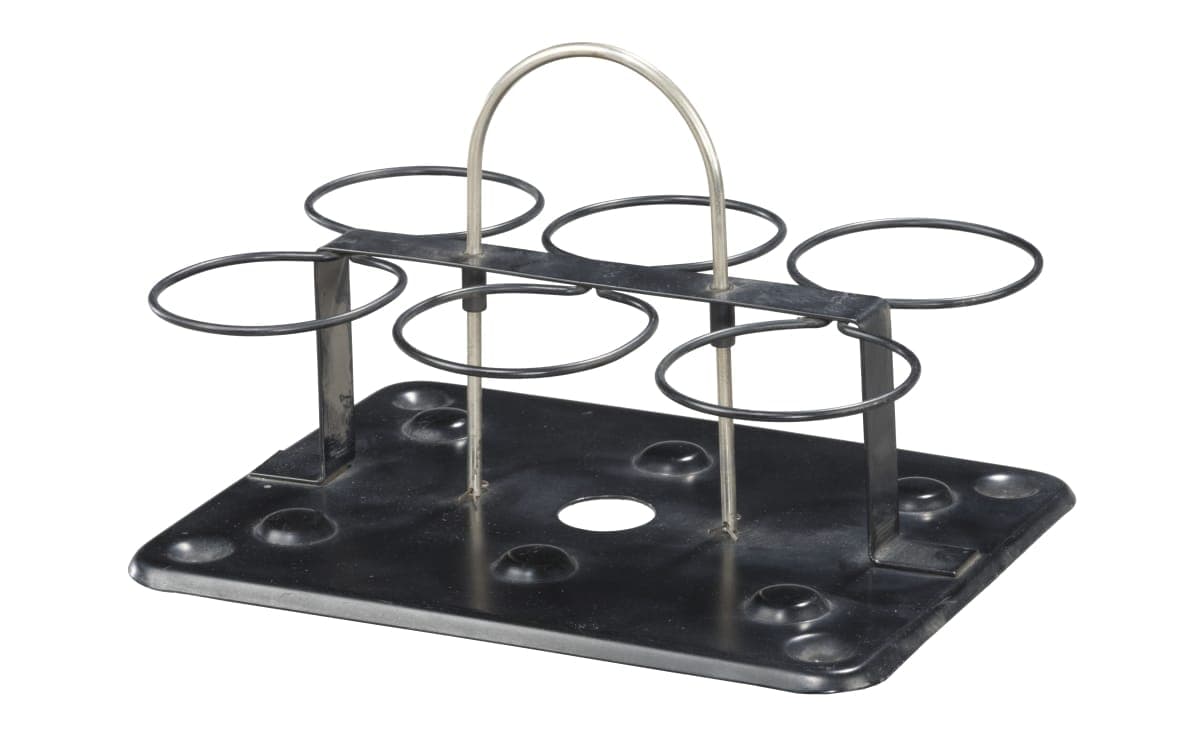
- Ediphone Wax Cylinder Holder, 1910-1940 - Dictaphones and Ediphones were sound recording devices used for efficient oral dictation in business settings. From the late 1800s and well into the 1900s, these office machines used wax cylinders to record dictation. A storage rack, such as this one, kept the cylinders safe and organized.
- 1910-1940
- Collections - Artifact
Ediphone Wax Cylinder Holder, 1910-1940
Dictaphones and Ediphones were sound recording devices used for efficient oral dictation in business settings. From the late 1800s and well into the 1900s, these office machines used wax cylinders to record dictation. A storage rack, such as this one, kept the cylinders safe and organized.
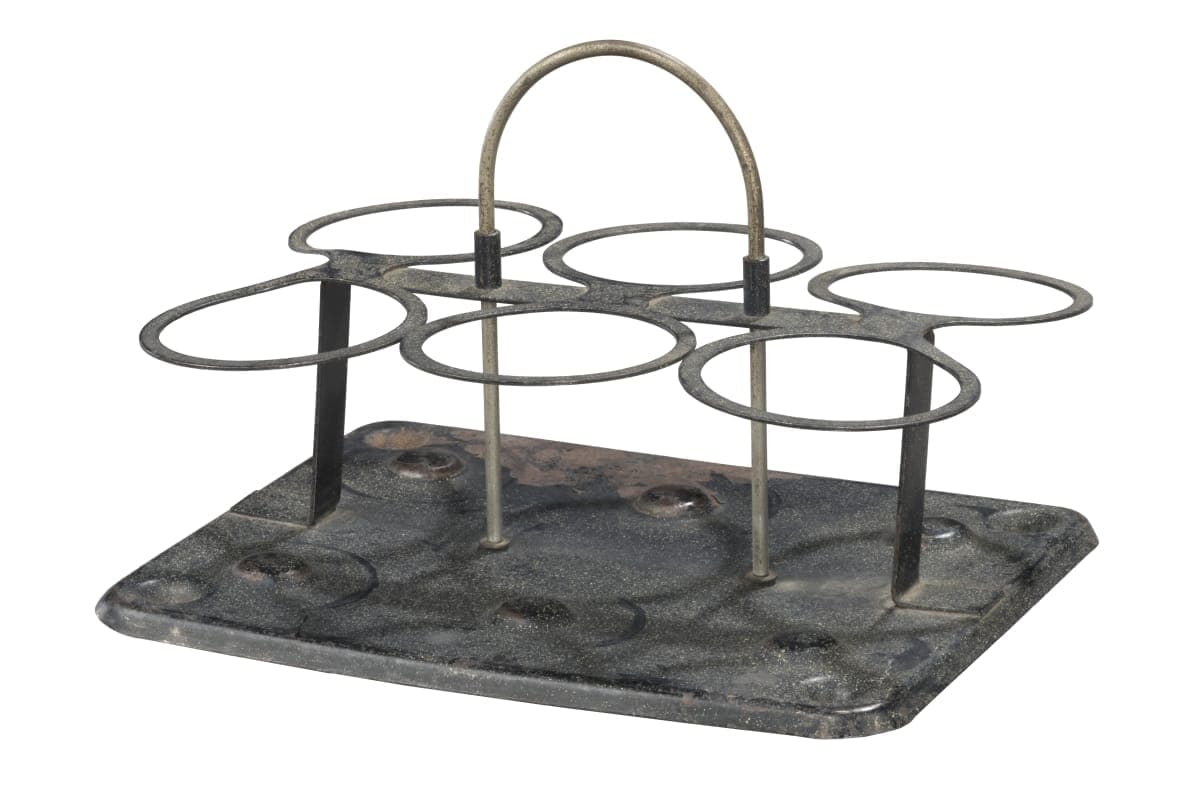
- Ediphone Wax Cylinder Holder, 1910-1940 - Dictaphones and Ediphones were sound recording devices used for efficient oral dictation in business settings. From the late 1800s and well into the 1900s, these office machines used wax cylinders to record dictation. A storage rack, such as this one, kept the cylinders safe and organized.
- 1910-1940
- Collections - Artifact
Ediphone Wax Cylinder Holder, 1910-1940
Dictaphones and Ediphones were sound recording devices used for efficient oral dictation in business settings. From the late 1800s and well into the 1900s, these office machines used wax cylinders to record dictation. A storage rack, such as this one, kept the cylinders safe and organized.
- Ediphone Wax Cylinder Holder, 1910-1940 - Dictaphones and Ediphones were sound recording devices used for efficient oral dictation in business settings. From the late 1800s and well into the 1900s, these office machines used wax cylinders to record dictation. A storage rack, such as this one, kept the cylinders safe and organized.
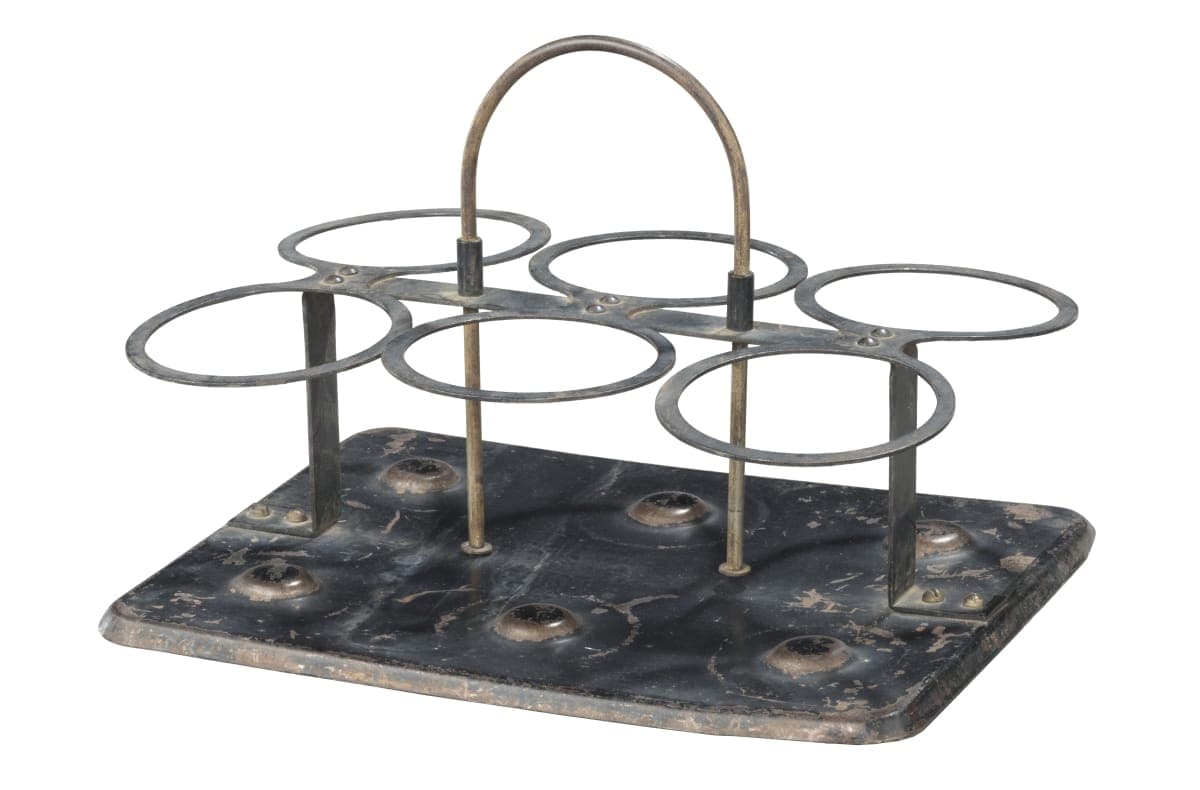
- 1910-1940
- Collections - Artifact
Ediphone Wax Cylinder Holder, 1910-1940
Dictaphones and Ediphones were sound recording devices used for efficient oral dictation in business settings. From the late 1800s and well into the 1900s, these office machines used wax cylinders to record dictation. A storage rack, such as this one, kept the cylinders safe and organized.
- Ediphone Wax Cylinder Holder, 1910-1940 - Dictaphones and Ediphones were sound recording devices used for efficient oral dictation in business settings. From the late 1800s and well into the 1900s, these office machines used wax cylinders to record dictation. A storage rack, such as this one, kept the cylinders safe and organized.
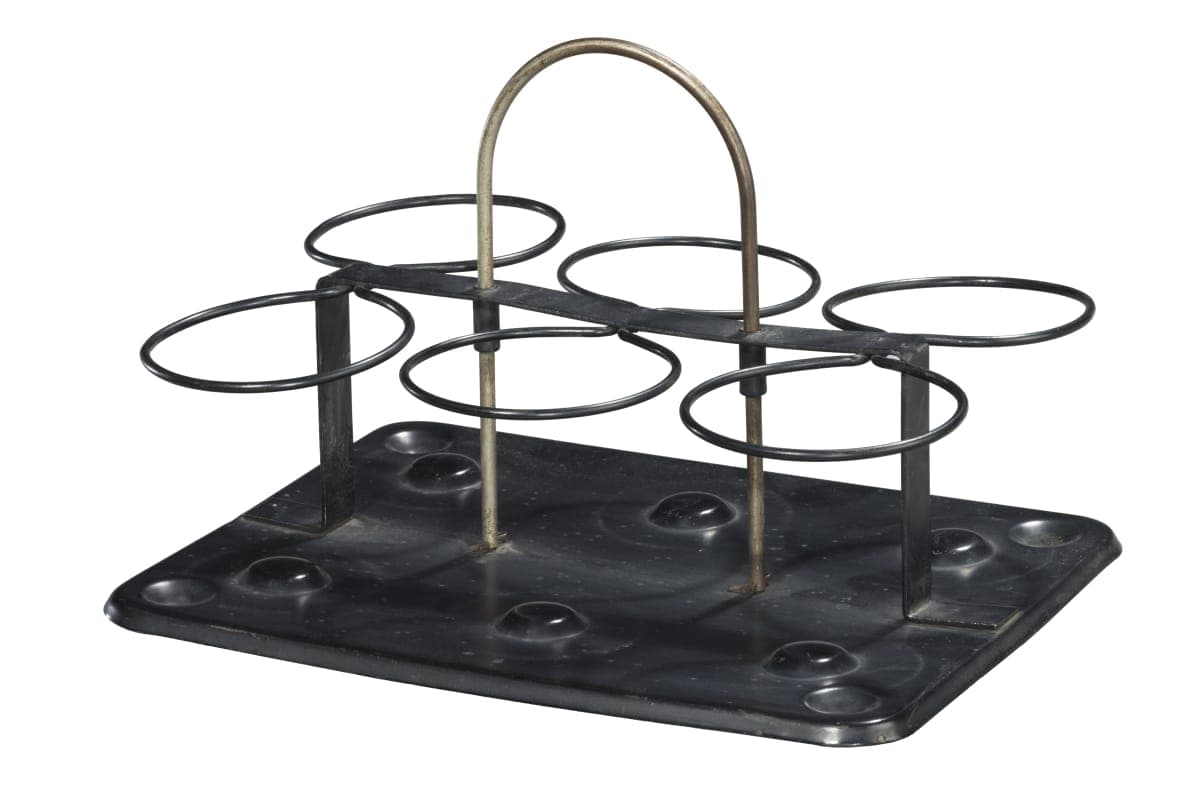
- 1910-1940
- Collections - Artifact
Ediphone Wax Cylinder Holder, 1910-1940
Dictaphones and Ediphones were sound recording devices used for efficient oral dictation in business settings. From the late 1800s and well into the 1900s, these office machines used wax cylinders to record dictation. A storage rack, such as this one, kept the cylinders safe and organized.
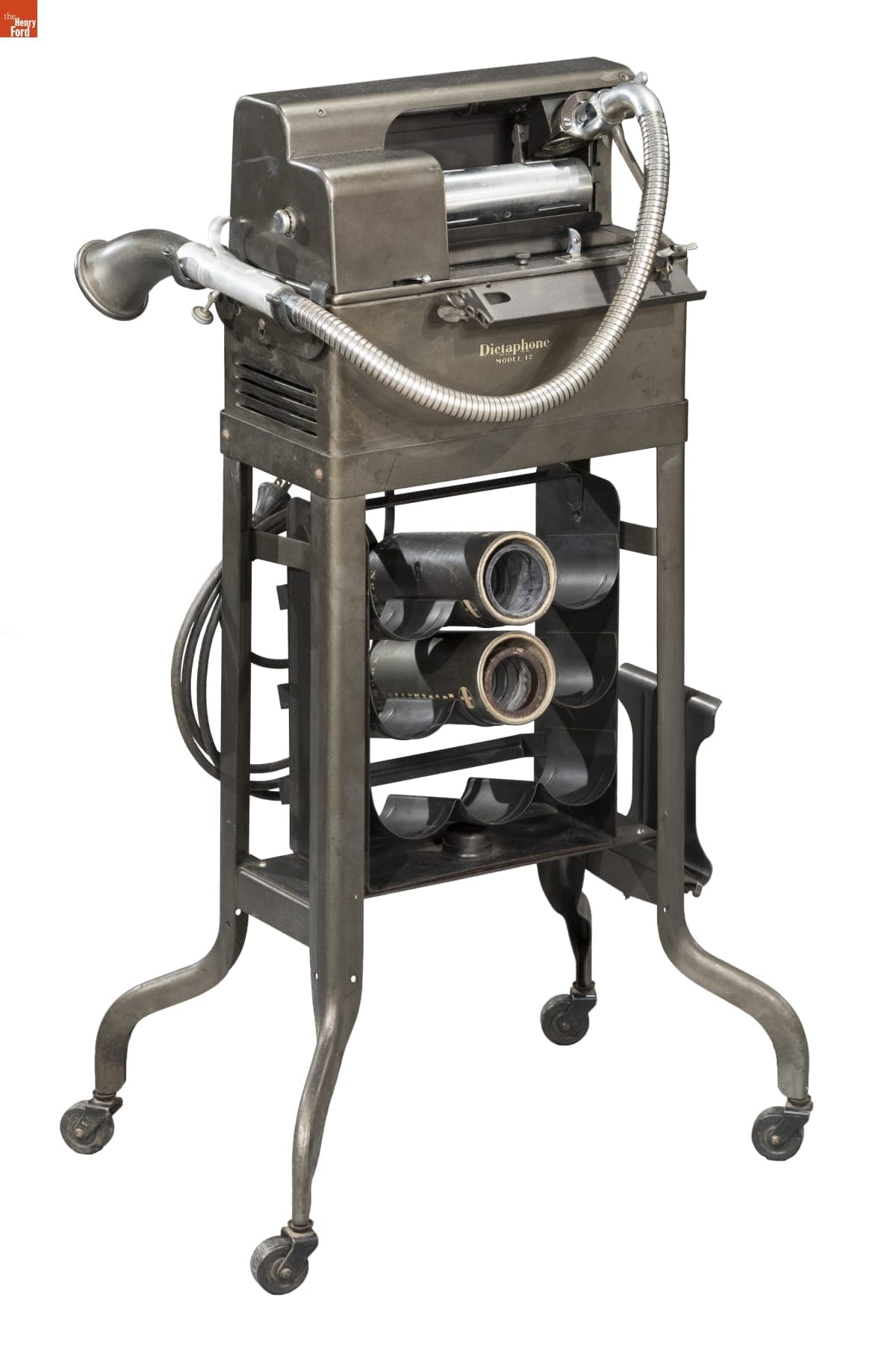
- Dictaphone Dictating Machine, Model 12 - Dictaphones and Ediphones were sound recording devices used for efficient oral dictation in business settings. When Edison invented the phonograph, one proposed use was "dictation without the aid of stenographers." Its tinfoil playback medium lacked quality, however. Alexander Graham Bell's Graphophone (later, Dictaphone) improved the phonograph by using wax cylinders for superior playback; cylinders were also used in the competing Ediphone.
- Collections - Artifact
Dictaphone Dictating Machine, Model 12
Dictaphones and Ediphones were sound recording devices used for efficient oral dictation in business settings. When Edison invented the phonograph, one proposed use was "dictation without the aid of stenographers." Its tinfoil playback medium lacked quality, however. Alexander Graham Bell's Graphophone (later, Dictaphone) improved the phonograph by using wax cylinders for superior playback; cylinders were also used in the competing Ediphone.
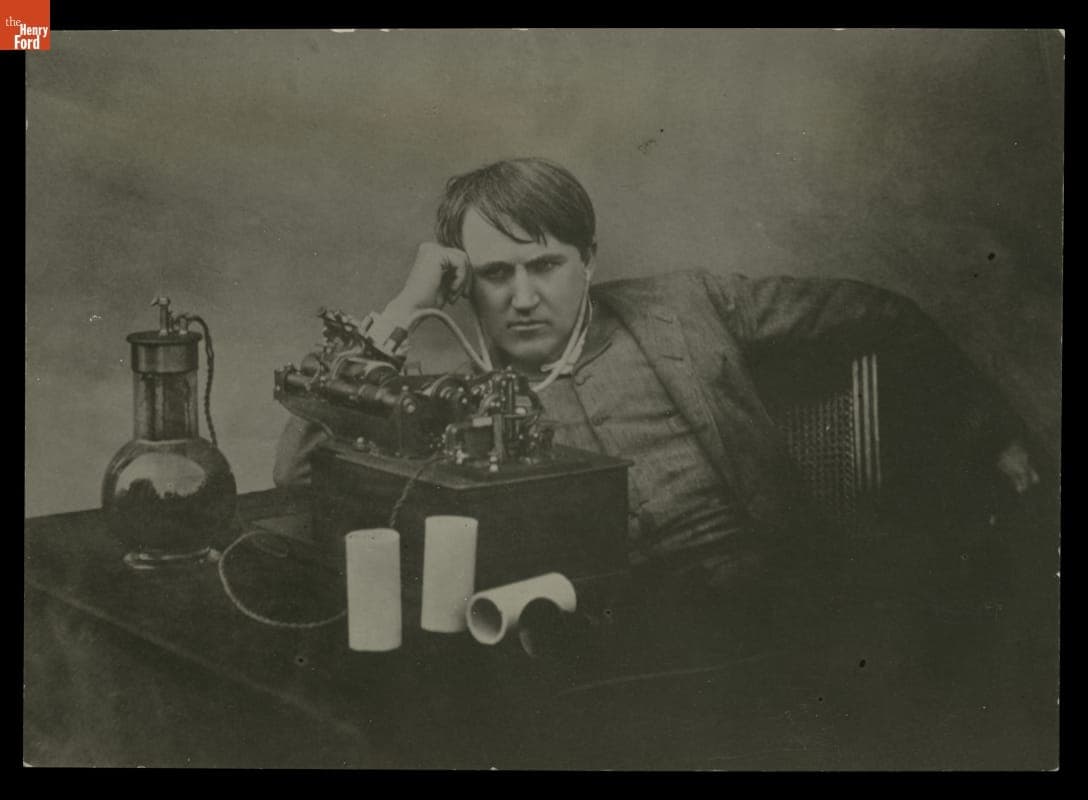
- Thomas Edison Perfecting His Wax Cylinder Phonograph, 1888 - Throughout his life, Thomas Edison continued to develop the phonograph he had invented in 1877. On June 11, 1888, Edison launched a round-the-clock session with his assistants to perfect the phonograph. When he emerged from his West Orange, New Jersey, laboratory days later, the exhausted, slumping inventor posed for this photograph with his improved machine.
- June 10, 1888
- Collections - Artifact
Thomas Edison Perfecting His Wax Cylinder Phonograph, 1888
Throughout his life, Thomas Edison continued to develop the phonograph he had invented in 1877. On June 11, 1888, Edison launched a round-the-clock session with his assistants to perfect the phonograph. When he emerged from his West Orange, New Jersey, laboratory days later, the exhausted, slumping inventor posed for this photograph with his improved machine.
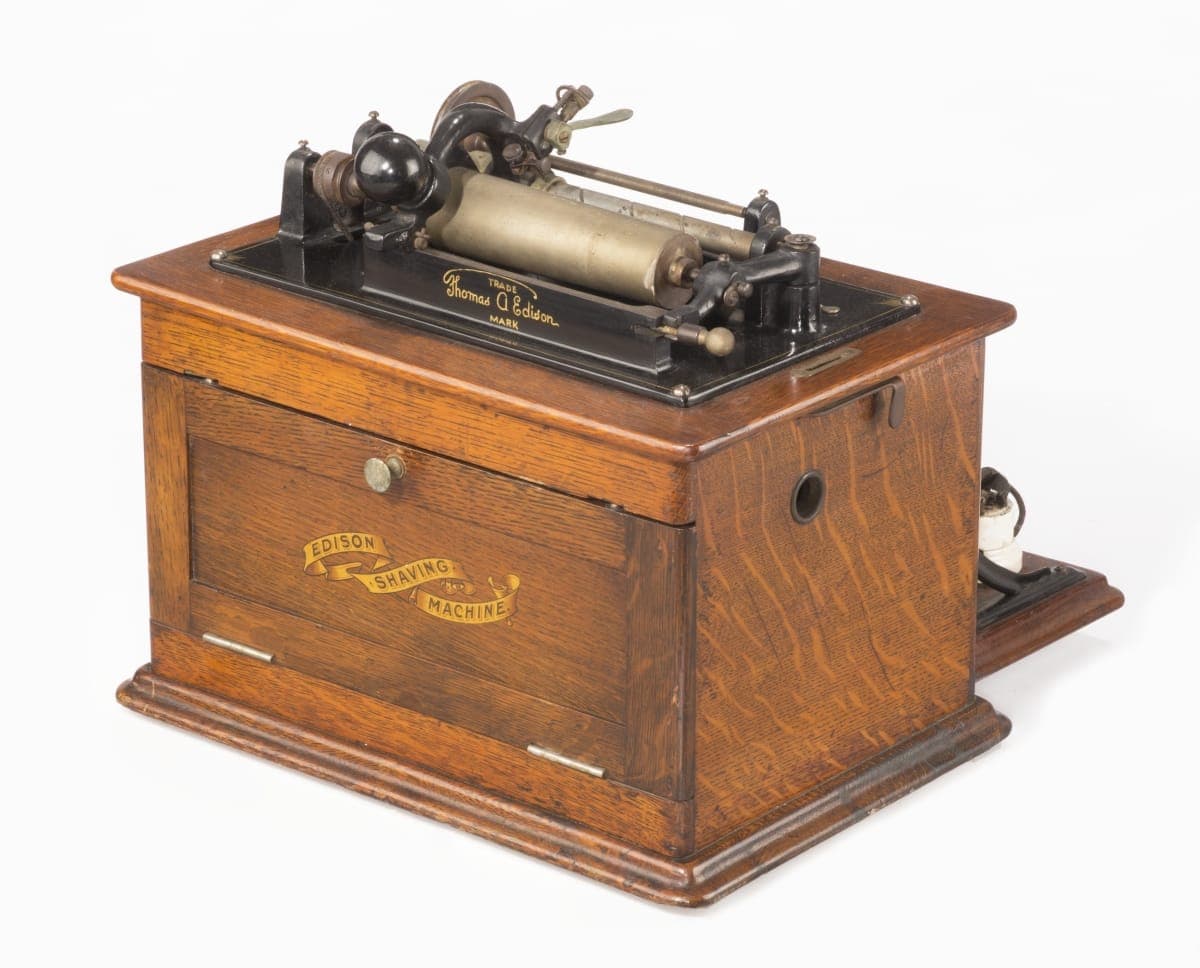
- Cylinder Shaving Machine, circa 1907 - Dictaphones and Ediphones were sound recording devices largely used for oral dictation in business settings. In this scenario, wax cylinder recordings were passed to a secretary, who listened to the recording with a playback-only transcriber and then typed up notes. A shaving machine, such as this one, scraped the previously inscribed layer away allowing a wax cylinder to be reused over 100 times.
- circa 1907
- Collections - Artifact
Cylinder Shaving Machine, circa 1907
Dictaphones and Ediphones were sound recording devices largely used for oral dictation in business settings. In this scenario, wax cylinder recordings were passed to a secretary, who listened to the recording with a playback-only transcriber and then typed up notes. A shaving machine, such as this one, scraped the previously inscribed layer away allowing a wax cylinder to be reused over 100 times.
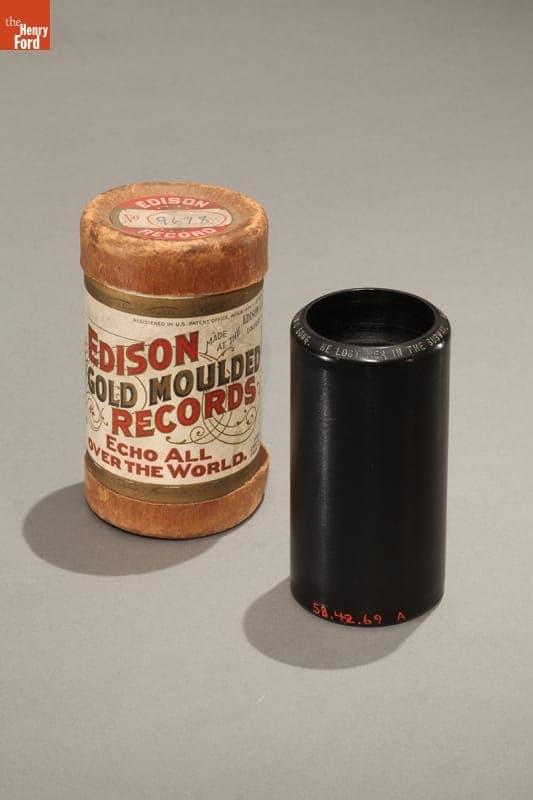
- Edison Gold Moulded Cylinder Record, "He Lost Her in the Subway," 1907 - Ada Jones was the first female popular singer to have a career making records. Her popular song recordings were largely humorous ones wherein she demonstrated her skill at using dialects. In this song, "the train began to swerve, we went around a curve" and 14 men fell into her lap! She found a man she liked more than her brand new husband!
- 1907
- Collections - Artifact
Edison Gold Moulded Cylinder Record, "He Lost Her in the Subway," 1907
Ada Jones was the first female popular singer to have a career making records. Her popular song recordings were largely humorous ones wherein she demonstrated her skill at using dialects. In this song, "the train began to swerve, we went around a curve" and 14 men fell into her lap! She found a man she liked more than her brand new husband!