
Search
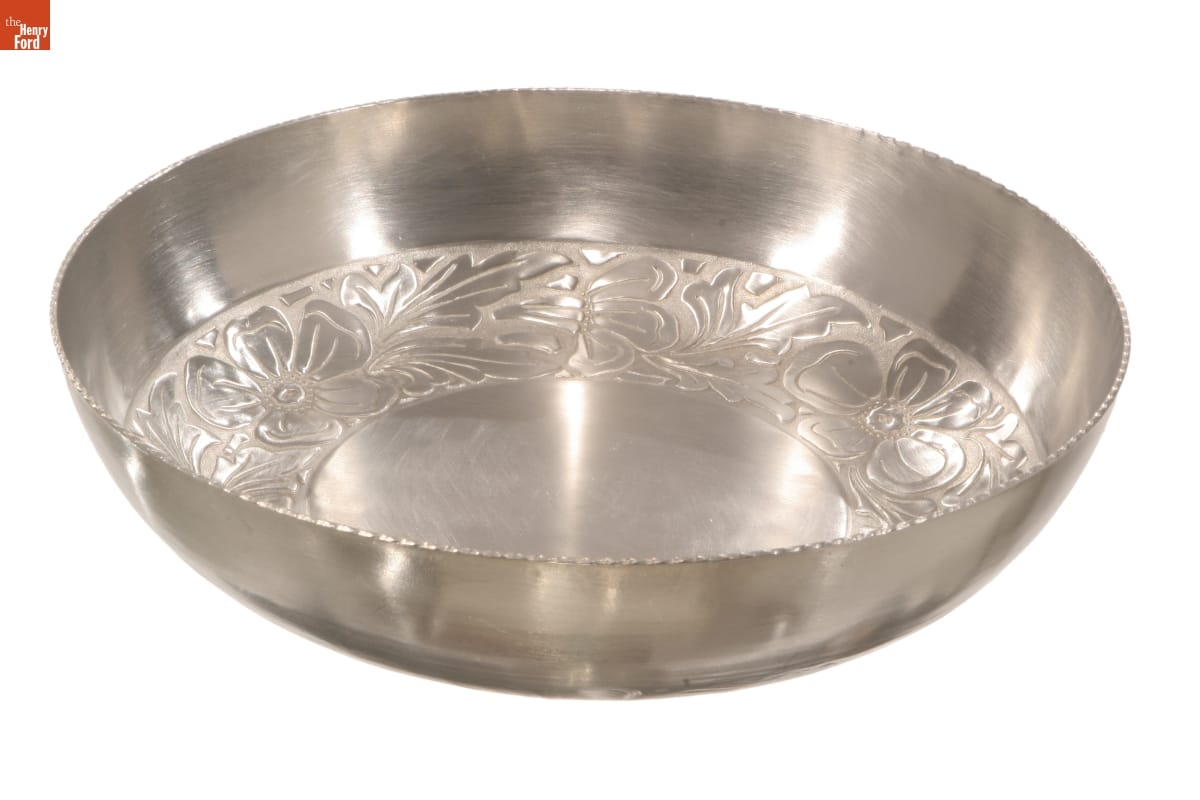
- Everlast "Intaglio Daisy" Salad Bowl, 1947-1950 - In 1932, Louis Schnitzer and Nathan Gelfman formed Everlast Metal Products Corporation, producing high-quality, hand-forged aluminum giftware. In an era of growing uniformity via factory production, the "made by hand" aspect of these products held an aesthetic appeal for consumers. By 1937, Everlast had introduced its "Intaglio" product line, featuring machine-stamped decorative motifs that were lighter in weight and more affordable than silver.
- 1947-1950
- Collections - Artifact
Everlast "Intaglio Daisy" Salad Bowl, 1947-1950
In 1932, Louis Schnitzer and Nathan Gelfman formed Everlast Metal Products Corporation, producing high-quality, hand-forged aluminum giftware. In an era of growing uniformity via factory production, the "made by hand" aspect of these products held an aesthetic appeal for consumers. By 1937, Everlast had introduced its "Intaglio" product line, featuring machine-stamped decorative motifs that were lighter in weight and more affordable than silver.
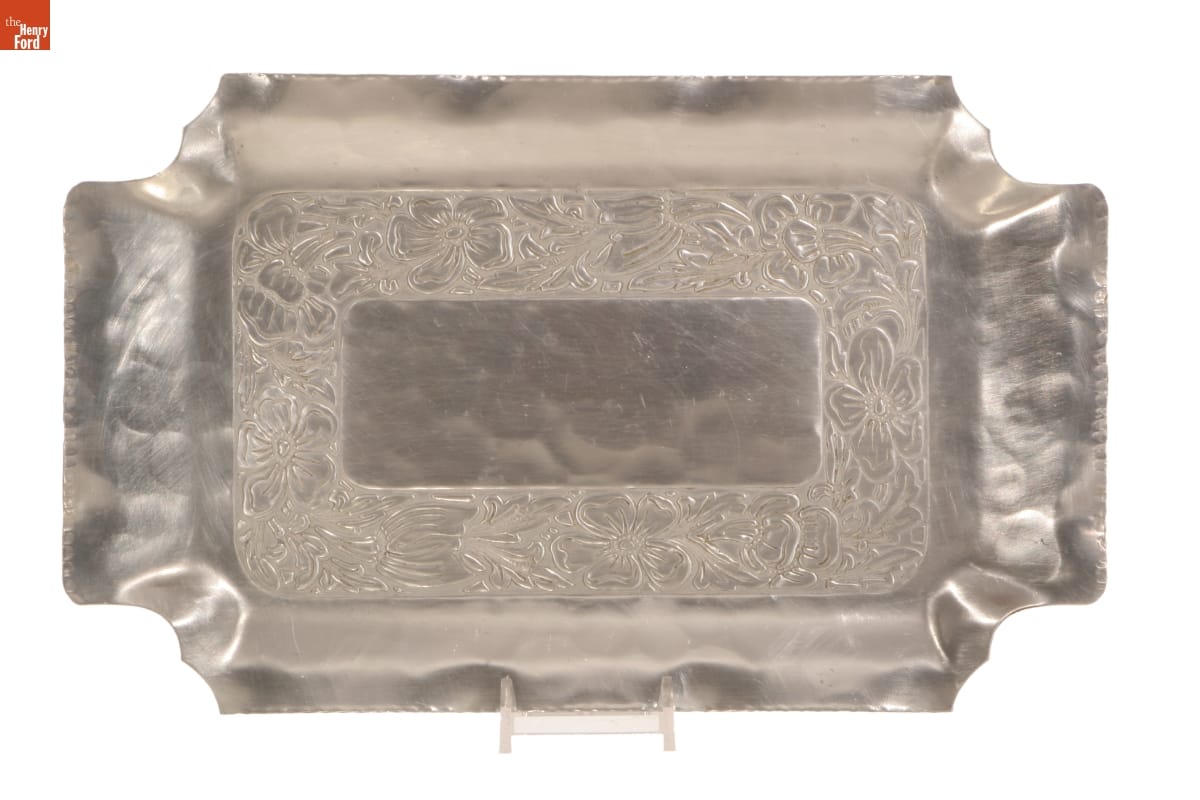
- Everlast "Intaglio Daisy" Tray, 1940-1946 - In 1932, Louis Schnitzer and Nathan Gelfman formed Everlast Metal Products Corporation, producing high-quality, hand-forged aluminum giftware. In an era of growing uniformity via factory production, the "made by hand" aspect of these products held an aesthetic appeal for consumers. By 1937, Everlast had introduced its "Intaglio" product line, featuring machine-stamped decorative motifs that were lighter in weight and more affordable than silver.
- 1940-1946
- Collections - Artifact
Everlast "Intaglio Daisy" Tray, 1940-1946
In 1932, Louis Schnitzer and Nathan Gelfman formed Everlast Metal Products Corporation, producing high-quality, hand-forged aluminum giftware. In an era of growing uniformity via factory production, the "made by hand" aspect of these products held an aesthetic appeal for consumers. By 1937, Everlast had introduced its "Intaglio" product line, featuring machine-stamped decorative motifs that were lighter in weight and more affordable than silver.
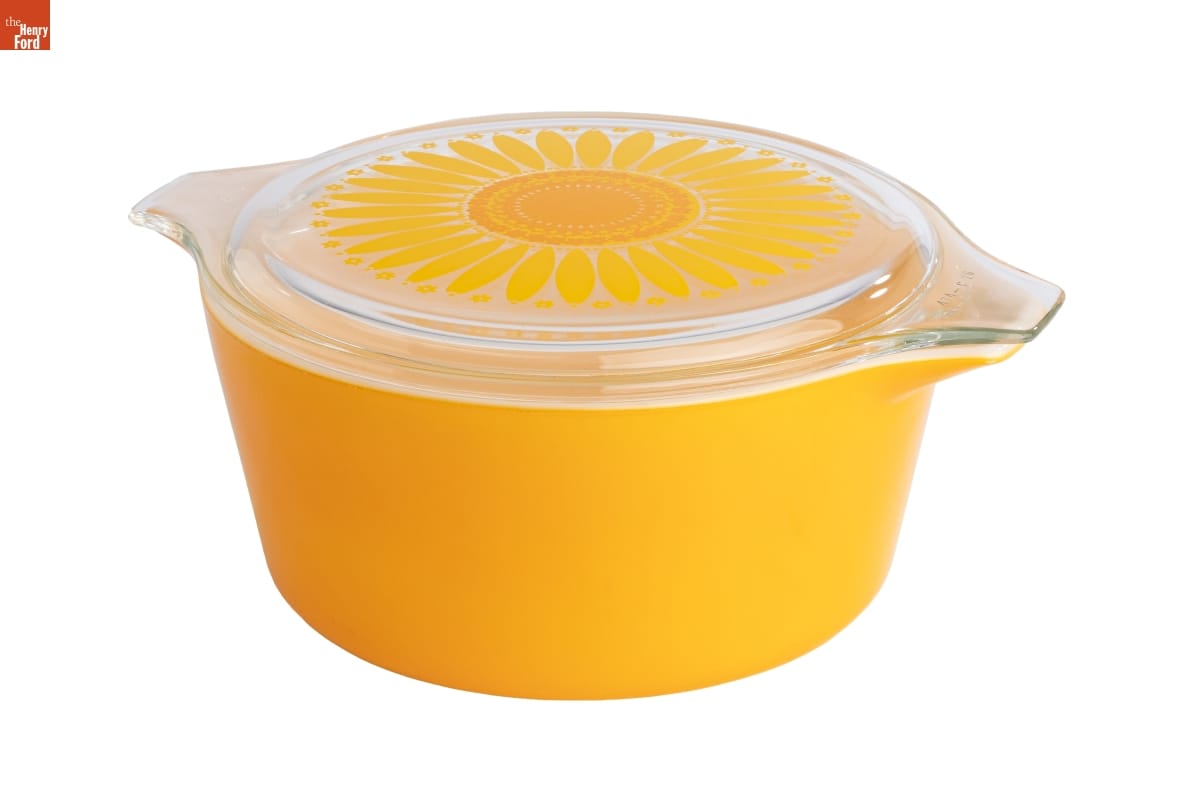
- Pyrex Casserole Dish, 1968-1972 - Corning Glass Works' heat-resistant glass bakeware, called Pyrex, was introduced in the mid-1910s. Pyrex products were inexpensive, with an easy-to-clean smooth surface. Pyrex glassware could travel from freezer to oven to table. Colored Pyrex kitchenware was introduced in 1947. Corning introduced its Daisy pattern with its bright and cheerful sunburst colors in 1968. It was discontinued five years later.
- 1968-1972
- Collections - Artifact
Pyrex Casserole Dish, 1968-1972
Corning Glass Works' heat-resistant glass bakeware, called Pyrex, was introduced in the mid-1910s. Pyrex products were inexpensive, with an easy-to-clean smooth surface. Pyrex glassware could travel from freezer to oven to table. Colored Pyrex kitchenware was introduced in 1947. Corning introduced its Daisy pattern with its bright and cheerful sunburst colors in 1968. It was discontinued five years later.
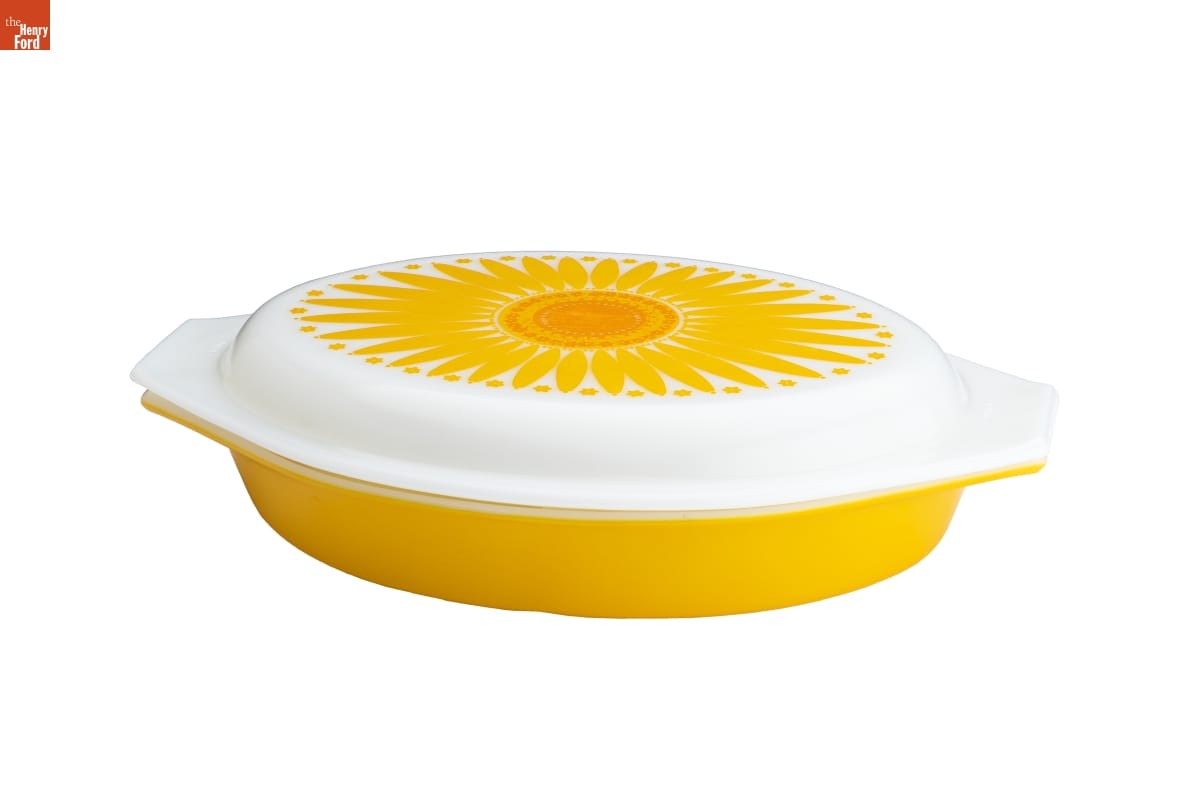
- Pyrex Casserole Dish, 1972-1973 - Corning Glass Works' heat-resistant glass bakeware, called Pyrex, was introduced in the mid-1910s. Pyrex products were inexpensive, with an easy-to-clean smooth surface. Pyrex glassware could travel from freezer to oven to table. Colored Pyrex kitchenware was introduced in 1947. Corning introduced its Daisy pattern with its bright and cheerful sunburst colors in 1968. It was discontinued five years later.
- 1972-1973
- Collections - Artifact
Pyrex Casserole Dish, 1972-1973
Corning Glass Works' heat-resistant glass bakeware, called Pyrex, was introduced in the mid-1910s. Pyrex products were inexpensive, with an easy-to-clean smooth surface. Pyrex glassware could travel from freezer to oven to table. Colored Pyrex kitchenware was introduced in 1947. Corning introduced its Daisy pattern with its bright and cheerful sunburst colors in 1968. It was discontinued five years later.
- Everlast "Intaglio Daisy" Cocktail Shaker, 1938-1946 - In 1932, Louis Schnitzer and Nathan Gelfman formed Everlast Metal Products Corporation, producing high-quality, hand-forged aluminum giftware. In an era of growing uniformity via factory production, the "made by hand" aspect of these products held an aesthetic appeal for consumers. By 1937, Everlast had introduced its "Intaglio" product line, featuring machine-stamped decorative motifs that were lighter in weight and more affordable than silver.
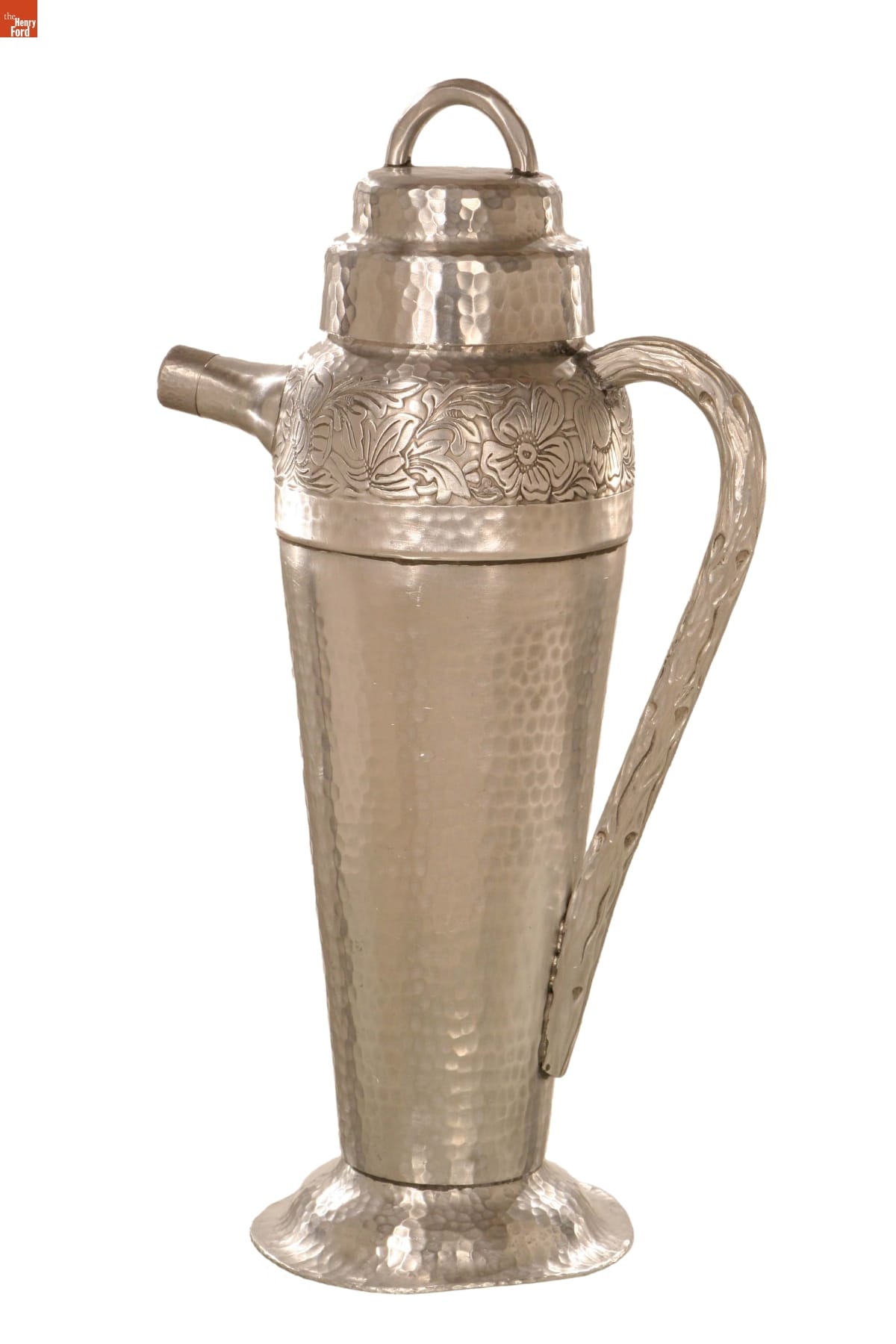
- 1938-1946
- Collections - Artifact
Everlast "Intaglio Daisy" Cocktail Shaker, 1938-1946
In 1932, Louis Schnitzer and Nathan Gelfman formed Everlast Metal Products Corporation, producing high-quality, hand-forged aluminum giftware. In an era of growing uniformity via factory production, the "made by hand" aspect of these products held an aesthetic appeal for consumers. By 1937, Everlast had introduced its "Intaglio" product line, featuring machine-stamped decorative motifs that were lighter in weight and more affordable than silver.
- Covered Dish, 1889-1895 - Nineteenth-century American glassmakers experimented with new methods to create products for a growing consumer market. In the 1820s, pressing glass into metal molds by machine was perfected, and by the mid-1800s, manufacturers were creating a variety of inexpensive pressed glass housewares. America's middle-class consumers could now decorate their homes with attractive glass bowls, creamers, dishes, plates, vases, and other tableware.
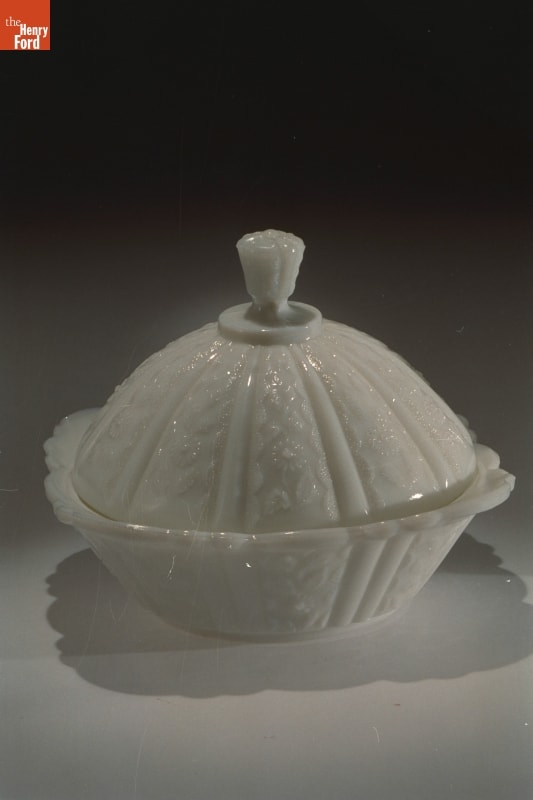
- 1889-1895
- Collections - Artifact
Covered Dish, 1889-1895
Nineteenth-century American glassmakers experimented with new methods to create products for a growing consumer market. In the 1820s, pressing glass into metal molds by machine was perfected, and by the mid-1800s, manufacturers were creating a variety of inexpensive pressed glass housewares. America's middle-class consumers could now decorate their homes with attractive glass bowls, creamers, dishes, plates, vases, and other tableware.
- Everlast "Forged Daisy" Bowl, 1933-1936 - In 1932, Louis Schnitzer and Nathan Gelfman formed Everlast Metal Products Corporation, producing high-quality, hand-forged aluminum giftware. In an era of growing uniformity via factory production, the "made by hand" aspect of these products held an aesthetic appeal for consumers. In 1933, Everlast introduced its first product line, "Forged Giftware" featuring Colonial Revival inspired designs.
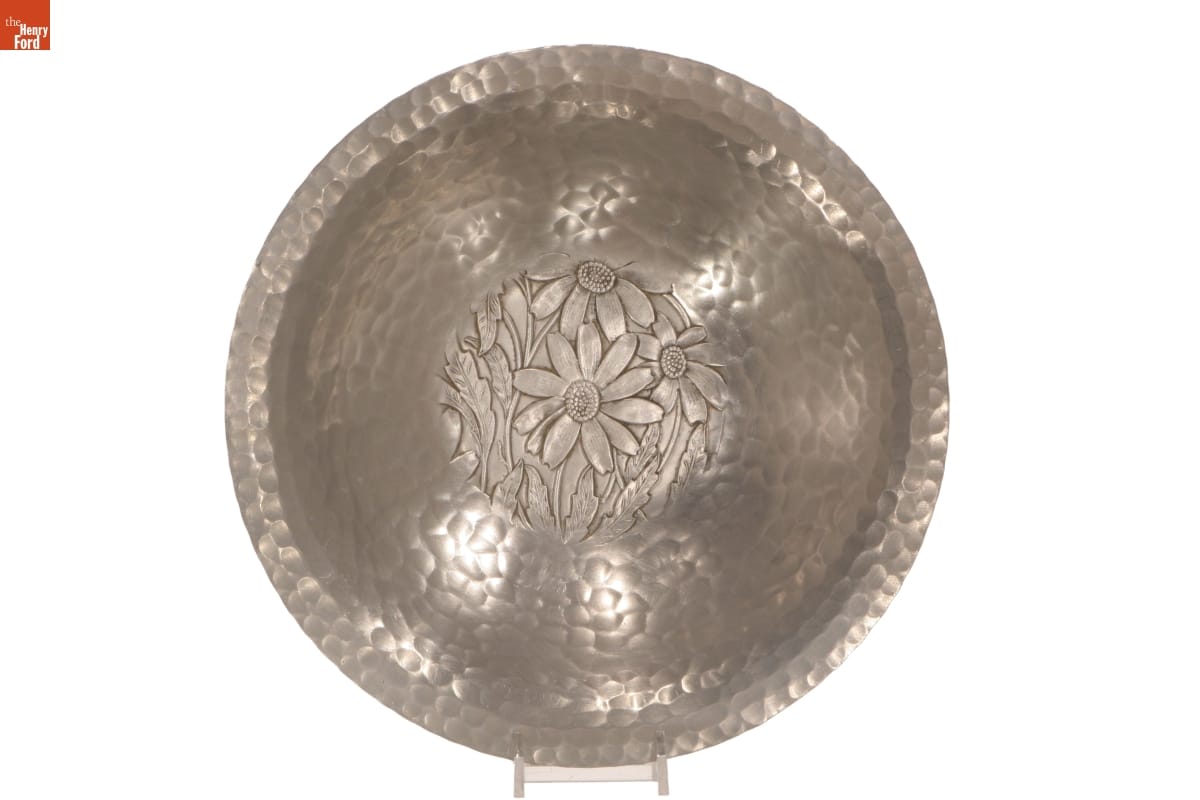
- 1933-1936
- Collections - Artifact
Everlast "Forged Daisy" Bowl, 1933-1936
In 1932, Louis Schnitzer and Nathan Gelfman formed Everlast Metal Products Corporation, producing high-quality, hand-forged aluminum giftware. In an era of growing uniformity via factory production, the "made by hand" aspect of these products held an aesthetic appeal for consumers. In 1933, Everlast introduced its first product line, "Forged Giftware" featuring Colonial Revival inspired designs.
- Everlast "Forged All Over Daisy" Coasters, 1947-1957 - In 1932, Louis Schnitzer and Nathan Gelfman formed Everlast Metal Products Corporation, producing high-quality, hand-forged aluminum giftware. In an era of growing uniformity via factory production, the "made by hand" aspect of these products held an aesthetic appeal for consumers. In 1933, Everlast introduced its first product line, "Forged Giftware" featuring Colonial Revival inspired designs.
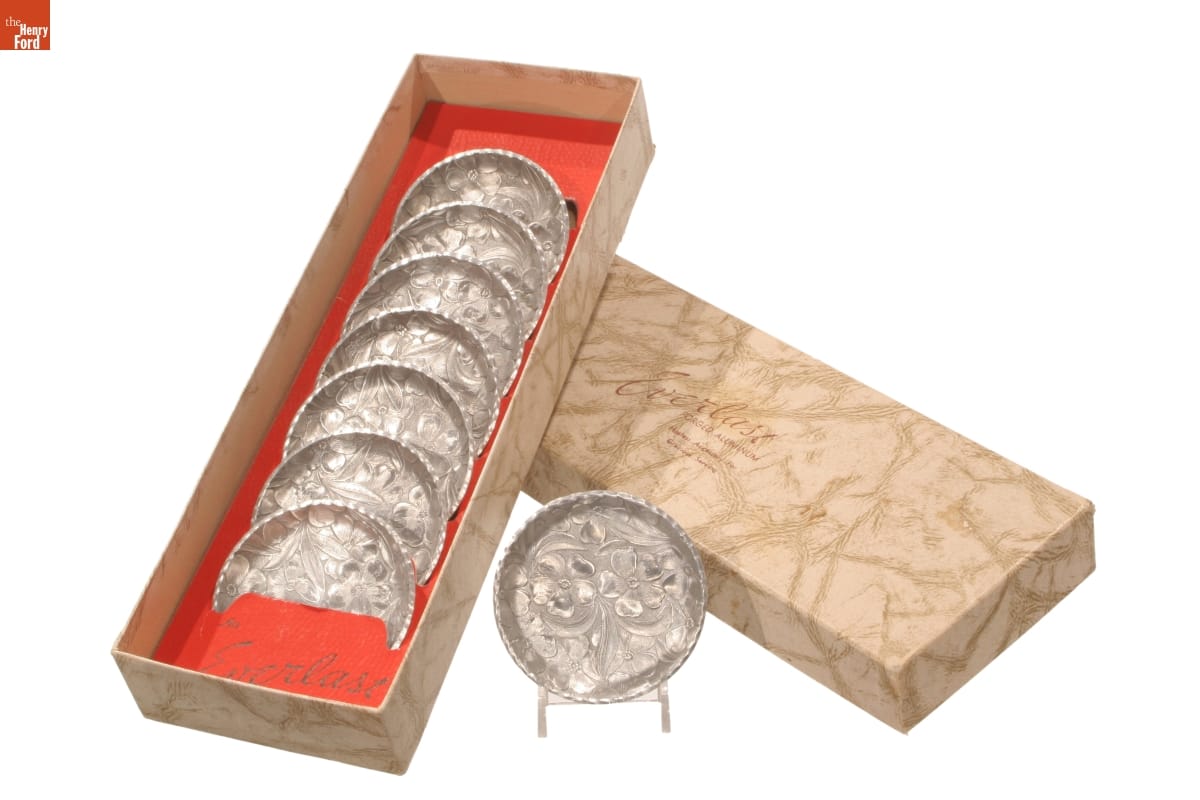
- 1947-1957
- Collections - Artifact
Everlast "Forged All Over Daisy" Coasters, 1947-1957
In 1932, Louis Schnitzer and Nathan Gelfman formed Everlast Metal Products Corporation, producing high-quality, hand-forged aluminum giftware. In an era of growing uniformity via factory production, the "made by hand" aspect of these products held an aesthetic appeal for consumers. In 1933, Everlast introduced its first product line, "Forged Giftware" featuring Colonial Revival inspired designs.
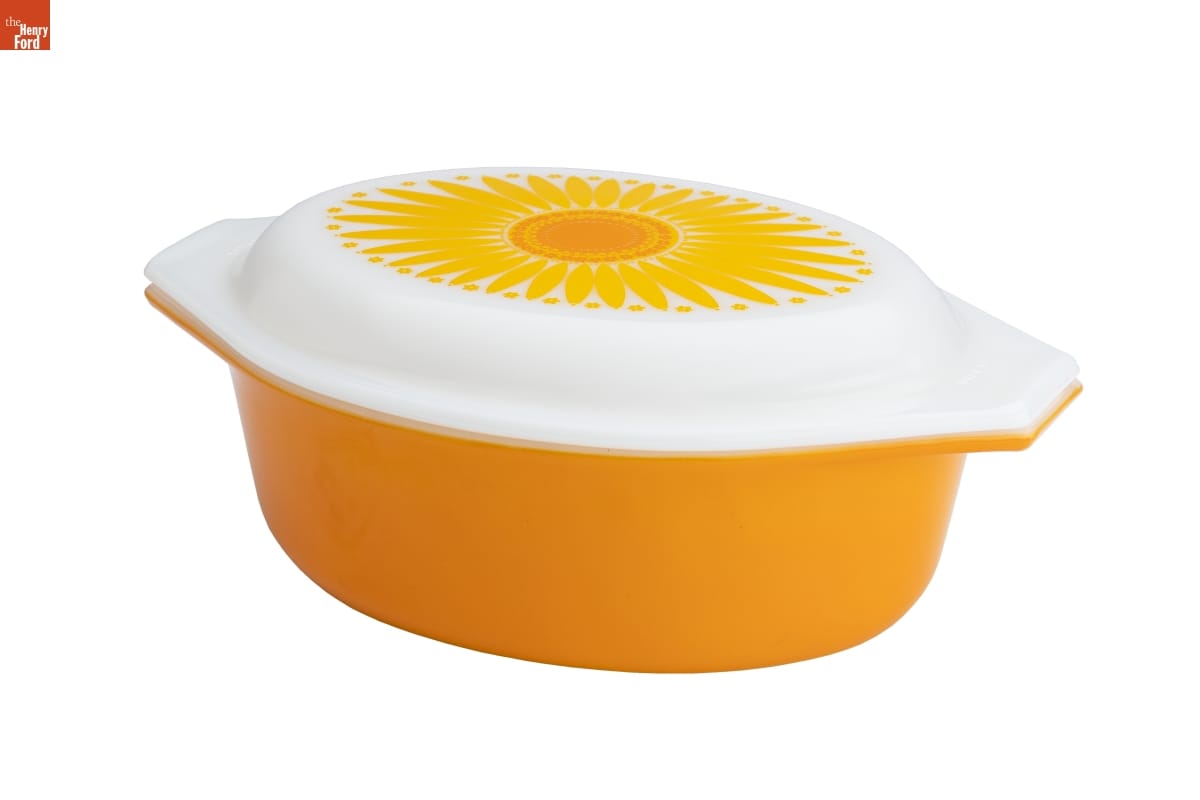
- Pyrex Casserole Dish, 1972-1973 - Corning Glass Works' heat-resistant glass bakeware, called Pyrex, was introduced in the mid-1910s. Pyrex products were inexpensive, with an easy-to-clean smooth surface. Pyrex glassware could travel from freezer to oven to table. Colored Pyrex kitchenware was introduced in 1947. Corning introduced its Daisy pattern with its bright and cheerful sunburst colors in 1968. It was discontinued five years later.
- 1972-1973
- Collections - Artifact
Pyrex Casserole Dish, 1972-1973
Corning Glass Works' heat-resistant glass bakeware, called Pyrex, was introduced in the mid-1910s. Pyrex products were inexpensive, with an easy-to-clean smooth surface. Pyrex glassware could travel from freezer to oven to table. Colored Pyrex kitchenware was introduced in 1947. Corning introduced its Daisy pattern with its bright and cheerful sunburst colors in 1968. It was discontinued five years later.
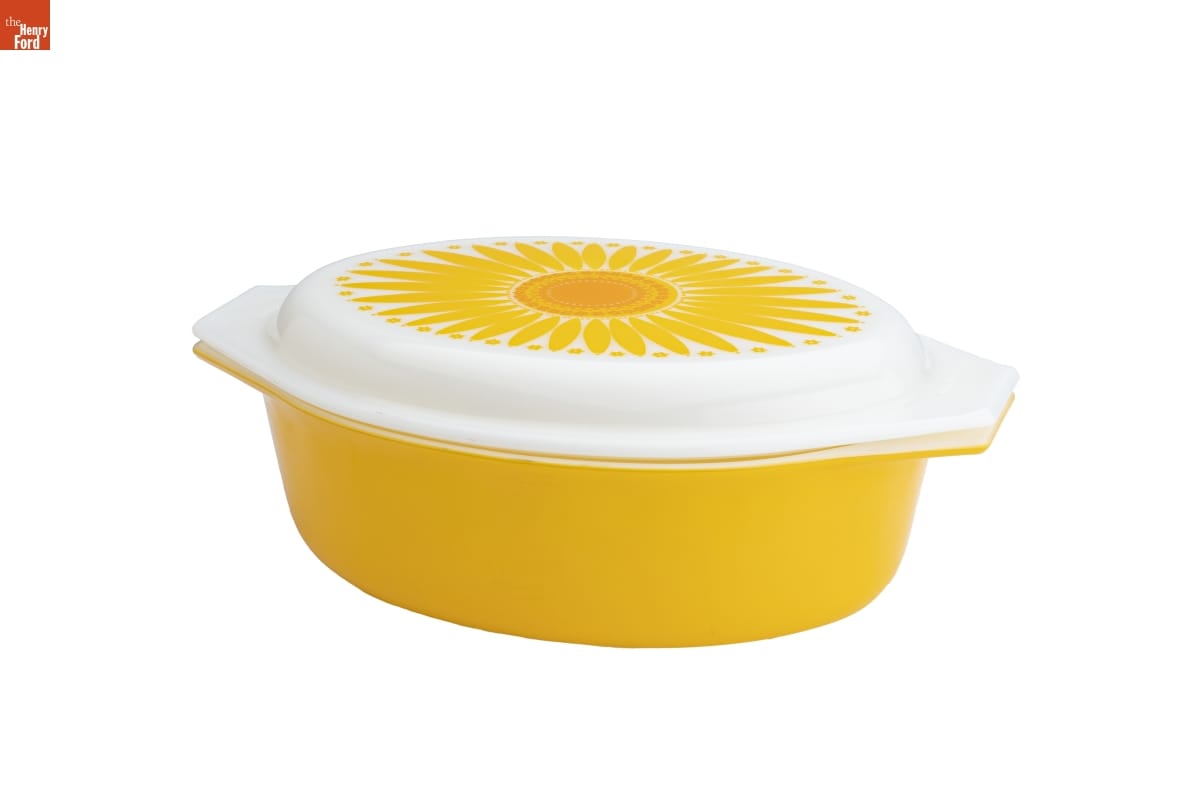
- Pyrex Casserole Dish, 1972-1973 - Corning Glass Works' heat-resistant glass bakeware, called Pyrex, was introduced in the mid-1910s. Pyrex products were inexpensive, with an easy-to-clean smooth surface. Pyrex glassware could travel from freezer to oven to table. Colored Pyrex kitchenware was introduced in 1947. Corning introduced its Daisy pattern with its bright and cheerful sunburst colors in 1968. It was discontinued five years later.
- 1972-1973
- Collections - Artifact
Pyrex Casserole Dish, 1972-1973
Corning Glass Works' heat-resistant glass bakeware, called Pyrex, was introduced in the mid-1910s. Pyrex products were inexpensive, with an easy-to-clean smooth surface. Pyrex glassware could travel from freezer to oven to table. Colored Pyrex kitchenware was introduced in 1947. Corning introduced its Daisy pattern with its bright and cheerful sunburst colors in 1968. It was discontinued five years later.