
Search
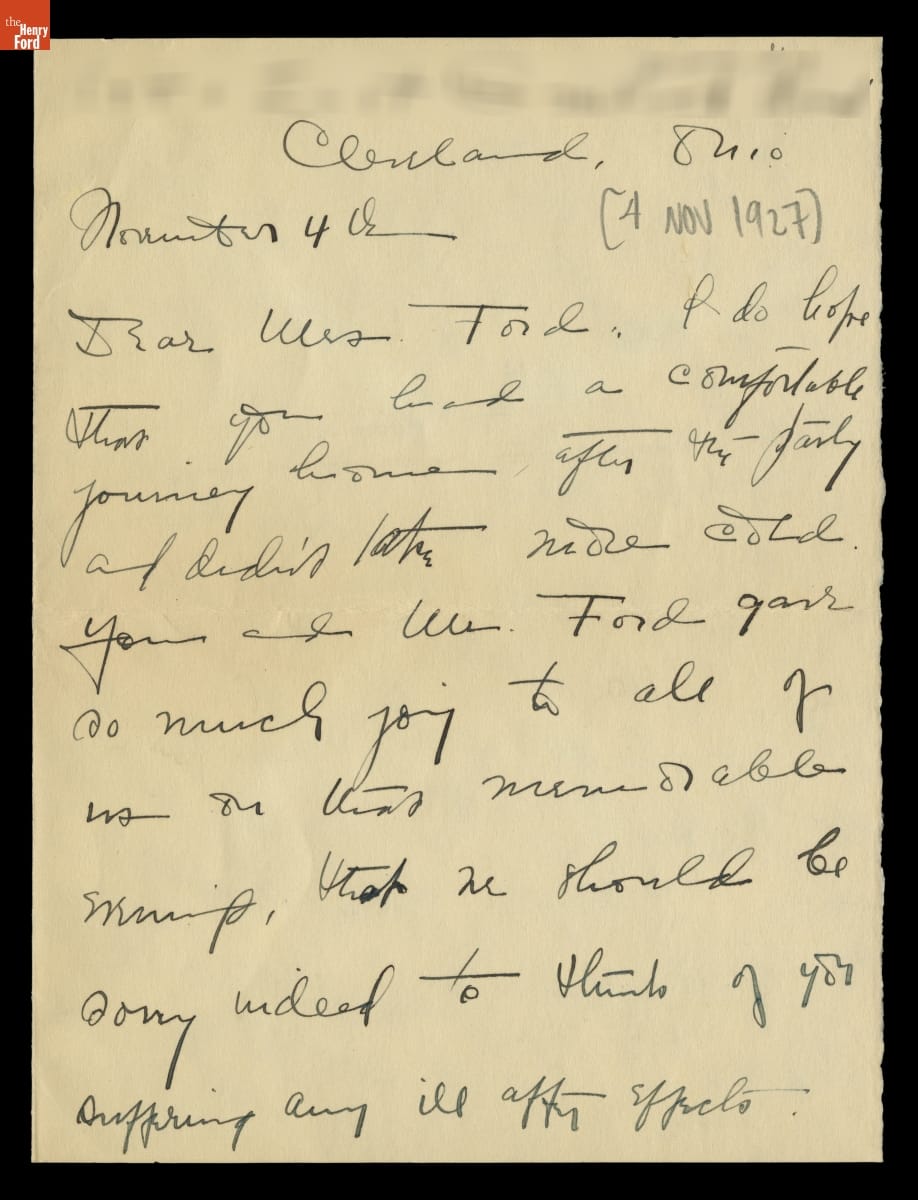
- Letter from Gertrude Moore to Clara Ford, November 4, 1927 -
- November 04, 1927
- Collections - Artifact
Letter from Gertrude Moore to Clara Ford, November 4, 1927
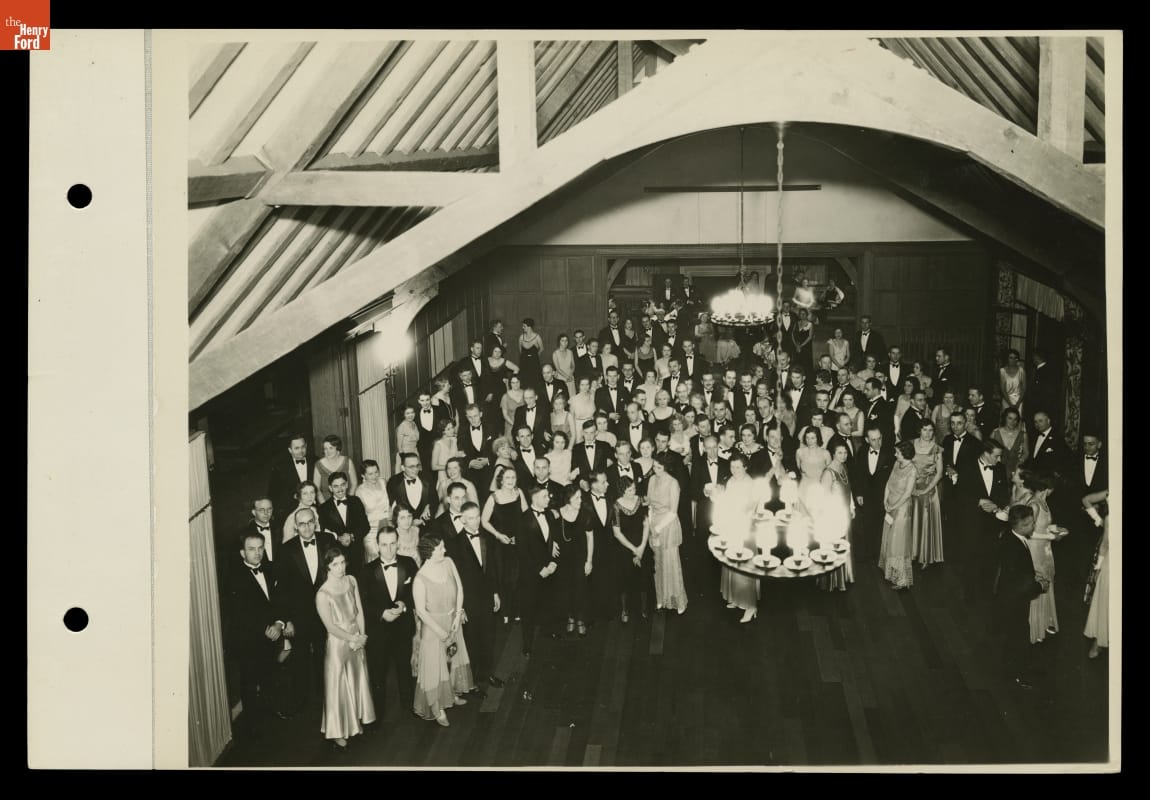
- Formal Dance at Dearborn Country Club, 1931 - Henry Ford established the Dearborn Country Club, with an 18-hole golf course and a clubhouse designed by Albert Kahn, in 1925. Ford himself was not a golfer, but the club helped attract and keep executive talent at Ford Motor Company's Dearborn, Michigan, offices. Club members purchased the facility from Ford interests in 1952.
- October 24, 1931
- Collections - Artifact
Formal Dance at Dearborn Country Club, 1931
Henry Ford established the Dearborn Country Club, with an 18-hole golf course and a clubhouse designed by Albert Kahn, in 1925. Ford himself was not a golfer, but the club helped attract and keep executive talent at Ford Motor Company's Dearborn, Michigan, offices. Club members purchased the facility from Ford interests in 1952.
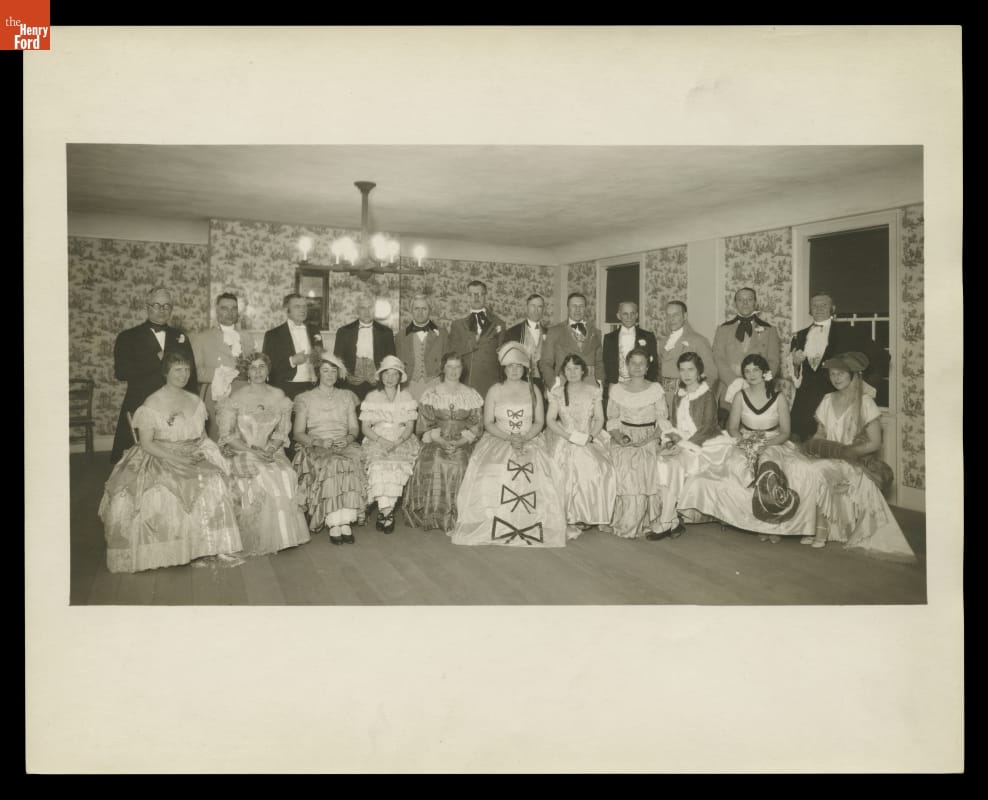
- Clara and Henry Ford with Guests at a Costume Party, Eagle Tavern, Greenfield Village, circa 1937 - Having attended many of Henry Ford's old-fashioned dancing parties, some of Ford's guests decided to give a special dinner party in honor of Henry and Clara Ford. Everyone dressed in historical costumes and enjoyed dinner at the Clinton Inn (now Eagle Tavern) in Greenfield Village, where they posed for this photograph. Then they proceeded to nearby Lovett Hall for dancing.
- circa 1937
- Collections - Artifact
Clara and Henry Ford with Guests at a Costume Party, Eagle Tavern, Greenfield Village, circa 1937
Having attended many of Henry Ford's old-fashioned dancing parties, some of Ford's guests decided to give a special dinner party in honor of Henry and Clara Ford. Everyone dressed in historical costumes and enjoyed dinner at the Clinton Inn (now Eagle Tavern) in Greenfield Village, where they posed for this photograph. Then they proceeded to nearby Lovett Hall for dancing.
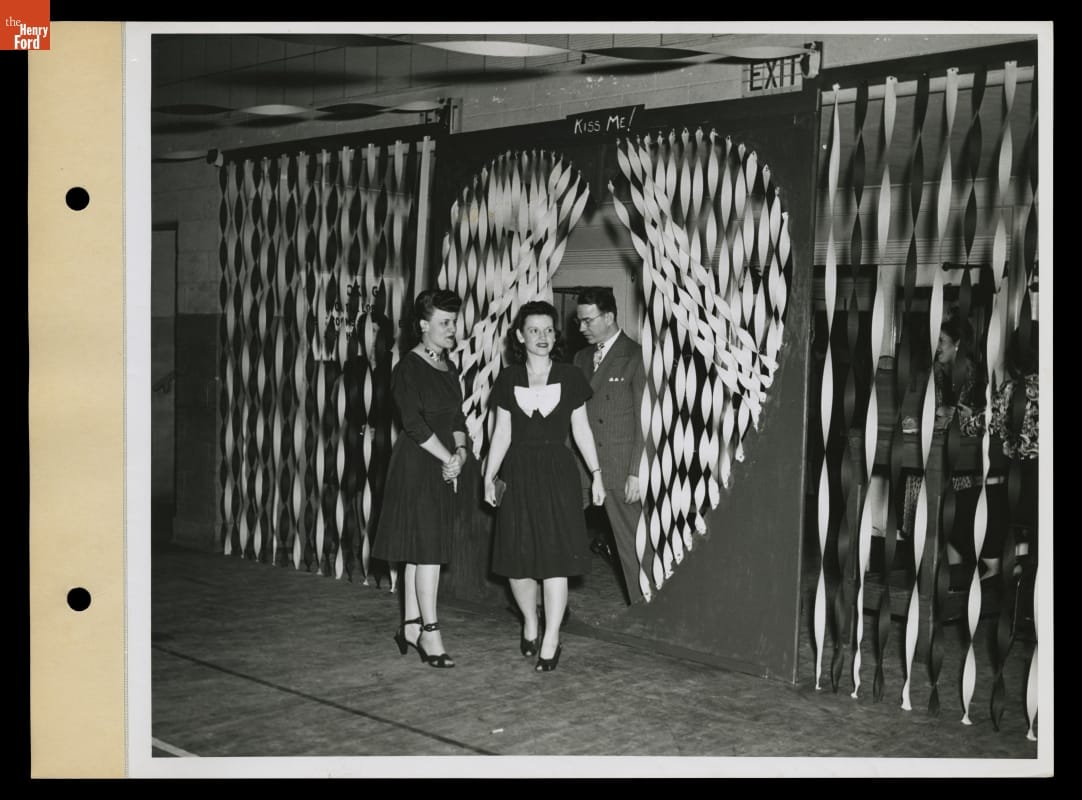
- Girls' Club Valentine Dance and Ford Plant Engineering Party, Dearborn, Michigan, February 14, 1947 -
- February 14, 1947
- Collections - Artifact
Girls' Club Valentine Dance and Ford Plant Engineering Party, Dearborn, Michigan, February 14, 1947
- News Story about Henry Ford's Revival of Old-Fashioned Music and Dancing, July 1925 -
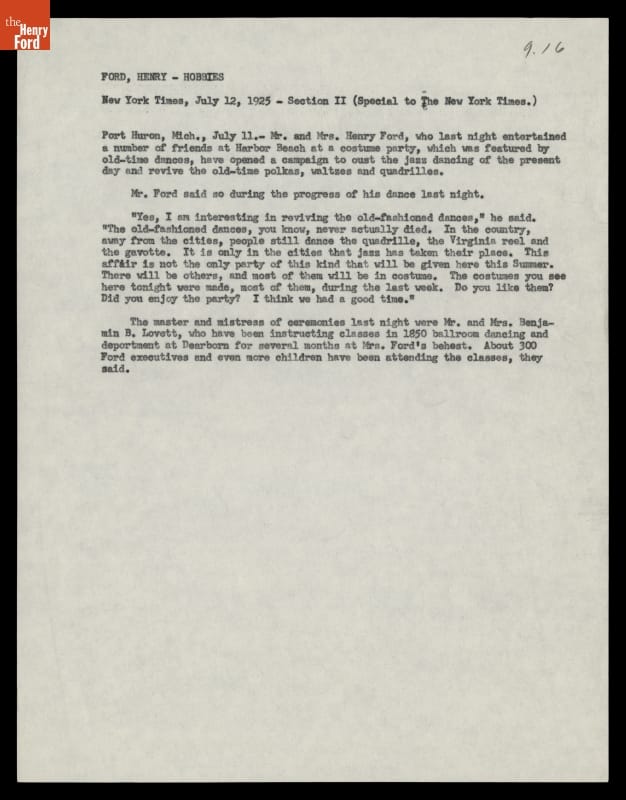
- July 11, 1925
- Collections - Artifact
News Story about Henry Ford's Revival of Old-Fashioned Music and Dancing, July 1925
- Card Advertising a Dinner Dance at the City Hotel, "Social Hop!," 1880 - By the 1880s, cities and towns across the country sported dozens of local dance bands and orchestras that played the latest popular numbers for social occasions. A social hop was a public dance which might include any number of cotillions, quadrilles, polkas, schottisches, lancers, mazurkas, minuettes, and waltzes. Dance orchestra members typically played violin, viola, clarinet, flute, and double bass.
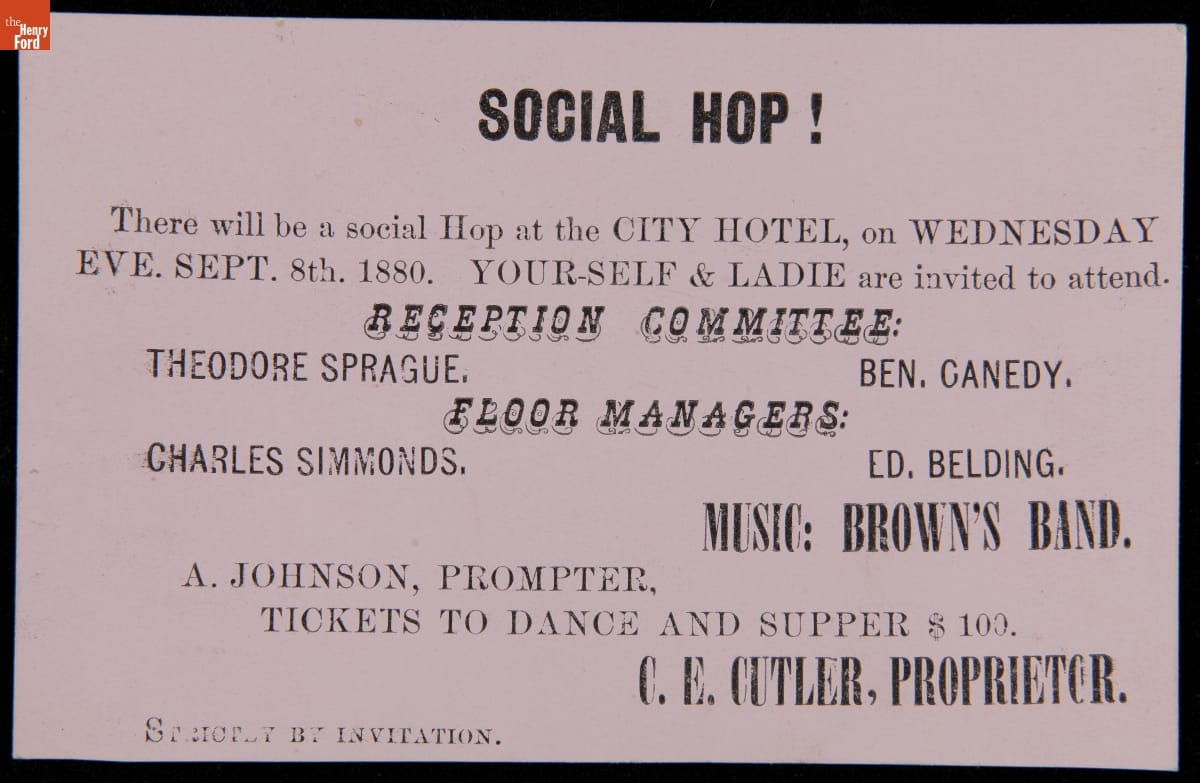
- September 08, 1880
- Collections - Artifact
Card Advertising a Dinner Dance at the City Hotel, "Social Hop!," 1880
By the 1880s, cities and towns across the country sported dozens of local dance bands and orchestras that played the latest popular numbers for social occasions. A social hop was a public dance which might include any number of cotillions, quadrilles, polkas, schottisches, lancers, mazurkas, minuettes, and waltzes. Dance orchestra members typically played violin, viola, clarinet, flute, and double bass.
- Trade Card Advertising a Social Dance, Letcher's Opera House, Fayette, Ohio, 1880 - In the last third of the nineteenth century, promoters used a popular medium--trade cards--to announce shows, activities, and community events. Americans enjoyed and often saved the vibrant little advertisements, which survive as historical records of leisure in the United States.
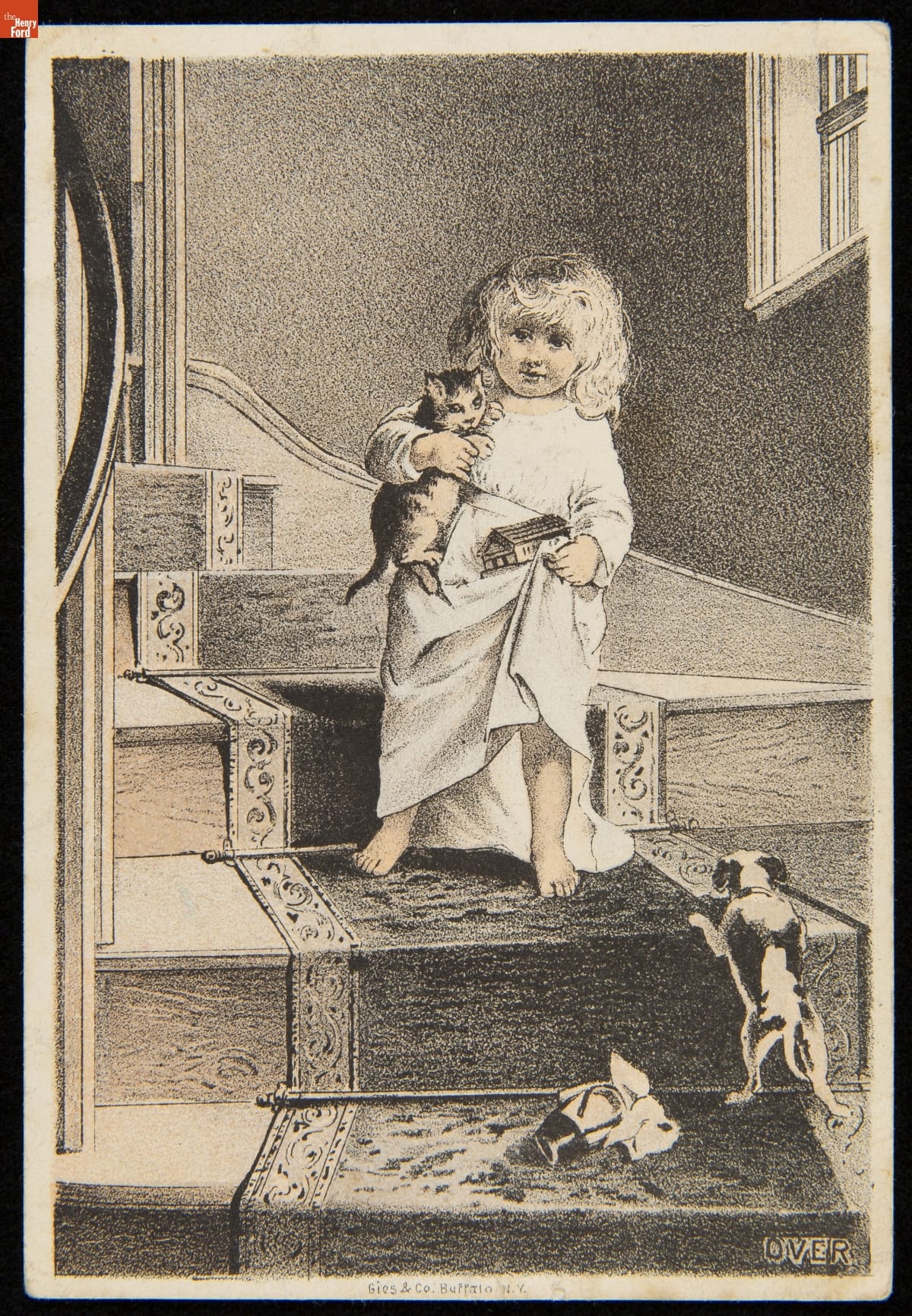
- October 15, 1880
- Collections - Artifact
Trade Card Advertising a Social Dance, Letcher's Opera House, Fayette, Ohio, 1880
In the last third of the nineteenth century, promoters used a popular medium--trade cards--to announce shows, activities, and community events. Americans enjoyed and often saved the vibrant little advertisements, which survive as historical records of leisure in the United States.
- Program, "The Fifth Annual Quadrille," Music by Henry Ford's Old-Time Orchestra, 1939 - Henry Ford sent his Old Time Orchestra to out-of-state parties, including the all-male Washington & Jefferson College in Pennsylvania. Benjamin Lovett, Ford's dancing master, gave the young men instruction in the basic steps for the traditional American dances like the quadrille and the schottische. Then, young women from Pennsylvania State College joined them for a formal dance.
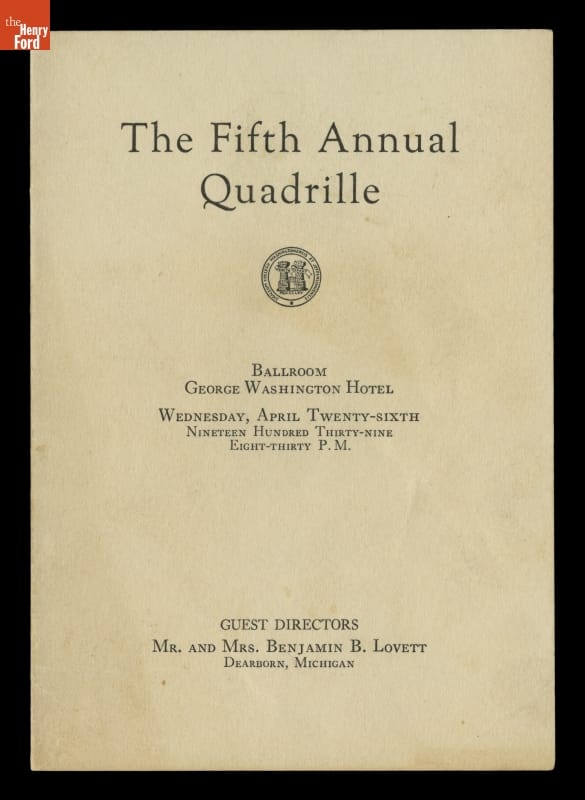
- April 26, 1939
- Collections - Artifact
Program, "The Fifth Annual Quadrille," Music by Henry Ford's Old-Time Orchestra, 1939
Henry Ford sent his Old Time Orchestra to out-of-state parties, including the all-male Washington & Jefferson College in Pennsylvania. Benjamin Lovett, Ford's dancing master, gave the young men instruction in the basic steps for the traditional American dances like the quadrille and the schottische. Then, young women from Pennsylvania State College joined them for a formal dance.
- "The Fiddler Plays His Brightest Air, And Calls Aloud for All to Pair" -
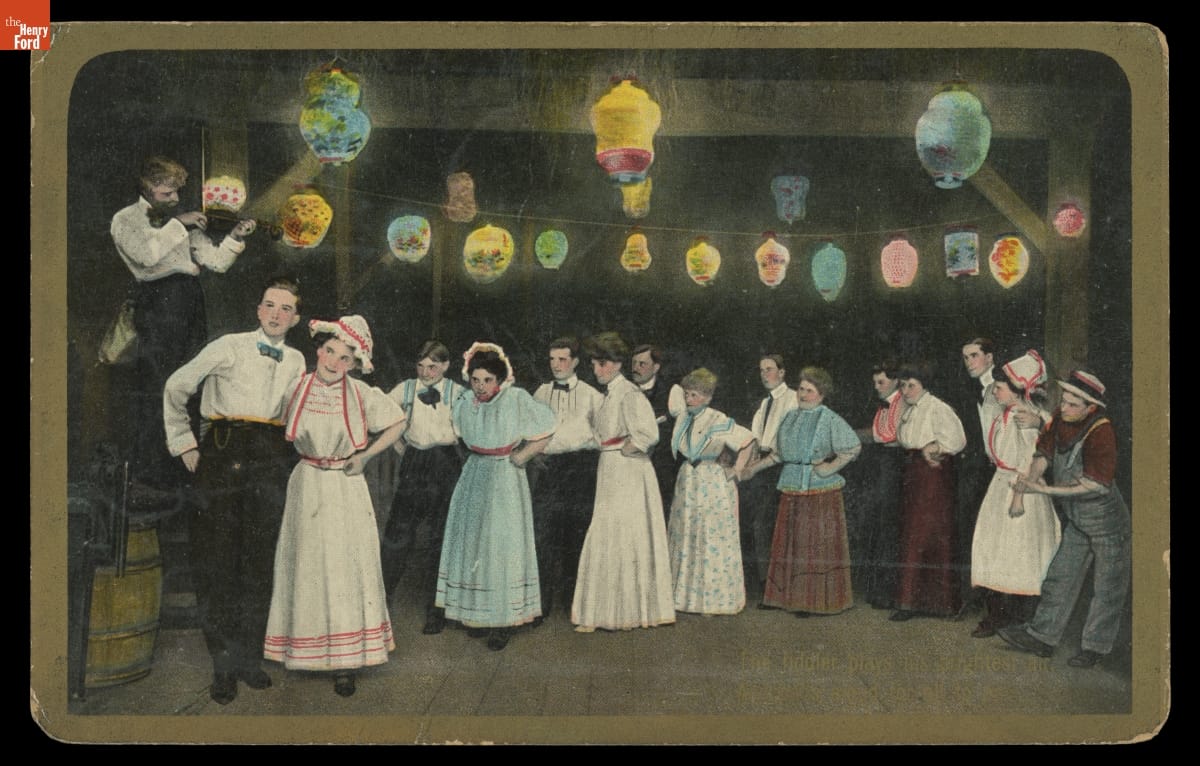
- 1909
- Collections - Artifact
"The Fiddler Plays His Brightest Air, And Calls Aloud for All to Pair"
- Clara and Henry Ford, with Others, Dancing in Newly Completed Lovett Hall Ballroom, Dearborn, Michigan, 1937 - In 1937, Henry Ford built this elegant ballroom for his old-fashioned dances. At the October 26th dedication, Henry and Clara Ford (right) led the dancing, as Ford's Old Time Orchestra played dances like waltzes and quadrilles. Benjamin Lovett--Ford's dancing teacher for over a decade--called the steps for the 300 guests. Ford named the ballroom Lovett Hall for him.
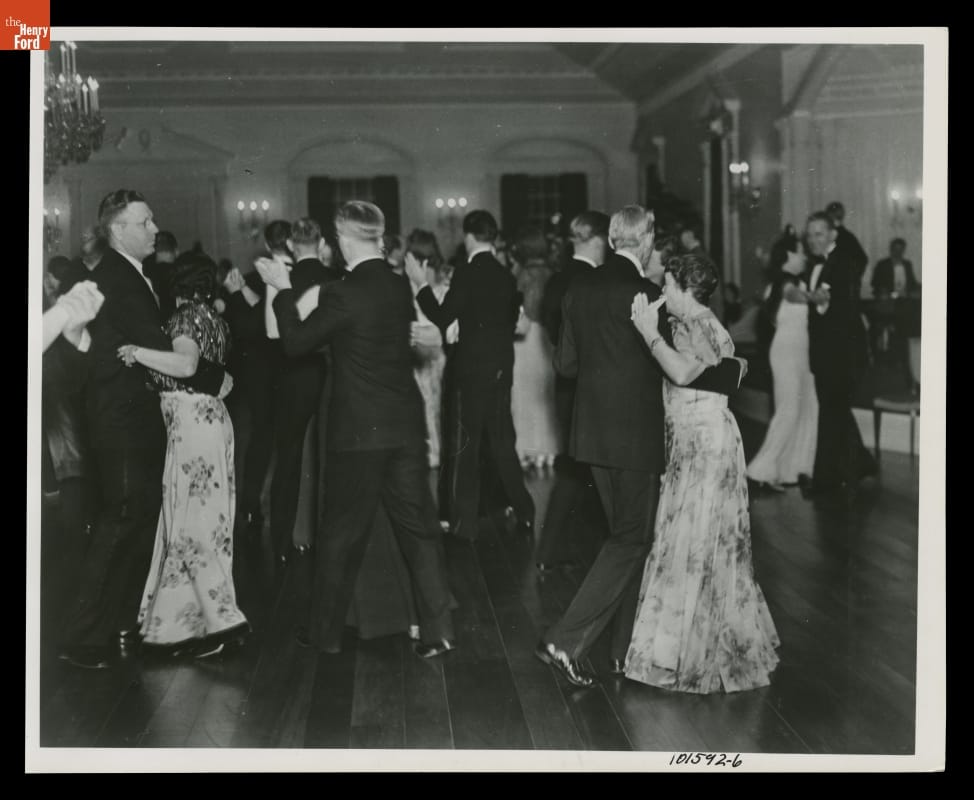
- October 26, 1937
- Collections - Artifact
Clara and Henry Ford, with Others, Dancing in Newly Completed Lovett Hall Ballroom, Dearborn, Michigan, 1937
In 1937, Henry Ford built this elegant ballroom for his old-fashioned dances. At the October 26th dedication, Henry and Clara Ford (right) led the dancing, as Ford's Old Time Orchestra played dances like waltzes and quadrilles. Benjamin Lovett--Ford's dancing teacher for over a decade--called the steps for the 300 guests. Ford named the ballroom Lovett Hall for him.