
Search
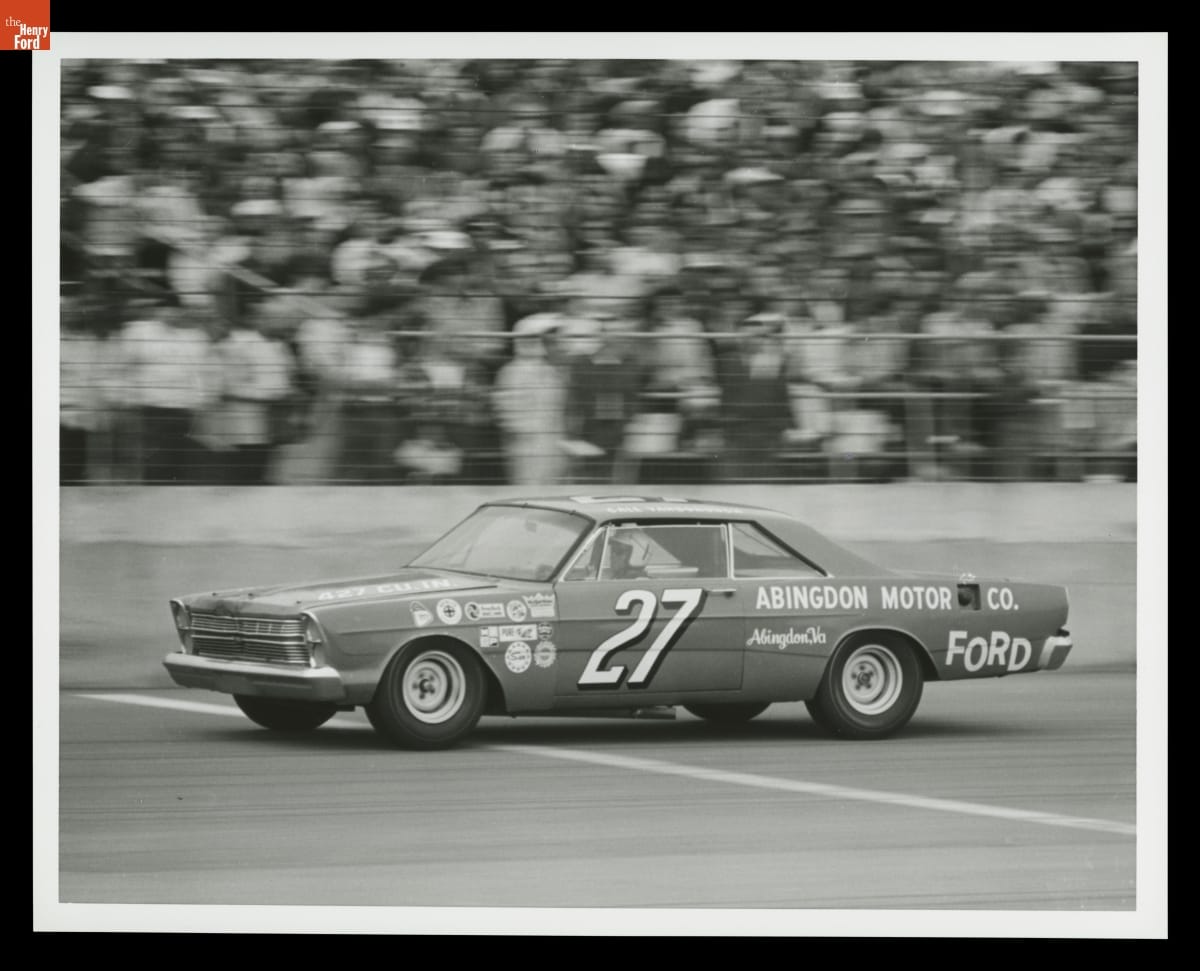
- 1966 Ford Galaxie Driven by Cale Yarborough in the Daytona 500, February 1966 - Cale Yarborough finished second at the 1966 Daytona 500, behind Richard Petty. Yarborough drove the #27 1966 Ford Galaxie for the Holman-Moody racing team. The following season, Yarborough's Galaxie was acquired by Wendell Scott, who drove it under #34 through 1968. Scott, the first African American driver to compete in NASCAR full-time, stretched his limited budget with secondhand equipment.
- February 27, 1966
- Collections - Artifact
1966 Ford Galaxie Driven by Cale Yarborough in the Daytona 500, February 1966
Cale Yarborough finished second at the 1966 Daytona 500, behind Richard Petty. Yarborough drove the #27 1966 Ford Galaxie for the Holman-Moody racing team. The following season, Yarborough's Galaxie was acquired by Wendell Scott, who drove it under #34 through 1968. Scott, the first African American driver to compete in NASCAR full-time, stretched his limited budget with secondhand equipment.
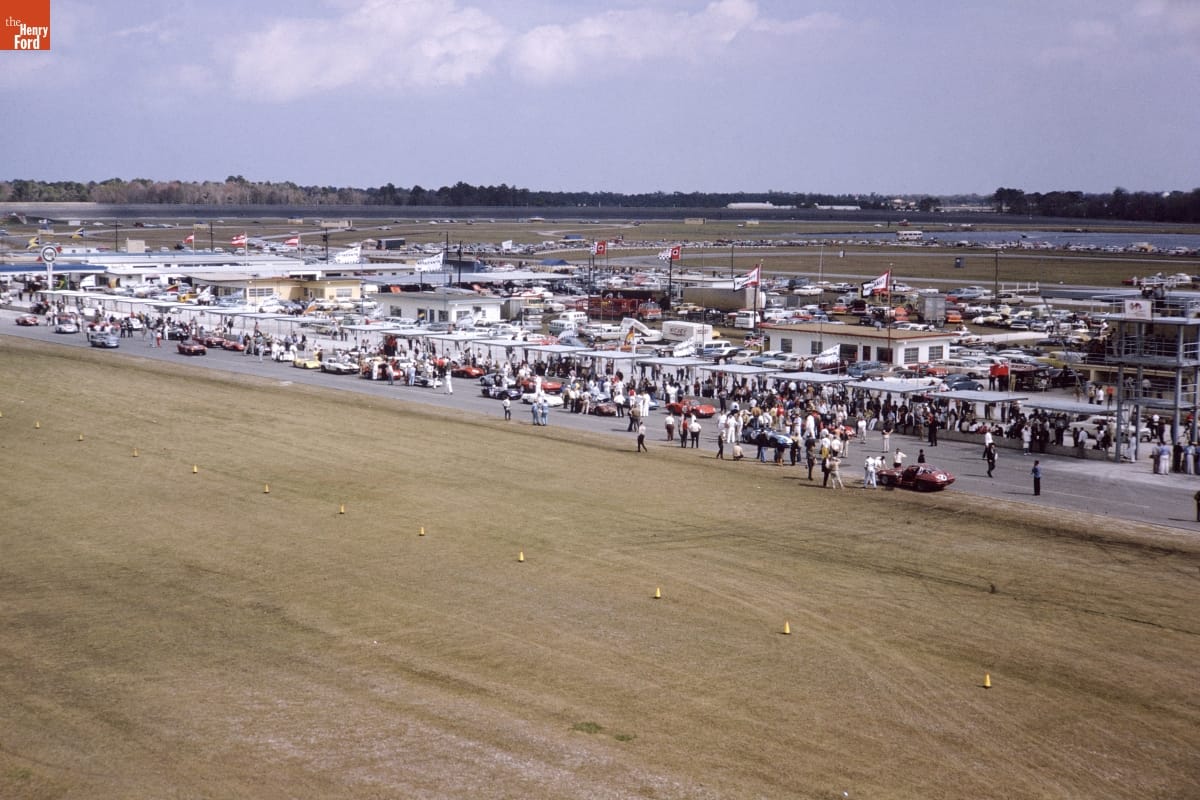
- Daytona 500, February 23, 1964 - NASCAR opens each season with the Daytona 500, the most important race in its top-level series. Daytona International Speedway's steeply banked turns and long back straightaway allow for fast speeds and exciting competition. Richard Petty won the 1964 Daytona 500 -- the first of a record-setting seven victories at that race for "The King."
- February 23, 1964
- Collections - Artifact
Daytona 500, February 23, 1964
NASCAR opens each season with the Daytona 500, the most important race in its top-level series. Daytona International Speedway's steeply banked turns and long back straightaway allow for fast speeds and exciting competition. Richard Petty won the 1964 Daytona 500 -- the first of a record-setting seven victories at that race for "The King."
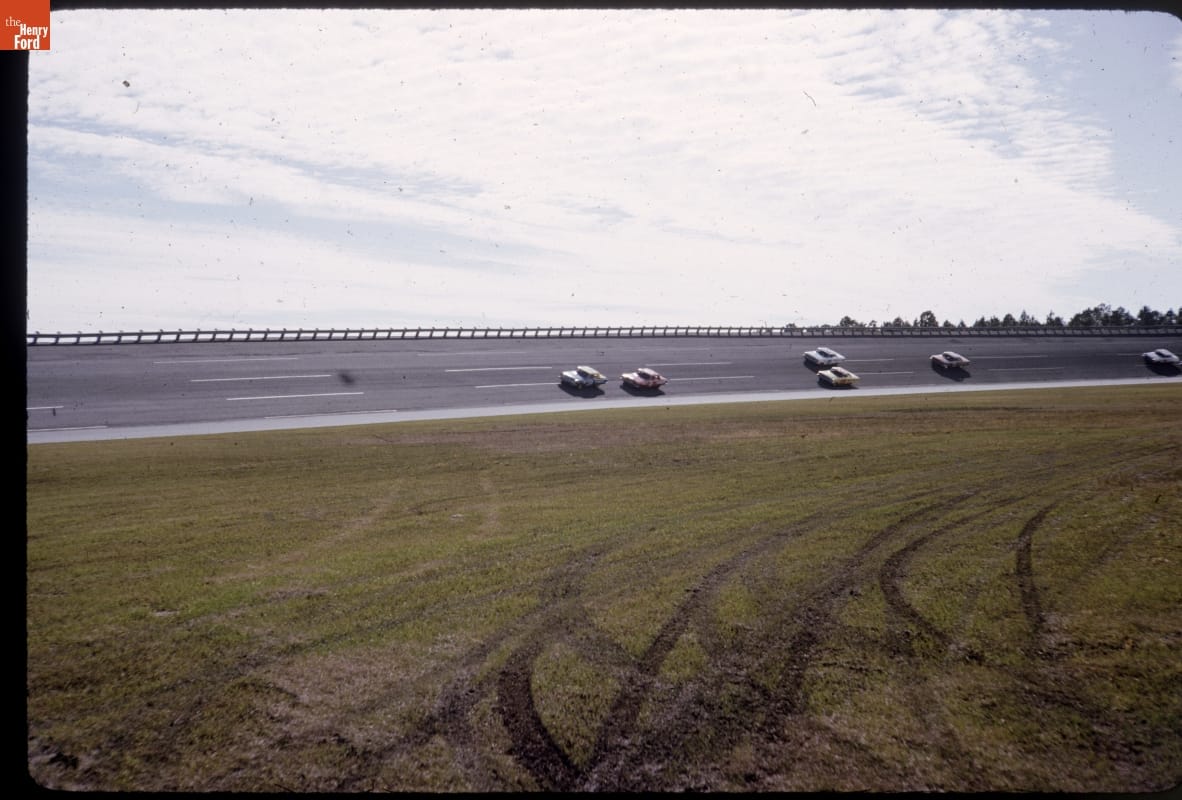
- Daytona 500, February 23, 1964 - NASCAR opens each season with the Daytona 500, the most important race in its top-level series. Daytona International Speedway's steeply banked turns and long back straightaway allow for fast speeds and exciting competition. Richard Petty won the 1964 Daytona 500 -- the first of a record-setting seven victories at that race for "The King."
- February 23, 1964
- Collections - Artifact
Daytona 500, February 23, 1964
NASCAR opens each season with the Daytona 500, the most important race in its top-level series. Daytona International Speedway's steeply banked turns and long back straightaway allow for fast speeds and exciting competition. Richard Petty won the 1964 Daytona 500 -- the first of a record-setting seven victories at that race for "The King."
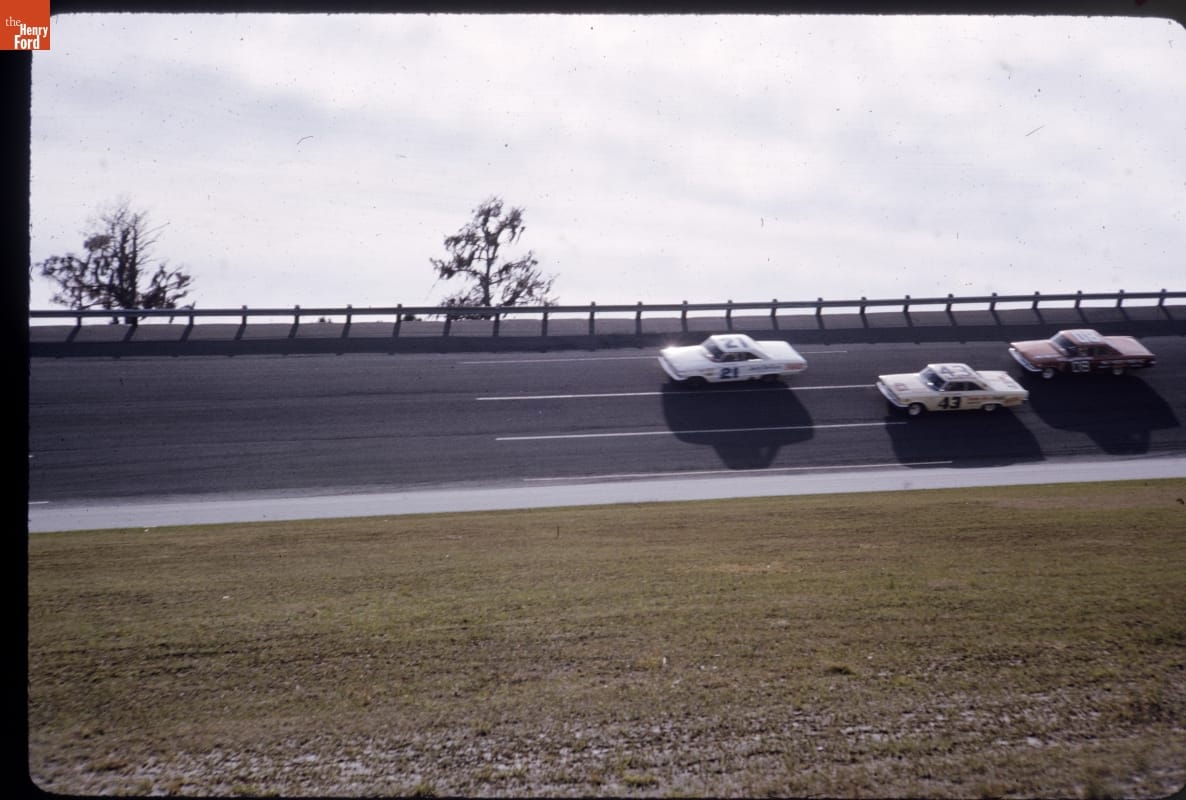
- Daytona 500, February 23, 1964 - NASCAR opens each season with the Daytona 500, the most important race in its top-level series. Daytona International Speedway's steeply banked turns and long back straightaway allow for fast speeds and exciting competition. Richard Petty won the 1964 Daytona 500 -- the first of a record-setting seven victories at that race for "The King."
- February 23, 1964
- Collections - Artifact
Daytona 500, February 23, 1964
NASCAR opens each season with the Daytona 500, the most important race in its top-level series. Daytona International Speedway's steeply banked turns and long back straightaway allow for fast speeds and exciting competition. Richard Petty won the 1964 Daytona 500 -- the first of a record-setting seven victories at that race for "The King."
- Daytona 500, February 23, 1964 - NASCAR opens each season with the Daytona 500, the most important race in its top-level series. Daytona International Speedway's steeply banked turns and long back straightaway allow for fast speeds and exciting competition. Richard Petty won the 1964 Daytona 500 -- the first of a record-setting seven victories at that race for "The King."
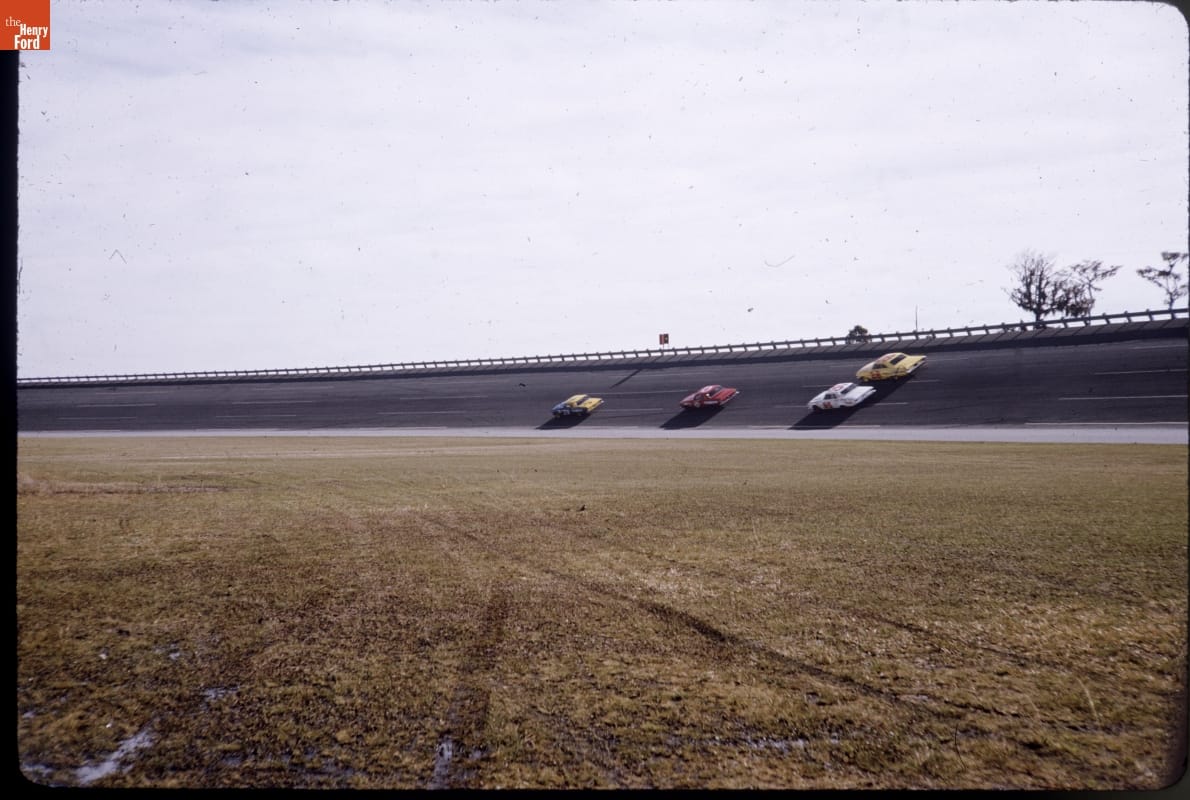
- February 23, 1964
- Collections - Artifact
Daytona 500, February 23, 1964
NASCAR opens each season with the Daytona 500, the most important race in its top-level series. Daytona International Speedway's steeply banked turns and long back straightaway allow for fast speeds and exciting competition. Richard Petty won the 1964 Daytona 500 -- the first of a record-setting seven victories at that race for "The King."
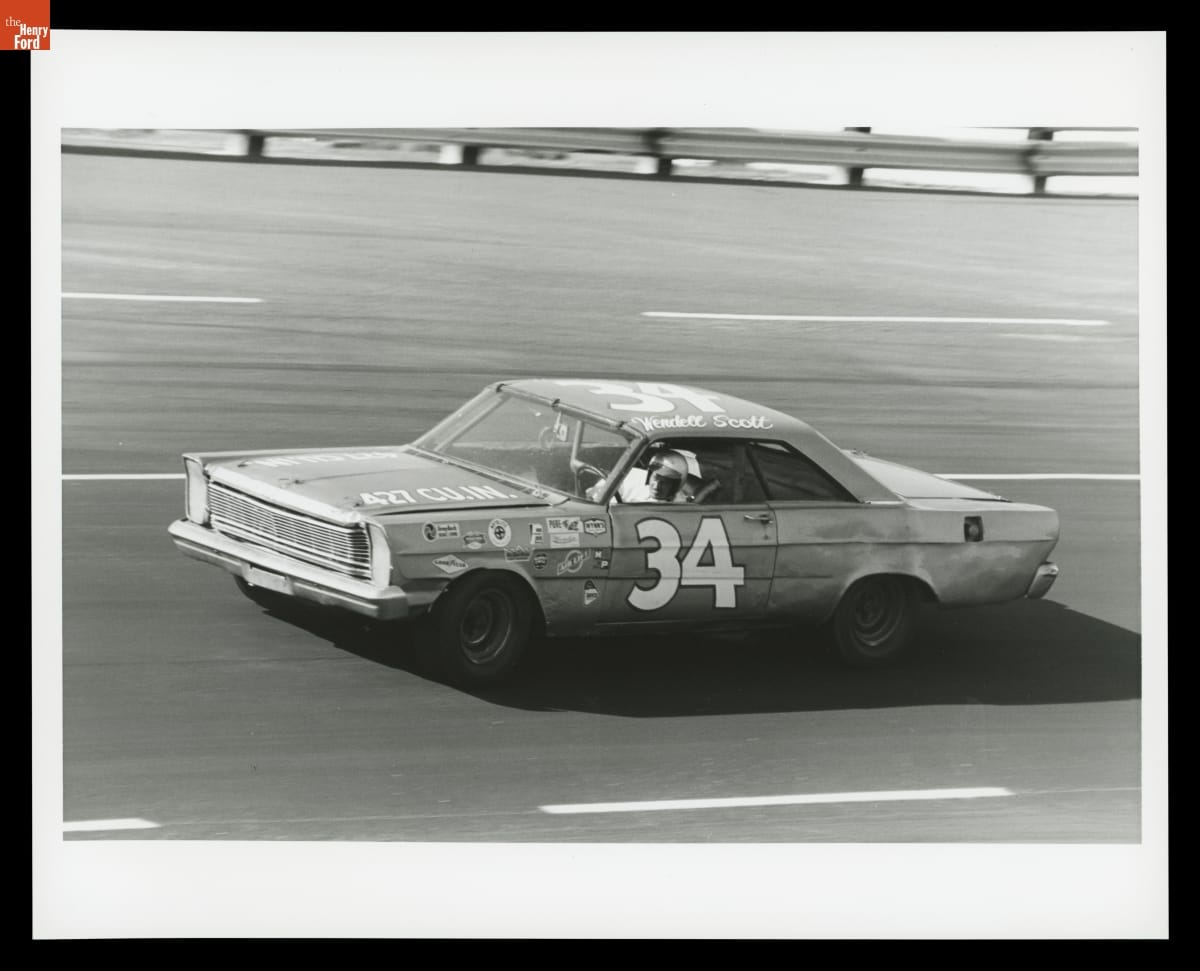
- 1965 Ford Galaxie Driven by Wendell Scott in the Daytona 500, February 1966 - Wendell Scott broke NASCAR's color barrier, becoming the first African American driver to win a Cup-level race, with his victory in a 100-mile event at Jacksonville's Speedway Park in 1963. He made 495 starts and earned 147 top-ten finishes in his 13-year Cup Series career. Scott was inducted into the NASCAR Hall of Fame in 2015.
- February 27, 1966
- Collections - Artifact
1965 Ford Galaxie Driven by Wendell Scott in the Daytona 500, February 1966
Wendell Scott broke NASCAR's color barrier, becoming the first African American driver to win a Cup-level race, with his victory in a 100-mile event at Jacksonville's Speedway Park in 1963. He made 495 starts and earned 147 top-ten finishes in his 13-year Cup Series career. Scott was inducted into the NASCAR Hall of Fame in 2015.
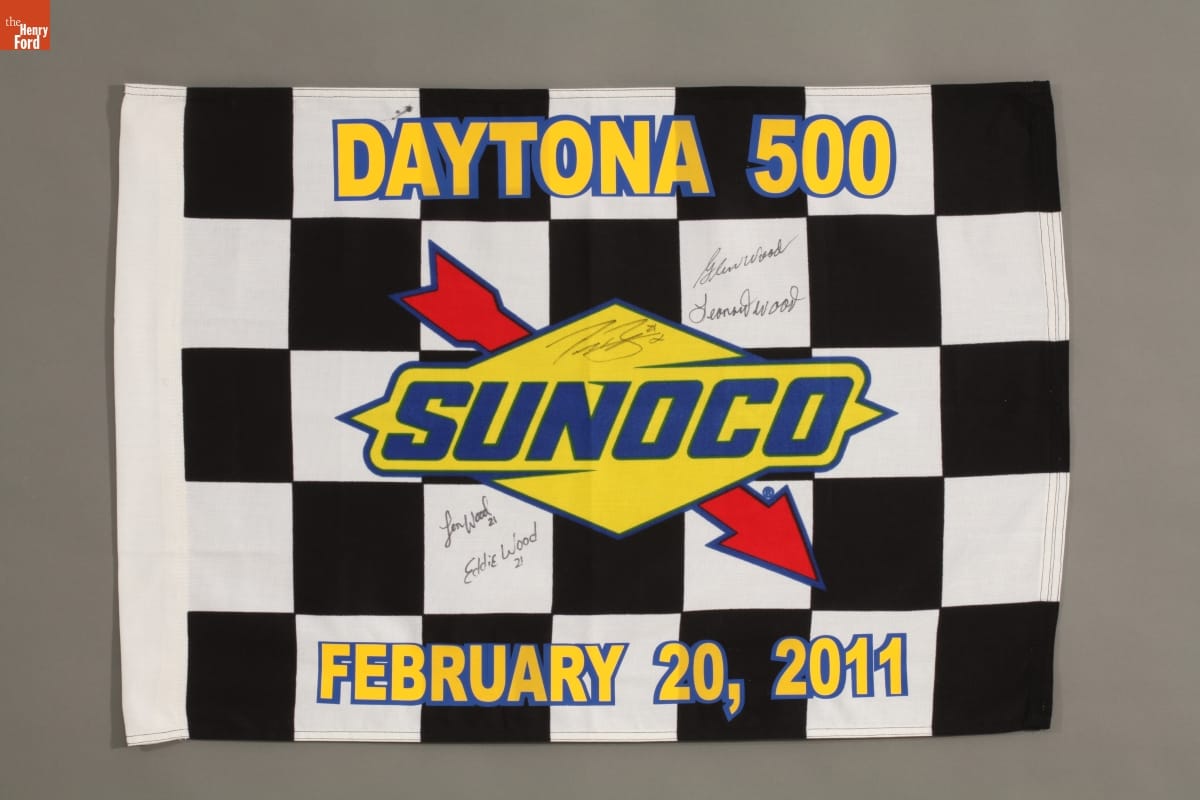
- Daytona 500 Checkered Flag, 2011 - This checkered flag ended the 2011 Daytona 500 and gave Ford's racing program its 600th NASCAR Cup Series win. Trevor Bayne drove the winning #21 Ford Fusion for Wood Brothers Racing. The team, formed in 1950, is NASCAR's oldest and uses Ford Motor Company vehicles exclusively. Bayne signed the flag, as did Glen, Leonard, Len, and Eddie Wood.
- February 20, 2011
- Collections - Artifact
Daytona 500 Checkered Flag, 2011
This checkered flag ended the 2011 Daytona 500 and gave Ford's racing program its 600th NASCAR Cup Series win. Trevor Bayne drove the winning #21 Ford Fusion for Wood Brothers Racing. The team, formed in 1950, is NASCAR's oldest and uses Ford Motor Company vehicles exclusively. Bayne signed the flag, as did Glen, Leonard, Len, and Eddie Wood.
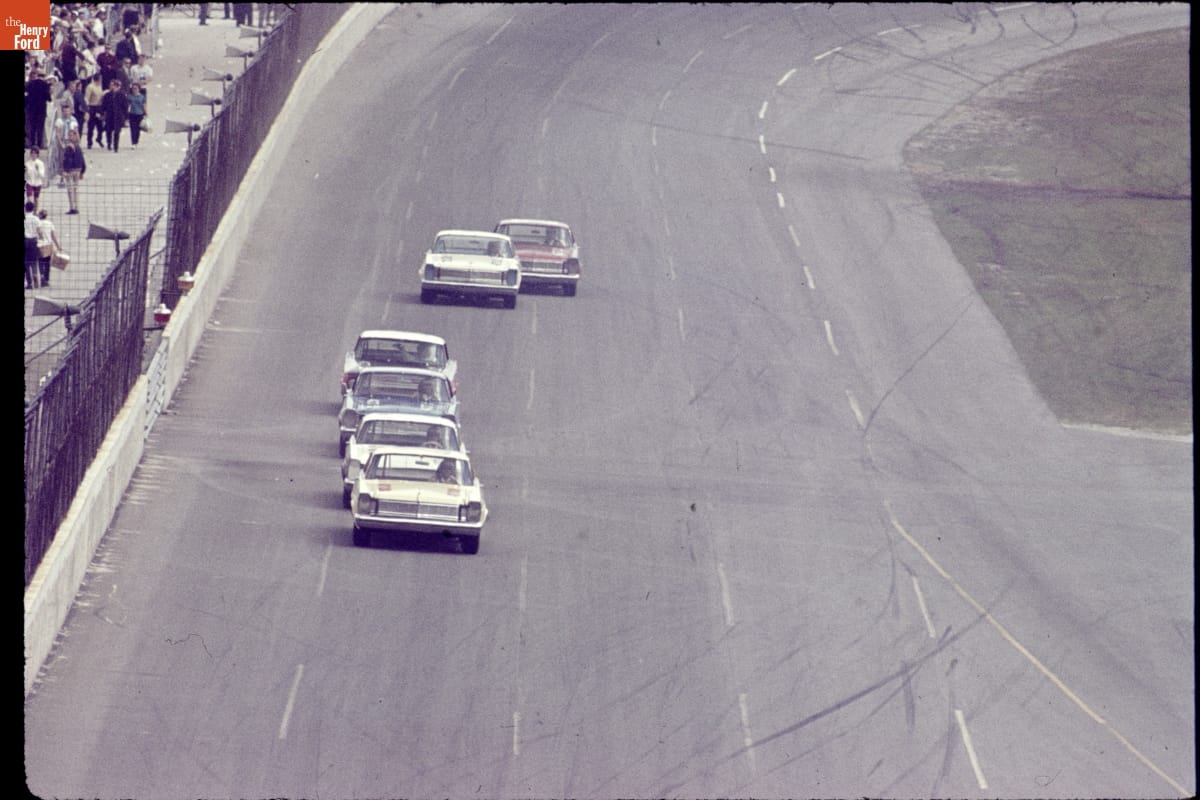
- Daytona 500, February 14, 1965 - NASCAR opens each season with the Daytona 500, the most important race in its top-level series. Daytona International Speedway's steeply banked turns and long back straightaway allow for fast speeds and exciting competition. Fred Lorenzen won the rain-shortened 1965 Daytona 500 driving the #28 Ford Galaxie for the Holman-Moody team. His average race speed was 141.539 miles per hour.
- February 14, 1965
- Collections - Artifact
Daytona 500, February 14, 1965
NASCAR opens each season with the Daytona 500, the most important race in its top-level series. Daytona International Speedway's steeply banked turns and long back straightaway allow for fast speeds and exciting competition. Fred Lorenzen won the rain-shortened 1965 Daytona 500 driving the #28 Ford Galaxie for the Holman-Moody team. His average race speed was 141.539 miles per hour.
- Program, Tenth Annual Daytona 500, February 1968 - The Daytona 500 is the most important race on NASCAR's Cup Series schedule. Cale Yarborough won in 1968, racing for Wood Brothers in the #21 Mercury Cyclone and besting drivers like A.J. Foyt, Richard Petty, Wendell Scott, and Lee Roy Yarbrough. It was the first of four Daytona 500 victories in Yarborough's career.

- February 25, 1968
- Collections - Artifact
Program, Tenth Annual Daytona 500, February 1968
The Daytona 500 is the most important race on NASCAR's Cup Series schedule. Cale Yarborough won in 1968, racing for Wood Brothers in the #21 Mercury Cyclone and besting drivers like A.J. Foyt, Richard Petty, Wendell Scott, and Lee Roy Yarbrough. It was the first of four Daytona 500 victories in Yarborough's career.
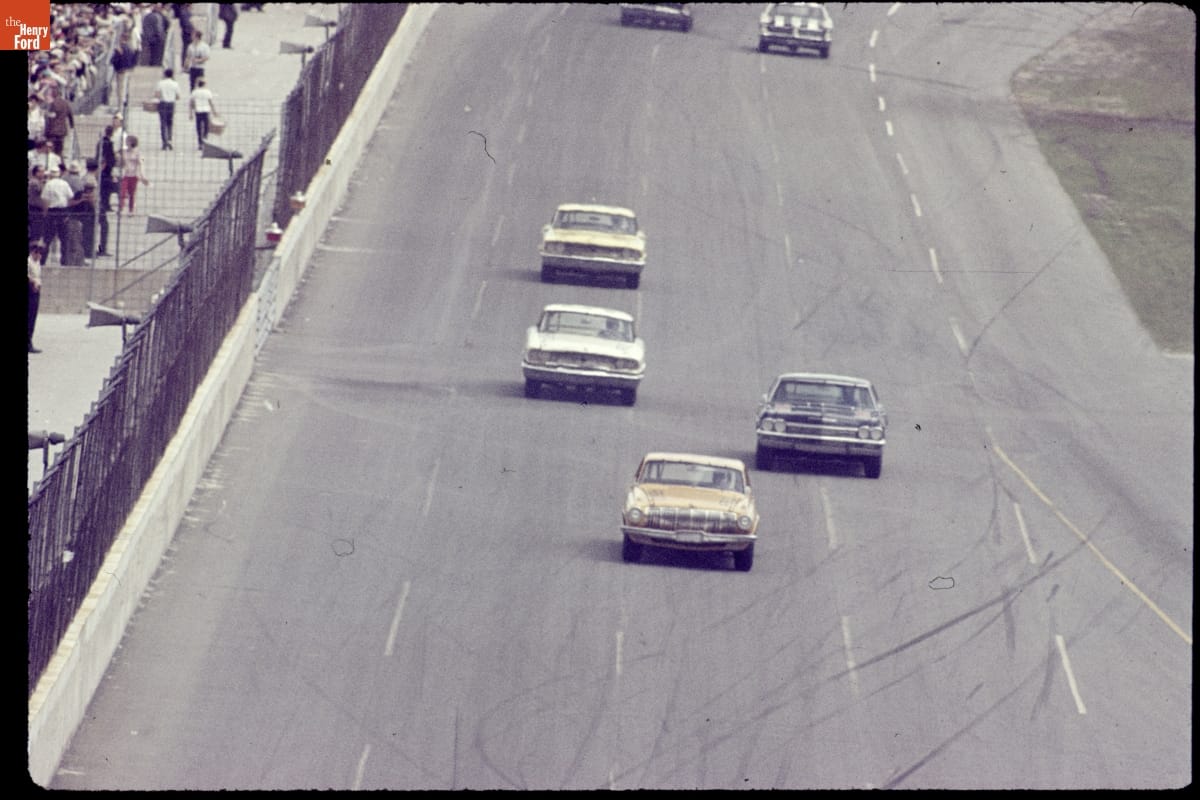
- Daytona 500, February 14, 1965 - NASCAR opens each season with the Daytona 500, the most important race in its top-level series. Daytona International Speedway's steeply banked turns and long back straightaway allow for fast speeds and exciting competition. Fred Lorenzen won the rain-shortened 1965 Daytona 500 driving the #28 Ford Galaxie for the Holman-Moody team. His average race speed was 141.539 miles per hour.
- February 14, 1965
- Collections - Artifact
Daytona 500, February 14, 1965
NASCAR opens each season with the Daytona 500, the most important race in its top-level series. Daytona International Speedway's steeply banked turns and long back straightaway allow for fast speeds and exciting competition. Fred Lorenzen won the rain-shortened 1965 Daytona 500 driving the #28 Ford Galaxie for the Holman-Moody team. His average race speed was 141.539 miles per hour.