
Search
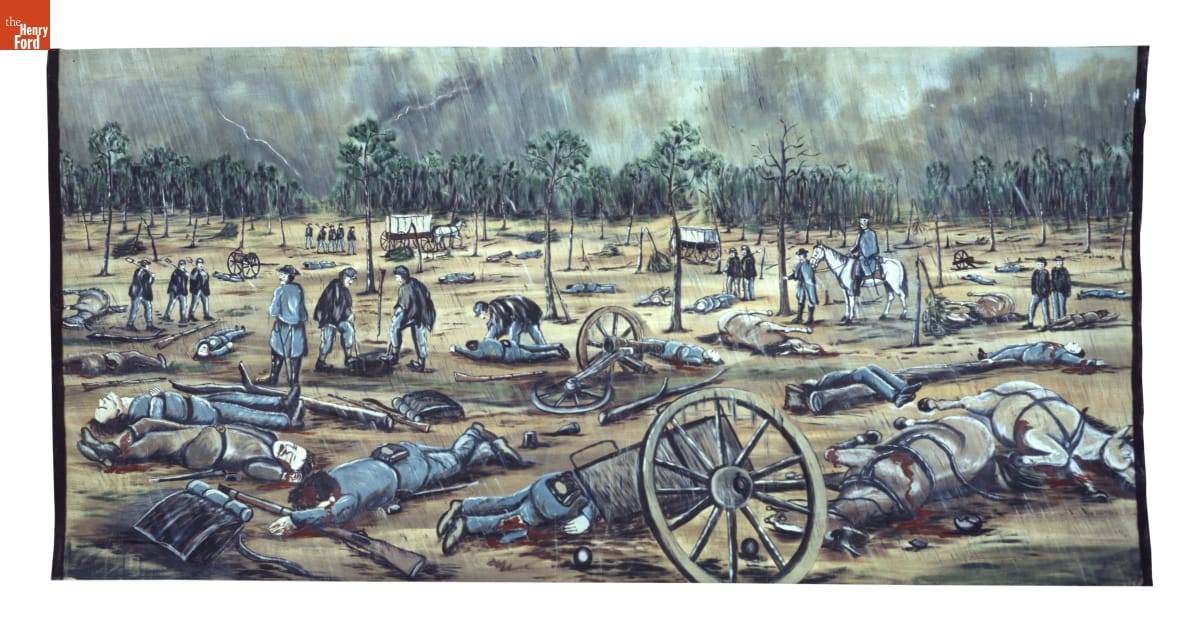
- "Battle Scenes of the Rebellion" Aftermath of Battle, Civil War Panorama - In the 1880s, Thomas Clarkson Gordon, a self-taught artist and Civil War veteran, created a panorama depicting scenes from the Civil War. Gordon stitched together 15 paintings -- each 7 by 14 feet -- into a canvas roll more than 100 feet long. He toured his multi-paneled panorama throughout eastern Indiana, retelling the history of the conflict through his vivid illustrations.
- 1861-1865
- Collections - Artifact
"Battle Scenes of the Rebellion" Aftermath of Battle, Civil War Panorama
In the 1880s, Thomas Clarkson Gordon, a self-taught artist and Civil War veteran, created a panorama depicting scenes from the Civil War. Gordon stitched together 15 paintings -- each 7 by 14 feet -- into a canvas roll more than 100 feet long. He toured his multi-paneled panorama throughout eastern Indiana, retelling the history of the conflict through his vivid illustrations.
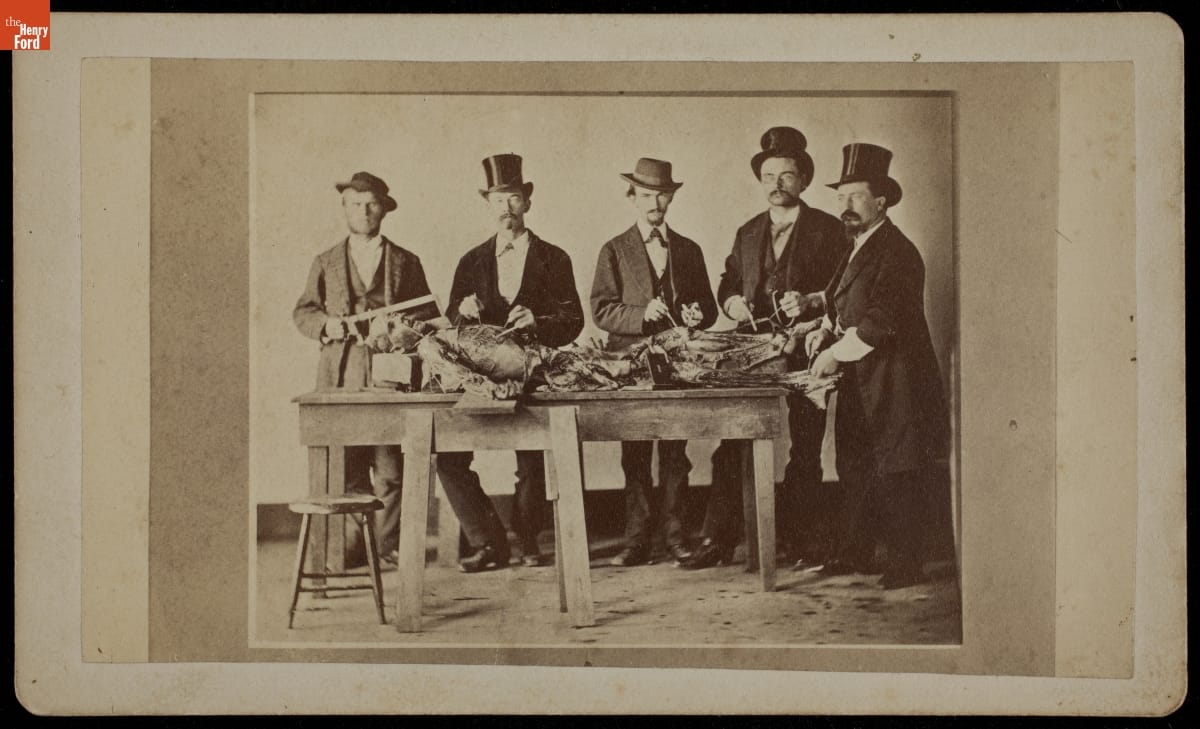
- Ohio Medical College Students with Surgical Instruments, Dissecting Cadaver, circa 1876 - Late 19th-century medical schools employed cadaver dissection to teach human anatomy. A post-mortem dissection -- using bodies supplied by prisons or poorhouses or, sometimes, obtained from grave robbers -- became an important rite of passage for medical school students, who documented this instruction through photography. Photographs like this were personal reminders of a student's professional transformation and usually not intended for general viewing.
- circa 1876
- Collections - Artifact
Ohio Medical College Students with Surgical Instruments, Dissecting Cadaver, circa 1876
Late 19th-century medical schools employed cadaver dissection to teach human anatomy. A post-mortem dissection -- using bodies supplied by prisons or poorhouses or, sometimes, obtained from grave robbers -- became an important rite of passage for medical school students, who documented this instruction through photography. Photographs like this were personal reminders of a student's professional transformation and usually not intended for general viewing.