
Search
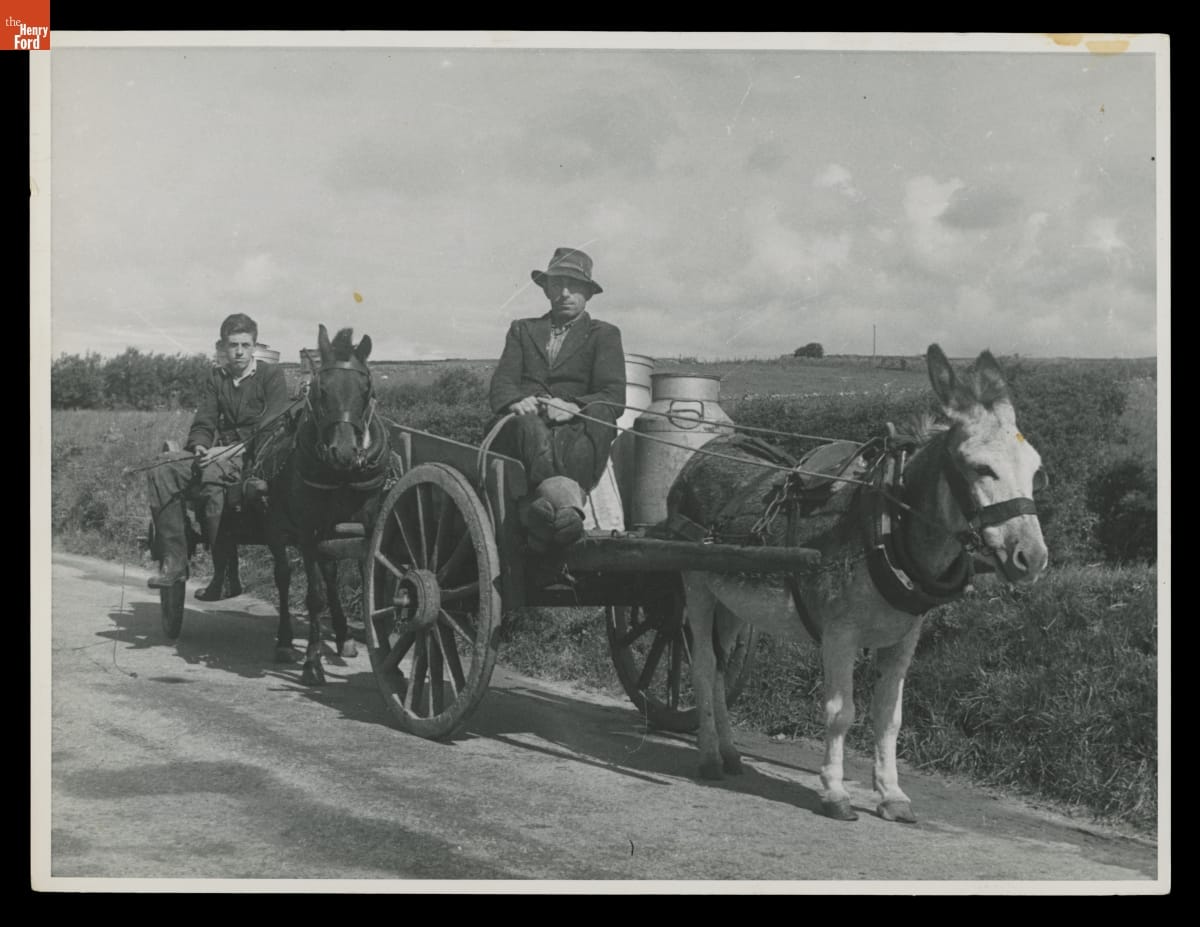
- Traditional Milk Delivery in Ireland, 1948-1951 -
- 1948-1951
- Collections - Artifact
Traditional Milk Delivery in Ireland, 1948-1951
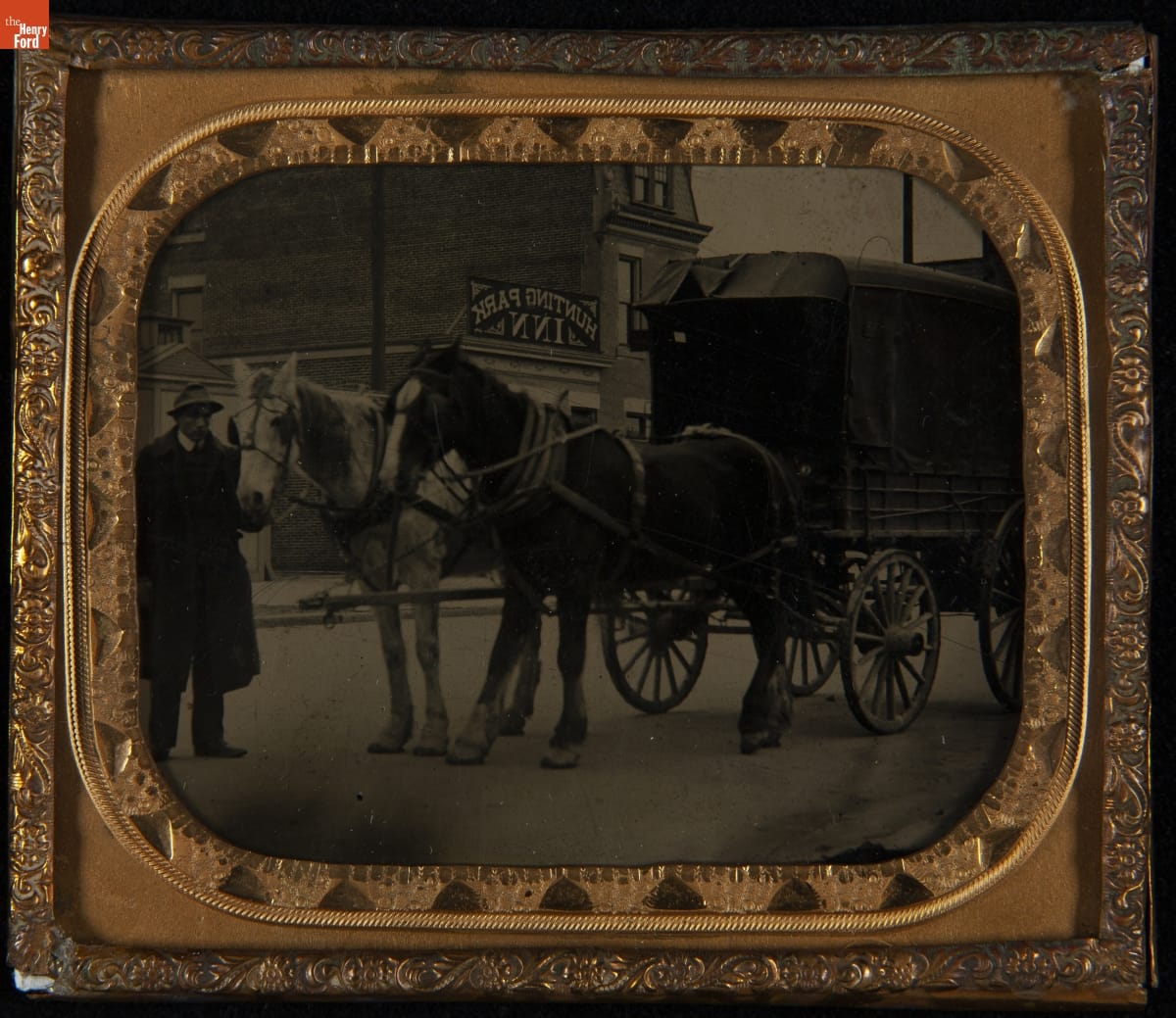
- Man with a Delivery Wagon Pulled by Two Horses, circa 1910 - Tintypes, the popular "instant photographs" of the 19th century, could be produced in a matter of minutes at a price most people could afford. At first, outdoor tintypes were rare. But after a new, more convenient process for making tintypes was introduced in the 1880s, photographs of outdoor scenes became more common.
- circa 1910
- Collections - Artifact
Man with a Delivery Wagon Pulled by Two Horses, circa 1910
Tintypes, the popular "instant photographs" of the 19th century, could be produced in a matter of minutes at a price most people could afford. At first, outdoor tintypes were rare. But after a new, more convenient process for making tintypes was introduced in the 1880s, photographs of outdoor scenes became more common.
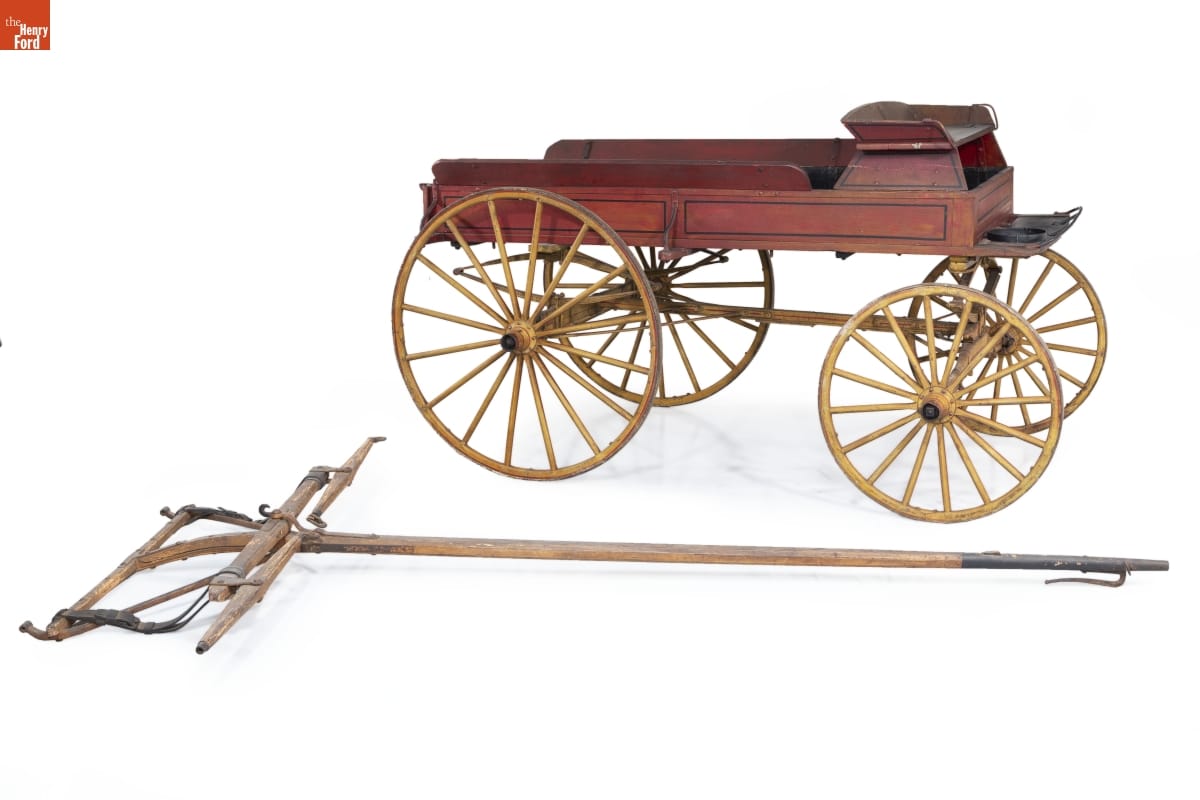
- Delivery Wagon, circa 1890 - Delivery wagons were used by all types of businesses to transport goods from the vendor to the customer. Flare boards on top of this vehicle keep the cargo from spilling over the sides, and the end gate drops to ease loading and unloading. This wagon has an interesting device that allows the two gate catches to be released simultaneously.
- circa 1890
- Collections - Artifact
Delivery Wagon, circa 1890
Delivery wagons were used by all types of businesses to transport goods from the vendor to the customer. Flare boards on top of this vehicle keep the cargo from spilling over the sides, and the end gate drops to ease loading and unloading. This wagon has an interesting device that allows the two gate catches to be released simultaneously.
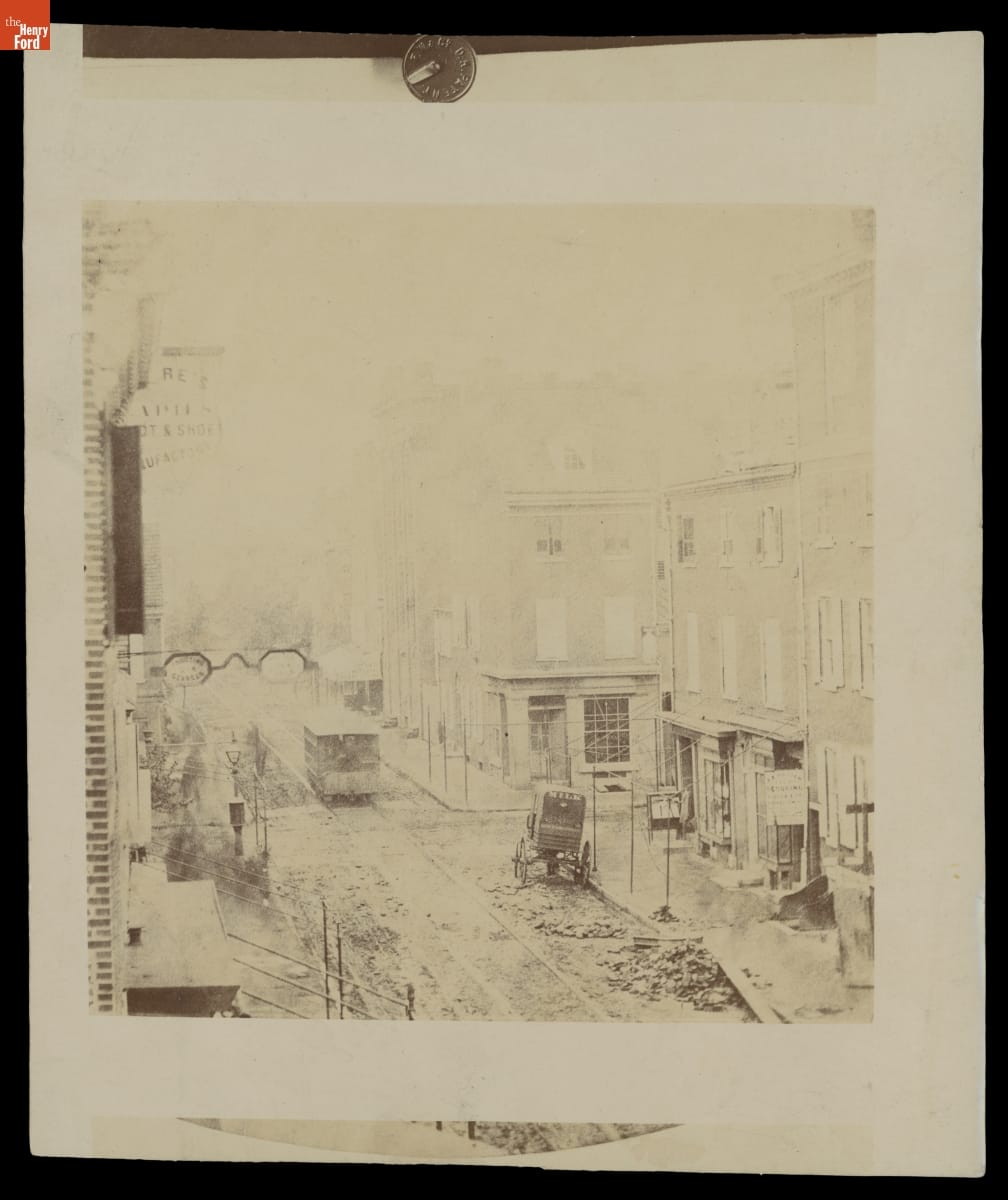
- Milk Delivery Wagon on a City Street in Winter, circa 1865 -
- circa 1865
- Collections - Artifact
Milk Delivery Wagon on a City Street in Winter, circa 1865
- Horse-Drawn Delivery Wagon Outside a Grocery Store, circa 1900 - Before automobiles became practical, America relied on horses and horse-drawn vehicles to move people, freight, money, and information to places railroads and waterways didn't go. This photograph, taken at the turn of the twentieth century, shows a horse-drawn wagon used to deliver groceries.
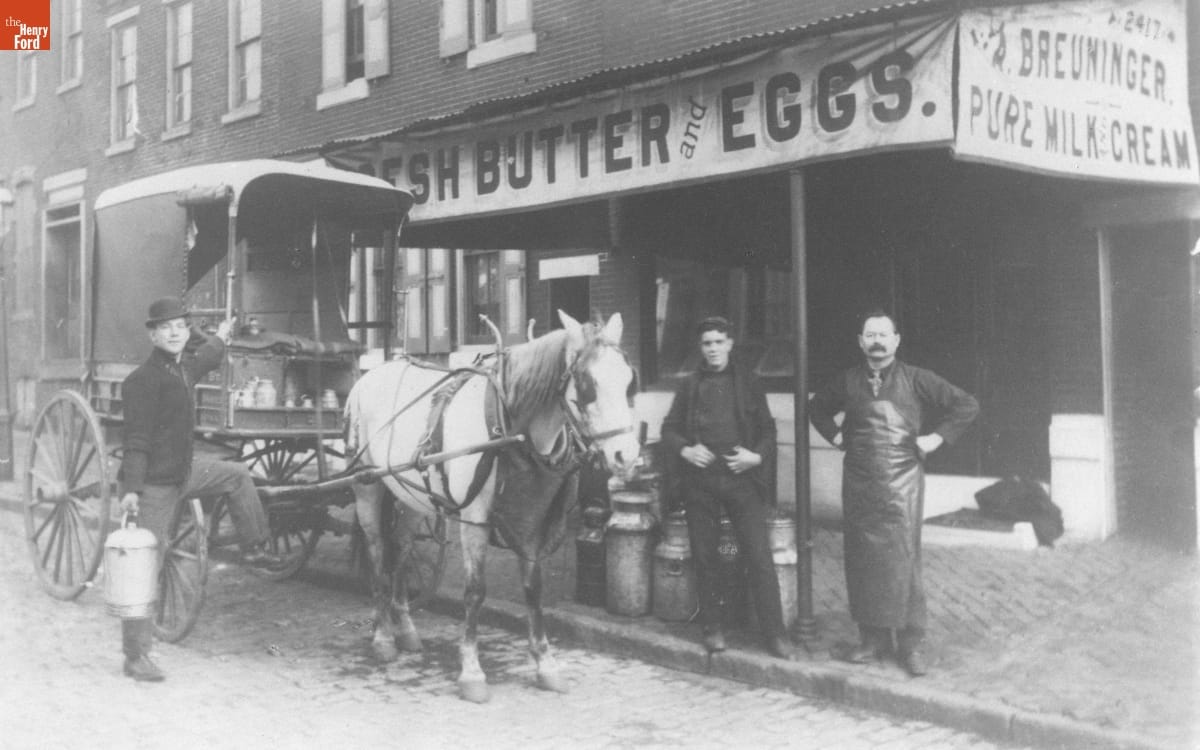
- circa 1900
- Collections - Artifact
Horse-Drawn Delivery Wagon Outside a Grocery Store, circa 1900
Before automobiles became practical, America relied on horses and horse-drawn vehicles to move people, freight, money, and information to places railroads and waterways didn't go. This photograph, taken at the turn of the twentieth century, shows a horse-drawn wagon used to deliver groceries.
- Winton Motor Carriage Company Delivery Wagon, 1898 - Alexander Winton founded the Winton Motor Carriage Company in Cleveland in 1897, making him one of the first American automobile manufacturers. The company's early cars and delivery wagons were powered by single-cylinder engines producing around nine horsepower. Winton built his last vehicles in 1924, when he shifted his attention to marine engines. General Motors acquired Winton's engine company in 1930.
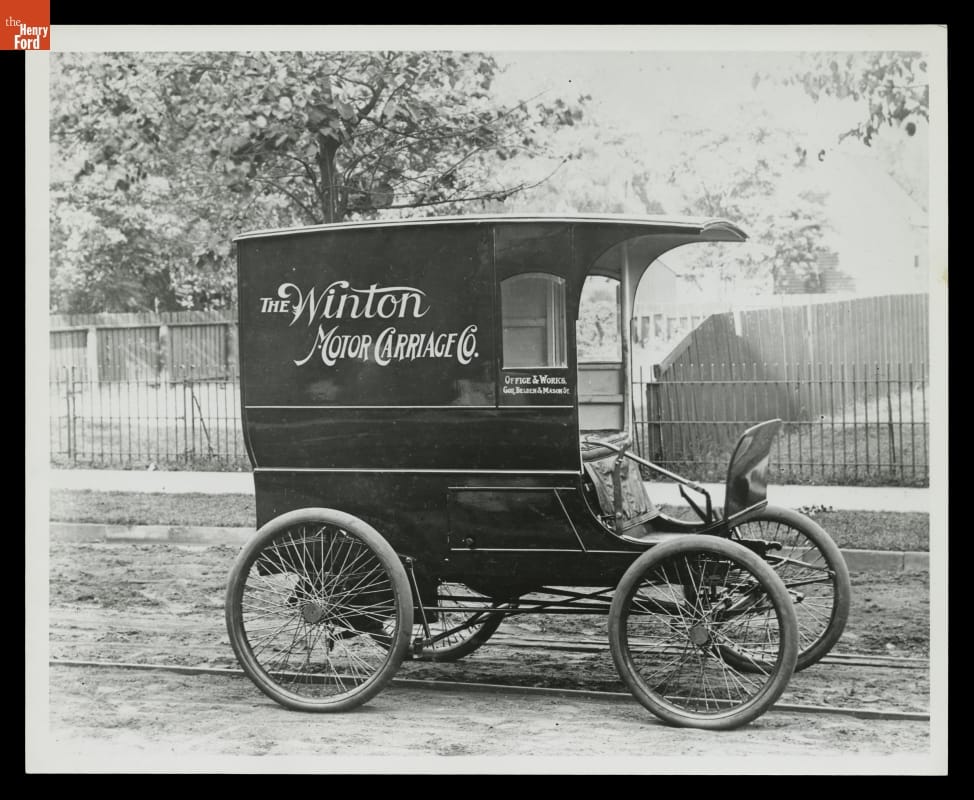
- 1898
- Collections - Artifact
Winton Motor Carriage Company Delivery Wagon, 1898
Alexander Winton founded the Winton Motor Carriage Company in Cleveland in 1897, making him one of the first American automobile manufacturers. The company's early cars and delivery wagons were powered by single-cylinder engines producing around nine horsepower. Winton built his last vehicles in 1924, when he shifted his attention to marine engines. General Motors acquired Winton's engine company in 1930.
- Man with Horse-Drawn Delivery Wagon, circa 1890 - Professional photographers began producing cabinet cards in 1867, and people soon preferred these photographic prints on cardboard stock to the earlier, smaller cartes-de-visite. American commonly collected and exchanged cabinet photographs through the early 1900s. This example, made by C. W. Lowry around 1890, shows a man near a horse-drawn "Parcel Delivery" wagon.
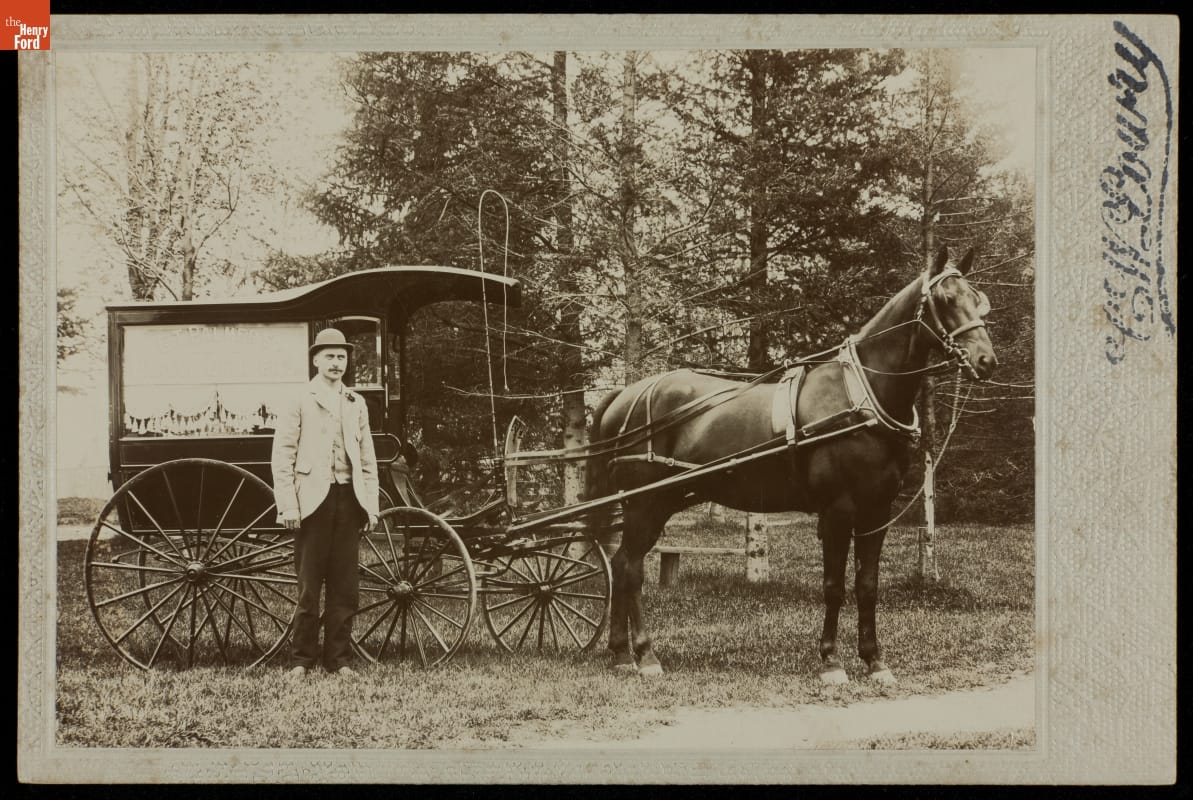
- circa 1890
- Collections - Artifact
Man with Horse-Drawn Delivery Wagon, circa 1890
Professional photographers began producing cabinet cards in 1867, and people soon preferred these photographic prints on cardboard stock to the earlier, smaller cartes-de-visite. American commonly collected and exchanged cabinet photographs through the early 1900s. This example, made by C. W. Lowry around 1890, shows a man near a horse-drawn "Parcel Delivery" wagon.
- Winton Motor Carriage Company Delivery Wagon, 1898 - Alexander Winton founded the Winton Motor Carriage Company in Cleveland in 1897, making him one of the first American automobile manufacturers. The company's early cars and delivery wagons were powered by single-cylinder engines producing around nine horsepower. Winton built his last vehicles in 1924, when he shifted his attention to marine engines. General Motors acquired Winton's engine company in 1930.
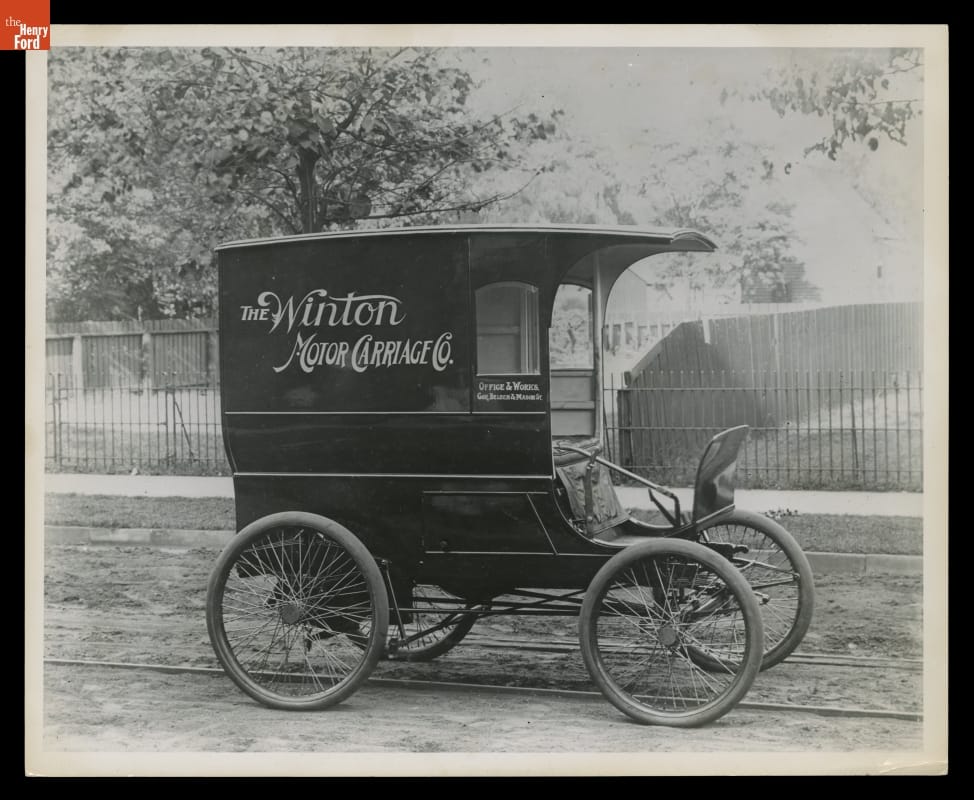
- 1898
- Collections - Artifact
Winton Motor Carriage Company Delivery Wagon, 1898
Alexander Winton founded the Winton Motor Carriage Company in Cleveland in 1897, making him one of the first American automobile manufacturers. The company's early cars and delivery wagons were powered by single-cylinder engines producing around nine horsepower. Winton built his last vehicles in 1924, when he shifted his attention to marine engines. General Motors acquired Winton's engine company in 1930.
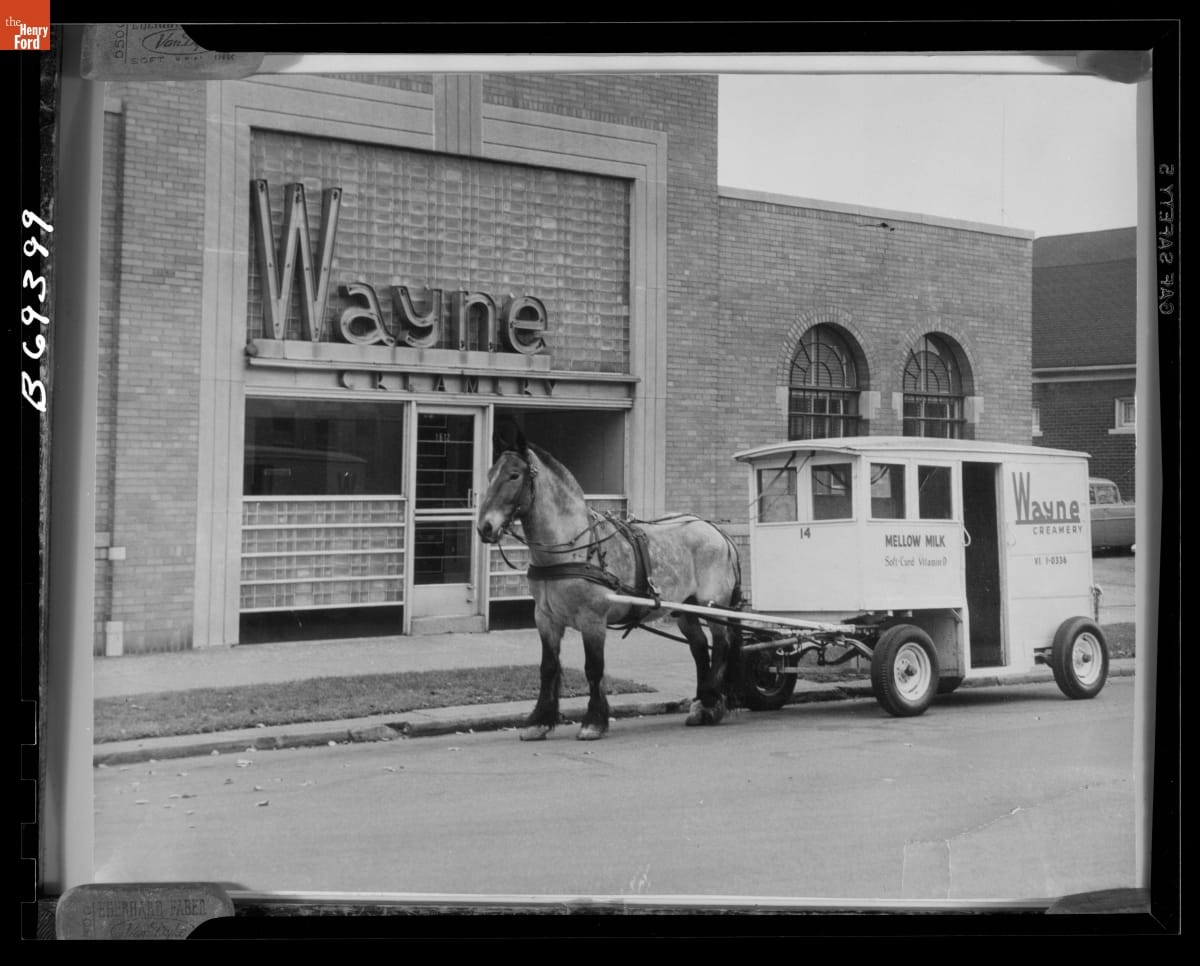
- Delivery Wagon Used by Wayne Creamery until 1962 - Wayne Creamery of Detroit, Michigan, used this horse-drawn wagon to deliver milk to its customers. The wagon's metal-tired wooden wheels were replaced with rubber automobile tires in the mid-1940s -- after residents in the delivery area complained about noise made by the metal tires during the wagon's early morning rounds. Wayne Creamery relied on horse-powered deliveries until 1962.
- 1947-1962
- Collections - Artifact
Delivery Wagon Used by Wayne Creamery until 1962
Wayne Creamery of Detroit, Michigan, used this horse-drawn wagon to deliver milk to its customers. The wagon's metal-tired wooden wheels were replaced with rubber automobile tires in the mid-1940s -- after residents in the delivery area complained about noise made by the metal tires during the wagon's early morning rounds. Wayne Creamery relied on horse-powered deliveries until 1962.
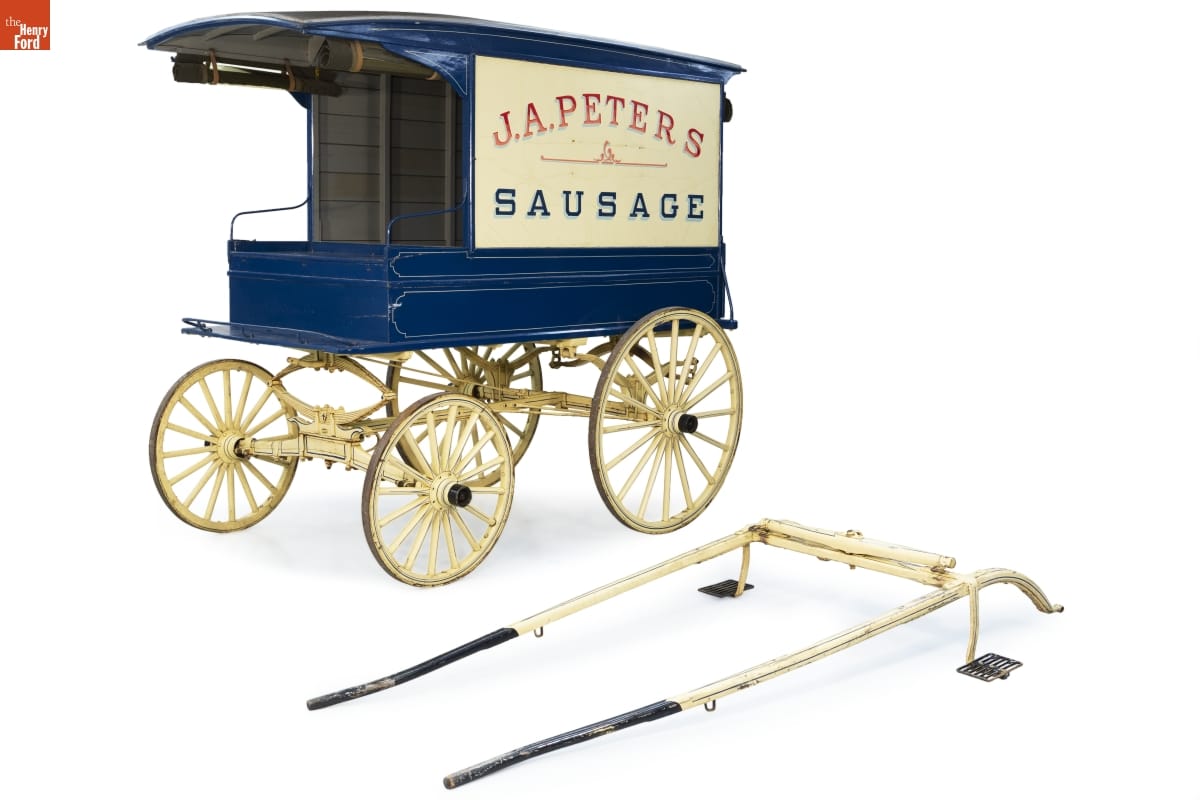
- J.A. Peters Sausage Delivery Wagon, 1908-1912 - One-horse delivery wagons were common on American streets from the latter 19th century into the 20th. Businesses of all kinds used these practical vehicles to transport goods to customers. While all delivery wagons shared the same basic layout, more refined versions featured wood panels instead of duck cloth around the cargo area, or wood panels with glass alongside the driver's seat.
- 1908-1912
- Collections - Artifact
J.A. Peters Sausage Delivery Wagon, 1908-1912
One-horse delivery wagons were common on American streets from the latter 19th century into the 20th. Businesses of all kinds used these practical vehicles to transport goods to customers. While all delivery wagons shared the same basic layout, more refined versions featured wood panels instead of duck cloth around the cargo area, or wood panels with glass alongside the driver's seat.