
Search
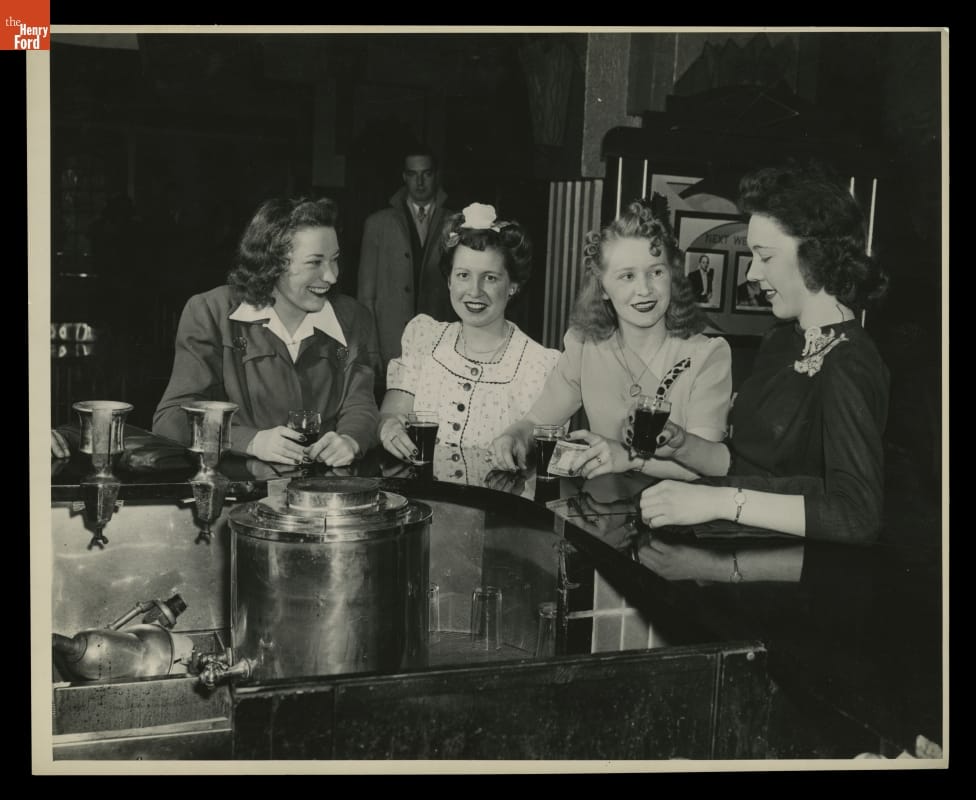
- Women at Lunch Counter, Willow Run Bomber Plant, 1943 - At its peak, Ford Motor Company's Willow Run plant employed more than 42,000 people who produced one bomber airplane every 63 minutes. The plant's five million square feet of roofed workspace incorporated everything needed to train and care for its workforce, including classrooms, a hospital, a commercial kitchen, and a cafeteria.
- February 10, 1943
- Collections - Artifact
Women at Lunch Counter, Willow Run Bomber Plant, 1943
At its peak, Ford Motor Company's Willow Run plant employed more than 42,000 people who produced one bomber airplane every 63 minutes. The plant's five million square feet of roofed workspace incorporated everything needed to train and care for its workforce, including classrooms, a hospital, a commercial kitchen, and a cafeteria.
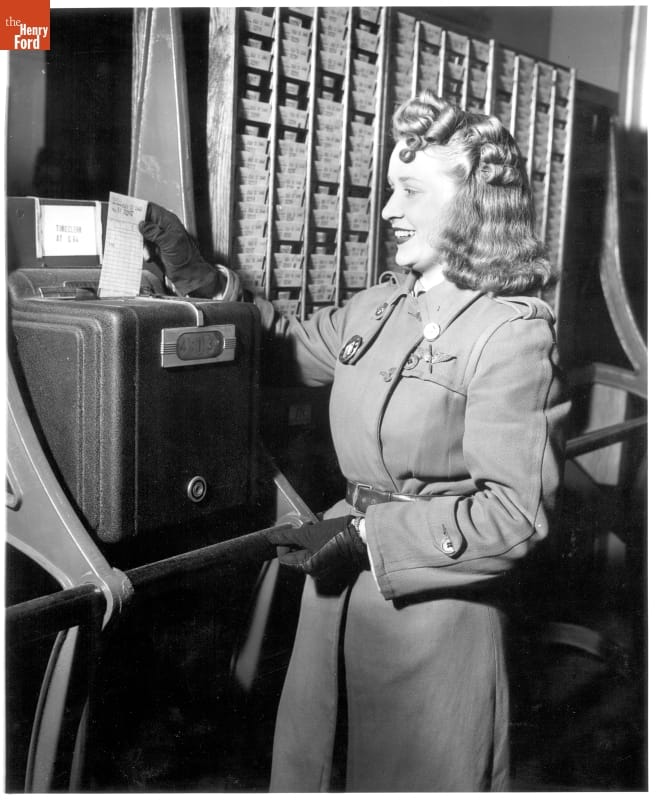
- Norma Denton Using the Time Clock at Willow Run Bomber Plant, 1943 - During World War II, women played a crucial role in supporting the Allied forces. As the men enlisted to fight overseas, workers were in short supply. With orders from the war office, Ford hired women to work at Willow Run as machinists, riveters, trainers or inspectors. Women punched their time cards and received the same wage rates as male workers.
- February 10, 1943
- Collections - Artifact
Norma Denton Using the Time Clock at Willow Run Bomber Plant, 1943
During World War II, women played a crucial role in supporting the Allied forces. As the men enlisted to fight overseas, workers were in short supply. With orders from the war office, Ford hired women to work at Willow Run as machinists, riveters, trainers or inspectors. Women punched their time cards and received the same wage rates as male workers.