
Search
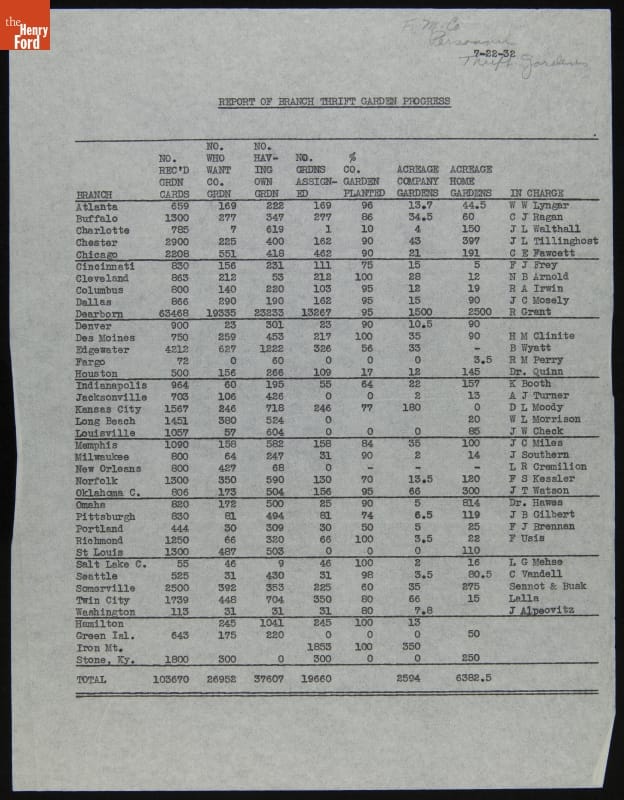
- Report of Branch Thrift Garden Progress, July 1932 -
- July 22, 1932
- Collections - Artifact
Report of Branch Thrift Garden Progress, July 1932
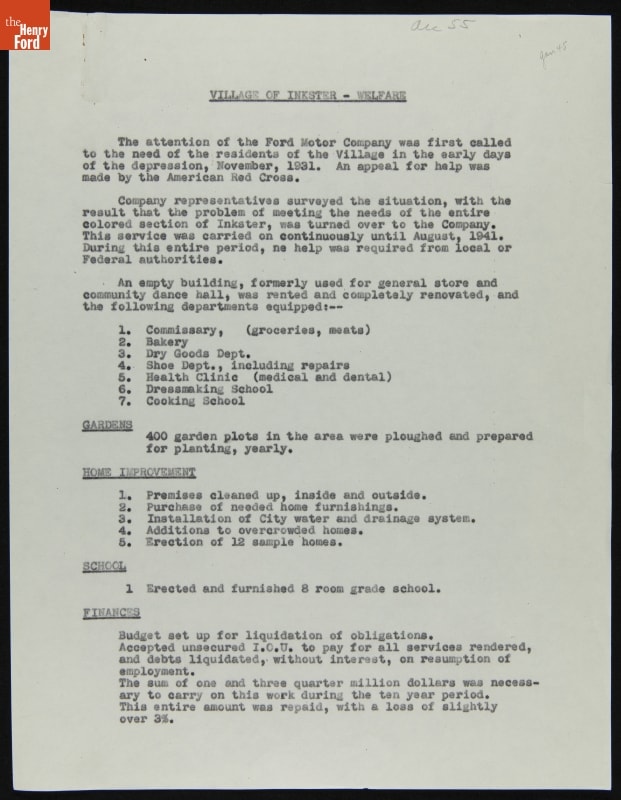
- Report on the Ford Motor Company Inkster Rehabilitation Project, 1931-1941, "Village of Inkster - Welfare" - During the Great Depression, Ford Motor Company made efforts to improve living conditions in Inkster, Michigan, a primarily Black community hit especially hard by the economic crisis. Ford repaired homes, paved streets, established a medical clinic, and opened a low-price commissary. Improvements were funded through involuntary paycheck deductions from Inkster residents employed at Ford's nearby Rouge plant.
- January 01, 1945
- Collections - Artifact
Report on the Ford Motor Company Inkster Rehabilitation Project, 1931-1941, "Village of Inkster - Welfare"
During the Great Depression, Ford Motor Company made efforts to improve living conditions in Inkster, Michigan, a primarily Black community hit especially hard by the economic crisis. Ford repaired homes, paved streets, established a medical clinic, and opened a low-price commissary. Improvements were funded through involuntary paycheck deductions from Inkster residents employed at Ford's nearby Rouge plant.
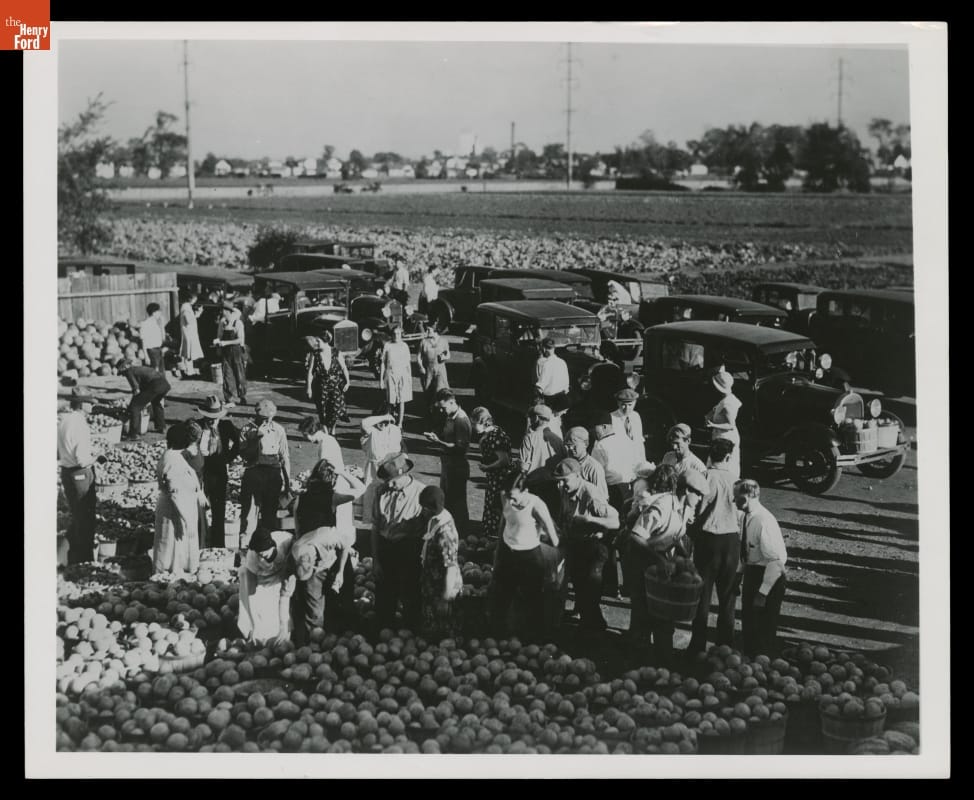
- Free Distribution of Surplus Melons from Ford Farms, Southeastern Michigan, 1931 -
- 1931
- Collections - Artifact
Free Distribution of Surplus Melons from Ford Farms, Southeastern Michigan, 1931
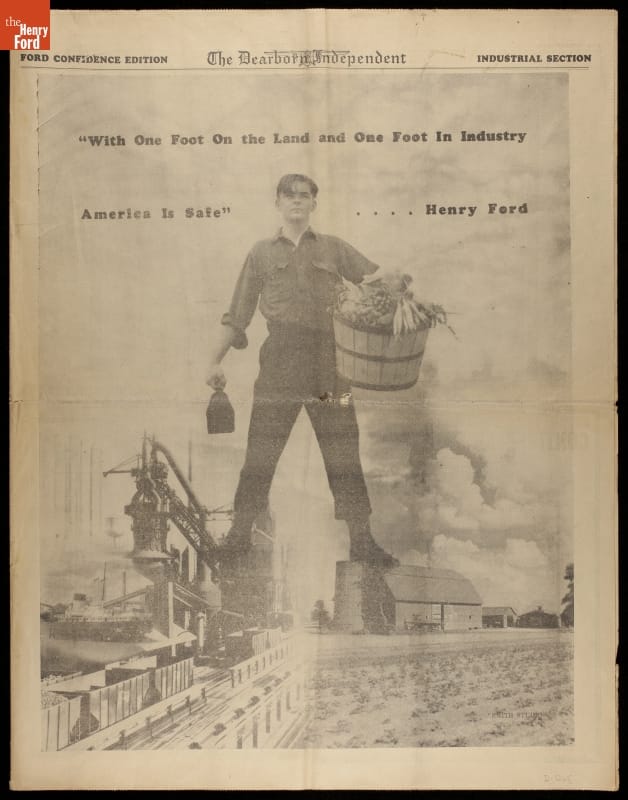
- Newspaper, "The Dearborn Independent, Ford Confidence Edition, Industrial Section," 1938 - In 1938, the <em>Dearborn Independent</em> published a special section highlighting Ford Motor Company's successes during the Great Depression. The cover image represented a longtime interest of Henry Ford's: the mutual relationship between industry and agriculture. Henry Ford had owned the <em>Dearborn Independent</em> from 1919 to 1927, and he had used it to publish notoriously anti-Semitic editorials and articles.
- 1938
- Collections - Artifact
Newspaper, "The Dearborn Independent, Ford Confidence Edition, Industrial Section," 1938
In 1938, the Dearborn Independent published a special section highlighting Ford Motor Company's successes during the Great Depression. The cover image represented a longtime interest of Henry Ford's: the mutual relationship between industry and agriculture. Henry Ford had owned the Dearborn Independent from 1919 to 1927, and he had used it to publish notoriously anti-Semitic editorials and articles.
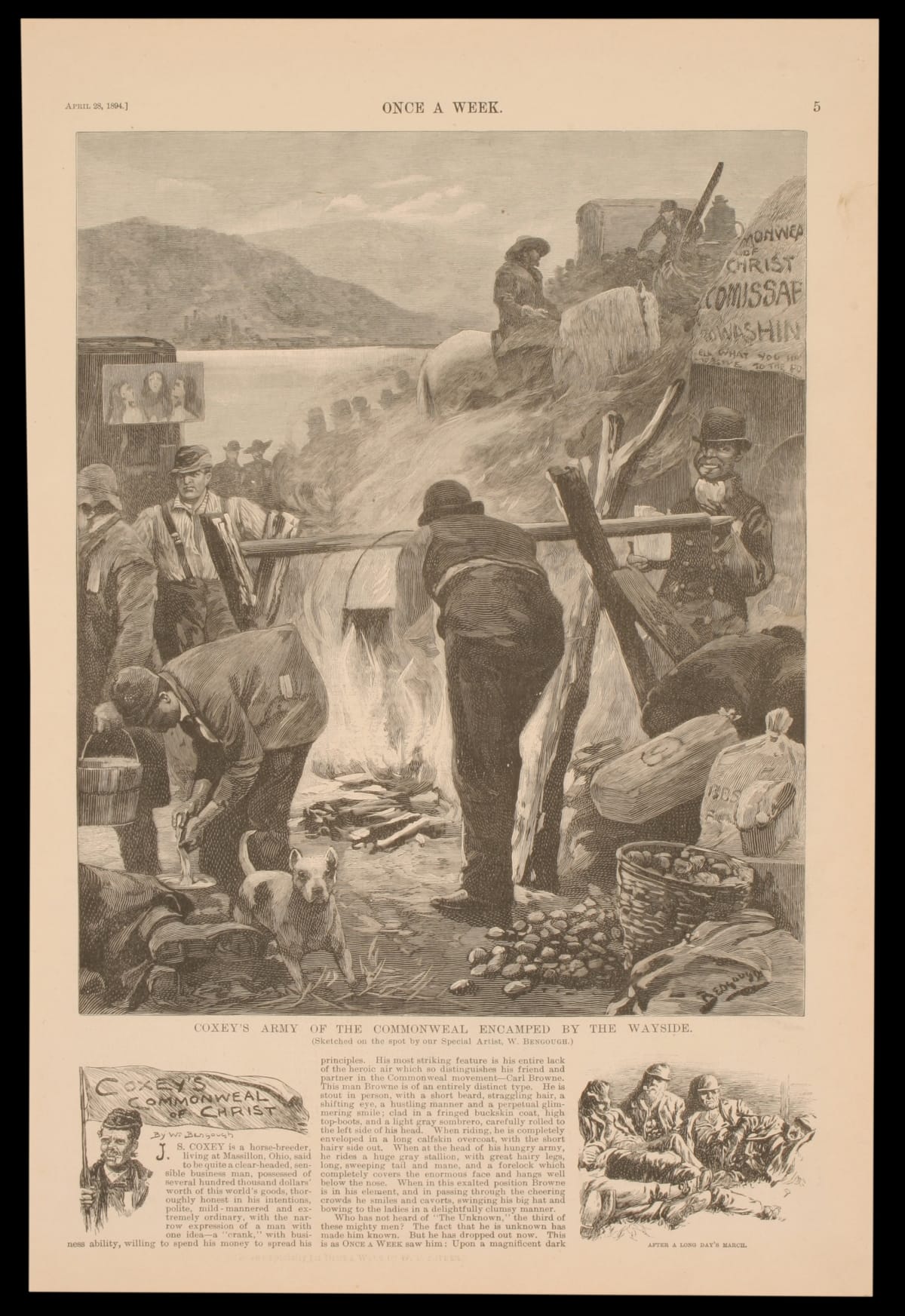
- Coxey's Army of the Commonweal Encamped By the Wayside, April 28, 1894 -
- April 28, 1894
- Collections - Artifact
Coxey's Army of the Commonweal Encamped By the Wayside, April 28, 1894
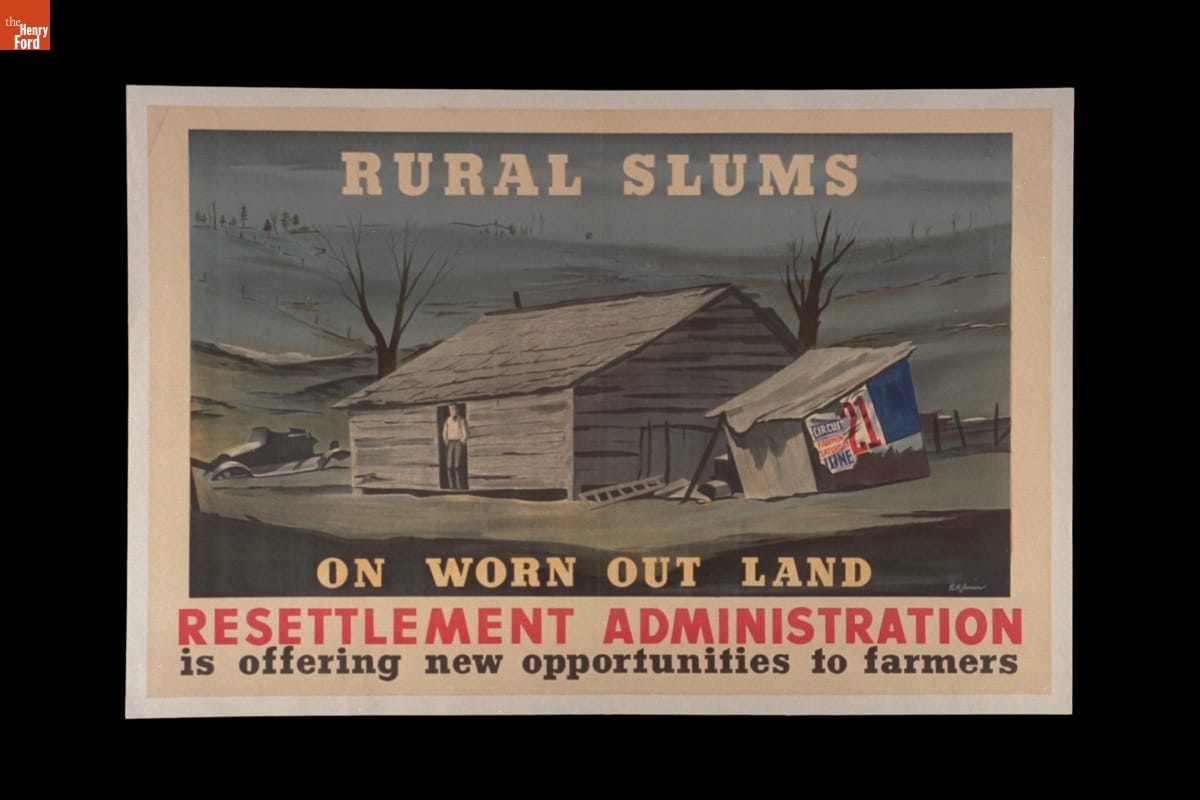
- Poster, "Rural Slums on Worn Out Land," Resettlement Administration, 1935-1936 - The Resettlement Administration (1935-6), a New Deal program, sought to relieve both urban and rural poverty by relocating struggling families to new, planned communities. Poor farming practices had depleted large areas of the United States, contributing to widespread loses in soil fertility. This poster encourages poor farm families to move from these regions of "worn out" soil to new communities.
- April 1935-December 1936
- Collections - Artifact
Poster, "Rural Slums on Worn Out Land," Resettlement Administration, 1935-1936
The Resettlement Administration (1935-6), a New Deal program, sought to relieve both urban and rural poverty by relocating struggling families to new, planned communities. Poor farming practices had depleted large areas of the United States, contributing to widespread loses in soil fertility. This poster encourages poor farm families to move from these regions of "worn out" soil to new communities.
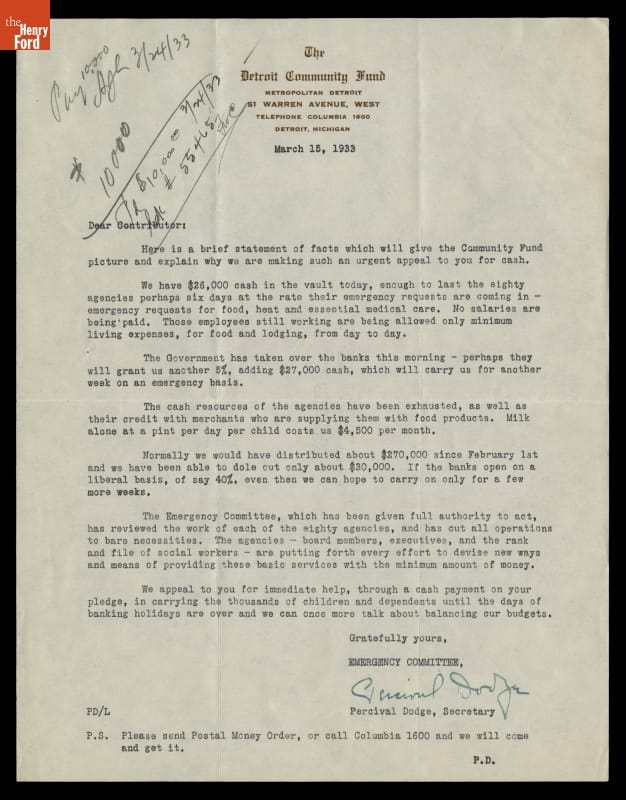
- Letter from Percival Dodge to Edsel Ford regarding Donation to The Detroit Community Fund, March 15, 1933 -
- March 15, 1933
- Collections - Artifact
Letter from Percival Dodge to Edsel Ford regarding Donation to The Detroit Community Fund, March 15, 1933
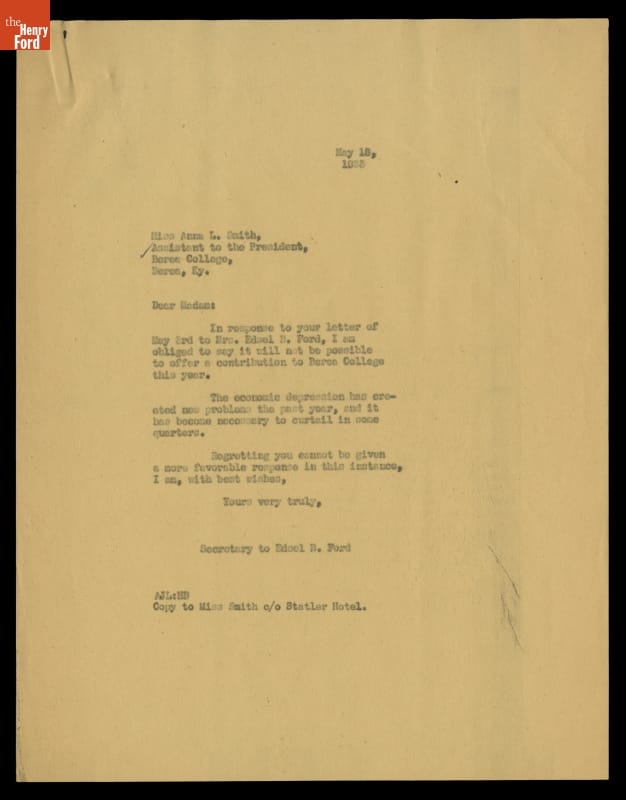
- Letter from the Office of Edsel Ford to Anna L. Smith regarding Donation to Berea College, May 18, 1933 -
- May 18, 1933
- Collections - Artifact
Letter from the Office of Edsel Ford to Anna L. Smith regarding Donation to Berea College, May 18, 1933
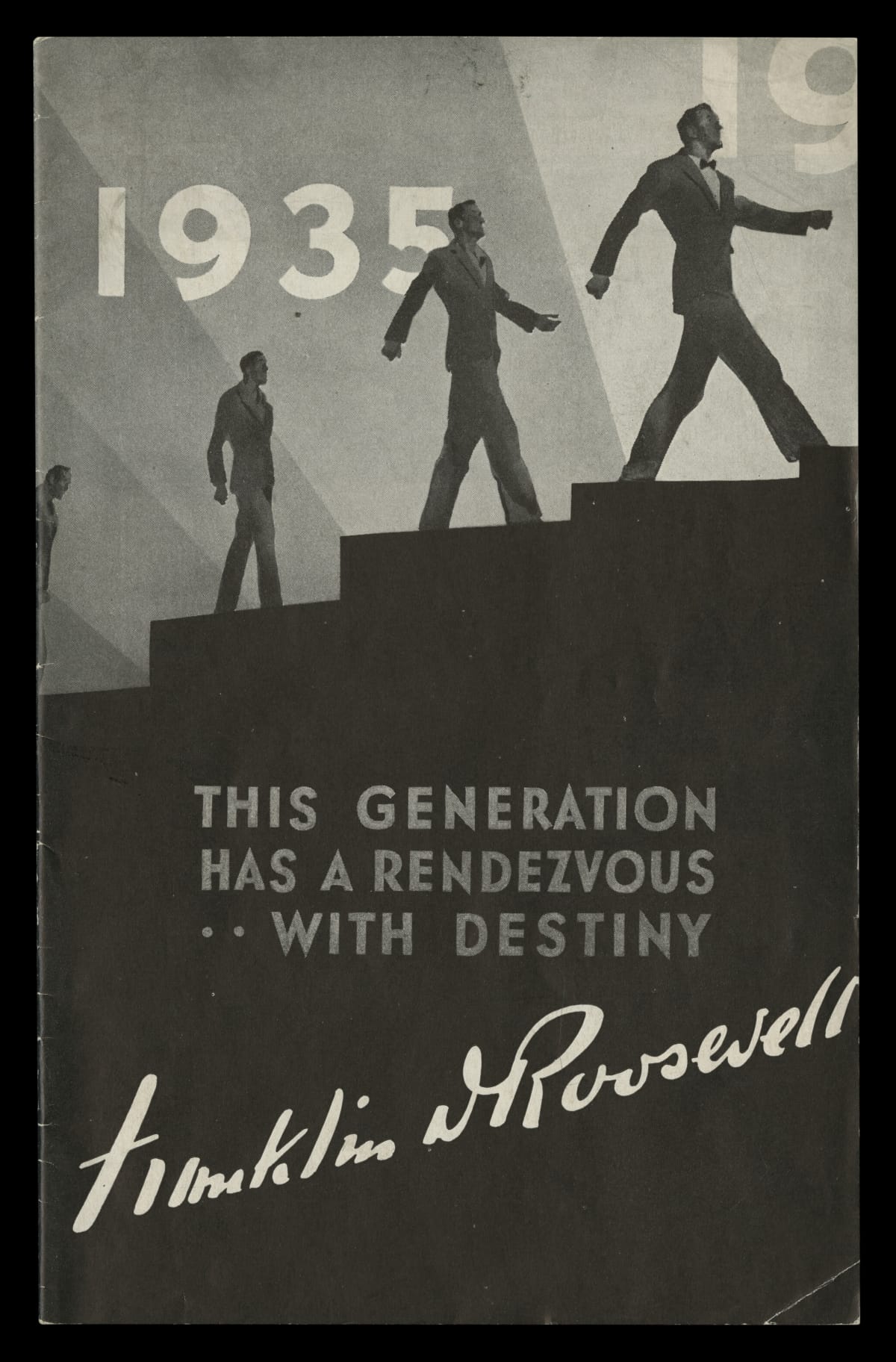
- Franklin D. Roosevelt Campaign Booklet, "This Generation Has a Rendezvous with Destiny," 1936 - President Franklin Roosevelt declared, during his renomination acceptance speech at the 1936 Democratic National Convention, that the generation of Depression-era Americans had "a rendezvous with destiny." This pronouncement became the title of this campaign brochure. The booklet touted the economic and social progress of the American people during Roosevelt's first term, highlighting the achievements of the alphabet agencies his administration created.
- 1933-1935
- Collections - Artifact
Franklin D. Roosevelt Campaign Booklet, "This Generation Has a Rendezvous with Destiny," 1936
President Franklin Roosevelt declared, during his renomination acceptance speech at the 1936 Democratic National Convention, that the generation of Depression-era Americans had "a rendezvous with destiny." This pronouncement became the title of this campaign brochure. The booklet touted the economic and social progress of the American people during Roosevelt's first term, highlighting the achievements of the alphabet agencies his administration created.
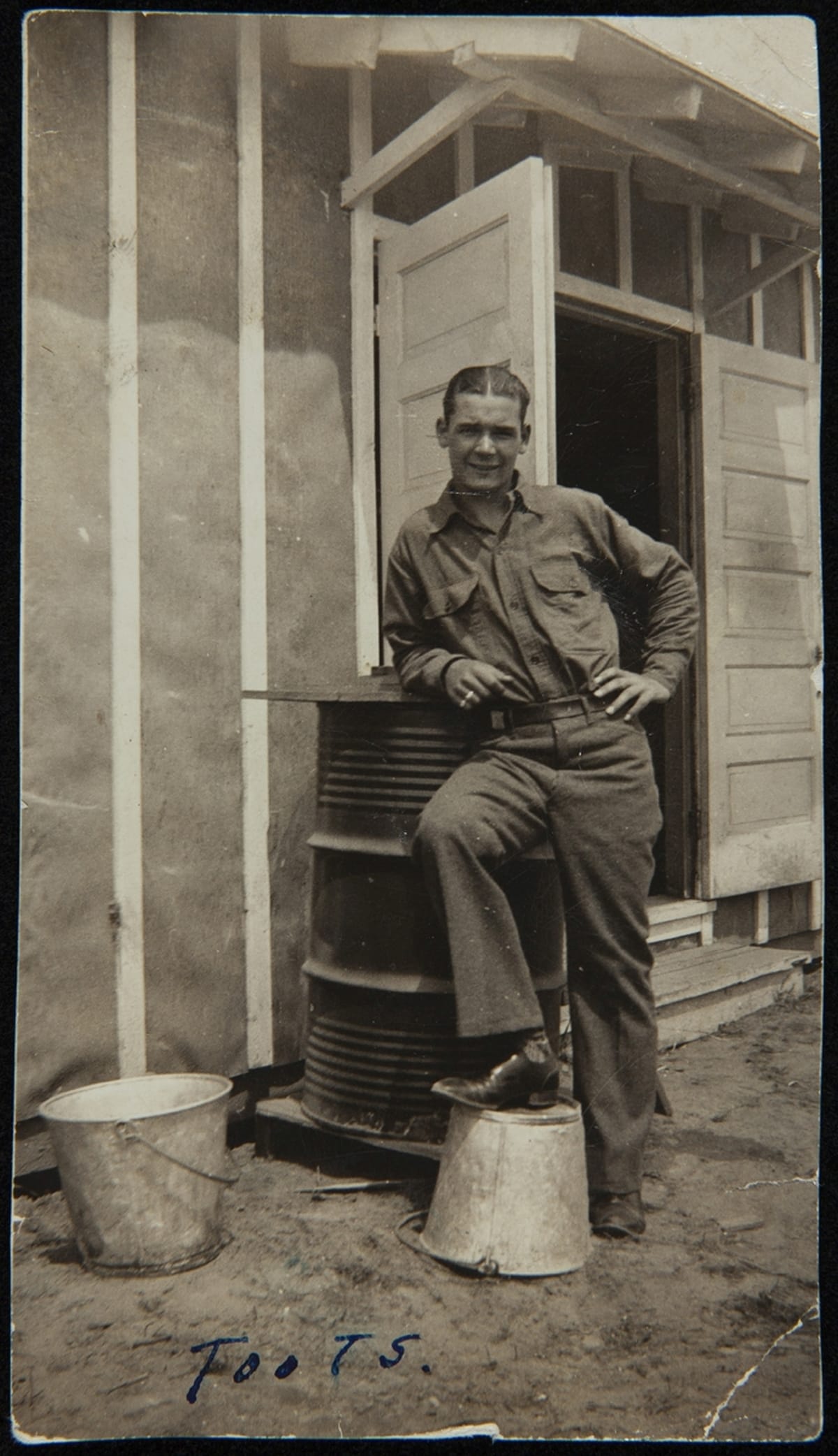
- Stanley J. Zaleski at 1614th Co., Civilian Conservation Corps, Camp McComb, Munising, Michigan, April-September 1934 - Michigan native Stanley Zaleski (1915-1973) enlisted in the Civilian Conservation Corps (CCC) in April 1934 when he was 18. The CCC, established in the early years of the Great Depression, enlisted unemployed, single young men to work in America's public lands, forests, and national parks. Zaleski, who helped with reforestation, was stationed with company 1614 at Camp McComb near Munising, Michigan.
- April 1934-September 1934
- Collections - Artifact
Stanley J. Zaleski at 1614th Co., Civilian Conservation Corps, Camp McComb, Munising, Michigan, April-September 1934
Michigan native Stanley Zaleski (1915-1973) enlisted in the Civilian Conservation Corps (CCC) in April 1934 when he was 18. The CCC, established in the early years of the Great Depression, enlisted unemployed, single young men to work in America's public lands, forests, and national parks. Zaleski, who helped with reforestation, was stationed with company 1614 at Camp McComb near Munising, Michigan.