
Search
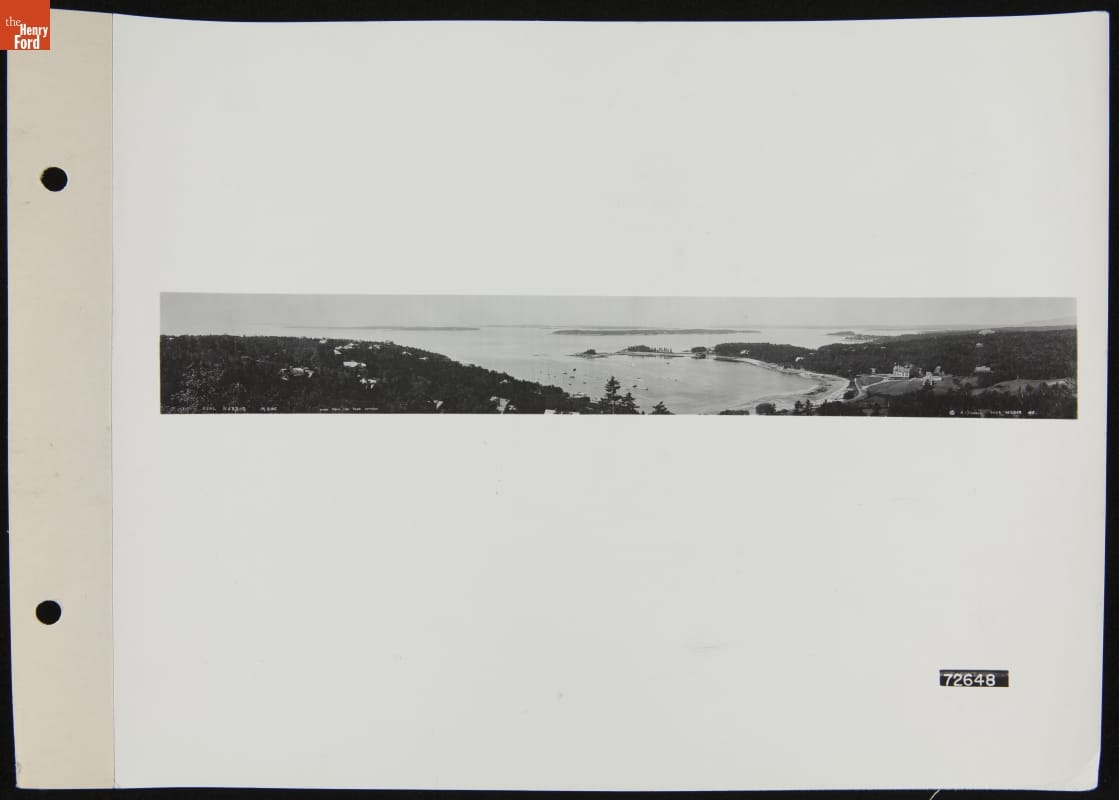
- Panoramic View of Seal Harbor, Maine, 1927 - In 1922, Edsel Ford purchased property in Seal Harbor, Maine, and began building his family's summer home. Philanthropist John D. Rockefeller, Jr., a fellow resident of the area, wrote congratulating Edsel on his selection -- the property offered the Fords splendid scenic views of the Maine coast. The letter initiated a friendship between the two that led to partnerships on various charitable causes.
- 1927
- Collections - Artifact
Panoramic View of Seal Harbor, Maine, 1927
In 1922, Edsel Ford purchased property in Seal Harbor, Maine, and began building his family's summer home. Philanthropist John D. Rockefeller, Jr., a fellow resident of the area, wrote congratulating Edsel on his selection -- the property offered the Fords splendid scenic views of the Maine coast. The letter initiated a friendship between the two that led to partnerships on various charitable causes.
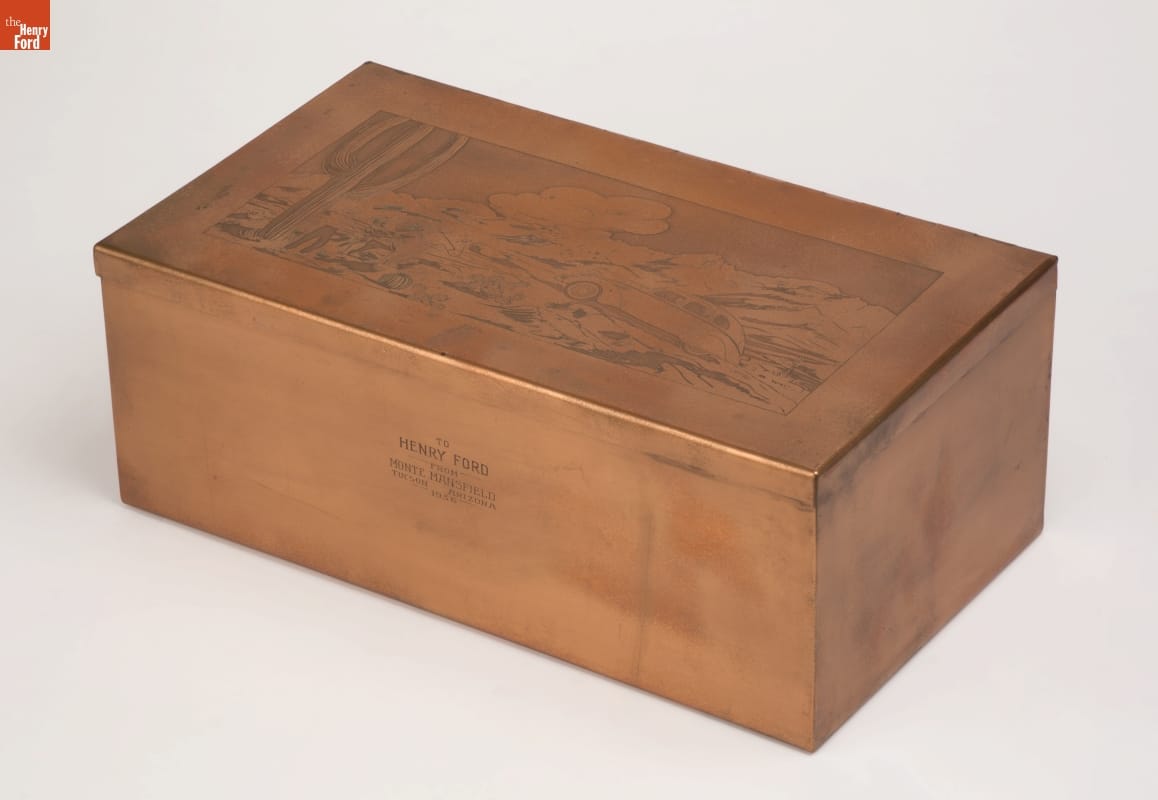
- Copper Box Presented to Henry Ford, 1936 - Henry Ford's corporate family was generous when it came to acknowledging their leader's enterprising and innovative strides forward. This copper box, with an elaborately worked Western scene on the lid, features a Ford automobile as the focal point. The donor established the first Ford dealership in Tucson, Arizona, beginning with the sale of Model Ts in 1914.
- 1936
- Collections - Artifact
Copper Box Presented to Henry Ford, 1936
Henry Ford's corporate family was generous when it came to acknowledging their leader's enterprising and innovative strides forward. This copper box, with an elaborately worked Western scene on the lid, features a Ford automobile as the focal point. The donor established the first Ford dealership in Tucson, Arizona, beginning with the sale of Model Ts in 1914.
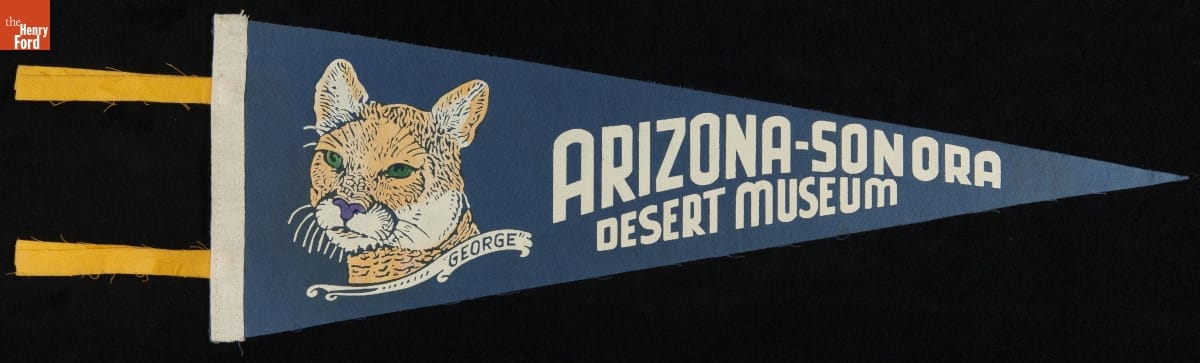
- Pennant, "Arizona-Sonora Desert Museum," 1952-1965 -
- 1952-1965
- Collections - Artifact
Pennant, "Arizona-Sonora Desert Museum," 1952-1965
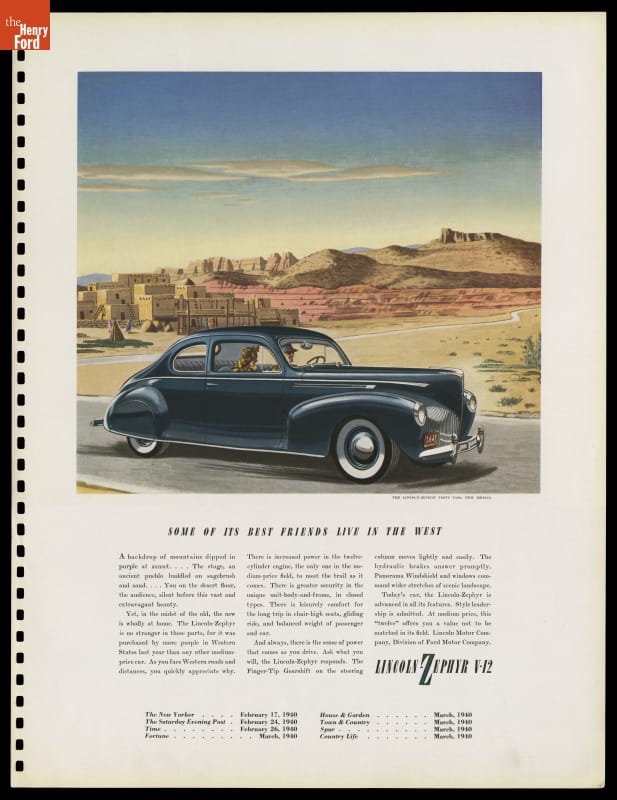
- 1940 Lincoln Zephyr Advertisement, "Some of its Best Friends Live in the West" - Lincoln's Zephyr received a facelift for 1940. Running boards were removed, the front windows were given vents, and the split rear window of previous years was replaced with a single pane of glass. Overall, glass area in the Zephyr increased by 22 percent. Lincoln dropped the Model K, leaving only the Zephyr and the Continental in its product line.
- February 01, 1940
- Collections - Artifact
1940 Lincoln Zephyr Advertisement, "Some of its Best Friends Live in the West"
Lincoln's Zephyr received a facelift for 1940. Running boards were removed, the front windows were given vents, and the split rear window of previous years was replaced with a single pane of glass. Overall, glass area in the Zephyr increased by 22 percent. Lincoln dropped the Model K, leaving only the Zephyr and the Continental in its product line.
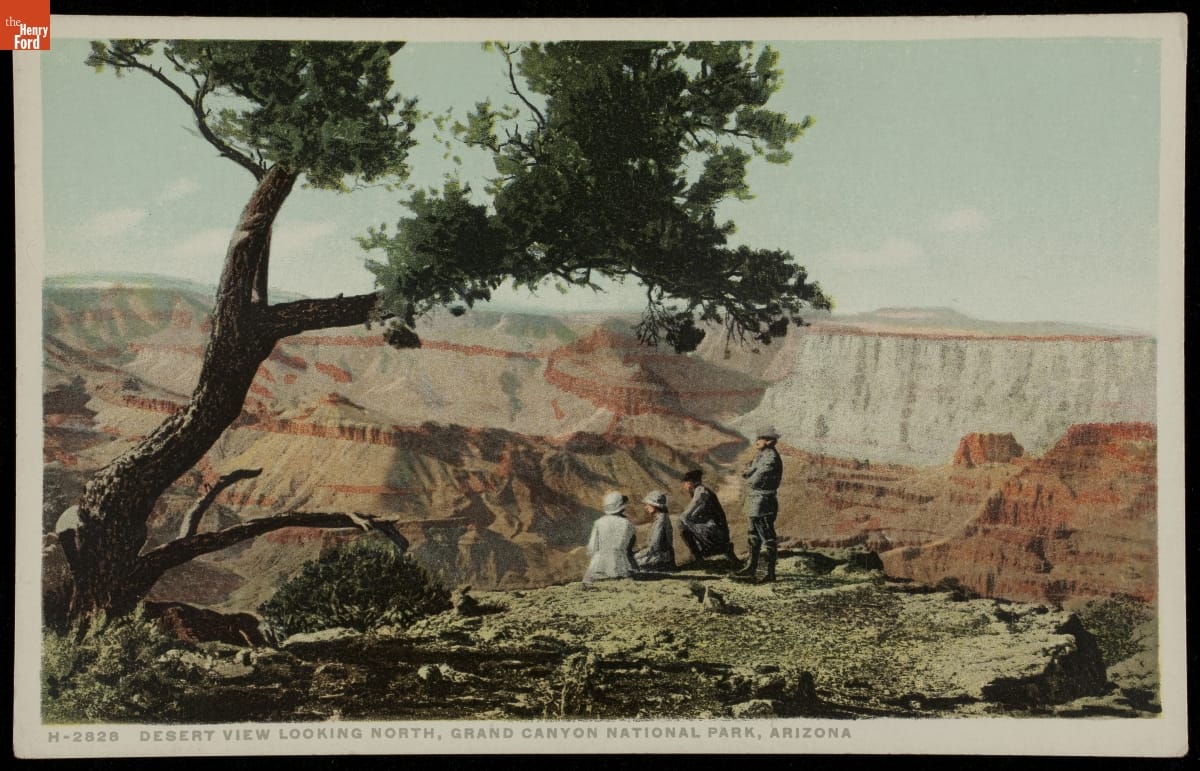
- "Desert View Looking North, Grand Canyon National Park, Arizona," circa 1910 - This postcard shows a group of tourists relaxing at the Grand Canyon National Park in Arizona. Scenic postcards became a way to remember vacations or to tell others about travel experiences.
- circa 1910
- Collections - Artifact
"Desert View Looking North, Grand Canyon National Park, Arizona," circa 1910
This postcard shows a group of tourists relaxing at the Grand Canyon National Park in Arizona. Scenic postcards became a way to remember vacations or to tell others about travel experiences.
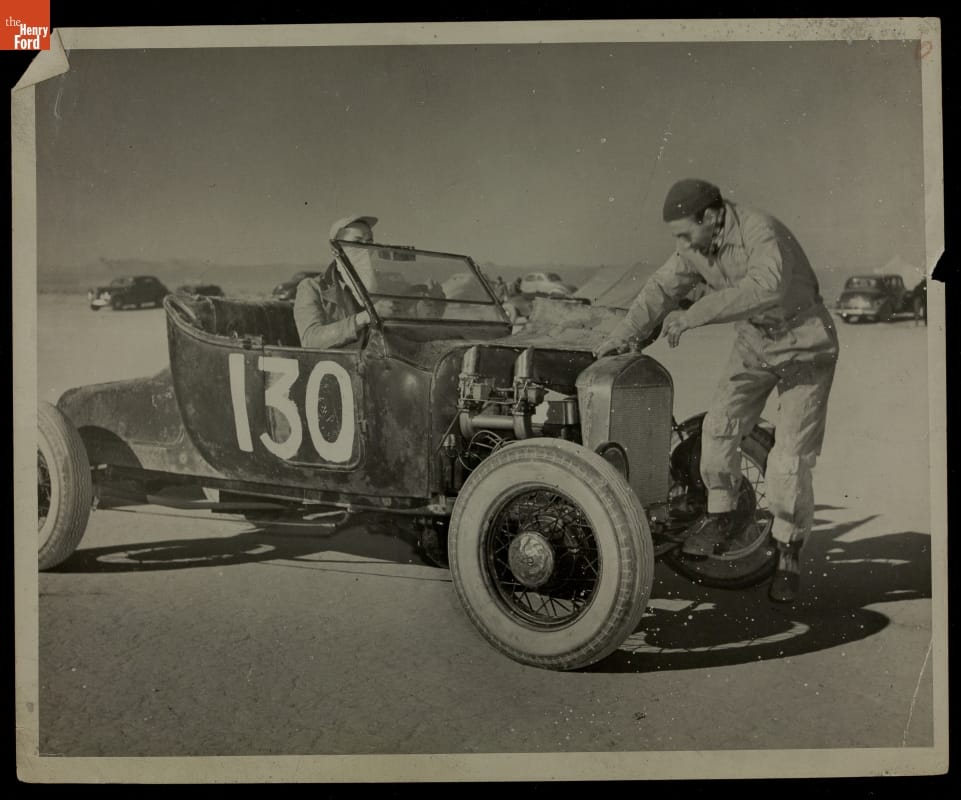
- Driver and Mechanic Starting Dry Lakes Race Car, circa 1940 - By the 1930s, speed enthusiasts in Southern California were souping up older cars and driving these "hot roadsters" at full speed on nearby dry lakebeds. The smooth, flat expanses are ideal for speed contests. These unusual geographic features made California the epicenter of hot rodding before World War II.
- circa 1940
- Collections - Artifact
Driver and Mechanic Starting Dry Lakes Race Car, circa 1940
By the 1930s, speed enthusiasts in Southern California were souping up older cars and driving these "hot roadsters" at full speed on nearby dry lakebeds. The smooth, flat expanses are ideal for speed contests. These unusual geographic features made California the epicenter of hot rodding before World War II.
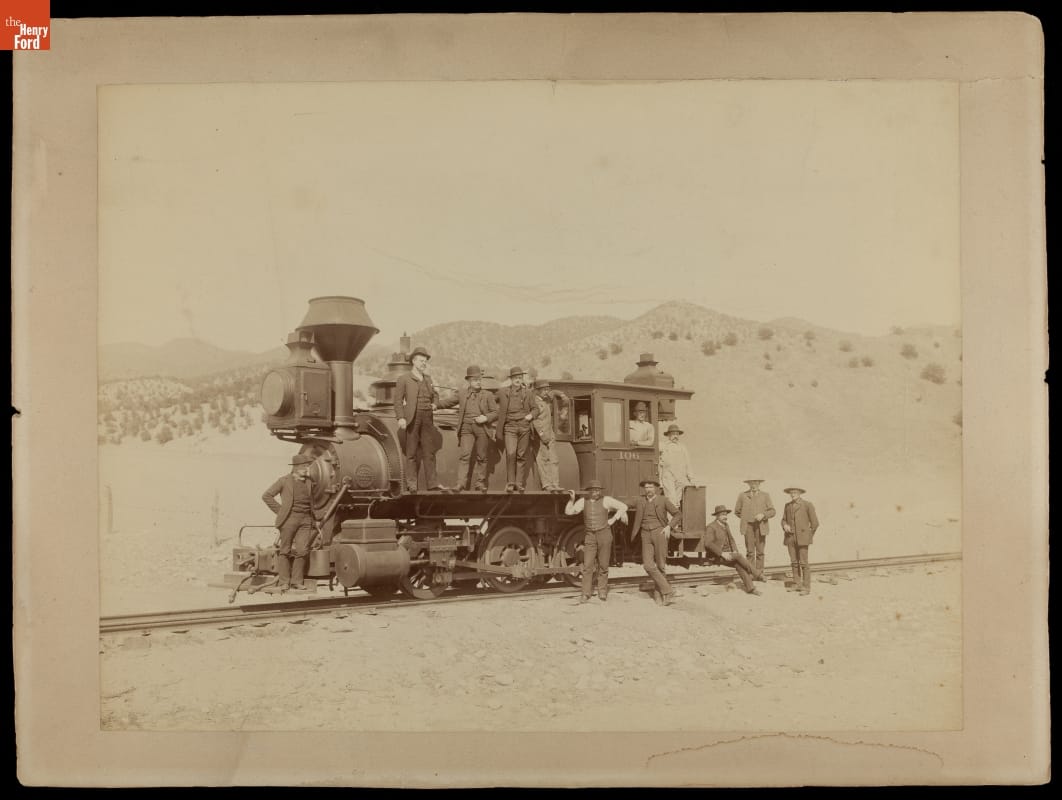
- Group of Men Posing with Locomotive, circa 1885 - Twelve men posed with a narrow-gauge 0-6-0 tank locomotive on the Denver & Rio Grande Railroad. The D&RG's rails were three feet apart, closer than the standard gauge of four feet, eight and one-half inches. Narrow-gauge railroads were less expensive to build, making them popular in difficult terrain like the D&RG's crossing of the Rocky Mountains.
- circa 1885
- Collections - Artifact
Group of Men Posing with Locomotive, circa 1885
Twelve men posed with a narrow-gauge 0-6-0 tank locomotive on the Denver & Rio Grande Railroad. The D&RG's rails were three feet apart, closer than the standard gauge of four feet, eight and one-half inches. Narrow-gauge railroads were less expensive to build, making them popular in difficult terrain like the D&RG's crossing of the Rocky Mountains.
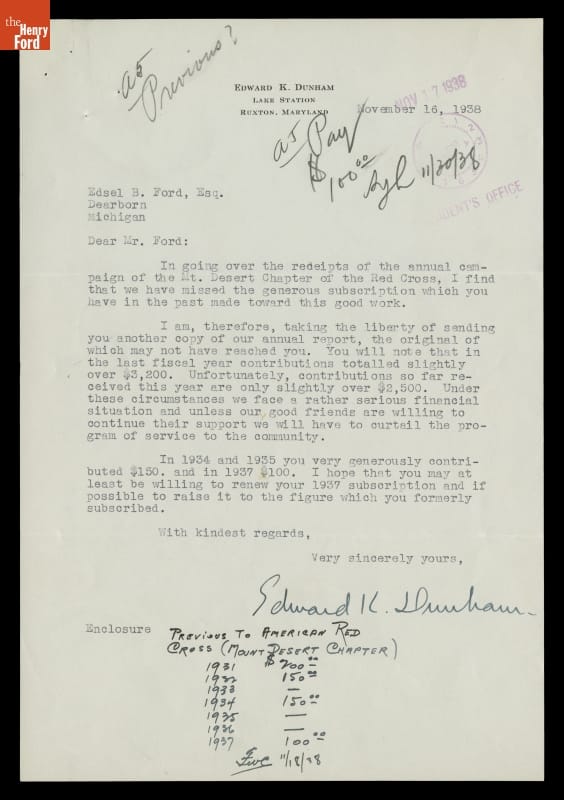
- Fundraising Letter from Edward K. Dunham, American Red Cross, to Edsel Ford, November 16, 1938 -
- November 16, 1938
- Collections - Artifact
Fundraising Letter from Edward K. Dunham, American Red Cross, to Edsel Ford, November 16, 1938
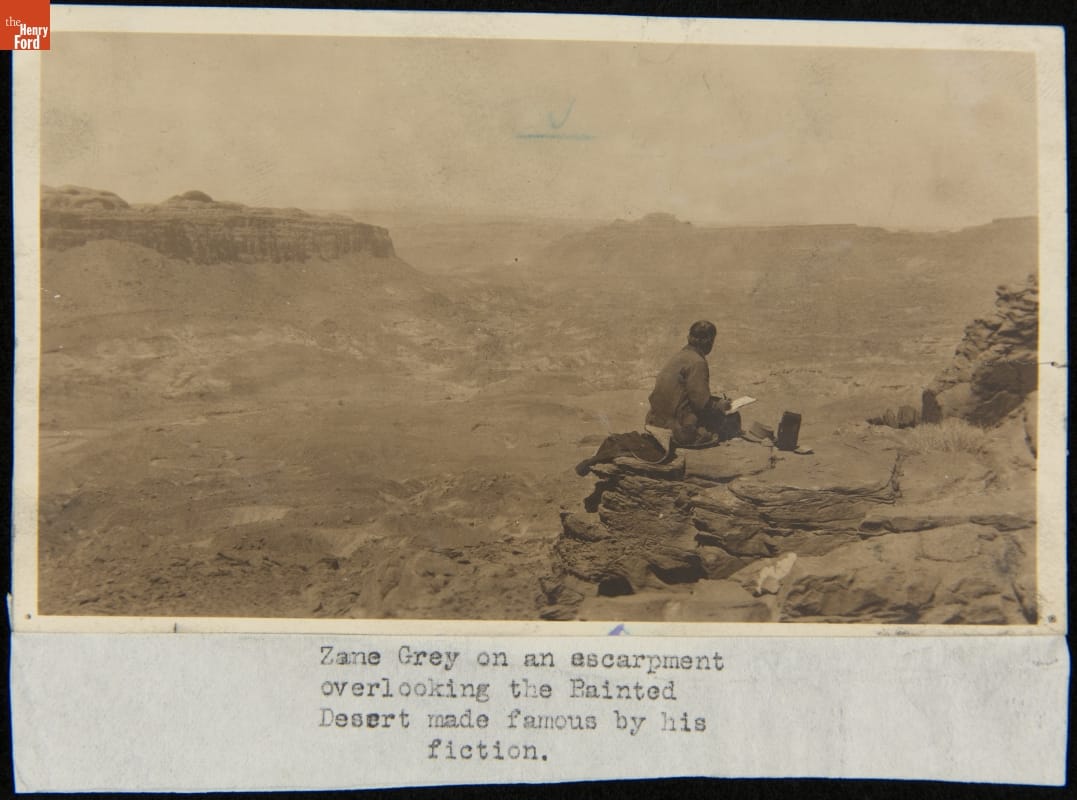
- "Zane Grey on an Escarpment Overlooking the Painted Desert Made Famous by His Fiction," circa 1924 -
- circa 1924
- Collections - Artifact
"Zane Grey on an Escarpment Overlooking the Painted Desert Made Famous by His Fiction," circa 1924
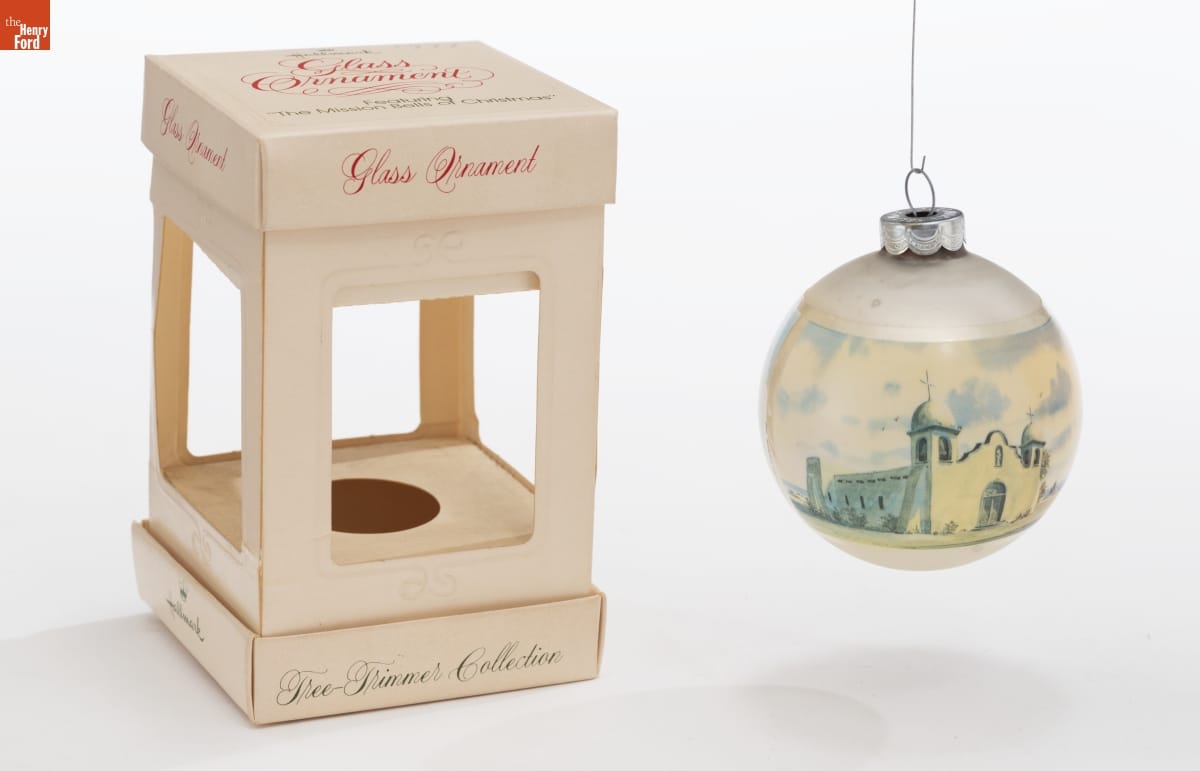
- Hallmark "Beauty of America: Desert" Christmas Ornament, 1977 - Already known for greeting cards, Hallmark introduced a line of Christmas ornaments in 1973. The company's annual release of an increasing array of ornaments revolutionized Christmas decorating, appealing to customers' interest in marking memories and milestones as well as expressing one's personality and unique tastes.
- 1977
- Collections - Artifact
Hallmark "Beauty of America: Desert" Christmas Ornament, 1977
Already known for greeting cards, Hallmark introduced a line of Christmas ornaments in 1973. The company's annual release of an increasing array of ornaments revolutionized Christmas decorating, appealing to customers' interest in marking memories and milestones as well as expressing one's personality and unique tastes.