
Search
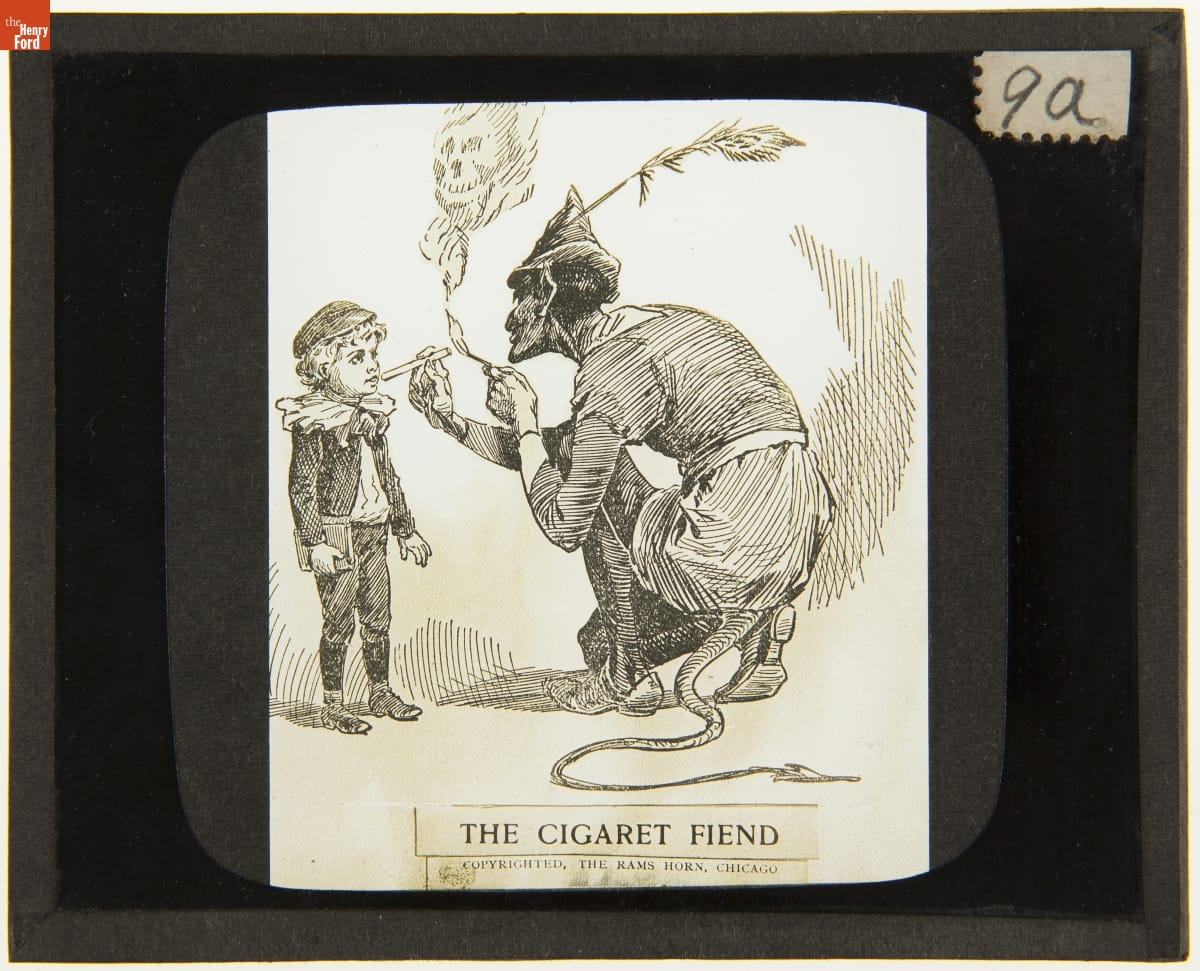
- Lantern Slide, "The Cigaret Fiend" Cartoon, 1890-1910 - Frank Beard (1842-1905), an illustrator, caricaturist, and cartoonist, began his career by sketching scenes of military life for popular publications--such as <em>Harper's Weekly</em>--during the Civil War. His later works promoted Christianity, warned against secularism, and targeted the social ills of the Gilded Age. This slide shows one of his illustrations from <em>The Ram's Horn</em>, a non-denominational Christian periodical.
- 1890-1910
- Collections - Artifact
Lantern Slide, "The Cigaret Fiend" Cartoon, 1890-1910
Frank Beard (1842-1905), an illustrator, caricaturist, and cartoonist, began his career by sketching scenes of military life for popular publications--such as Harper's Weekly--during the Civil War. His later works promoted Christianity, warned against secularism, and targeted the social ills of the Gilded Age. This slide shows one of his illustrations from The Ram's Horn, a non-denominational Christian periodical.
- "Devils Blowing Glass" by Lucio Bubacco, 1997 - Lucio Bubacco grew up surrounded by the centuries-old glass culture of the island of Murano, Italy. He invented a glass technique to sculpt bodies that appear in motion. His figures are precariously placed in poses that make for a lively arrangement. He uses a delicate soda-lime glass mixture instead of the sturdier Pyrex to achieve a more vibrant, colorful result.

- 1997
- Collections - Artifact
"Devils Blowing Glass" by Lucio Bubacco, 1997
Lucio Bubacco grew up surrounded by the centuries-old glass culture of the island of Murano, Italy. He invented a glass technique to sculpt bodies that appear in motion. His figures are precariously placed in poses that make for a lively arrangement. He uses a delicate soda-lime glass mixture instead of the sturdier Pyrex to achieve a more vibrant, colorful result.
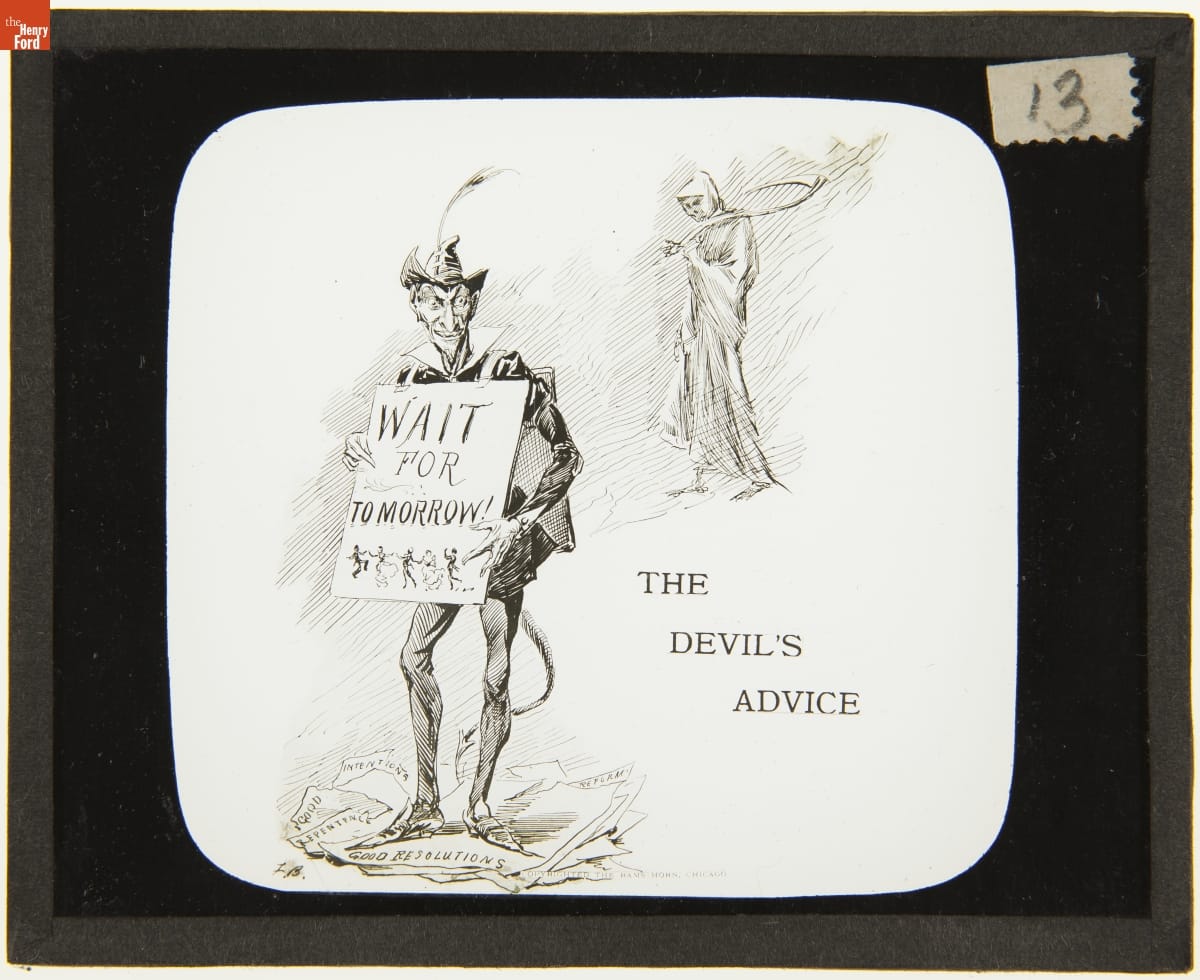
- Lantern Slide, "The Devil's Advice" Cartoon, 1890-1910 - Frank Beard (1842-1905), an illustrator, caricaturist, and cartoonist, began his career by sketching scenes of military life for popular publications--such as <em>Harper's Weekly</em>--during the Civil War. His later works promoted Christianity, warned against secularism, and targeted the social ills of the Gilded Age. This slide shows one of his illustrations from <em>The Ram's Horn</em>, a non-denominational Christian periodical.
- 1890-1910
- Collections - Artifact
Lantern Slide, "The Devil's Advice" Cartoon, 1890-1910
Frank Beard (1842-1905), an illustrator, caricaturist, and cartoonist, began his career by sketching scenes of military life for popular publications--such as Harper's Weekly--during the Civil War. His later works promoted Christianity, warned against secularism, and targeted the social ills of the Gilded Age. This slide shows one of his illustrations from The Ram's Horn, a non-denominational Christian periodical.
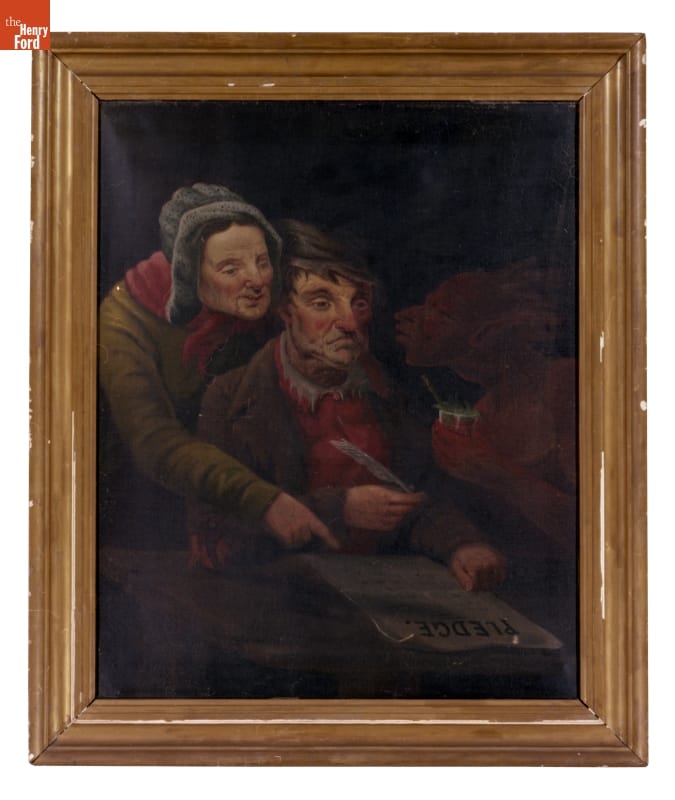
- Oil Painting, "The Temperance Pledge," by John G. Dunn, circa 1851 -
- circa 1851
- Collections - Artifact
Oil Painting, "The Temperance Pledge," by John G. Dunn, circa 1851
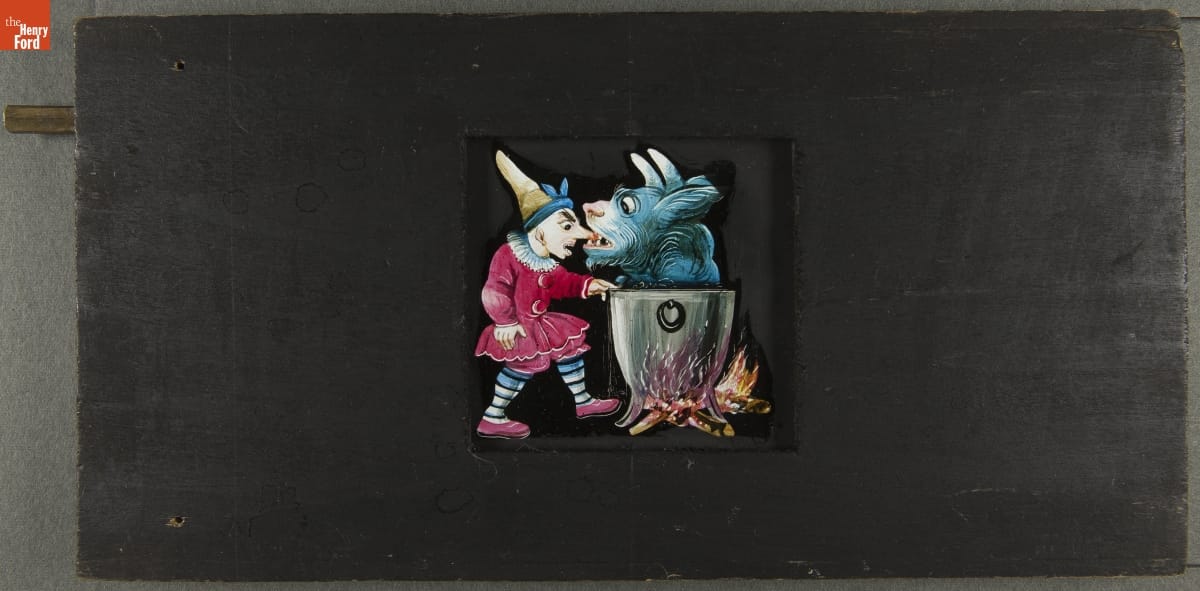
- Mechanical Lantern Slide, "The Devil's Pot Catches Simpletons," 1860-1900 - Magic lanterns use a concave mirror and light source to project images on glass slides with painted or photographic scenes. Developed in the 17th century, magic lanterns predate slide projectors and motion pictures. In the hands of magicians, they became "lanterns of fright," projecting wondrous images and apparitions. Slide themes ranged widely: exotic travel, folklore, advertising, history, science, and art.
- 1860-1900
- Collections - Artifact
Mechanical Lantern Slide, "The Devil's Pot Catches Simpletons," 1860-1900
Magic lanterns use a concave mirror and light source to project images on glass slides with painted or photographic scenes. Developed in the 17th century, magic lanterns predate slide projectors and motion pictures. In the hands of magicians, they became "lanterns of fright," projecting wondrous images and apparitions. Slide themes ranged widely: exotic travel, folklore, advertising, history, science, and art.