
Search
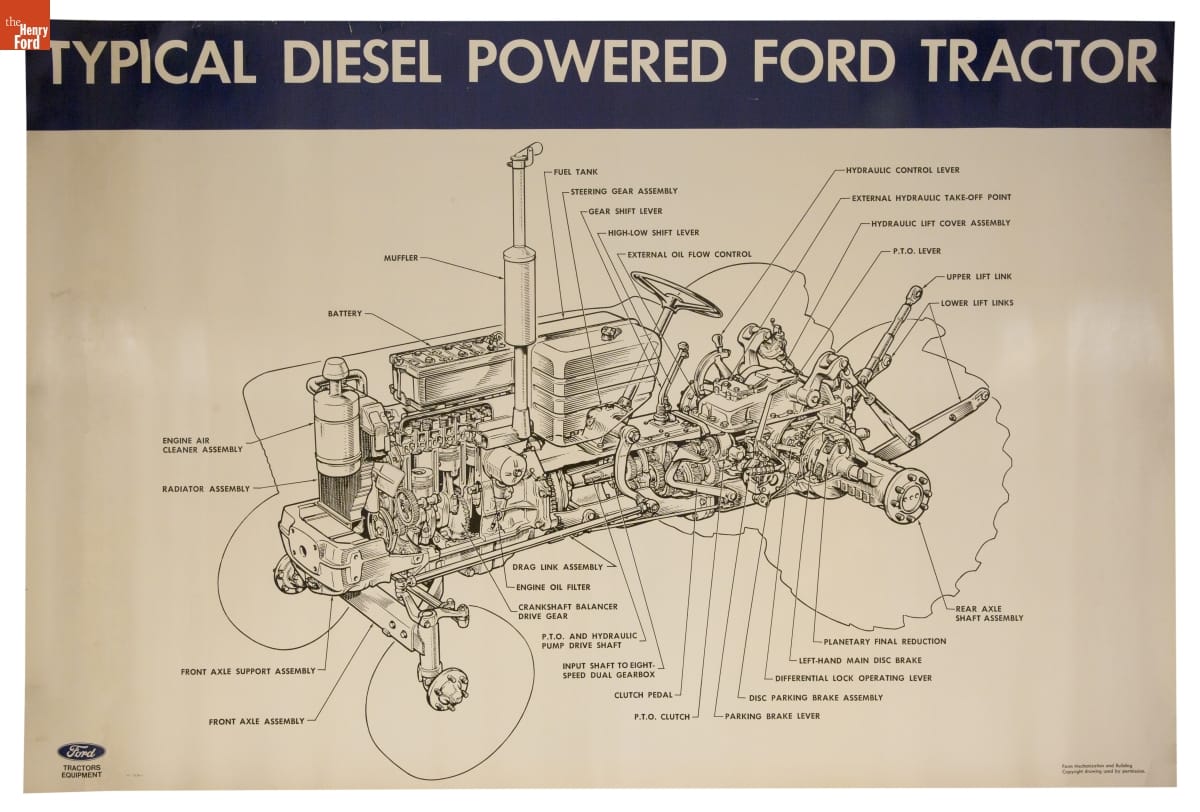
- Typical Diesel Powered Ford Tractor, 1965-1976 -
- 1965-1976
- Collections - Artifact
Typical Diesel Powered Ford Tractor, 1965-1976
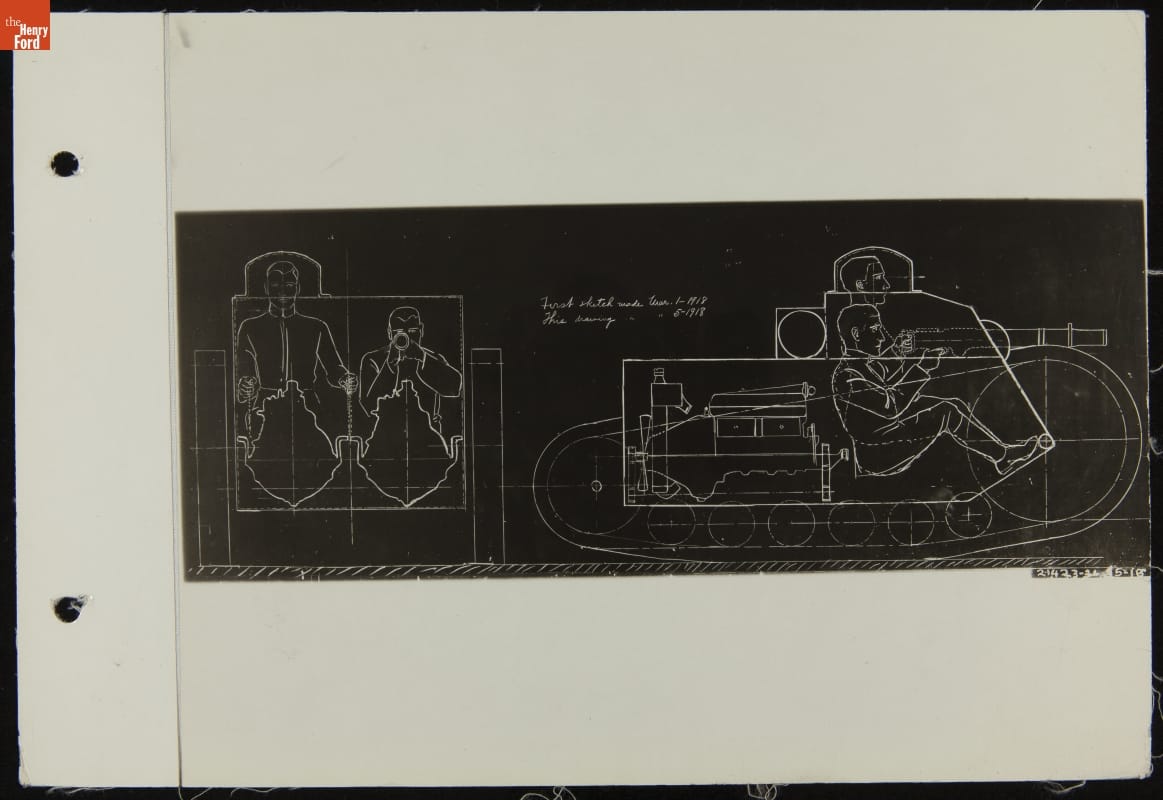
- Blackboard Drawing Showing Seated Figures in a Ford Tank, March 1918 - Tanks emerged during World War I in response to trenches, barbed wire, and machine guns. Their tracks -- rather than tires -- handled rough ground, and their armor protected against wire and gunfire. Ford designed a 2 1/2-ton, 2-man tank and sent several examples to France for testing. Results were encouraging, but the war ended before mass production could begin.
- March 06, 1918
- Collections - Artifact
Blackboard Drawing Showing Seated Figures in a Ford Tank, March 1918
Tanks emerged during World War I in response to trenches, barbed wire, and machine guns. Their tracks -- rather than tires -- handled rough ground, and their armor protected against wire and gunfire. Ford designed a 2 1/2-ton, 2-man tank and sent several examples to France for testing. Results were encouraging, but the war ended before mass production could begin.
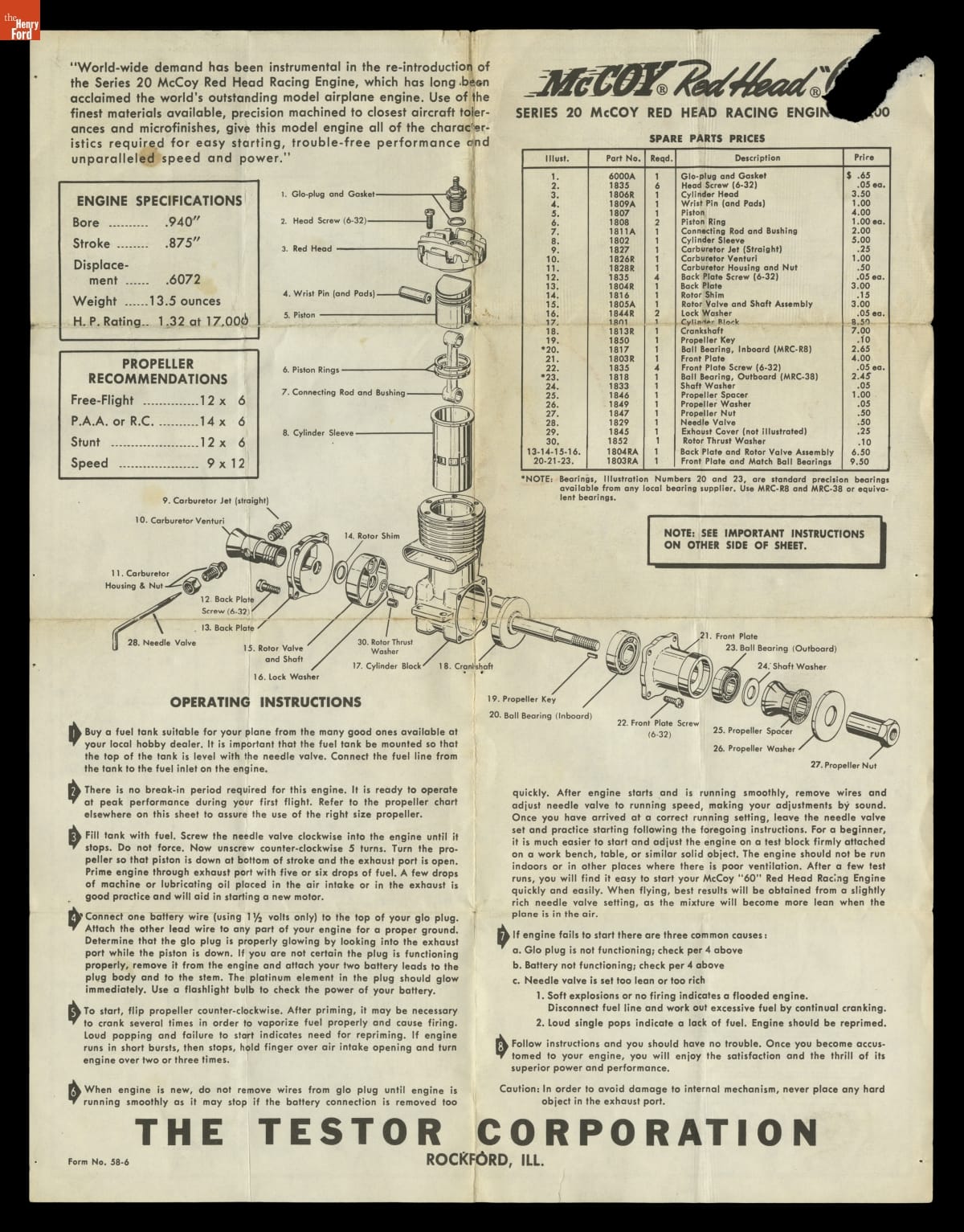
- Operating Instructions for the McCoy "Red Head 60" Racing Engine, 1956-1966 - Tether cars, gas-powered model race cars, were popular in the 1930s and 1940s. They were raced individually while tethered to a central pivot, or against each other on a scaled-down board track. The McCoy "60" racing engine produced 1.32 horsepower. The "60" referred to its displacement of .6072 cubic inches. The engine used a glow plug for ignition.
- 1956-1966
- Collections - Artifact
Operating Instructions for the McCoy "Red Head 60" Racing Engine, 1956-1966
Tether cars, gas-powered model race cars, were popular in the 1930s and 1940s. They were raced individually while tethered to a central pivot, or against each other on a scaled-down board track. The McCoy "60" racing engine produced 1.32 horsepower. The "60" referred to its displacement of .6072 cubic inches. The engine used a glow plug for ignition.
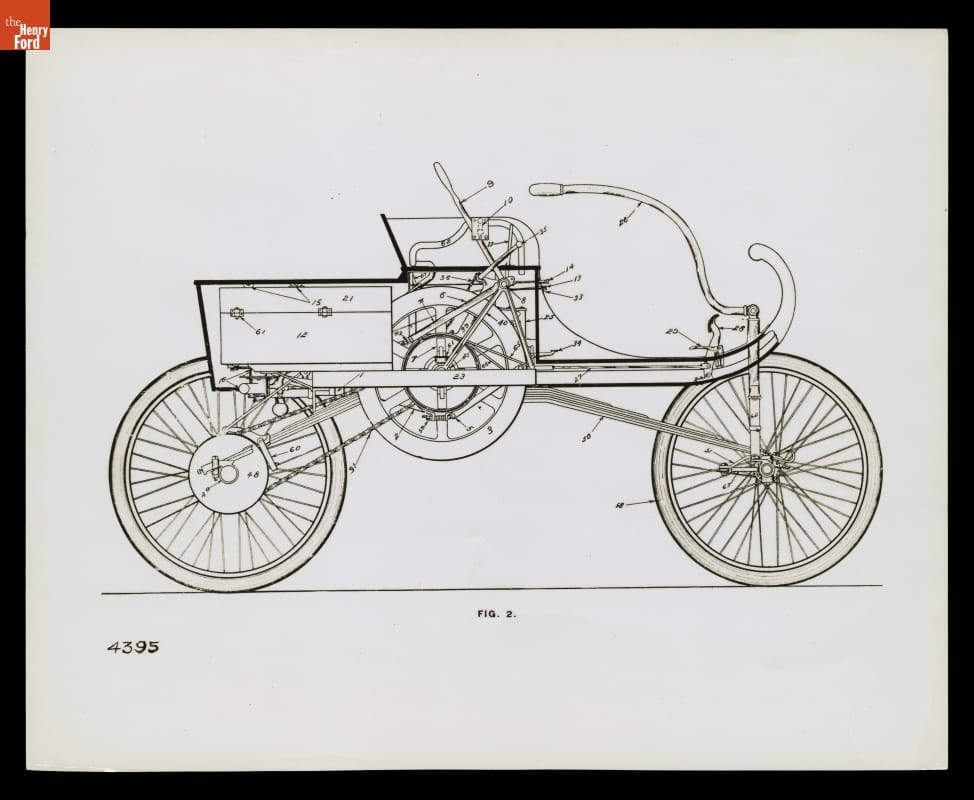
- Diagram of a 1902 Curved-Dash Oldsmobile - Shortly after the company moved to Detroit, a fire destroyed the Olds Motor Works factory in 1901. Several prototype automobiles were lost and only the Curved Dash survived. Left with no other options, Olds put the small, inexpensive car into production. The little runabout became the bestselling car in the United States, and that fire became the happiest of accidents.
- circa 1902
- Collections - Artifact
Diagram of a 1902 Curved-Dash Oldsmobile
Shortly after the company moved to Detroit, a fire destroyed the Olds Motor Works factory in 1901. Several prototype automobiles were lost and only the Curved Dash survived. Left with no other options, Olds put the small, inexpensive car into production. The little runabout became the bestselling car in the United States, and that fire became the happiest of accidents.
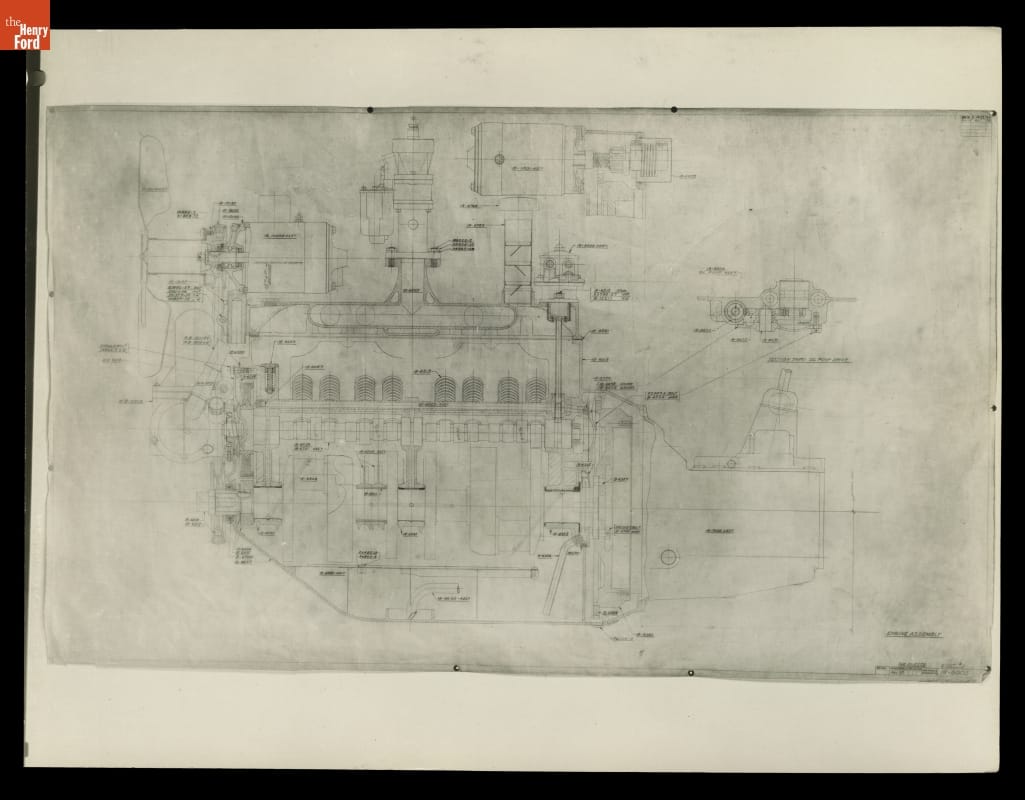
- Diagram of Ford V-8 Engine Assembly, August 1932 - Henry Ford and Ford Motor Company revolutionized the automobile market again in 1932 with the introduction of the company's V-8 engine. By casting the engine's block as single piece, Ford kept manufacturing costs down and made the engine affordable to more motorists. The venerable engine remained in production until 1953.
- August 15, 1932
- Collections - Artifact
Diagram of Ford V-8 Engine Assembly, August 1932
Henry Ford and Ford Motor Company revolutionized the automobile market again in 1932 with the introduction of the company's V-8 engine. By casting the engine's block as single piece, Ford kept manufacturing costs down and made the engine affordable to more motorists. The venerable engine remained in production until 1953.
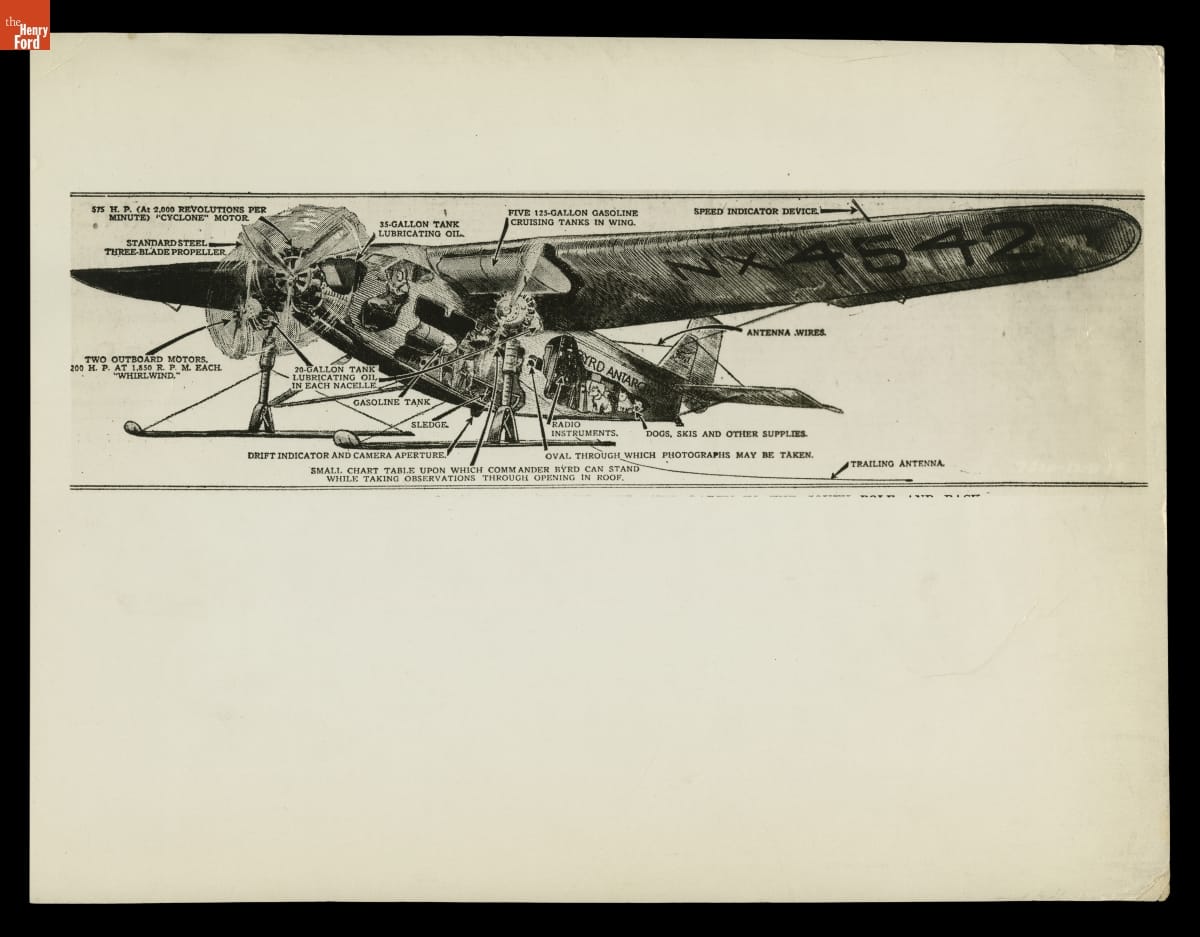
- Diagram of Ford Tri-Motor Airplane "Floyd Bennett" Flown by Richard E. Byrd in Antarctica, December 1929 - On November 28-29, 1929, explorer Richard Byrd made the first flight over the South Pole in the Ford Tri-Motor <em>Floyd Bennett</em>. The airplane, named for the late pilot on Byrd's North Pole expedition of 1926, was designed for long flights in Antarctic weather. With the heavy wooden skis, Byrd could land on snow and ice.
- December 08, 1929
- Collections - Artifact
Diagram of Ford Tri-Motor Airplane "Floyd Bennett" Flown by Richard E. Byrd in Antarctica, December 1929
On November 28-29, 1929, explorer Richard Byrd made the first flight over the South Pole in the Ford Tri-Motor Floyd Bennett. The airplane, named for the late pilot on Byrd's North Pole expedition of 1926, was designed for long flights in Antarctic weather. With the heavy wooden skis, Byrd could land on snow and ice.
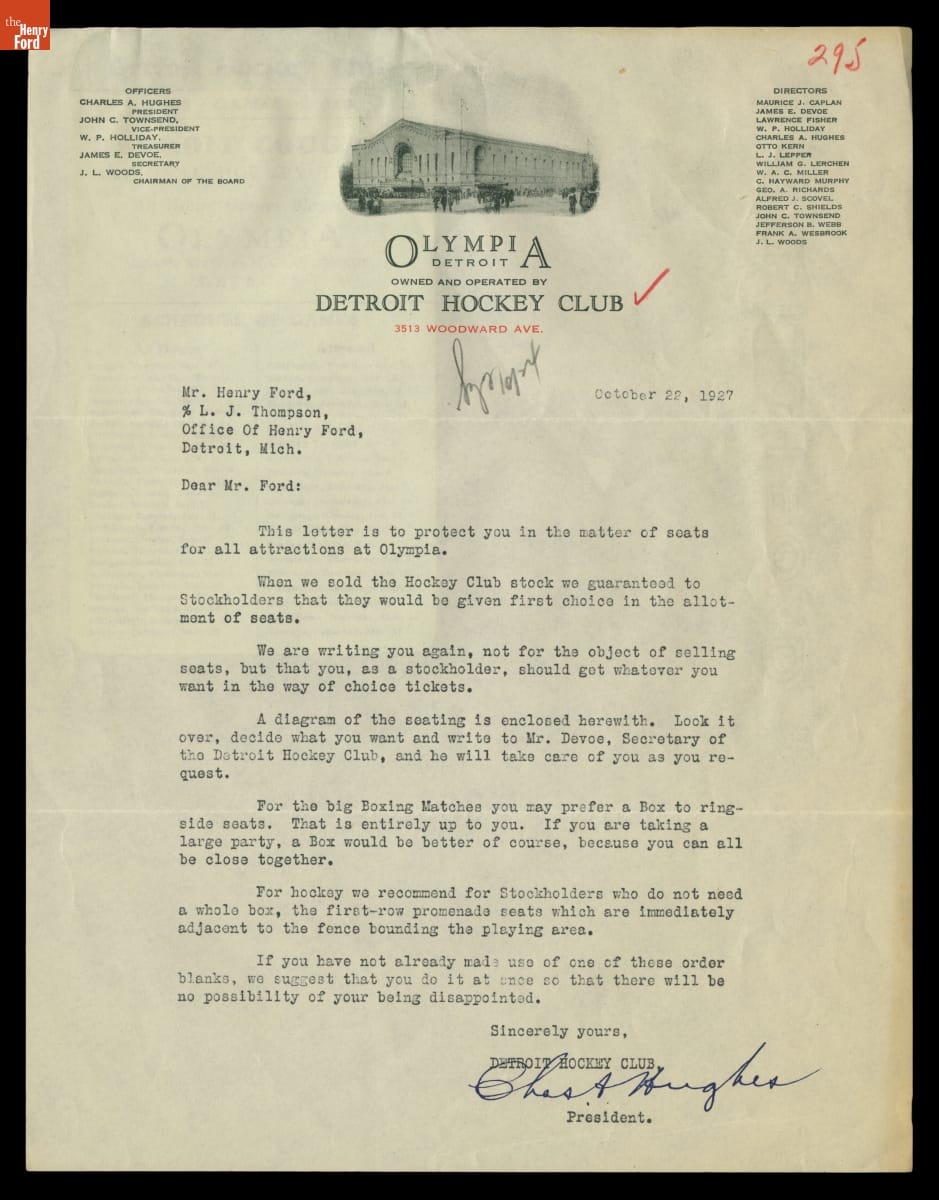
- Letter to Henry Ford from Charles A. Hughes, President of Detroit Hockey Club, Regarding Tickets and Seats, October 22, 1927 - Henry Ford purchased stock in the new Detroit ice hockey team in 1927. One of the perks for shareholders was the choice of allotted seats for events at Olympia Stadium -- the newly built arena where the National Hockey League team played. The Detroit Hockey Club's president, Charles Hughes, sent this letter and a stadium seating diagram with the team's schedule to Ford.
- October 22, 1927
- Collections - Artifact
Letter to Henry Ford from Charles A. Hughes, President of Detroit Hockey Club, Regarding Tickets and Seats, October 22, 1927
Henry Ford purchased stock in the new Detroit ice hockey team in 1927. One of the perks for shareholders was the choice of allotted seats for events at Olympia Stadium -- the newly built arena where the National Hockey League team played. The Detroit Hockey Club's president, Charles Hughes, sent this letter and a stadium seating diagram with the team's schedule to Ford.
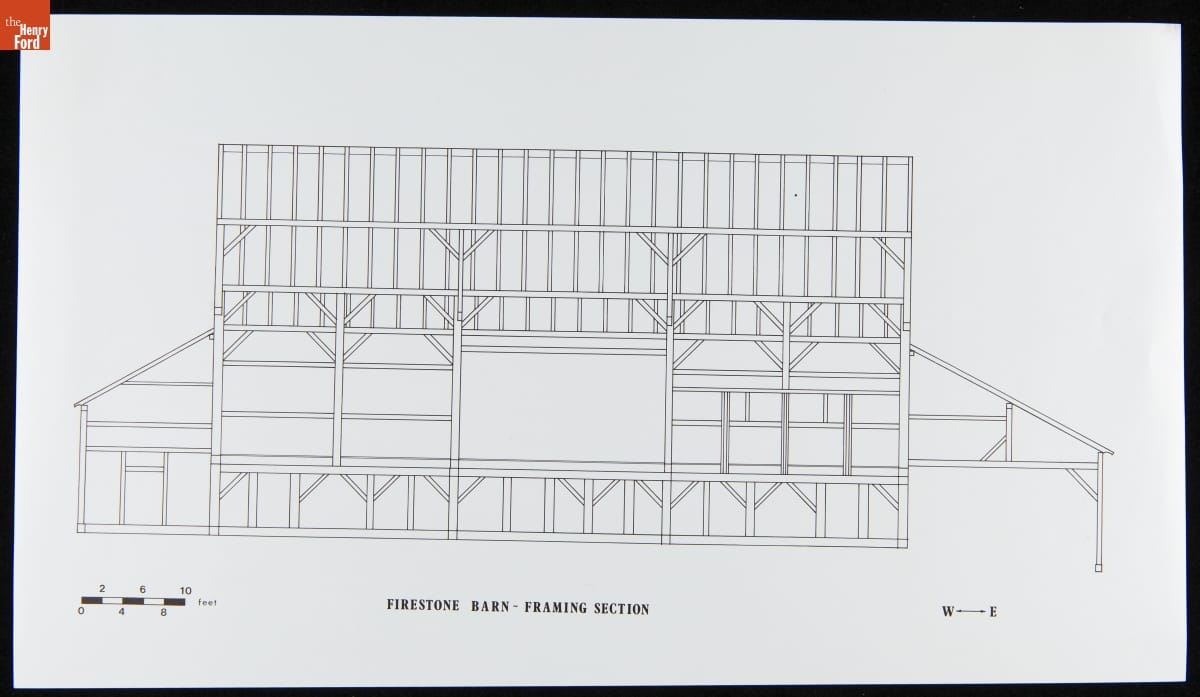
- Diagram, Firestone Barn--Framing Section W--E, 1983-1985 - The Firestone barn is a Pennsylvania-German bank barn, an American barn type with Swiss origins. They are called bank barns because the barn is built into a bank, allowing wagons to be driven into the upper floor. Bank barns combined multiple farm functions under a single roof. Livestock were kept in the lower floor, crops on the upper floor.
- 1983-1985
- Collections - Artifact
Diagram, Firestone Barn--Framing Section W--E, 1983-1985
The Firestone barn is a Pennsylvania-German bank barn, an American barn type with Swiss origins. They are called bank barns because the barn is built into a bank, allowing wagons to be driven into the upper floor. Bank barns combined multiple farm functions under a single roof. Livestock were kept in the lower floor, crops on the upper floor.
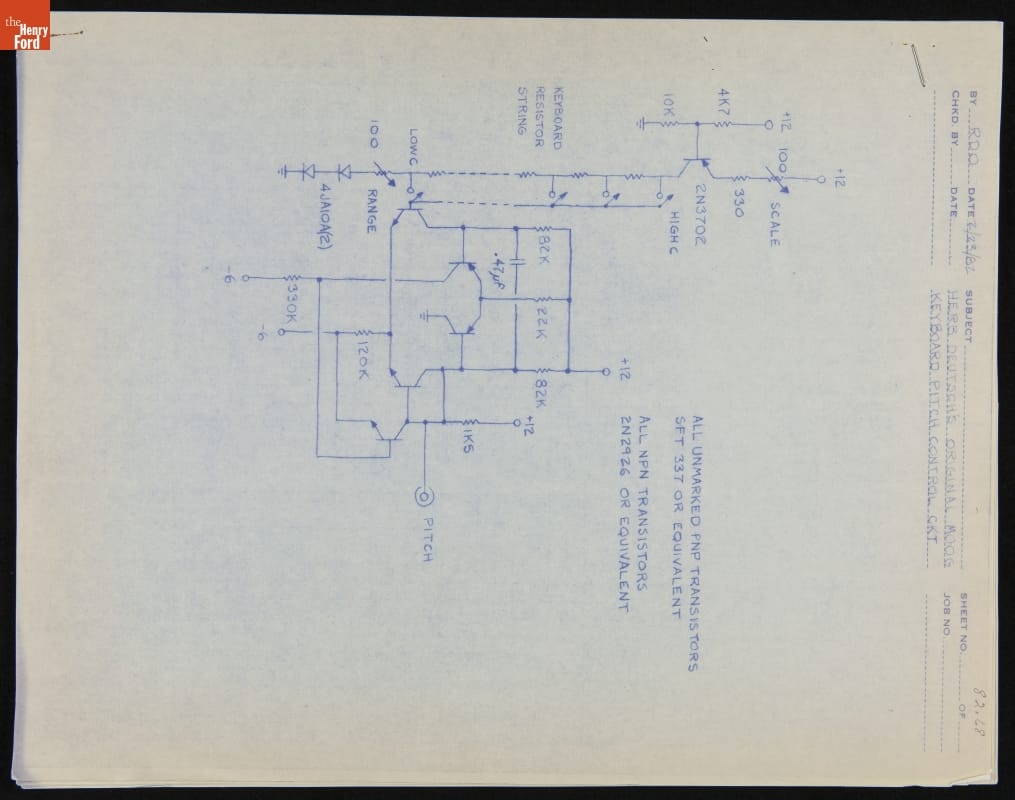
- Diagrams of Herb Deutsch's Original Moog Synthesizer, February 1982 - These circuit diagrams are graphic representations of the electronics that powered Robert Moog's first prototype synthesizer, built for Herbert Deutsch. Individual "modules" on the synthesizer allowed sounds to be shaped into infinite possibilities; these diagrams address the pitch control, envelope generator, amplifier, band pass filter, noise generator, and trigger extractor.
- February 01, 1982
- Collections - Artifact
Diagrams of Herb Deutsch's Original Moog Synthesizer, February 1982
These circuit diagrams are graphic representations of the electronics that powered Robert Moog's first prototype synthesizer, built for Herbert Deutsch. Individual "modules" on the synthesizer allowed sounds to be shaped into infinite possibilities; these diagrams address the pitch control, envelope generator, amplifier, band pass filter, noise generator, and trigger extractor.
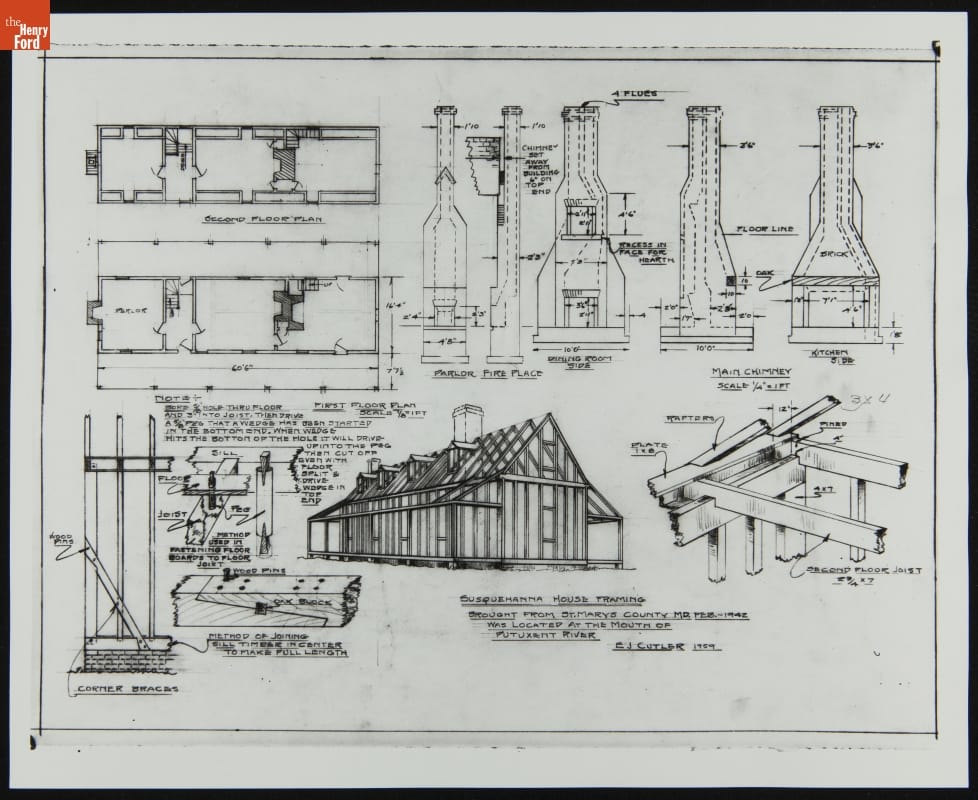
- Susquehanna House Framing, 1960 -
- July 19, 1960
- Collections - Artifact
Susquehanna House Framing, 1960