
Search
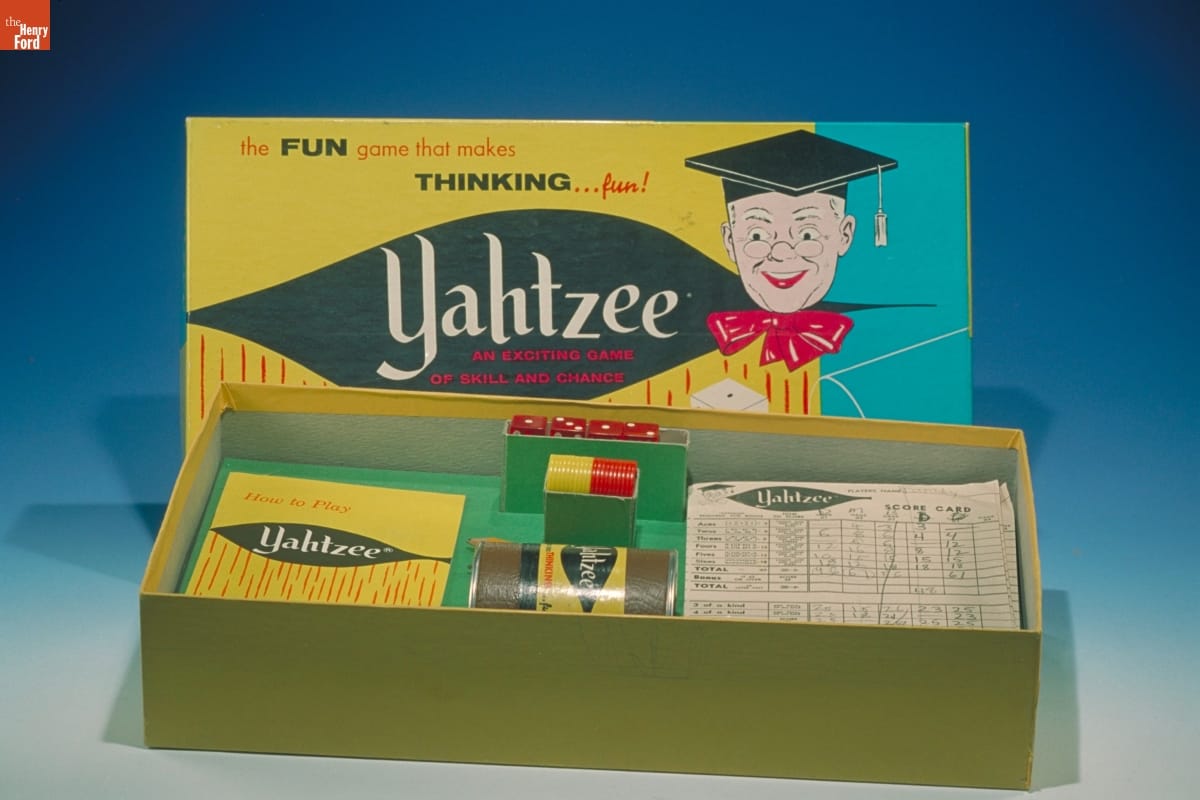
- Yahtzee Game, 1961-1965 - In Yahtzee, players throw a set of five dice to complete certain combinations. Each combination gives the player points to help win the game. In the late 1950s, Edwin S. Lowe acquired the rights to the game and hosted Yahtzee parties to promote and sell the game. Through this word of mouth marketing, the game quickly caught on and gained in popularity.
- 1961-1965
- Collections - Artifact
Yahtzee Game, 1961-1965
In Yahtzee, players throw a set of five dice to complete certain combinations. Each combination gives the player points to help win the game. In the late 1950s, Edwin S. Lowe acquired the rights to the game and hosted Yahtzee parties to promote and sell the game. Through this word of mouth marketing, the game quickly caught on and gained in popularity.
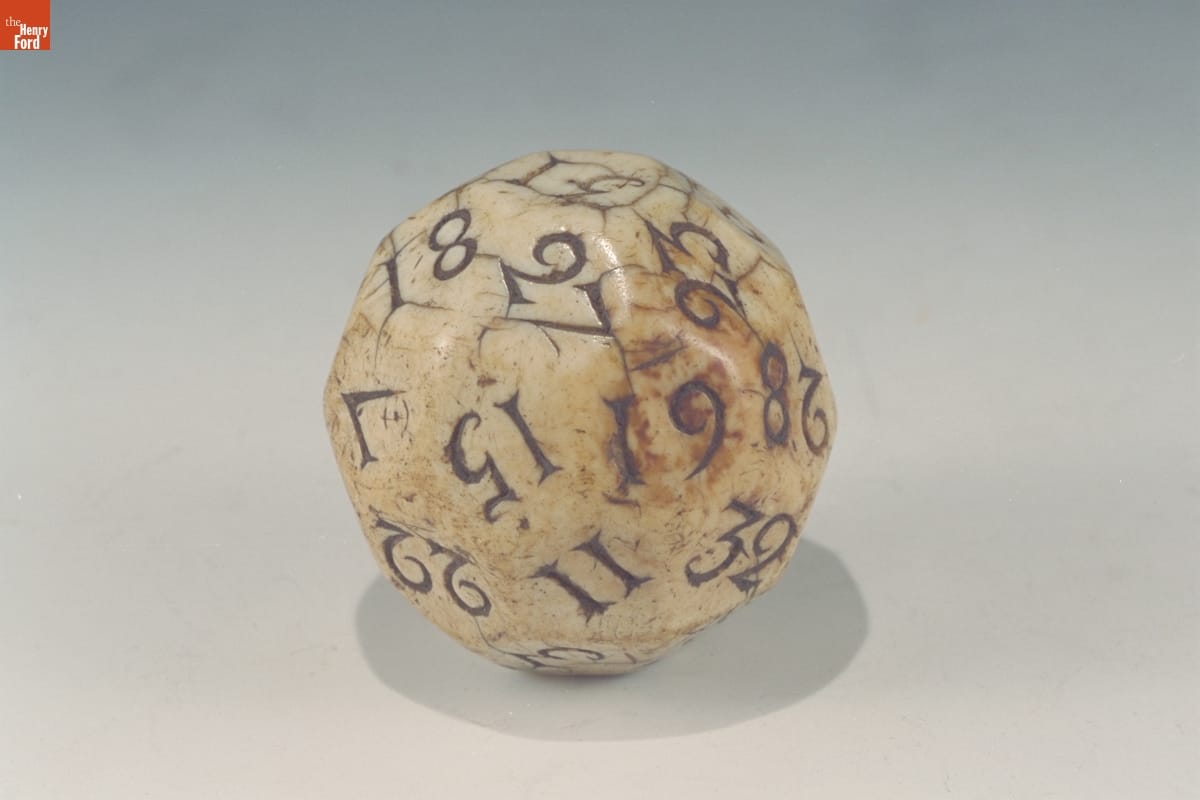
- Game Die, 1840-1860 - People have used dice to decide their fate for thousands of years. Early types of dice consisted of animal bones -- usually ankle bones -- marked with dots or "pips." This multi-faceted die from the mid-1800s is made of ivory, has over 30 sides, and uses numbers instead of pips.
- 1840-1860
- Collections - Artifact
Game Die, 1840-1860
People have used dice to decide their fate for thousands of years. Early types of dice consisted of animal bones -- usually ankle bones -- marked with dots or "pips." This multi-faceted die from the mid-1800s is made of ivory, has over 30 sides, and uses numbers instead of pips.
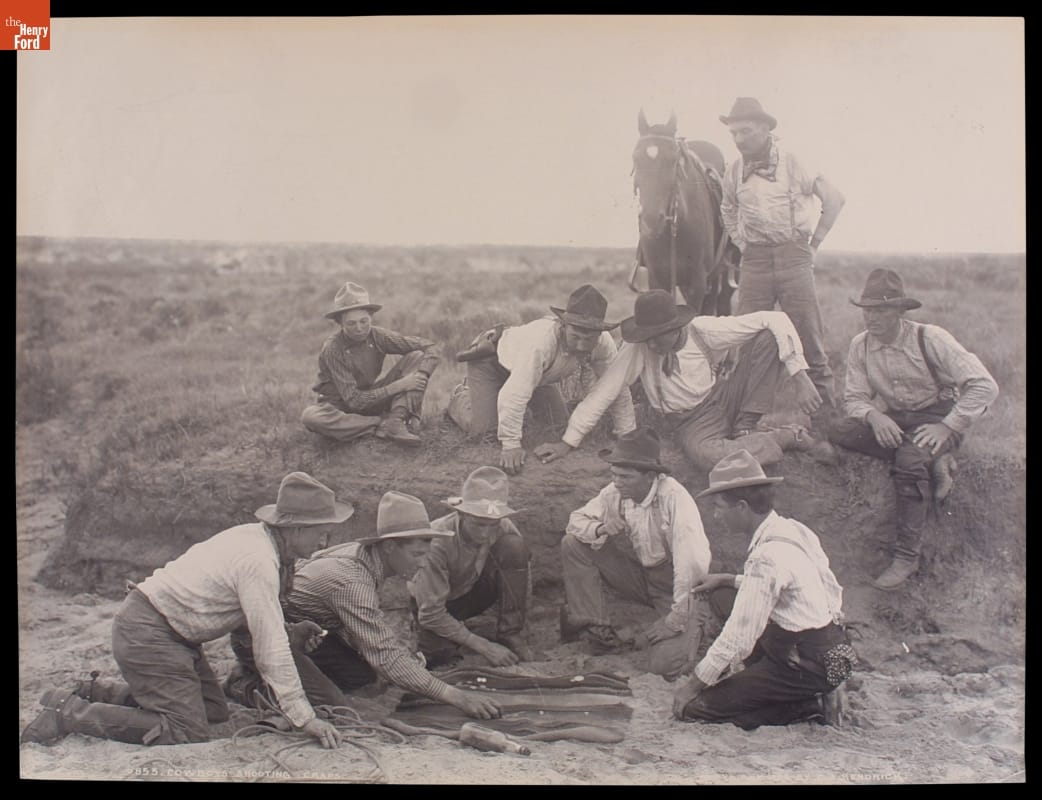
- Cowboys Shooting Craps, 1904 - From 1895 to 1924, the Detroit Publishing Company was one of the major image publishers in the world. The company's wide-ranging stock of original photographs documented life and landscapes from across the nation and around the globe. From the tens of thousands of negatives, the company created prints, postcards, lantern slides, panoramas, and other merchandise for sale to educators, businessmen, advertisers, homeowners and travelers.
- 1904
- Collections - Artifact
Cowboys Shooting Craps, 1904
From 1895 to 1924, the Detroit Publishing Company was one of the major image publishers in the world. The company's wide-ranging stock of original photographs documented life and landscapes from across the nation and around the globe. From the tens of thousands of negatives, the company created prints, postcards, lantern slides, panoramas, and other merchandise for sale to educators, businessmen, advertisers, homeowners and travelers.
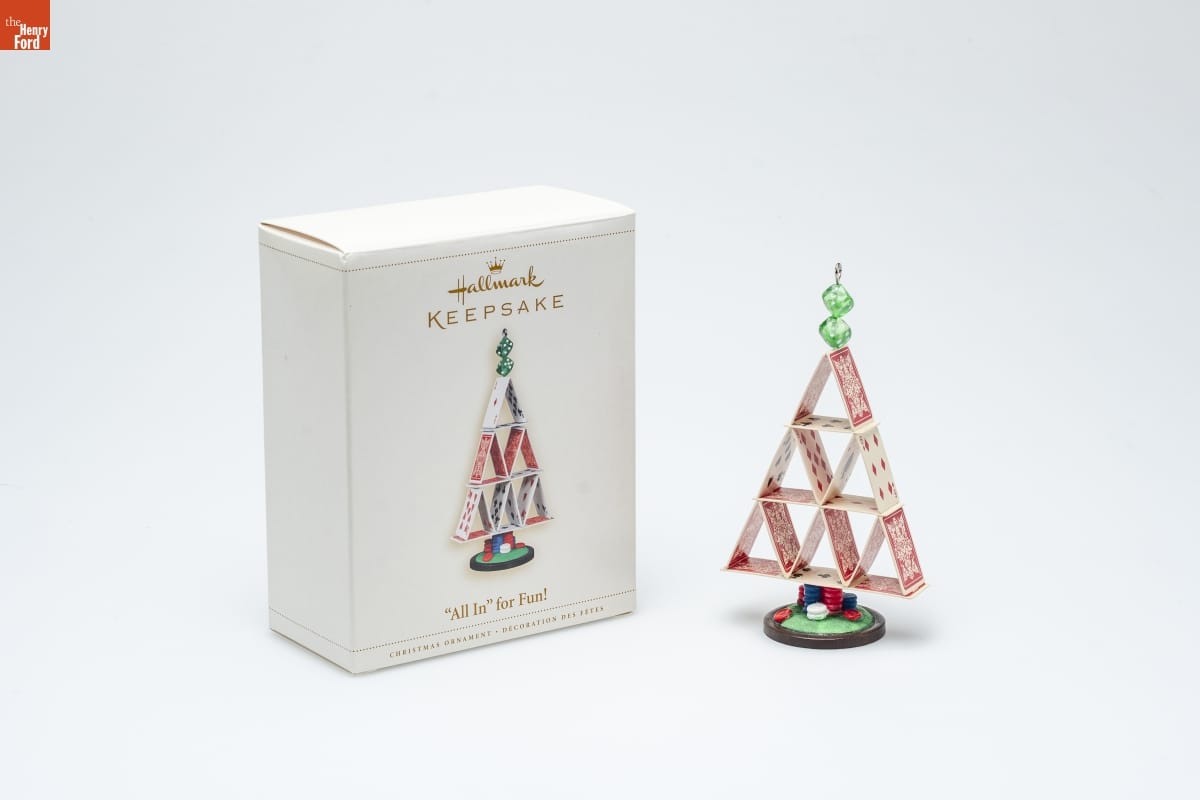
- Hallmark ""All In" For Fun!" Christmas Ornament, 2006 - Already known for greeting cards, Hallmark introduced a line of Christmas ornaments in 1973. The company's annual release of an increasing array of ornaments revolutionized Christmas decorating, appealing to customers' interest in marking memories and milestones as well as expressing one's personality and unique tastes.
- 2006
- Collections - Artifact
Hallmark ""All In" For Fun!" Christmas Ornament, 2006
Already known for greeting cards, Hallmark introduced a line of Christmas ornaments in 1973. The company's annual release of an increasing array of ornaments revolutionized Christmas decorating, appealing to customers' interest in marking memories and milestones as well as expressing one's personality and unique tastes.
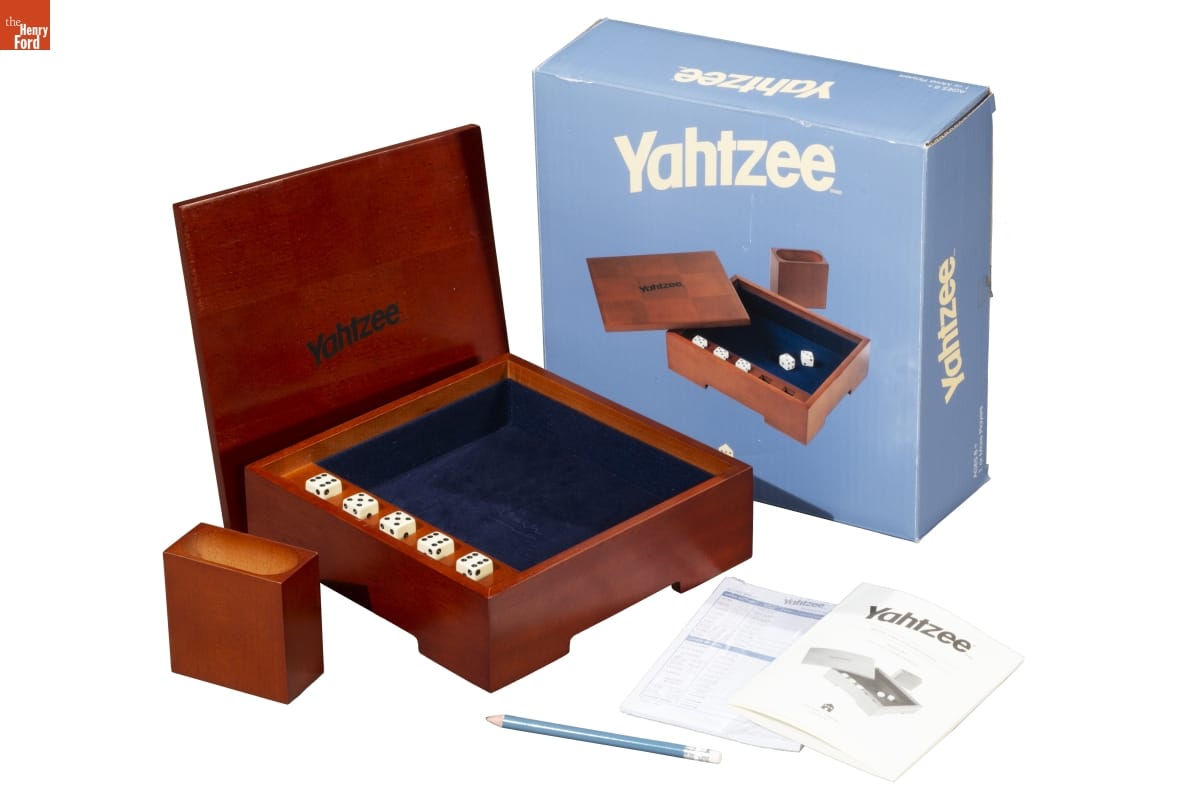
- Yahtzee Game, 2004 - Starting in the early 1980s--and already established as an internationally recognized architect--Michael Graves began to pursue a parallel career as a product designer. Over the following three and a half decades he and his collaborators designed everything from humble household goods to limited edition luxury items for clients as diverse as Steuben, Alessi, Target, J. C. Penney, and Disney.
- 2004
- Collections - Artifact
Yahtzee Game, 2004
Starting in the early 1980s--and already established as an internationally recognized architect--Michael Graves began to pursue a parallel career as a product designer. Over the following three and a half decades he and his collaborators designed everything from humble household goods to limited edition luxury items for clients as diverse as Steuben, Alessi, Target, J. C. Penney, and Disney.
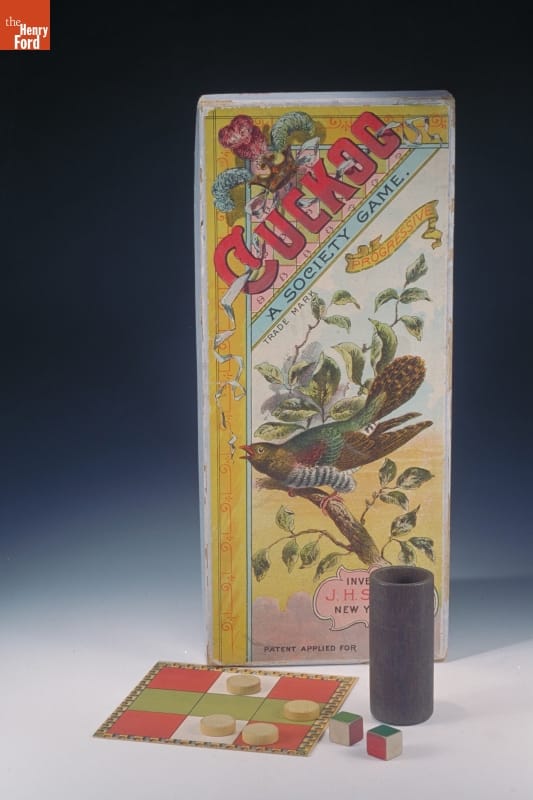
- Cuckoo: A Society Game, circa 1890 - Cuckoo is a bingo-like game where players win by covering up all the colors on a card -- at which time they yell "Cuckoo!" The colorful, eye-catching lithography on the box cover -- a staple for successful game manufacturers in the late 1800s -- probably attracted many consumers to try the game. J. H. Singer invented this game in 1891.
- circa 1890
- Collections - Artifact
Cuckoo: A Society Game, circa 1890
Cuckoo is a bingo-like game where players win by covering up all the colors on a card -- at which time they yell "Cuckoo!" The colorful, eye-catching lithography on the box cover -- a staple for successful game manufacturers in the late 1800s -- probably attracted many consumers to try the game. J. H. Singer invented this game in 1891.
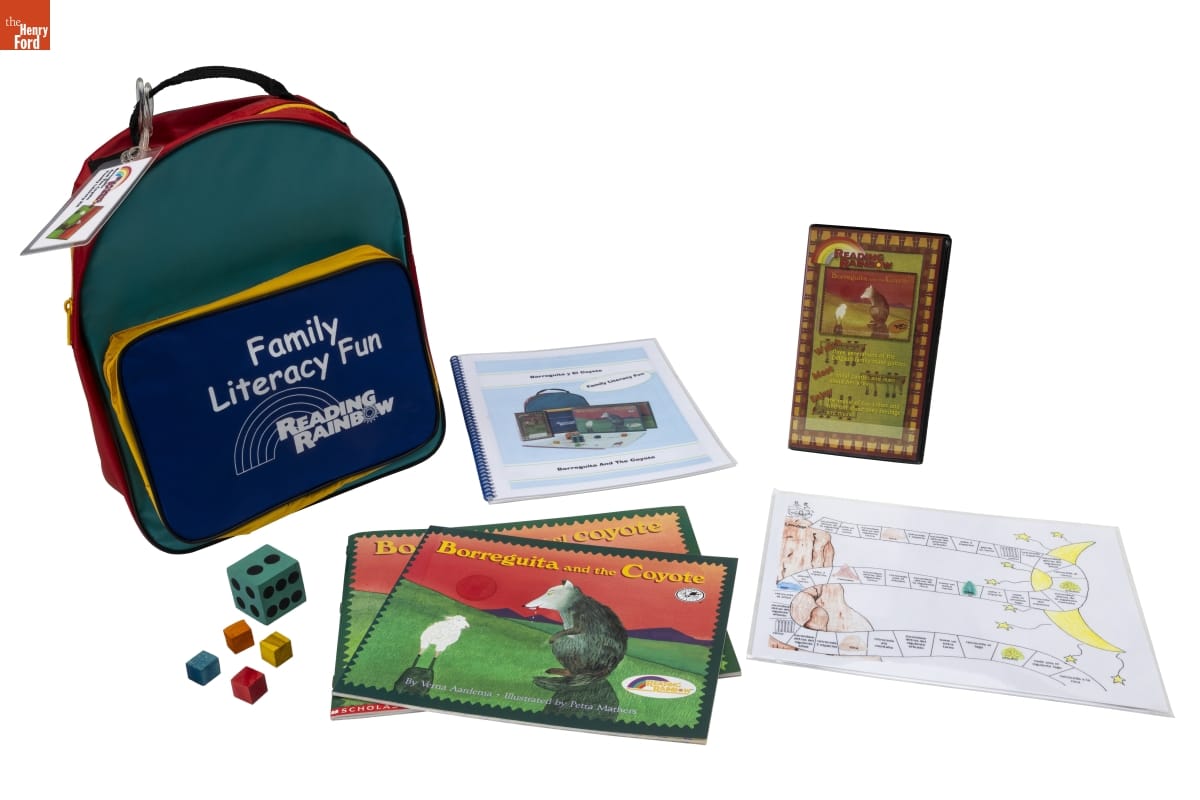
- Reading Rainbow "Borreguita and the Coyote" Family Literacy Kit, 1999-2008 - From 1983 until 2006, <em>Reading Rainbow</em> aimed to encourage a love of books and reading in children. The show won over 250 awards, including 26 Emmys, and earned the title of the most-watched PBS program in classrooms. The program's commitment to literacy also extended outside of the show itself, through sponsorship of programs like this literacy kit.
- 1999-2008
- Collections - Artifact
Reading Rainbow "Borreguita and the Coyote" Family Literacy Kit, 1999-2008
From 1983 until 2006, Reading Rainbow aimed to encourage a love of books and reading in children. The show won over 250 awards, including 26 Emmys, and earned the title of the most-watched PBS program in classrooms. The program's commitment to literacy also extended outside of the show itself, through sponsorship of programs like this literacy kit.
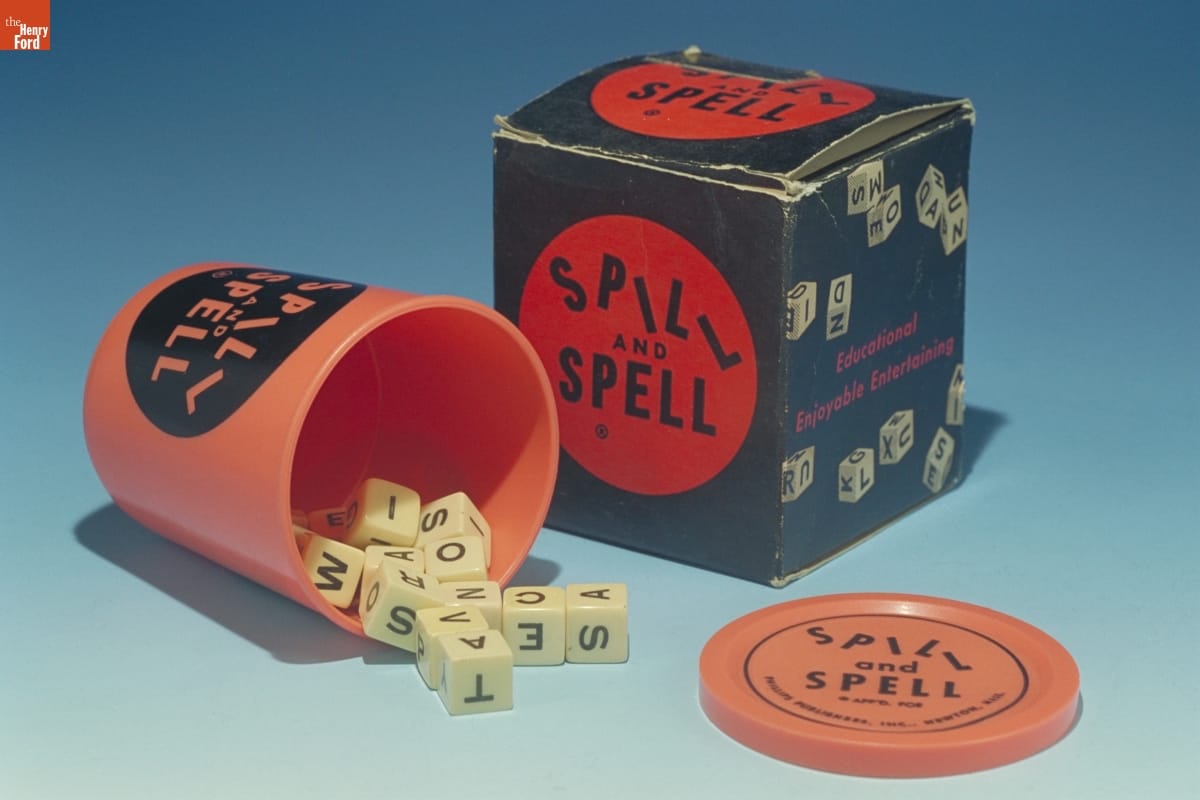
- Spill and Spell Dice Game, 1957 - Spill and Spell is competitive. Players take turns spilling fifteen lettered cubes and spelling out words from the upturned letters. Complex scoring requires addition and multiplication skills. The longer the word, the more points, and words that intersect like a crossword puzzle double the score. The first player to earn 300 points wins!
- 1957
- Collections - Artifact
Spill and Spell Dice Game, 1957
Spill and Spell is competitive. Players take turns spilling fifteen lettered cubes and spelling out words from the upturned letters. Complex scoring requires addition and multiplication skills. The longer the word, the more points, and words that intersect like a crossword puzzle double the score. The first player to earn 300 points wins!
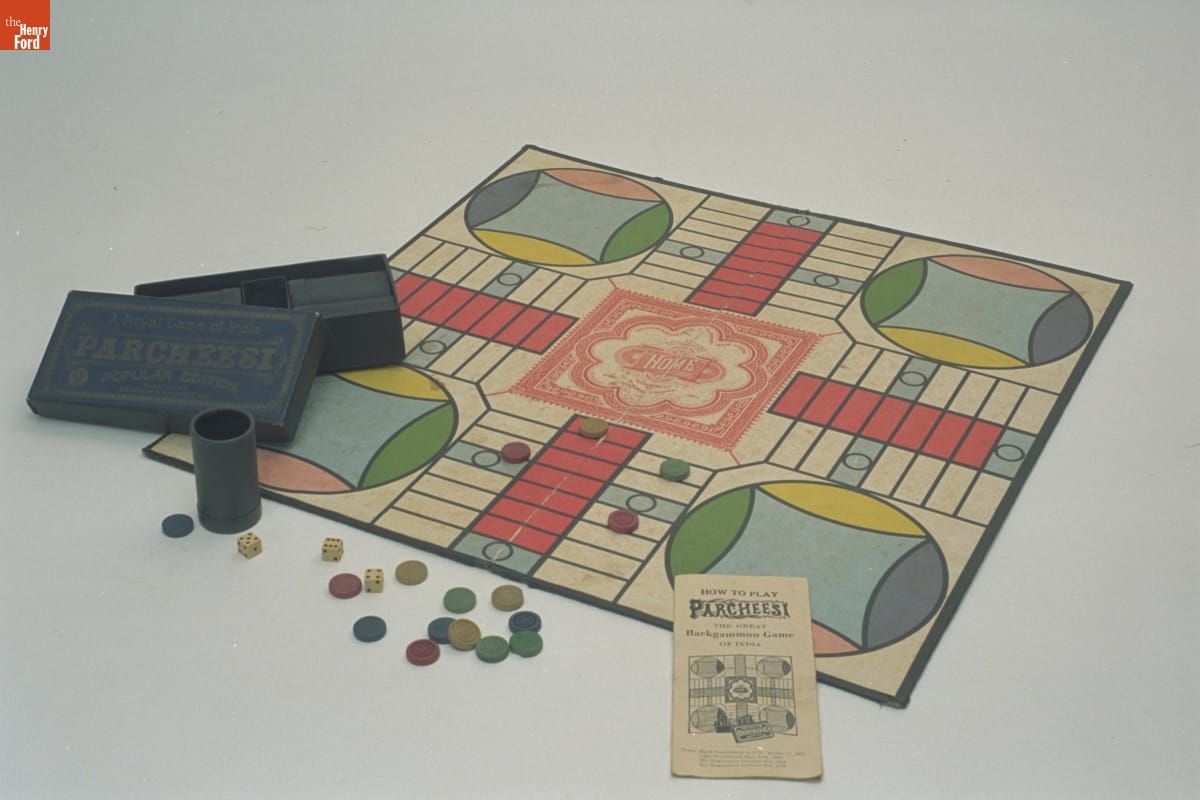
- Parcheesi Game, 1938-1945 - Parcheesi is based on Pachisi -- a game that originated in India. Basic game rules have players traveling around the cross-shaped board from start to home. Landing on another players' marker sends that player back to start. American game makers, Selchow and Righter, trademarked the Parcheesi name in 1874 after purchasing the game rights in 1867.
- 1938-1945
- Collections - Artifact
Parcheesi Game, 1938-1945
Parcheesi is based on Pachisi -- a game that originated in India. Basic game rules have players traveling around the cross-shaped board from start to home. Landing on another players' marker sends that player back to start. American game makers, Selchow and Righter, trademarked the Parcheesi name in 1874 after purchasing the game rights in 1867.
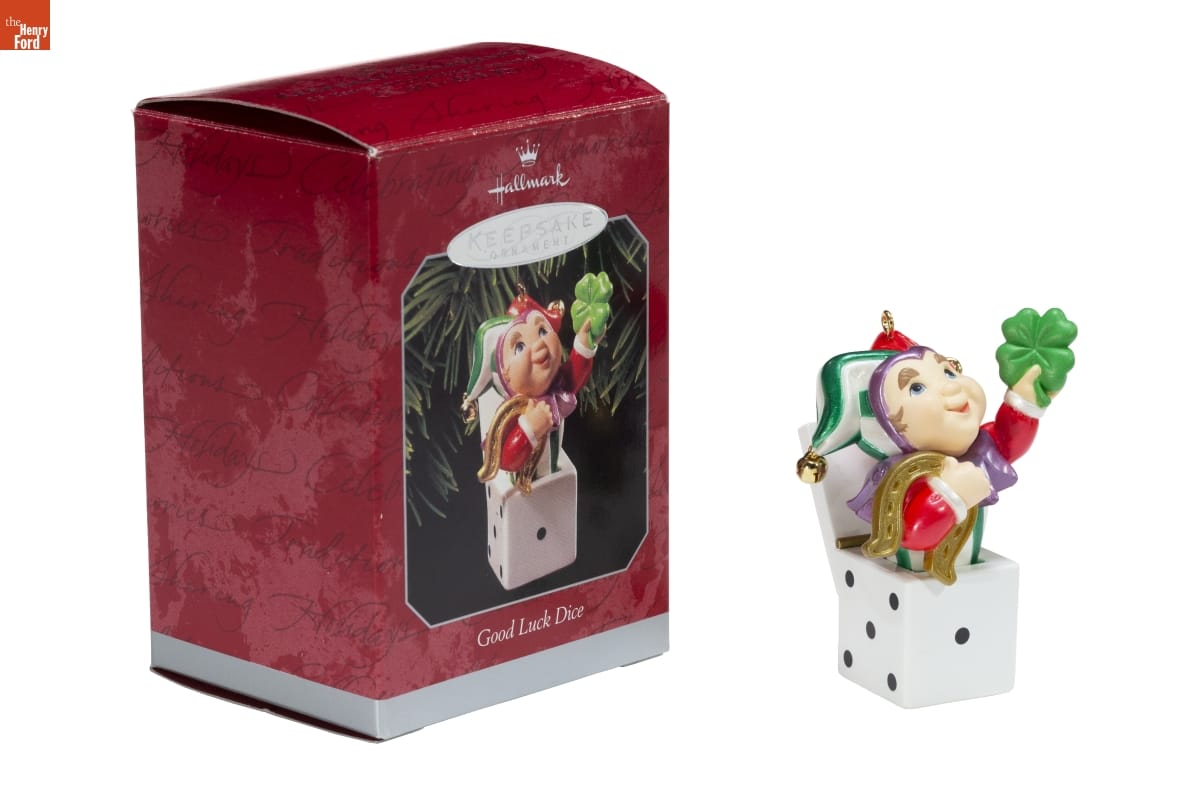
- Hallmark "Good Luck Dice" Christmas Ornament, 1998 - Already known for greeting cards, Hallmark introduced a line of Christmas ornaments in 1973. The company's annual release of an increasing array of ornaments revolutionized Christmas decorating, appealing to customers' interest in marking memories and milestones as well as expressing one's personality and unique tastes.
- 1998
- Collections - Artifact
Hallmark "Good Luck Dice" Christmas Ornament, 1998
Already known for greeting cards, Hallmark introduced a line of Christmas ornaments in 1973. The company's annual release of an increasing array of ornaments revolutionized Christmas decorating, appealing to customers' interest in marking memories and milestones as well as expressing one's personality and unique tastes.