
Search
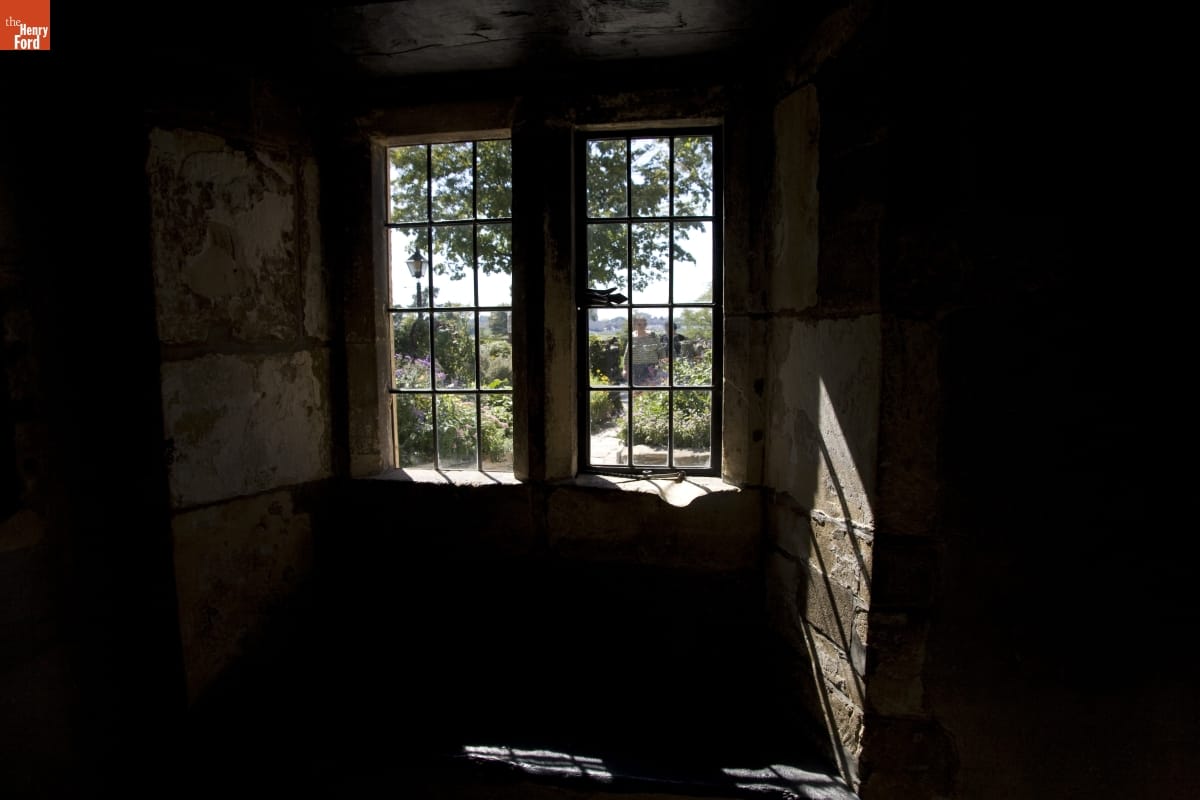
- Cotswold Cottage in Greenfield Village, September 2007 -
- September 01, 2007
- Collections - Artifact
Cotswold Cottage in Greenfield Village, September 2007
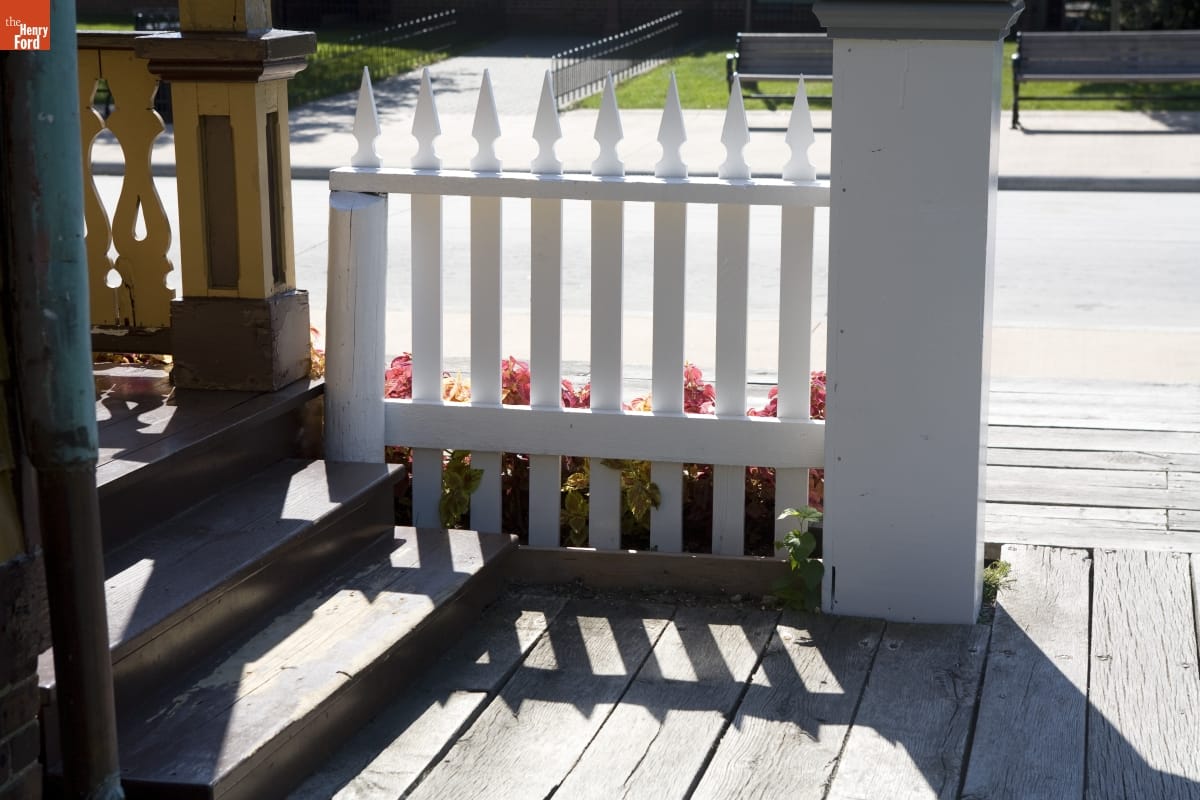
- Sarah Jordan Boarding House in Greenfield Village, September 2007 - In 1879, Sarah Jordan ran a boarding house a short walk from Thomas Edison's Menlo Park Laboratory in New Jersey. Her boarding house was home to more than a dozen unmarried men working at the laboratory. Today, this house and other Menlo Park Complex buildings in Greenfield Village offer visitors a glimpse into the lives of those who developed and witnessed the first successful incandescent lamp.
- September 01, 2007
- Collections - Artifact
Sarah Jordan Boarding House in Greenfield Village, September 2007
In 1879, Sarah Jordan ran a boarding house a short walk from Thomas Edison's Menlo Park Laboratory in New Jersey. Her boarding house was home to more than a dozen unmarried men working at the laboratory. Today, this house and other Menlo Park Complex buildings in Greenfield Village offer visitors a glimpse into the lives of those who developed and witnessed the first successful incandescent lamp.
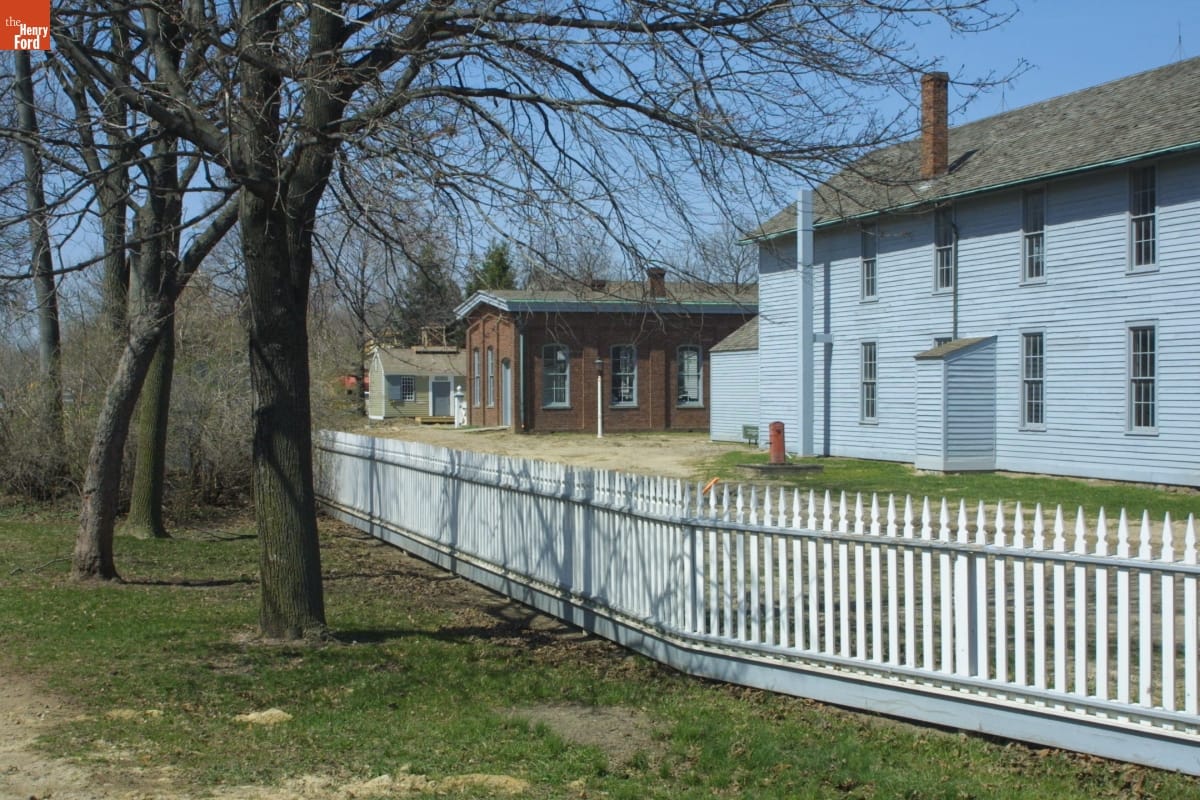
- Menlo Park Laboratory Complex during the Greenfield Village Restoration Project, April 2003 - By 2000, Greenfield Village began showing its age. Buildings and crumbling infrastructure desperately needed repair. Museum planners envisioned a revitalized village. They created themed "Historic Districts" by relocating and refurbishing the historic structures. Workers repaved streets and upgraded water, sewer, electric, and gas lines. In June 2003, nine months after restoration began, visitors passed through a new entrance into a reborn Greenfield Village.
- April 01, 2003
- Collections - Artifact
Menlo Park Laboratory Complex during the Greenfield Village Restoration Project, April 2003
By 2000, Greenfield Village began showing its age. Buildings and crumbling infrastructure desperately needed repair. Museum planners envisioned a revitalized village. They created themed "Historic Districts" by relocating and refurbishing the historic structures. Workers repaved streets and upgraded water, sewer, electric, and gas lines. In June 2003, nine months after restoration began, visitors passed through a new entrance into a reborn Greenfield Village.
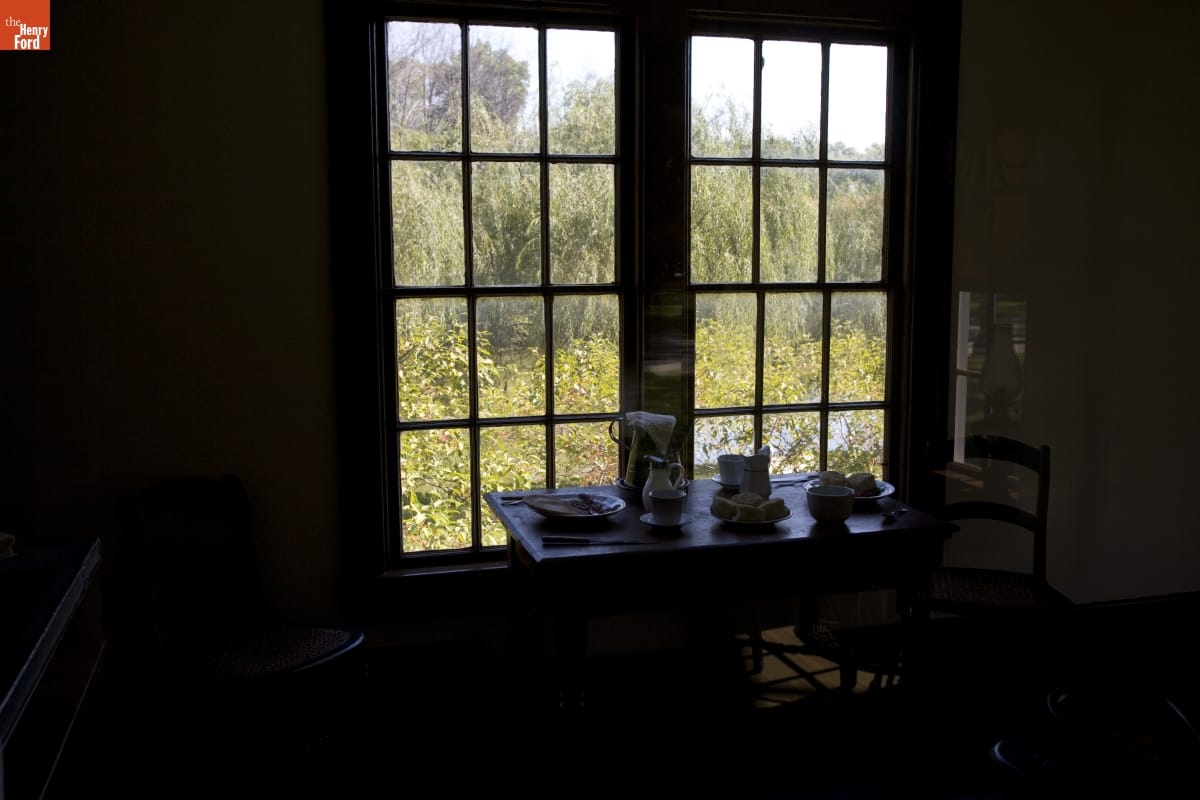
- Chapman Family Home in Greenfield Village, September 2007 - During the 1870s, John B. Chapman and his wife Susie lived in a simple farmhouse. Chapman taught several terms in the one-room schools of his southeast Michigan rural community. Young Henry Ford was one of his pupils. Ford later purchased the home for his outdoor museum in Dearborn, Michigan. This image shows the building's interior as it looked in 2007.
- September 01, 2007
- Collections - Artifact
Chapman Family Home in Greenfield Village, September 2007
During the 1870s, John B. Chapman and his wife Susie lived in a simple farmhouse. Chapman taught several terms in the one-room schools of his southeast Michigan rural community. Young Henry Ford was one of his pupils. Ford later purchased the home for his outdoor museum in Dearborn, Michigan. This image shows the building's interior as it looked in 2007.
- Tintype Studio Former Site after Relocation during the Greenfield Village Restoration Project, September 2002 - By 2000, Greenfield Village began showing its age. Buildings and crumbling infrastructure desperately needed repair. Museum planners envisioned a revitalized village. They created themed "Historic Districts" by relocating and refurbishing the historic structures. Workers repaved streets and upgraded water, sewer, electric, and gas lines. In June 2003, nine months after restoration began, visitors passed through a new entrance into a reborn Greenfield Village.
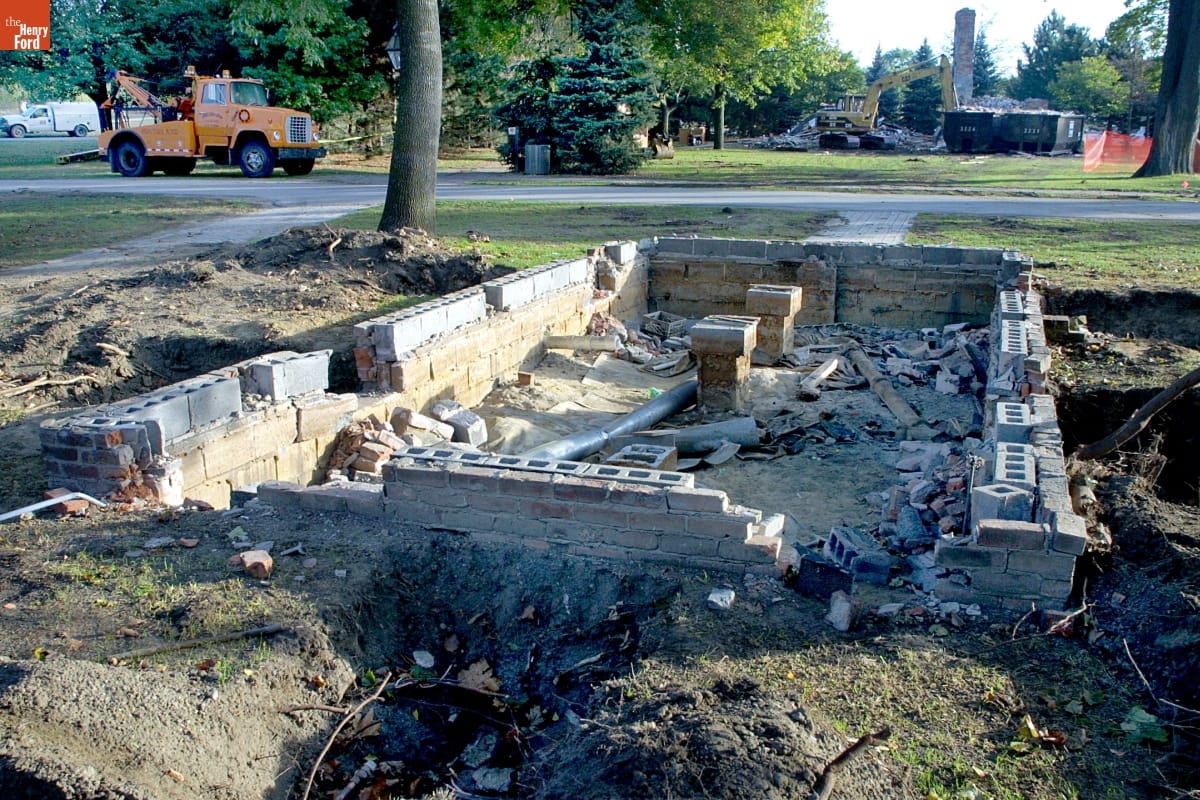
- September 01, 2002
- Collections - Artifact
Tintype Studio Former Site after Relocation during the Greenfield Village Restoration Project, September 2002
By 2000, Greenfield Village began showing its age. Buildings and crumbling infrastructure desperately needed repair. Museum planners envisioned a revitalized village. They created themed "Historic Districts" by relocating and refurbishing the historic structures. Workers repaved streets and upgraded water, sewer, electric, and gas lines. In June 2003, nine months after restoration began, visitors passed through a new entrance into a reborn Greenfield Village.
- Tintype Studio Former Site after Relocation during the Greenfield Village Restoration Project, September 2002 - By 2000, Greenfield Village began showing its age. Buildings and crumbling infrastructure desperately needed repair. Museum planners envisioned a revitalized village. They created themed "Historic Districts" by relocating and refurbishing the historic structures. Workers repaved streets and upgraded water, sewer, electric, and gas lines. In June 2003, nine months after restoration began, visitors passed through a new entrance into a reborn Greenfield Village.
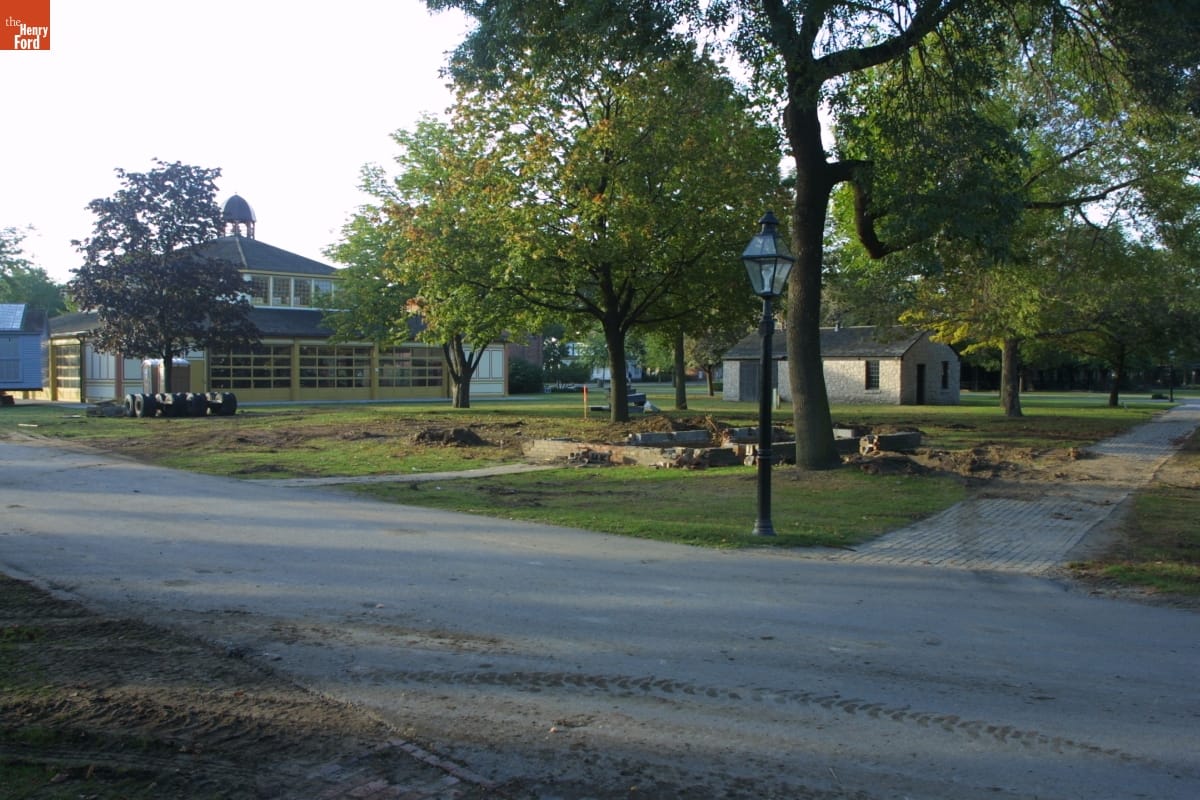
- September 01, 2002
- Collections - Artifact
Tintype Studio Former Site after Relocation during the Greenfield Village Restoration Project, September 2002
By 2000, Greenfield Village began showing its age. Buildings and crumbling infrastructure desperately needed repair. Museum planners envisioned a revitalized village. They created themed "Historic Districts" by relocating and refurbishing the historic structures. Workers repaved streets and upgraded water, sewer, electric, and gas lines. In June 2003, nine months after restoration began, visitors passed through a new entrance into a reborn Greenfield Village.
- Lodge at Christie & Main Construction Site, Greenfield Village Restoration Project, November 2002 - By 2000, Greenfield Village began showing its age. Buildings and crumbling infrastructure desperately needed repair. Museum planners envisioned a revitalized village. They relocated and refurbished the historic structures into themed "Historic Districts" and added new support buildings--shops, restaurants, and a special-event venue. In June 2003, nine months after restoration began, visitors passed through a new entrance into a reborn Greenfield Village.
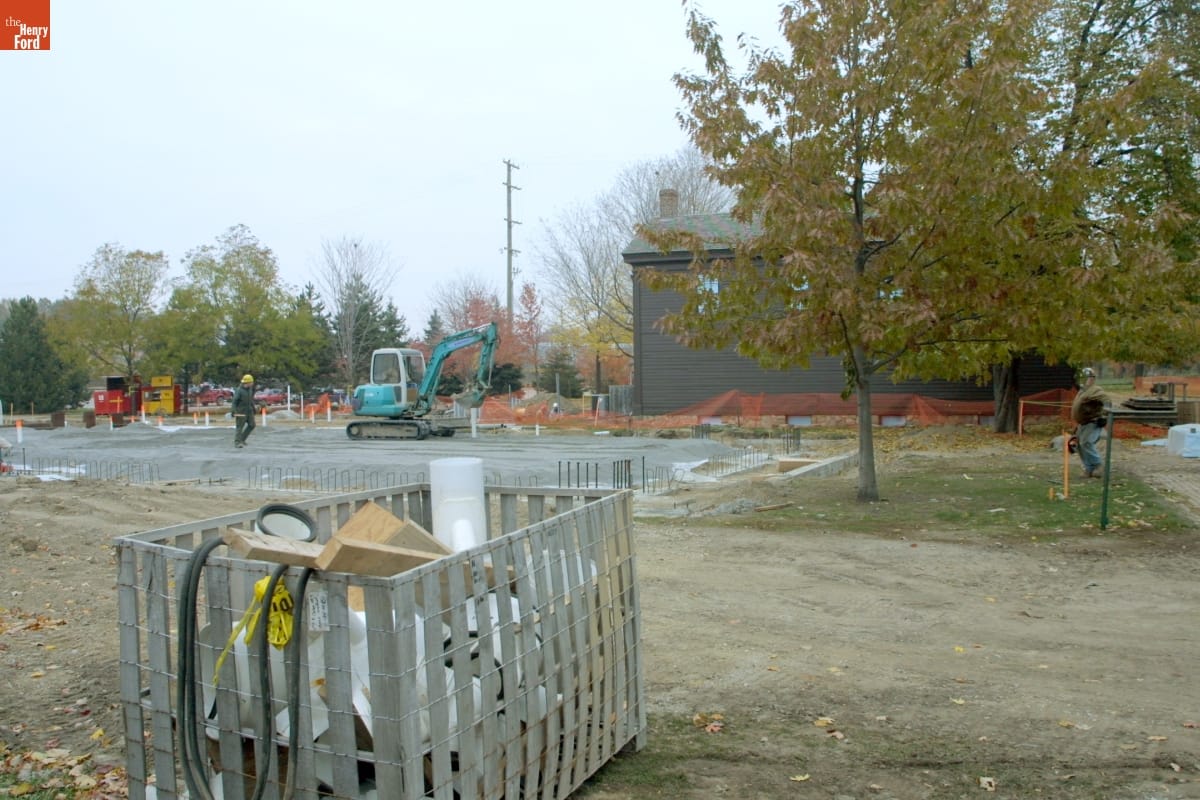
- November 01, 2002
- Collections - Artifact
Lodge at Christie & Main Construction Site, Greenfield Village Restoration Project, November 2002
By 2000, Greenfield Village began showing its age. Buildings and crumbling infrastructure desperately needed repair. Museum planners envisioned a revitalized village. They relocated and refurbished the historic structures into themed "Historic Districts" and added new support buildings--shops, restaurants, and a special-event venue. In June 2003, nine months after restoration began, visitors passed through a new entrance into a reborn Greenfield Village.
- Mill Pond during the Greenfield Village Restoration Project, May 2003 - By 2000, Greenfield Village began showing its age. Buildings and crumbling infrastructure desperately needed repair. Museum planners envisioned a revitalized village. They created themed "Historic Districts" by relocating and refurbishing the historic structures. Workers repaved streets and upgraded water, sewer, electric, and gas lines. In June 2003, nine months after restoration began, visitors passed through a new entrance into a reborn Greenfield Village.
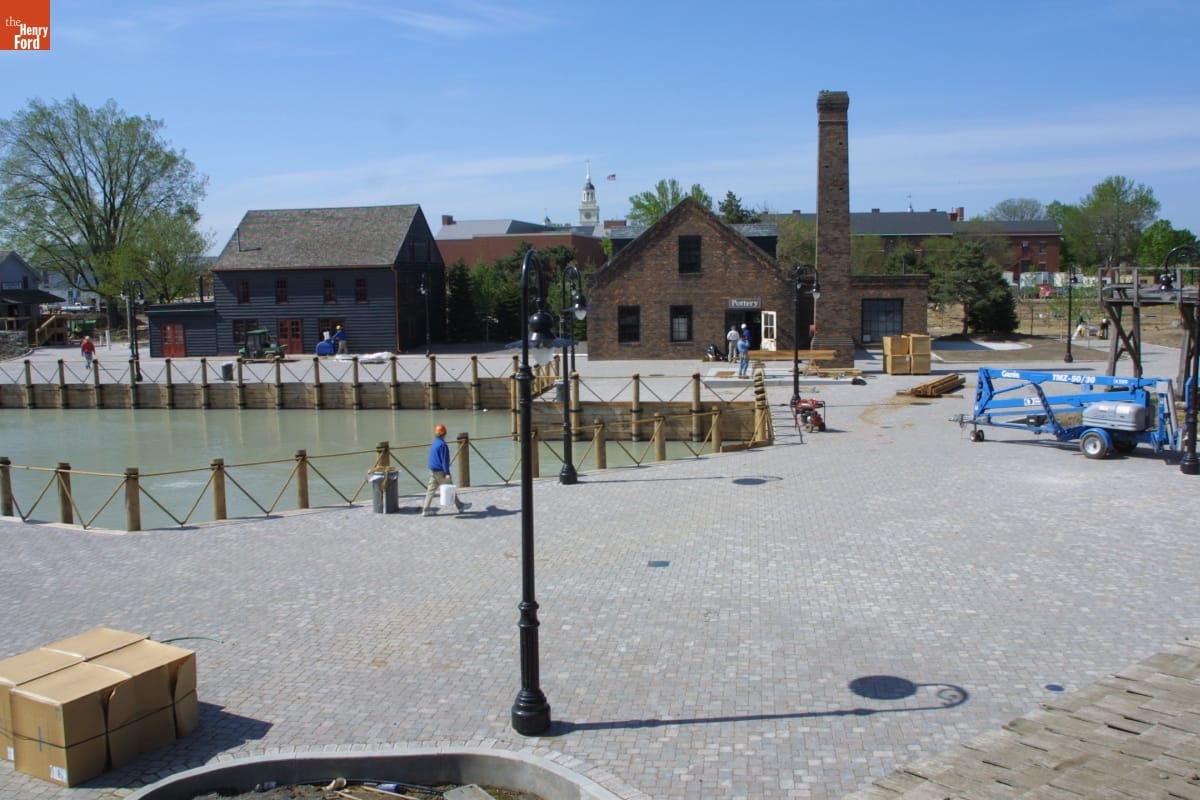
- May 01, 2003
- Collections - Artifact
Mill Pond during the Greenfield Village Restoration Project, May 2003
By 2000, Greenfield Village began showing its age. Buildings and crumbling infrastructure desperately needed repair. Museum planners envisioned a revitalized village. They created themed "Historic Districts" by relocating and refurbishing the historic structures. Workers repaved streets and upgraded water, sewer, electric, and gas lines. In June 2003, nine months after restoration began, visitors passed through a new entrance into a reborn Greenfield Village.
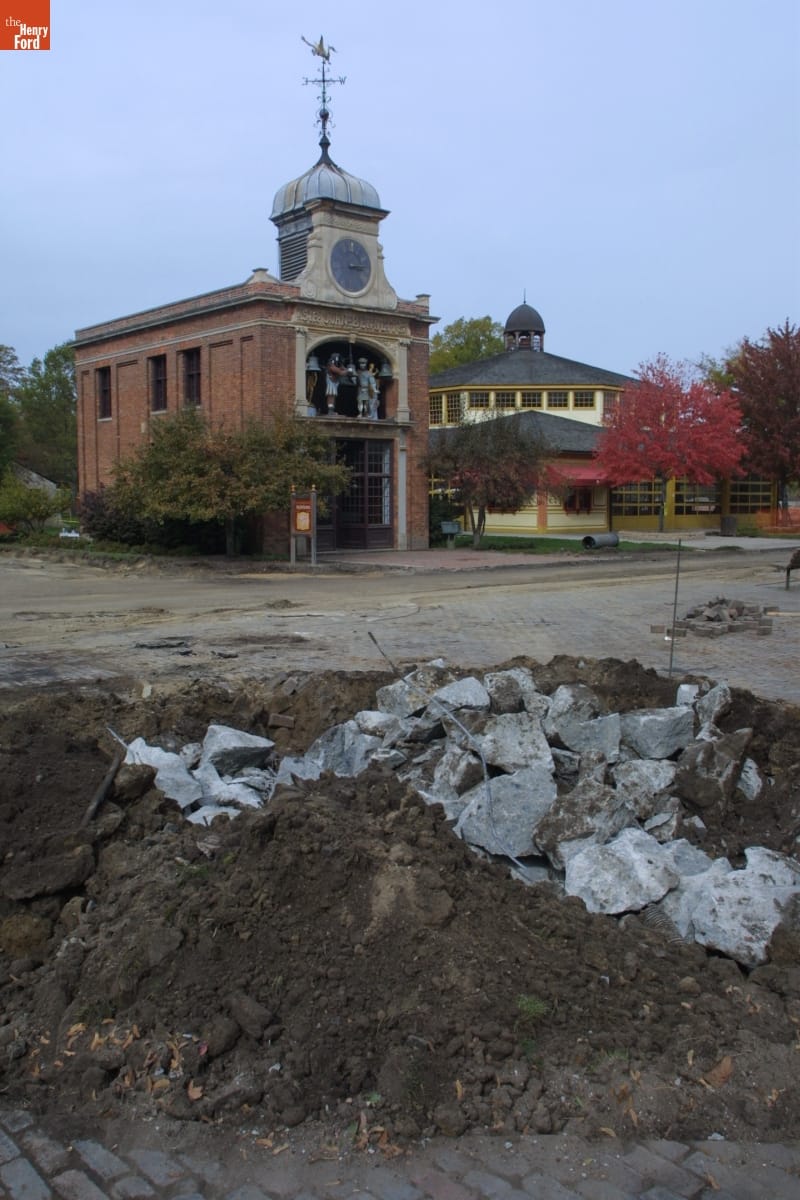
- Bandstand's Former Site after Relocation during the Greenfield Village Restoration Project, October 2002 - By 2000, Greenfield Village began showing its age. Buildings and crumbling infrastructure desperately needed repair. Museum planners envisioned a revitalized village. They created themed "Historic Districts" by relocating and refurbishing the historic structures. Workers repaved streets and upgraded water, sewer, electric, and gas lines. In June 2003, nine months after restoration began, visitors passed through a new entrance into a reborn Greenfield Village.
- October 01, 2002
- Collections - Artifact
Bandstand's Former Site after Relocation during the Greenfield Village Restoration Project, October 2002
By 2000, Greenfield Village began showing its age. Buildings and crumbling infrastructure desperately needed repair. Museum planners envisioned a revitalized village. They created themed "Historic Districts" by relocating and refurbishing the historic structures. Workers repaved streets and upgraded water, sewer, electric, and gas lines. In June 2003, nine months after restoration began, visitors passed through a new entrance into a reborn Greenfield Village.
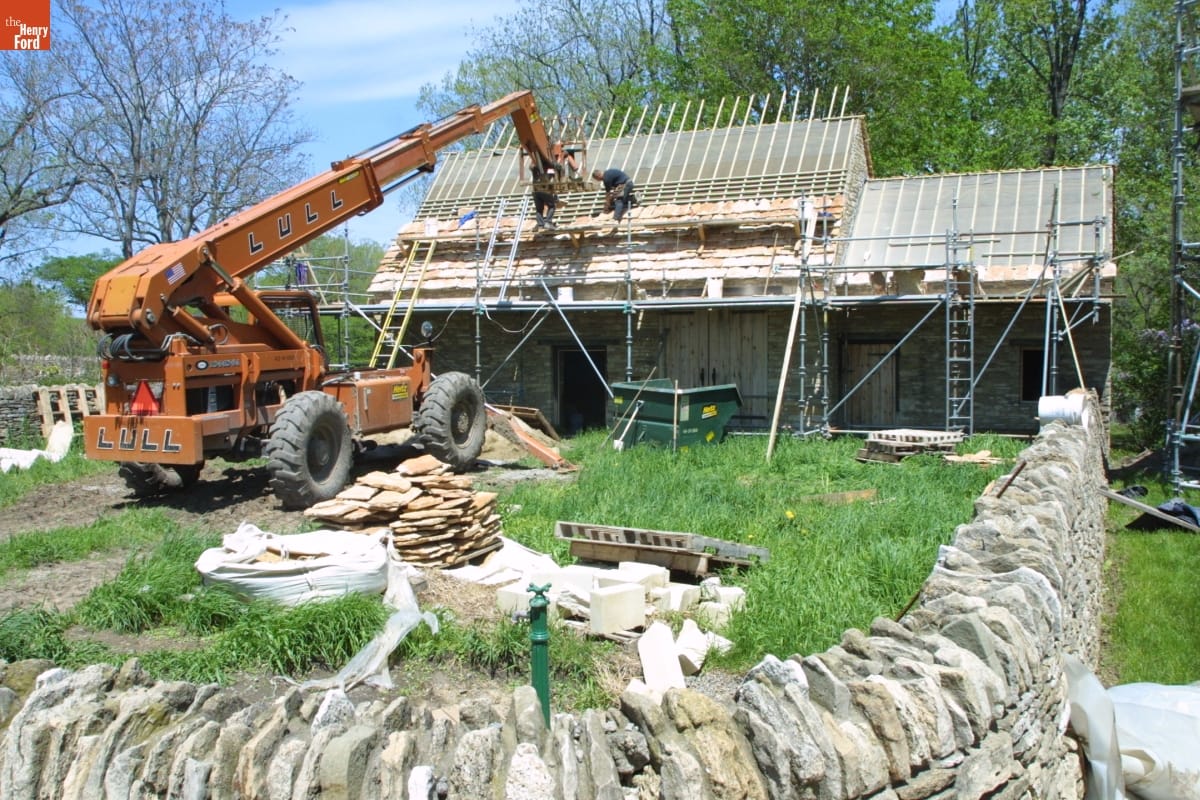
- Cotswold Stable during the Greenfield Village Restoration Project, May 2003 - By 2000, Greenfield Village began showing its age. Buildings and crumbling infrastructure desperately needed repair. Museum planners envisioned a revitalized village. They created themed "Historic Districts" by relocating and refurbishing the historic structures. Workers repaved streets and upgraded water, sewer, electric, and gas lines. In June 2003, nine months after restoration began, visitors passed through a new entrance into a reborn Greenfield Village.
- May 01, 2003
- Collections - Artifact
Cotswold Stable during the Greenfield Village Restoration Project, May 2003
By 2000, Greenfield Village began showing its age. Buildings and crumbling infrastructure desperately needed repair. Museum planners envisioned a revitalized village. They created themed "Historic Districts" by relocating and refurbishing the historic structures. Workers repaved streets and upgraded water, sewer, electric, and gas lines. In June 2003, nine months after restoration began, visitors passed through a new entrance into a reborn Greenfield Village.