
Search
- Dropleaf Table, 1730-1770 - Tables provide useful, multi-purpose space -- but sometimes their size gets in the way. For 18th-century Americans, a drop-leaf table offered an ideal solution. With the leaves extended the table could be used for dining, working or game playing. When not needed, the table's top folded down and the table could be moved easily to another room or pushed against a wall.
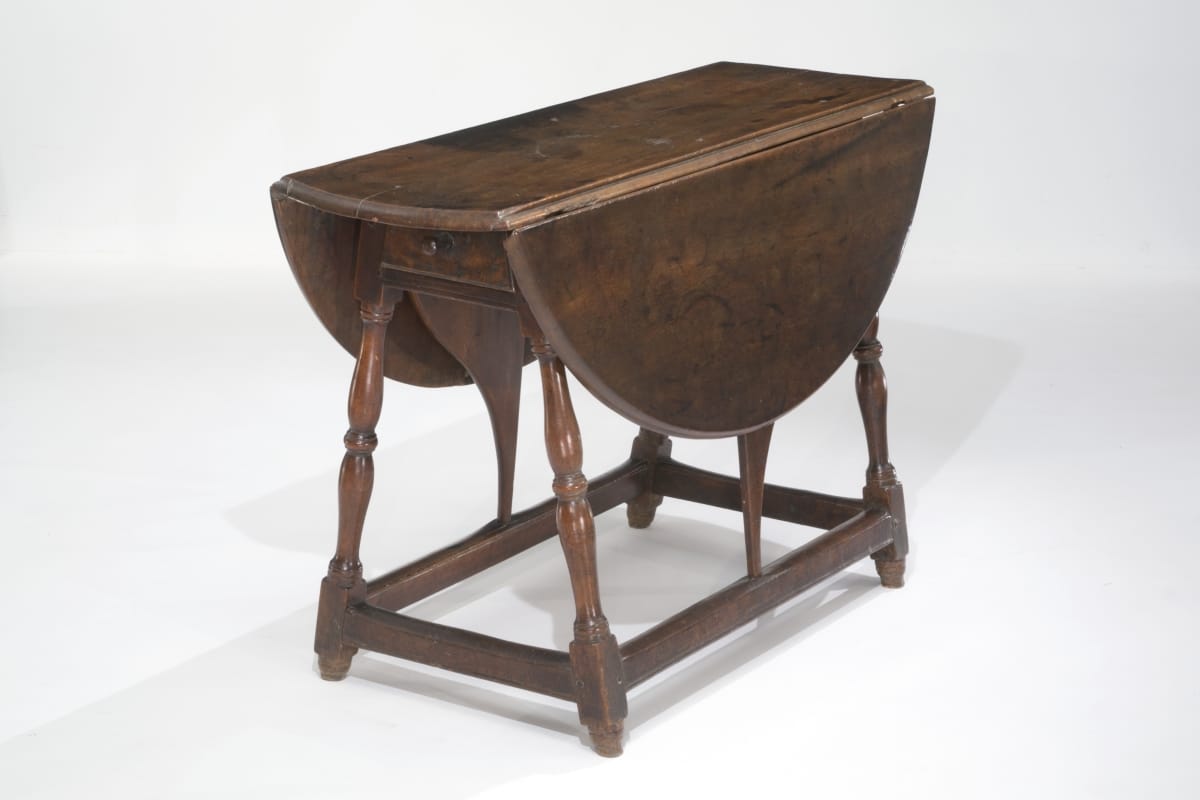
- 1730-1770
- Collections - Artifact
Dropleaf Table, 1730-1770
Tables provide useful, multi-purpose space -- but sometimes their size gets in the way. For 18th-century Americans, a drop-leaf table offered an ideal solution. With the leaves extended the table could be used for dining, working or game playing. When not needed, the table's top folded down and the table could be moved easily to another room or pushed against a wall.
- Crew Dining Room aboard the Henry Ford II Freighter, October 16, 1935 - Henry Ford had two ore freighters built in 1924 and named them after his grandsons, Henry Ford II and Benson Ford. The ships plied the Great Lakes, transporting raw materials to and from Ford's River Rouge manufacturing complex. The crews enjoyed well-furnished quarters and many up-to-date accommodations, like this dining room with electric lighting and a built-in sideboard buffet.
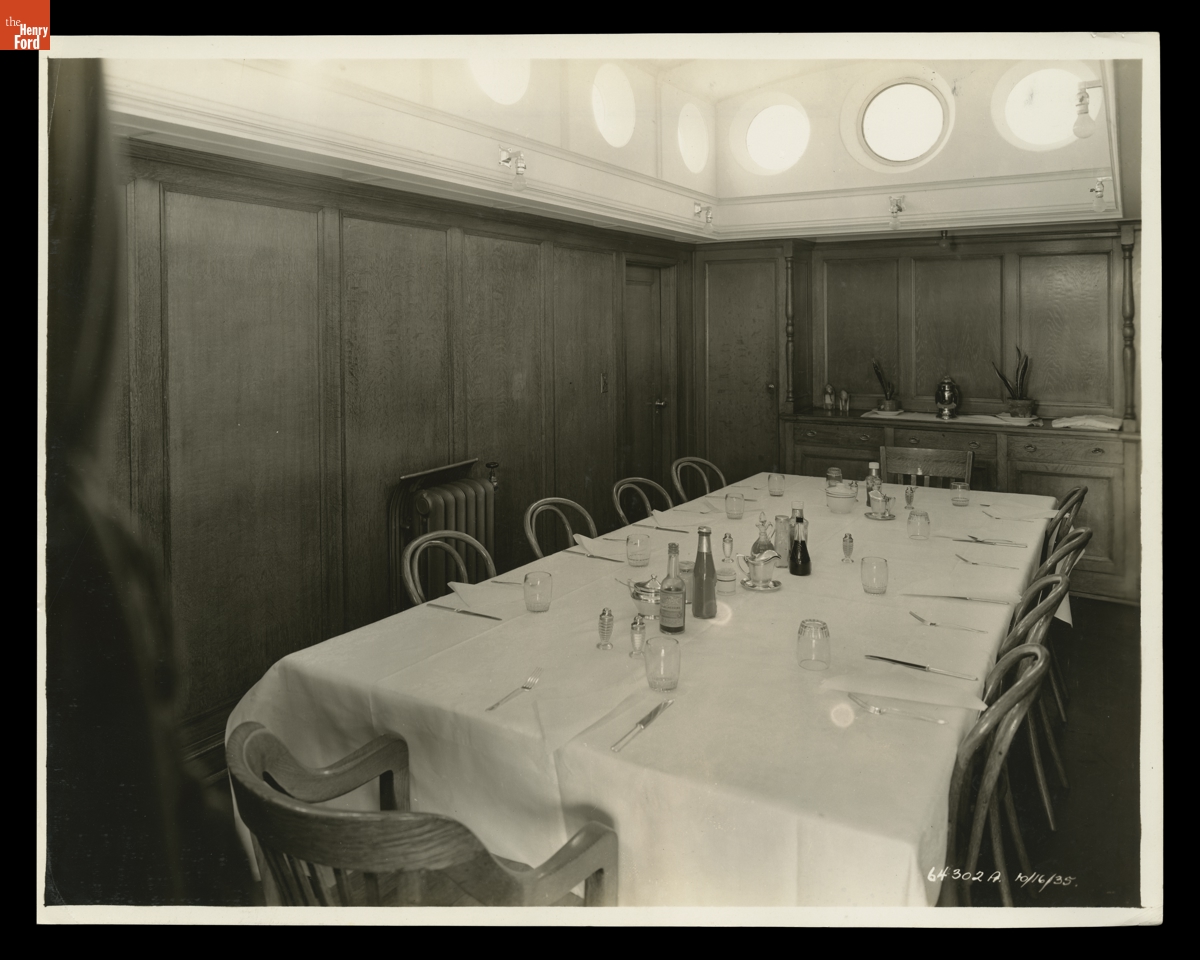
- October 16, 1935
- Collections - Artifact
Crew Dining Room aboard the Henry Ford II Freighter, October 16, 1935
Henry Ford had two ore freighters built in 1924 and named them after his grandsons, Henry Ford II and Benson Ford. The ships plied the Great Lakes, transporting raw materials to and from Ford's River Rouge manufacturing complex. The crews enjoyed well-furnished quarters and many up-to-date accommodations, like this dining room with electric lighting and a built-in sideboard buffet.
- Crew of the Benson Ford Freighter around the Dining Room Table, April 14, 1945 - Henry Ford had two ore freighters built in 1924 and named them after his grandsons, Henry Ford II and Benson Ford. The ships plied the Great Lakes, transporting raw materials to and from Ford's River Rouge manufacturing complex. The crews enjoyed well-furnished quarters and many up-to-date accommodations, like this dining room aboard the <i>Benson Ford</i>.
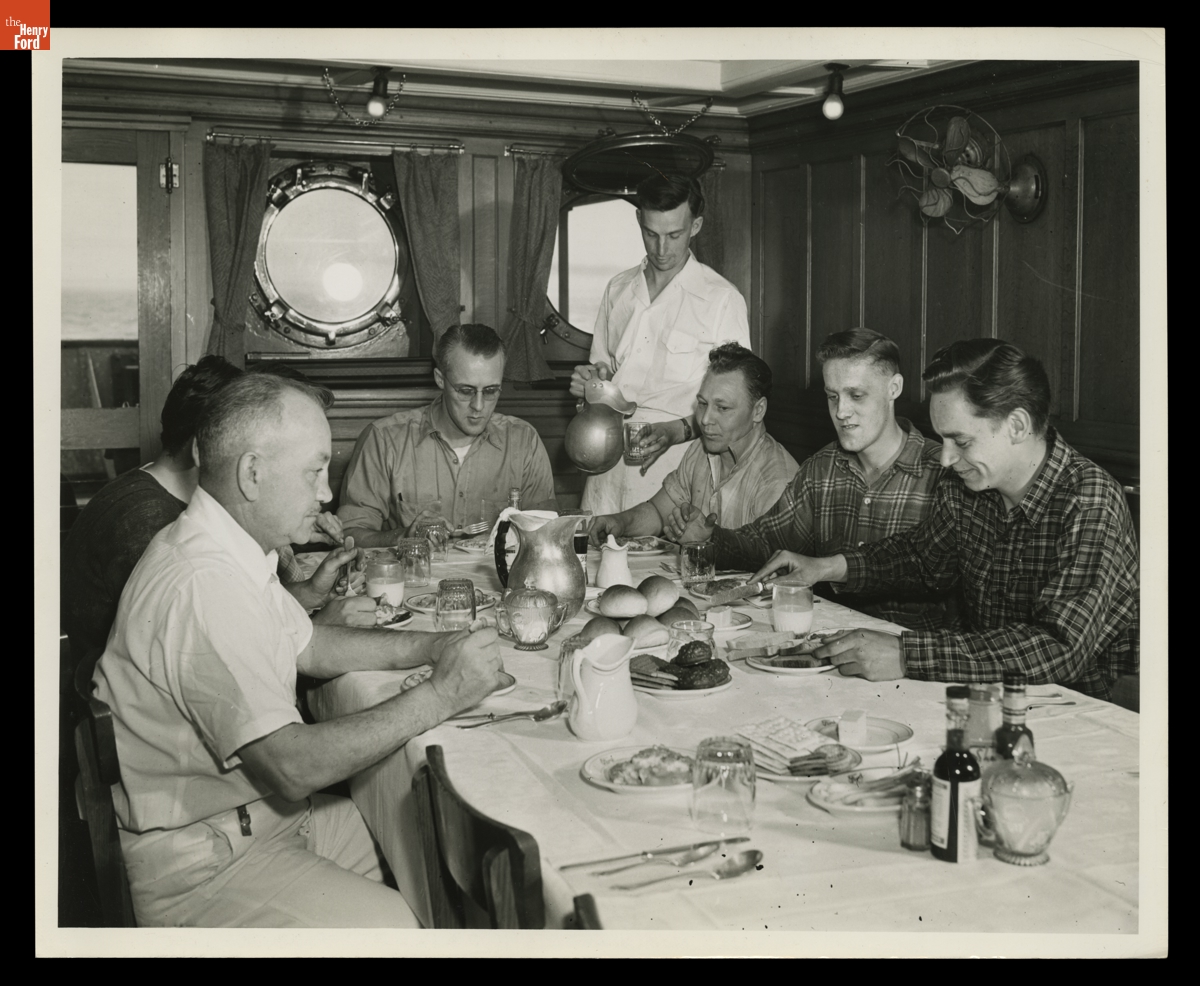
- April 14, 1945
- Collections - Artifact
Crew of the Benson Ford Freighter around the Dining Room Table, April 14, 1945
Henry Ford had two ore freighters built in 1924 and named them after his grandsons, Henry Ford II and Benson Ford. The ships plied the Great Lakes, transporting raw materials to and from Ford's River Rouge manufacturing complex. The crews enjoyed well-furnished quarters and many up-to-date accommodations, like this dining room aboard the Benson Ford.
- Table Setting in Eagle Tavern in Greenfield Village, February 1983 -
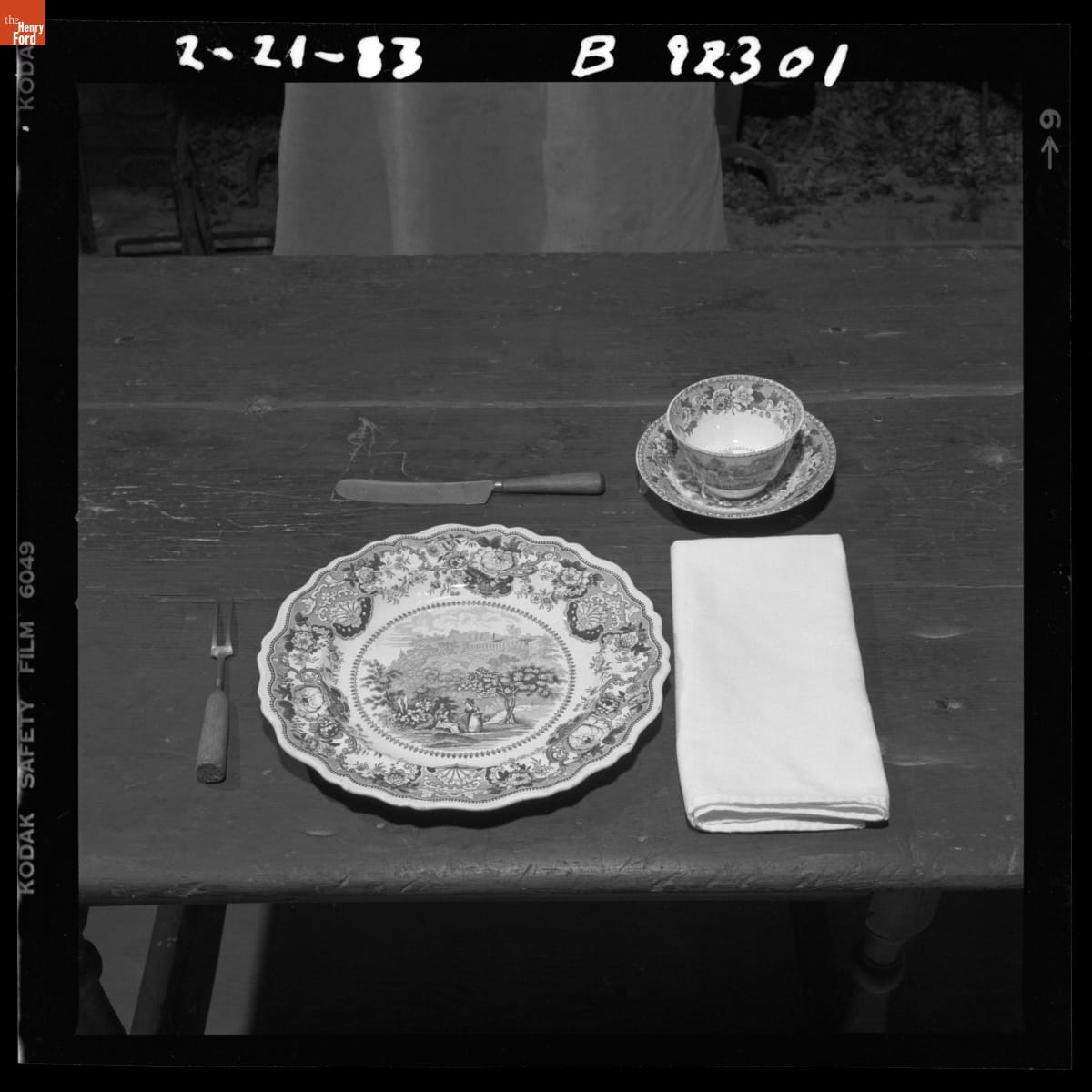
- February 21, 1983
- Collections - Artifact
Table Setting in Eagle Tavern in Greenfield Village, February 1983
- Dropleaf Table, 1740-1770 - Tables provide useful, multi-purpose space -- but sometimes their size gets in the way. For 18th-century Americans, a drop-leaf table offered an ideal solution. With the leaves extended the table could be used for dining, working or game playing. When not needed, the table's top folded down and the table could be moved easily to another room or pushed against a wall.
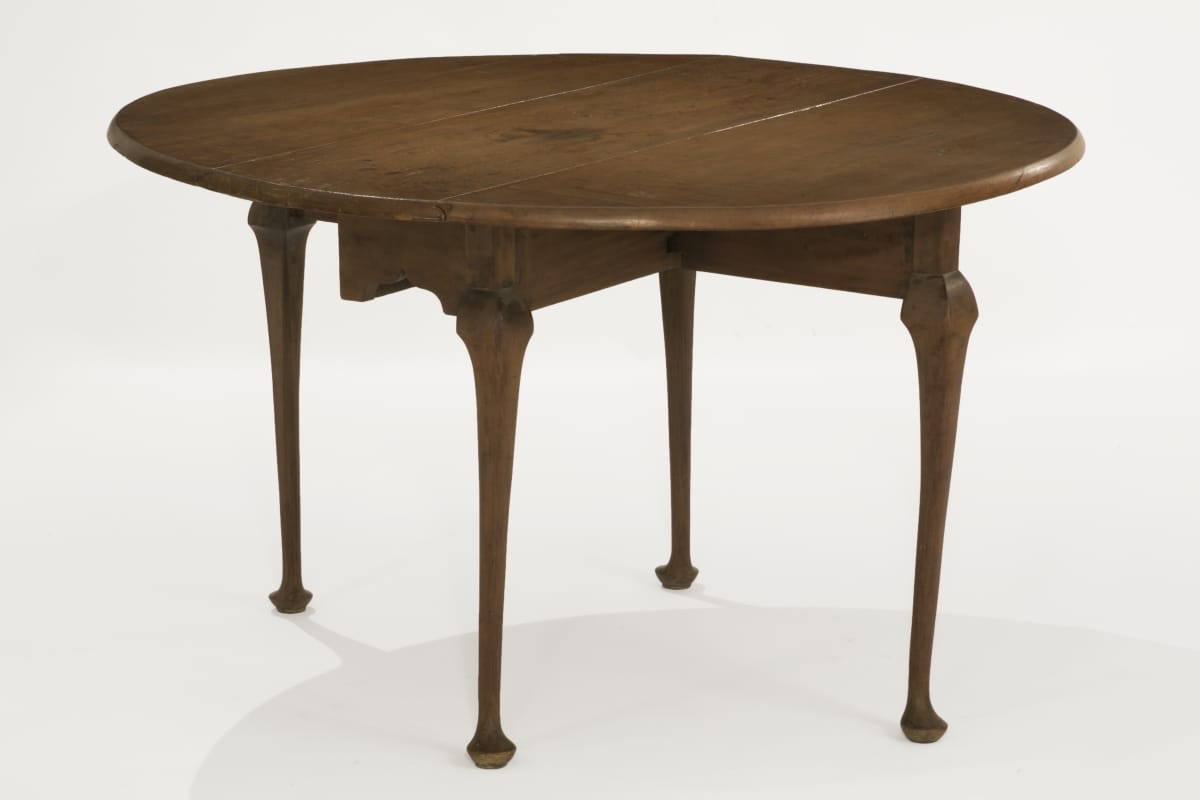
- 1740-1770
- Collections - Artifact
Dropleaf Table, 1740-1770
Tables provide useful, multi-purpose space -- but sometimes their size gets in the way. For 18th-century Americans, a drop-leaf table offered an ideal solution. With the leaves extended the table could be used for dining, working or game playing. When not needed, the table's top folded down and the table could be moved easily to another room or pushed against a wall.
- Gate-leg Table, 1730-1765 - Colonial Americans used gate-leg tables chiefly for dining, but also for working, writing and game playing. These tables -- with their gate-framed legs that swing out to support the table leaves -- came in many sizes. And when not needed, these tables could be easily folded, moved from room to room, or placed against a wall to save space.
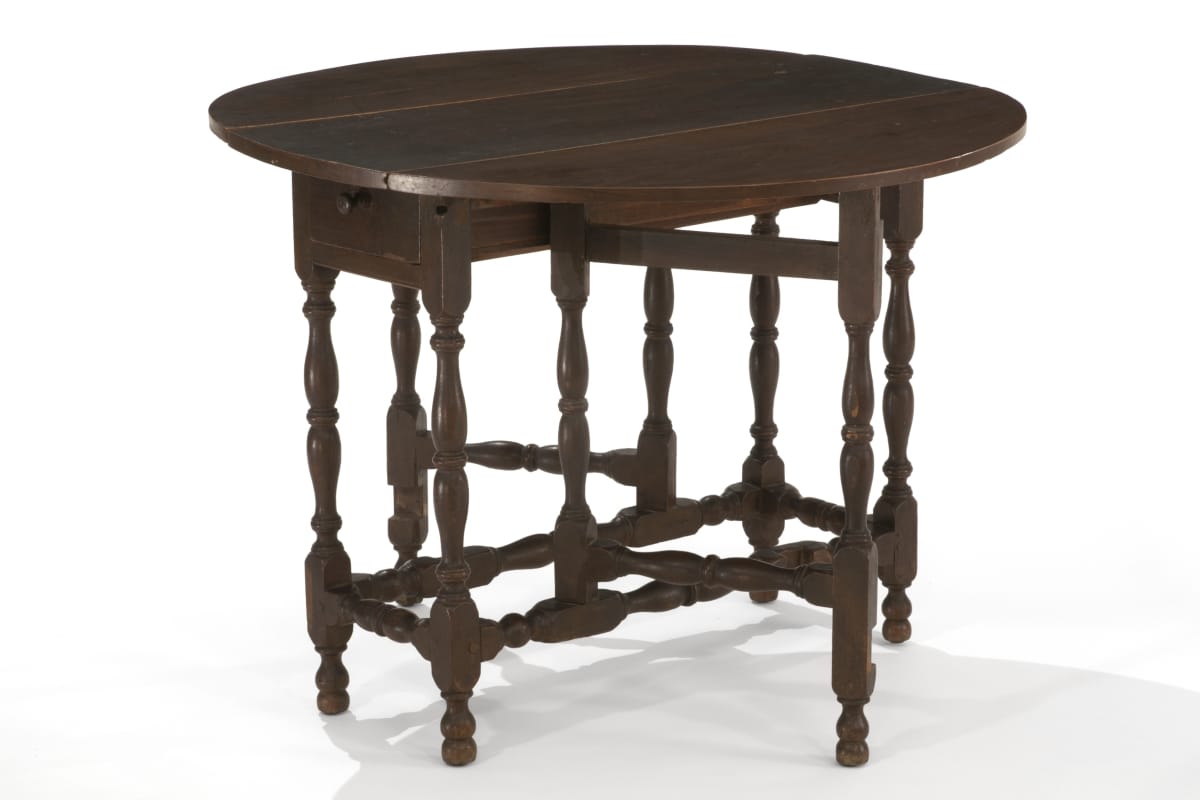
- 1730-1765
- Collections - Artifact
Gate-leg Table, 1730-1765
Colonial Americans used gate-leg tables chiefly for dining, but also for working, writing and game playing. These tables -- with their gate-framed legs that swing out to support the table leaves -- came in many sizes. And when not needed, these tables could be easily folded, moved from room to room, or placed against a wall to save space.
- Dropleaf Table, 1760-1780 -
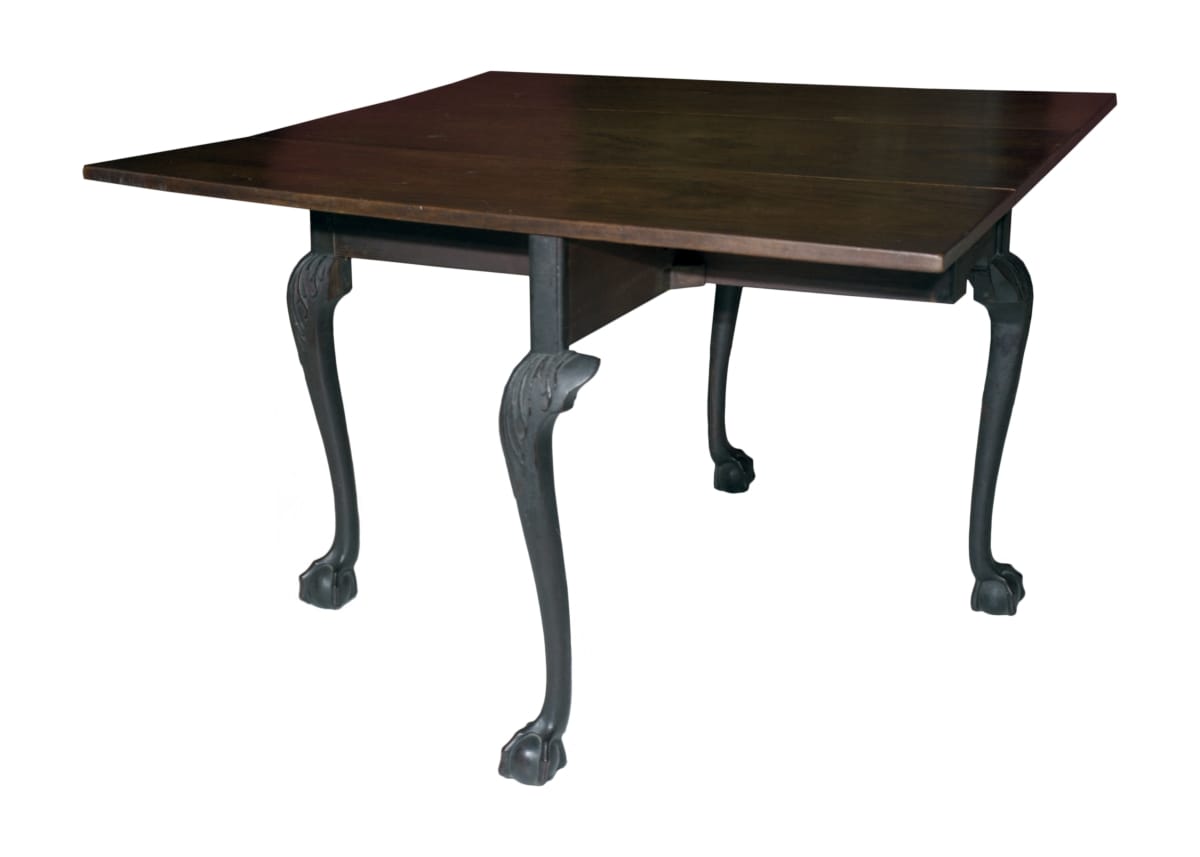
- 1760-1780
- Collections - Artifact
Dropleaf Table, 1760-1780
- Tablecloth, circa 1900 - In the 1890s, artists and designers in Europe and the United States attempted to create a modern aesthetic for the 20th century. The decorative style that emerged, Art Nouveau, reached its peak of popularity in 1900. This tablecloth features characteristic elements of Art Nouveau design: bold color contrasts, undulating "whiplash" lines, and stylized botanical motifs.
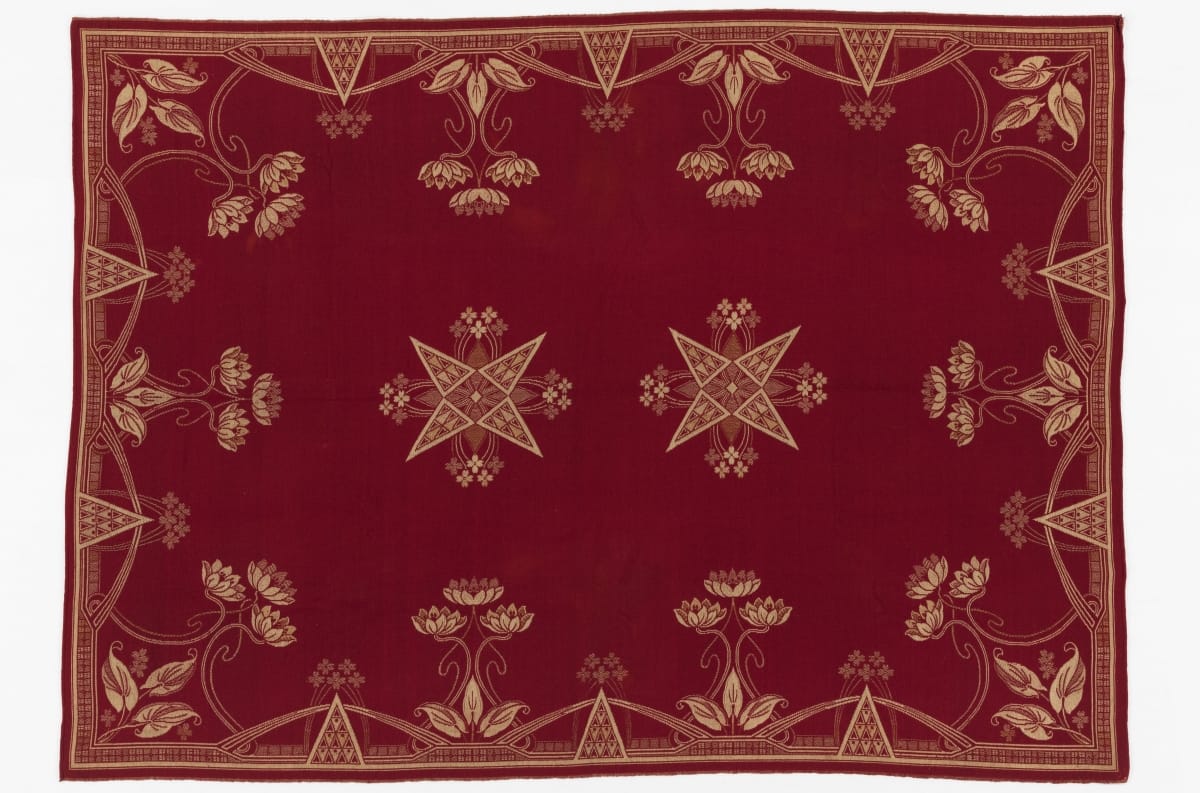
- circa 1900
- Collections - Artifact
Tablecloth, circa 1900
In the 1890s, artists and designers in Europe and the United States attempted to create a modern aesthetic for the 20th century. The decorative style that emerged, Art Nouveau, reached its peak of popularity in 1900. This tablecloth features characteristic elements of Art Nouveau design: bold color contrasts, undulating "whiplash" lines, and stylized botanical motifs.
- Advertisement for Daystrom Kitchen Dining Furniture, "Daystrom Puts the Fun in Functional Furniture," May 1952 -
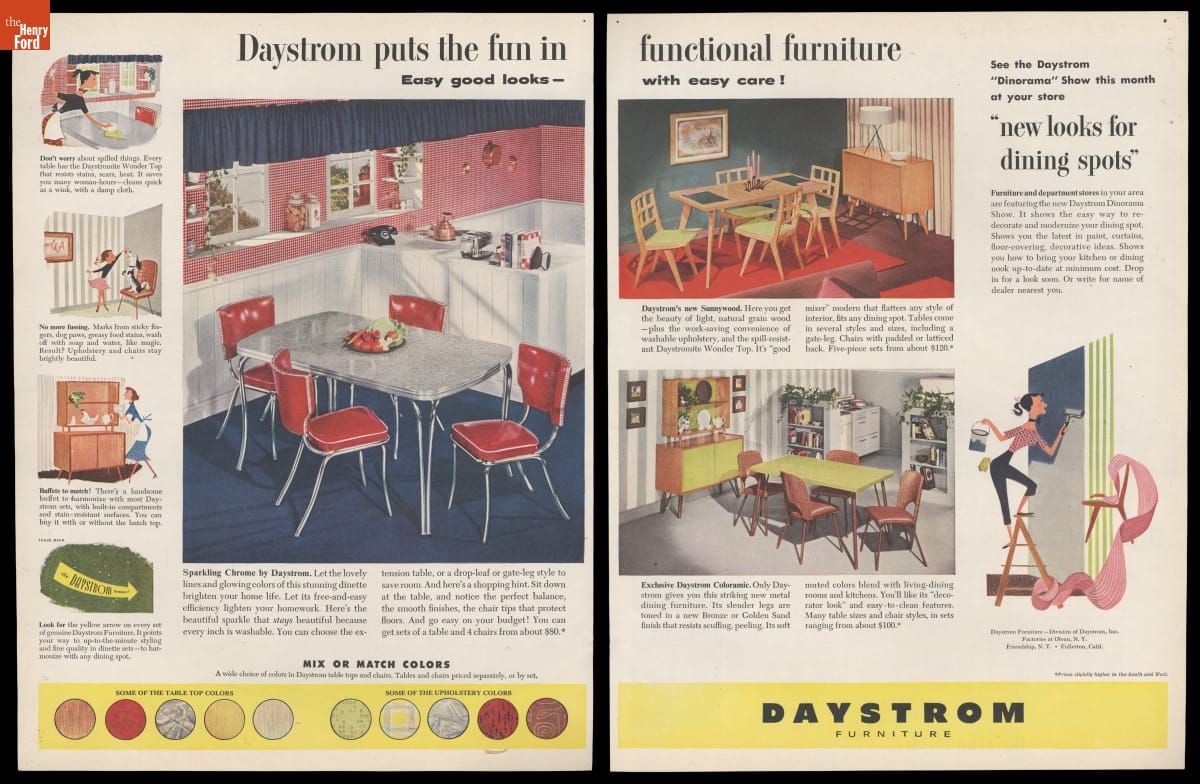
- May 01, 1952
- Collections - Artifact
Advertisement for Daystrom Kitchen Dining Furniture, "Daystrom Puts the Fun in Functional Furniture," May 1952
- Lorin and Ivonette Wright, at Christmas Dinner Table with Their Children, Milton and Ivonette, Dayton, Ohio, 1897-1898 - Lorin Wright, older brother of Wilbur and Orville, married Ivonette Stokes in 1892 and the couple settled in Dayton. They had four children -- Milton, Ivonette, Leontine, and Horace -- who were regular visitors to the Wright family home at 7 Hawthorn Street. Never fathers themselves, Wilbur and Orville enjoyed playing with their nieces and nephews.
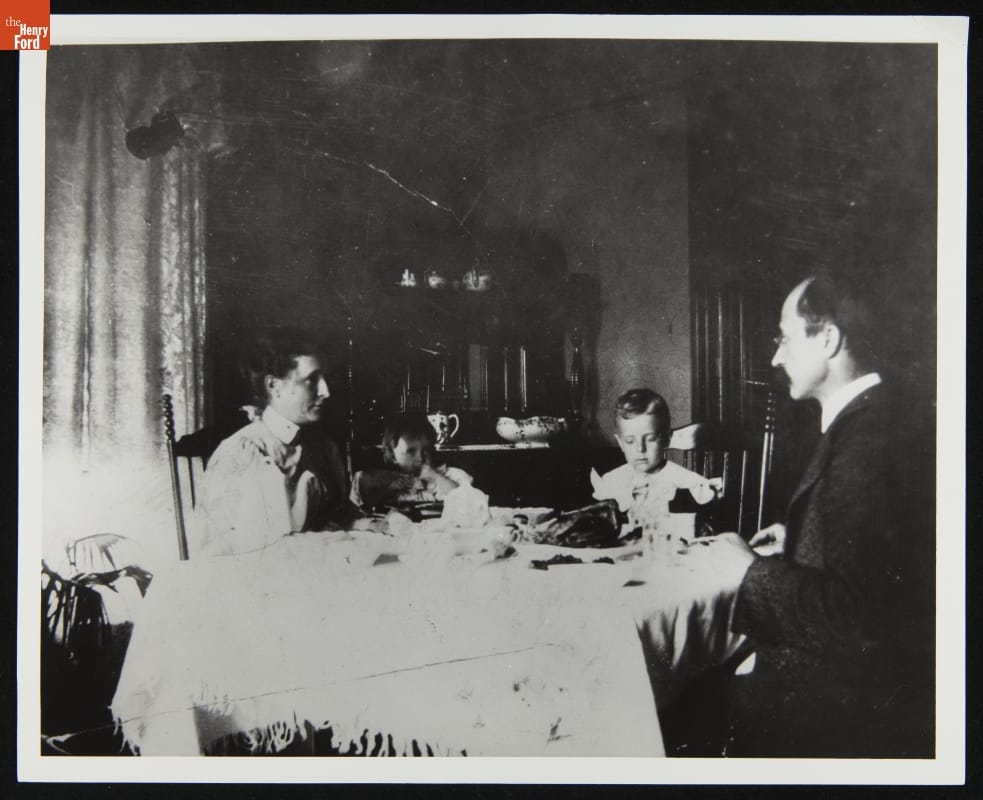
- 1897-1898
- Collections - Artifact
Lorin and Ivonette Wright, at Christmas Dinner Table with Their Children, Milton and Ivonette, Dayton, Ohio, 1897-1898
Lorin Wright, older brother of Wilbur and Orville, married Ivonette Stokes in 1892 and the couple settled in Dayton. They had four children -- Milton, Ivonette, Leontine, and Horace -- who were regular visitors to the Wright family home at 7 Hawthorn Street. Never fathers themselves, Wilbur and Orville enjoyed playing with their nieces and nephews.