
Search
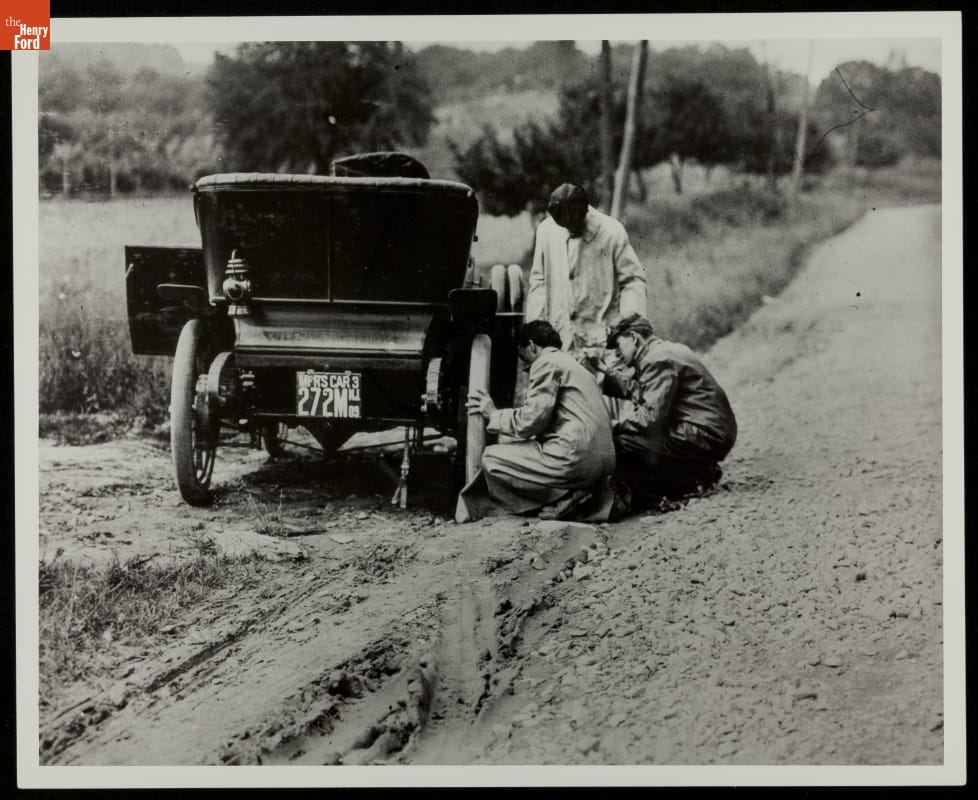
- Three Men Examining Tire on Ford Model T Car, 1909 - Early automobiles required a lot of maintenance. Drivers like these, dressed for motoring and examining their Model T by the side of the road, had to be ready to perform mobile repairs.
- 1909
- Collections - Artifact
Three Men Examining Tire on Ford Model T Car, 1909
Early automobiles required a lot of maintenance. Drivers like these, dressed for motoring and examining their Model T by the side of the road, had to be ready to perform mobile repairs.
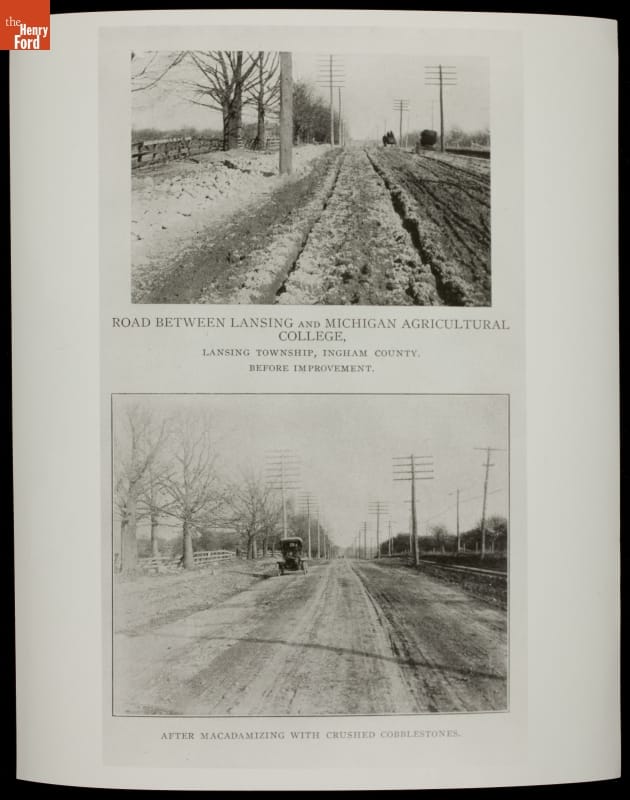
- Dirt Road Between Lansing and Michigan Agricultural College, Before and After Improvements, 1905-1906 - The establishment of the Michigan State Highway Department in 1905 made state funding available to township and county road commissions for improvements and repairs. The State Highway Commissioner published biennial reports highlighting the progress of "reward roads" -- projects funded by the state. These images from his first report show crushed stone applied to a rutted road near the state capital.
- 1905-1906
- Collections - Artifact
Dirt Road Between Lansing and Michigan Agricultural College, Before and After Improvements, 1905-1906
The establishment of the Michigan State Highway Department in 1905 made state funding available to township and county road commissions for improvements and repairs. The State Highway Commissioner published biennial reports highlighting the progress of "reward roads" -- projects funded by the state. These images from his first report show crushed stone applied to a rutted road near the state capital.
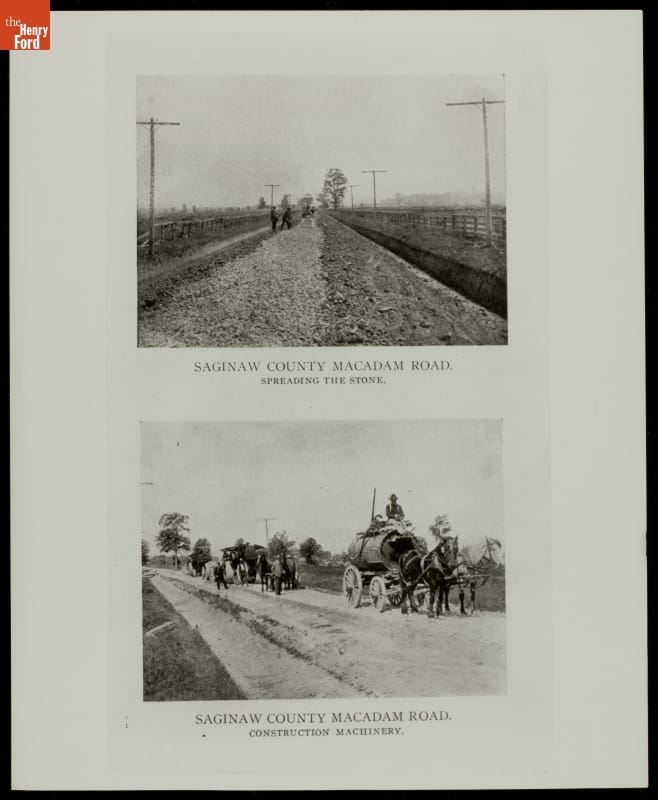
- Saginaw County Macadam Road Construction Machinery, and Stone Spreading, 1905-1906 - The establishment of the Michigan State Highway Department in 1905 made state funding available to township and county road commissions for improvements and repairs. The State Highway Commissioner published biennial reports highlighting the progress of "reward roads"--projects funded by the state. These images from his first report illustrate some of the equipment and construction methods used in Saginaw County.
- 1905-1906
- Collections - Artifact
Saginaw County Macadam Road Construction Machinery, and Stone Spreading, 1905-1906
The establishment of the Michigan State Highway Department in 1905 made state funding available to township and county road commissions for improvements and repairs. The State Highway Commissioner published biennial reports highlighting the progress of "reward roads"--projects funded by the state. These images from his first report illustrate some of the equipment and construction methods used in Saginaw County.
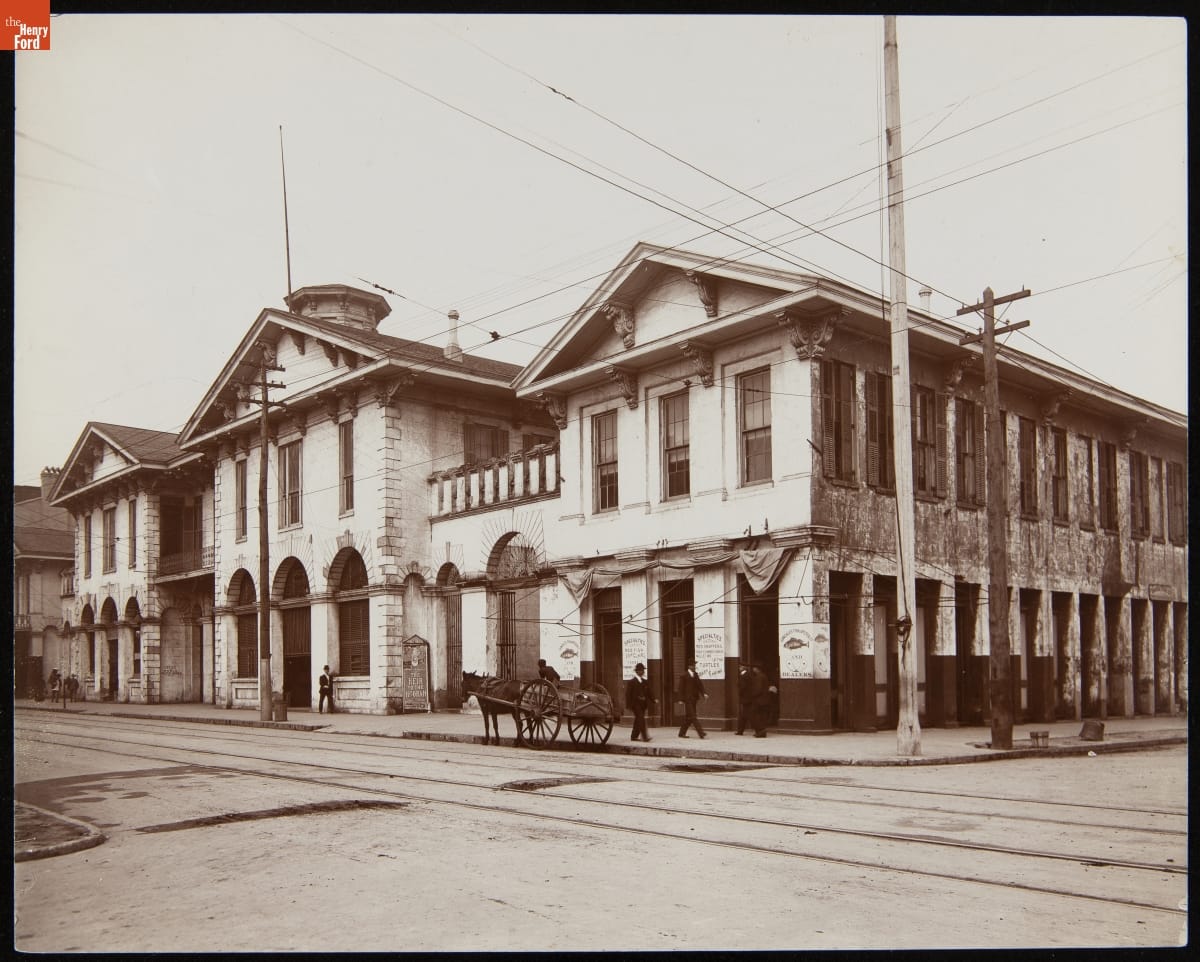
- Old Market House, Mobile, Alabama, -
- circa 1906
- Collections - Artifact
Old Market House, Mobile, Alabama,
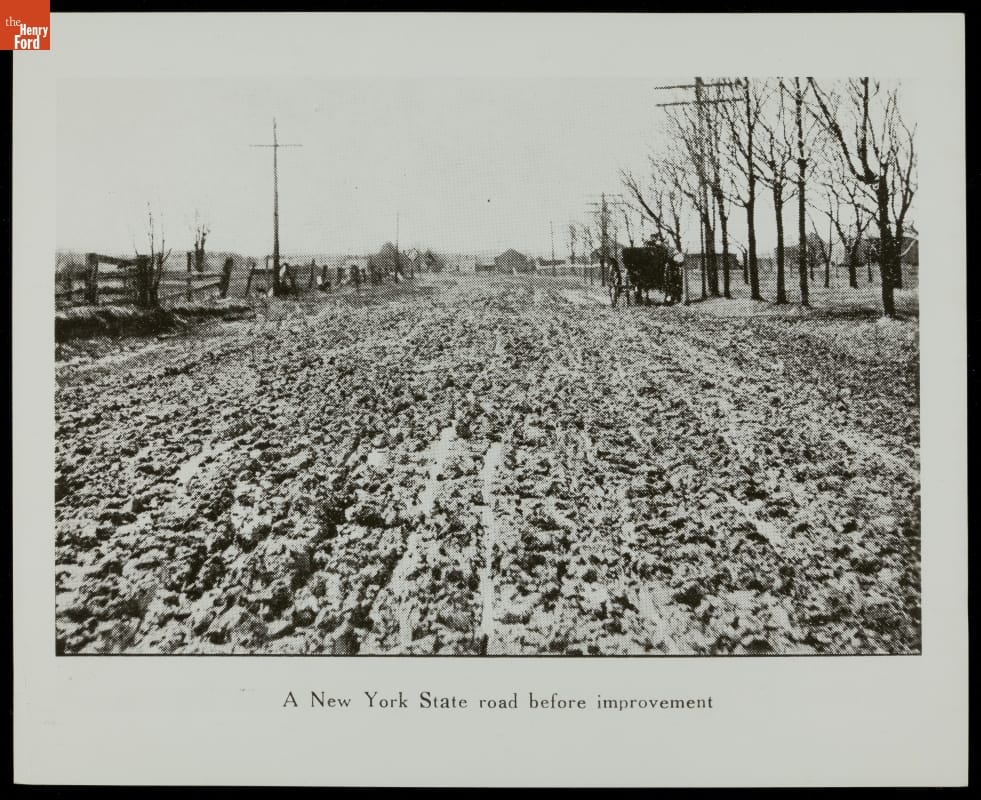
- New York State Road Before Improvement, 1910 - In the early 1900s, hard surfaced roadways existed only in cities. Most roads were bumpy dirt paths carved with ruts from the narrow wheels of horse-drawn vehicles and torn up by the tires of heavy automobiles. They became rivers of mud at the slightest turn of weather.
- January 15, 1910
- Collections - Artifact
New York State Road Before Improvement, 1910
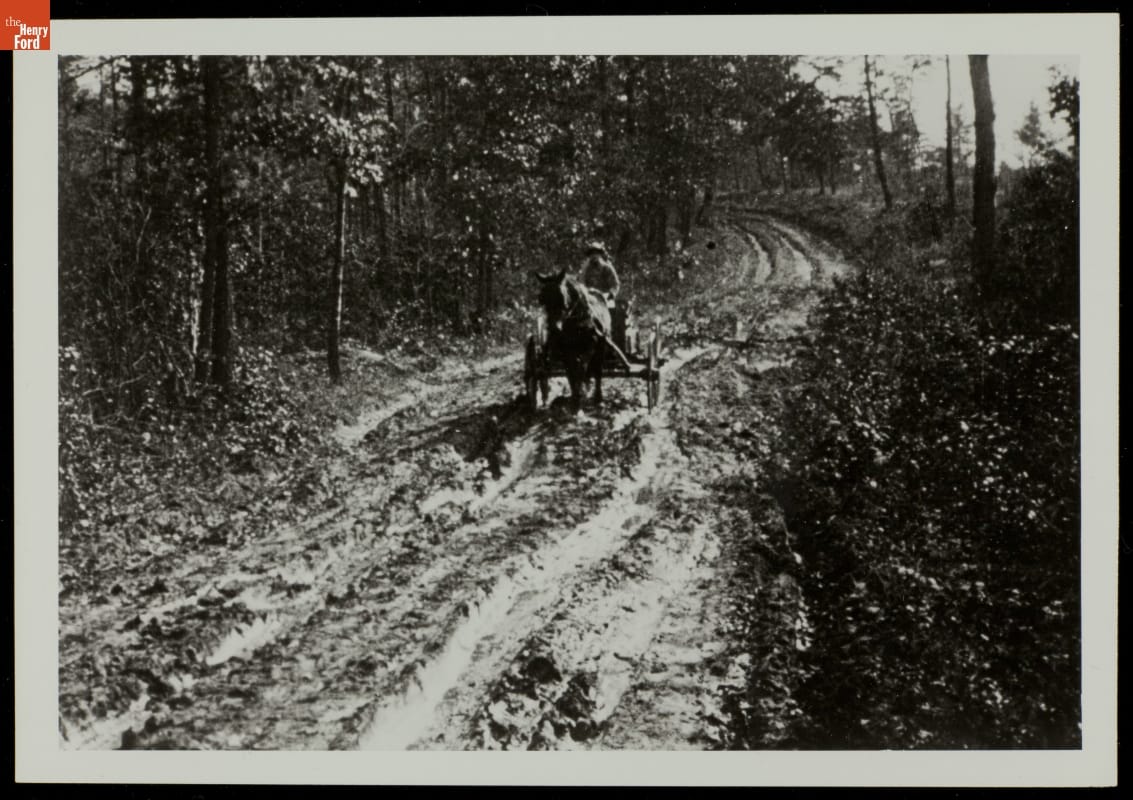
In the early 1900s, hard surfaced roadways existed only in cities. Most roads were bumpy dirt paths carved with ruts from the narrow wheels of horse-drawn vehicles and torn up by the tires of heavy automobiles. They became rivers of mud at the slightest turn of weather.
- Horse and Wagon on Muddy Country Road, circa 1900 -
- circa 1900
- Collections - Artifact
Horse and Wagon on Muddy Country Road, circa 1900
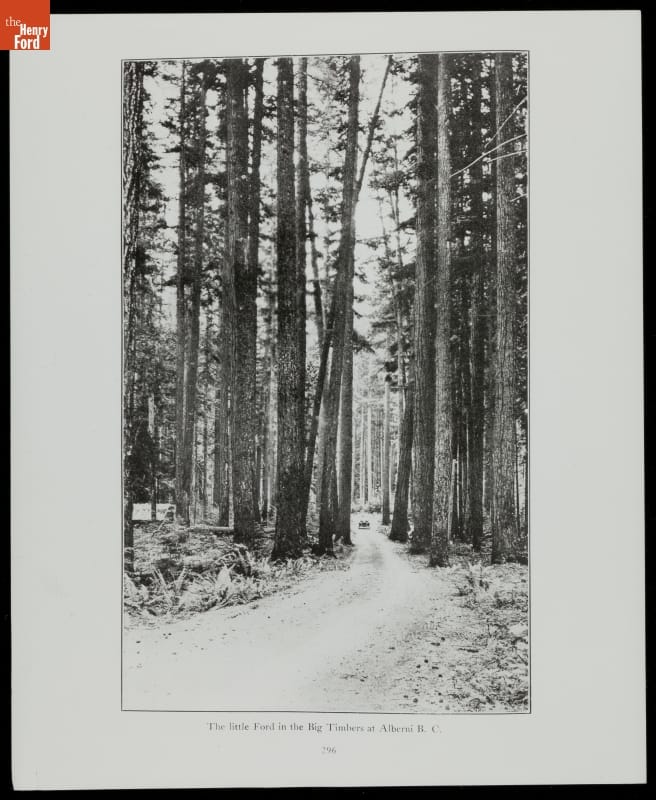
- Ford Model T on a Forest Road, British Columbia, Canada, 1913 - A monthly publication of Ford Motor Company, <EM>Ford Times</EM> was distributed worldwide at no cost. Its purpose was to cultivate loyalty among Ford owners and attract new customers. Images like this one from the February 1914 issue of <EM>Canadian Ford Times</EM> suggested the dependability and freedom that came alongside Ford ownership.
- 1913
- Collections - Artifact
Ford Model T on a Forest Road, British Columbia, Canada, 1913
A monthly publication of Ford Motor Company, Ford Times was distributed worldwide at no cost. Its purpose was to cultivate loyalty among Ford owners and attract new customers. Images like this one from the February 1914 issue of Canadian Ford Times suggested the dependability and freedom that came alongside Ford ownership.
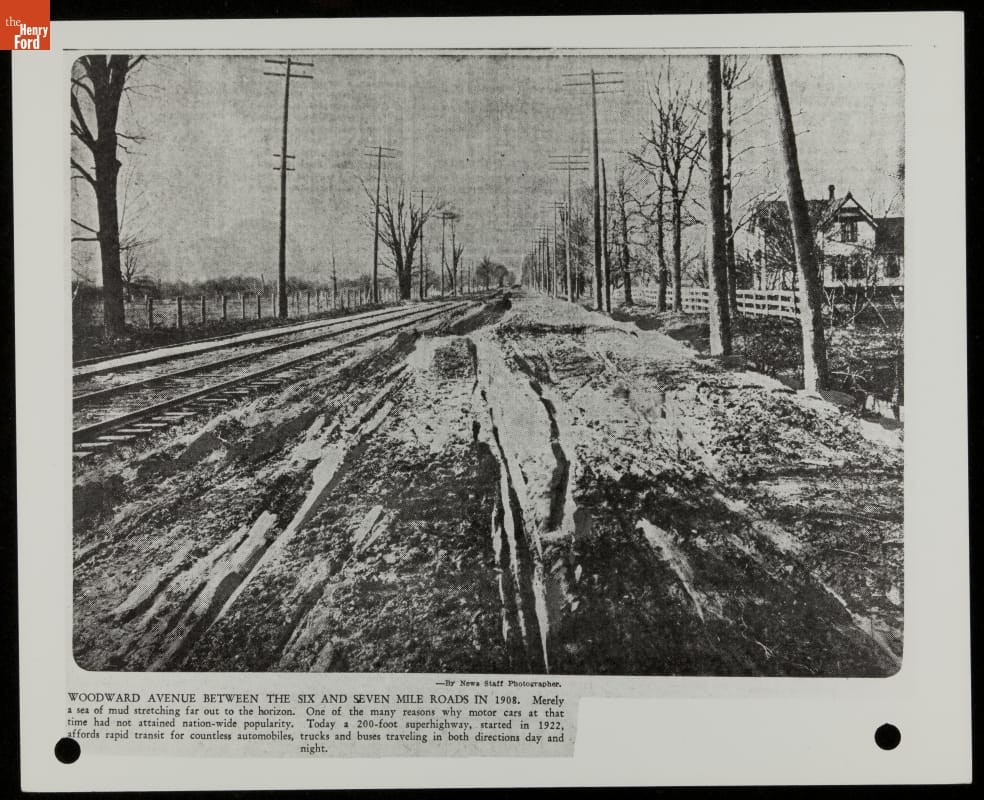
- Woodward Avenue between Six and Seven Mile Roads, Detroit, Michigan, 1908 - Woodward Avenue between Six and Seven Mile Roads in Wayne County, Michigan, was paved in 1909, creating the country's first mile of concrete highway. This copy of a newspaper clipping shows the road's poor condition before paving. Soon, new road construction technologies improved roadways throughout the United States.
- 1908
- Collections - Artifact
Woodward Avenue between Six and Seven Mile Roads, Detroit, Michigan, 1908
Woodward Avenue between Six and Seven Mile Roads in Wayne County, Michigan, was paved in 1909, creating the country's first mile of concrete highway. This copy of a newspaper clipping shows the road's poor condition before paving. Soon, new road construction technologies improved roadways throughout the United States.
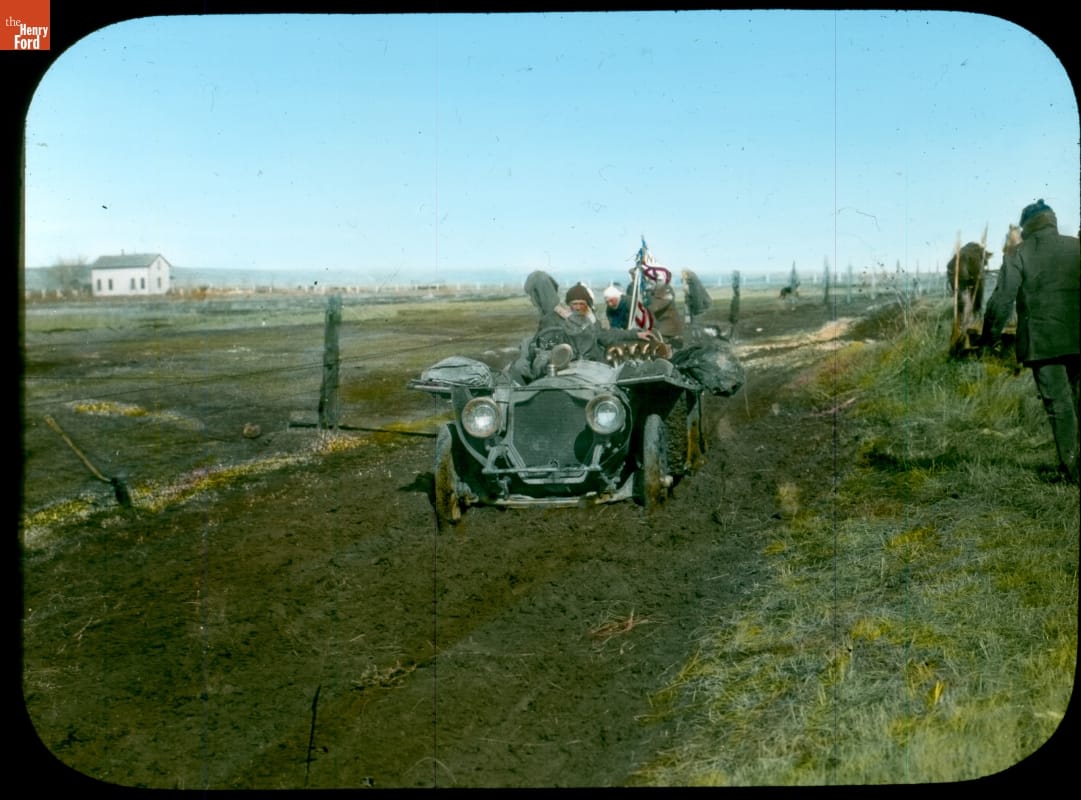
- Thomas Flyer Stuck in the Mud near Julesburg, Colorado, New York to Paris Race, 1908 - In 1908, an American-built Thomas Flyer won the New York to Paris automobile race. The vehicle traveled 22,000 miles across three continents, through rain, snow, and mud. The race took 169 days and the American team driving this automobile was declared the winner. This lantern slide image shows the Thomas Flyer stuck in mud near Julesburg, Colorado.
- 1908
- Collections - Artifact
Thomas Flyer Stuck in the Mud near Julesburg, Colorado, New York to Paris Race, 1908
In 1908, an American-built Thomas Flyer won the New York to Paris automobile race. The vehicle traveled 22,000 miles across three continents, through rain, snow, and mud. The race took 169 days and the American team driving this automobile was declared the winner. This lantern slide image shows the Thomas Flyer stuck in mud near Julesburg, Colorado.
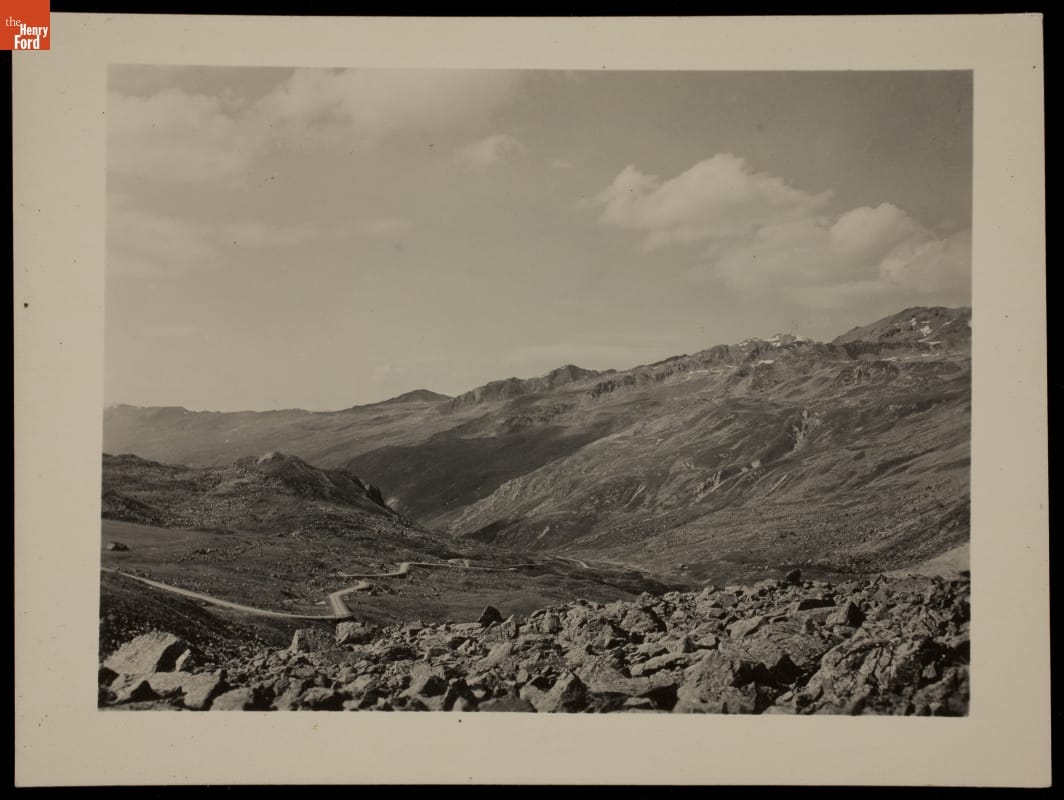
- Scene at the Fluela Pass, Switzerland, circa 1935 - In 1913, Henry Ford established Ford Motor Company's photographic department. Though few internal records describe company photography, remaining photographs reveal a wide range of departmental activity. Over nearly 100 years, Ford photographers documented company ventures, personal affairs, and daily life around the world. This photograph shows Fluela Pass, a historic route through the Swiss Alps.
- circa 1935
- Collections - Artifact
Scene at the Fluela Pass, Switzerland, circa 1935
In 1913, Henry Ford established Ford Motor Company's photographic department. Though few internal records describe company photography, remaining photographs reveal a wide range of departmental activity. Over nearly 100 years, Ford photographers documented company ventures, personal affairs, and daily life around the world. This photograph shows Fluela Pass, a historic route through the Swiss Alps.